

P0300 on 2001-2003 GMC Sierra 1500 HD: Random Misfire Causes & Fixes
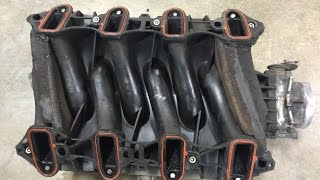
On a 2001-2003 GMC Sierra 1500 HD with the 6.0L V8, a P0300 code is most frequently caused by a vacuum leak from failed intake manifold gaskets. The original plastic-framed gaskets are a known failure point. The recommended fix is an upgraded metal-frame gasket set like the Fel-Pro MS 98016 T. If gaskets are good, a full ignition tune-up (plugs and wires) is the next most likely solution.
- For a P0300 on a 2001-2003 Sierra 1500 HD, immediately suspect a vacuum leak from the intake manifold gaskets.
- If the check engine light is flashing, pull over and stop driving as soon as it is safe to do so to prevent catastrophic damage to the catalytic converters.
- Always start with the most likely and affordable fixes: check for vacuum leaks, then perform a full tune-up with quality spark plugs and wires.
- When replacing the intake manifold gaskets, use an upgraded set with a metal frame (e.g., Fel-Pro MS98016T) to prevent the problem from recurring.
What's Unique About the 2001-2003 Gmc SIERRA 1500 HD
For this generation of GMC Sierra (GMT800 platform), the P0300 code is very frequently linked to failed intake manifold gaskets. The original gaskets used a plastic frame that becomes brittle with heat and age, causing significant vacuum leaks that the PCM can't compensate for. This failure is a well-documented weak point on the 4.8L, 5.3L, and 6.0L V8 engines. A classic symptom is a misfire that appears or worsens once the engine is fully warmed up. Additionally, official GM Technical Service Bulletins (TSBs) point to a more severe, though less common, cause: a worn camshaft lobe, which should be investigated if common fixes don't resolve the issue.
Diagnostic Flowchart
Tap your situation to follow the diagnostic path that matches what you're seeing on this vehicle.
Symptoms You May Notice
- Flashing or solid Check Engine Light
- Rough or shaking idle, sometimes only when the engine is warm
- Engine hesitation or stumbling during acceleration
- Noticeable loss of engine power
- Difficulty starting the engine
- Reduced fuel economy
- Black smoke from the exhaust, indicating a rich condition
- Rotten egg or sulfur smell from the exhaust, suggesting catalytic converter damage
- Replacing only one ignition coil when the problem is shared across all cylinders (e.g., vacuum leak or fuel pressure).
- Replacing oxygen sensors. O2 sensors will report the symptom (like a lean condition from a vacuum leak or a rich condition from a bad fuel pressure regulator) but are rarely the root cause of the misfire itself.
- Replacing parts without proper diagnosis. For example, replacing a fuel pump when the issue is a simple clogged fuel filter.
Most Likely Causes
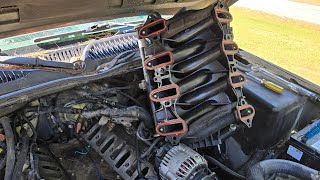
- Leaking Intake Manifold Gaskets 🔴 High Probability → Shop Engine Intake Manifold The original ACDelco gaskets used a plastic frame that cracks and degrades from heat cycles and exposure to fuel. This is a notorious failure on GMT800 trucks with the 4.8L, 5.3L, and 6.0L V8 engines, causing a vacuum leak.
How to confirm: Perform a smoke test to check for vacuum leaks around the intake manifold. Alternatively, with the engine running, carefully spray brake cleaner or starter fluid around the gasket area; a change in engine RPM indicates a leak. A key symptom is a misfire that only starts after the engine warms up and enters 'closed loop' fuel control.
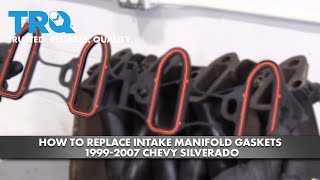
Typical fix: Replace the intake manifold gaskets. It is highly recommended to use an upgraded set with a metal frame, such as the Fel-Pro MS 98016 T, for a more durable repair. 🎬 See this walkthrough on replacing your intake manifold gaskets. This kit also includes a new throttle body gasket and fuel injector O-rings.
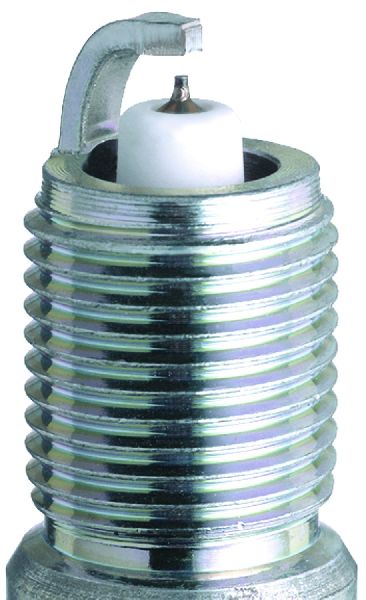
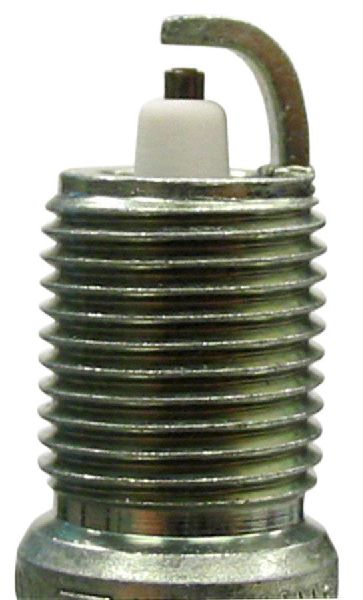
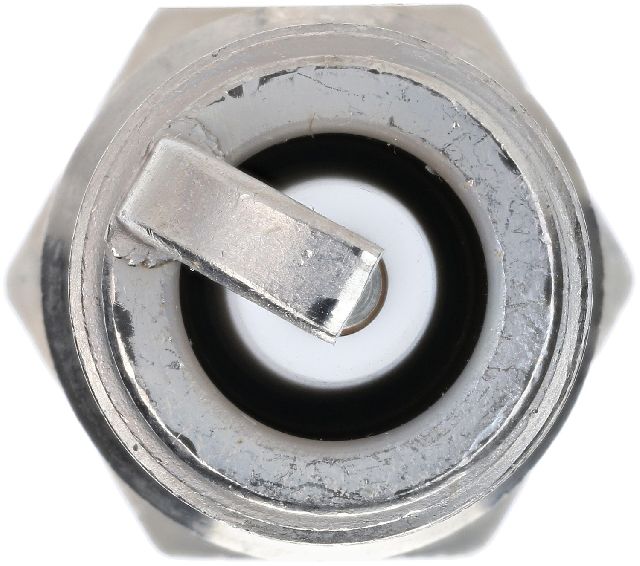
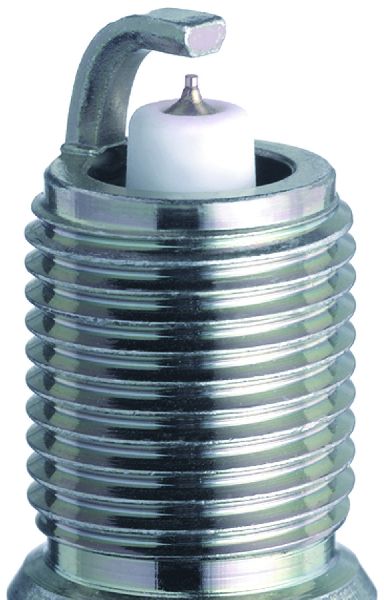
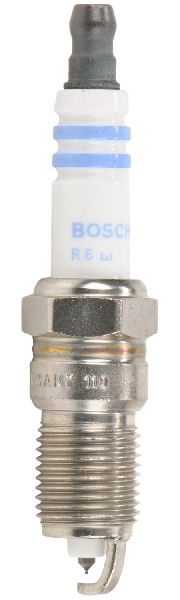
Est. part cost: $50-$120 - Worn Spark Plugs and/or Spark Plug Wires 🔴 High Probability → Shop Spark Plug These are standard maintenance items that wear out over time, leading to a weak or inconsistent spark. They are a primary cause of misfires on any gasoline engine and a common starting point for diagnosis.
How to confirm: Visually inspect spark plugs for wear (worn electrode), fouling (black, oily, or white deposits), or an incorrect gap. Inspect wires for cracks, burns, or corrosion on the terminals. Misfires that are more noticeable in wet weather can point to failing wires.
Typical fix: Replace all spark plugs and spark plug wires as a set. Use quality brands like ACDelco or NGK to avoid premature failure.
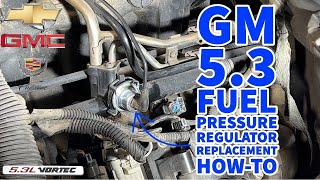
Est. part cost: $100-$200 - Faulty Fuel Pressure Regulator 🟡 Medium Probability → Shop Fuel Injection Pressure Regulator The diaphragm inside the regulator can rupture, allowing raw fuel to be sucked into the intake through the vacuum line. This creates a rich condition across all cylinders, causing misfires and potentially black smoke.
How to confirm: Remove the vacuum hose from the regulator (located on the fuel rail). If fuel drips out or the hose smells strongly of gasoline, the regulator is bad and must be replaced. 🎬 Watch: How to replace a faulty fuel pressure regulator.
Typical fix: Replace the fuel pressure regulator.
Est. part cost: $50-$80 - Weak Fuel Pump or Clogged Fuel Filter 🟡 Medium Probability → Shop Fuel Filter A failing pump or clogged filter will not supply adequate fuel pressure to the fuel rail, causing a lean condition across all cylinders and resulting in random misfires, especially under load.
How to confirm: Connect a fuel pressure gauge to the Schrader valve on the fuel rail. Pressure should be 55-62 PSI with the key on, engine off. Pressure that is low, drops significantly under load, or bleeds off quickly after the pump primes indicates a problem.
Typical fix: Replace the fuel filter first, as it is an inexpensive maintenance item located on the frame rail. If pressure is still low, the fuel pump module will likely need to be replaced.
Est. part cost: $20-$50 (filter), $200-$400 (pump) - Clogged or Restricted Catalytic Converter ⚪ Low Probability → Shop Catalytic Converter If a long-term misfire has been ignored, the catalytic converter can become clogged with unburnt fuel, creating excessive exhaust backpressure that chokes the engine and causes a severe loss of power.
How to confirm: A symptom is a severe lack of power, as if towing a heavy trailer. An infrared thermometer can be used to check temperatures; the outlet should be significantly hotter than the inlet on a working converter. A professional can perform an exhaust backpressure test. Temporarily removing the upstream oxygen sensor to create an exhaust leak may cause performance to improve, indicating a restriction.
Typical fix: Replace the clogged catalytic converter(s). This is always a result of another problem (like a persistent misfire), so the root cause must be fixed as well to prevent destroying the new converters.
Est. part cost: $300-$800+
Rare But Worth Checking
- Worn Camshaft Lobe: → Shop Engine Camshaft A GM Technical Service Bulletin (PIP4138R, later superseded by 19-NA-219) specifically calls this out as a potential cause for P0300 codes on this engine if other diagnostics fail. It is often accompanied by a persistent chirp, squeak, or tick noise that occurs at half of engine speed. This is a major mechanical repair requiring significant engine disassembly.
- Faulty Crankshaft Position Sensor (CKP): → Shop Engine Crankshaft Position Sensor The PCM uses the CKP sensor to detect misfires. An erratic signal from a failing sensor can cause the PCM to incorrectly report a P0300 code. After replacing the sensor, a 'Crankshaft Variation Relearn' procedure must be performed with a capable scan tool for the system to function correctly.
- Corroded or Loose Ground Wires: The GMT800 platform is known for having electrical issues caused by poor grounds. A corroded or loose ground for the ignition coil banks (G102 on the front driver's side of the block) or the main PCM ground (passenger side rear of the block) can cause weak spark and random misfires.
Diagnosis Steps
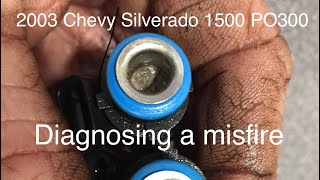
- Scan the PCM for any other trouble codes that could provide clues, such as P0171/P0174 (lean condition) or specific cylinder misfires (P0301-P0308).
- Check Live Data: Use a scanner to monitor short-term fuel trims (STFT) at idle. High positive numbers (e.g., +15% or more) that decrease when RPMs are raised strongly suggest a vacuum leak.
- Inspect the ignition system. Check all spark plugs for wear and proper gap, and inspect spark plug wires for damage or corrosion. Consider using an inline spark tester to confirm spark delivery to each cylinder.
- Test the fuel system. Check fuel pressure to ensure it is within the 55-62 PSI range with the key on, engine off. Check the fuel pressure regulator for any signs of fuel in the vacuum line.
- Check for vacuum leaks. The most common source is the intake manifold gaskets. A smoke test is the most effective method. A rough idle that appears only when the engine is warm is a classic sign of this issue.
- Clean the Mass Airflow (MAF) sensor with a dedicated cleaner and inspect the air filter to ensure it's not clogged.
- Inspect engine grounds. Check the main ground straps, especially the one for the ignition coils on the front driver's side of the engine block, for corrosion or looseness.
- If all other tests fail, investigate potential mechanical engine issues, such as low compression or a worn camshaft lobe as indicated by TSB PIP4138R.
Parts You'll Likely Need
- Intake Manifold Gasket Set
(OEM #89017852)— This is the most frequent cause of P0300 on this platform due to the original plastic-framed design failing. The upgraded metal-frame design is a permanent fix.
Trusted brands: Fel-Pro (MS98016T is the popular metal-frame upgrade), ACDelco
OEM price range: $70-$120
Aftermarket price range: $50-$100 - Spark Plugs
(OEM #41-962)— Worn or fouled spark plugs are a fundamental cause of misfires and are a standard tune-up item. They are an inexpensive and logical first step in diagnosis.
Trusted brands: ACDelco, NGK
OEM price range: $6-$12 per plug
Aftermarket price range: $4-$8 per plug - Spark Plug Wire Set
(OEM #9748GG)— Wires degrade over time, increasing resistance and causing a weak spark. They should be replaced with the spark plugs as a set for a complete tune-up.
Trusted brands: ACDelco, NGK
OEM price range: $60-$100
Aftermarket price range: $40-$80 - Fuel Pressure Regulator
(OEM #19245530)— A common failure item where the internal diaphragm leaks, sending raw fuel into the intake and causing a rich misfire condition.
Trusted brands: ACDelco, Delphi, Standard Motor Products
OEM price range: $60-$90
Aftermarket price range: $40-$70
Related Codes That Often Appear With This One
- P0171 and P0174 — These 'System Too Lean' codes for Bank 1 and Bank 2 frequently accompany P0300 when the cause is a large vacuum leak, such as from the intake manifold gaskets, which allows unmetered air into the engine.
- P0301-P0308 — A random misfire (P0300) may eventually be isolated by the PCM to one or more specific cylinders, triggering these codes and helping to narrow down the diagnosis to a specific plug, wire, coil, or injector.
Technical Service Bulletins (TSBs) & Recalls
- PIP4138R / 19-NA-219: Addresses a potential cause of P0300-P0308 being a worn camshaft lobe and/or lifter roller, often accompanied by a distinct chirp or tick noise.
- PIP5628E: Preliminary information bulletin for technicians to gather specific data when diagnosing misfire codes P0300-P0308.
- 02-06-04-023A: An older TSB for rough idle and lean codes (P0171, P0174) on Gen III V8s caused by leaking intake gaskets, recommending an updated gasket design.
Platform-Specific Known Issues
- Intake Gasket Leaks When Hot: A very common scenario for the 6.0L V8 is an engine that idles perfectly when cold but develops a rough idle and throws a P0300 code once it reaches operating temperature. This happens because the engine computer switches from a rich 'open-loop' mode to a leaner 'closed-loop' mode, and the vacuum leak from the bad gaskets creates a mixture that is too lean to fire properly.
- Crankshaft Variation Relearn Requirement: → Shop Engine Crankshaft If the Crankshaft Position Sensor (CKP) is replaced during diagnosis, it is critical to perform a 'crankshaft variation relearn' procedure using a GM-compatible scan tool. Failure to do so can cause the PCM to continue to misinterpret crankshaft speed and falsely report a P0300 code.
- Corroded Electrical Grounds: These trucks are known to develop corrosion on key electrical grounding points. A bad ground for the ignition coils or PCM can introduce electrical noise or insufficient voltage, leading to a weak spark on multiple cylinders and triggering a P0300. Checking and cleaning grounds is a valid diagnostic step.
Helpful Videos

We Have This Part in Stock


The information in this article is provided for general reference and educational purposes only. Vehicle specifications, procedures, and part compatibility can vary by production date, trim level, and region. Always consult your vehicle's factory service manual and verify part numbers before purchasing or performing repairs. Safety-critical components such as airbags, seat belts, and braking systems should be installed by a qualified professional.
- Gmc SIERRA 1500 HD:
- 🧭 Diagnostic Flowchart
- 🎬 Helpful Videos
- 🛍️ Shop This Part
- What's Unique About the 2001-2003 Gmc SIERRA 1500 HD
- Symptoms You May Notice
- Most Likely Causes
- Rare But Worth Checking
- Diagnosis Steps
- Parts You'll Likely Need
- Related Codes That Often Appear With This One
- Technical Service Bulletins (TSBs) & Recalls
- Platform-Specific Known Issues
- 🎟️ Get 5% Off