

P0300 on 2000-2007 GMC Sierra 2500: Random Misfire Causes & Fixes
Code P0300 on a 2000-2007 GMC Sierra 2500 indicates a random or multiple cylinder misfire. The most common causes are vacuum leaks from aged intake manifold gaskets, a failing fuel pump, or basic ignition system wear like old spark plugs and wires. Start by checking fuel pressure and inspecting for vacuum leaks, especially around the intake manifold.
- P0300 means multiple cylinders are misfiring, so look for a problem that affects the whole engine.
- On a 2000-2007 Sierra 2500, the most likely culprits are a vacuum leak from the intake manifold gaskets or a failing fuel pump.
- Always check fuel pressure and perform a smoke test before replacing expensive components like ignition coils.
- If the check engine light is flashing, stop driving to prevent catastrophic damage to your catalytic converters.
- Be aware of TSBs for this truck, which point to rare but serious issues like worn camshafts or crossed wiring after a repair.
What's Unique About the 2000-2007 Gmc SIERRA 2500
On the GMT800 platform Sierra 2500s with Vortec V8 engines, P0300 is frequently caused by vacuum leaks from failing intake manifold gaskets. 🎬 Watch: Step-by-step guide to replacing your intake manifold gaskets. These engines are also susceptible to fuel pump failures that lead to low fuel pressure across all cylinders. More severe, though less common, issues documented in manufacturer bulletins include worn camshaft lobes (TSB #PIP4138R), which can cause a misfire with a related chirp or tick noise, and crossed injector wiring after repairs (TSB #PIP5169), making diagnosis more complex than on other vehicles.
Diagnostic Flowchart
Tap your situation to follow the diagnostic path that matches what you're seeing on this vehicle.
Generation note: This range covers two generations. The 2000-2006 models (and 2007 "Classic") are the first generation (GMT800). The new second-generation (GMT900) was introduced in 2007. While many causes are similar, be aware of which model you have when sourcing parts, as engine and electronic components can differ. The intake gasket design, for example, is a well-known failure point on GMT800 trucks. A key change occurred around 2004 when GM switched from a return-style fuel system to a returnless system, which can affect diagnosis and parts.
Symptoms You May Notice
- Flashing or solid Check Engine Light
- Rough or shaking idle, sometimes smoothing out as the engine warms up
- Engine hesitation or stumbling during acceleration
- Noticeable loss of power, especially under load
- Reduced fuel economy
- Difficulty starting the engine
- Strong smell of gasoline from the exhaust due to unburnt fuel
- Replacing only one spark plug or coil when the root cause is a systemic issue like a vacuum leak or low fuel pressure.
- Replacing oxygen sensors. While a bad O2 sensor can contribute to fuel trim issues, it's more often a symptom of the misfire (detecting unburnt oxygen) rather than the root cause. However, a failed O2 sensor can get stuck reading lean, causing the PCM to dump excess fuel and create a rich misfire.
- Assuming a flashing CEL is always a bad catalytic converter. The flashing light is a warning that the current misfire *will* damage the converter if not fixed, but the converter itself is not usually the initial cause.
Most Likely Causes
- Vacuum Leak (Intake Manifold Gaskets) 🔴 High Probability The original plastic-carrier intake manifold gaskets on Vortec V8s are notorious for degrading from heat and exposure to ethanol in fuel, causing cracks and vacuum leaks. This introduces unmetered air, creating a lean condition (often with P0171/P0174) and random misfires.
How to confirm: Perform a smoke test on the intake system. Alternatively, carefully spray brake cleaner or an unlit propane torch around the intake manifold gasket sealing surfaces with the engine running; a change in engine idle indicates a leak. A scan tool showing high positive short-term fuel trims (STFT) at idle that decrease with RPM is also a strong indicator.
Typical fix: Replace the intake manifold gaskets with an upgraded steel-carrier set, like the Fel-Pro MS98016T.
Est. part cost: $50-$150 - Low Fuel Pressure 🔴 High Probability The in-tank fuel pumps on these trucks can weaken with age, failing to supply the required pressure (55-62 PSI for Vortec engines) for proper fuel atomization, affecting all cylinders simultaneously.
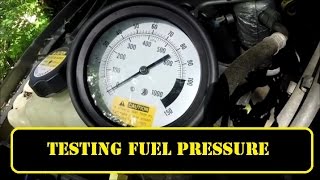
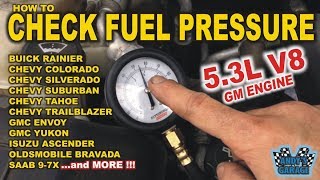
How to confirm: Connect a fuel pressure gauge to the Schrader valve on the fuel rail. Check the pressure with the key on, engine off, and while the engine is running. Pressure should be steady and within the 55-62 PSI specification. A drop in pressure under load is a clear sign of a weak pump.
Typical fix: Replace the fuel pump module and the fuel filter. It's often recommended to use a quality OEM replacement like ACDelco or Delphi to ensure longevity.
Est. part cost: $150-$400 - Worn Ignition Components 🟡 Medium Probability High mileage can lead to worn-out spark plugs, degraded spark plug wires, or failing ignition coils, causing a weak or inconsistent spark across multiple cylinders. Wires can develop high resistance or arc to ground.
How to confirm: Inspect spark plugs for wear, fouling, or incorrect gap. Test spark plug wires for resistance (spec is typically under 8,000 ohms per foot). Use a scan tool to monitor misfire data while swapping coils to see if a cylinder-specific misfire follows a particular coil.
Typical fix: Replace spark plugs and spark plug wires as a set. Replace ignition coils if found to be faulty. Use quality parts like ACDelco plugs and wires.
Est. part cost: $100-$300 - Dirty or Clogged Fuel Injectors 🟡 Medium Probability → Shop Fuel Injector Fuel deposits can build up over time, causing poor spray patterns or restricting flow to multiple cylinders. This can sometimes be triggered by a tank of bad or contaminated fuel.
How to confirm: A professional fuel injector balance test is the most accurate method. A simpler approach is to use a quality in-tank fuel system cleaner (like Sea Foam or Chevron Techron) and observe if symptoms improve. You can also use a multimeter to check the resistance of each injector to ensure they are within spec.
Typical fix: Perform a professional fuel injector cleaning service or replace the faulty injectors.
Est. part cost: $50-$100 per injector - Corroded Ignition Coil Ground Wire ⚪ Low Probability → Shop Ignition Coil A specific, well-documented issue on GMT800 trucks involves the main ground wire for an entire bank of ignition coils corroding and breaking. This ground is often a black wire bolted to the front of the driver's side cylinder head. When it fails, it kills spark to all four cylinders on that bank, causing a severe misfire that logs a P0300.
How to confirm: Visually inspect the ground wire connections for the ignition coils, especially the ring terminal bolted to the front of the driver's side cylinder head. Check for green corrosion or a broken wire inside the terminal. Wiggling this wire may cause the engine to stall or run worse, confirming a bad connection.
Typical fix: Cut off the old terminal, clean the wire and the grounding point on the head with a wire brush, and crimp on a new ring terminal.
Est. part cost: $5-$10
Rare But Worth Checking
- Worn Camshaft Lobes: → Shop Engine Camshaft Mentioned in TSB #PIP4138R, this is a serious mechanical issue. A worn cam lobe prevents the corresponding valves from opening fully, causing a persistent misfire on one or more cylinders, often accompanied by a distinct ticking or chirping noise. This should be investigated by a professional if common fuel and ignition causes are ruled out.
- Clogged Catalytic Converter: → Shop Catalytic Converter If the catalytic converter becomes internally clogged or melted from a previous rich condition or misfire, it can create excessive exhaust backpressure. This chokes the engine, preventing it from breathing properly and can lead to a random misfire, sluggish performance, and a glowing hot converter after running.
- Crankshaft Position Sensor (CKP) Variation Relearn: → Shop Engine Crankshaft Position Sensor After certain repairs like replacing the sensor, timing chain, or harmonic balancer, the PCM may need to relearn the minor variations of the crankshaft reluctor wheel. A high-end scan tool is required to perform this procedure, which can resolve an otherwise phantom P0300 code.
- Crossed Fuel Injector Connectors: → Shop Fuel Injector TSB #PIP5169 specifically warns that after engine repairs, the injector connectors for cylinders 5 and 7, or 6 and 8, can be accidentally swapped due to their proximity. This will cause immediate and confusing misfires.
Diagnosis Steps
- Check for any other stored DTCs. Codes like P0171/P0174 strongly suggest a vacuum leak.
- Use a scan tool to view live data. Check Short Term Fuel Trims (STFT) at idle vs. 2500 RPM. High positive trims at idle that normalize at higher RPM point to a vacuum leak. Also, monitor the misfire counter for each cylinder.
- Test fuel pressure using a mechanical gauge. It should be stable and within the 55-62 PSI range for most Vortec engines.
- Perform a smoke test to check for vacuum leaks, paying close attention to the intake manifold gaskets, PCV hoses, and brake booster hose.
- Inspect the entire ignition system: spark plugs, wires, and coils. Look for signs of wear, carbon tracking, or corrosion. Check wire resistance.
- Inspect the ignition coil ground wires on the cylinder heads, particularly the one on the front of the driver's side head, for corrosion or breakage.
- If the above steps do not reveal the cause, consider more advanced diagnostics like a compression test, checking for a clogged catalytic converter via a backpressure test, or investigating for worn camshaft lobes as per TSB #PIP4138R.
Parts You'll Likely Need
- Intake Manifold Gasket Set
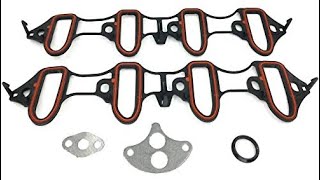
(OEM #ACDelco 89017825)— This is the most frequent cause of vacuum leaks on these engines, leading directly to a lean condition and random misfires. The original plastic design fails with age.
Trusted brands: Fel-Pro (P/N: MS98016T - a popular steel-carrier upgrade), ACDelco
OEM price range: $80-$150
Aftermarket price range: $40-$90 - Fuel Pump Module Assembly
(OEM #ACDelco MU1613 (example, varies by specific model))— A weak fuel pump is a very common failure item that causes low fuel pressure and affects all cylinders simultaneously.
Trusted brands: ACDelco, Delphi (often the OEM supplier)
OEM price range: $250-$400
Aftermarket price range: $150-$250 - Spark Plugs and Wires Set
(OEM #ACDelco 41-162 (plugs), ACDelco 748UU (wires) (examples))— Basic maintenance items that wear out over time, causing weak spark and misfires. Wires are especially prone to failure.
Trusted brands: ACDelco, NGK
OEM price range: $100-$180
Aftermarket price range: $60-$120
Related Codes That Often Appear With This One
- P0171 / P0174 — These codes indicate "System Too Lean" on Bank 1 and Bank 2, respectively. They frequently appear with P0300 when the cause is a major vacuum leak from the intake manifold gaskets, as unmetered air is leaning out the air/fuel mixture for the entire engine.
- P0301 - P0308 — If the random misfire begins to occur more frequently on specific cylinders, the PCM may also log cylinder-specific misfire codes in addition to P0300. This can sometimes help narrow down the search.
- P0420 / P0430 — These codes for "Catalyst System Efficiency Below Threshold" can appear if the misfire has been happening for a long time, dumping unburnt fuel into the exhaust and damaging the catalytic converters.
Technical Service Bulletins (TSBs) & Recalls
- TSB #PIP4138R: Discusses engine misfires (P0300-P0308) that may be accompanied by a chirp, squeak, or tick noise. Points technicians to check for worn camshaft lobes or lifter issues if standard diagnostics fail.
- TSB #PIP5169: Warns technicians to ensure fuel injector connectors for cylinders 5 & 7 and 6 & 8 are not crossed after engine repairs, as this will cause a P0300 code.
- TSB #19-NA-219: Supersedes PIP4138R, providing updated diagnostic information for misfires and engine noises related to camshafts, lifters (including AFM lifters), sticking valves, and broken valve springs.
- TSB #20-NA-098: Provides guidelines for fuel injector replacement when diagnosing various DTCs including P0300, P0171/P0174, and others, suggesting injectors are a common cause.
Platform-Specific Known Issues
- Ignition Coil Bank Ground Failure: → Shop Ignition Coil A recurring problem on GMT800 trucks is the corrosion of the ground wire terminal for one of the two ignition coil banks. This is typically a black wire bolted to the front of the driver's side cylinder head. When this connection fails, all four cylinders on that bank lose spark, causing a very rough idle and an immediate P0300 code. The fix is simple—cleaning the connection and replacing the ring terminal—but it is often misdiagnosed.
- Upgraded Intake Manifold Gaskets: → Shop Engine Intake Manifold The OEM plastic-carrier intake manifold gaskets are a known weak point. The aftermarket has responded with significantly improved designs, such as the Fel-Pro MS98016T, which uses a steel carrier and more durable rubber seals. This is considered a permanent fix and a highly recommended upgrade whenever the intake manifold is removed.
Mechanic-Grade Diagnostic Values
- Fuel Pressure (Key On, Engine Off) — expected: 55-62 PSI. Failure: Pressure below 55 PSI suggests a weak fuel pump or leak. Pressure that bleeds off quickly can indicate a bad check valve or leaking injector.
- Fuel Injector Resistance — expected: 11-14 Ohms (typical for high-impedance injectors). Failure: A reading far outside this range indicates a failed injector coil.
- Short-Term Fuel Trim (STFT) at Idle (with vacuum leak) — expected: Highly positive (+10% to +25%). Failure: High positive fuel trims at idle that decrease significantly when RPMs are raised to ~2500 RPM strongly indicate an unmetered air/vacuum leak.
- Ignition Coil Ground Circuit — expected: Near 0 Ohms resistance to battery negative. Failure: High resistance or an open circuit on the ground wire (often at the cylinder head) will prevent an entire bank of coils from firing.
Scan Tool Commands That Help
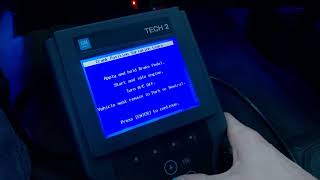
- GM Tech2 / High-End Aftermarket: Crankshaft Position Variation Learn — Required after replacing the crankshaft position sensor, harmonic balancer, timing chain, or PCM. Failure to perform this relearn can leave a persistent P0300 or set a P1336 code. The procedure involves applying the brake and accelerating to a specific RPM (e.g., ~4000 RPM) until the fuel cuts off, allowing the PCM to learn the profile of the reluctor wheel.
- GM Tech2 / High-End Aftermarket: Fuel Injector Balance Test — To identify a clogged or weak fuel injector that isn't flowing correctly. The tool commands each injector to fire for a set duration, and the resulting pressure drop is measured. All cylinders should have a similar pressure drop.
- GM Tech2 / High-End Aftermarket: Misfire History Counters — To see which specific cylinders have the highest number of misfires, even if a cylinder-specific code (P0301-P0308) has not been set. This can help focus diagnosis on a particular area even when the only code is P0300.
Wiring & Ground Locations
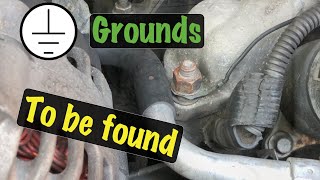
- Ignition Coil Ground (Bank 1) — A black wire with a ring terminal bolted to the front of the driver's side cylinder head. This is a very common failure point.. This single ground is for all four ignition coils on Bank 1 (cylinders 1, 3, 5, 7). If it corrodes and fails, the entire bank loses spark, causing a severe misfire that logs as P0300.
- G102 — Located at the left rear of the engine.. This is the ground for the 8 ignition coils on some models/years. A poor connection here can cause random misfires.
- G103 / G104 — G103 is often near the thermostat housing; G104 is on the rear of the passenger's side cylinder head.. These grounds are critical for the PCM (ECM) and various sensors. A poor connection at G103 or G104 can cause erratic sensor readings and lead to a P0300 code.
- Crankshaft Position Sensor (CKP) Connector — Located on the lower side of the engine block, near the starter.. The PCM uses the CKP sensor to detect misfires by monitoring crankshaft speed variations. A loose or corroded connector here can cause a false P0300. The Yellow wire is typically the signal wire, and Purple is the low reference.
Real Owner Repair Stories
- YouTube channel 'The Car Doctor' (2005 Chevy Silverado 5.3L) — Rough running, black smoke from tailpipe, P0300 code only.
❌ Tried (didn't work) Initial diagnosis did not point to a specific component.
✅ What actually fixed it Live data showed the Bank 1 O2 sensor voltage was fixed at 0.6V while Bank 2 was switching normally. Misfire counters were high on all odd-numbered cylinders (Bank 1). The Bank 2 O2 sensor was found to be physically loose in the exhaust pipe. After tightening the loose sensor and replacing the faulty Bank 1 sensor, the misfires were resolved. - YouTube channel 'G Automotive and More' (GMC Sierra 5.3L) — Check engine light flashing, running very badly, P0300 code.
❌ Tried (didn't work) Swapping ignition coils did not resolve the issue.
✅ What actually fixed it The technician found no spark on the entire driver's side bank (cylinders 1, 3, 5, 7). The cause was a broken and corroded ground wire for the Bank 1 ignition coils, located at the front of the driver's side cylinder head. Repairing the ring terminal on the ground wire restored spark and fixed the misfire. - YouTube channel 'Burnin Gas' (GMC Sierra 2500HD with 8.1L V8) — Flashing engine light, truck would barely move, horrible cold starts, strong gas smell.
❌ Tried (didn't work) The owner suspected a clogged fuel injector based on past experience.
✅ What actually fixed it The owner unplugged the front oxygen sensor (Bank 1, Sensor 1) and the truck immediately ran perfectly. The O2 sensor had failed in a way that it was reading lean, causing the computer to command a massively rich fuel mixture, which fouled the plugs and caused the misfire. Replacing the faulty O2 sensor was the final fix.
"I Checked Everything" — The Actual Cause
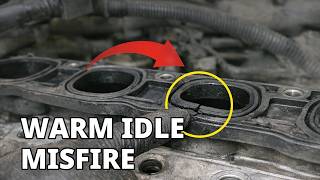
- In some cases, a P0300 that appears only when the engine is warm is caused by intake manifold gaskets that only leak when hot. The aluminum heads and intake manifold expand at different rates, opening a gap in the hardened gasket that isn't present when cold.
- A faulty upstream oxygen sensor can fail by sending a constant 'lean' signal to the PCM. The PCM responds by dumping excessive fuel into one bank, causing a rich misfire across multiple cylinders that can be mistaken for a fuel delivery or ignition problem. Unplugging the suspect O2 sensor will force the system into open loop; if the misfire disappears, the sensor is the likely cause.
OEM Part Supersession History
Original plastic-frame intake manifold gaskets→Fel-Pro MS98016T (or equivalent)— The original plastic carrier becomes brittle from heat cycles and cracks, while the rubber seals degrade from exposure to modern fuel with ethanol.
Heads up: The Fel-Pro MS98016T is an upgraded design featuring a rigid aluminized steel carrier that resists cracking and has improved, more durable molded rubber seals.
Model Year Variations Within This Range
- 2000-2003 (approx.): These earlier models typically used a return-style fuel system with a vacuum-actuated fuel pressure regulator on the fuel rail. This system has an external, frame-mounted fuel filter.
- 2004-2007 (approx.): GM switched to a returnless fuel system. The fuel pressure regulator is located inside the fuel tank as part of the fuel pump module. These systems typically do not have a serviceable external fuel filter. This change affects fuel pressure diagnosis and part replacement.
- 2003+: Some 2003 and later models began using drive-by-wire (electronic throttle control) instead of a physical throttle cable. This introduces different sensors (APP sensor at the pedal) and wiring that can be a factor in diagnosis.
Helpful Videos
We Have This Part in Stock

The information in this article is provided for general reference and educational purposes only. Vehicle specifications, procedures, and part compatibility can vary by production date, trim level, and region. Always consult your vehicle's factory service manual and verify part numbers before purchasing or performing repairs. Safety-critical components such as airbags, seat belts, and braking systems should be installed by a qualified professional.
- Gmc SIERRA 2500:
- 🧭 Diagnostic Flowchart
- 🎬 Helpful Videos
- 🛍️ Shop This Part
- What's Unique About the 2000-2007 Gmc SIERRA 2500
- Symptoms You May Notice
- Most Likely Causes
- Rare But Worth Checking
- Diagnosis Steps
- Parts You'll Likely Need
- Related Codes That Often Appear With This One
- Technical Service Bulletins (TSBs) & Recalls
- Platform-Specific Known Issues
- Mechanic-Grade Diagnostic Values
- Scan Tool Commands That Help
- Wiring & Ground Locations
- Real Owner Repair Stories
- "I Checked Everything" — The Actual Cause
- OEM Part Supersession History
- Model Year Variations Within This Range
- 🎟️ Get 5% Off