

P0300 on 2002-2006 GMC Sierra Denali: Random Misfire Causes and Fixes
A P0300 code on a 2002-2006 GMC Sierra Denali indicates a random engine misfire. The most common causes are worn spark plugs and wires, or a vacuum leak from failed intake manifold gaskets. Less common but notable issues include a weak fuel pump, bad engine grounds, or a worn camshaft.
- P0300 on a 2002-2006 Sierra Denali is most often caused by a vacuum leak from failed intake manifold gaskets or a basic ignition system tune-up (plugs and wires).
- Diagnose a vacuum leak by checking fuel trims with a scanner or by carefully spraying brake cleaner near the intake manifold seam while the engine is idling.
- Do not immediately replace expensive components like sensors; start with the most common and affordable fixes first.
- If the check engine light is flashing, pull over and shut off the engine to prevent expensive damage to the catalytic converters.
- Be aware that in rare cases, this code can indicate a serious internal engine problem like a worn camshaft, as noted in a GM TSB.
What's Unique About the 2002-2006 Gmc SIERRA DENALI
The 2002-2006 Sierra Denali is part of the GMT800 platform, typically equipped with a robust 6.0L V8 engine (LQ4 or LQ9). While it suffers from common misfire causes like any vehicle, this platform is particularly known for vacuum leaks caused by deteriorating intake manifold gaskets. The original plastic-carrier gaskets become brittle from heat cycles and exposure to ethanol in fuel, leading to cracks and seal failure. Furthermore, official GM Technical Service Bulletins (TSBs) point to a more severe, though less common, cause for P0300 on these trucks: worn camshaft lobes, which is a significant mechanical issue to be aware of if basic fixes fail.
Diagnostic Flowchart
Tap your situation to follow the diagnostic path that matches what you're seeing on this vehicle.
Symptoms You May Notice
- Rough or shaky idle
- Flashing or solid Check Engine Light
- Hesitation or stumbling during acceleration
- Reduced engine power
- Poor fuel economy
- Difficulty starting the engine
- Fuel smell from the exhaust
- Replacing oxygen sensors. While a bad O2 sensor can contribute to fuel trim issues, it's more often a symptom of the misfire, not the root cause. However, a failing front O2 sensor can sometimes cause an entire bank to misfire.
- Replacing only one spark plug or coil when the issue is systemic (like a vacuum leak or fuel pressure).
- Replacing the Mass Airflow (MAF) sensor without proper diagnosis. While a dirty MAF can cause issues, it should be cleaned and tested before replacement.
Most Likely Causes
- Leaking Intake Manifold Gaskets 🔴 High Probability → Shop Engine Intake Manifold The original gaskets on the GM 4.8L, 5.3L, and 6.0L V8 engines are made of a plastic/rubber material that can become hard and brittle over time, losing its seal and creating a significant vacuum leak. This is a very common failure on the GMT800 platform, often triggering P0171 and P0174 lean codes alongside the P0300.
How to confirm: With the engine running, spray short bursts of brake cleaner or unlit propane around the seam where the intake manifold meets the cylinder heads. An increase in engine RPM or a smoothing of the idle indicates the location of the leak. A scan tool showing high positive short-term fuel trims (STFT) at idle that decrease with RPM also points to a vacuum leak.
Typical fix: Replace the intake manifold gaskets. Many owners and mechanics recommend upgrading to the Fel-Pro PermaDryPlus gasket set (part number MS98016T), which uses a more durable metal carrier instead of the OEM plastic one. It is also wise to replace the two knock sensors and harness located under the intake manifold at the same time.
Est. part cost: $40-$90 - Worn Spark Plugs and/or Spark Plug Wires 🔴 High Probability → Shop Spark Plug These are standard maintenance items. The original wires are prone to becoming brittle from engine heat, and the ends can break off when being removed. Misfires that are worse in damp or wet weather often point to failing wires.
How to confirm: Visually inspect the spark plugs for wear, fouling, or incorrect gap. Inspect wires for cracks, melting, or arcing (white dust). A misfire that occurs mostly when cold or in wet weather is a strong indicator of bad plugs or wires.
Typical fix: Replace all spark plugs and spark plug wires as a set. GM issued a TSB updating the recommended spark plug from a 0.060" gap to a 0.040" gap. Use ACDelco Iridium (41-162) or Platinum (41-962) plugs gapped to 0.040". Use dielectric grease inside the boots of the new wires.
Est. part cost: $80-$200 - Low Fuel Pressure 🟡 Medium Probability The fuel pump is a common failure item on these trucks as they age, leading to insufficient pressure to all injectors, especially under load.
How to confirm: Connect a fuel pressure gauge to the Schrader valve on the fuel rail. With the key on and engine off (KOEO), pressure should be 55-62 PSI. While running, it should hold steady. If pressure is below 50 PSI, the pump is likely weak.
Typical fix: Replace the fuel pump and fuel filter. On 1999-2003 models, the fuel filter is external along the frame rail; on 2004+ models, it is integrated into the fuel pump assembly inside the tank. Recommended brands include ACDelco and Delphi.
Est. part cost: $150-$400 - Bad Engine Ground(s) 🟡 Medium Probability These trucks are known for having critical ground connections that corrode or break over time, causing intermittent and random electrical issues, including misfires.
How to confirm: Inspect the main ground straps. Key locations include the ground for the ignition coil harnesses (often a black wire on a stud on the front driver's side of the cylinder head), and grounds on the frame rail under the driver's door. A visual inspection may reveal a broken or corroded wire. Providing a temporary jumper ground to the coil harness may resolve the misfire, confirming a bad ground.
Typical fix: Remove, clean, and securely reattach the ground connections. If the wire or eyelet is broken, it must be replaced.
Est. part cost: $5-$20 - Faulty Ignition Coil(s) 🟡 Medium Probability → Shop Ignition Coil While a single failed coil usually triggers a specific cylinder code (e.g., P0301), multiple weak or intermittently failing coils can contribute to a random P0300 code, especially if a shared ground is compromised.
How to confirm: Use a scan tool to monitor misfire data on each cylinder. Swap a suspected faulty coil with a known good one from another cylinder and see if the misfire count follows the coil.
Typical fix: Replace the faulty ignition coil(s).
Est. part cost: $30-$70 per coil - Dirty or Clogged Fuel Injectors ⚪ Low Probability → Shop Fuel Injector Fuel deposits can build up over time, causing poor spray patterns and insufficient fuel delivery to multiple cylinders. This can sometimes be initiated by a tank of bad or contaminated fuel.
How to confirm: Use a scan tool and an infrared thermometer to check exhaust manifold temperatures at each cylinder port. A cold cylinder may indicate a clogged injector. You can also listen to each injector with a mechanic's stethoscope to ensure it is clicking.
Typical fix: First, try a high-quality fuel system cleaner (e.g., Techron, Seafoam). If that fails, the injectors may need to be professionally cleaned or replaced.
Est. part cost: $40-$100 per injector
Rare But Worth Checking
- Worn Camshaft Lobe(s): → Shop Engine Camshaft A GM Technical Service Bulletin (PIP4138L, and its successors) specifically calls out checking for worn camshaft lobes if other diagnostics for a P0300 code do not isolate the cause. This is a major mechanical repair but is a documented issue for these engines, often accompanied by a distinct chirp or squeak.
- Clogged Catalytic Converters: → Shop Catalytic Converter A restriction in the exhaust can create backpressure, leading to misfires. This is often a consequence of long-term misfires but can also be a cause. Check the temperature before and after the catalytic converter; the outlet should be significantly hotter than the inlet. A large drop in power at high RPM is a key symptom.
- Faulty Crankshaft Position Sensor (CKP): → Shop Engine Crankshaft Position Sensor An erratic CKP sensor can provide incorrect data to the ECM, disrupting ignition and fuel timing and causing random misfires. Sometimes a 'Crankshaft Position Sensor Relearn' procedure with a high-end scan tool can resolve issues after other work has been performed.
Diagnosis Steps
- Read all stored fault codes with an OBD-II scanner. Note any other codes besides P0300, especially P0171/P0174.
- Using a scanner with live data, monitor short-term fuel trims (STFT) at idle and at 2500 RPM. High positive trims at idle that normalize at higher RPM strongly suggest a vacuum leak.
- Inspect the entire ignition system. Check for worn spark plugs, and look for cracks, burns, or corrosion on spark plug wires and boots. Ensure plugs have the correct 0.040" gap.
- Test for vacuum leaks. Use a smoke machine or carefully spray carb cleaner/unlit propane around the intake manifold gaskets, vacuum hoses, and PCV valve.
- Check fuel pressure using a gauge connected to the fuel rail's Schrader valve. Ensure it meets the 55-62 PSI specification at KOEO and while running.
- Inspect and clean critical engine grounds, especially the coil pack grounds on the cylinder heads and the frame ground under the driver's door.
- Test ignition coils by swapping a coil from a frequently misfiring cylinder (identified via scan tool data) with a known good coil.
- If the above steps do not reveal the cause, investigate less common issues like clogged catalytic converters (temperature check), fuel injector function, and crankshaft position sensor signals.
- As a final step based on TSB PIP4138L, a mechanical inspection for a worn camshaft may be necessary if all other possibilities are exhausted.
Parts You'll Likely Need
- Intake Manifold Gasket Set — This is one of the most frequent causes of P0300 on this platform due to the original plastic gaskets deteriorating and causing a large vacuum leak.
Trusted brands: ACDelco, Fel-Pro (MS98016T is a popular metal-carrier upgrade)
OEM price range: $50-$90
Aftermarket price range: $30-$70 - Spark Plugs
(OEM #ACDelco 41-962 (Platinum) or 41-162 (Iridium))— Worn spark plugs are a primary cause of misfires. A TSB updated the gap specification to 0.040 inches for better performance.
Trusted brands: ACDelco, NGK
OEM price range: $6-$12 per plug
Aftermarket price range: $4-$10 per plug - Spark Plug Wire Set
(OEM #ACDelco 9748HH)— Wires degrade from heat, causing weak or intermittent spark, especially in damp conditions.
Trusted brands: ACDelco, NGK/NTK
OEM price range: $60-$100
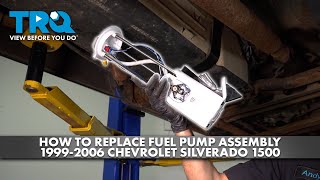
Aftermarket price range: $40-$80 - Fuel Pump Module Assembly — A weak fuel pump is a common aging-related failure that starves the engine for fuel, causing random misfires under load.
Trusted brands: ACDelco, Delphi
OEM price range: $250-$400
Aftermarket price range: $150-$300
Related Codes That Often Appear With This One
- P0171 — System Too Lean (Bank 1) - Often appears with P0300 when a vacuum leak from the intake manifold gaskets is the cause.
- P0174 — System Too Lean (Bank 2) - Often appears with P0300 when a vacuum leak from the intake manifold gaskets is the cause.
- P0301-P0308 — Specific cylinder misfire codes may appear alongside P0300 if the random misfire begins to occur more frequently on certain cylinders.
Technical Service Bulletins (TSBs) & Recalls
- PIP4138L: Points to worn camshaft lobes as a potential cause for P0300-P0308 when other diagnostics fail.
- PIP5628E: Preliminary information request for diagnosing P0300-P0308 codes.
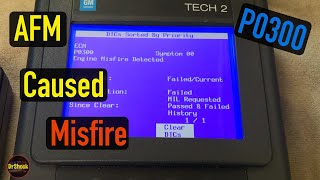
- 15-06-01-002 series: Discusses engine misfire (P0300) caused by collapsed or stuck Active Fuel Management (AFM) lifters, which is more common on later generation engines but the diagnostic principles can apply.
Platform-Specific Known Issues
- Intake manifold gaskets are a known failure point, causing a vacuum leak that is most noticeable as a rough idle when the engine is warm.
- Per TSB #PIP4138L, a worn camshaft lobe can be an underlying mechanical cause for P0300 codes that are difficult to diagnose.
- The original spark plug wires can become very brittle, and the metal connector often separates from the wire and remains stuck on the spark plug during removal.
Helpful Videos
We Have This Part in Stock


The information in this article is provided for general reference and educational purposes only. Vehicle specifications, procedures, and part compatibility can vary by production date, trim level, and region. Always consult your vehicle's factory service manual and verify part numbers before purchasing or performing repairs. Safety-critical components such as airbags, seat belts, and braking systems should be installed by a qualified professional.
- Gmc SIERRA DENALI:
- 🧭 Diagnostic Flowchart
- 🎬 Helpful Videos
- 🛍️ Shop This Part
- What's Unique About the 2002-2006 Gmc SIERRA DENALI
- Symptoms You May Notice
- Most Likely Causes
- Rare But Worth Checking
- Diagnosis Steps
- Parts You'll Likely Need
- Related Codes That Often Appear With This One
- Technical Service Bulletins (TSBs) & Recalls
- Platform-Specific Known Issues
- 🎟️ Get 5% Off