

P0300 on 2000-2002 GMC Sonoma: Random Misfire Causes and Fixes
For the popular 4.3L V6, a P0300 code is most often caused by a worn distributor cap and rotor, a relatively inexpensive and straightforward DIY fix. On 2.2L 4-cylinder models, suspect the ignition control module and coil pack assembly.
- For a P0300 on a 2000-2002 GMC Sonoma, the diagnostic path depends heavily on which engine you have: the 4.3L V6 or the 2.2L 4-cylinder.
- Owners of the 4.3L V6 should almost always inspect the distributor cap and rotor first, as it is the most common and an inexpensive fix.
- Owners of the 2.2L 4-cylinder should suspect a failing ignition control module, especially if the misfire worsens as the engine warms up.
- Do not ignore a flashing check engine light. This signals a severe misfire that can quickly damage your expensive catalytic converter.
- Basic tune-up components like spark plugs and wires are a frequent cause and should be part of regular maintenance to prevent this code.
What's Unique About the 2000-2002 Gmc SONOMA
The 2000-2002 Sonoma was available with two common engines, and the cause of a P0300 code is often engine-specific. The 4.3L V6 is well-known for ignition issues related to its distributor cap and rotor, as well as fuel delivery problems from a leaking internal fuel pressure regulator. The distributor's location at the rear of the engine bay can trap moisture, accelerating corrosion. The 2.2L 4-cylinder, on the other hand, uses a distributorless ignition system where the ignition control module (ICM) is a frequent failure point, often due to heat stress.
Diagnostic Flowchart
Tap your situation to follow the diagnostic path that matches what you're seeing on this vehicle.
Symptoms You May Notice
- Rough or shaky idle
- Engine hesitation or stumbling during acceleration
- Flashing Check Engine Light
- Noticeable loss of engine power
- Reduced fuel economy
- Difficulty starting the engine
- Smell of raw fuel from the exhaust
- Replacing oxygen sensors. A misfire will cause poor O2 sensor readings, but the sensor is almost never the root cause of a P0300 code.
- Replacing the catalytic converter. A misfire can damage a catalytic converter, but a clogged converter is a symptom, not the cause of the misfire itself. A clogged converter will, however, cause a lack of power and can contribute to misfire-like symptoms.
Most Likely Causes
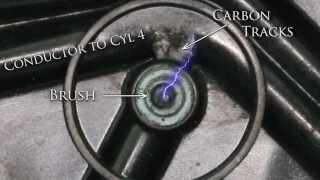
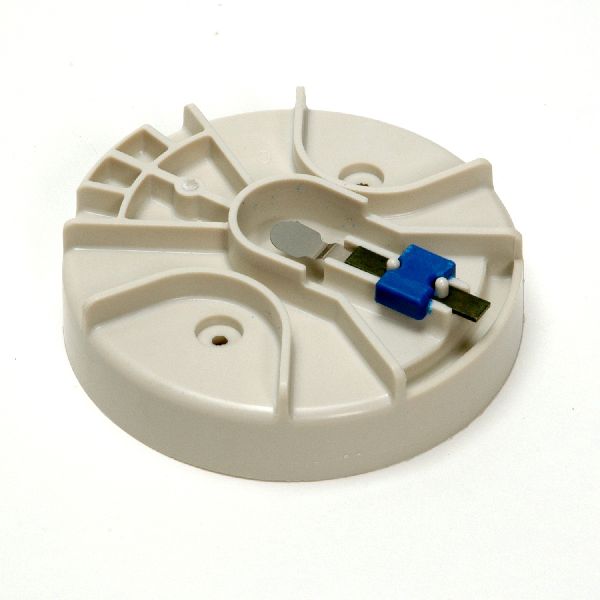
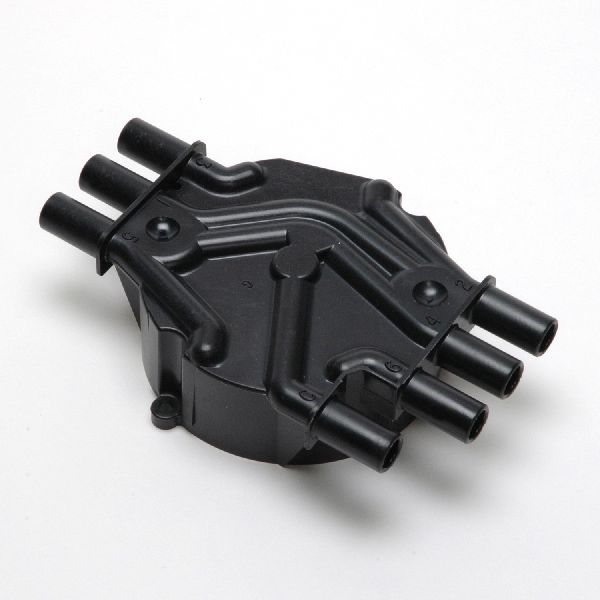
- Worn Distributor Cap and Rotor (4.3L V6 only) 🔴 High Probability The distributor is located at the back of the engine where it can be susceptible to moisture and wear. Carbon tracking and corrosion on the terminals are extremely common causes of random misfires on this engine. The plastic housing can also develop cracks, allowing moisture inside. Many owners recommend using caps with brass terminals over aluminum for better corrosion resistance.
How to confirm: Remove the distributor cap and inspect the inside terminals and the rotor tip for white or green corrosion, black carbon tracks, or physical wear. A worn distributor gear can also cause erratic timing and misfires.
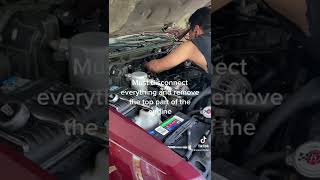
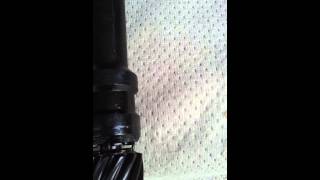
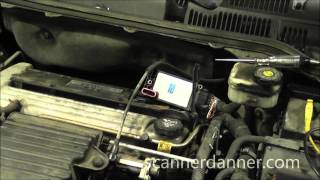
Typical fix: Replace the distributor cap and rotor as a set. 🎬 Watch: How to diagnose a bad distributor causing random misfires. This is a common maintenance item. Applying a thin layer of dielectric grease to the terminals can help prevent future corrosion.
Est. part cost: $25-$75 - Failed Ignition Control Module (ICM) and/or Coil Packs (2.2L I4 only) 🔴 High Probability → Shop Ignition Coil The ICM is prone to failure from heat stress. As it fails, it provides an inconsistent spark, leading to misfires that often worsen as the engine warms up. The module is responsible for firing the coils, and when it fails, it can stop sending the signal to one or more coils.
How to confirm: Some auto parts stores can bench test the module. Diagnosis can also involve swapping a known good coil with a suspect one to see if the misfire follows the coil, or using a spark tester to check for spark directly from the coil packs when symptoms are present.
Typical fix: Replace the ignition control module and/or the faulty coil pack assembly. It's recommended to apply new thermal paste to the back of the new module to help dissipate heat.
Est. part cost: $70-$150 - Worn Spark Plugs and/or Spark Plug Wires 🔴 High Probability → Shop Spark Plug These are standard maintenance items. Worn plugs with excessive gaps or fouled electrodes, and wires with high resistance or cracked insulation, are a primary cause of weak spark and misfires. Owners often recommend using the OEM ACDelco plugs (e.g., 41-993 for the 4.3L) as these engines can be sensitive to plug types.
How to confirm: Inspect spark plugs for wear, fouling, or incorrect gap. Inspect wires for physical damage, and test their resistance with a multimeter. A visual inspection of the plugs can reveal rich (black, sooty) or lean (white, ashy) conditions.
Typical fix: Replace spark plugs and spark plug wires as a set. Use quality brands like ACDelco or NGK.
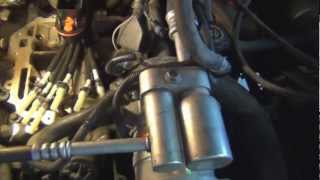
Est. part cost: $50-$120 - Leaking Fuel Pressure Regulator (4.3L V6 only) 🟡 Medium Probability → Shop Fuel Injection Pressure Regulator The fuel pressure regulator is located inside the upper intake plenum. Its internal diaphragm can tear, allowing raw fuel to be sucked into the engine through its vacuum port, causing a rich condition and random misfires. This is a very common failure on the 4.3L Vortec engine.
How to confirm: After removing the upper intake plenum, check for a strong smell of gasoline or evidence of washed-clean areas where fuel has been leaking. If fuel is present in the vacuum line nipple of the regulator, it has failed.
Typical fix: Replace the fuel pressure regulator. This requires removing the upper intake manifold. It is often done at the same time as a spider injector replacement.
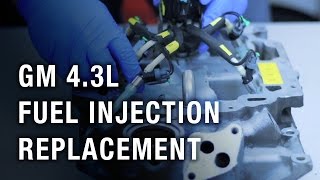
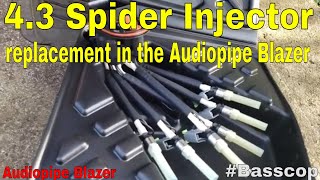
Est. part cost: $50-$100 - Failed Central Port Fuel Injection (CPI) 'Spider' Assembly (4.3L V6) 🟡 Medium Probability → Shop Fuel Injector The original injection system uses a central injector body with tubes and poppet valves extending to each cylinder. These are known to leak, clog, and cause misfires. An updated Multi-Port Fuel Injection (MPFI) spider assembly is available and is a highly recommended upgrade to solve this common issue.
How to confirm: Diagnosis often involves a fuel injector balance test using a professional scan tool. Visual inspection after removing the upper intake may show signs of fuel washing or leaking from the injector nozzles or fuel lines.
Typical fix: Replace the entire spider injector assembly. Upgrading from the original CPI to the newer MPFI style is the preferred, most reliable repair.
Est. part cost: $250-$400 for an MPFI upgrade kit - Clogged Fuel Injectors 🟡 Medium Probability → Shop Fuel Injector Over time, deposits can restrict fuel flow from injectors, leading to a lean misfire. A GM Technical Service Bulletin (#03-06-04-030F) was issued for this issue on many models, including the 2000 Sonoma, recommending a specific cleaning procedure.
How to confirm: Diagnosis often involves a fuel injector balance test using a professional scan tool like the GM-recommended AFIT (Active Fuel Injector Tester). Sometimes, running a quality fuel system cleaner can show improvement.
Typical fix: Professional on-vehicle fuel injector cleaning using a product like GM Top Engine Cleaner, or replacement of restricted injectors.
Est. part cost: $50-$200 per injector - Vacuum Leak ⚪ Low Probability Aging rubber vacuum hoses can crack and leak, and intake manifold gaskets can fail, introducing unmetered air into the engine and leaning out the air/fuel mixture, which can cause misfires.
How to confirm: Visually inspect all vacuum lines for cracks. A smoke test is the most effective way to find the source of a vacuum leak. Spraying carburetor cleaner around suspected leak areas and listening for a change in engine idle is another common method.
Typical fix: Replace the cracked or broken vacuum hose(s) or faulty gasket.
Est. part cost: $5-$30 for hoses, $100-$300 for intake gaskets
Rare But Worth Checking
- Low Fuel Pressure: A weak fuel pump or clogged fuel filter can starve the engine for fuel, causing lean misfires across all cylinders. Fuel pressure should be checked early in the diagnosis. For the 4.3L, pressure should be 60-66 psi with the key on, engine off, and should not drop more than 5 psi in 10 minutes.
- Leaking Lower Intake Manifold Gaskets (4.3L V6): → Shop Engine Intake Manifold These gaskets are known to fail and leak coolant internally into the cylinders, which can cause a misfire, especially on cold starts. Look for unexplained coolant loss, a milky appearance on the oil cap, or white smoke from the exhaust.
- Low Engine Compression: Internal engine mechanical issues like a worn camshaft, broken valve springs, or bad piston rings can cause a loss of compression, leading to a misfire. This is less common but should be checked if ignition and fuel systems are confirmed to be good. A running compression test can be more revealing than a static one.
- Worn Distributor Gear (4.3L V6): The gear at the bottom of the distributor that meshes with the camshaft can wear out over time. This creates slop and causes erratic spark timing, leading to a P0300 code that can be difficult to diagnose. If replacing the distributor, ensure the new one has a quality gear.
Diagnosis Steps
- Read all stored trouble codes with an OBD-II scanner. Note any other codes that are present, as they can provide crucial clues (e.g., P0171, P0172).
- Check for a flashing check engine light, which indicates a severe, catalyst-damaging misfire.
- For 4.3L V6: Visually inspect the distributor cap and rotor for wear, corrosion, or carbon tracking. This is the most common starting point.
- For 2.2L I4: Test for spark at all four cylinders using a spark tester. If spark is weak or intermittent, suspect the ignition control module or coil packs.
- Inspect all spark plugs and spark plug wires. Look for signs of wear, damage, or fouling. Replace if they are due for service or if their condition is questionable.
- Test fuel pressure. Connect a fuel pressure gauge to the service port on the fuel rail. For the 4.3L engine, the pressure should be 60-66 psi with the key on, engine off.
Parts You'll Likely Need
- Distributor Cap and Rotor Kit (4.3L V6)
(OEM #ACDelco D328A (Cap), ACDelco D465 (Rotor))— This is the most frequent cause of P0300 on the 4.3L V6 engine due to high rates of wear and corrosion.
Trusted brands: ACDelco, Delphi, MSD
OEM price range: $40-$80
Aftermarket price range: $25-$50 - Ignition Control Module (2.2L I4)
(OEM #ACDelco D1976F (GM #19178835))— A very common failure point on the 2.2L engine, leading to intermittent, heat-related misfires.
Trusted brands: ACDelco, Standard Motor Products
OEM price range: $65-$130
Aftermarket price range: $40-$80 - Fuel Pressure Regulator (4.3L V6)
(OEM #ACDelco 19210686)— The internal diaphragm fails, leaking raw fuel into the intake manifold and causing a rich misfire.
Trusted brands: ACDelco, Delphi, Standard Motor Products
OEM price range: $60-$110
Aftermarket price range: $40-$70
Related Codes That Often Appear With This One
- P0301-P0306 — If the random misfire becomes isolated or more frequent on specific cylinders, the PCM may also log cylinder-specific misfire codes.
- P0171/P0174 — These 'System Too Lean' codes often accompany P0300 when the cause is a vacuum leak or a fuel delivery issue like a weak fuel pump or clogged injectors.
- P0172/P0175 — These 'System Too Rich' codes can appear with P0300 if the cause is a leaking fuel pressure regulator dumping excess fuel into the intake.
Technical Service Bulletins (TSBs) & Recalls
- 03-06-04-030F: Multiple Driveability Symptoms Due to Clogged Fuel Injectors. This TSB, which applies to the 2000 Sonoma among many other GM vehicles, details the issue of restricted injectors and recommends diagnosis with an AFIT tester and an on-vehicle cleaning procedure.
- 03-06-04-041: Poor Engine Performance/Service Engine Soon Light On, DTC P0300. This bulletin addresses internal corrosion in the distributor on 4.3L engines due to clogged vent screens. It instructs technicians to inspect the cap, rotor, and shaft for corrosion and replace parts as needed.
Platform-Specific Known Issues
- On the 4.3L V6, the Central Port Injection (CPI) 'spider' assembly is a known weak point that can cause fuel leaks and misfires.
- A Technical Service Bulletin (TSB #03-06-04-030) was issued regarding clogged fuel injectors causing misfires on 2000-2003 models with the 4.3L engine, among others.
- Heat-related failure of the ignition control module is a classic, well-documented issue on the 2.2L 4-cylinder engine.
Mechanic-Grade Diagnostic Values
- Fuel Pressure (4.3L V6) — expected: 60-66 PSI with key on, engine off (KOEO).. Failure: Pressure below 60 PSI indicates a weak pump or clogged filter. Pressure that drops more than 5 PSI in 10 minutes indicates a leak, possibly from the regulator or spider assembly.
- Camshaft Retard Offset (4.3L V6 with a capable scan tool) — expected: 0° +/- 2°. Failure: A value outside this range indicates incorrect distributor installation/timing. This can be caused by a worn distributor gear or improper installation after a repair. It will cause a P0300 without a specific cylinder misfire.
- Misfire Counters (Live Data on Scan Tool) — expected: Zero or very few counts at idle on all cylinders.. Failure: Even without a specific P030x code, the live data may show one or two cylinders with a much higher misfire count, pointing the diagnosis in that direction.
Hidden / Shadow Codes Worth Checking
- Mode $06 Misfire Data: Even if a P0300 is the only code set, many advanced scan tools can access Mode $06 data, which contains raw misfire counts for each cylinder from the last drive cycle. This can reveal which cylinder(s) are the primary offenders before they are bad enough to set a specific P0301-P0306 code. (see via An advanced OBD-II scan tool with Mode $06 capability (e.g., BlueDriver, Autel, Snap-on).)
Scan Tool Commands That Help
- Tech 2 or other advanced bidirectional scanner: Crankshaft Variation Relearn (CASE Relearn) — This procedure is required after replacing the crankshaft position sensor, PCM, or performing major engine work. The PCM learns the minute variations of the crankshaft reluctor wheel to accurately detect misfires. Failure to perform this relearn can itself cause a false P0300 code.
- Tech 2 or other advanced bidirectional scanner: Injector Balance Test — This command sequentially fires each injector while monitoring fuel pressure drop. It is the definitive way to identify a clogged or weak injector that might be causing a random misfire, especially on the 4.3L V6 with its spider injection system.
Wiring & Ground Locations
- PCM/ECM Grounds — On these trucks, the primary PCM grounds are black wires that should be secured to the engine block or cylinder head. A common location is a stud on the back of the cylinder head or a bolt on the intake manifold.. A poor PCM ground can cause erratic sensor readings and incorrect calculations for spark and fuel, leading to phantom misfires that are impossible to trace to a single component. The PCM case itself is not the ground; the specific ground wires in the harness must have a clean, tight connection to the engine block.
- G103 — Located on the cowl at the left rear of the engine compartment, often near the brake booster.. This is a major body and data ground. While not a direct engine control ground, a poor connection here can cause issues with the Data Link Connector (DLC) and communication between modules, complicating diagnosis.
- Engine to Frame Ground Strap — A braided copper strap typically running from the back of the engine (often near the transmission) to the vehicle's frame.. Ensures the entire vehicle shares a common ground potential. A corroded or broken strap can cause the ignition system to seek a ground path through other components, leading to weak spark and misfires.
Real Owner Repair Stories
- Blazer Forum user (GMC Jimmy with 4.3L V6) — P0300 code, misfiring while cruising uphill or under hard acceleration.
❌ Tried (didn't work) Replacing spark plugs with non-ACDelco brand
✅ What actually fixed it The final fix was replacing the distributor. The user noted that a worn distributor gear and incorrect camshaft retard are extremely common causes for this specific symptom on the 4.3L V6. - YouTube user comment (Vehicle with 4.3L V6) — Persistent P0300 code after many attempted fixes.
❌ Tried (didn't work) Tune-up parts, Fuel pressure checks
✅ What actually fixed it The problem was a burnt wire in the pigtail connector for the camshaft position sensor (located inside the distributor). Moving the wires around temporarily made a connection and fixed the misfire, indicating the wiring itself was the failure point. The user noted that new camshaft sensors often come with a replacement pigtail for this reason.
OEM Part Supersession History
Various (Original CSFI 'Spider' Injector)→ACDelco 217-3028 (also listed as GM 12568332, 19210688, 89060439); Delphi FJ10565— The original Central Sequential Fuel Injection (CSFI) unit used failure-prone poppet valves. The upgraded Multi-Port Fuel Injection (MPFI) unit replaces these with small, reliable electronic injectors at the end of each line for vastly improved reliability and performance.
Heads up: When replacing, it is critical to install the MPFI upgrade kit, not another original-style CSFI unit. Aftermarket versions are available, but quality can vary; ACDelco or Delphi are the most recommended brands.
Helpful Videos
We Have This Part in Stock


The information in this article is provided for general reference and educational purposes only. Vehicle specifications, procedures, and part compatibility can vary by production date, trim level, and region. Always consult your vehicle's factory service manual and verify part numbers before purchasing or performing repairs. Safety-critical components such as airbags, seat belts, and braking systems should be installed by a qualified professional.
- Gmc SONOMA:
- 🧭 Diagnostic Flowchart
- 🎬 Helpful Videos
- 🛍️ Shop This Part
- What's Unique About the 2000-2002 Gmc SONOMA
- Symptoms You May Notice
- Most Likely Causes
- Rare But Worth Checking
- Diagnosis Steps
- Parts You'll Likely Need
- Related Codes That Often Appear With This One
- Technical Service Bulletins (TSBs) & Recalls
- Platform-Specific Known Issues
- Mechanic-Grade Diagnostic Values
- Hidden / Shadow Codes Worth Checking
- Scan Tool Commands That Help
- Wiring & Ground Locations
- Real Owner Repair Stories
- OEM Part Supersession History
- 🎟️ Get 5% Off