

P0300 on 2008-2015 GMC Yukon: Random Misfire Causes & Fixes
Code P0300 on a 2008-2015 GMC Yukon indicates random cylinder misfires. The most common causes are worn spark plugs (ACDelco 41-110 or 41-162) and faulty ignition coils. On higher-mileage 5.3L and 6.2L engines, failed Active Fuel Management (AFM) lifters are a significant and more serious potential cause, often heralded by a ticking noise and confirmed by TSBs like 15-06-01-002F.
- P0300 means multiple cylinders are misfiring, not just one.
- Start your diagnosis with the cheapest and most common fixes: spark plugs, wires, and ignition coils.
- On 5.3L and 6.2L engines, be highly suspicious of a failed AFM lifter, especially if you hear an engine tick or have higher mileage.
- A flashing check engine light is serious. Pull over to prevent costly catalytic converter damage.
- A vacuum leak from a bad intake manifold gasket is another very common cause on these trucks.
What's Unique About the 2008-2015 Gmc YUKON

The GMC Yukon from this era, particularly models with the 5.3L and 6.2L V8 engines, uses an Active Fuel Management (AFM) system. This system deactivates cylinders to save fuel but is a well-documented source of P0300 codes. The AFM lifters can become stuck or collapse, leading to persistent misfires that are often mistaken for ignition or fuel problems. This mechanical issue, often requiring replacement of the lifters, guides, and sometimes the camshaft, is a key differentiator for this platform. Many owners opt for an 'AFM Delete' kit to permanently solve the problem. Furthermore, the 2015 model year's switch to direct-injected Gen V engines introduces unique issues like carbon buildup on intake valves.
Diagnostic Flowchart

Tap your situation to follow the diagnostic path that matches what you're seeing on this vehicle.
Generation note: This range covers two Yukon generations: the third generation (GMT900, 2008-2014) and the first year of the fourth generation (K2UG, 2015). The GMT900 models use Gen IV V8 engines (e.g., 5.3L LC9), while the 2015 K2UG models introduced the new Gen V EcoTec3 engines (e.g., 5.3L L83). While many causes are similar, the AFM lifter issues are a known problem across both generations as documented in GM TSBs. The 2015 Gen V engines are also susceptible to carbon buildup on intake valves due to direct injection, a problem not seen on the port-injected Gen IV engines.
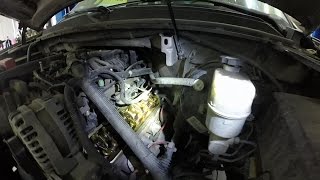
🎬 See how to diagnose misfires on 2015 Gen V engines.Symptoms You May Notice
- Rough or shaking idle.
- Hesitation or stumbling during acceleration.
- Flashing or solid Check Engine Light.
- Reduced engine power.
- Poor fuel economy.
- Engine sounds uneven or rough.
- Audible ticking or tapping noise from the engine, especially on startup, indicating a possible lifter issue.
- Exhaust smells like rotten eggs, indicating unburnt fuel reaching the catalytic converter.
- Replacing oxygen (O2) sensors. O2 sensors will report the results of a misfire (like a lean or rich condition), but they are rarely the root cause of the P0300 code itself.
- Replacing only one spark plug or coil when a full tune-up is needed. Misfires often indicate that other ignition components are near the end of their service life.
- Replacing the Mass Airflow (MAF) sensor without proper diagnosis. While a dirty MAF can cause issues, it should be cleaned first and only replaced if cleaning doesn't resolve the issue and diagnostic data points to a fault.
Most Likely Causes

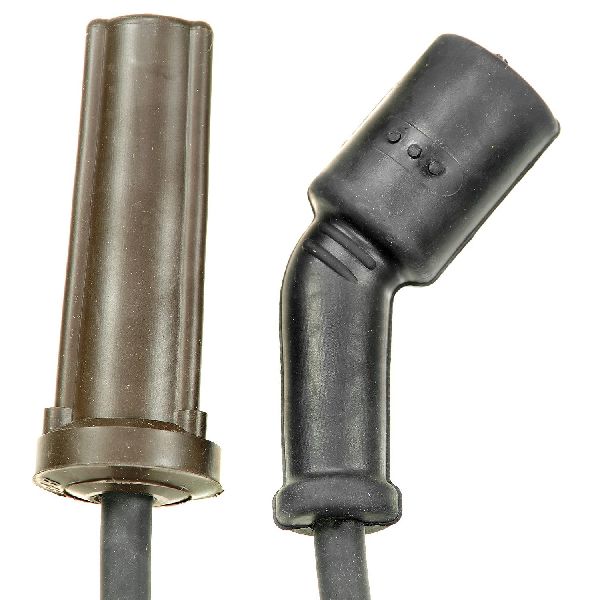
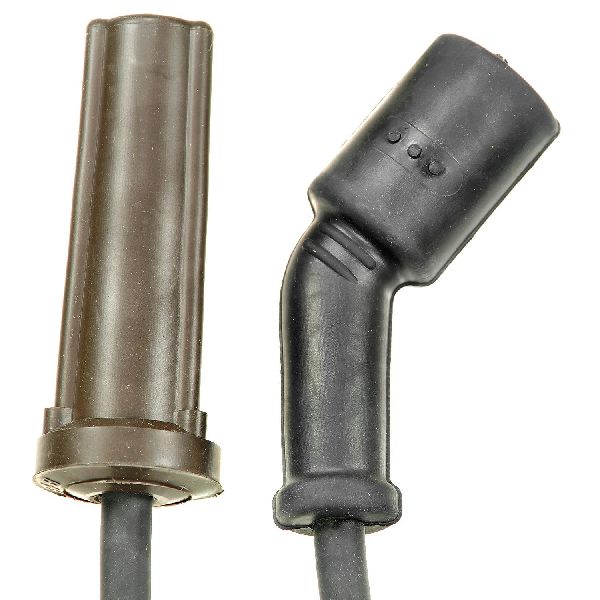
- Worn Spark Plugs or Defective Wires 🔴 High Probability → Shop Spark Plug Spark plugs are a regular maintenance item. The factory-recommended ACDelco Iridium plugs have a long service life but will eventually wear, causing a weak spark. Wires can degrade from heat and age.
How to confirm: Inspect the spark plugs for wear (worn electrode), fouling (black soot or wet with oil/fuel), or incorrect gap. Check wires for cracks, burns, or looseness. A broken center insulator on a spark plug is also a known issue.
Typical fix: Replace all eight spark plugs and spark plug wires as a set. Use of quality OEM parts is highly recommended.
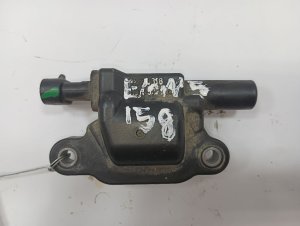
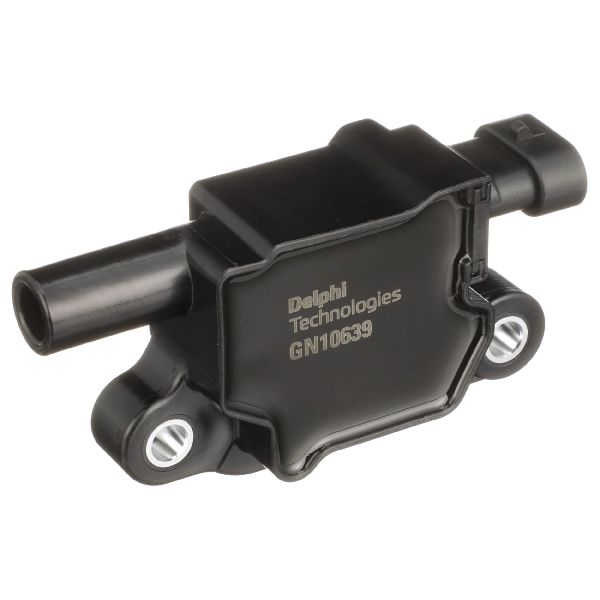
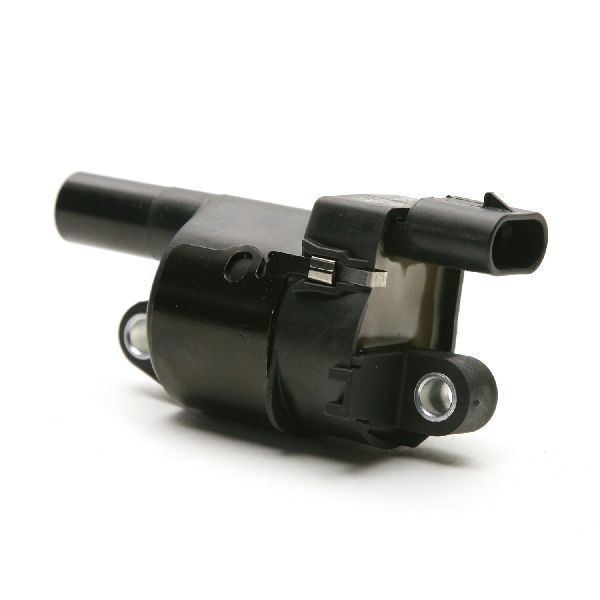
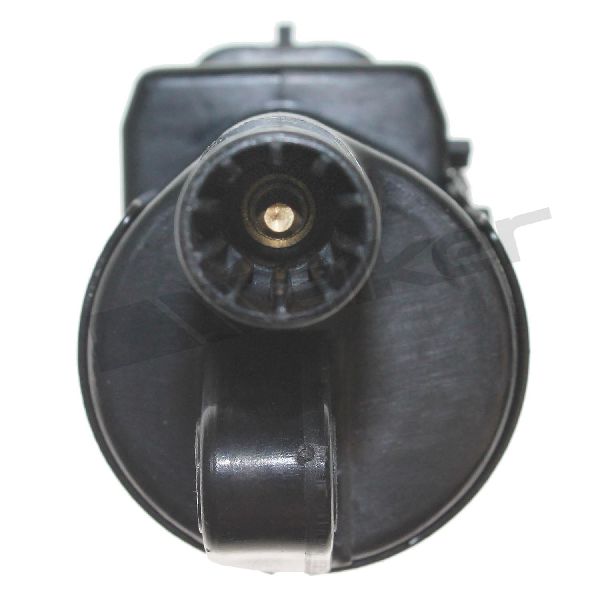
Est. part cost: $60-$150 - Failing Ignition Coil(s) 🔴 High Probability → Shop Ignition Coil Each cylinder has its own coil-on-plug. Constant heat cycles and vibration cause them to fail over time, resulting in no spark.
How to confirm: Use a scan tool with live data (Mode $06) to identify which cylinder is misfiring. Swap the ignition coil from the misfiring cylinder with a known good one. If the misfire code (e.g., P0304) moves to the new cylinder, the coil is bad.
Typical fix: Replace the faulty ignition coil. It is often wise to replace the corresponding spark plug at the same time.
Est. part cost: $40-$80 per coil - Active Fuel Management (AFM) Lifter Failure 🟡 Medium Probability → Shop Engine Valve Lifter The 5.3L and 6.2L engines feature AFM, where special lifters deactivate cylinders. These lifters are a notorious failure point, often due to oil pressure/aeration issues, and can become stuck, collapsed, or even spin in their bores, causing a constant misfire and potentially destroying the camshaft.
How to confirm: A distinct ticking or tapping noise from the top of the engine is a primary symptom. A mechanic can remove the valve cover to observe rocker arm movement. A compression test will show low or zero compression on the affected cylinder. GM TSB PIP4568P directly links P0300 to failed AFM lifters.
Typical fix: This is a major repair. The minimum is replacing the failed AFM lifters, lifter guides, and the Valve Lifter Oil Manifold (VLOM). If the camshaft is damaged, it must also be replaced. Many owners and shops install a full AFM/DOD delete kit from brands like Texas Speed or Brian Tooley Racing to prevent future failures. This requires an ECM tune to disable AFM.
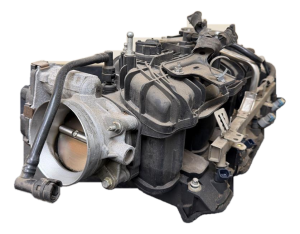
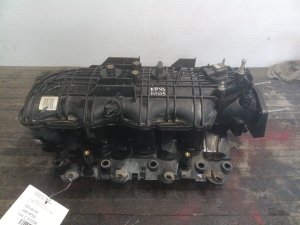
Est. part cost: $400-$1500 for parts - Vacuum Leak (Intake Manifold Gasket) 🟡 Medium Probability The plastic intake manifold is sealed to the cylinder heads with rubber gaskets that are known to dry out, harden, and crack over time. This allows unmetered air into the engine, which leans out the air/fuel mixture and causes misfires, often accompanied by P0171 and P0174 codes.
How to confirm: A professional can perform a smoke test, which involves feeding smoke into the intake system to see where it leaks out. Spraying brake cleaner around the gasket area with the engine running may cause a change in idle speed, indicating a leak. A hissing sound near the intake manifold is also a clue.
Typical fix: Replace the intake manifold gaskets. This is a labor-intensive job but can be done by a skilled DIYer.
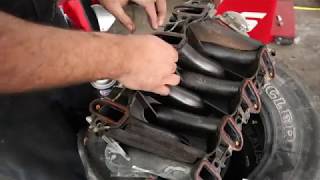
Est. part cost: $50-$120 for gaskets, but labor costs can be high ($313-$459). 🎬 Watch: How to replace intake manifold gaskets yourself.
- Dirty or Clogged Fuel Injectors ⚪ Low Probability → Shop Fuel Injector Fuel deposits can build up over time, restricting fuel flow and causing a lean condition and misfire. This is a more common issue on the direct-injected 2015 models.
How to confirm: Can be tested by checking fuel trims with a scan tool or performing a fuel injector balance test. A professional cleaning and flow test is the most definitive method.
Typical fix: Run a quality fuel system cleaner (e.g., Techron) through the tank. If the problem persists, the specific injector(s) may need to be professionally cleaned or replaced.
Est. part cost: $50-$100 per injector
Rare But Worth Checking
- Low Fuel Pressure: A failing fuel pump or clogged fuel filter can affect all cylinders, leading to a P0300 code. Check fuel pressure at the fuel rail to confirm; it should be within the manufacturer's specified range (typically 50-60 PSI at idle).
- Clogged Catalytic Converter: → Shop Catalytic Converter A clogged catalytic converter can create excessive backpressure, leading to random misfires, especially under load. This is often accompanied by a significant loss of power and a 'rotten egg' smell from the exhaust.
- Faulty Crankshaft Position Sensor: → Shop Engine Crankshaft Position Sensor A failing crankshaft position sensor can send erratic signals to the ECM, disrupting ignition timing and causing random misfires that jump between cylinders. This is often accompanied by a P0335 code and may require a crankshaft variation relearn procedure after replacement.
Diagnosis Steps
- Check for any other stored trouble codes with an OBD-II scanner. Pay close attention to cylinder-specific misfires (P0301-P0308) or lean codes (P0171, P0174).
- Use a scan tool with live data to monitor misfire counts for each cylinder using Mode $06. This can help narrow down the problem even if only a P0300 is present.
- Perform a visual inspection of the engine bay. Look for disconnected vacuum hoses, damaged wiring, signs of oil leaks around the valve covers, or coolant leaks near the intake manifold.
- Inspect and test the ignition system. Start with the spark plugs and wires. If a specific cylinder is misfiring, swap the ignition coil with an adjacent cylinder to see if the misfire follows the coil.
- If a vacuum leak is suspected, perform a smoke test to find the source. Pay close attention to the intake manifold gaskets, which are a very common failure point.
- Check fuel pressure at the fuel rail to rule out a weak fuel pump or clogged filter. Pressure should be stable and within spec (typically 50-60 PSI).
- If ignition and fuel systems check out, especially on a 5.3L or 6.2L engine with higher mileage or a ticking noise, investigate the AFM system for a collapsed or stuck lifter per TSB PIP4568P. This may require a compression test and professional assistance.
Parts You'll Likely Need
- Spark Plugs
(OEM #ACDelco 41-162 (or 41-110))— Worn spark plugs are a primary cause of misfires and are a standard maintenance item.
Trusted brands: ACDelco, NGK
OEM price range: $8-$15 per plug - Ignition Coils
(OEM #ACDelco D585)— Coil-on-plug units are a common failure item due to heat and vibration, leading to a lack of spark.
Trusted brands: ACDelco, Delphi, NGK
OEM price range: $40-$80 per coil - Intake Manifold Gasket Set — These gaskets are known to fail, causing vacuum leaks and lean misfires.
Trusted brands: Fel-Pro, ACDelco
OEM price range: $50-$120 - AFM/DOD Delete Kit — For vehicles with failed AFM lifters, this kit provides a permanent solution by replacing the failure-prone components with standard lifters, a new valley cover, and other required parts.
Trusted brands: Texas Speed & Performance, Brian Tooley Racing (BTR)
OEM price range: $400-$800 for a basic kit
Related Codes That Often Appear With This One
- P0301-P0308 — If the random misfire becomes consistent in one cylinder, the ECM will store a specific code (e.g., P0304 for cylinder 4) alongside P0300.
- P0171 / P0174 — These codes mean "System Too Lean" on Bank 1 and Bank 2, respectively. They often appear with P0300 when a vacuum leak, such as a bad intake manifold gasket, is the cause.
- P050D — This code for "Rough Idle Off Idle" is mentioned in TSBs #PIP5628G and #PIP5498B in conjunction with misfire codes, suggesting a complex diagnostic path that may involve internal engine components like AFM lifters or even coolant intrusion.
Technical Service Bulletins (TSBs) & Recalls
- Addresses engine misfire/tick noise with DTC P0300, identifying the cause as a mechanically collapsed or stuck AFM lifter, potentially due to internal pin damage from oil aeration. It advises inspecting the camshaft for damage and replacing the lifters and potentially the Valve Lifter Oil Manifold (VLOM).
- For 2015-2019 models, this TSB guides technicians to inspect for poor terminal tension at the ignition coil power feed and the X2 connector of the underhood fuse block (UBEC) when a P0300 code is present.
- Provides a diagnostic template for technicians to follow when dealing with misfire codes P0300-P0308 and/or P050D, emphasizing the use of GDS2 scan tools and PicoScope for advanced diagnostics like relative compression tests.
- Concerns a P0300 and P050D code set on a cold start, possibly with white smoke or a coolant smell from the exhaust, pointing towards potential engine cooling system issues affecting combustion.
Platform-Specific Known Issues

- Intake Valve Carbon Buildup (2015+ EcoTec3 Engines): The 2015 model year introduced the Gen V EcoTec3 engines (5.3L L83, 6.2L L86) with direct injection. Unlike port injection, direct injection does not spray fuel over the intake valves, so they are not cleaned by fuel detergents. This can lead to significant carbon buildup on the intake valves over time, which can disrupt airflow into the cylinders and cause a P0300 misfire. This issue is specific to the 2015 models in this range and requires manual cleaning (e.g., walnut blasting) to resolve.
- Valve Cover & PCV System Failure: → Shop Engine Valve Cover The driver's side valve cover contains an integrated PCV orifice and baffle system that can fail. If the orifice becomes clogged or the baffle fails, it can lead to excessive oil consumption and oil fouling of the spark plugs, particularly on the driver's side bank (cylinders 1, 3, 5, 7). This can cause misfires and a P0300 code. An updated valve cover design is available to fix this issue.
Mechanic-Grade Diagnostic Values
- Fuel Injector Resistance (5.3L Flex Fuel L59/LMG) — expected: 12.5 Ohms. Failure: A reading significantly different from other injectors, or outside of a narrow range (e.g., +/- 0.5 Ohms).
- Fuel Injector Resistance (5.3L Non-Flex Fuel) — expected: 13.5 Ohms. Failure: A reading that deviates significantly from the other injectors.
- Engine Oil Pressure (Hot Idle) — expected: 25 PSI (172 kPa) or greater. Failure: Pressure at 19 PSI (131 kPa) or less at hot idle with new oil may indicate a problem with the AFM system's oiling, potentially leading to lifter failure.
Hidden / Shadow Codes Worth Checking
- Mode $06 Misfire Data: Even when only a P0300 is set, the ECU stores misfire counts for each individual cylinder. This data is accessible via Mode $06 on a capable scan tool and is crucial for identifying which specific cylinder(s) are causing the random misfire code, without waiting for a P0301-P0308 to set. (see via Advanced OBD-II scan tool with Mode $06 functionality.)
Scan Tool Commands That Help
- GM Tech2 / GDS2: Misfire Graph — To visually identify which specific cylinders are misfiring in real-time, which is essential for diagnosis when only a general P0300 code is present.
- GM Tech2 / GDS2: Crankshaft Position (CKP) Variation Relearn — This procedure is required after replacing a crankshaft position sensor, flexplate, or performing major engine work. Failure to perform the relearn can cause the ECM to falsely detect misfires and set a P0300 code.
- GM Tech2 / GDS2: Fuel Injector Balance Test — This bidirectional test commands each injector to fire for a specific duration and measures the corresponding drop in fuel pressure. It's used to identify a clogged or weak injector that may be causing a misfire. GM Special Policy 16-NA-379 specifies using the AFIT (Active Fuel Injector Tester) for this diagnosis on 2016+ models, but the principle applies to earlier models via GDS2.
Wiring & Ground Locations
- G103 / G104 — Typically located on the rear of the driver's side cylinder head and the front of the passenger side cylinder head, respectively. They serve as primary engine grounds.. A loose or corroded G103 or G104 ground can cause erratic behavior in the ignition system, including the coils and injectors, leading to random misfires and a P0300 code. Verifying these grounds are clean and tight is a critical diagnostic step.
- Engine Wiring Harness — Particularly where it routes near the back of the intake manifold and around the cylinder heads.. Harnesses can chafe against engine brackets or sharp edges over time, causing intermittent shorts or open circuits in the wiring for ignition coils or fuel injectors. This can lead to misfires that are difficult to trace. While a TSB (#21-NA-149) specifically addresses this on later models, the principle applies to the 2008-2015 range due to engine vibration and heat.
Real Owner Repair Stories
- Tahoe Yukon Forum user 'RAFJR' (2012 Yukon Denali 6.2L, 65,000 miles) — P0300 code, erratic oil pressure gauge, random misfire on cylinder #5.
❌ Tried (didn't work) Replaced oil pressure sensor, Replaced all spark plugs and wires, Ran Techron fuel system cleaner, Replaced #5 ignition coil, Replaced crankshaft position sensor
✅ What actually fixed it The owner discovered the P0300 code would only set when the vehicle entered AFM (V4) mode. A specialist identified a faulty solenoid in the VLOM (Valve Lifter Oil Manifold). The owner had the AFM system disabled via a $50 ECM tune, which completely resolved the P0300 code. - Tahoe Yukon Forum user 'yukon2015' (2015 Yukon Denali 6.2L) — P0300, misfires on cylinders 8 and 4.
❌ Tried (didn't work) New spark plugs, New plug wires, New fuel injectors (all 8), New lifters and springs
✅ What actually fixed it After extensive parts replacement, the root cause was found to be worn/shaved camshaft lobes and lifters. Replacing the camshaft and lifters, and then disabling the AFM/DOD system with an HP Tuner, finally resolved the misfire.
"I Checked Everything" — The Actual Cause
- In cases where a smoke test reveals no vacuum leaks, a persistent P0300 (especially when accompanied by lean codes P0171/P0174) can still be caused by a faulty Valve Lifter Oil Manifold (VLOM). A leaking internal seal in the VLOM can create an internal vacuum leak that a smoke test cannot detect, requiring removal of the intake manifold for inspection and replacement of the VLOM gasket or the entire unit.
OEM Part Supersession History
12571595, 12619820, 12632143, 12645725→12680871, 12740071 (current as of search)— Multiple revisions to the AFM/DOD lifter design to improve durability and prevent collapse or sticking.
Heads up: While physically interchangeable, it is critical to replace all lifters, or at least a full bank, with the same part number. It is especially important to use the updated lifter guides when performing the repair to ensure proper alignment and oiling.
Model Year Variations Within This Range
- 2015: The 2015 model year introduced the Gen V EcoTec3 engine family (L83/L86), which uses direct injection. This makes them prone to carbon buildup on the back of the intake valves, which can cause misfires. This is not a common issue on the 2008-2014 port-injected Gen IV engines.
- 2008-2014 (Gen IV): These engines are more susceptible to P0300 caused by a clogged filter screen under the Valve Lifter Oil Manifold (VLOM), an issue that was addressed in later designs.
Helpful Videos
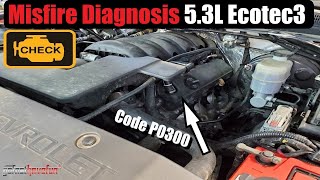
Used OEM Parts in Stock
New Aftermarket Parts Available


The information in this article is provided for general reference and educational purposes only. Vehicle specifications, procedures, and part compatibility can vary by production date, trim level, and region. Always consult your vehicle's factory service manual and verify part numbers before purchasing or performing repairs. Safety-critical components such as airbags, seat belts, and braking systems should be installed by a qualified professional.
- Gmc YUKON:
- 🧭 Diagnostic Flowchart
- 🎬 Helpful Videos
- 🛍️ Shop This Part
- What's Unique About the 2008-2015 Gmc YUKON
- Symptoms You May Notice
- Most Likely Causes
- Rare But Worth Checking
- Diagnosis Steps
- Parts You'll Likely Need
- Related Codes That Often Appear With This One
- Technical Service Bulletins (TSBs) & Recalls
- Platform-Specific Known Issues
- Mechanic-Grade Diagnostic Values
- Hidden / Shadow Codes Worth Checking
- Scan Tool Commands That Help
- Wiring & Ground Locations
- Real Owner Repair Stories
- "I Checked Everything" — The Actual Cause
- OEM Part Supersession History
- Model Year Variations Within This Range
- 🎟️ Get 5% Off