

P0300 on 2016-2022 GMC Yukon: Random Misfire Causes and Fixes
P0300 on a 2016-2022 GMC Yukon often indicates a random or multiple cylinder misfire. While common causes like spark plugs should be checked first, this code is frequently a symptom of failed valve lifters related to the Active/Dynamic Fuel Management system, a significant and costly internal engine repair documented in numerous GM Technical Service Bulletins.
- P0300 on a 2016-2022 Yukon indicates a random misfire, but the cause is often very specific to this platform.
- The most probable serious cause is a failed valve lifter related to the Active/Dynamic Fuel Management (AFM/DFM) system, a known issue covered by multiple TSBs.
- Always check simple and cheap fixes first, like spark plugs and ignition coils, before assuming the worst-case scenario.
- A flashing check engine light is a critical warning to stop driving to prevent expensive damage to the catalytic converters.
- Due to the high probability of a serious internal engine problem, professional diagnosis is strongly recommended if basic ignition and fuel checks do not resolve the issue.
What's Unique About the 2016-2022 Gmc YUKON

On the 2016-2022 GMC Yukon, particularly those with the 5.3L and 6.2L V8 engines, a P0300 code is very often a precursor to diagnosing a significant internal engine issue. These engines use Active Fuel Management (AFM) or Dynamic Fuel Management (DFM) systems, and the specialized valve lifters for these systems are a known, widespread failure point. Multiple manufacturer Technical Service Bulletins (TSBs) directly link random misfire codes to collapsed, stuck, or damaged lifters, which can also damage the camshaft, requiring an extensive and expensive repair. A class-action lawsuit has also been filed concerning these alleged defects in the valvetrain system.
Diagnostic Flowchart

Tap your situation to follow the diagnostic path that matches what you're seeing on this vehicle.
Generation note: This range covers two Yukon generations: the 4th gen (2016-2020) and the 5th gen (2021-2022). Both generations use versions of the 5.3L and 6.2L EcoTec3 V8 engines with Active or Dynamic Fuel Management, and the associated lifter problems are common to both.
Symptoms You May Notice

- Flashing or solid Check Engine Light
- Rough or unstable idle
- Engine shaking or vibrating
- Hesitation or stumbling during acceleration
- Noticeable loss of engine power
- Engine ticking or tapping noise, often louder on cold starts before quieting down.
- Poor fuel economy
- The misfire may appear or worsen when the engine switches into or out of AFM (V4) mode.
- Replacing only spark plugs and coils without investigating further. While these are common maintenance items, on this platform they often are not the root cause if the misfire persists, and ignoring the signs of a lifter issue can lead to more severe engine damage.
- Attributing the misfire solely to fuel injectors without confirming the mechanical health of the valvetrain first.
Most Likely Causes

- Failed AFM/DFM Valve Lifters 🔴 High Probability The Active/Dynamic Fuel Management lifters are a well-documented failure point on these GM V8 engines. The internal locking pin can fail, or the lifter can become mechanically collapsed or stuck in its bore, preventing proper valve operation. TSBs #23-NA-043, #PIP5776H, and multiple versions of #15-06-01-002 directly cite this as a cause for P0300.
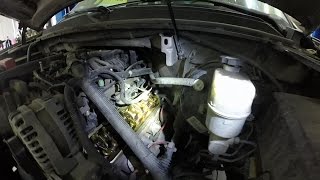
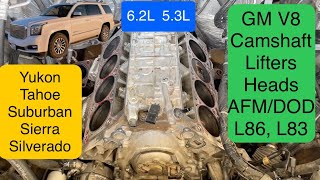
How to confirm: Diagnosis often requires removing a valve cover 🎬 Watch: Diagnostic walkthrough for P0300 and lifter issues and running the engine to look for a rocker arm that is not moving, indicating a collapsed lifter. A technician may also find a bent pushrod. If a lifter has failed, it often damages the camshaft lobe, requiring further inspection with the lifters removed.
Typical fix: Replacement of the failed lifters, lifter guides, and often the camshaft. Per TSB #PIP5776H and #23-NA-043, it is recommended to replace the lifter guide and all lifters on the affected bank. If the vehicle has low mileage (e.g., under 16,000 miles per TSB #23-NA-043), replacing lifters on both banks may be required. Many owners opt to perform an 'AFM/DFM delete' at this time, replacing all AFM components with standard lifters and disabling the system via ECU tuning.
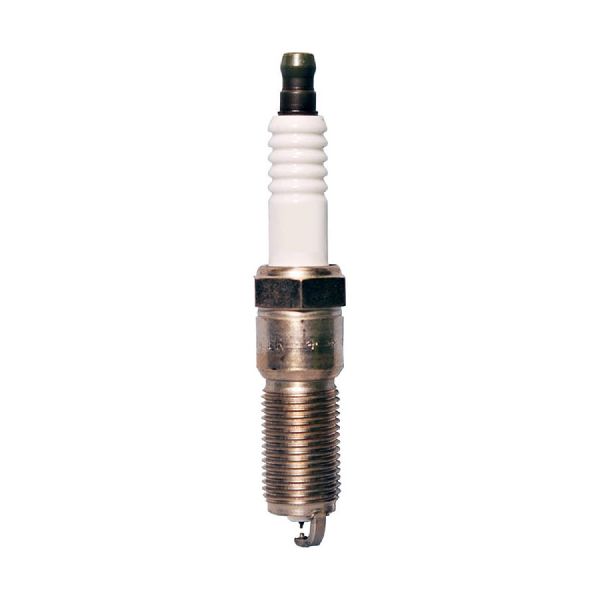
Est. part cost: $400-$1800 - Worn or Fouled Spark Plugs 🟡 Medium Probability → Shop Spark Plug Oil consumption issues, sometimes related to the PCV system or piston rings on AFM cylinders, can lead to oil-fouled spark plugs, causing misfires.
How to confirm: Remove and inspect spark plugs for wear, carbon fouling, oil, or coolant contamination. A worn electrode or cracked insulator can cause a weak or inconsistent spark.
Typical fix: Replace all spark plugs. It is recommended to use OEM-spec Iridium plugs, such as ACDelco 12622561 or equivalent.
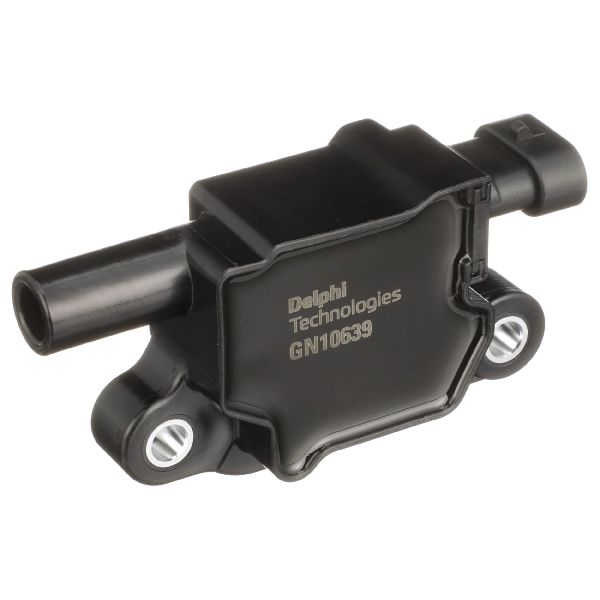
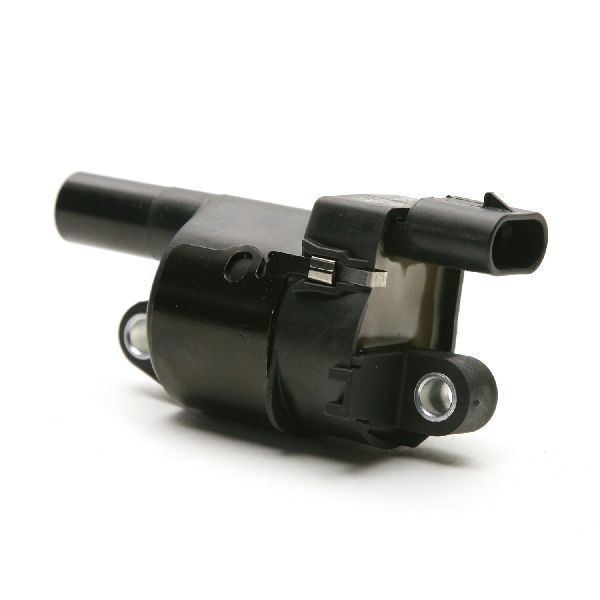
Est. part cost: $60-$150 - Faulty Ignition Coils 🟡 Medium Probability → Shop Ignition Coil
How to confirm: Use a scan tool to identify which cylinders are misfiring most frequently. Swap the ignition coil from a misfiring cylinder with one from a known good cylinder. If the misfire code follows the coil (e.g., P0302 becomes P0304 after swapping coils from cylinders 2 and 4), the coil is bad.
Typical fix: Replace the faulty ignition coil.
Est. part cost: $50-$100 per coil - Faulty or Clogged Fuel Injectors ⚪ Low Probability → Shop Fuel Injector Direct injection systems can be sensitive to fuel quality and deposits. TSB #20-NA-166 mentions checking injector balance rates on a cold engine for related codes like P050D.
How to confirm: A professional can perform a fuel injector balance test to check flow rates. A scan tool can also show fuel trim data that might indicate a problem. An owner on a forum noted that after a lifter job, a persistent misfire on one cylinder was only solved by replacing the injector.
Typical fix: Clean or replace the faulty fuel injector(s). If replacing, it's often recommended to replace them as a set on the affected bank.
Est. part cost: $70-$200 per injector
Rare But Worth Checking
- Intake Manifold Gasket Leak: → Shop Engine Intake Manifold A vacuum leak from a faulty intake manifold gasket can lean out the air/fuel mixture on multiple cylinders, causing random misfires. This is more common on cold starts, as the gasket may seal better once the engine warms up and expands.
- Low Fuel Pressure: A weak fuel pump or clogged fuel filter can starve the entire engine for fuel, leading to lean misfires across all cylinders. This should be verified with a fuel pressure test at the rail.
- Broken Valve Spring: → Shop Engine Valve Spring Though less common than lifter failure, TSB #PIP5752M mentions that a broken valve spring can also cause misfires and engine noise with a P0300 code. This was a known supplier issue for some 2021 models.
Diagnosis Steps
- Read all stored fault codes with an OBD-II scanner. Note any codes accompanying P0300, such as specific cylinder misfires (P0301-P0308) or P050D.
- Check freeze frame data to see the engine conditions (RPM, load, temperature) when the misfire occurred.
- Listen for engine noises. A distinct ticking or tapping noise from the top-center of the engine (under the intake manifold) that is loudest on a cold start is a strong indicator of a lifter problem.
- Inspect the ignition system. Start with the easiest components: check spark plugs for wear, fouling, and proper gap.
- Test the ignition coils by swapping a coil from a misfiring cylinder to a good cylinder to see if the fault follows the coil.
- Check for vacuum leaks. Inspect all vacuum hoses and the intake manifold gasket for cracks or damage. A smoke test is the most effective way to find leaks.
- Test fuel pressure to ensure the fuel pump and filter are functioning correctly.
- If a mechanical issue is suspected, perform a compression test to check for internal engine problems.
- Have a professional inspect the valvetrain. This involves removing the valve covers and running the engine to visually check for non-moving rocker arms, which confirms a collapsed lifter. Further disassembly is needed to inspect for bent pushrods and a damaged camshaft, as detailed in TSBs #23-NA-043 and #PIP5776H.
Parts You'll Likely Need
- Valve Lifter Kit (AFM/DFM)
(OEM #See notes)— This is the most common root cause of persistent P0300 codes on this platform. The kit should include all 16 lifters (AFM and standard) and new lifter guides.
Trusted brands: ACDelco, Delphi, Michigan Motorsports
OEM price range: $300-$600
Aftermarket price range: $200-$450 - Camshaft
(OEM #e.g., 12619823 (GM Genuine Parts))— A failed lifter often damages the corresponding lobe on the camshaft, requiring replacement of both components. This must be inspected whenever lifters are replaced.
Trusted brands: ACDelco, Melling
OEM price range: $350-$600
Aftermarket price range: $250-$450 - Head Gasket Kit — Required for lifter/camshaft replacement as the cylinder heads must be removed. 🎬 Watch: Step-by-step guide to removing heads and lifters
Trusted brands: ACDelco, Fel-Pro
OEM price range: $200-$400
Aftermarket price range: $150-$300 - Spark Plugs
(OEM #ACDelco 41-121 or 41-166 (Iridium))— A common cause of misfires and a routine maintenance item that should be replaced during a major engine repair.
Trusted brands: ACDelco, NGK
OEM price range: $8-$15 per plug
Aftermarket price range: $6-$12 per plug - Ignition Coil
(OEM #ACDelco D510C or D514A)— Can fail and cause misfires on one or more cylinders. It's a common diagnostic step to swap coils to isolate the issue.
Trusted brands: ACDelco, Delphi, Dragon Fire
OEM price range: $50-$80 per coil
Aftermarket price range: $30-$60 per coil
Related Codes That Often Appear With This One
- P0301-P0308 — These are specific cylinder misfire codes (e.g., P0301 for Cylinder 1). They often accompany P0300, helping to narrow down which cylinders are most affected. The AFM cylinders (1, 7, 4, and 6) are common culprits.
- P050D — This code means 'Cold Start Rough Idle.' It is frequently seen with P0300 on these GM trucks and is mentioned in multiple TSBs (#PIP5628G, #20-NA-166) and owner complaints as being related to both injector issues and internal engine problems like lifter failure.
Technical Service Bulletins (TSBs) & Recalls
- 23-NA-043: Procedure to replace valve lifters and guides for P0300-P0308.
- PIP5776H: Preliminary information on misfires from lifters coming apart; recommends replacing lifters and guides on the affected bank.
- 15-06-01-002 (multiple revisions): Seminal TSB covering engine misfire/tick noise from collapsed/stuck AFM lifters.
- PIP5628G: Diagnostic aid for misfire codes P0300-P0308 and/or P050D.
- 20-NA-166: Discusses P0300 and P050D on cold starts, potentially related to internal coolant leaks or injector issues.
- PIP5752M: Links P0300 to possible valve spring concerns.
Platform-Specific Known Issues
- AFM/DFM Lifter Failure: → Shop Engine Valve Lifter The most significant and platform-specific cause for a P0300 code on these V8 engines is the failure of the specialized hydraulic lifters used by the Active Fuel Management (AFM) or Dynamic Fuel Management (DFM) systems. These systems deactivate cylinders to save fuel, but the lifters can collapse, get stuck, or have their internal locking pins fail. This prevents the valve from opening, causing a misfire on that cylinder. A ticking noise from the engine is a primary symptom. The failure often damages the camshaft, turning a top-end repair into a much larger and more expensive job requiring engine disassembly. Numerous TSBs have been issued by GM to address this widespread problem.
Mechanic-Grade Diagnostic Values
- Ignition Coil Primary Resistance — expected: 0.4 to 2.0 Ohms. Failure: A reading outside this range indicates a faulty coil winding.
- Ignition Coil Secondary Resistance — expected: 5,000 to 10,500 Ohms (depending on specific coil type). Failure: A reading outside this range suggests the secondary winding is compromised.
- Low-Side Fuel Pressure (Key On, Engine Off) — expected: 50-60 PSI (345-414 kPa). Failure: Pressure below this range indicates a weak fuel pump or clogged filter.
- High-Side Fuel Pressure (at idle) — expected: 290-725 PSI (2-5 MPa). Failure: Erratic or low pressure can indicate a failing high-pressure fuel pump, common on these direct-injection engines.
Hidden / Shadow Codes Worth Checking
- Mode $06 Misfire Counts: This is not a specific code but a function within a generic OBD-II scanner. It shows raw misfire counts per cylinder for the current and last 10 driving cycles. Even if a specific P030x code isn't set, these counters can reveal which cylinder(s) are the primary offenders in a P0300 random misfire scenario. (see via Any advanced OBD-II scanner with Mode $06 test capability.)
Scan Tool Commands That Help
- GDS2 (GM Dealer Software): Cylinder Power Balance Test — This function graphically displays the contribution of each cylinder, allowing a technician to quickly identify underperforming cylinders that are causing the P0300 code. It's a primary step before physical parts swapping.
- GDS2 (GM Dealer Software): Fuel Injector Balance Test — Used to command each injector to flow for a specific duration. By measuring the pressure drop for each injector, a technician can identify a clogged or weak injector that might be causing a lean misfire on one or more cylinders.
- GDS2 or high-end bidirectional scanner: Crankshaft Position (CKP) System Variation Learn — This procedure must be performed after replacing the crankshaft, crankshaft position sensor, or flexplate. If not performed, the ECM may misinterpret slight variations in the crank signal as misfires, setting a P0300 code even with a mechanically sound engine.
Wiring & Ground Locations
- G102 — Located at the left rear of the engine, typically on the cylinder head.. This is the primary ground for all eight ignition coils. A loose or corroded G102 can cause a weak spark across multiple cylinders, leading to a classic P0300 random misfire.
- G103 — Located on the front of the right (passenger side) cylinder head.. This ground is critical for various engine sensors. A poor connection here can cause erratic sensor readings, confusing the ECM and potentially contributing to misfire detection.
- ECM/PCM Connectors (X1/X2) — Located on the driver's side of the engine compartment, near the firewall.. The pins for the ignition coils, fuel injectors, and crankshaft position sensor all terminate here. Water intrusion or pin corrosion in these connectors can cause intermittent and random misfires that are difficult to trace.
Real Owner Repair Stories
- Reddit user in r/ChevyTrucks (2004 Suburban 5.3L (similar Gen IV architecture)) — Persistent P0300, P0174 (Lean Bank 2), and P1153.
❌ Tried (didn't work) Fuel pressure regulator, MAP sensor, Upstream O2 sensors, Intake manifold gaskets, Throttle body gasket, All spark plugs and wires, Fuel pump
✅ What actually fixed it The user was advised that a "crankshaft position sensor relearn" procedure was the solution after similar extensive parts replacement. Another user confirmed this fixed their P0300 issue in less than 5 minutes with a capable scan tool. - Reddit user in r/gmcsierra (2021 GMC Sierra with 26,000 km) — Intermittent P0300 code that appeared and then went away.
❌ Tried (didn't work) Initial assumption was the common lifter failure.
✅ What actually fixed it The dealership determined it was an injector issue, not lifters. They replaced all fuel injectors to resolve the misfire. The service department noted that faulty injectors are also a known problem on these engines.
"I Checked Everything" — The Actual Cause
- A cracked flexplate (the plate connecting the engine to the torque converter) can cause a P0300. If the crack passes through the reluctor teeth that the crankshaft position sensor reads, it can send an erratic signal to the ECM. The ECM interprets this signal fluctuation as a change in engine speed, misdiagnosing it as a cylinder misfire. This is often missed because it's not a vacuum, fuel, or ignition issue, and will not be found with a smoke test. The primary symptom is often a ticking or knocking noise from the bellhousing area.
OEM Part Supersession History
12576400, 12648846→12698945— These are earlier revisions of the standard (non-AFM) hydraulic roller lifter used in Gen IV/V V8s. The latest part number reflects design or manufacturing updates.
Heads up: While physically interchangeable for standard lifter positions, it is critical to distinguish between standard lifters and AFM/DFM lifters. Part number 12698945 is a standard lifter and will NOT function in an active AFM/DFM cylinder.
Model Year Variations Within This Range
- 2016-2019 (approx.): These model years primarily use the 5.3L L83 and 6.2L L86 engines, which are equipped with Active Fuel Management (AFM). AFM deactivates a fixed set of four cylinders (1, 7, 4, 6) under light load. The lifter failures are concentrated on these specific cylinders.
- 2019-2022 (approx.): Later models transitioned to the 5.3L L84 and 6.2L L87 engines, which feature Dynamic Fuel Management (DFM). DFM is more advanced and can deactivate any number of cylinders in 17 different patterns. This means any of the 16 lifters can be a DFM-style lifter and a potential point of failure, spreading the risk across the entire engine rather than just four cylinders.
- 2021: A known valve spring issue from a bad batch supplied to GM affected some 2021 models with 5.3L L84 and 6.2L L87 engines. TSB #PIP5752M references this possibility. This can cause a misfire and noise similar to a lifter failure but is a distinct problem. A GM service update was issued to address this.
Helpful Videos
We Have This Part in Stock


The information in this article is provided for general reference and educational purposes only. Vehicle specifications, procedures, and part compatibility can vary by production date, trim level, and region. Always consult your vehicle's factory service manual and verify part numbers before purchasing or performing repairs. Safety-critical components such as airbags, seat belts, and braking systems should be installed by a qualified professional.
- Gmc YUKON:
- 🧭 Diagnostic Flowchart
- 🎬 Helpful Videos
- 🛍️ Shop This Part
- What's Unique About the 2016-2022 Gmc YUKON
- Symptoms You May Notice
- Most Likely Causes
- Rare But Worth Checking
- Diagnosis Steps
- Parts You'll Likely Need
- Related Codes That Often Appear With This One
- Technical Service Bulletins (TSBs) & Recalls
- Platform-Specific Known Issues
- Mechanic-Grade Diagnostic Values
- Hidden / Shadow Codes Worth Checking
- Scan Tool Commands That Help
- Wiring & Ground Locations
- Real Owner Repair Stories
- "I Checked Everything" — The Actual Cause
- OEM Part Supersession History
- Model Year Variations Within This Range
- 🎟️ Get 5% Off