

P0300 on 2015-2019 GMC Yukon Denali: Random Misfire Causes & Fixes
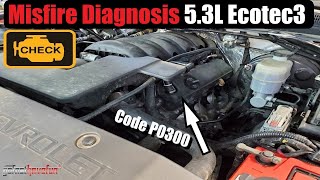
P0300 on a 2015-2019 GMC Yukon Denali indicates a random engine misfire. The most common causes are worn spark plugs and loose or faulty spark plug wires. A GM Technical Service Bulletin specifically points to spark plug wires losing their connection at the coil. Less common but more severe causes include failed Active Fuel Management (AFM) lifters, which can get stuck and damage the camshaft, or internal coolant leaks from a cracked cylinder head.
- P0300 on a 2015-2019 Yukon Denali is a random misfire code that demands attention to prevent costly catalytic converter damage.
- Always start your diagnosis by checking for loose spark plug wires, as this is a known issue documented by GM.
- Basic ignition system maintenance, including new ACDelco Iridium spark plugs and wires, resolves the issue in many cases.
- Be aware of more severe potential causes like internal coolant leaks (indicated by white smoke on startup) and AFM lifter failure, which are known issues for this engine.
- If the check engine light is flashing, pull over and have the vehicle towed to prevent catastrophic damage to the exhaust system.
What's Unique About the 2015-2019 Gmc YUKON DENALI

For the 2015-2019 Yukon Denali with the 6.2L V8 (L86), this code is frequently linked to specific known issues. GM has issued service bulletins pointing to problems like loose spark plug wires due to faulty retaining clips at the ignition coil and, more seriously, internal coolant leaks causing misfires on cold starts. Another significant known issue on these Gen V V8 engines relates to the Active Fuel Management (AFM) system, where faulty lifters can become stuck or collapsed, leading to a ticking noise, misfires, and potential camshaft damage.
Diagnostic Flowchart

Tap your situation to follow the diagnostic path that matches what you're seeing on this vehicle.
Symptoms You May Notice

- Rough or shaky idle
- Hesitation or stumbling during acceleration
- Reduced engine power
- Flashing Check Engine Light (indicates a severe misfire)
- Poor fuel economy
- Engine ticking or tapping noise, especially if it's consistent (indicates possible lifter issue)
- White smoke and/or coolant smell from the exhaust, especially on a cold start (indicates a serious internal coolant leak)
- Replacing only spark plugs when the spark plug wires are the actual cause of the loose connection at the coil.
- Replacing oxygen (O2) sensors. While a faulty O2 sensor can disrupt the air-fuel ratio and contribute to misfires, it's less likely to be the root cause of P0300 on this platform compared to ignition or mechanical issues.
- Replacing a single ignition coil when the underlying issue is a bad ground or chafed harness affecting multiple coils.
Most Likely Causes

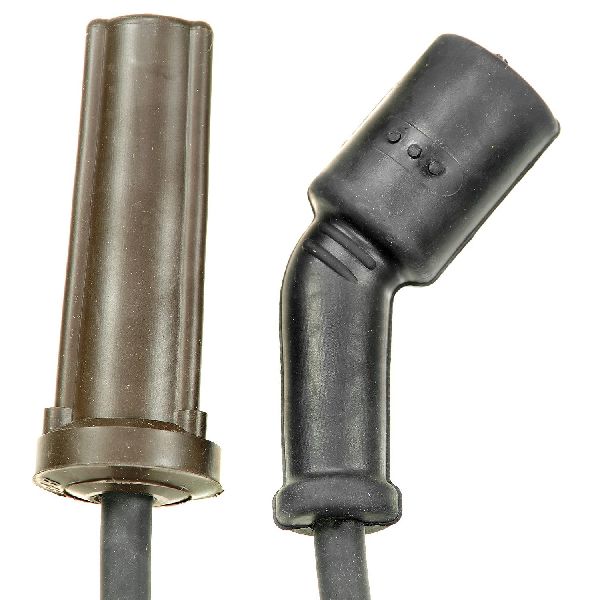
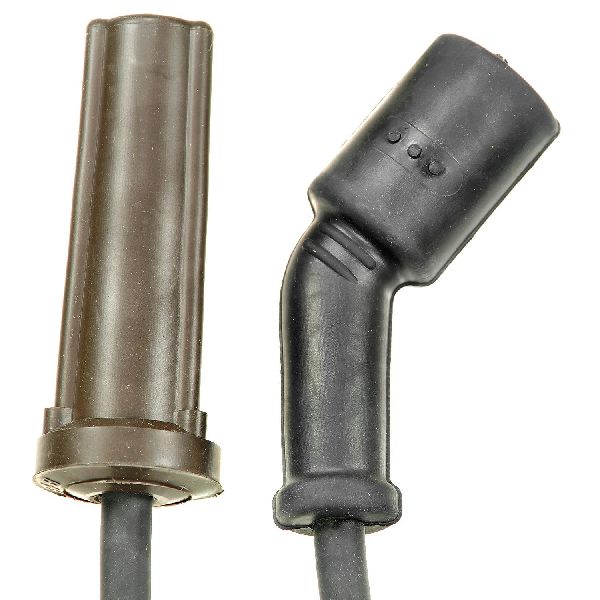
- Loose or Worn Spark Plug Wires 🔴 High Probability → Shop Spark Plug A specific GM Technical Service Bulletin (#PIP5159C) identifies that spark plug wires can become loose at the ignition coil. This is often due to a missing or damaged 'C' clip on the wire's terminal end. The bulletin instructs technicians to inspect this specific connection point.
How to confirm: Physically inspect each spark plug wire. Gently pull on the boot where it connects to the ignition coil to ensure it is secure. Check for the presence of the small metal 'C' clip inside the boot. Also check the connection at the spark plug.
Typical fix: Re-secure any loose wires. If the retaining clip is missing or the wire is damaged, replace the full set of spark plug wires. The OEM part number for the wire set is GM 19431551. 🎬 Watch: Step-by-step spark plug and ignition wire replacement guide.
Est. part cost: $60-$120 - Worn or Fouled Spark Plugs 🔴 High Probability → Shop Spark Plug Spark plugs are a regular maintenance item with a finite lifespan. The 6.2L direct-injection engine is sensitive to spark quality for efficient combustion. Worn electrodes, incorrect gap, or carbon/oil fouling can easily lead to misfires.
How to confirm: Remove and inspect all eight spark plugs. Look for excessive wear on the electrode, a gap wider than specification, and fouling from oil, fuel, or carbon.
Typical fix: Replace all eight spark plugs. It's recommended to use the specified ACDelco Iridium plugs, part number 41-123 (GM part 12622441 is an older number). Ensure they are gapped correctly.
Est. part cost: $80-$150 - Faulty Active Fuel Management (AFM) Lifters 🟡 Medium Probability → Shop Engine Valve Lifter The L86 engine uses AFM to deactivate cylinders for fuel economy. The specialized lifters for cylinders 1, 4, 6, and 7 can fail, becoming mechanically collapsed or stuck. This prevents the valve from opening, causing a misfire, often accompanied by a distinct ticking noise. TSB 15-06-01-002H specifically addresses this issue. Low oil pressure or oil aeration can contribute to this failure.
How to confirm: This is a complex diagnosis. It often presents as a ticking noise and a misfire code for a specific AFM cylinder (P0301, P0304, P0306, P0307). A technician may need to remove the valve covers to observe valve movement and inspect the valvetrain. In severe cases, a bent pushrod may also be found.
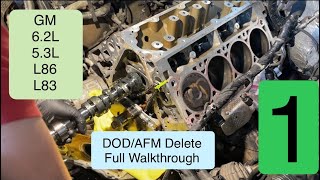
Typical fix: This is a labor-intensive job. It requires replacing the faulty bank of AFM lifters, the lifter guides, and often the Valve Lifter Oil Manifold (VLOM). The camshaft must be inspected for damage from the failed lifter and replaced if any lobes are worn. An AFM lifter kit may be required. 🎬 See how to replace lifters and the camshaft in this walkthrough.
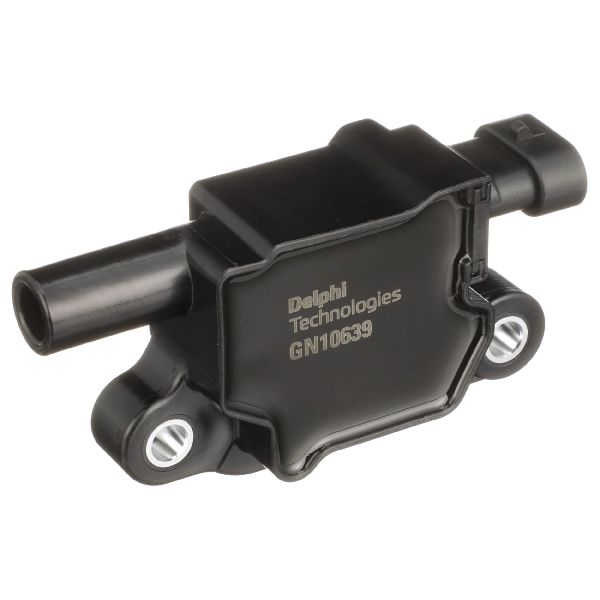
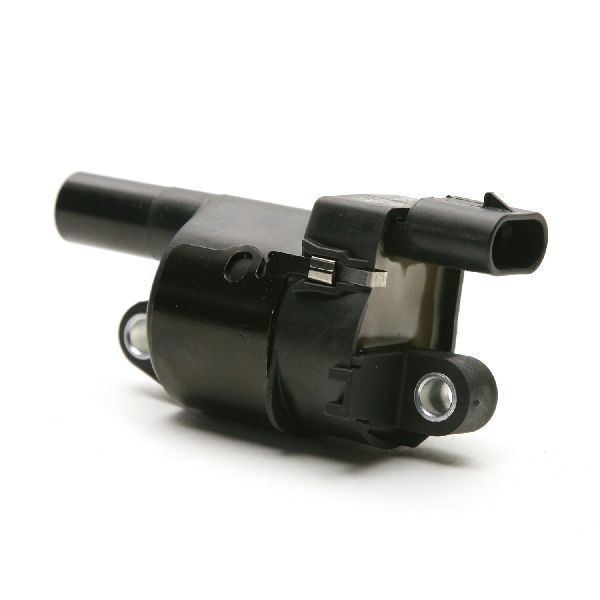
Est. part cost: $400-$1000+ - Faulty Ignition Coil(s) 🟡 Medium Probability → Shop Ignition Coil While P0300 indicates a random misfire, it can be caused by one or more ignition coils beginning to fail intermittently before failing completely on a single cylinder. Heat and vibration can cause internal windings to break down over time.
How to confirm: Use a scan tool with live data to monitor misfire counts per cylinder. If you can identify a cylinder with a higher misfire count, swap its ignition coil with a known good cylinder and see if the misfire follows the coil.
Typical fix: Replace the faulty ignition coil. The OEM part is ACDelco D521C.
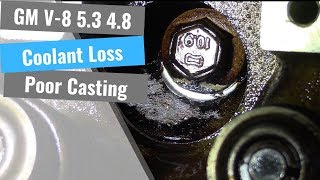
Est. part cost: $75-$110 per coil - Internal Coolant Leak (Cracked Cylinder Head) ⚪ Low Probability Multiple TSBs (#PIP5498 series) link P0300 with code P050D on cold starts. This is often caused by coolant entering a cylinder due to a cracked cylinder head, a known issue with some Castech manufactured heads used on earlier GM V8s, though the issue can still occur. Another TSB (#21-NA-210) notes cracks can form near the exhaust manifold stud bolt holes. 🎬 Watch: How to identify a cracked head causing antifreeze loss.
How to confirm: Monitor coolant levels for gradual loss. Check for white, sweet-smelling smoke from the exhaust on cold starts. A mechanic can perform a cooling system pressure test or use a black light to check for coolant residue in the cylinders (after adding dye to the coolant), as noted in TSB #PIP5498K.
Typical fix: This is a major repair. If a crack is confirmed, the cylinder head must be replaced. Per TSB #PIP5498K, if this specific cold-start leak is confirmed, GM's recommendation may be to replace the entire engine assembly.
Est. part cost: $500-$2500+
Rare But Worth Checking
- Chafed Wiring Harness: TSB #PIP5553A notes that a chafed wiring harness can cause P0300 along with a host of other electrical and engine codes. This can be difficult to find, requiring careful inspection of the engine wiring loom, especially near vibrating components or sharp edges.
- Clogged or Failing Fuel Injectors: → Shop Fuel Injector While less common than ignition issues, a dirty or failing fuel injector can cause a lean condition and misfire. A user on the TahoeYukonForum noted that after a DOD delete, persistent misfires on cylinders 5, 6, and 8 were suspected to be injector-related.
- Poor Engine Ground Connection: A poor ground for the ignition coil and injector harness can cause a weak spark or intermittent injector function. A user on ScannerDanner.com noted checking grounds G102 and G103 for corrosion when troubleshooting a persistent P0300.
- Intake Manifold Gasket Leak: → Shop Engine Intake Manifold A vacuum leak from a faulty intake manifold gasket can lean out the air-fuel mixture and cause random misfires. This is sometimes more noticeable on a cold start before the gasket has expanded with heat.
Diagnosis Steps
- Read the codes with an OBD-II scanner and note any other codes present, especially cylinder-specific misfires (P0301-P0308) or P050D.
- Check if the Check Engine Light is flashing. If so, avoid driving to prevent catalytic converter damage.
- Inspect all spark plug wires for a secure connection at both the spark plug and the ignition coil, as per TSB #PIP5159C.
- Using a scanner with live data, monitor misfire counts for each cylinder to see if the misfires are truly random or favor specific cylinders (especially AFM cylinders 1, 4, 6, 7).
- Listen for a consistent ticking or tapping noise from the upper engine, which could indicate a collapsed AFM lifter.
- Remove and inspect spark plugs for wear, correct gap, and signs of oil or coolant fouling.
- If a specific cylinder shows higher misfire counts, swap the ignition coil with another cylinder to see if the misfire moves.
- Check for vacuum leaks around the intake manifold, PCV system, and brake booster hose by listening for hissing or using a smoke machine.
- On a cold start, check the exhaust for sweet-smelling white smoke, which indicates a coolant leak.
- Inspect engine wiring harnesses for any signs of chafing or damage, particularly near hot or vibrating components.
- Check major engine ground connections (e.g., G102, G103) for tightness and corrosion.
- If an AFM lifter or internal coolant leak is suspected, professional diagnosis is strongly recommended due to the complexity and labor involved.
Parts You'll Likely Need
- Spark Plugs
(OEM #41-123)— These are a primary wear item in the ignition system and a frequent cause of misfires.
Trusted brands: ACDelco
OEM price range: $10-$18 per plug
Aftermarket price range: $8-$15 per plug - Spark Plug Wire Set
(OEM #19431551)— A known issue on this platform where wires can become loose at the coil, as documented in TSB #PIP5159C. Replacing as a set ensures proper connection and performance.
Trusted brands: ACDelco, Denso
OEM price range: $70-$100
Aftermarket price range: $40-$80 - Ignition Coil
(OEM #D521C)— An intermittently failing coil can cause random misfires before it fails completely on one cylinder.
Trusted brands: ACDelco
OEM price range: $75-$110 per coil
Aftermarket price range: $40-$80 per coil - AFM Lifter Kit — Required if diagnosis confirms a collapsed or stuck AFM lifter. The kit often includes lifters for one bank and new lifter guides.
Trusted brands: GM Genuine, Delphi, Michigan Motorsports
OEM price range: $300-$500
Aftermarket price range: $150-$300
Related Codes That Often Appear With This One
- P0301-P0308 — If the random misfire begins to occur consistently on one cylinder, the ECM will log a specific code (e.g., P0306 for cylinder 6). This helps narrow down the diagnosis.
- P050D — As per TSBs #PIP5498J/K/M, this code for 'Cold Start Rough Idle' often appears with P0300 when there is a coolant leak into a cylinder.
- P3400 — This code for 'Cylinder Deactivation System Bank 1' can appear alongside a P0300 when there is a failure in the AFM system, such as a stuck lifter.
Technical Service Bulletins (TSBs) & Recalls
- PIP5159C: Engine Misfire May Be Due To Loose Spark Plug Wires (at the ignition coil).
- PIP5498J / K / M: P050D and P0300 on Cold Start due to Coolant Leak.
- 15-06-01-002H: Engine Misfire/Tick Noise with DTC P0300 due to AFM Lifter Failure.
- PIP5553A: Chafed Wiring Harness Causing Various DTCs including P0300.
- 21-NA-210: Coolant Leak from Cracks in Cylinder Head Near Exhaust Manifold.
Platform-Specific Known Issues
- AFM Lifter Failure: → Shop Engine Valve Lifter The Active Fuel Management (AFM) system's lifters are a well-documented failure point on the 6.2L L86 engine. They can collapse or stick, causing a valve to stop operating. This results in a misfire (often on cylinders 1, 4, 6, or 7) and can lead to camshaft damage if not addressed. The repair is invasive and costly.
- Spark Plug Wire Connection: → Shop Spark Plug Unlike many vehicles where plug wires fail from age or heat, a specific GM TSB points to a manufacturing/design flaw where the retaining 'C' clip on the ignition coil side of the wire can be missing or damaged, leading to a loose connection and misfires.
- Cylinder Head Cracking: → Shop Engine Cylinder Head A series of TSBs address an issue where coolant can leak into the cylinders, particularly on cold starts, causing a P0300 and P050D. This is often due to porosity or cracks developing in the cylinder head, which is a major repair often requiring head or full engine replacement.
Mechanic-Grade Diagnostic Values
- Ignition Coil Primary Winding Resistance — expected: 0.4 - 2.0 ohms. Failure: A reading of 0 (short) or OL/infinity (open) indicates a failed coil. A reading outside the expected range suggests a coil is failing.
- Ignition Coil Secondary Winding Resistance — expected: 6,000 - 10,000 ohms (6kΩ - 10kΩ). Failure: A reading significantly outside this range, or showing open/shorted, indicates a failed coil. Note that some modern coils with internal electronics may give misleading readings with a multimeter.
- Short-Term/Long-Term Fuel Trims (STFT/LTFT) — expected: Within +/- 10% at idle and steady cruise.. Failure: Consistently high positive trims (e.g., +15% to +25%) across all cylinders suggest a vacuum leak or fuel delivery issue affecting the whole engine, which can cause a P0300.
Scan Tool Commands That Help
- GDS2 / Tech 2: Misfire Data / Misfire Graphic — Even when only a P0300 is set, this function allows a technician to view misfire counts for each individual cylinder in real-time. This is critical for determining if the misfire is truly random or is, in fact, concentrated on one or two cylinders that haven't yet met the threshold to set a cylinder-specific code (e.g., P0301).
- GDS2 / Tech 2: Crankshaft Position (CKP) Variation Learn — This procedure must be performed after replacing the crankshaft position sensor, the engine control module (ECM), or the crankshaft. Failure to perform the relearn can result in the ECM incorrectly identifying misfires and setting a P0300 code.
Wiring & Ground Locations
- G102 — Located at the left rear of the engine block, sometimes specified as being in the #3 cylinder area below the exhaust manifold.. This is the primary ground point for all eight ignition coils. A loose or corroded connection here can cause a weak or intermittent spark on multiple cylinders, directly leading to a P0300 code.
- G103 — Located on the cowl in the left rear of the engine compartment, typically above the brake booster.. This ground serves the Engine Control Module (ECM) and Body Control Module (BCM). A poor connection can cause a wide range of erratic electrical issues and false sensor readings that could lead the ECM to incorrectly report a misfire.
- G108 — Located on the back side of the cylinder heads.. This is another critical engine ground. A forum user identified G103 and G108 as common culprits for difficult-to-diagnose drivability problems. A poor connection can affect sensor readings and actuator performance, contributing to misfires.
Real Owner Repair Stories
- YouTube user 'nune NAVA' (GMC Yukon Denali with 6.2L L86 engine) — Engine knock, significant blow-by, and likely misfire codes. The owner had previously replaced a single damaged piston.
❌ Tried (didn't work) Replacing only one damaged piston. The engine still had significant blow-by and other underlying issues.
✅ What actually fixed it A full engine teardown revealed that most of the other pistons were also cracked or broken, particularly around the ring lands. The ultimate fix required a complete engine rebuild, replacing all the damaged pistons with new forged units. - Reddit user 'Bloodysamflint' on r/gmc (2017 GMC Yukon Denali) — Heard some engine ticking which then went away. About three days later, the engine developed a dead miss and the Check Engine Light started flashing.
❌ Tried (didn't work) Ignoring the initial ticking sound.
✅ What actually fixed it The symptoms are classic for a catastrophic AFM lifter failure. The rapid progression from a minor tick to a severe, flashing-CEL misfire highlights how quickly this known issue can escalate. The fix is AFM lifter and potentially camshaft replacement.
"I Checked Everything" — The Actual Cause
- A severe mechanical failure like cracked pistons can cause a P0300. While a compression test should identify this, a simple vacuum leak test (smoke test) would come back clean. In one documented case, a 6.2L L86 was found to have multiple broken pistons, causing significant blow-by and misfires that would not be found with a standard smoke test.
OEM Part Supersession History
Elgin HL-7011 (or equivalent GM AFM lifter)→Elgin HL-7025 (or equivalent GM DFM lifter)— The newer Dynamic Fuel Management (DFM) lifter design is backward compatible with older Active Fuel Management (AFM) applications.
Heads up: The new DFM lifter (HL-7025) can be used in older AFM engines, but the original AFM lifter (HL-7011) CANNOT be used in newer DFM engines. This is critical when sourcing replacement parts.Multiple, e.g., 12668395, 12644386→Current GM OE Part— Part number consolidation and minor updates.
Heads up: When replacing direct fuel injectors, GM specifies they should be replaced as a matched set. There are 'low', 'nominal', and 'high' flow versions that are functionally identical but must match for all eight cylinders.
Model Year Variations Within This Range
- 2015: Early 2015 models were equipped with a 6-speed automatic transmission. Mid-year 2015.5 models were upgraded to the 8-speed automatic transmission.
- 2018-2019: The 10-speed automatic transmission was introduced for the 2018 model year, replacing the 8-speed. The front grille design was also updated.
- 2016-2019: Starting with the 2016 model year, GM reduced the powertrain warranty from 5 years/100,000 miles to a shorter term.
Helpful Videos
We Have This Part in Stock


The information in this article is provided for general reference and educational purposes only. Vehicle specifications, procedures, and part compatibility can vary by production date, trim level, and region. Always consult your vehicle's factory service manual and verify part numbers before purchasing or performing repairs. Safety-critical components such as airbags, seat belts, and braking systems should be installed by a qualified professional.
- Gmc YUKON DENALI:
- 🧭 Diagnostic Flowchart
- 🎬 Helpful Videos
- 🛍️ Shop This Part
- What's Unique About the 2015-2019 Gmc YUKON DENALI
- Symptoms You May Notice
- Most Likely Causes
- Rare But Worth Checking
- Diagnosis Steps
- Parts You'll Likely Need
- Related Codes That Often Appear With This One
- Technical Service Bulletins (TSBs) & Recalls
- Platform-Specific Known Issues
- Mechanic-Grade Diagnostic Values
- Scan Tool Commands That Help
- Wiring & Ground Locations
- Real Owner Repair Stories
- "I Checked Everything" — The Actual Cause
- OEM Part Supersession History
- Model Year Variations Within This Range
- 🎟️ Get 5% Off