

P0300 on 2004-2008 GMC Yukon Denali XL: Random Misfire Causes & Fixes
Code P0300 on a 2004-2008 GMC Yukon Denali XL indicates a random or multiple cylinder misfire. The most common causes are worn spark plugs, faulty ignition coils or wires, and vacuum leaks from aged intake manifold gaskets. While basic ignition parts are an affordable first step, be aware of more serious documented issues like worn camshafts and failed Active Fuel Management (AFM) lifters on 2007+ models.
- P0300 means multiple cylinders are misfiring randomly, so don't focus on just one.
- Start with the most common and affordable fixes: inspect and replace worn spark plugs, wires, and check for vacuum leaks around the intake manifold.
- A flashing check engine light is a serious warning. Stop driving to prevent damage to the catalytic converters.
- Be aware of the official GM TSBs for this truck, which point to more severe issues like worn camshafts and oil consumption if basic repairs don't solve the problem.
- If you've had recent engine work done, double-check the fuel injector wiring on cylinders 5, 6, 7, and 8 to ensure they are not crossed, as per TSB PIP5169.
What's Unique About the 2004-2008 Gmc YUKON DENALI XL
The 2004-2008 Yukon Denali XL spans two generations: the GMT800 (2004-2006) with the 6.0L V8 and the GMT900 (2007-2008) with the 6.2L V8. While both are prone to common ignition and vacuum leak issues, the 2007-2008 models with the L92 engine feature Active Fuel Management (AFM), also known as Displacement on Demand (DOD). Collapsed or stuck AFM lifters are a very common and serious cause of P0300 on these specific models, often accompanied by a ticking noise. GM has issued Technical Service Bulletins (TSBs) for this platform highlighting other severe potential causes, including oil-fouled spark plugs (PIP4525D), worn camshaft lobes (PIP4138P), and even crossed fuel injector wiring after repairs (PIP5169), making a thorough diagnosis crucial.
Diagnostic Flowchart
Tap your situation to follow the diagnostic path that matches what you're seeing on this vehicle.
Generation note: This guide covers the end of the second generation (GMT800, 2004-2006) with the 6.0L LQ4 V8 engine, and the beginning of the third generation (GMT900, 2007-2008) with the 6.2L L92 V8 engine. While many causes are similar, the intake manifold gasket design differs, and the 2007-2008 models have specific TSBs related to camshaft wear and oil consumption. Crucially, the 2007+ models are susceptible to AFM lifter failure, which is a major mechanical cause of P0300 not present in the earlier LQ4 engine.
Symptoms You May Notice
- Rough or shaky idle
- Hesitation or stumbling during acceleration
- Noticeable loss of engine power, especially under load
- Flashing or solid Check Engine Light
- Increased fuel consumption
- Engine ticking or squeaking noise, which could indicate a worn cam lobe or failed lifter.
- Exhaust may smell of raw fuel
- Replacing oxygen (O2) sensors. While a bad O2 sensor can cause fuel trim issues, it's rarely the direct cause of a P0300. Misfires often cause O2 sensor codes (like P0171/P0174), not the other way around.
- Replacing only one spark plug or coil. P0300 indicates a random, multiple-cylinder issue. The fix is usually systemic, like a full set of plugs, a vacuum leak, or a fuel delivery problem, not a single component.
- Replacing the Mass Airflow (MAF) sensor without proper diagnosis. While a dirty MAF can contribute to fuel trim issues, it's less commonly the root cause of a significant P0300 misfire compared to ignition or vacuum problems.
Most Likely Causes
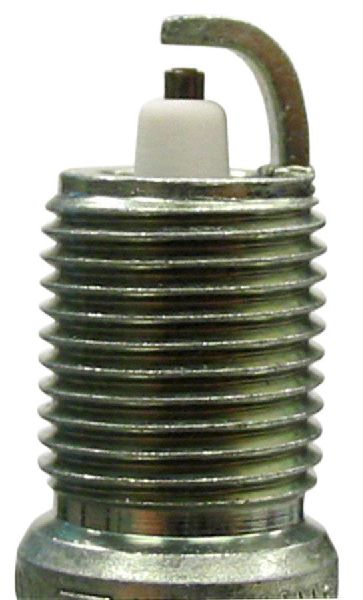
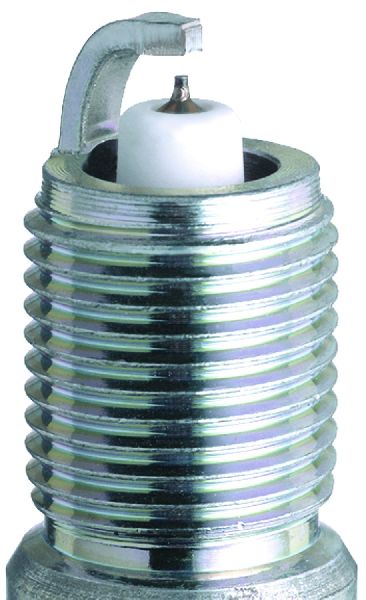
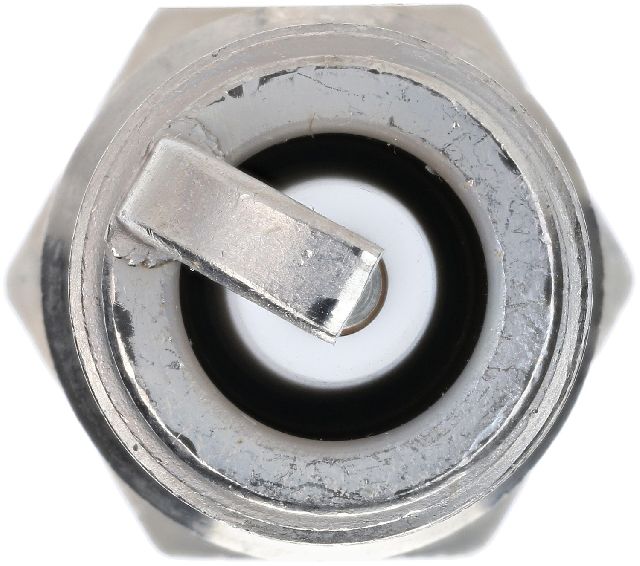
- Worn or Fouled Spark Plugs 🔴 High Probability → Shop Spark Plug A manufacturer TSB (PIP4525D) specifically notes that oil fouling and cracked porcelain on spark plugs are a cause for P0300 on these trucks. Over time, the electrodes simply wear out, increasing the gap and requiring more energy to create a spark. Oil can also leak from failing valve cover gaskets into the spark plug wells, causing misfires.
How to confirm: Remove and inspect all 8 spark plugs. Look for heavy carbon buildup, oil residue, moisture, or worn/missing electrodes. Check the porcelain for cracks. Check the gap against specifications (typically 0.040 inches for these engines).
Typical fix: Replace all 8 spark plugs with quality replacements like ACDelco Iridium (e.g., 41-110 or 41-962 depending on the specific year). It's also wise to replace the spark plug wires at the same time.
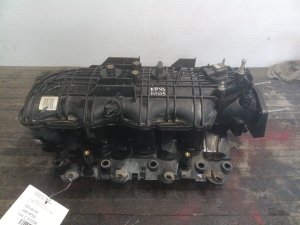
Est. part cost: $40-$120 - Leaking Intake Manifold Gaskets 🔴 High Probability → Shop Engine Intake Manifold The intake manifold gaskets on GM's V8 engines of this era are made of plastic and rubber, which can become brittle and crack over time, causing unmetered air to enter the engine. This lean condition causes random misfires, often worse when the engine is cold.
How to confirm: With the engine running, spray brake cleaner or a propane torch (unlit) around the intake manifold sealing surfaces. If the engine RPM changes or smooths out, a leak is present. A professional smoke test is the most definitive method. Watching Short-Term Fuel Trims (STFT) on a scanner will show high positive numbers at idle (e.g., >+15%) that decrease as RPMs increase, confirming a vacuum leak.
Typical fix: Replace the intake manifold gaskets. The Fel-Pro MS 96587 is a popular, upgraded metal-and-rubber replacement part for the GMT800 platform. This is a moderately involved DIY job.
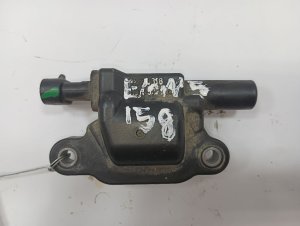
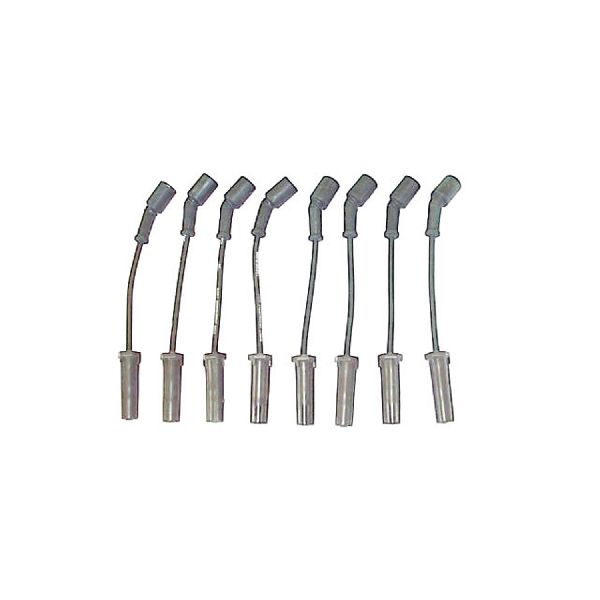
Est. part cost: $30-$90 - Faulty Ignition Coils or Wires 🟡 Medium Probability → Shop Ignition Coil Each cylinder has its own ignition coil. While generally reliable, heat and age can cause them to fail, producing a weak or inconsistent spark. Wires can degrade, allowing spark to arc to ground before reaching the plug.
How to confirm: Use a scan tool with live data to see if misfires are more common on certain cylinders. Swap a suspected bad coil with a known good one and see if the misfire follows the coil. Inspect wires for any signs of arcing (white marks) or physical damage.
Typical fix: Replace the faulty ignition coil(s) and/or the full set of spark plug wires. The OEM ACDelco coil part number is often D510C or 12570616 for the square-style coils.
Est. part cost: $30-$70 per coil, $50-$100 for a wire set - Low Fuel Pressure or Clogged Injectors 🟡 Medium Probability A weakening fuel pump or a clogged fuel filter can reduce fuel pressure, leading to a lean condition and misfires across all cylinders, especially under load. Injectors can also become clogged over time, causing poor fuel atomization.
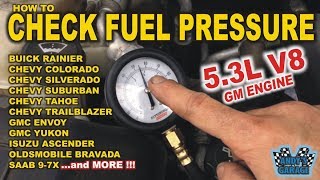
How to confirm: Connect a fuel pressure gauge to the fuel rail's Schrader valve. Check that the pressure is within OEM specifications (typically 55-62 PSI with key on, engine off for non-Flex Fuel models). Clogged injectors can sometimes be cleaned with a quality fuel system additive as a first step, but may require professional cleaning or replacement.
Typical fix: Replace the fuel pump or fuel filter. If injectors are confirmed to be clogged, they may need professional cleaning or replacement.
Est. part cost: $150-$350 for a fuel pump, $20-$50 for a filter
Rare But Worth Checking
- Failed AFM/DOD Lifter (2007+ L92 Engine): → Shop Engine Valve Lifter A very common major failure on the 2007+ 6.2L engine. The Active Fuel Management (AFM) system deactivates cylinders for fuel economy, but the specialized lifters can collapse or get stuck. This results in a persistent misfire on one of the AFM cylinders (1, 4, 6, or 7), often with a ticking noise. TSB #15-06-01-002K and PIP4138Q address this issue. The fix involves replacing the lifters and often the camshaft. Many owners opt to install an AFM-delete kit to prevent recurrence.
- Worn Camshaft Lobe(s): → Shop Engine Camshaft TSB #PIP4138P directly links P0300-P0308 codes on the 2007 model to worn camshaft lobes. This is a major mechanical failure that prevents the valves from opening and closing properly, causing a persistent misfire that won't be fixed by ignition or fuel parts. It often produces a distinct chirp or squeak. This can happen on both LQ4 and L92 engines.
- Crossed Fuel Injector Connectors: → Shop Fuel Injector TSB #PIP5169 warns technicians that after engine repairs on the 2006 model, it's possible to cross the injector connectors for cylinders 5 and 7, or 6 and 8. This will cause an immediate P0300 code. The connectors are physically close and can be easily mixed up.
- Bad Crankshaft Position Sensor / CASE Relearn Needed: → Shop Engine Crankshaft Position Sensor A failing crankshaft position sensor can send erratic signals to the ECM, causing false misfire detection. Sometimes, after repairs or due to timing chain stretch, the sensor's correlation with the camshaft sensor drifts. A 'CASE' (Crankshaft Angle Sensor Error) relearn procedure with a bi-directional scan tool is required to resolve the code. Some owners report this fixes a P0300 that appears with no felt misfire, especially when coasting downhill.
- Poor Engine Ground: A corroded or loose engine ground strap, particularly the one for the ignition coil harnesses (often located on the back of the cylinder head or on the alternator bracket), can cause a loss of spark to an entire bank of cylinders under load, triggering a P0300. This can be difficult to diagnose as the ground may test fine with a multimeter under no-load conditions. A user on a forum fixed their issue by adding a redundant ground wire from the harness to the chassis.
Diagnosis Steps
- Scan for all stored DTCs. Note any other codes besides P0300, as they provide critical clues (e.g., P0171/P0174 point to vacuum leaks).
- Check freeze frame data to see the engine conditions (RPM, load, temperature) when the code was set. This helps replicate the issue.
- Use a scan tool with live data to monitor misfire counts per cylinder. Even with a P0300, the counters may show one or two cylinders with significantly more misfires, pointing you to a specific coil, plug, or injector.
Parts You'll Likely Need
- Spark Plugs
(OEM #ACDelco 41-110 (Iridium))— Often the primary cause due to wear or oil fouling, as documented in TSB PIP4525D. A simple and relatively inexpensive first step in diagnosis. - Intake Manifold Gaskets
(OEM #Fel-Pro MS 96587 (Upgraded design for GMT800))— A very common failure point on these GM V8s, causing lean codes and random misfires, especially when cold. - Ignition Coils
(OEM #ACDelco D510C / 12570616 (Square Style))— Heat and age cause coil failure, leading to weak or no spark. Swapping coils is a key diagnostic step. - Spark Plug Wires — Insulation breaks down over time, causing spark to arc to ground instead of firing the plug. Often replaced with spark plugs as a set.
Related Codes That Often Appear With This One
- P0301-P0308 — If the random misfire begins to occur more frequently on specific cylinders, the PCM may also log a cylinder-specific code (e.g., P0306 for cylinder 6) alongside P0300. This can help pinpoint a failing component like a single coil or injector.
- P0171 / P0174 — These codes indicate 'System Too Lean' on Bank 1 and Bank 2, respectively. They often appear with P0300 when the root cause is a vacuum leak, such as from intake manifold gaskets, which allows unmetered air into the engine.
- P0420 / P0430 — These codes indicate low catalyst efficiency. They are often a consequence of a long-term P0300 misfire, as unburned fuel enters the exhaust and damages the catalytic converters. This is a symptom of the misfire, not the cause.
Technical Service Bulletins (TSBs) & Recalls
- PIP5628C: Preliminary information on diagnosing misfire codes P0300-P0308.
- PIP4138P: Links engine misfire codes P0300-P0308 to worn camshaft lobes.
- PIP5169: Warns of crossed fuel injector connectors (5-7, 6-8) after engine repairs causing P0300.
- PIP4525D: Identifies oil-fouled and cracked spark plugs as a cause for P0300.
Platform-Specific Known Issues
- Active Fuel Management (AFM) Lifter Failure (2007+): → Shop Engine Valve Lifter The 6.2L L92 engine in 2007-2008 models is equipped with AFM. The hydraulic lifters used for this system are a known major failure point. They can become stuck or collapse, causing a complete loss of compression in a cylinder and a persistent P0300 or single-cylinder misfire code (P0301, P0304, P0306, P0307). This is often accompanied by a ticking noise from the engine. Repair is expensive, requiring replacement of all lifters, the lifter oil manifold (VLOM), and often the camshaft if it has been damaged. Many owners choose to perform an 'AFM delete' during the repair to prevent future failures.
Mechanic-Grade Diagnostic Values
- Fuel Pressure (Key On, Engine Off) — expected: 55-62 PSI for non-Flex Fuel (LQ4/L92); 48-54 PSI for Flex Fuel models.. Failure: Pressure below the specified range indicates a weak fuel pump, clogged filter, or faulty regulator.
- Ignition Coil Primary Winding Resistance — expected: Approximately 0.5 to 2.0 Ohms.. Failure: A reading of OL (open loop) or significantly outside the expected range indicates a bad coil.
- Ignition Coil Secondary Winding Resistance — expected: Approximately 5,000 to 15,000 Ohms (5-15 kOhms).. Failure: A reading of OL (open loop) or significantly outside this range suggests a faulty secondary winding.
- Engine Compression (Dry Test) — expected: Approximately 150-170 PSI per cylinder, with less than 15% variation between cylinders.. Failure: Low compression in one or more cylinders points to mechanical issues like worn piston rings, bad valves, or a failed head gasket.
Hidden / Shadow Codes Worth Checking
- Mode 6 Misfire Data: Even if only a P0300 is set, the ECU tracks misfire events for each individual cylinder. This data, accessible via Mode 6 on a capable scan tool, can reveal which specific cylinder(s) are misfiring the most, even if not enough to trigger a specific P030x code. (see via Use a scan tool with Live Data or Mode 6 functionality. Look for PIDs related to 'Misfire Count Cylinder X' or similar.)
Scan Tool Commands That Help
- Tech2 / GDS2 or equivalent professional scanner: Crankshaft Position Variation Learn (CASE Relearn) — This procedure is mandatory after replacing the crankshaft position sensor or the PCM. Failure to perform the relearn can cause the PCM to incorrectly interpret minor crankshaft variations as misfires, setting a P0300 code when no mechanical misfire is present.
Wiring & Ground Locations
- G103 — On the front of the right (passenger-side) cylinder head on GMT900 (2007-2008) models.. This is a primary engine ground. A poor connection here can cause a variety of sensor and module issues, contributing to misfires.
- G104 — On the rear of the left (driver-side) cylinder head on GMT900 (2007-2008) models. A braided strap often connects from here to the firewall (G108).. This is a critical ground for the engine harness. A loose or corroded G104 can cause intermittent issues with the ignition system, leading to random misfires.
- Ignition Coil Harness Ground — The ground circuit for all 8 coils consists of black wires that are typically grounded to the rear of the cylinder heads.. This is the most critical ground for the ignition system. A single bad ground connection here can affect multiple coils, causing a P0300, especially under load. On some models, this is G102 or G107.
Real Owner Repair Stories
- YouTube Commenter (2011 GMC Yukon Denali 6.2L) — Good idle, but would 'fall on its face' with more than 25% throttle. After extended idling, it would drop all cylinders on the passenger bank (no spark).
❌ Tried (didn't work) Initial testing of the ground with a multimeter showed it was good.
✅ What actually fixed it The ground for the passenger bank ignition coils was faulty. It tested fine with no load but would lose connection under engine load and vibration. Cleaning the ground connection and ensuring it was tight resolved all issues. - Reddit user r/MechanicAdvice (2012 GMC Yukon 5.3L) — Started with P0300, then stalling while driving, long crank, flashing check engine light under heavy acceleration, and specific P0304 code.
❌ Tried (didn't work) Replaced spark plugs, wires, MAF sensor, cam position sensor, ignition coils, and fuel injector #4.
✅ What actually fixed it The user eventually received a P0335 (Crankshaft Position Sensor 'A' Circuit) code, pointing toward a wiring issue between the sensor and the PCM as the likely root cause for the persistent, difficult-to-diagnose misfire. The story highlights how a sensor circuit fault can manifest as a P0300 before the specific circuit code appears.
"I Checked Everything" — The Actual Cause
- In one documented case on a 2011 Yukon, the vehicle had a severe P0300 and power loss under load, but no vacuum leaks were present. The cause was an intermittent ignition coil ground on the passenger cylinder head. The ground would test as 'good' with a multimeter when the engine was off, but would fail under the vibration and electrical load of a running engine, causing the entire bank of cylinders to lose spark.
OEM Part Supersession History
ACDelco D585 / GM 10457730 (Round 'Truck' Coil)→ACDelco D510C (Square Coil) on later models— Change in engine design and mounting brackets for the GMT900 platform (2007+).
Heads up: The round D585 coils (often found on 2004-2006 LQ4 engines) and square D510C coils (common on 2007-2008 L92 engines) are NOT directly interchangeable. They use different mounting brackets, different electrical connectors, and may require different dwell time settings in the PCM tune for optimal performance.
Model Year Variations Within This Range
- 2004-2006 (GMT800): Typically equipped with the 6.0L LQ4 V8. These models use the round, heat-sink style ignition coils (e.g., ACDelco D585). They do NOT have Active Fuel Management (AFM), so lifter failure is not a common cause of P0300 on these specific years.
- 2007-2008 (GMT900): Equipped with the 6.2L L92 V8 featuring Active Fuel Management (AFM). These models are highly susceptible to collapsed/stuck AFM lifters causing a P0300. They typically use the square-style ignition coils (e.g., ACDelco D510C). The engine grounds (G103/G104) are in well-documented locations on the cylinder heads.
Helpful Videos

Used OEM Parts in Stock
New Aftermarket Parts Available


The information in this article is provided for general reference and educational purposes only. Vehicle specifications, procedures, and part compatibility can vary by production date, trim level, and region. Always consult your vehicle's factory service manual and verify part numbers before purchasing or performing repairs. Safety-critical components such as airbags, seat belts, and braking systems should be installed by a qualified professional.
- Gmc YUKON DENALI XL:
- 🧭 Diagnostic Flowchart
- 🎬 Helpful Videos
- 🛍️ Shop This Part
- What's Unique About the 2004-2008 Gmc YUKON DENALI XL
- Symptoms You May Notice
- Most Likely Causes
- Rare But Worth Checking
- Diagnosis Steps
- Parts You'll Likely Need
- Related Codes That Often Appear With This One
- Technical Service Bulletins (TSBs) & Recalls
- Platform-Specific Known Issues
- Mechanic-Grade Diagnostic Values
- Hidden / Shadow Codes Worth Checking
- Scan Tool Commands That Help
- Wiring & Ground Locations
- Real Owner Repair Stories
- "I Checked Everything" — The Actual Cause
- OEM Part Supersession History
- Model Year Variations Within This Range
- 🎟️ Get 5% Off