

P0300 on 2004-2011 GMC Yukon XL: Random Misfire Causes & Fixes
P0300 on a GMC Yukon XL indicates random engine misfires. The most common causes are worn spark plugs, faulty ignition coils, or a vacuum leak from a failed intake manifold gasket. For 2007-2011 models, failed Active Fuel Management (AFM) lifters are also a very common and more serious cause, often presenting with a distinct ticking noise.
- P0300 means your engine is misfiring on random cylinders, which requires immediate attention to avoid damaging the catalytic converters.
- For all 2004-2011 models, start your diagnosis with the cheapest and most common items: spark plugs, ignition wires, and checking for vacuum leaks at the intake manifold gasket.
- If you have a 2007-2011 model, be highly suspicious of a failed Active Fuel Management (AFM) lifter, especially if you hear a ticking noise or the misfire is persistent on cylinders 1, 4, 6, or 7.
- A scan tool with live data is crucial for diagnosing P0300 effectively, as it can show you fuel trims (to find vacuum leaks) and individual cylinder misfire counts.
What's Unique About the 2004-2011 Gmc YUKON XL

The GMC Yukon XL from this era, particularly the 2007-2011 GMT900 generation, is known for specific issues that lead to a P0300 code. The introduction of Active Fuel Management (AFM) on the 5.3L and other V8s created a common failure point with the specialized lifters, which can collapse or get stuck, causing misfires. This failure is often linked to oil aeration or issues with the Valve Lifter Oil Manifold (VLOM) that controls them. Additionally, the Vortec V8 engines in both GMT800 and GMT900 generations are prone to intake manifold gasket leaks; the original gasket material hardens and cracks over time, creating a vacuum leak that worsens as the engine warms up and parts expand at different rates, leading to a rough idle and random misfires.
Diagnostic Flowchart

Tap your situation to follow the diagnostic path that matches what you're seeing on this vehicle.
Generation note: This range covers two generations: the GMT800 (2004-2006) and the GMT900 (2007-2011). While many causes like ignition faults and intake gasket leaks are common to both, the GMT900 models with the 5.3L, 6.0L, and 6.2L V8s are uniquely susceptible to failures in the Active Fuel Management (AFM) system, often involving collapsed lifters on cylinders 1, 4, 6, or 7.
Symptoms You May Notice
- Rough, shaking, or stumbling idle, sometimes only after the engine is fully warm
- Hesitation or lack of power during acceleration
- Flashing or solid Check Engine Light
- Reduced fuel economy
- Engine noise, such as a ticking or tapping sound, often indicating a collapsed lifter
- Sucking or hissing noise near the top of the engine, indicating a vacuum leak
- Replacing oxygen (O2) sensors. While a faulty O2 sensor can affect fuel mixture, it's rarely the root cause of a P0300. The misfire itself is more likely to foul the O2 sensor or cause it to report strange readings, making it a symptom, not the cause.
Most Likely Causes


- Worn Spark Plugs and/or Ignition Wires 🔴 High Probability → Shop Spark Plug These are standard maintenance items that wear out over time. Given the age of these vehicles, they are often the original or have not been changed in many years. Incorrectly gapped or fouled plugs are a primary cause of misfires.
How to confirm: Visually inspect spark plugs for wear, fouling, or incorrect gap. Inspect wires for cracks, burns, or corrosion. A scan tool may show misfire counts spread across multiple cylinders.
Typical fix: Replace all spark plugs and ignition wires as a set. Use quality OEM-spec brands like ACDelco or NGK. Ensure new plugs are gapped correctly (typically 0.040 inches).
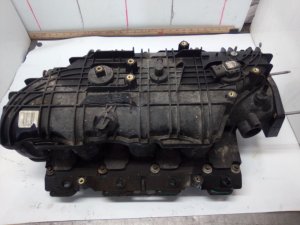
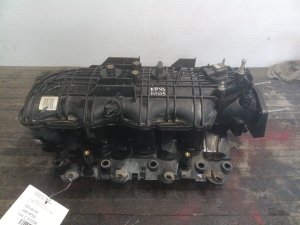
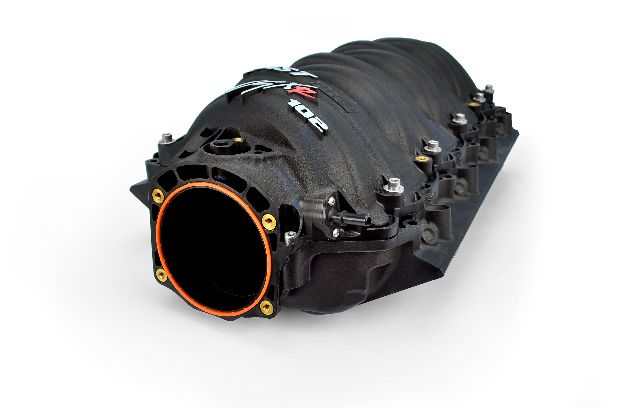
Est. part cost: $60-$150 - Leaking Intake Manifold Gaskets 🔴 High Probability → Shop Engine Intake Manifold The design of the Vortec V8 intake manifold and the original plastic/rubber gasket material make them prone to cracking and leaking over time, causing a vacuum leak. The symptom is often a rough idle and P0300 that appears only after the engine is fully warmed up, as thermal expansion widens the leak.
How to confirm: With the engine idling, spray short bursts of brake cleaner or unlit propane around the seam where the intake manifold meets the cylinder heads. A change in engine idle (smoothing out or stumbling) confirms a leak. A scan tool will also show high positive long-term fuel trims (LTFT) at idle that decrease as RPMs increase.
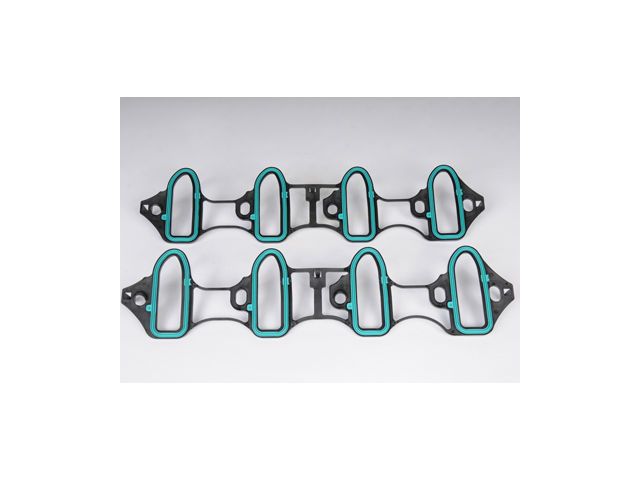
Typical fix: Replace the intake manifold gaskets. It is highly recommended to use an updated design like the Fel-Pro MS 98016 T, which uses a more durable molded rubber over a steel carrier. Also replace the throttle body gasket.
Est. part cost: $40-$100 - Faulty Ignition Coil(s) 🟡 Medium Probability → Shop Ignition Coil
How to confirm: Use a scan tool to check for misfire counts on specific cylinders. Swap a suspected bad coil with a known good one from another cylinder. If the misfire follows the coil, the coil is bad.
Typical fix: Replace the faulty ignition coil. It's often recommended to use OEM-quality brands like ACDelco (e.g., D585 for many GMT800 models) for reliability.
Est. part cost: $40-$80 per coil - Failed Active Fuel Management (AFM) Lifters (2007-2011) 🟡 Medium Probability → Shop Engine Valve Lifter The AFM system deactivates cylinders to save fuel, but the specialized lifters for these cylinders (1, 4, 6, and 7) are a known major failure point. They can collapse or become stuck due to internal pin damage or oiling issues, resulting in a dead cylinder and a P0300 code, often accompanied by a ticking noise.
How to confirm: A persistent misfire on an AFM cylinder (often with a P0301, P0304, P0306, or P0307) accompanied by a ticking noise is a strong indicator. The definitive test is to remove the valve cover and run the engine, observing if a rocker arm on the suspect cylinder is not moving, which indicates a collapsed lifter.
Typical fix: This is a major repair requiring the cylinder head(s) to be removed to replace the faulty lifters. Many owners opt to replace all AFM lifters and the Valve Lifter Oil Manifold (VLOM) at the same time, or install an AFM-delete kit which replaces the AFM lifters, camshaft, and requires an ECU tune to permanently disable the system.
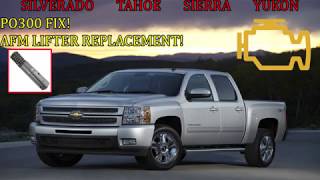
Est. part cost: $300-$800 for parts (lifters, gaskets, etc.), significantly more with labor 🎬 Watch: Step-by-step AFM lifter replacement and P0300 fix walkthrough.
- Low Fuel Pressure ⚪ Low Probability
How to confirm: Connect a fuel pressure gauge to the fuel rail's Schrader valve. Pressure at idle (engine running) should be between 55-62 PSI for most of these models. Some sources note idle pressure may be lower, around 43-45 PSI, so check specs for your specific year. Low pressure indicates a weak fuel pump or a clogged fuel filter.
Typical fix: Replace the fuel pump module (which includes the in-tank filter) and/or the fuel pump relay.
Est. part cost: $200-$400 for a fuel pump assembly
Rare But Worth Checking
- Worn Camshaft Lobe: → Shop Engine Camshaft Mentioned in TSB #PIP4138P. A collapsed or seized lifter can quickly wipe out the corresponding lobe on the camshaft. If a lifter is replaced, the camshaft must be inspected for damage. This requires significant engine disassembly.
- Crossed Fuel Injector Connectors: → Shop Fuel Injector TSB #PIP5169 specifically warns that after engine repairs, the injector connectors for cylinders 5 and 7, or 6 and 8, can be accidentally swapped due to their proximity. This is a simple visual check worth performing if work was recently done.
- Clogged Catalytic Converter: → Shop Catalytic Converter A restricted exhaust can create excessive backpressure, leading to random misfires. This is usually a consequence of long-term, unaddressed misfiring (dumping raw fuel into the exhaust), not the initial cause.
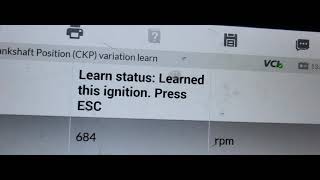
- Crankshaft Position Sensor Relearn Needed: → Shop Engine Crankshaft Position Sensor In some cases, especially after battery replacement or other service, the ECM can lose its learned crankshaft position profile. This can cause false misfire detection (P0300) without any actual performance issue, particularly during deceleration. A shop with a capable scan tool can perform the 'crank relearn' procedure to fix this.
Diagnosis Steps
- Scan for Codes: Use an OBD-II scanner to confirm P0300 and check for any other codes (like P030x or P0171/P0174) that can help pinpoint the issue. Record freeze frame data if available.
- Check Misfire Data: Use a scan tool with live data to view misfire counts per cylinder while the engine is running. This can help determine if the misfire is truly random or concentrated on a few cylinders (e.g., AFM cylinders 1, 4, 6, 7).
- Inspect Ignition System: Start with the basics. Visually inspect all spark plugs, wires, and coils for wear, damage, or corrosion. Replace as needed.
- Test for Vacuum Leaks: With the engine fully warm and idling, carefully spray brake cleaner or use a smoke machine around the intake manifold gasket area. A change in engine RPM or the sound of the engine indicates a leak.
- Check Fuel Pressure: Connect a fuel pressure gauge to the fuel rail schrader valve. Pressure should be within the 55-62 PSI range at idle.
- Inspect for AFM Lifter Failure (2007-2011 models): If misfires are concentrated on cylinders 1, 4, 6, or 7, listen for a distinct ticking noise. The definitive check is to remove the appropriate valve cover and watch the rocker arms while the engine runs to check for a collapsed (non-moving) lifter.
- Advanced Diagnostics: If the cause is still not found, perform a compression test to check for mechanical engine problems. If compression is good, consider the possibility of a worn camshaft lobe (TSB #PIP4138P) or the need for a crankshaft position sensor relearn.
Parts You'll Likely Need
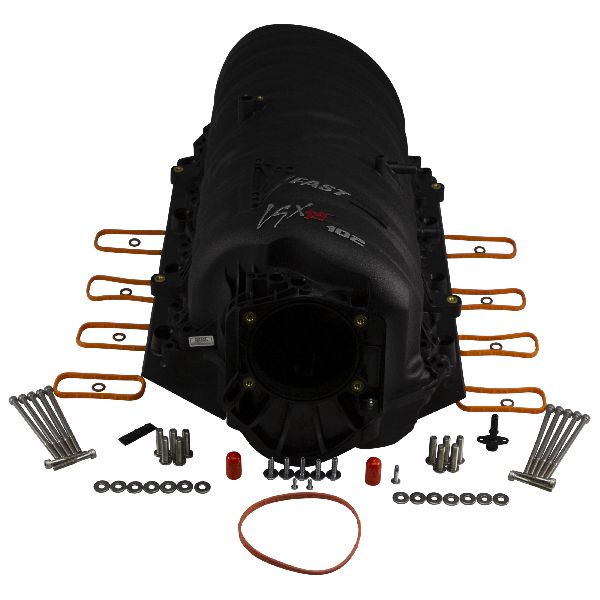
- Intake Manifold Gasket Set
(OEM #89060413 (for many 5.3L/6.0L))— These gaskets are a very common failure point on Vortec V8s, causing vacuum leaks that trigger a P0300, especially when the engine is warm.
Related Codes That Often Appear With This One
- P0301-P0308 — These codes indicate a misfire on a specific cylinder (e.g., P0301 for Cylinder 1). A P0300 will often appear with one or more of these codes, helping to narrow down the problem area, especially for AFM lifter issues.
- P0171 / P0174 — These codes mean "System Too Lean" on Bank 1 and Bank 2, respectively. They strongly suggest a vacuum leak, such as from a failed intake manifold gasket, is allowing unmetered air into the engine.
Technical Service Bulletins (TSBs) & Recalls
- PIP5628C: Preliminary information for diagnosing P0300-P0308 and/or P050D.
- PIP5169: Warns technicians to check for crossed fuel injector connectors on cylinders 5-7 and 6-8 after engine repairs, which can cause a P0300 code.
- PIP4138P / PIP4138Q: Advises that if standard diagnostics fail, the cause may be a worn camshaft lobe, sticking valve, broken valve spring, or a collapsed AFM lifter.
- 15-06-01-002F: Discusses engine misfire/tick noise with a P0300 code caused by a mechanically collapsed or stuck AFM lifter, potentially due to oil aeration.
Platform-Specific Known Issues
- Active Fuel Management (AFM) Lifter Failure: On 2007-2011 models, the AFM system is a primary source of P0300 codes. The lifters can fail, leading to a misfire and potential camshaft damage. This is a well-documented issue across GM trucks and SUVs with these engines.
- Intake Manifold Gasket Leaks: The plastic intake manifold combined with heat cycles causes the gaskets to become hard and brittle, leading to vacuum leaks that are most noticeable as a rough idle when the engine is warm.
- Oil Consumption Issues (AFM Models): Related to the AFM system, some engines suffer from excessive oil consumption, which can foul spark plugs (especially in cylinders #1 and #7) and contribute to misfires. A TSB (#10-06-01-008E) addresses this with a redesigned valve cover and an oil deflector shield.
Mechanic-Grade Diagnostic Values
- Fuel Pressure (Key ON, Engine OFF) — expected: 55-62 psi (385-425 kPa) for most models. Some 5.3L Flex Fuel (VIN Z) models may be lower at 48-54 psi (335-375 kPa).. Failure: Pressure below the specified range indicates a weak fuel pump, clogged filter, or faulty regulator.
- Fuel Pressure (Engine Running at Idle) — expected: Approximately 55-62 PSI, may vary by +/- 5 PSI.. Failure: Consistently low pressure points to a fuel delivery problem.
- Ignition Coil Primary Resistance — expected: 0.1 to 0.8 ohms.. Failure: Readings outside this range, or readings that are erratic, suggest a failing coil.
- Ignition Coil Secondary Resistance — expected: Around 5.85 kOhms.. Failure: A significantly different reading indicates a fault in the coil's secondary winding.
Hidden / Shadow Codes Worth Checking
- P1336: Crankshaft Position System Variation Not Learned. This code is often set after replacing a crankshaft sensor, ECM, or major engine components without performing the relearn procedure. It can cause the ECM to incorrectly interpret data, leading to a false P0300. (see via A professional scan tool like a GM Tech2 or VXDIAG with Tech2Win software.)
Scan Tool Commands That Help
- GM Tech2 or equivalent: Crankshaft Position Variation Learn — This procedure is required after replacing the crankshaft position sensor, ECM, or performing major engine work. Failure to perform the relearn can cause the ECM to set a false P0300 code because it cannot accurately detect misfires.
- GM Tech2 or GDS2: Misfire History Data / Misfire Graphic — To view historical or live misfire counts for each individual cylinder. This is critical for diagnosing a P0300, as it can reveal if the 'random' misfire is actually concentrated on one or two cylinders (e.g., AFM cylinders), which a basic code reader might not show.
- GM Tech2 or GDS2: AFM Solenoid Test / Cylinder Deactivation — To command the Active Fuel Management solenoids on and off to test their electrical function and observe the engine's response. This can help diagnose a faulty VLOM solenoid without disassembly.
Wiring & Ground Locations
- G103 — Front of the right (passenger side) cylinder head.. This is a primary engine ground. Corrosion or looseness here can cause erratic sensor readings and contribute to misfires.
- G104 — Rear of the left (driver side) cylinder head, near the brake booster. A ground strap often runs from here to the firewall (G108).. This ground is critical for the engine block and various components. A poor connection can cause a host of electrical issues, including misfires. One owner fixed a bank-wide misfire by repairing the main ground wire for the coils that attached here.
- G102 — Lower left front of the engine.. Grounds the eight ignition coils. A failure at this point can cause an entire bank of cylinders or multiple random cylinders to stop firing.
- ECM Location — On both GMT800 and GMT900 platforms, the ECM is located in the engine compartment on the passenger side, near the firewall and HVAC blower motor housing.. Knowing the location is essential for inspecting connectors for corrosion or damage and for testing power and ground circuits directly at the module.
Real Owner Repair Stories
- Tahoe Yukon Forum (2012 Yukon Denali 6.2L, 65,000 miles) — P0300, erratic oil pressure gauge, misfire on cylinder #5.
❌ Tried (didn't work) Replaced oil pressure sensor, Replaced spark plugs and wires, Used fuel system cleaner, Checked battery and grounds, Replaced #5 ignition coil, Replaced crankshaft sensor
✅ What actually fixed it The owner discovered the P0300 code was only set when the vehicle went into AFM mode. A specialist suggested a faulty solenoid in the VLOM. The owner had the AFM system disabled via an ECM tune for $50, which solved the P0300 code. - YouTube - The G Automotive and More (GMC/Chevy Truck with 5.3L V8) — Flashing check engine light, running very rough, P0300, entire left bank (bank one) was not working.
❌ Tried (didn't work) Initial diagnosis pointed towards multiple component failures.
✅ What actually fixed it The main ground wire for the ignition coils (G102) was broken and corroded where it attached to the engine block. Repairing the broken wire by cleaning the connection point and attaching a new ring terminal restored function to the ignition coils and fixed the misfire. - Tahoe Yukon Forum (2003 Yukon XL Denali, 209k miles) — P0300 Random Misfire, flashing CEL.
❌ Tried (didn't work) The owner first planned to check injectors, grounds, MAF, and throttle body.
✅ What actually fixed it The issue was resolved with a basic tune-up. The owner replaced the old AC Delco Iridium spark plugs and wires. The new plugs and wires immediately fixed the misfire and the P0300 code did not return after a test drive.
"I Checked Everything" — The Actual Cause
- In cases where a smoke test shows no vacuum leaks, a P0300 can be caused by a faulty crankshaft position sensor that needs a 'relearn' procedure, which can only be done with a dealer-level scan tool.
- A P0300 that occurs only when the engine is warm, but passes a smoke test, can be caused by a clogged filter screen inside the Valve Lifter Oil Manifold (VLOM). This restricts oil flow to the AFM lifters, causing them to malfunction and misfire, but won't show as a vacuum leak.
- A cracked flexplate can cause misfire-like symptoms and trigger a P0300 code. The crack can cause the crankshaft position sensor to get erratic readings, but all fuel and ignition system tests will appear normal.
OEM Part Supersession History
12571595, 12619820, 12639516→12645725 (and others)— Multiple revisions to the AFM/DOD lifter design to improve reliability and address high failure rates.
Heads up: Newer Dynamic Fuel Management (DFM) lifters (e.g., HL-7025) are backwards compatible with older AFM systems, but original AFM lifters (e.g., HL-7011) will NOT work in newer DFM engines.
Model Year Variations Within This Range
- 2004-2006 (GMT800): These models do not have Active Fuel Management (AFM). Therefore, P0300 causes are more likely to be traditional issues like intake manifold gaskets, ignition components, or fuel delivery. AFM lifter failure is not a possible cause.
- 2007-2011 (GMT900): These models widely use Active Fuel Management (AFM) on 5.3L and 6.0L engines, making AFM lifter failure and VLOM issues a very common cause of P0300 that does not affect the earlier generation.
- 2007: The 2007 model year was a transition year. A 'Classic' body style (GMT800) was sold alongside the new GMT900 body style. It is critical to identify the body style to correctly diagnose P0300, as the potential causes (especially AFM) are very different between the two.
Helpful Videos

Used OEM Parts in Stock
New Aftermarket Parts Available


The information in this article is provided for general reference and educational purposes only. Vehicle specifications, procedures, and part compatibility can vary by production date, trim level, and region. Always consult your vehicle's factory service manual and verify part numbers before purchasing or performing repairs. Safety-critical components such as airbags, seat belts, and braking systems should be installed by a qualified professional.
- Gmc YUKON XL:
- 🧭 Diagnostic Flowchart
- 🎬 Helpful Videos
- 🛍️ Shop This Part
- What's Unique About the 2004-2011 Gmc YUKON XL
- Symptoms You May Notice
- Most Likely Causes
- Rare But Worth Checking
- Diagnosis Steps
- Parts You'll Likely Need
- Related Codes That Often Appear With This One
- Technical Service Bulletins (TSBs) & Recalls
- Platform-Specific Known Issues
- Mechanic-Grade Diagnostic Values
- Hidden / Shadow Codes Worth Checking
- Scan Tool Commands That Help
- Wiring & Ground Locations
- Real Owner Repair Stories
- "I Checked Everything" — The Actual Cause
- OEM Part Supersession History
- Model Year Variations Within This Range
- 🎟️ Get 5% Off