

P0300 on 2015-2018 Honda FIT: Random Misfire Causes and Fixes
On a 2015-2018 Honda FIT, a P0300 code is most often caused by carbon buildup on the intake valves, an issue specific to this direct-injection engine. Honda has acknowledged this with TSBs and a warranty extension. Other common causes include faulty fuel injectors (especially on 2015-16 models), worn spark plugs, or faulty ignition coils.
- P0300 on a 2015-2018 Fit is very likely due to carbon buildup on the intake valves, a known issue with the direct-injection engine.
- Before paying for repairs, check with a Honda dealer to see if your vehicle is covered under the 10-year/150,000-mile warranty extension for valve cleaning.
- If not caused by carbon buildup, the next most likely culprits are standard maintenance items: worn spark plugs or failing ignition coils.
- A flashing check engine light signals a severe misfire that can damage your catalytic converter, so reduce driving until the issue is fixed.
What's Unique About the 2015-2018 Honda FIT
The 2015-2018 Honda FIT uses a 1.5L engine with gasoline direct injection (GDI). Unlike older port-injection engines that spray fuel over the intake valves and naturally clean them, GDI engines inject fuel directly into the cylinder. This design allows oil vapors from the PCV system to bake onto the hot, dry intake valves, causing carbon deposits that disrupt airflow and lead to misfires. This issue is so prevalent on this platform that Honda issued multiple Technical Service Bulletins (TSBs) and a warranty extension for valve cleaning.
Diagnostic Flowchart
Tap your situation to follow the diagnostic path that matches what you're seeing on this vehicle.
Symptoms You May Notice
- Check Engine Light is on or flashing
- Multiple dashboard warning lights illuminating simultaneously ('Christmas tree' effect)
- Rough or unstable idle
- Hesitation or stumbling during acceleration
- Reduced engine power and poor performance
- Decreased fuel economy
- Engine may stall at stops
- Replacing only spark plugs or coils without addressing the underlying carbon buildup issue. Many owners report the misfire returning shortly after replacing ignition components because the root cause was not fixed.
- Replacing the catalytic converter for a P0420 code when the actual cause is faulty fuel injectors creating a rich/lean condition that fools the O2 sensors.
Most Likely Causes
- Carbon Buildup on Intake Valves 🔴 High Probability The direct-injection fuel system does not wash carbon deposits off the intake valves, leading to accumulation that disrupts airflow and causes misfires. This is a widely documented issue for this engine, acknowledged by Honda via TSB A21-007.
How to confirm: A visual inspection of the intake valves is required, typically using a borescope camera inserted into the intake ports after removing the intake manifold.
Typical fix: The intake valves must be physically cleaned. The official Honda procedure is walnut shell blasting of the intake ports. The repair also includes a PGM-FI software update. Some DIYers have reported success with chemical soaks, but this is a more involved process.
Est. part cost: $0 (if under warranty) - $50 (walnut media/chemicals for DIY) - Faulty Fuel Injectors 🔴 High Probability → Shop Fuel Injector The original fuel injectors, especially on 2015-2016 models, were prone to clogging and failure. This was common enough for Honda to issue TSB A18-027 and a warranty extension. The issue can cause misfires, hesitation, and even falsely trigger a P0420 catalytic converter code.
How to confirm: Diagnosis can be difficult. A scan tool can monitor fuel trims and misfire counts. A dealer can perform a specific injector flow test outlined in service bulletins. A multimeter can be used to check resistance; a healthy high-impedance injector should read between 10-12 ohms.
Typical fix: Replace all four fuel injectors as a set with the updated OEM part (16010-5R1-315). It is also required to replace the single-use fuel joint pipe.
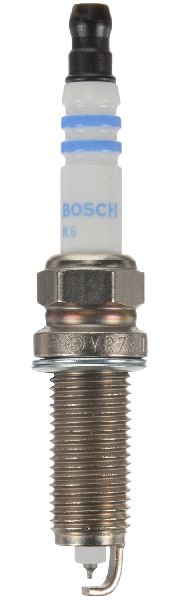
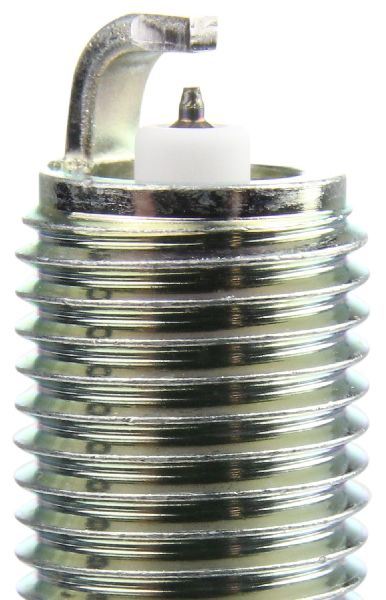
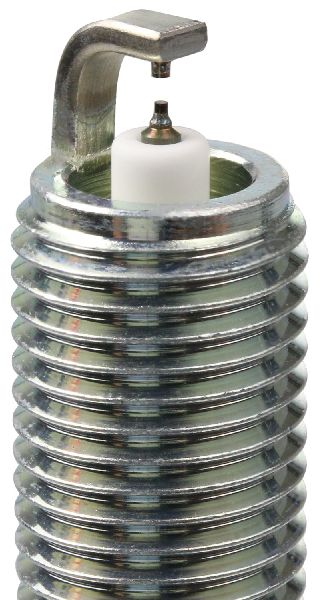
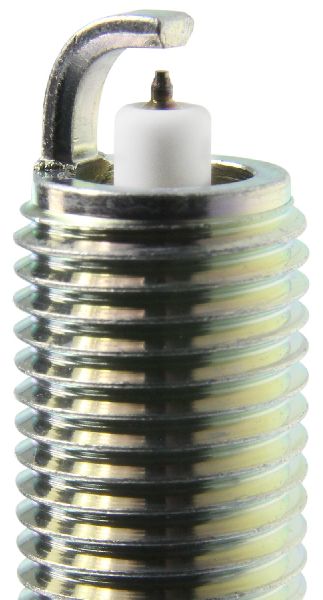
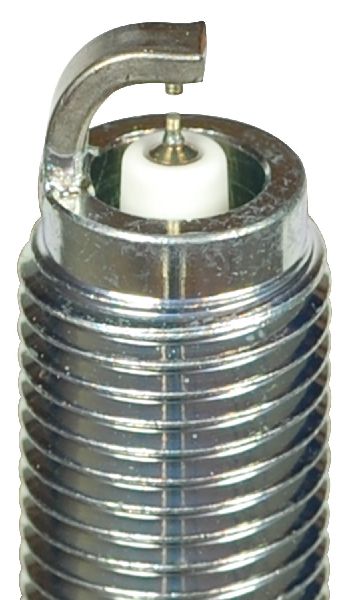
Est. part cost: $300-$500 for a set of 4 OEM injectors - Worn Spark Plugs 🟡 Medium Probability → Shop Spark Plug Spark plugs are a standard maintenance item with a finite life. Worn electrodes or an incorrect gap can lead to a weak spark, causing incomplete combustion and misfires.
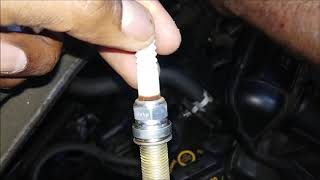
How to confirm: Remove and inspect all four spark plugs for wear, fouling, or damage. The center electrode should be sharp and the gap should match spec (typically pre-gapped from the factory).
Typical fix: Replace all four spark plugs as a set. 🎬 Watch: Step-by-step guide to replacing your Honda Fit spark plugs. It's recommended to use the OEM-specified plugs to ensure correct performance.
Est. part cost: $40-$80 - Faulty Ignition Coils 🟡 Medium Probability → Shop Ignition Coil Ignition coils can fail from heat and age, resulting in insufficient voltage to the spark plugs. While reliable, failures are not uncommon on higher-mileage vehicles.
How to confirm: Use a scan tool with Mode $06 to check for misfire counts on specific cylinders. Swap the ignition coil from a misfiring cylinder with one from a known good cylinder. If the misfire code follows the coil (e.g., P0302 becomes P0304 after swapping coils from cylinders 2 and 4), the coil is bad. Resistance can also be tested: primary winding should be ~0.4-2.0 ohms and secondary should be ~6k-10k ohms.
Typical fix: Replace the faulty ignition coil. Many mechanics recommend replacing them as a set if they are original and high-mileage.
Est. part cost: $40-$75 per coil
Rare But Worth Checking
- Vacuum Leak: A leak in a vacuum hose or intake manifold gasket can introduce unmetered air, throwing off the air-fuel ratio and causing random misfires.
- Low Fuel Pressure: A weak fuel pump or clogged fuel filter can starve the engine of fuel, leading to lean conditions and misfires across all cylinders. Note that a separate recall exists for the low-pressure fuel pump on 2018-2020 models.
Diagnosis Steps
- Read the codes: Use an OBD-II scanner to confirm the P0300 code and check for any other specific cylinder misfire codes (P0301-P0304) or related codes like P0420.
- Check for TSBs and Warranty Extensions: This is the most important first step. Contact a Honda dealer with your VIN. Ask them to check for eligibility for the carbon buildup warranty extension (TSB #ABOM06022023906) and the fuel injector warranty extension (related to TSB A18-027 for 2015-16 models).
- Inspect Ignition System: If not covered or if you prefer to DIY, start with the basics. Inspect the spark plugs for wear and correct gap. They are a common maintenance item.
- Test Ignition Coils: If plugs are good, test the ignition coils. The easiest method is to swap a coil from a cylinder that is logging misfires (if any specific codes are present) with a good one and see if the misfire follows the coil.
- Inspect for Carbon Buildup: If the ignition system is healthy, the next step is to inspect the intake valves for carbon buildup using a borescope. This is the most probable cause on this specific vehicle.
- Investigate Fuel Injectors: Especially on 2015-2016 models, suspect the fuel injectors. This is harder to test for a DIYer and may require professional diagnosis or deciding to replace them as a likely culprit if other steps fail.
- Check for Vacuum Leaks: Inspect all vacuum hoses and the intake manifold gasket for cracks or leaks. A smoke test is the most effective way to find a leak.
Parts You'll Likely Need
- Ignition Coil
(OEM #30520-5R0-013)— A common failure point for misfires on many modern engines. Replaces prior part number 30520-5R0-003.
Trusted brands: Honda (OEM), NGK (U5362), Denso, Hitachi (IGC0099)
OEM price range: $75-$105
Aftermarket price range: $40-$75 - Spark Plug
(OEM #12290-5R0-003)— A routine maintenance part that is a primary cause of misfires when worn.
Trusted brands: NGK (DILZKAR7C11S), Denso (DXE22HCR11S)
OEM price range: $20-$30 per plug
Aftermarket price range: $10-$20 per plug - Fuel Injector Set
(OEM #16010-5R1-315)— The original injectors on 2015-2016 models are a known high-failure item. This is the updated part number. Always replace as a set of four.
Trusted brands: Honda (OEM)
OEM price range: $100-$150 per injector
Aftermarket price range: $50-$100 per injector
Related Codes That Often Appear With This One
- P0301, P0302, P0303, P0304 — These codes indicate a misfire on a specific cylinder. They often accompany or precede a P0300 code as the ECU tries to pinpoint the problem.
- P0420 — This code for 'Catalyst System Efficiency Below Threshold' can be triggered by faulty fuel injectors causing an improper fuel mixture, not necessarily a bad catalytic converter.
Technical Service Bulletins (TSBs) & Recalls
- A21-007: States P0300-P0304 can be caused by carbon buildup on intake valves and outlines the walnut blasting and software update repair procedure.
- A16-034: An earlier bulletin noting the MIL can illuminate with P0300-P0304 codes on 2015-16 Fit models.
- ABOM06022023906: Details the warranty extension for valve cleaning and software installation due to carbon buildup causing misfires.
- A18-027: Addresses faulty fuel injectors on 2015-2016 models, which can cause misfires.
Platform-Specific Known Issues
- Carbon Buildup on Intake Valves: Honda has issued multiple Technical Service Bulletins regarding this issue. TSB #A21-007 explicitly states the check engine light may come on with DTC P0300 due to carbon buildup on the intake valves. The fix involves walnut blasting and a software update.
- Warranty Extension (Carbon): Honda extended the warranty for this specific problem. TSB #ABOM06022023906 extends coverage for valve cleaning and a software update to 10 years or 150,000 miles for vehicles experiencing misfire codes P0300-P0304 due to carbon buildup.
- Faulty Fuel Injectors (2015-2016): TSB A18-027 was released to address a high rate of fuel injector failure on early 3rd-gen Fits. Honda extended the warranty for this part to 10 years/150,000 miles for affected vehicles.
Mechanic-Grade Diagnostic Values
- Ignition Coil Primary Winding Resistance — expected: 0.4 - 2.0 Ohms. Failure: A reading outside this range, especially an open circuit (infinite resistance) or a short (zero resistance).
- Ignition Coil Secondary Winding Resistance — expected: 6,000 - 10,500 Ohms (6kΩ - 10.5kΩ). Failure: A reading significantly outside this range indicates an internal coil failure.
- Fuel Injector Resistance — expected: 10 - 12 Ohms. Failure: A reading outside this range suggests a faulty injector. These are high-impedance injectors; a very low reading indicates a short that could damage the ECU.
- Low-Pressure Fuel System Pressure — expected: ~50 psi (static). Failure: Significantly lower pressure indicates a weak in-tank fuel pump or clogged filter.
- Valve Lash/Clearance (Cold Engine) — expected: Intake: 0.15mm - 0.19mm | Exhaust: 0.26mm - 0.30mm. Failure: Clearances that are too tight (especially on the exhaust side) can cause misfires when the engine is warm. Clearances that are too loose will cause a ticking noise.
Scan Tool Commands That Help
- Honda HDS (or compatible high-end scanner): CKP Pattern Learn / Crank Pattern Learn — This procedure must be performed after replacing the Crankshaft Position (CKP) sensor, and is sometimes recommended to clear persistent, phantom misfire codes. It synchronizes the ECU with the precise rotational pattern of the crankshaft.
- Honda HDS: ECM/PCM RESET — This is a deeper reset than a generic DTC clear. It erases all stored DTCs, freeze data, and readiness codes but does NOT erase the learned CKP pattern. Use this after a repair to ensure all adaptive values are cleared.
Wiring & Ground Locations
- G1 / Battery Ground — Main ground cable from the battery negative terminal to the vehicle's chassis.. A poor main ground can cause widespread electrical issues, including weak spark and erratic sensor readings, leading to random misfires.
- G2 / Engine Ground — Ground strap connecting the engine block directly to the chassis.. This is the primary ground path for the ignition coils and various engine sensors. Corrosion or a loose connection here is a direct cause of ignition problems.
- G3 / Transmission Ground — Ground strap connecting the transmission case to the chassis. Sometimes referred to as 'mission earth'.. Provides a ground path for sensors located on the transmission, which can influence engine operation.
- G101 — In the engine compartment, serves as a common ground point for multiple components in the engine harness, including the PCM.. A fault at this central grounding point can cause multiple, seemingly unrelated sensor and actuator problems, mimicking a random misfire scenario.
Real Owner Repair Stories
- FitFreak.net user 'slow' (2015 Honda Fit EX, Manual Transmission, 130,000 miles) — Persistent P0300, P0301, and P0303 codes. Engine felt like it ran fine, mileage was okay.
❌ Tried (didn't work) Replacing spark plugs, Replacing ignition coils, Performing a valve adjustment, Cleaning the intake valves (carbon cleaning)
✅ What actually fixed it Replacing all four fuel injectors finally solved the misfire codes. The owner made it 5,000 miles with no Check Engine Light after the injector replacement.
"I Checked Everything" — The Actual Cause
- On the 2015-2018 Fit, a smoke test is likely to come back clean even when a P0300 is present. The most common causes are not vacuum leaks, but rather internal issues like carbon buildup on intake valves or faulty direct-injection fuel injectors. A technician unfamiliar with this platform's specific TSBs might incorrectly rule out fuel/air delivery issues after a clean smoke test.
When the Usual Fixes Don't Work
- While spark plugs and ignition coils are common causes for misfires on any vehicle, on the 2015-2018 Fit they are often replaced without success. A real-world repair story from an owner with over 100,000 miles showed that even after replacing plugs, coils, and performing a valve adjustment and carbon cleaning, the P0300 persisted. The ultimate fix was replacing the fuel injectors, which are a known failure point addressed by a Honda TSB. This highlights the importance of checking for TSBs and considering platform-specific issues before spending money on generic tune-up parts.
OEM Part Supersession History
30520-5R0-003→30520-5R0-013— Standard part revision/update by the manufacturer.e.g., 16010-5R1-005, 16010-5R1-015→16010-5R1-315— Updated design to address the high failure rate (clogging, electronic failure) of the original injectors on 2015-2016 models, as noted in TSB A18-027.
Heads up: While older part numbers will physically fit, it is critical to use the latest superseded part number (16010-5R1-315) for reliability. Always replace as a full set of four.
Model Year Variations Within This Range
- 2015-2016: These model years were equipped with the first-design fuel injectors which are known to have a high failure rate. Honda issued a specific TSB (A18-027) and a warranty extension (10 years/150,000 miles) for this issue on these specific years. While later years can still have injector failures, it is a primary and documented weak point for the early production models.
Helpful Videos
We Have This Part in Stock


The information in this article is provided for general reference and educational purposes only. Vehicle specifications, procedures, and part compatibility can vary by production date, trim level, and region. Always consult your vehicle's factory service manual and verify part numbers before purchasing or performing repairs. Safety-critical components such as airbags, seat belts, and braking systems should be installed by a qualified professional.
- Honda FIT:
- 🧭 Diagnostic Flowchart
- 🎬 Helpful Videos
- 🛍️ Shop This Part
- What's Unique About the 2015-2018 Honda FIT
- Symptoms You May Notice
- Most Likely Causes
- Rare But Worth Checking
- Diagnosis Steps
- Parts You'll Likely Need
- Related Codes That Often Appear With This One
- Technical Service Bulletins (TSBs) & Recalls
- Platform-Specific Known Issues
- Mechanic-Grade Diagnostic Values
- Scan Tool Commands That Help
- Wiring & Ground Locations
- Real Owner Repair Stories
- "I Checked Everything" — The Actual Cause
- When the Usual Fixes Don't Work
- OEM Part Supersession History
- Model Year Variations Within This Range
- 🎟️ Get 5% Off