

P0300 on 2004-2009 Hummer H2: Random Misfire Causes and Fixes
P0300 on a Hummer H2 most often points to a basic tune-up need like worn spark plugs and wires, or a vacuum leak from a failed intake manifold gasket. While these are common, a more serious, documented issue with worn camshaft lobes exists, particularly on 2008-2009 models with the 6.2L engine. Diagnosis should start with the basics before suspecting major mechanical failure.
- Start with the basics: P0300 on an H2 is very often caused by worn spark plugs and wires. If a tune-up hasn't been done in over 50,000 miles, start there.
- Suspect a vacuum leak: The second most likely cause is a failed intake manifold gasket. Look for lean codes (P0171, P0174) and consider a smoke test.
- Don't ignore noises: A persistent ticking or chirping sound accompanying a P0300 code could point to the more serious camshaft wear issue documented in TSBs, especially on 2008-2009 models.
- A flashing check engine light means stop: If the light is flashing, it indicates a severe misfire that can quickly destroy your catalytic converters, leading to a much more expensive repair.
What's Unique About the 2004-2009 Hummer H2

The Hummer H2 uses large GM V8 engines (6.0L and 6.2L) that are generally robust but have well-known weak points leading to a P0300 code. The plastic-and-rubber intake manifold gaskets are a frequent failure point, causing vacuum leaks that throw off the air-fuel mixture. More seriously, Technical Service Bulletins for the 2008-2009 models with the 6.2L engine specifically mention that a P0300 code can be caused by worn camshaft lobes, a significant mechanical engine problem. The location of the knock sensors under the intake manifold also makes them susceptible to damage from coolant intrusion when the gaskets fail, complicating diagnosis.
Diagnostic Flowchart

Tap your situation to follow the diagnostic path that matches what you're seeing on this vehicle.
Symptoms You May Notice
- Rough or shaky idle.
- Hesitation or stumbling during acceleration.
- Noticeable loss of engine power.
- Flashing or solid Check Engine Light.
- Reduced fuel economy.
- A ticking, chirping, or squealing noise from the engine, which could indicate mechanical wear like a worn camshaft lobe.
- Engine stalling.
- Popping or backfiring from the exhaust.
- Smell of gasoline from the exhaust, indicating unburnt fuel.
- Engine vibrations felt in the cabin or steering wheel.
- Replacing only one spark plug or coil when the root cause is a systemic issue like a vacuum leak or low fuel pressure.
- Replacing oxygen sensors, as they are more likely to report a problem (like a lean condition from a vacuum leak) rather than be the cause of the P0300 itself.
- Immediately assuming a major mechanical failure like a bad camshaft before thoroughly ruling out much more common and cheaper issues like spark plugs, wires, and intake gaskets.
Most Likely Causes

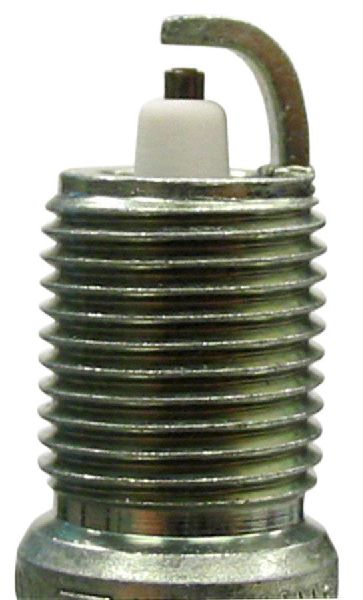
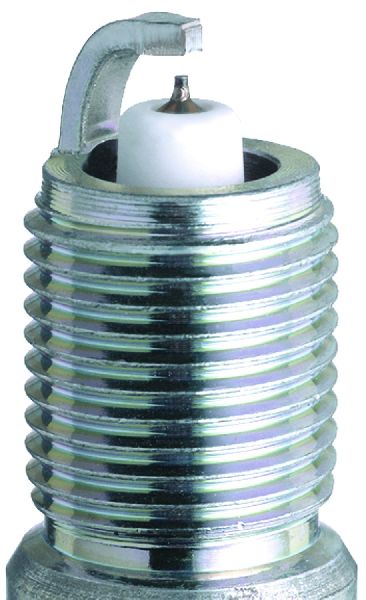
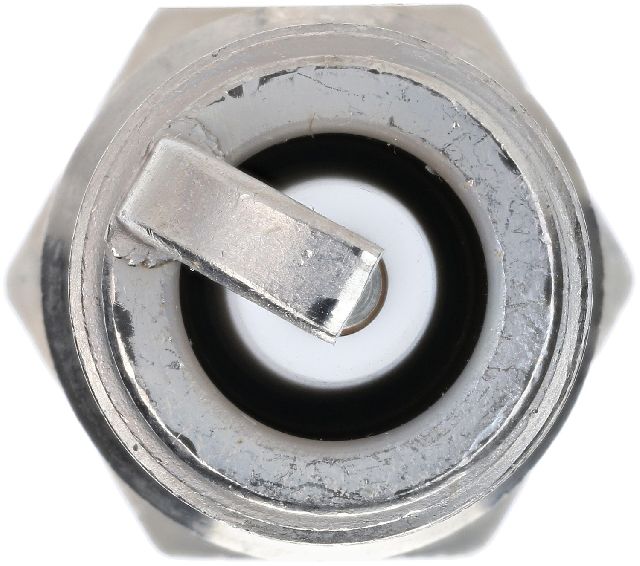
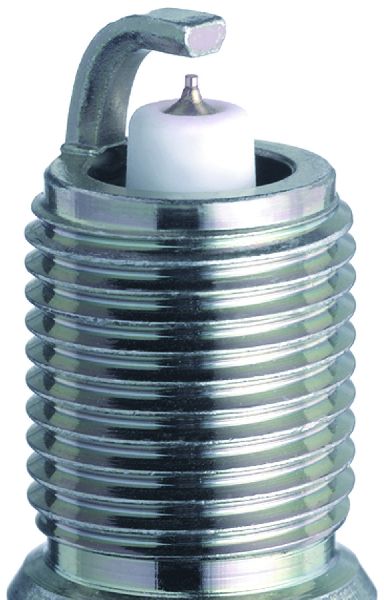
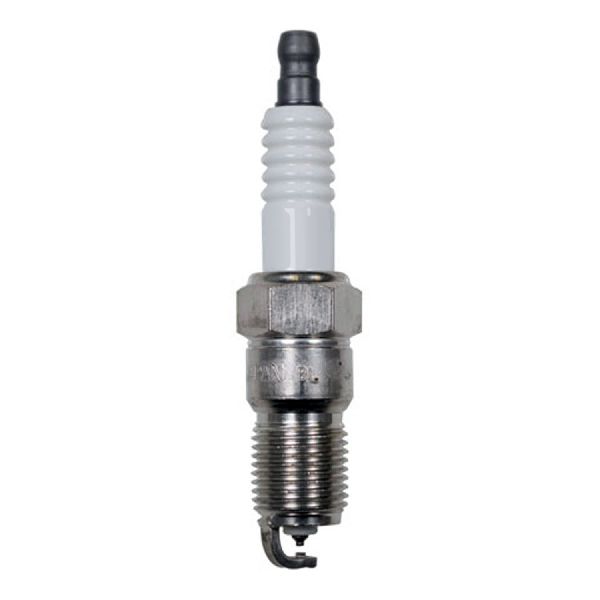
- Worn Spark Plugs and/or Spark Plug Wires 🔴 High Probability → Shop Spark Plug Standard wear and tear. High-mileage H2s that have not had a recent tune-up are very likely to have degraded plugs or wires, causing weak or inconsistent spark. Misfires are more likely to occur under heavy load, like towing, when high cylinder pressures make it harder for the spark to jump a worn gap.
How to confirm: Visually inspect spark plugs for wear, fouling, or cracked porcelain. Inspect wires for brittleness, corrosion, or damage. A good scan tool can show misfire counts per cylinder, 🎬 Watch: How to diagnose and fix P0300 on GM engines. helping to isolate the issue before disassembly. In a dark environment, you may be able to see blue sparks arcing from a bad wire to a ground point on the engine.
Typical fix: Replace all spark plugs and spark plug wires as a set. Use of dielectric grease in the plug boots is recommended.
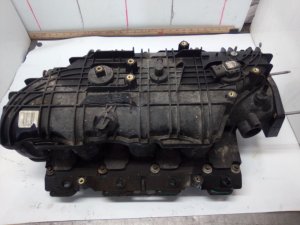
Est. part cost: $80-$200 - Vacuum Leak (Intake Manifold Gasket) 🔴 High Probability The original intake manifold gaskets on these GM V8s use a plastic frame that becomes brittle and cracks from heat cycles and exposure to ethanol in fuel, allowing unmetered air into the engine. This is a very common failure point.
How to confirm: Perform a smoke test on the intake system. A visual inspection may also reveal coolant leaks near the front or rear of the manifold, another symptom of gasket failure. Often accompanied by lean codes P0171 and P0174. Spraying carburetor cleaner around the gasket area and listening for a change in engine idle RPM can also indicate a leak, but a smoke test is more definitive.
Typical fix: Replace the intake manifold gaskets. It's highly recommended to use updated gaskets with a metal frame, like the Fel-Pro MS98016T, which is more durable than the OEM plastic design. 🎬 Watch: Step-by-step guide to replacing your H2 intake gaskets. While the intake is off, it is common practice to also replace the two knock sensors and the wiring harness located in the valley of the engine, as they are prone to failure from moisture intrusion.
Est. part cost: $50-$100 - Faulty Ignition Coil(s) 🟡 Medium Probability → Shop Ignition Coil While generally reliable, individual coils can fail over time due to heat and vibration, leading to a weak spark that gets 'blown out' under high cylinder pressure.
How to confirm: Use a scan tool to identify which cylinders are misfiring the most. Swap the ignition coil from a misfiring cylinder with one from a cylinder that is firing correctly. Clear the codes and drive the vehicle to see if the misfire follows the coil to the new cylinder.
Typical fix: Replace the faulty ignition coil. It's often wise to replace the corresponding spark plug at the same time.
Est. part cost: $40-$80 per coil - Clogged or Dirty Fuel Injectors 🟡 Medium Probability → Shop Fuel Injector Fuel deposits can restrict injectors over time, causing a lean condition and misfires. This is common enough that GM has issued bulletins recommending specific on-vehicle cleaning procedures. Some owners report success after running several bottles of fuel system cleaner.
How to confirm: An injector balance test can identify a weak injector by measuring the pressure drop for each injector. A mechanic's stethoscope can be used to listen for the 'clicking' of each injector; a silent injector is likely faulty. Swapping injectors between cylinders is also a valid diagnostic step, similar to swapping coils.
Typical fix: Professionally clean the fuel injectors or replace any that are confirmed to be faulty. It is recommended to replace the O-rings when injectors are removed.
Est. part cost: $50-$120 per injector
Rare But Worth Checking
- Worn Camshaft Lobe / Failed Lifter: → Shop Engine Camshaft This is a serious mechanical issue specifically cited in TSB #PIP4138P (and its successors like PIP4138Q) for the 2008 H2. It can cause a persistent misfire on one or more cylinders, often accompanied by a distinct ticking or chirping noise. Diagnosis requires checking for a worn cam lobe if other diagnostics fail, which involves removing the valve covers to inspect valve train movement.
- Low Fuel Pressure: A weak fuel pump or clogged fuel filter can starve the entire engine for fuel, causing random misfires under load. An owner on HummerForums traced a P0300 to a clogged fuel filter, which significantly improved performance when replaced. Checking fuel pressure at the rail is a key diagnostic step if ignition and vacuum issues are ruled out.
- Clogged Catalytic Converters: → Shop Catalytic Converter If the catalytic converters are clogged, excessive exhaust backpressure can build up, causing the engine to misfire randomly. This is often a result of long-term misfires that have already damaged the converters by dumping raw fuel into the exhaust. A user on HummerForums discovered their P0300 was caused by clogged cats that had turned to dust inside. 🎬 See how a clogged catalytic converter causes random misfires.
- Contaminated Fuel: Water in the fuel from a gas station's storage tank can cause immediate and severe random misfires. If the P0300 code appears directly after refueling, this is a strong possibility. The fix involves using a fuel additive like 'dry gas' to help disperse the water and refueling at a different station.
- Failed Engine Mounts: While not a direct cause of misfires, excessively worn or broken engine mounts can allow the engine to move enough to cause vibrations that the knock sensors may misinterpret as a misfire, setting a P0300 code. This is a less common cause but should be considered if all other avenues are exhausted. Visual inspection for cracked rubber or excessive engine movement when shifting from drive to reverse is key.
Diagnosis Steps
- Check for any other stored DTCs. Codes like P0171/P0174 are a strong clue for a vacuum leak. Codes related to the throttle body (P2108, P1516) should be addressed first as they can cause a P0300.
- Using a scan tool with live data, monitor the misfire counters for each cylinder to see if any are more active than others. This can help turn a 'random' misfire into a more specific one.
- Perform a full ignition system inspection. Check the condition of all spark plugs and wires. Replace if they are old or show signs of wear, fouling, or damage. The recommended OEM spark plugs are often ACDelco Iridium (e.g., 41-110), which are pre-gapped and should not be adjusted.
Parts You'll Likely Need

- Spark Plugs
(OEM #ACDelco 41-110 (or 12621258))— This is the most common and basic maintenance item to address a misfire. Worn plugs are a primary cause of weak spark. The OEM Iridium plugs are recommended for longevity and performance.
Trusted brands: ACDelco, NGK
OEM price range: $8-$15 per plug
Aftermarket price range: $5-$12 per plug - Spark Plug Wires
(OEM #ACDelco 9748UU (example set))— Original wires can become brittle and fail, causing intermittent spark delivery. They are typically replaced with the spark plugs.
Trusted brands: ACDelco
OEM price range: $80-$120 per set
Aftermarket price range: $50-$90 per set - Intake Manifold Gasket Set
(OEM #Fel-Pro MS98016T (upgraded alternative))— A very common failure point on these GM V8s, causing vacuum leaks that lead directly to a P0300 code. The Fel-Pro metal-carrier gasket is a widely recommended upgrade over the failure-prone OEM plastic design.
Trusted brands: Fel-Pro, ACDelco
OEM price range: $80-$110
Aftermarket price range: $40-$70
Related Codes That Often Appear With This One
- P0301-P0308 — If the random misfire begins to occur more frequently on specific cylinders, the ECM may also log cylinder-specific misfire codes, which can help narrow down the diagnosis.
- P0171, P0174 — These 'System Too Lean' codes for Bank 1 and Bank 2 strongly indicate a vacuum leak, such as from a bad intake manifold gasket, is allowing unmetered air into the engine.
- P0137, P0157 — These codes for 'O2 Sensor Circuit Low Voltage' can appear alongside a P0300, sometimes as a result of the misfire condition itself or due to related exhaust issues. One owner found these codes were triggered by gutted catalytic converters.
Technical Service Bulletins (TSBs) & Recalls

- TSB #PIP4138P / #PIP4138Q: Addresses engine misfire (P0300-P0308) and/or engine noise (chirp, squeak, tick). Points to potential causes like a worn camshaft lobe, sticking valve, or broken valve spring.
- TSB #PIP5628G: Provides diagnostic guidance for technicians dealing with misfire codes (P0300-P0308). It outlines a template of information to collect (fuel trims, compression test results, etc.) before contacting GM's technical assistance.
Platform-Specific Known Issues
- Intake Manifold Gasket Failure: The original gaskets use a plastic carrier that degrades over time, leading to vacuum and/or coolant leaks. This is a very common cause for P0300, often accompanied by P0171 and P0174 codes. Many owners on forums consider the upgrade to the Fel-Pro MS98016T metal gasket a necessary preventative measure.
- Worn Camshaft Lobes (2008-2009): TSB #PIP4138P explicitly identifies worn camshaft lobes as a potential cause for a persistent, isolated misfire that logs a P0300 code, often with a ticking or chirping noise. This is a significant mechanical repair.
- Misfire Under Load: Many owners of trucks with the 6.0L V8 report a distinct misfire or shudder that only appears under heavy load, such as towing or hard acceleration. This is a classic symptom of a secondary ignition failure (weak coil, bad wire, or worn plug) where the high cylinder pressure 'blows out' the weak spark.
Mechanic-Grade Diagnostic Values
- Fuel Pressure (Key On, Engine Off and at Idle) — expected: 55-60 PSI. Failure: Readings consistently at 50 PSI or lower may indicate a weak fuel pump, clogged filter, or faulty regulator.
- Ignition Coil Primary Resistance — expected: Approximately 0.5 to 2.5 ohms. Failure: A reading significantly outside this range, or an open circuit (infinite resistance), indicates a faulty coil. However, a coil can test good with a multimeter but still fail under load.
- Ignition Coil Secondary Resistance — expected: Approximately 5,000 to 15,000 ohms (5k-15k Ω). Failure: A reading outside this range suggests the coil's secondary winding is compromised.
- Fuel Injector Resistance — expected: 11 to 14 ohms. Failure: A reading outside this range indicates a faulty injector coil. This test does not check for mechanical clogs.
Scan Tool Commands That Help
- GM Tech2 / GDS2 (or equivalent professional scanner): Crankshaft Position Variation Learn (CASE Relearn) — This procedure should be performed after replacing the crankshaft position sensor, PCM, or making any changes to the engine's rotating assembly (flexplate, crankshaft). An unlearned sensor can cause false misfire detection and set a P0300. One owner reported this procedure alone fixed their persistent P0300 after other repairs failed.
Wiring & Ground Locations
- G103 — Top right rear of the engine block.. This is a primary engine ground. A loose or corroded connection at G103 can cause erratic sensor readings and intermittent misfires due to an unstable ground reference for the ignition system and various sensors.
- G200 / G203 — Located near the left (G200) and right (G203) kick panels inside the cabin.. These are major interior body grounds. While less likely to cause a P0300 directly, poor connections here can cause a variety of seemingly unrelated electrical issues with modules that communicate with the PCM, potentially complicating diagnosis.
- Powertrain Control Module (PCM) — On the left front of the engine compartment, near the battery.. This is the location of the main engine computer. Knowing its location is critical for checking connector integrity and performing pin-out voltage/resistance tests on circuits related to the ignition system, fuel injectors, and sensors.
Real Owner Repair Stories
- YouTube user Koland Howe (Hummer H2 6.0L) — Random misfire code P0300, with misfires primarily on cylinders 4 and 6. Engine ran poorly.
❌ Tried (didn't work) Replaced all ignition coils, Replaced all spark plugs, Performed a fuel pressure test, Performed a leak-down test, Swapped fuel injectors to different cylinders, Tested O2 sensors
✅ What actually fixed it The catalytic converters were completely clogged and stopped up. Disconnecting the exhaust from the manifolds to relieve backpressure made the engine run perfectly, confirming the diagnosis. - YouTube user '2003 Hummer H2 code P0300' (2003 Hummer H2) — P0300 code with a significant number of misfires logged on cylinder 2. Engine stuttered while driving.
❌ Tried (didn't work) Added dry gas to the fuel tank.
✅ What actually fixed it Found two spark plugs on the passenger side with hairline cracks in the porcelain. Replacing all spark plugs and wires resolved the misfire. - HummerForums user (2005 Hummer H2) — Persistent P0300 Check Engine Light after numerous parts were replaced.
❌ Tried (didn't work) New spark plugs, New spark plug wires, New ignition coils, New fuel injectors, New fuel pump, New intake manifold gasket
✅ What actually fixed it A mechanic performed a 'Crankshaft Position Variation Learn' procedure using a Tech2 scan tool. This immediately resolved the code, which did not return after 300 miles of driving.
"I Checked Everything" — The Actual Cause
- In one documented case, a technician performed extensive diagnostics including swapping coils and injectors, pressure tests, and O2 sensor checks, all of which passed. A smoke test was also performed and showed no significant leaks. The final cause was determined to be severely clogged catalytic converters, which a smoke test would not identify. The issue was only found after disconnecting the exhaust system to check for backpressure.
OEM Part Supersession History
OEM Plastic-Frame Intake Manifold Gasket→Fel-Pro MS98016T (or similar metal-frame design)— The original plastic gasket carrier is prone to cracking from heat cycles and fuel exposure, causing vacuum leaks. The updated design uses an aluminized steel carrier that is far more durable.ACDelco 41-985 (Double Platinum)→ACDelco 41-110 (Iridium)— Transition to longer-lasting Iridium electrode material for improved performance and service life.
Heads up: While the 41-110 is a direct replacement, some owners of earlier models prefer the performance of the original style plug or alternatives like the NGK TR55.ACDelco 41-110 (Iridium)→ACDelco 41-162 (Iridium)— Supplier change and potential minor design modifications. The 41-162 is reportedly slightly shorter.
Heads up: Both are considered compatible, but some Corvette and GM truck owners have expressed a preference for the 41-110, claiming it runs smoother in their engines, though this is subjective.
Model Year Variations Within This Range
- 2008-2009: The 6.2L L92 V8 engine was introduced, along with a 6-speed 6L80E transmission. The fuel system also changed to a returnless style, meaning the fuel pressure regulator is located in the fuel tank as part of the pump assembly, not on the fuel rail as in earlier models. The EVAP pressure sensor was also changed for these years.
- 2004-2007: The 6.0L LQ4 V8 used a fuel system with a vacuum-referenced fuel pressure regulator located on the fuel rail. This provides an additional diagnostic point (and failure point) not present on later models.
Helpful Videos
Used OEM Parts in Stock
New Aftermarket Parts Available


The information in this article is provided for general reference and educational purposes only. Vehicle specifications, procedures, and part compatibility can vary by production date, trim level, and region. Always consult your vehicle's factory service manual and verify part numbers before purchasing or performing repairs. Safety-critical components such as airbags, seat belts, and braking systems should be installed by a qualified professional.
- Hummer H2:
- 🧭 Diagnostic Flowchart
- 🎬 Helpful Videos
- 🛍️ Shop This Part
- What's Unique About the 2004-2009 Hummer H2
- Symptoms You May Notice
- Most Likely Causes
- Rare But Worth Checking
- Diagnosis Steps
- Parts You'll Likely Need
- Related Codes That Often Appear With This One
- Technical Service Bulletins (TSBs) & Recalls
- Platform-Specific Known Issues
- Mechanic-Grade Diagnostic Values
- Scan Tool Commands That Help
- Wiring & Ground Locations
- Real Owner Repair Stories
- "I Checked Everything" — The Actual Cause
- OEM Part Supersession History
- Model Year Variations Within This Range
- 🎟️ Get 5% Off