

P0300 on 2000-2004 Isuzu Rodeo: Random Misfire Causes and Fixes
On a 2000-2004 Isuzu Rodeo, code P0300 is most often caused by a vacuum leak from a failed intake manifold gasket or a faulty fuel pressure regulator leaking fuel into its vacuum line. Worn or incorrect spark plugs (NGK BKR6E-11) and aging ignition coils are also common culprits. A misfire on cylinder #6 is often misdiagnosed as a bad coil when it's actually the nearby fuel pressure regulator failing. Expect to spend $50-$200 on parts for common fixes.
- P0300 on this Rodeo is very frequently caused by either a bad fuel pressure regulator or cracked intake manifold gaskets.
- Before buying any parts, pull the vacuum line off the fuel pressure regulator to check for raw fuel—this is a simple, free diagnostic step.
- If you also have lean codes (P0171/P0174), the cause is almost certainly a vacuum leak from the intake gaskets.
- Only use OEM-spec NGK or Denso spark plugs; the ignition system is sensitive and can set false misfire codes with other plug types.
- If the check engine light is flashing, pull over and stop driving to avoid destroying your catalytic converters.
What's Unique About the 2000-2004 Isuzu Rodeo
The V6 engines in this generation of Isuzu Rodeo are well-known for a few specific issues that directly cause a P0300 code. The original plastic/composite intake manifold gaskets are prone to cracking and shrinking with age, creating hard-to-find vacuum leaks. Additionally, the fuel pressure regulator is a frequent failure point; its internal diaphragm ruptures, leaking raw fuel into its vacuum line, which disrupts the air/fuel mixture and causes random misfires. A common misdiagnosis occurs on cylinder #6; due to its proximity to the fuel pressure regulator, a leak from the regulator is often mistaken for a failed ignition coil. A Honda TSB for the same engine confirms this tendency.
Symptoms You May Notice
- Flashing or steady Check Engine Light
- Rough or shaky idle
- Engine hesitation or stumbling during acceleration
- Noticeable loss of power, especially under load
- Reduced fuel economy
- Smell of raw gasoline from the exhaust, especially if the fuel pressure regulator has failed
- Difficulty starting the engine, including long crank times
- Black smoke from the exhaust if the fuel pressure regulator is leaking internally
- Replacing only the cylinder #6 ignition coil when the root cause is a leaking fuel pressure regulator located nearby.
- Replacing fuel injectors without first confirming fuel pressure is within the 48-55 psi spec and checking for vacuum leaks.
- Using non-OEM spec spark plugs (e.g., boutique brands instead of NGK or Denso), which can cause the ion-sensing system to incorrectly report misfires.
Most Likely Causes
- Leaking Intake Manifold Gaskets 🔴 High Probability → Shop Engine Intake Manifold The original gaskets are made of a plastic/composite material that becomes brittle and cracks over time, causing vacuum leaks that lean out the air/fuel mixture.
How to confirm: Perform a smoke test on the intake system. Alternatively, with the engine running, carefully spray carburetor cleaner around the intake manifold gasket area; a change in engine idle speed indicates a leak. This is a well-documented failure on owner forums.
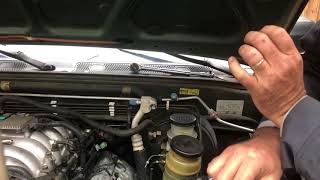
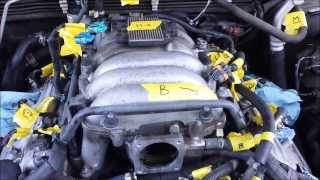
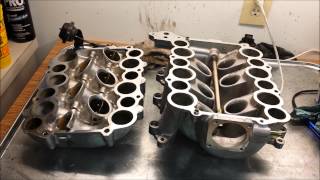
Typical fix: Replace the upper and lower intake manifold gaskets. This is a labor-intensive job that often requires removing the fuel rail. 🎬 Watch: Step-by-step guide to removing the intake manifold. An aftermarket set like Fel-Pro MS 95890 is a common choice.
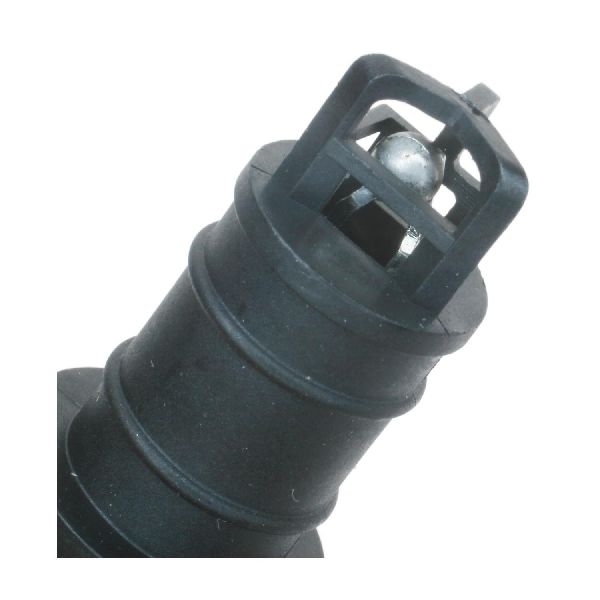
Est. part cost: $40-$90 - Faulty Fuel Pressure Regulator 🔴 High Probability → Shop Fuel Injection Pressure Regulator This is a very common failure point on both the 3.2L and 3.5L V6 engines. The internal diaphragm fails, allowing fuel to be sucked directly into the intake via the vacuum reference hose.
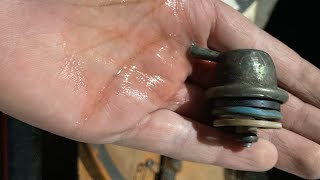
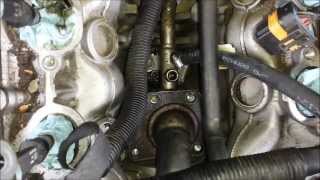
How to confirm: Disconnect the vacuum hose from the regulator with the engine off. If raw fuel is present in the hose or if there is a strong smell of fuel, the regulator has failed and must be replaced. This is a definitive test. 🎬 See how to replace a faulty fuel pressure regulator.
Typical fix: Replace the fuel pressure regulator. The OEM part number is 8-97137-042-1. Aftermarket options from brands like Walker (255-1100) or Standard Motor Products are also available.
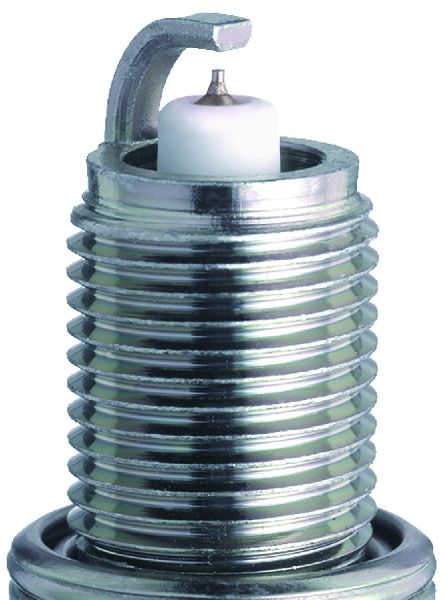
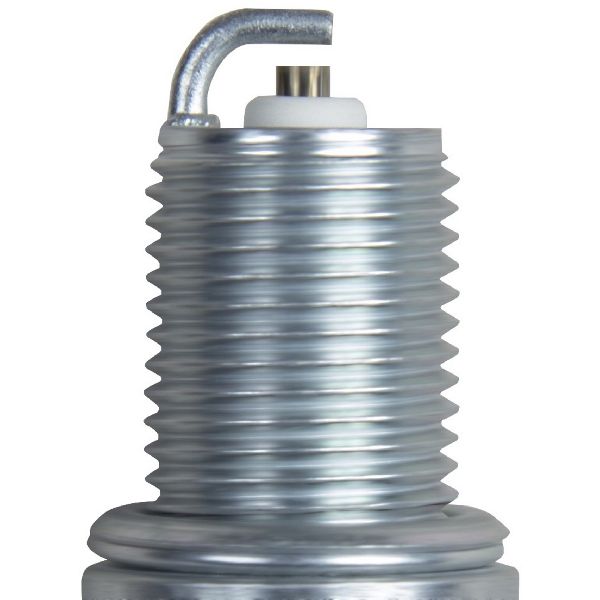
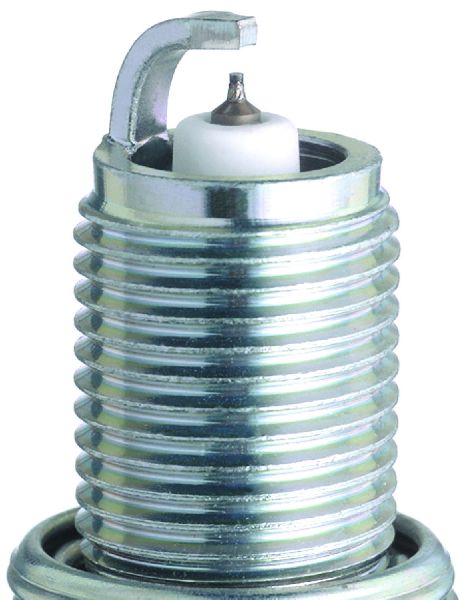
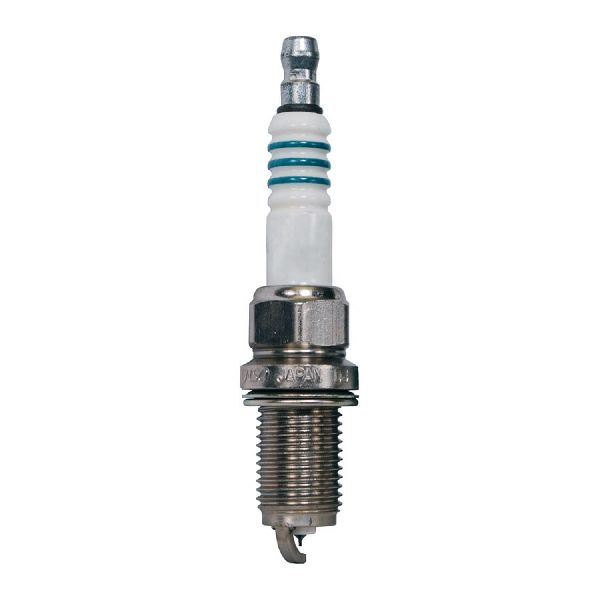
Est. part cost: $50-$120 - Worn or Incorrect Spark Plugs 🟡 Medium Probability → Shop Spark Plug These engines use an 'ion-sensing' ignition system that is sensitive to spark plug type and condition. Using incorrect plugs can cause misfire detection issues. Normal wear also reduces plug effectiveness.
How to confirm: Remove and inspect all six spark plugs for wear (worn electrode), fouling (black, sooty, or oily deposits), or incorrect gap. Verify the part number against OEM specifications. The recommended plugs are NGK BKR6E-11 or Denso K16PR-P11.
Typical fix: Replace all six spark plugs with the correct OEM-spec type.
Est. part cost: $40-$80 - Failing Ignition Coil(s) 🟡 Medium Probability → Shop Ignition Coil Ignition coils are a common wear item. While one bad coil usually sets a specific cylinder code (e.g., P0301), a weak or intermittently failing coil can contribute to a P0300, especially before it fails completely. Owners on forums often solve a P0300 by identifying and replacing a single bad coil.
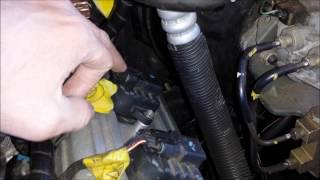
How to confirm: Use a scan tool to see which cylinders have the highest misfire counts. Swap a suspected bad coil with a known good one from another cylinder. If the misfire follows the coil (e.g., a P0302 becomes P0304 after swapping coils 2 and 4), the coil is bad.
Typical fix: Replace the faulty ignition coil. The OEM part number is 8-97136-325-0 (or Honda equivalent 8-19005-249-0).
Est. part cost: $30-$70 per coil - Clogged Fuel Filter or Weak Fuel Pump ⚪ Low Probability → Shop Fuel Filter Fuel filters can become clogged over time, restricting flow. Fuel pumps can weaken with age, reducing overall fuel pressure and volume.
How to confirm: Connect a fuel pressure gauge to the fuel rail's Schrader valve. Pressure should be between 48-55 psi with the key on, engine off. A video guide for a 2001 Rodeo shows this process, with the user seeing around 40 psi at key-on and 33-34 psi at idle. 🎬 Watch this video to see a fuel pressure test performed.
Typical fix: Replace the fuel filter or fuel pump if pressure is low.
Est. part cost: $20-$40 for a filter, $150-$300 for a pump
Rare But Worth Checking
- Leaking Valve Cover Gaskets: → Shop Engine Valve Cover Oil commonly leaks from the valve cover gaskets into the spark plug tubes, submerging the spark plug and boot in oil. This fouls the spark plug and can degrade the ignition coil boot, causing a misfire. The fix involves replacing the valve cover gaskets and the spark plug tube seals.
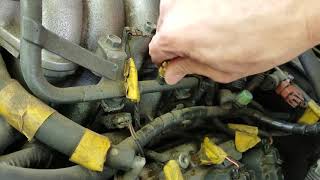
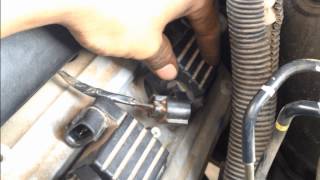
- Damaged Ignition Coil Connector: → Shop Ignition Coil The small metal tabs inside the plastic connectors for the ignition coils can break or lose tension, causing an intermittent connection and random misfires. Wiggling the connector while the engine is running may reveal a change in idle, indicating a bad connection.
- Incorrect Ignition Coil Installation (Misdiagnosis): → Shop Ignition Coil A common myth, based on older Isuzu TSBs, is that the 3.2L V6 uses a shorter ignition coil for cylinder #6. For the 2000-2004 models, this is incorrect. Honda TSB #10002572 for the identical Passport engine clarifies that a misfire on cylinder #6 is often caused by the nearby fuel pressure regulator leaking, not a unique coil.
Diagnosis Steps
- Check for any other stored trouble codes. Codes like P0171/P0174 strongly suggest a vacuum leak.
- Check the vacuum line on the fuel pressure regulator for the presence of raw fuel. This is a quick, definitive test for a very common failure.
- Inspect all spark plugs. Check for wear, oil fouling (from valve cover gaskets), and ensure they are the correct OEM-specified type (NGK BKR6E-11 or Denso K16PR-P11). Replace if in doubt.
- While the plugs are out, inspect the spark plug tubes for oil, which indicates leaking valve cover tube seals.
- Test fuel pressure. Connect a gauge to the fuel rail and check for 48-55 psi with the key on, engine off. Pressure should hold steady and not drop quickly.
- If no obvious issues are found, perform a vacuum leak test using a smoke machine, focusing on the upper and lower intake manifold gaskets.
- Use a scan tool with live data to monitor misfire counts per cylinder. Swap ignition coils between a misfiring cylinder and a good cylinder to see if the misfire follows the coil.
- Inspect the wiring and connectors for each ignition coil for damage or loose-fitting terminals.
Parts You'll Likely Need
- Intake Manifold Gasket Set — The original plastic gaskets are a primary cause of vacuum leaks that trigger P0300 on this vehicle.
Trusted brands: Fel-Pro (MS 95890), DNJ
OEM price range: $60-$100
Aftermarket price range: $40-$90 - Spark Plugs
(OEM #NGK BKR6E-11 (Stock #2756) or Denso K16PR-P11)— Worn or incorrect spark plugs are a common cause of misfires. These engines require specific plugs (Denso or NGK) for their ion-sensing ignition system.
Trusted brands: NGK, Denso
OEM price range: $60-$90
Aftermarket price range: $40-$80 - Fuel Pressure Regulator
(OEM #8-97137-042-1)— The internal diaphragm ruptures, leaking raw fuel into the intake via the vacuum hose, causing rich running conditions and random misfires.
Trusted brands: Walker (255-1100), Standard Motor Products, Delphi
OEM price range: $80-$150
Aftermarket price range: $50-$120
Related Codes That Often Appear With This One
- P0301-P0306 — These are cylinder-specific misfire codes. They often appear with P0300 as the computer tries to identify the source of the random misfires.
- P0171/P0174 — These 'System Too Lean' codes often accompany P0300 if the cause is a vacuum leak from the intake manifold gaskets, as the unmetered air leans out the air/fuel mixture.
- P0420/P0430 — These 'Catalyst Efficiency' codes can appear if a persistent misfire has been ignored, allowing unburnt fuel to enter and damage the catalytic converter.
Technical Service Bulletins (TSBs) & Recalls
- Honda TSB #10002572: Notes that for the 2002 Passport (with the same 3.2L Isuzu engine), a misfire on cylinder #6 can be caused by a leaking fuel pressure regulator diaphragm, leading to a rich condition. This is often misdiagnosed as a bad ignition coil.
- Manufacturer TSB Bulletin #PIP5628: Provides preliminary information to aid in diagnosing vehicles that present with misfires and DTC codes P0300 through P0308.
Platform-Specific Known Issues
- The 2004 model year with the 3.5L V6 was available with Gasoline Direct Injection (GDI). This version has a different high-pressure fuel system, and a failing high-pressure pump is a known cause of P0300.
- On the 3.2L V6, there is a TSB regarding a specific, shorter ignition coil for cylinder #6. Installing this coil in any other cylinder, or a standard coil in cylinder #6, can cause misfires.
Mechanic-Grade Diagnostic Values
- Ignition Coil Primary Resistance (3.2L V6) — expected: 0.4 - 0.5 Ω (Ohms) at 68°F. Failure: A reading significantly outside this range indicates a faulty primary winding.
- Ignition Coil Secondary Resistance (3.2L V6) — expected: 2.8 - 3.0 kΩ (kilo-ohms). Failure: A reading far from this value suggests a break or short in the secondary winding.
- Fuel Injector Resistance (3.2L V6) — expected: 11.8 - 12.6 Ω (Ohms). Failure: A reading outside this range indicates a faulty injector winding (open or shorted).
- Crankshaft Position Sensor (3-wire type) Voltage Check — expected: With connector unplugged and key-on/engine-off: one wire should have ~5V (reference voltage), one should be ground (~0V), and one may show battery voltage.. Failure: Absence of the 5V reference or a bad ground points to a wiring or ECM issue, not necessarily a bad sensor.
- ECM Power and Ground Integrity — expected: Approximately 12V at the ECM's main power pin (key on) and near 0V voltage drop between the ECM ground pin and the battery negative terminal.. Failure: Low voltage on the power pin or significant voltage (>0.1V) on the ground circuit indicates a wiring fault that can cause erratic ECM behavior and phantom codes.
Hidden / Shadow Codes Worth Checking
- Mode $06 Misfire Data: This is not a 'code' but a diagnostic mode accessible with advanced scan tools. It shows raw misfire counts for each cylinder from the current and previous 10 driving cycles. This allows a technician to identify a cylinder that is misfiring intermittently, even if the count is not yet high enough to trigger a specific P0301-P0306 code or a flashing check engine light. (see via Use a scan tool that supports OBD-II Mode $06 diagnostics. Navigate to the misfire data monitor (e.g., Test ID $A2 through $AD) to view counts for each cylinder.)
Scan Tool Commands That Help
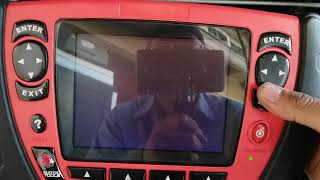
- Tech 2 or equivalent advanced OBD-II scanner: View Mode $06 Misfire Data — Use this when you have a P0300 code but no specific cylinder misfire codes (P0301-P0306). It helps pinpoint which cylinder(s) are contributing the most to the random misfire count, guiding you to swap coils or inspect plugs on the correct cylinders.
Wiring & Ground Locations
- G117 — Located on the right rear of the engine.. A poor ground connection at this point can affect sensor readings and ignition system performance, contributing to erratic behavior and misfires.
- G120 — Located on the right side of the engine, on the intake manifold.. This ground is critical for components mounted on the intake manifold. A loose or corroded connection can cause issues with sensors that are essential for air/fuel mixture calculation, leading to misfires.
- Main Engine Ground — Typically a braided strap or heavy cable running from the engine block to the vehicle's chassis/frame, often near the passenger side apron or an engine mount.. The entire ignition system relies on a solid engine ground to complete its circuit. A weak or corroded main ground can cause a weak spark across all cylinders, leading to a random misfire condition.
- ECM Location — Below the center of the dashboard.. Knowing the ECM location is necessary for testing power and ground circuits directly at the module, which is a key step in ruling out wiring issues that could mimic component failures.
Real Owner Repair Stories
- YouTube user 'isuzu rodeo p0300 code mystery solved???' (Isuzu Rodeo, year not specified but within 2000-2004 range) — Persistent P0300 random misfire code after replacing ignition coils and spark plugs.
❌ Tried (didn't work) Replacing all ignition coils, Replacing spark plugs
✅ What actually fixed it The plastic connector (pigtail) for the cylinder #1 ignition coil had a broken internal metal tab, causing a poor, intermittent connection. Replacing the connector pigtail with one from a junkyard resolved the misfire. - Isuzu Forums user 'Gizmo42' (1999 Isuzu Rodeo 3.2L V6 (similar wiring to 2000+)) — Engine running on only one bank of cylinders (2,4,6). No idle change when unplugging coils or injectors for cylinders 1,3,5. Spark plugs on the dead bank were wet with fuel.
❌ Tried (didn't work) Swapping known-good coils and plugs, Compression test (was good on all cylinders)
✅ What actually fixed it A blown fuse for the fuel injectors on the misfiring bank (Bank 1). Replacing the fuse restored power to the injectors for cylinders 1, 3, and 5, fixing the issue. - iFixit forum post by an Isuzu Master Tech (2002 Isuzu Rodeo) — P0300 code, possibly related to a cracked flexplate.
❌ Tried (didn't work) Simply replacing the cracked flexplate without finding the root cause.
✅ What actually fixed it The root cause was missing engine-to-transmission alignment dowel pins. Without the dowels, the transmission was not perfectly centered, causing stress that cracked the flexplate. A cracked or wobbling flexplate can disrupt the crankshaft position sensor reading, causing a P0300 code.
"I Checked Everything" — The Actual Cause
- A smoke test for vacuum leaks would come back clean if the actual cause was a faulty ignition coil connector pigtail with a broken internal pin, causing an intermittent electrical connection.
- If an entire bank of injectors loses power due to a blown fuse, a smoke test would show no leaks, yet the engine would have severe misfires on three cylinders, potentially logging a P0300.
- An erratic signal from the crankshaft position sensor due to a cracked flexplate will cause a P0300 code, but the intake system would pass a smoke test perfectly.
When the Usual Fixes Don't Work
- In several documented cases, owners replaced all common parts like spark plugs, ignition coils, and even intake gaskets without resolving the P0300 code. The final solution was often an overlooked electrical fault, such as a single blown fuel injector fuse shutting down one bank of cylinders, or a physically damaged ignition coil connector causing an intermittent signal loss to one coil. These cases highlight the need to verify electrical integrity (power, ground, signal) at the components before assuming the component itself has failed.
OEM Part Supersession History
Varies (for cylinder #6 ignition coil)→Coil with a white dot, later a coil with '#6' stamped on it— To prevent incorrect installation. The 3.2L V6 uses a unique, shorter ignition coil (148mm) for cylinder #6, while cylinders #1-5 use a longer coil (155mm).
Heads up: Installing a standard 155mm coil in cylinder #6 or the 148mm #6 coil in any other cylinder can cause a P0300 random misfire code. The coil must be the correct length for its position.
Model Year Variations Within This Range
- 2004 only: The 3.5L V6 (6VE1) engine was equipped with Gasoline Direct Injection (GDI) for the 2004 model year only. This system uses a high-pressure fuel pump and different injectors. Diagnosing a P0300 on this engine requires checking both low and high-side fuel pressure and may involve different diagnostic procedures than the more common port-injected engines from 2000-2003.
- 2000-2004 (3.2L 6VD1 engine): The 3.2L V6 engine requires a specific, shorter ignition coil (148mm) for cylinder #6. The other five coils are longer (155mm). This is not applicable to the 3.5L V6.
Diagnostic Flowchart
Real Owner Stories
Aggregated from forums and TSBs cited above. Mileages and costs reflect what owners reported in those sources.
Isuzu Rodeo
Symptoms: Experienced a P0300 code accompanied by a lean condition.
What fixed it: Replaced a bad intake manifold gasket, which is a common issue on these trucks.
Source hint: Edmunds Forums - 'Problems with my Isuzu Rodeo' (2009-01)
2002 Honda Passport 3.2L V6
Symptoms: Misfire specifically on cylinder #6, which is often misdiagnosed as a bad ignition coil.
What fixed it: Replaced the fuel pressure regulator, as the internal diaphragm was leaking and causing a rich condition.
Source hint: Honda TSB #10002572
2004 Acura TL
Symptoms: Multiple misfire codes (P0300, P0302-P0305) that did not improve after replacing spark plugs and swapping coils.
What fixed it: Replaced a single bad ignition coil on cylinder 6.
Source hint: Reddit r/AcuraTL - '2004 P0300, Random/Multiple Cylinder Misfire (SOLVED)' (2021)
Honda V6
Symptoms: Random engine misfire (P0300) causing a rough idle.
What fixed it: Unplugged coil connectors one by one until finding one that made no difference to the idle, successfully identifying and replacing the single bad coil.
Source hint: AcuraZine - 'P0300, random engine misfire fixed :)' (2013-05-24)
Vehicle with intake manifold
Symptoms: Sudden P0300 code and rough idle immediately following an intake manifold repair.
What fixed it: Corrected a pinched and improperly seated intake manifold gasket.
Source hint: CorvetteForum - 'P0300 after re-installing intake manifold' (2014-09-08)
Related OBD-II Codes
Frequently Asked Questions
Why do I smell raw gas and have a P0300 code on my 3.2L or 3.5L Isuzu Rodeo?
Are intake manifold gaskets a common cause for P0300 on the 2000-2004 Rodeo?
Does it matter what spark plugs I use in my 2000-2004 Isuzu Rodeo V6?
Is there a specific issue with the cylinder #6 ignition coil on the 3.2L V6?
Does Honda TSB #10002572 apply to my Isuzu Rodeo?
I have a 2004 Rodeo with the 3.5L engine. Is there a unique cause for P0300 on this specific year?
Helpful Videos
We Have This Part in Stock


The information in this article is provided for general reference and educational purposes only. Vehicle specifications, procedures, and part compatibility can vary by production date, trim level, and region. Always consult your vehicle's factory service manual and verify part numbers before purchasing or performing repairs. Safety-critical components such as airbags, seat belts, and braking systems should be installed by a qualified professional.
- Isuzu Rodeo:
- 🧭 Diagnostic Flowchart
- 🎬 Helpful Videos
- 🛍️ Shop This Part
- What's Unique About the 2000-2004 Isuzu Rodeo
- Symptoms You May Notice
- Most Likely Causes
- Rare But Worth Checking
- Diagnosis Steps
- Parts You'll Likely Need
- Related Codes That Often Appear With This One
- Technical Service Bulletins (TSBs) & Recalls
- Platform-Specific Known Issues
- Mechanic-Grade Diagnostic Values
- Hidden / Shadow Codes Worth Checking
- Scan Tool Commands That Help
- Wiring & Ground Locations
- Real Owner Repair Stories
- "I Checked Everything" — The Actual Cause
- When the Usual Fixes Don't Work
- OEM Part Supersession History
- Model Year Variations Within This Range
- Real Owner Stories
- Isuzu Rodeo
- 2002 Honda Passport 3.2L V6
- 2004 Acura TL
- Honda V6
- Vehicle with intake manifold
- Related OBD-II Codes
- Frequently Asked Questions
- 🎟️ Get 5% Off