

P0300 on 2017-2024 Jeep Compass: Random Misfire Causes and Fixes
P0300 on a 2017-2024 Jeep Compass indicates random cylinder misfires. The most common causes are worn spark plugs and failing ignition coils. A more serious, vehicle-specific issue is a failing high-pressure fuel pump, which can leak fuel into the oil. Start by inspecting spark plugs and coils, a DIY fix costing around $80-$200. Always check the oil for a gasoline smell, as this is a critical indicator of the HPFP issue.
- P0300 means your engine is misfiring on multiple cylinders, causing symptoms like a rough idle, hesitation, and a flashing check engine light.
- Always start diagnosis with the cheapest and most common fixes: inspect and replace worn spark plugs and test the ignition coils.
- For the 2017-2024 Compass, you MUST check the oil level and smell for gas. A high, fuel-smelling oil level is a strong indicator of a failing high-pressure fuel pump, a known issue (TSB #18-044-26).
- Do not drive with a flashing check engine light. This signals a severe misfire that can destroy your catalytic converter, leading to a much more expensive repair.
What's Unique About the 2017-2024 Jeep COMPASS
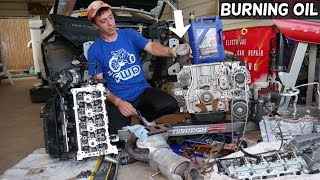
For the 2017-2024 Jeep Compass with the 2.4L Tigershark engine, a P0300 code can be more than just a simple tune-up issue. While spark plugs and coils are common culprits, this platform has a known issue detailed in Technical Service Bulletin (TSB) #18-044-26 that links random misfires to a failing high-pressure fuel pump (HPFP). This failure can cause fuel to leak into the engine oil, leading to a high oil level and potential for significant engine damage. Therefore, checking the oil for a gasoline smell is a critical and unique diagnostic step for this vehicle. Additionally, the 2.4L MultiAir engine is known for oil consumption issues, which can cause misfires if the oil level gets too low, as oil pressure is used to actuate the intake valves.
🎬 See why the 2.4L engine suffers from excessive oil consumption.Diagnostic Flowchart
Tap your situation to follow the diagnostic path that matches what you're seeing on this vehicle.
Generation note: The 2017 model year was a transition period. This guide primarily covers the second-generation (MP) Jeep Compass, which began production in 2017. The first-generation (MK) also had a 2017 model year, but this guide's specifics, especially regarding TSBs and the 2.4L Tigershark engine, are most relevant to the second-gen platform.
Symptoms You May Notice
- Flashing or steady check engine light
- Rough or shaking engine idle
- Engine hesitation or sputtering during acceleration
- Noticeable loss of engine power
- Reduced fuel economy
- Difficulty starting the engine
- Engine cuts out unexpectedly
- Replacing only the oxygen sensors without checking the fuel and ignition systems first. While a faulty O2 sensor can contribute to fuel mixture issues, it's less commonly the root cause of a P0300 compared to plugs, coils, or fuel delivery problems.
- Ignoring the possibility of a vacuum leak. A small, unmetered air leak can cause symptoms that mimic a fuel or ignition problem, leading to unnecessary parts replacement.
Most Likely Causes
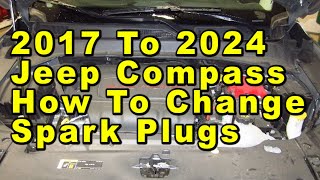
- Worn or Fouled Spark Plugs 🔴 High Probability → Shop Spark Plug Spark plugs are a regular maintenance item and a primary cause of misfires on most gasoline engines. Using incorrect or low-quality plugs can also cause issues. The OEM recommended gap for the 2.4L engine is 0.047 inches.
How to confirm: Remove and visually inspect the spark plugs for wear, carbon buildup, oil fouling, or damage to the electrode or ceramic insulator. Check that the gap is correct.
Typical fix: Replace all four spark plugs. It is recommended to use OEM-spec Iridium plugs from Mopar (made by Champion) or NGK.
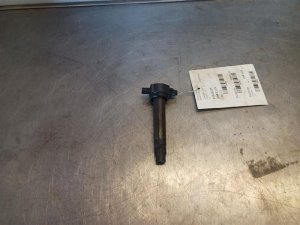
Est. part cost: $20-$90 - Failing Ignition Coils 🔴 High Probability → Shop Ignition Coil Ignition coils are exposed to high heat and can fail over time, leading to a weak or non-existent spark. Corrosion on the coil packs has also been noted by owners.
How to confirm: With the engine running, use a scan tool to see which cylinders are misfiring. Swap the ignition coil from a misfiring cylinder with one from a known good cylinder. Clear the codes and see if the misfire code follows the coil (e.g., P0301 becomes P0302), the coil is bad.
Typical fix: Replace the faulty ignition coil. It is often recommended to replace all four coils at the same time, especially on higher-mileage vehicles.
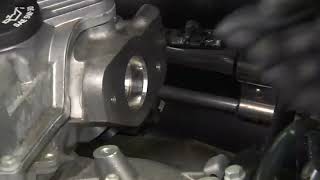
Est. part cost: $30-$115 per coil - Failing High-Pressure Fuel Pump (HPFP) 🟡 Medium Probability → Shop Fuel Pump As identified in TSB #18-044-26, the HPFP can fail, causing low fuel rail pressure and misfires. A significant symptom is the pump leaking fuel into the crankcase, diluting the engine oil.
How to confirm: Check the engine oil dipstick. If the oil level is unusually high and smells strongly of gasoline, the HPFP is the likely culprit. A scan tool may also show code P00C6-00 (Fuel Rail Pressure Too Low - Engine Cranking) or P0087 (Fuel Rail Pressure Too Low).
Typical fix: Replace the high-pressure fuel pump and change the engine oil and filter immediately to prevent engine damage.
Est. part cost: $200-$600 - Vacuum Leak ⚪ Low Probability Cracked or disconnected vacuum hoses (including the PCV valve hose) or a leaking intake manifold gasket can allow unmetered air into the engine, disrupting the air-fuel ratio and causing random misfires.
How to confirm: Perform a visual inspection of all vacuum lines. For less obvious leaks, a mechanic can use a smoke machine to feed smoke into the intake system and see where it escapes. Watching fuel trims on a scan tool can also help; high positive trims at idle that normalize under load suggest a vacuum leak.
Typical fix: Replace the cracked hose or leaking gasket. The mechanical vacuum pump itself (Mopar P/N 5048401AD) can also be a source of leaks.
Est. part cost: $10-$250
Rare But Worth Checking
- Clogged Fuel Injectors: → Shop Fuel Injector If a few injectors are partially clogged, it can lead to a random misfire before setting a specific cylinder code. The entire fuel rail assembly is often sold as one part (Mopar P/N 4627120AD).
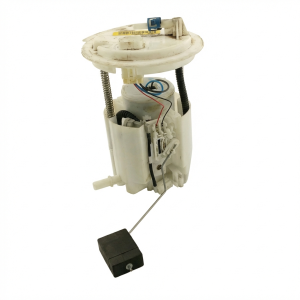
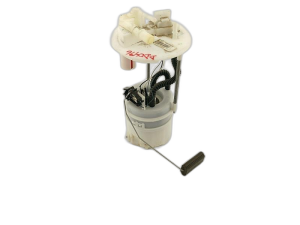
- Low Fuel Pressure (from in-tank pump): A weak in-tank fuel pump can starve the engine of fuel under load, causing misfires across all cylinders. Testing fuel pressure is necessary to diagnose this.
- Faulty Crankshaft Position Sensor: → Shop Engine Crankshaft Position Sensor A failing crankshaft position sensor can send erratic signals to the ECU, disrupting ignition and injection timing and causing random misfires. This can sometimes occur without a specific sensor code.
- Excessive Oil Consumption / Low Oil Level: The 2.4L Tigershark MultiAir engine is known for consuming oil. The MultiAir system uses oil pressure to actuate intake valves. If the oil level is too low, it can cause valve actuation to fail, leading to misfires, stalling, and codes P0300-P0304.
Diagnosis Steps
- Read the codes with an OBD-II scanner. Note any other codes present, especially specific cylinder misfires (P0301-P0304) or fuel pressure codes (P00C6, P0087).
- Check the engine oil level and smell it for gasoline. A high level and fuel smell strongly suggest a failing high-pressure fuel pump. [TSB #18-044-26] Also, check if the oil level is low, which can cause issues with the MultiAir system.
- Inspect the ignition system. Remove the ignition coils and spark plugs. Look for worn electrodes, oil fouling, or cracks in the spark plug insulators. Check the coil boots for corrosion or pinholes.
- If a specific cylinder misfire code is present, swap the ignition coil with a coil from a different cylinder. Clear the codes and see if the misfire follows the coil to the new cylinder.
- Check for vacuum leaks. Visually inspect all hoses connected to the intake manifold for cracks or disconnections. A smoke test is the most effective way to find hidden leaks.
- Test fuel pressure. This requires a fuel pressure gauge. Check both the low-pressure system from the in-tank pump and the high-pressure side if a HPFP issue is suspected.
- If all else fails, consider a compression test to rule out internal engine mechanical problems, though this is a less common cause for random misfires.
Parts You'll Likely Need
- Spark Plugs
(OEM #SP142582AB (Mopar, set of 4))— These are the most frequent cause of misfires and are a standard maintenance item.
Trusted brands: NGK (LZFR5CI-11, P/N 92145), Champion (for Mopar)
OEM price range: $60-$90 (set of 4)
Aftermarket price range: $25-$50 (set of 4) - Ignition Coil
(OEM #68242286AA)— A very common point of failure for ignition systems, causing weak or no spark.
Trusted brands: Mopar, NGK, Delphi
OEM price range: $80-$115 per coil
Aftermarket price range: $30-$75 per coil - High-Pressure Fuel Pump
(OEM #68615943AA)— A documented issue on this platform (TSB #18-044-26) that causes misfires and fuel-in-oil contamination.
Trusted brands: Mopar, Bosch
OEM price range: $400-$600
Aftermarket price range: $200-$400
Related Codes That Often Appear With This One
- P0301, P0302, P0303, P0304 — These codes indicate a misfire on a specific cylinder. P0300 often appears with one or more of these codes when the misfire is severe or moves between cylinders.
- P00C6 — As per TSB #18-044-26, this code for 'Fuel Rail Pressure Too Low - Engine Cranking' can accompany P0300 when the high-pressure fuel pump is failing.
- P0087 — This code for 'Fuel Rail Pressure Too Low' is also associated with a failing HPFP or a weak in-tank fuel pump, both of which can cause random misfires.
Technical Service Bulletins (TSBs) & Recalls
- 18-044-26: High-Pressure Fuel Pump Failure causing P0300 and P00C6.
- 14-003-26: Acknowledges P0300 with specific cylinder misfire codes.
- 09-026-25: Acknowledges P0300 with specific cylinder misfire codes.
- 08-027-20: Acknowledges P0300 with specific cylinder misfire codes.
Platform-Specific Known Issues
- TSB #18-044-26 points to a potential failure of the high-pressure fuel pump, which can cause P0300 along with code P00C6 (Fuel Rail Pressure Too Low) and a high oil level warning due to fuel contaminating the engine oil.
- Excessive Oil Consumption: The 2.4L Tigershark engine is known for burning oil. Low oil levels can cause the MultiAir valve actuation system to malfunction, leading to misfires and stalling, especially dur
Mechanic-Grade Diagnostic Values
- Ignition Coil Primary Resistance — expected: 0.56 - 0.68 ohms. Failure: A reading outside this range, or OL (Open Line), indicates a faulty coil.
- Ignition Coil Secondary Resistance — expected: 7.8 - 9.6 kΩ (7,800 - 9,600 ohms). Failure: A reading significantly outside this range suggests the coil's secondary winding has failed.
- Fuel Injector Resistance — expected: OEM specification is not published, but all four injectors should have nearly identical resistance readings.. Failure: An injector with a significantly higher or lower resistance reading compared to the others is likely faulty.
- Crankshaft Position Sensor Voltage (while cranking) — expected: Should switch rapidly between 0 and 5 volts.. Failure: No voltage or an unchanging voltage indicates a failed sensor.
Scan Tool Commands That Help
- OBD-II Scan Tool with live data/bidirectional capability: Power Balance Test — Use this function to systematically deactivate one fuel injector at a time. If deactivating a cylinder causes little or no drop in engine RPM, you have found the misfiring cylinder. This helps isolate the problem when you have a P0300 without a specific cylinder code (P0301, etc.).
Wiring & Ground Locations
- G904 — Front center of the engine compartment.. This is a primary ground point for engine performance circuits. A loose or corroded connection here can cause erratic behavior in multiple sensors and actuators, leading to a random misfire code.
- PCM Connector C1 — On the Powertrain Control Module (PCM).. This connector houses pins for critical functions like the EVAP purge control and starter relay control. A bad pin or wire at this connector can cause misfire-related symptoms. For example, pin 4 is the EVAP Purge Control circuit.
- PCM Connector C2 — On the Powertrain Control Module (PCM).. This connector is crucial for sensor inputs and actuator outputs, including the Crankshaft Position Sensor (CKP) signal, Camshaft Position Sensor (CMP) signal, and injector control circuits. A fault here can directly cause misfires. For example, pin 44 is the CKP signal and pin 45 is the CMP signal on a 2018 model.
- PCM Wiring Harness Bracket — Near the Powertrain Control Module (PCM).. There is a known pattern on Jeep vehicles where the main PCM wiring harness can rub (chafe) against its metal mounting bracket. Over time, this can wear through the insulation of one or more wires, causing them to short to ground, which can lead to multiple DTCs including P0300 and no-start conditions.
Real Owner Repair Stories
- DSMtuners.com forum user (1999 Mitsubishi Eclipse GSX (different vehicle, but same P0300 code and diagnostic journey)) — Sudden loss of power, engine shaking, and flashing check engine light with code P0300, occurring randomly.
❌ Tried (didn't work) Replaced spark plugs (twice), Replaced spark plug wires, Replaced coil packs, Fixed boost/vacuum leaks, Replaced O2 sensor
✅ What actually fixed it After four years of troubleshooting, the problem was solved by replacing a faulty, cheap aftermarket Crankshaft Position Sensor with a genuine Mitsubishi (OEM) part. - Tacoma World forum user (2002 Toyota Tacoma 2.7L) — Shaking at idle, check engine light with code P0300.
❌ Tried (didn't work) Replaced both O2 sensors, Replaced spark plugs, Replaced ignition coils
✅ What actually fixed it A complete engine teardown revealed a cracked piston in cylinder 2. Replacing the cylinder head and piston resolved the code. - Reddit r/mazdaspeed3 user (2007 Mazdaspeed3) — Intermittent P0300 code, cold start misfire.
❌ Tried (didn't work) Replaced spark plugs, Replaced ignition coils
✅ What actually fixed it Performing a walnut blasting service on the intake valves to remove carbon buildup and having the fuel injectors professionally cleaned and serviced.
OEM Part Supersession History
68242286AA→68242286AB— Standard part revision and update by the manufacturer.
Heads up: The new part number (68242286AB) is the correct replacement for the original. The previous part number 68080580AB was also replaced by this part.
Model Year Variations Within This Range
- 2022: For the 2022 model year, the 2.4L Tigershark engine's output was slightly reduced from 180 hp and 175 lb-ft of torque to 177 hp and 172 lb-ft.
- 2023-2024: Beginning with the 2023 model year, the 2.4L Tigershark engine was phased out and replaced by a standard 2.0L turbocharged four-cylinder engine. Therefore, this guide is primarily applicable to models from 2017 through the 2022 model year, and potentially very early 2023 models still equipped with the 2.4L engine.
- 2017-2022: Models equipped with front-wheel-drive (FWD) typically use a 6-speed Aisin automatic transmission, while all-wheel-drive (AWD) models use a 9-speed ZF 948TE automatic transmission. This does not directly affect the cause of P0300 but is a key vehicle variation.
Helpful Videos
We Have This Part in Stock

The information in this article is provided for general reference and educational purposes only. Vehicle specifications, procedures, and part compatibility can vary by production date, trim level, and region. Always consult your vehicle's factory service manual and verify part numbers before purchasing or performing repairs. Safety-critical components such as airbags, seat belts, and braking systems should be installed by a qualified professional.
- Jeep COMPASS:
- 🧭 Diagnostic Flowchart
- 🎬 Helpful Videos
- 🛍️ Shop This Part
- What's Unique About the 2017-2024 Jeep COMPASS
- Symptoms You May Notice
- Most Likely Causes
- Rare But Worth Checking
- Diagnosis Steps
- Parts You'll Likely Need
- Related Codes That Often Appear With This One
- Technical Service Bulletins (TSBs) & Recalls
- Platform-Specific Known Issues
- Mechanic-Grade Diagnostic Values
- Scan Tool Commands That Help
- Wiring & Ground Locations
- Real Owner Repair Stories
- OEM Part Supersession History
- Model Year Variations Within This Range
- 🎟️ Get 5% Off