

P0300 on 2025-2026 Jeep Compass: Random Misfire Causes & Fixes
Code P0300 on a 2025-2026 Jeep Compass signifies random cylinder misfires. Manufacturer service bulletins strongly suggest the cause is often related to low fuel pressure from a failing high-pressure fuel pump. Checking for related fuel pressure codes (P0087, P00C6) and inspecting the engine oil for fuel contamination are critical first steps before replacing common ignition parts.
- P0300 on a 2025-2026 Compass is not just a generic misfire code; multiple manufacturer bulletins point towards a specific weakness in the fuel delivery system.
- Always check for accompanying fuel pressure codes (P0087, P00C6) as they are a strong indicator of the root cause.
- A critical diagnostic step is to check the engine oil level and smell for gasoline. A high, fuel-smelling oil level is a red flag for a failing high-pressure fuel pump.
- Do not drive the vehicle if the check engine light is flashing, as this can quickly destroy the catalytic converter, leading to a much more expensive repair.
What's Unique About the 2025-2026 Jeep COMPASS
For the 2025-2026 Jeep Compass, which is equipped with the 2.0L GME T4 Turbo engine, the P0300 code has been the subject of multiple Technical Service Bulletins (TSBs) even early in its life cycle. This engine uses Gasoline Direct Injection (GDI), which operates with a high-pressure fuel system (up to 2,900 psi). The TSBs repeatedly connect random misfires to problems with this system, specifically low fuel rail pressure. One critical TSB links the misfire code to a high oil level warning, a direct result of a failing high-pressure fuel pump leaking gasoline into the engine oil, a significant and specific issue for this platform.
Diagnostic Flowchart
Tap your situation to follow the diagnostic path that matches what you're seeing on this vehicle.
Symptoms You May Notice
- Flashing or solid Check Engine Light
- Rough or unstable idle
- Engine hesitation or stumbling during acceleration
- Reduced engine power
- Poor fuel economy
- Engine shaking or vibrating
- Potential for engine stalling
- Oil Level High Warning light may be illuminated
- Abnormal engine noise or ticking
- Replacing only spark plugs and coils without checking for fuel pressure codes. Given the numerous TSBs for this vehicle, ignoring the strong possibility of a fuel system issue can lead to repeated, ineffective repairs.
- Assuming a ticking noise is normal valvetrain sound when it could be an abnormal noise associated with a failing fuel injector or pump, as mentioned in TSB 14-009-25.
Most Likely Causes
- Low Fuel Pressure from Failing High-Pressure Fuel Pump (HPFP) 🔴 High Probability → Shop Fuel Pump Multiple TSBs (#18-044-26, #14-009-25, #09-016-25) have been issued for this specific vehicle and engine family, linking P0300 directly to fuel pressure problems. The GDI system's HPFP is a known weak point that can fail, causing insufficient pressure or leaking fuel into the crankcase.
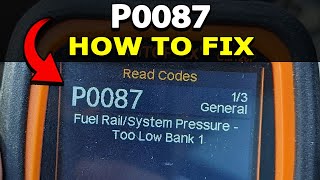
How to confirm: Scan for accompanying codes like P0087 (Fuel Rail Pressure Too Low) or P00C6 (Fuel Rail Pressure Too Low - Engine Cranking). A technician can use a scan tool to monitor live data, comparing 'Commanded Fuel Rail Pressure' to 'Actual Fuel Rail Pressure' under load. A significant discrepancy indicates a problem. Also, check the engine oil for a strong gasoline smell.
Typical fix: Replacement of the high-pressure fuel pump. If fuel has contaminated the oil, an immediate oil and filter change is mandatory to prevent severe engine damage. In some cases, a PCM software update is also required as part of the TSB.
Est. part cost: $150-$900 - Worn or Defective Spark Plugs 🟡 Medium Probability → Shop Spark Plug Spark plugs are a routine maintenance item. However, TSB 23-198 notes that misfire codes can be caused by spark plugs that were cracked during installation, suggesting a sensitivity in the repair process.
How to confirm: Remove and visually inspect all spark plugs. Look for signs of wear on the electrode, carbon fouling, oil contamination, or cracks in the ceramic insulator. Ensure the gap is correct; for the 2.0L Turbo, it should be approximately 0.022 - 0.025 inches.
Typical fix: Replace all four spark plugs as a set. It is recommended to use high-quality OEM-spec plugs (Mopar Part #68292346AA) and torque them to specification to avoid cracking. 🎬 Watch: 2.0L GME T4 spark plug and coil replacement walkthrough
Est. part cost: $40-$100 - Failing Ignition Coils 🟡 Medium Probability → Shop Ignition Coil A TSB for the platform-mate Alfa Romeo (09-002-22) identified a bad batch of ignition coils causing misfires, indicating potential quality control issues that could affect other GME T4 engines.
How to confirm: If a specific cylinder misfire code (e.g., P0301) 🎬 Watch: How to diagnose misfires caused by fuel, fire, or compression is also present, swap the ignition coil from the misfiring cylinder with one from a known good cylinder. Clear the codes and drive the vehicle. If the misfire code follows the coil to the new cylinder, the coil is faulty. A multimeter can also be used to check primary resistance (expected: 0.56 - 0.68 Ohms) and secondary resistance (expected: 7.8 - 9.6 kOhms).
Typical fix: Replace the faulty ignition coil. It is often recommended to replace them as a set if they are original and the vehicle has higher mileage, especially if a TSB applies.
Est. part cost: $50-$120 per coil
Rare But Worth Checking
- Fuel Dilution of Engine Oil: TSB #18-044-26 specifically mentions a 'High Oil Level Warning' in conjunction with P0300. This happens when a failing high-pressure fuel pump leaks gasoline into the crankcase. This is a severe condition that thins the oil, reduces its ability to lubricate, and risks catastrophic engine damage.
- Clogged or Leaking Fuel Injectors: → Shop Fuel Injector While less common than pump issues, one or more dirty or leaking GDI injectors can disrupt the precise fuel spray pattern and cause misfires. TSB 14-009-25 Rev. D outlines a diagnostic procedure using an endoscope to check for leaking injectors when the engine is off. Resistance should be approximately 12 Ohms.
- Large Vacuum Leak: A significant leak in a vacuum hose, the intake manifold gasket, or the PCV system can introduce unmetered air into the engine, leaning out the air-fuel mixture and causing random misfires across all cylinders.
- Intake Valve Carbon Buildup: As a Gasoline Direct Injection (GDI) engine, the 2.0L Turbo is susceptible to carbon buildup on the intake valves over time, as fuel is not sprayed over them to provide a cleaning effect. This buildup can restrict airflow into the cylinders, leading to poor performance and misfires.
Diagnosis Steps
- Use an OBD-II scanner to check for any other stored codes. Pay close attention to fuel pressure codes like P0087 or P00C6, as they are a critical clue on this platform.
- Check for any applicable TSBs or recalls for your vehicle's VIN. A dealer may need to perform a software update or a specific hardware replacement as outlined in a bulletin.
- Crucial Step: Check the engine oil level and smell it for gasoline. A high oil level and a strong fuel smell are critical signs of a failing high-pressure fuel pump leaking into the crankcase, as noted in TSB #18-044-26. If this is found, do not drive the vehicle further.
- Inspect the ignition system. Remove and examine the spark plugs for wear, damage, or fouling. Inspect the ignition coil boots for any signs of carbon tracking or damage. Consider swapping coils to see if a specific misfire code moves.
- If fuel pressure codes are present, a professional diagnosis of the fuel system is required. This involves monitoring 'Commanded' vs. 'Actual' fuel rail pressure with a scan tool under various conditions (idle, load, cranking).
- Check for vacuum leaks. Inspect all vacuum hoses and the intake manifold area for cracks or loose connections. A smoke test is the most effective way to find hard-to-see leaks.
- Listen to the fuel injectors with a mechanic's stethoscope. Each should produce a consistent, rapid clicking sound. An irregular sound or silence may indicate a faulty injector. TSB 14-009-25 suggests using an endoscope through the spark plug hole to visually check for leaking injectors.
Parts You'll Likely Need
- High-Pressure Fuel Pump
(OEM #05281484AA (verify with VIN))— Multiple TSBs point to low fuel pressure as a primary cause of P0300 on this vehicle, and the high-pressure pump is a common failure point in direct-injection systems.
Trusted brands: Mopar, Bosch
OEM price range: $700-$900
Aftermarket price range: $400-$600 - Spark Plugs
(OEM #68292346AA (Set of 4))— Spark plugs are a standard maintenance item and a common cause of misfires. A specific TSB also points to cracked plugs causing this code.
Trusted brands: Mopar, NGK
OEM price range: $60-$100 (set of 4)
Aftermarket price range: $40-$80 (set of 4) - Fuel Rail Pressure Sensor — This sensor reports pressure to the PCM. If it fails, it can send incorrect data, leading to fuel delivery issues and misfires, though pump failure is more common.
Trusted brands: Mopar, Delphi
OEM price range: $100-$180
Aftermarket price range: $50-$120
Related Codes That Often Appear With This One
- P0087 — Indicates 'Fuel Rail/System Pressure - Too Low.' Its presence strongly points to the fuel delivery system (likely the HPFP) as the root cause of the misfire, as cited in TSBs #14-009-25 and #09-016-25.
- P00C6 — Indicates 'Fuel Rail Pressure Too Low - Engine Cranking.' This code, mentioned in TSB #18-044-26, also points directly to a fuel delivery problem happening during startup, further strengthening the diagnosis of a failing HPFP.
- P0301, P0302, P0303, P0304 — These are codes for misfires in specific cylinders (1, 2, 3, or 4). They often appear alongside P0300 when the misfire is severe enough for the PCM to identify specific cylinders, even if the root problem (like low fuel pressure) is affecting the whole engine.
Technical Service Bulletins (TSBs) & Recalls
- 18-044-26: Links P0300 to low fuel pressure (P00C6) and a high oil level warning.
- 14-003-26: Lists P0300 along with all specific cylinder misfire codes (P0301-P0304 and P1337-P1340).
- 14-009-25 REV. D: Connects P0300 to low fuel line pressure (P0087).
- 09-026-25: Defines P0300 as Random/Multiple Cylinder Misfire and lists it with specific cylinder codes.
- 09-016-25: Associates P0300 with low fuel rail pressure (P0087).
Platform-Specific Known Issues
- TSB #18-044-26 notes that P0300 may be accompanied by code P00C6 (Fuel Rail Pressure Too Low) and a 'High Oil Level Warning,' indicating a potential high-pressure fuel pump failure causing fuel to leak into the engine oil.
- TSBs #14-009-25 and #09-016-25 also link P0300 to code P0087 (Fuel Rail Pressure Too Low), reinforcing the diagnosis of a fuel system fault. TSB #14-009-25 Rev. D specifically involves diagnosing and potentially replacing fuel injectors.
- TSB #23-198 indicates that P0300-P0304 codes can be set simply due to a spark plug being cracked during installation, requiring replacement of all four plugs.
Mechanic-Grade Diagnostic Values
- High-Pressure Fuel Pump Pressure — expected: Up to 2,900 PSI (200 bar) under load. Failure: Significantly lower pressure than commanded by the PCM, especially under load. Often triggers P0087.
- Low-Pressure Fuel Pump Pressure — expected: 58 - 64 PSI (Key On, Engine Off). Failure: Pressure below 58 PSI indicates a weak in-tank pump, which can starve the high-pressure pump.
- Ignition Coil Primary Resistance — expected: 0.56 - 0.68 Ohms. Failure: A reading outside this range indicates a faulty primary winding in the coil.
- Ignition Coil Secondary Resistance — expected: 7.8 - 9.6 kOhms. Failure: A reading outside this range indicates a faulty secondary winding in the coil.
- Fuel Injector Resistance — expected: Approximately 12 Ohms. Failure: A reading significantly higher or lower suggests a failed injector coil. All injectors should have very similar readings.
- Long-Term Fuel Trim (LTFT) — expected: Within +/- 5% at idle on a warm engine. Failure: Sustained positive values above +10% suggest the PCM is compensating for a vacuum leak or lack of fuel, which can cause misfires.
- Engine Compression — expected: Approximately 160 PSI per cylinder, with less than 15-20% variation between cylinders.. Failure: Low compression in one or more cylinders points to a mechanical engine problem (e.g., piston rings, valves, head gasket).
Scan Tool Commands That Help
- wiTECH or other professional scanner (e.g., Autel, Appcar DiagFCA): Cam Crank Relearn / Cam Crank Reward — This function should be used anytime work has been done that could affect the cam and crank relationship, such as replacing the camshaft or crankshaft position sensors, or after timing chain service. An incorrect correlation can cause misfires.
Model Year Variations Within This Range
- 2025-2026: For the specified 2.0L Turbo I4 engine, there are no significant mechanical or powertrain differences between the 2025 and 2026 model years that would alter the diagnosis of a P0300 code. Both years share the same engine, power output, and related components.
Helpful Videos

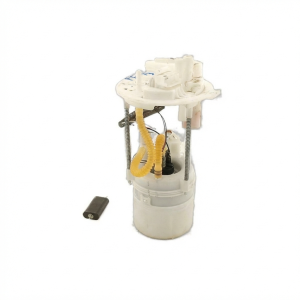
We Have This Part in Stock

The information in this article is provided for general reference and educational purposes only. Vehicle specifications, procedures, and part compatibility can vary by production date, trim level, and region. Always consult your vehicle's factory service manual and verify part numbers before purchasing or performing repairs. Safety-critical components such as airbags, seat belts, and braking systems should be installed by a qualified professional.
- Jeep COMPASS:
- 🧭 Diagnostic Flowchart
- 🎬 Helpful Videos
- 🛍️ Shop This Part
- What's Unique About the 2025-2026 Jeep COMPASS
- Symptoms You May Notice
- Most Likely Causes
- Rare But Worth Checking
- Diagnosis Steps
- Parts You'll Likely Need
- Related Codes That Often Appear With This One
- Technical Service Bulletins (TSBs) & Recalls
- Platform-Specific Known Issues
- Mechanic-Grade Diagnostic Values
- Scan Tool Commands That Help
- Model Year Variations Within This Range
- 🎟️ Get 5% Off