

P0300 on 2018-2023 Kia Stinger 3.3T: Random Misfire Causes and Fixes
For a 2018-2023 Kia Stinger 3.3T, a P0300 code is most often caused by worn spark plugs or failing ignition coils. Spark plugs (OEM Part #18852-09070) are a routine maintenance item due at 42,000 miles, and replacing them often resolves the issue. If plugs are new, suspect ignition coils, a known failure point. Expect to pay $100-$200 for a set of OEM-spec plugs.
- A P0300 code on your Stinger 3.3T is serious, especially if the check engine light is flashing. Stop driving to prevent expensive catalytic converter damage.
- Start your diagnosis with the most likely and cheapest fix: the spark plugs. They are due for replacement every 42,000 miles.
- If plugs don't solve it, test the ignition coils by swapping them between cylinders to see if the misfire follows.
- Be aware of the long-term potential for carbon buildup on the intake valves, a common issue with GDI engines that requires professional cleaning.
- Always check for open recalls on your vehicle, such as the SC300 turbo oil feed line recall, with a Kia dealer.
What's Unique About the 2018-2023 Kia Stinger
The Kia Stinger's 3.3L twin-turbo V6 (Engine Code: G6DP) is a Gasoline Direct Injection (GDI) engine. A known characteristic of GDI engines is the tendency for carbon to build up on the intake valves over time, as fuel is injected directly into the cylinder and doesn't wash the valves clean. This carbon buildup can disrupt airflow, leading to random misfires and a P0300 code, especially as the vehicle accumulates mileage (typically noticeable after 40,000 miles). Many owners proactively install an oil catch can to mitigate the rate of carbon buildup.
Symptoms You May Notice
- Rough or unstable idle
- Engine hesitation or stumbling during acceleration
- Noticeable loss of power
- Flashing or solid Check Engine Light
- Difficulty starting the engine
- Smell of raw fuel from the exhaust
- Vibrations felt in the cabin, especially at idle
- Replacing only one spark plug or coil when others are near the end of their life.
- Replacing oxygen sensors without diagnosing the root cause of the misfire.
- Assuming the issue is a catalytic converter failure, when the converter is often damaged as a result of untreated misfires, not the cause of them.
- Ignoring the 42,000-mile spark plug service interval.
Most Likely Causes
- Worn or Fouled Spark Plugs 🔴 High Probability → Shop Spark Plug Spark plugs are a regular maintenance item with a recommended replacement interval of 42,000 miles on the 3.3T engine. Misfires under boost are a common symptom of plugs nearing the end of their service life. Tuned vehicles often require a shorter interval and a colder plug, like the HKS M45IL.
How to confirm: Inspect the spark plugs for wear, fouling, or incorrect gap. The factory gap is typically around 0.028-0.032", but tuned applications often use a tighter gap around 0.022"-0.024". A common diagnostic step is to replace all six plugs, especially if their age is unknown or near the service interval.
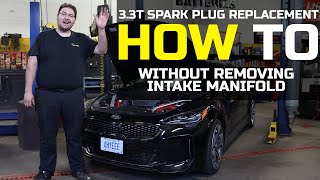
Typical fix: Replace all six spark plugs. 🎬 Watch: How to change and gap your Stinger's spark plugs correctly. It is highly recommended to use OEM NGK Iridium plugs (Part #18852-09070). The rear three plugs are significantly harder to access and may require working around the intake manifold.
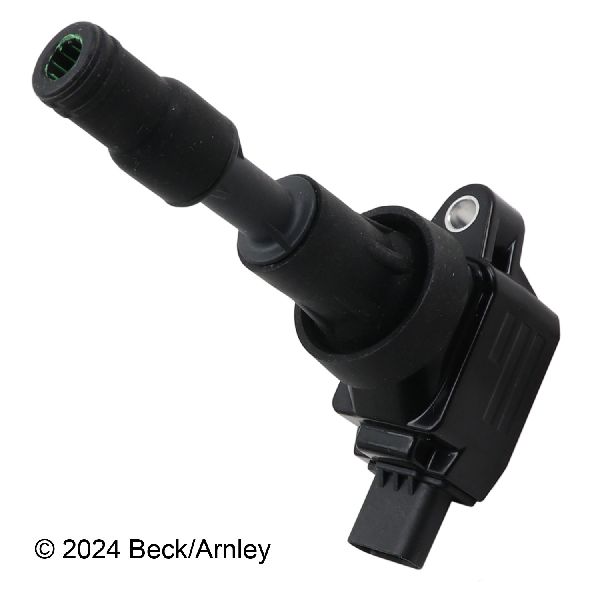
Est. part cost: $100-$200 - Faulty Ignition Coil(s) 🟡 Medium Probability → Shop Ignition Coil Ignition coil failure is a documented issue on the Stinger platform, potentially due to high heat in the engine bay. When one coil fails, others may be weak and prone to failure soon after. There are different part numbers for the front and rear banks of coils.
How to confirm: Use an OBD-II scanner with live data to identify which cylinders are misfiring. Swap the ignition coil from a misfiring cylinder to a known good cylinder. If the misfire code follows the coil (e.g., P0302 becomes P0304 after swapping coils from cylinder 2 to 4), the coil is bad.
Typical fix: Replace the faulty ignition coil. 🎬 See this walkthrough on how to replace a 3.3L ignition coil. The OEM part number for the front bank is often cited as 27310-3L030. It is often recommended to replace coils in banks (e.g., all three rear coils) or all six at once to prevent future failures, especially since accessing the rear bank is labor-intensive.
Est. part cost: $50-$100 per coil - Intake Valve Carbon Buildup 🟡 Medium Probability As a GDI engine, the 3.3T Lambda II is susceptible to carbon deposits on the intake valves, which are not cleaned by fuel spray. This restricts airflow and can cause misfires, a rough idle, and power loss, typically becoming noticeable between 40,000 and 80,000 miles.
How to confirm: A visual inspection of the intake valves using a borescope is the most definitive method. This requires removing the intake manifold. Some owners report improvement after using spray-in intake valve cleaners like Seafoam or CRC as a preventative measure.
Typical fix: The most effective solution is walnut shell blasting to clean the intake valves and ports. This service typically costs between $400 and $800 at an independent shop or dealer.
Est. part cost: $0 (service only) - Fuel System Issues (Injectors, Pump) ⚪ Low Probability While less common than ignition issues, problems with the high-pressure fuel pump (HPFP) or fuel injectors can cause lean conditions leading to random misfires. There have been multiple recalls and TSBs related to fuel pumps on Stinger models, including NHTSA recalls 23V-653 (for 2018-2021 models) and SC198 (for 2020-2021 models), which address fuel pump failures that can lead to a loss of power.
How to confirm: Requires advanced diagnostics, including monitoring fuel rail pressure with a scan tool and potentially performing a fuel injector flow test. Check VIN against known recalls.
Typical fix: If related to a recall, the dealer will inspect and replace the fuel pump and/or update software for free. Otherwise, replace the faulty component, such as the high-pressure fuel pump or one or more fuel injectors.
Est. part cost: $500-$1500+
Rare But Worth Checking
- Vacuum Leak: A leak from a cracked hose or faulty gasket can introduce unmetered air into the engine, leaning out the air/fuel mixture and causing random misfires. A failed PCV valve can also be a source.
- Low Engine Compression: Internal engine issues like a burnt exhaust valve, worn piston rings, or a failing head gasket can cause a loss of compression and lead to misfires. This is a severe issue and requires a compression test to diagnose. While the Lambda II engine is generally considered robust, head gasket failures have been noted on the broader engine family. In related Kia models, NHTSA ODI #11697208 describes a P0300 and P0303 caused by a burnt valve, while NHTSA ODI #11725093 reports a total loss of pressure in cylinders 2 and 4 alongside misfire codes.
Diagnosis Steps
- Read all diagnostic trouble codes (DTCs) with an OBD-II scanner. Note any codes in addition to P0300, especially specific cylinder codes (P0301-P0306).
- Check the freeze frame data to see the engine conditions (RPM, load, temperature) when the misfire occurred.
- Inspect the service history. If the vehicle has over 42,000 miles and the spark plugs have not been replaced, start there. This is the most common fix.
- Inspect the ignition coils for visible damage or corrosion. If specific cylinder misfire codes are present (e.g., P0302), swap the coil from the misfiring cylinder with a known good one (e.g., from cylinder 4) and see if the code follows the coil.
- If ignition components are good, check for vacuum leaks by inspecting all hoses and intake gaskets. A smoke test is the most effective way to find leaks.
- If no vacuum leaks are found, consider carbon buildup. This requires a borescope inspection of the intake valves, which involves removing the intake manifold.
- For advanced issues, check fuel rail pressure to diagnose potential fuel pump problems and perform a compression test to rule out internal engine mechanical issues.
Parts You'll Likely Need
- Spark Plugs (Set of 6)
(OEM #18852-09070)— This is the most common cause of P0300 on the Stinger 3.3T, as they are a scheduled maintenance item that directly impacts ignition performance.
Trusted brands: Kia/Hyundai (OEM NGK), HKS, Denso
OEM price range: $150-$200 (set of 6)
Aftermarket price range: $100-$180 (set of 6) - Ignition Coil
(OEM #27301-3L100 (Rear Bank) / 27310-3L030 (Front Bank))— Ignition coils are the second most likely cause of misfires. Heat and vibration can cause them to fail over time. Note that front and rear banks use different coils.
Trusted brands: Kia (OEM), Delphi, Bosch, NGK
OEM price range: $80-$120 (per coil)
Aftermarket price range: $50-$90 (per coil)
Related Codes That Often Appear With This One
- P0301-P0306 — P0300 often appears with specific cylinder misfire codes (e.g., P0302 for cylinder 2) which can help pinpoint the location of a bad coil or plug.
- P0171 / P0174 — These codes indicate a 'System Too Lean' condition on Bank 1 and Bank 2, respectively. A vacuum leak or fuel delivery problem causing the P0300 can also trigger these codes.
- P0420 — As noted in NHTSA ODI #11727865, a catalyst system efficiency code may appear alongside P0300 and specific cylinder misfires like P0301 and P0304.
Technical Service Bulletins (TSBs) & Recalls
- TSB ENG227 (SA463): While primarily for other models and codes, this TSB regarding ECM software updates for error detection highlights Kia's use of software flashes to fix engine management issues.
- TSB ENG222: This bulletin defines excessive oil consumption (over 1 quart per 1,000 miles) which, as reported in NHTSA ODI #11717327, can lead to fouled spark plugs and active misfires on multiple cylinders.
Platform-Specific Known Issues
- Carbon Buildup on Intake Valves: A well-documented issue for GDI engines like the Lambda II 3.3T, leading to misfires and requiring walnut blast cleaning for removal.
- Recall SC300 / NHTSA 24V143000: A recall was issued for the left turbocharger oil feed pipe, which can degrade and leak oil. While this doesn't directly cause a P0300, symptoms like smoke or an oil pressure light can appear alongside engine performance issues.
- High Pressure Fuel Pump (HPFP) Recalls: Multiple recalls (e.g., NHTSA 23V-653) have been issued for HPFP failures that can cause stalling and loss of power, which may present with misfire codes.
- Excessive Oil Consumption: Reports across the manufacturer's engine lines, such as in NHTSA ODI #11716567, indicate that low oil levels and metal in the oil can coincide with P0300 and multiple cylinder misfire codes (P0302, P0304, P0306).
Mechanic-Grade Diagnostic Values
- High-Pressure Fuel Pump (HPFP) Outlet Pressure — expected: Over 2,500 PSI under load. Failure: Significantly lower pressure indicates a failing HPFP.
- Low-Pressure Fuel Pump (In-Tank) Outlet Pressure — expected: Approximately 50-80 PSI. Failure: Pressure below this range suggests a weak in-tank pump.
- Ignition Coil Primary Resistance — expected: 0.3 to 1.5 ohms. Failure: Readings outside this range indicate a faulty coil.
- Ignition Coil Secondary Resistance — expected: 5,000 to 15,000 ohms (5k-15k Ω). Failure: Readings outside this range indicate a faulty coil winding.
Scan Tool Commands That Help
- Kia GDS (Global Diagnostic System): Misfire Counter / Live Data — To monitor which specific cylinders are incrementing misfires in real-time, helping to isolate the issue even when only a general P0300 code is present.
- Kia GDS (Global Diagnostic System): Reset Adaptive Values — After replacing components like fuel injectors or sensors, this function resets the engine control module's long-term fuel trims and other learned values to their defaults, which can be necessary for the system to properly adapt to the new parts.
- Kia GDS (Global Diagnostic System): Actuation Test (e.g., for injectors) — To command individual components like fuel injectors to operate, allowing a technician to check their function without the engine running. This can help isolate a single faulty injector that may be contributing to a random misfire condition.
Wiring & Ground Locations
- ECM Ground — The Engine Control Module (ECM) is typically located in the engine bay, often near the battery or firewall. Its grounding points are critical for stable sensor readings.. A poor ground for the ECM or its associated sensors (like Crankshaft Position Sensor) can introduce electrical noise, leading to false or erratic signals that the ECM may interpret as a misfire. Verifying clean, tight ground connections is a key step in diagnosing elusive electronic-related misfires.
Real Owner Repair Stories
- Forum User (Kia Stinger 3.3T (year not specified)) — Rough idle, engine misfires, and a P0300 code.
❌ Tried (didn't work) Replacing spark plugs, Replacing ignition coils
✅ What actually fixed it The issue was ultimately traced to a faulty PCV (Positive Crankcase Ventilation) valve. A stuck or clogged PCV valve can create a vacuum leak, disrupting the air-fuel mixture and leading to random misfires.
Model Year Variations Within This Range
- 2022-2023: For the 2022 model year refresh, the 3.3T V6 engine received a new variable exhaust system which resulted in a minor power increase from 365 hp to 368 hp. This change does not fundamentally alter the diagnosis for a P0300 code but is a known difference in later models.
Diagnostic Flowchart
Other Known Issues on This Vehicle
Issues unrelated to this code that are worth knowing about as an owner of this generation:
- Sunset Yellow Paint Defect 🟠 Medium — Affects only the limited-run 'Sunset Yellow' color from the 2018 model year. The paint fails to adhere properly, leading to chipping and cracking. (Ref: Voluntary Service Campaign / Recall - Kia offered repaints, buybacks, or replacements to affected owners.)
- Brake Judder / Premature Rotor Warping 🟡 Low — Common complaint, especially on 2018-2020 models. Owners report steering wheel vibration under braking, often attributed to warped front brake rotors.
- High-Pressure Fuel Pump (HPFP) Failure 🔴 High → Shop Fuel Pump — Affects 2018-2021 models. A faulty fuel control valve plunger can cause the pump to fail, leading to a loss of motive power. (Ref: NHTSA Recall 23V-653 / Kia Recall SC281)
- Interior Rattles and Noises 🟡 Low — Frequently reported by owners. Common sources include the trunk area, sunroof, and dashboard components.
- HECU (Hydraulic Electronic Control Unit) Fire Risk 🔴 High — Affects certain 2018-2021 models. A potential electrical short in the HECU for the anti-lock brake system could cause an engine compartment fire, even when the vehicle is off. (Ref: NHTSA Recall 21V164000 / Kia Recall SC206)
- Left Turbocharger Oil Feed Pipe Leak 🟠 Medium → Shop Turbocharger — Affects 2018-2023 models. The oil feed pipe and hose assembly for the left turbo may deteriorate and leak oil, potentially causing smoke or engine damage if oil level becomes critically low. (Ref: NHTSA Recall 24V143000 / Kia Recall SC300)
Used vs. New Parts: Buying Guide for This Vehicle
When a used part is the smart pick: For this repair, used parts are generally not recommended for the primary failure items. However, if a larger component like an intake manifold (in case of damage during repair) or engine cover is needed, a used part from a reputable salvage yard is a cost-effective option.
Donor-vehicle mileage cap: roughly under 50000 miles for the part to have meaningful remaining life.
What to inspect on the donor part:
- For any electronic part, check for corrosion on pins or connectors.
- For mechanical parts like manifolds, inspect for cracks, warping, or signs of extreme heat.
- Verify the donor vehicle was not in a front-end collision that could have stressed engine components.
OEM-only on this vehicle (don't cheap out):
- Spark Plugs: The cost savings are minimal and the risk of incorrect heat range or poor quality is high. Always use new OEM-spec (NGK) or validated performance plugs (HKS).
- High-Pressure Fuel Pump (HPFP): Given the multiple recalls and the critical nature of this part, only a new OEM pump should be used to ensure reliability and proper fuel pressure regulation.
Aftermarket brands forum-validated for this vehicle:
- Ignition Coils: Delphi, Bosch, NGK are generally considered reliable alternatives to OEM.
- Spark Plugs: HKS (M45IL) is a well-regarded performance upgrade, especially for tuned vehicles.
Brands owners have reported issues with on this vehicle:
- Unbranded, no-name ignition coils and spark plugs from online marketplaces should be avoided. They are a common source of repeat misfires due to poor quality control and incorrect specifications.
Real Owner Stories
Aggregated from forums and TSBs cited above. Mileages and costs reflect what owners reported in those sources.
2019 Kia Stinger GT 3.3T
Symptoms: Power loss, jerking, and rough idle.
What fixed it: The dealer diagnosed and replaced all six ignition coils under warranty.
Source hint: stingerforum.org - 'Check Engine Light, Gear Skip and idle issue'
2018-2023 Kia Stinger 3.3T — ~42000 miles
Symptoms: Misfires occurring specifically when the engine is under boost.
What fixed it: Replacement of all six spark plugs; the owner noted the factory gap is 0.028-0.032".
Cost: $500-$1000
Source hint: reddit.com/r/StingerGT user poll and discussion threads
2017-present Genesis G70 3.3T — ~40000 miles
Symptoms: P030x codes and difficulty accessing the rear bank for diagnostics.
What fixed it: Replacing all three ignition coils on the rear bank at the same time as the spark plugs to save on future labor.
Source hint: Genesis G70 Forums
Documented NHTSA Reports
NHTSA ODI #11717327
Symptoms: Fouled spark plugs and active misfires on cylinders 1, 3, 4, and 5.
What fixed it: An owner reported that Kia acknowledged a defect in TSB ENG222 regarding piston rings and excessive oil consumption leading to these misfire codes.
NHTSA ODI #11727865
Symptoms: Check engine light with codes P0300, P0301, P0304, and P0420.
Observations: The owner noted these codes appeared together, indicating that random and specific cylinder misfires can be linked to catalyst system efficiency issues.
NHTSA ODI #11716567
Symptoms: Random misfire (P0300) and specific cylinder misfires (P0302, P0304, P0306).
Observations: Diagnostic findings included metal in the oil, oil levels being one or more quarts low, and a bank 2 rich condition (P0175).
Related OBD-II Codes
Frequently Asked Questions
Is there a recall for the fuel pump on my 2018-2021 Kia Stinger 3.3T that could cause misfires?
What spark plugs should I use for my Stinger 3.3T to fix a P0300 code?
Does the turbocharger oil feed pipe recall (NHTSA 24V143000) cause P0300?
How often should I change the spark plugs on the Lambda II 3.3T engine to prevent misfires?
Why is the labor cost so high for replacing the rear spark plugs or coils?
Can carbon buildup cause a P0300 on a Stinger with 50,000 miles?
Helpful Videos
Used OEM Parts in Stock
New Aftermarket Parts Available


The information in this article is provided for general reference and educational purposes only. Vehicle specifications, procedures, and part compatibility can vary by production date, trim level, and region. Always consult your vehicle's factory service manual and verify part numbers before purchasing or performing repairs. Safety-critical components such as airbags, seat belts, and braking systems should be installed by a qualified professional.
- Kia Stinger:
- 🧭 Diagnostic Flowchart
- 🎬 Helpful Videos
- 🛍️ Shop This Part
- What's Unique About the 2018-2023 Kia Stinger
- Symptoms You May Notice
- Most Likely Causes
- Rare But Worth Checking
- Diagnosis Steps
- Parts You'll Likely Need
- Related Codes That Often Appear With This One
- Technical Service Bulletins (TSBs) & Recalls
- Platform-Specific Known Issues
- Mechanic-Grade Diagnostic Values
- Scan Tool Commands That Help
- Wiring & Ground Locations
- Real Owner Repair Stories
- Model Year Variations Within This Range
- Other Known Issues on This Vehicle
- Used vs. New Parts: Buying Guide for This Vehicle
- Real Owner Stories
- 2019 Kia Stinger GT 3.3T
- 2018-2023 Kia Stinger 3.3T — ~42000 miles
- 2017-present Genesis G70 3.3T — ~40000 miles
- Documented NHTSA Reports
- NHTSA ODI #11717327
- NHTSA ODI #11727865
- NHTSA ODI #11716567
- Related OBD-II Codes
- Frequently Asked Questions
- 🎟️ Get 5% Off