

P0300 on 2013-2015 Land Rover LR2: Random Misfire Causes and Fixes
On a 2013-2015 LR2, a P0300 random misfire code is frequently caused by failing ignition coils or worn spark plugs. However, this specific platform, which uses a Ford 2.0L EcoBoost engine, has known issues outlined in Land Rover service bulletins related to faulty high-pressure fuel pumps and fuel injectors. Diagnosis should begin with the ignition system but must include verification of fuel pressure and injector function to be thorough.
- P0300 on a 2013-2015 LR2 indicates a random misfire, not tied to one cylinder.
- While spark plugs and ignition coils are the most common starting point, do not overlook the fuel system.
- Land Rover has specifically identified faulty fuel injectors and the high-pressure fuel pump as known causes for this code on this engine (TSBs SSM71894, LTB00730NAS1).
- A flashing check engine light signals a severe misfire that requires immediate attention to prevent catalytic converter damage.
- This guide applies to the 2.0L Turbo engine used from 2013-2015, not the earlier 3.2L I6 engine.
What's Unique About the 2013-2015 Land Rover LR2
The 2013-2015 LR2 uses a 2.0L turbocharged direct-injection engine sourced from Ford, also known as the 2.0 Si4. While standard ignition system wear (plugs, coils) is a common cause for P0300, this platform is also subject to specific fuel system issues that are less common on other vehicles. Land Rover issued multiple Technical Service Bulletins (TSBs) for this vehicle range that directly link P0300 to problems with the high-pressure fuel pump's metering valve (LTB00730NAS1) and faulty fuel injectors, particularly causing misfires at cold start (SSM71894). This makes a thorough fuel system diagnosis critical.
Diagnostic Flowchart
Tap your situation to follow the diagnostic path that matches what you're seeing on this vehicle.
Generation note: This guide specifically covers the Land Rover LR2 (L359), also known as the Freelander 2, from 2013-2015, which was updated with the 2.0L turbocharged four-cylinder Ford EcoBoost engine. Earlier models (2008-2012) used a 3.2L inline-six engine and have different common causes and TSBs for a P0300 code.
Symptoms You May Notice
- Check Engine Light (MIL) is on or, more seriously, flashing
- Rough or shaking engine idle [SSM71894]
- Engine runs rough, especially under load [LTB01101NAS4]
- Poor or difficult starting, requiring extended cranking [LTB01101NAS2]
- Hesitation or stumbling during acceleration
- Noticeable loss of engine power
- Reduced fuel economy
- Smell of gasoline from the exhaust due to unburnt fuel
- Replacing only one spark plug or ignition coil when others are near the end of their service life.
- Replacing oxygen sensors when they are correctly reporting a problem with the air/fuel mixture caused by the misfire. A bad O2 sensor is a possible but less likely cause.
- Assuming the issue is only ignition-related and not investigating the fuel system, despite the specific TSBs (LTB00730NAS1, SSM71894) for this vehicle.
- Replacing the PCV valve without checking for other vacuum leaks, such as a cracked intake manifold or disconnected hoses.
Most Likely Causes
- Worn Spark Plugs or Faulty Ignition Coils 🔴 High Probability → Shop Ignition Coil Turbocharged engines place higher demands on the ignition system, leading to a shorter service life for spark plugs and coils. Oil leaks from the valve cover gasket can also pool in the spark plug wells, fouling the coils and causing misfires.
How to confirm: Inspect spark plugs for wear (scorching, oil fouling), damage, or an incorrect gap. The correct gap for the OEM plugs is approximately 0.026 inches. Test ignition coils by swapping a coil from a misfiring cylinder (if identified with codes like P0301, P0302, etc.) to a known good cylinder to see if the misfire follows. A multimeter can be used to test the primary and secondary resistance of the coils; primary should be between 0.2 to 3.0 ohms, and secondary between 5k to 15k ohms, though specific values for the OEM coil are best.
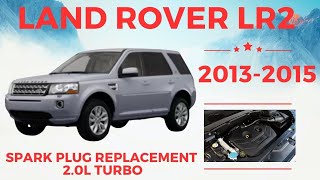
Typical fix: Replace all four spark plugs and any faulty ignition coils. It is best practice to replace spark plugs as a set. 🎬 Watch: Step-by-step guide to replacing spark plugs on this engine. If one coil has failed and the others are original, replacing all four can prevent future issues.
Est. part cost: $80-$250 - Faulty or Clogged Fuel Injectors 🟡 Medium Probability → Shop Fuel Injector Land Rover issued TSB SSM71894 specifically to investigate misfires at cold start related to fuel injectors on this platform. Direct injection injectors operate under very high pressure and can be sensitive to fuel quality and deposits over time. [SSM71894] One leaking injector can sometimes cause a random misfire code by affecting the overall fuel rail pressure.
How to confirm: A professional can perform a fuel injector balance test. An advanced scan tool can monitor misfire counters per cylinder to help isolate a problematic injector. A DIY method involves using a mechanic's stethoscope to listen for a consistent clicking sound from each injector; a silent or irregular injector is suspect.
Typical fix: Replace the faulty fuel injector(s). It is often recommended to have all injectors professionally cleaned or replaced as a set to ensure balanced fuel delivery, especially on higher mileage vehicles.
Est. part cost: $150-$400 per injector - Failing High-Pressure Fuel Pump (HPFP) 🟡 Medium Probability → Shop Fuel Pump TSB LTB00730NAS1 directly identifies an internal fault with the HPFP's metering valve as a cause for rough running and misfire codes, including P0300. The 2.0L EcoBoost engine relies on extremely high fuel pressure for its direct injection system, and any weakness in the pump can cause widespread misfires. The HPFP is mechanically driven by the camshaft and can pressurize fuel to over 2,000 PSI.
How to confirm: This requires monitoring fuel rail pressure with a capable OBD-II scanner. The pressure should meet specified values and increase with engine RPM. A failure to build or maintain pressure, or pressure that is erratic, points to a weak HPFP. The desired pressure should be compared to the actual pressure; a significant deviation under load indicates a problem.
Typical fix: Replacement of the high-pressure fuel pump. This is a more involved job than the low-pressure pump in the fuel tank. It is highly recommended to also replace the camshaft follower (tappet) at the same time.
Est. part cost: $400-$800 - Vacuum Leak ⚪ Low Probability A common source is a torn diaphragm in the PCV (Positive Crankcase Ventilation) valve, which is integrated into the valve cover. Hoses and intake manifold gaskets can also become brittle over time, leading to cracks and unmetered air entering the engine, disrupting the air-fuel ratio.
How to confirm: A failing PCV diaphragm may cause a loud hissing or squealing noise from the engine. Pulling the oil dipstick with the engine running may cause the noise to change or stop, indicating a crankcase vacuum issue. The most effective method for finding any vacuum leak is a smoke test, which forces smoke into the intake system to reveal any leaks.
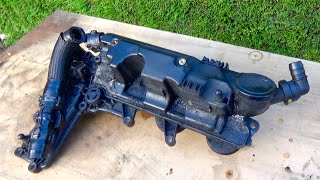
Typical fix: Replace the leaking hose, gasket, or the entire valve cover if the PCV diaphragm has failed. Aftermarket kits are available to replace just the PCV diaphragm. 🎬 See this walkthrough for stripping down the PCV and camshaft cover.
Est. part cost: $20-$350
Rare But Worth Checking
- Stretched or Jumped Timing Chain: → Shop Engine Timing Chain The 2.0L EcoBoost engine can be prone to timing chain tensioner and guide issues, especially at higher mileage (over 75,000 miles / 120,000 km). A stretched chain can cause camshaft and crankshaft correlation codes (like P0016) along with P0300, rough idle, and rattling noises on cold starts. This is an interference engine, so a significant timing jump can cause catastrophic engine damage.
- Clogged Catalytic Converter: → Shop Catalytic Converter A severely clogged catalytic converter can create excessive exhaust backpressure, leading to random misfires. This is usually a consequence of long-term misfiring (which allows unburnt fuel to enter and damage the converter), not the initial cause, and is often accompanied by code P0420.
- Low Engine Compression: Although less common, internal engine issues like a burnt valve, damaged piston, or a failed head gasket can cause persistent misfires. This should be investigated with a compression test after all ignition, fuel, and air/vacuum issues have been ruled out.
Diagnosis Steps
- Read all stored fault codes with an OBD-II scanner. Note any codes accompanying P0300, especially cylinder-specific (P0301-P0304), fuel-related (P0089), or timing-related (P0016) codes.
- Check freeze frame data to see the engine conditions (RPM, load, temperature) when the misfire occurred. This can provide clues if the misfire happens when cold, under load, etc.
- Inspect the ignition system. Remove and check all spark plugs for wear, damage, or fouling. The correct spark plug is LR025605, and the gap should be ~0.026". Test or swap ignition coils to see if a specific misfire moves to another cylinder.
- If ignition components are good, move to the fuel system. Use a scan tool to monitor high and low fuel pressure readings live. Compare them to manufacturer specifications. Per TSB LTB00730NAS1, a faulty high-pressure pump is a known issue.
- Listen to each fuel injector with a stethoscope for a steady, rhythmic clicking. An silent or irregular injector is likely faulty. This is especially relevant if misfires are worse on cold starts, per TSB SSM71894.
- Perform a smoke test to check for any vacuum leaks in the intake manifold, vacuum hoses, or PCV system. Pay close attention to the PCV diaphragm on the valve cover, a known failure point.
- If all else fails, perform an engine compression test to rule out internal mechanical problems like worn piston rings, a bad head gasket, or a timing chain issue.
Parts You'll Likely Need
- Ignition Coil
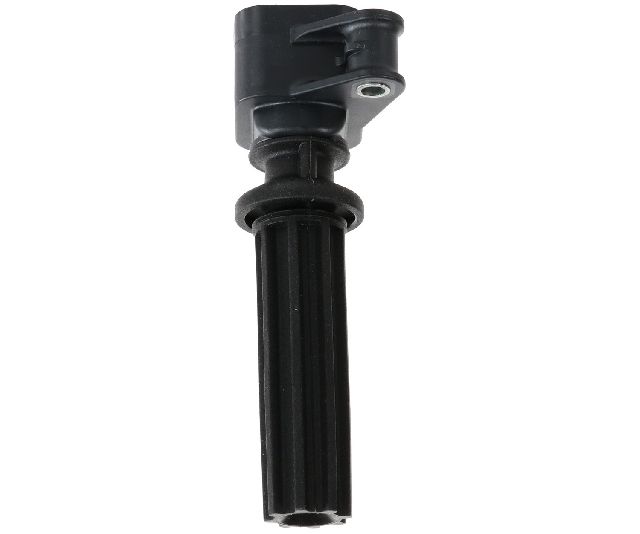
(OEM #LR078438)— Ignition coils are a primary wear item and a leading cause of misfires on most gasoline engines, including this one.
Trusted brands: Bosch, Delphi, NGK
OEM price range: $70-$100
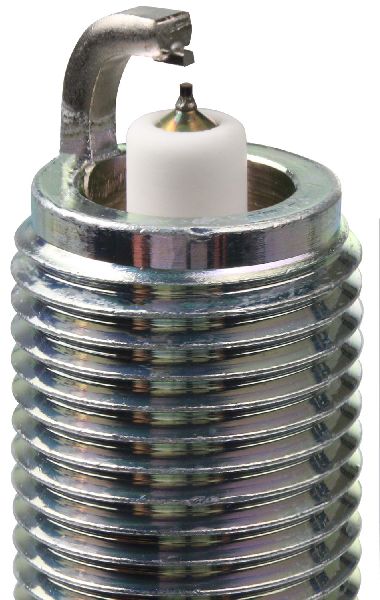
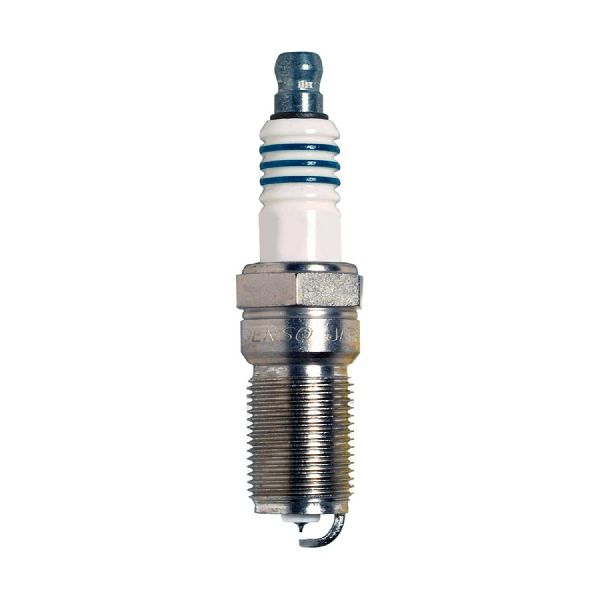
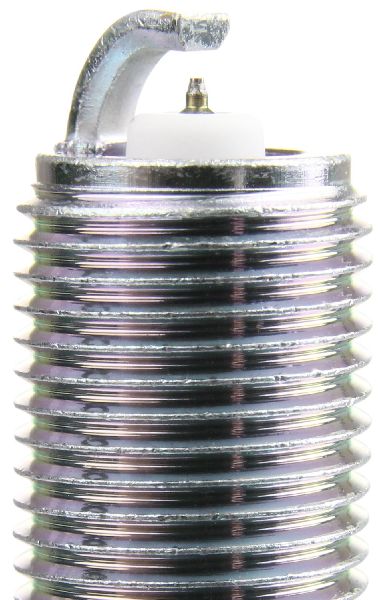
Aftermarket price range: $40-$70 - Spark Plug
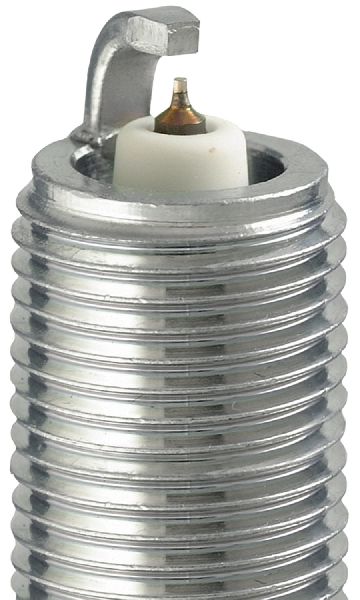
(OEM #LR025605)— As a routine maintenance item, worn or fouled spark plugs are a very common cause of incomplete combustion and misfires. Turbocharged engines are particularly sensitive to plug condition.
Trusted brands: NGK, Bosch
OEM price range: $20-$30
Aftermarket price range: $10-$20 - High-Pressure Fuel Pump
(OEM #LR030860)— A known issue documented in TSB LTB00730NAS1 for causing misfires and rough running on this specific vehicle.
Trusted brands: Bosch, Genuine Land Rover
OEM price range: $600-$800
Aftermarket price range: $350-$550 - PCV Valve / Valve Cover Assembly
(OEM #LR057283 (Valve Cover w/ PCV))— The PCV diaphragm is a common failure point that causes a significant vacuum leak, leading to lean conditions and random misfires. The diaphragm is integrated into the valve cover.
Trusted brands: Genuine Land Rover, Aftermarket PCV repair kits
OEM price range: $250-$350
Aftermarket price range: $30-$150
Related Codes That Often Appear With This One
- P0301, P0302, P0303, P0304 — These codes specify which cylinder is misfiring (P0301 for cylinder 1, etc.). They often accompany P0300 when the misfire is frequent enough in specific cylinders for the PCM to identify them. [LTB01101NAS4, 34]
- P1315 — This is a manufacturer-specific code that is frequently stored alongside P0300 on Land Rovers. It indicates a persistent misfire that is severe enough to potentially damage the catalytic converter. [LTB01101NAS2]
- P0089 — This code relates to 'Fuel Pressure Regulator Performance'. Its presence strongly suggests the issue lies within the fuel delivery system, aligning with the known high-pressure fuel pump (HPFP) issues described in TSB LTB00730NAS1.
- P0016 — Crankshaft/Camshaft Position Correlation. If you see this code with P0300, it is a strong indicator of a potential timing chain issue, such as a stretched chain or failing tensioner. This should be investigated immediately to prevent severe engine damage.
Technical Service Bulletins (TSBs) & Recalls
- LTB01101NAS4
- LTB01101NAS2
- SSM71894
- LTB00730NAS1
- LTB01101NAS3
Platform-Specific Known Issues
- High-Pressure Fuel Pump Failure: → Shop Fuel Pump As detailed in TSB LTB00730NAS1, the HPFP is a known weak point. Failure of its internal metering valve can cause fuel pressure to be erratic, leading to random misfires that are hard to diagnose without monitoring fuel rail pressure with a scan tool.
- Cold Start Misfires due to Injectors: TSB SSM71894 was issued for engineers to investigate cold start misfires specifically related to fuel injectors. This suggests a higher-than-normal probability of injector issues on this platform compared to others. [SSM71894]
- PCV Diaphragm Failure: The PCV system's rubber diaphragm is integrated into the valve cover and is known to tear, creating a large vacuum leak. This often produces a loud squeal or hiss at idle and can be temporarily diagnosed by pulling the oil dipstick to see if the engine sound changes.
Mechanic-Grade Diagnostic Values
- Low-Pressure Fuel System Pressure — expected: 4.0 to 7.0 bar (58 to 101 PSI) at idle. Failure: Pressure dropping below 4.0 bar (58 PSI) at idle indicates a weak in-tank pump or clogged filter.
- High-Pressure Fuel System Pressure (HPFP) — expected: Can exceed 2,000 PSI under load. At idle, it should closely match the 'desired' fuel rail pressure value on a scan tool.. Failure: A significant lag or inability for the actual pressure to meet the desired pressure during acceleration is a strong sign of a failing HPFP. A code P0087 (Fuel Rail/System Pressure - Too Low) often accompanies this.
- Ignition Coil Primary Winding Resistance — expected: 0.2 to 3.0 Ohms. Failure: A reading outside this range, or an open loop (OL) reading, indicates a faulty coil.
- Ignition Coil Secondary Winding Resistance — expected: 5,000 to 15,000 Ohms (5kΩ to 15kΩ). Failure: A reading significantly outside this range suggests the internal windings are compromised.
Scan Tool Commands That Help
- Land Rover SDD / Pathfinder or equivalent advanced scanner: Reset PCM Adaptations — After major engine repairs, especially timing chain or VCT actuator replacement. The PCM learns to compensate for worn components, and failing to reset these learned values after installing new parts can cause misfire codes to be stored incorrectly as the engine re-learns.
Wiring & Ground Locations
- Passenger Footwell Harness — Underneath the carpet on the right passenger side.. One owner reported a ground wire from the Body Control Module (BCM) in this area overheating and melting nearby wires, causing blown fuses and electrical issues that could potentially lead to misfire-related symptoms.
Real Owner Repair Stories
- Reddit user in r/LandRover (2014 Land Rover LR2 2.0L Turbo) — Stored 'historic' codes P0300 and P0301 with no active Check Engine Light, occurring at idle (950-980 RPM).
❌ Tried (didn't work) The issue appeared immediately after a major service.
✅ What actually fixed it The likely cause was identified as the technician failing to 'reset PCM adaptions' after replacing the timing chain and VCT actuator. The engine had learned to cope with the old, out-of-time parts, and through codes when the new, correct parts were installed until the learned values were cleared.
OEM Part Supersession History
LR044427→LR057235— This is a known supersession for a fuel pump, likely the high-pressure pump, indicating a revision or change in the supplied part over time.
Model Year Variations Within This Range
- 2015 only: For the 2015 model year, the 6-speed automatic transmission was updated to a 9-speed automatic transmission. While this does not directly affect the cause of a P0300 code, it is a significant powertrain difference within the 2013-2015 range.
Helpful Videos
We Have This Part in Stock


The information in this article is provided for general reference and educational purposes only. Vehicle specifications, procedures, and part compatibility can vary by production date, trim level, and region. Always consult your vehicle's factory service manual and verify part numbers before purchasing or performing repairs. Safety-critical components such as airbags, seat belts, and braking systems should be installed by a qualified professional.
- Land Rover LR2:
- 🧭 Diagnostic Flowchart
- 🎬 Helpful Videos
- 🛍️ Shop This Part
- What's Unique About the 2013-2015 Land Rover LR2
- Symptoms You May Notice
- Most Likely Causes
- Rare But Worth Checking
- Diagnosis Steps
- Parts You'll Likely Need
- Related Codes That Often Appear With This One
- Technical Service Bulletins (TSBs) & Recalls
- Platform-Specific Known Issues
- Mechanic-Grade Diagnostic Values
- Scan Tool Commands That Help
- Wiring & Ground Locations
- Real Owner Repair Stories
- OEM Part Supersession History
- Model Year Variations Within This Range
- 🎟️ Get 5% Off