

P0300 on 2013-2016 Mazda CX-5: Random Misfire Causes and Fixes
For a 2013-2016 Mazda CX-5, a P0300 code is most often caused by worn spark plugs or failing ignition coils. A Mazda TSB (01-014/16) specifically notes that original equipment 'YUMEBISHI' brand ignition coils are prone to failure and should be replaced with updated 'MITSUBISHI' brand coils (Part No. PE20-18-100B). Replacing all four spark plugs (NGK ILKAR7L11) and the faulty coil(s) is the most common fix, costing $100-$300 for DIY parts. Higher mileage vehicles may also suffer from intake valve
- For a 2013-2016 CX-5, P0300 is very frequently caused by either worn spark plugs or failing ignition coils.
- Check for a specific Mazda TSB (01-014/16) regarding faulty original-equipment ignition coils, which are a known weak point.
- If the check engine light is flashing, pull over immediately to prevent catastrophic damage to the catalytic converter.
- Because this is a direct-injection engine, intake valve carbon buildup is a significant possibility, especially if ignition components are confirmed to be good.
- On 2.0L models, check for a high oil level and gasoline smell, which points to a specific cold-weather issue requiring a dealer PCM update.
What's Unique About the 2013-2016 Mazda CX-5
The 2013-2016 CX-5 uses Mazda's Skyactiv-G direct injection engine. While efficient, these engines are known to be susceptible to intake valve carbon buildup, which can disrupt airflow and cause misfires, as fuel does not wash over the valves. More specifically for this vehicle range, Mazda issued a Technical Service Bulletin (TSB 01-014/16) for faulty 'YUMEBISHI' brand ignition coils that can fail when exposed to large temperature changes, leading directly to P0300 and other misfire codes. Another TSB (01-005/15) also affects some 2.0L models, where cold weather and short trips can cause fuel to dilute the engine oil, triggering misfires.
Symptoms You May Notice
- Rough or shaky idle
- Engine hesitation or stumbling, especially during acceleration
- Noticeable loss of power
- Flashing or solid check engine light
- Reduced fuel economy
- Stuttering or jerking when accelerating
- TCS/TPMS warning lights may illuminate along with the Check Engine Light
- Replacing only spark plugs when a faulty ignition coil is the root cause.
- Replacing fuel injectors when the issue is actually carbon buildup on the intake valves.
- Replacing the MAF sensor when the actual problem is a vacuum leak elsewhere in the intake system.
Most Likely Causes
- Failing Ignition Coil(s) 🔴 High Probability → Shop Ignition Coil Mazda TSB #01-014/16 identifies that original equipment 'YUMEBISHI' brand coils on 2013-2016 CX-5s are prone to internal failure, especially after large ambient temperature swings. Manufacturer Bulletin #01-014-16-3208A further clarifies that this concern may be caused by an internal failure of the ignition coil(s) due to a high difference between temperatures. The TSB recommends replacing these with updated 'MITSUBISHI' brand coils, which are identifiable by having a 5-digit lot number instead of YUMEBISHI's 4-digit one.
How to confirm: If a specific cylinder misfire code (e.g., P0301) is also present, swap the ignition coil from the misfiring cylinder with one from a known good cylinder. Clear the codes and drive the vehicle. If the misfire code 'follows' the coil to the new cylinder (e.g., P0302 appears), the coil is bad. A scan tool with Mode $06 can also show live misfire counts per cylinder to identify the culprit without swapping parts.
Typical fix: Replace the faulty ignition coil. The TSB advises replacing any other original 'YUMEBISHI' coils manufactured before lot number 6328 (March 28, 2016). Many owners choose to replace all four coils preventatively. The updated OEM part is PE20-18-100B.
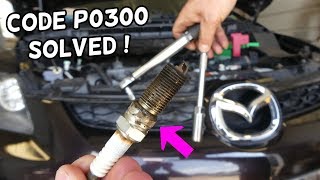
Est. part cost: $40-$80 per coil - Worn or Fouled Spark Plugs 🔴 High Probability → Shop Spark Plug Skyactiv engines are sensitive to spark plug condition and gap. The recommended service interval is 75,000 miles, but plugs can fail sooner, causing misfires. Carbon tracking on the plug's porcelain is a known failure mode, and even a single bad plug can cause a random misfire code.
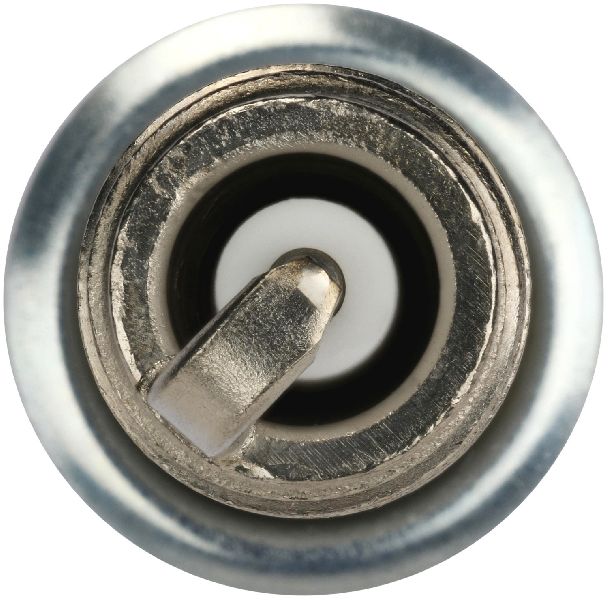
How to confirm: Remove and inspect all spark plugs. Look for worn electrodes, incorrect gap, oil fouling, or a thin black line (carbon track) on the white porcelain insulator.
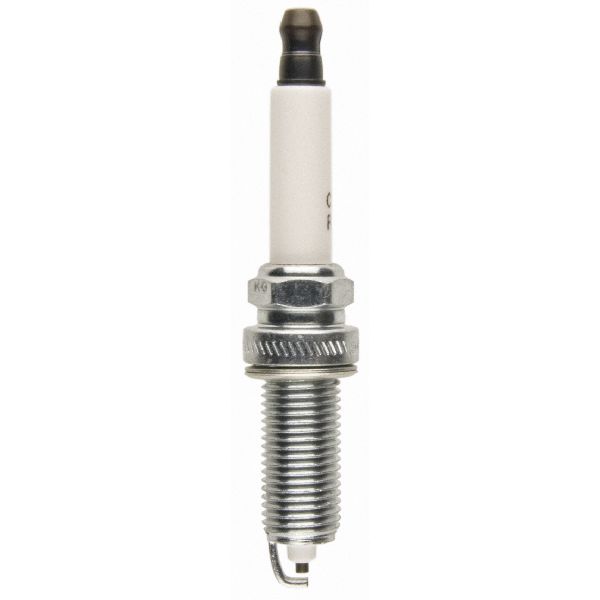
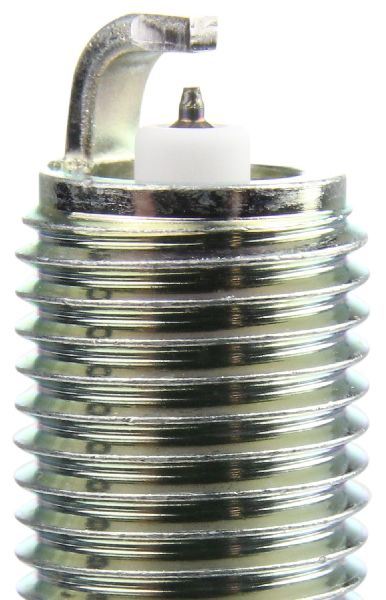
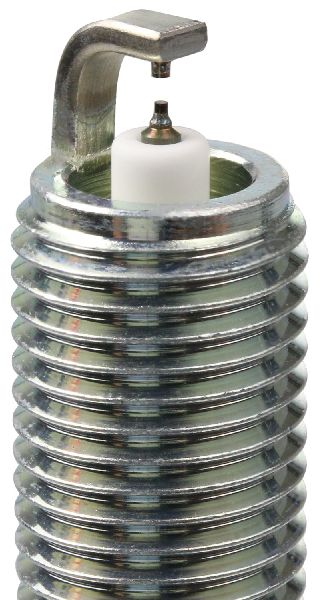
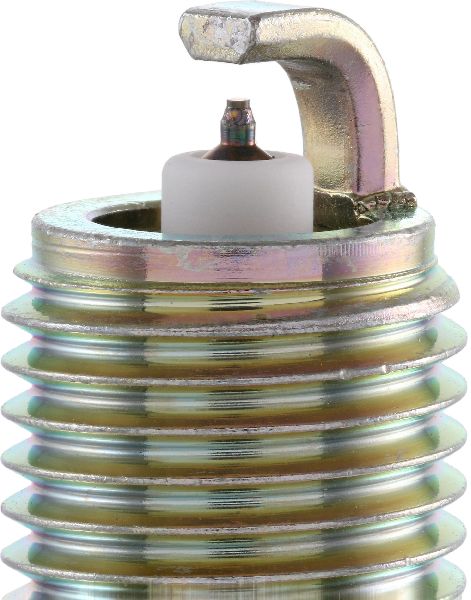
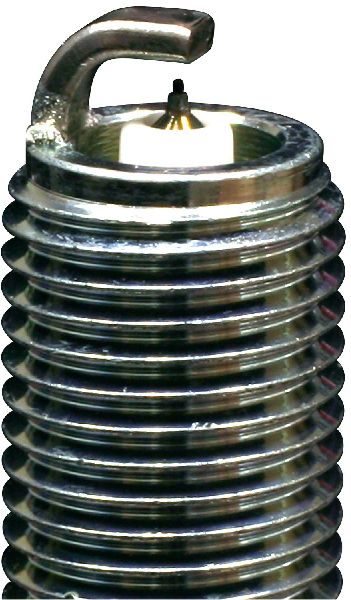
Typical fix: Replace all four spark plugs as a set. Use high-quality Iridium plugs specified for the engine, such as the OEM-spec NGK Laser Iridium ILKAR7L11.
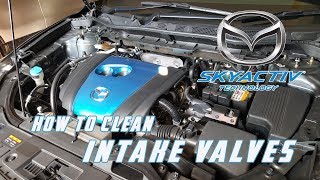
Est. part cost: $40-$80 for a set of four - Intake Valve Carbon Buildup 🟡 Medium Probability As a direct injection (DI) engine, fuel is sprayed directly into the cylinder, not over the intake valves. This means gasoline detergents don't clean the valves. Oil vapors from the PCV system can bake onto the hot valves, restricting airflow and causing misfires, especially on higher-mileage vehicles (over 60,000 miles) or those used for frequent short trips.
How to confirm: This is difficult to confirm without disassembly. A borescope inspection through the intake manifold is the most direct method. This is often diagnosed after ruling out more common ignition and fuel system issues.
Typical fix: The intake manifold must be removed and the valves cleaned manually, often through a process called walnut blasting. Chemical intake cleaning services are also available but may be less effective for heavy buildup.
Est. part cost: $0 (if DIY cleaning) - $500+ (for professional walnut blasting) - PCM Logic and Fuel Dilution (2.0L Engine) ⚪ Low Probability TSB 01-005/15 applies to some 2.0L models. It describes how repeated short trips in very cold weather (below 14°F / -10°C) can cause the PCM to inject excess fuel, which then accumulates in the crankcase. This dilutes the engine oil, reduces its effectiveness, and can lead to misfires. Additionally, Bulletin #01-007-19-3541 notes that in cold temperatures (32°F / 0°C), some vehicles may exhibit a rough idle and/or the check engine light with P0300 through P0303 stored in memory.
How to confirm: Check the engine oil level on the dipstick. If it is above the full mark and smells strongly of gasoline, this is a likely cause. This issue is typically accompanied by misfire codes (P0300-P0304).
Typical fix: The official fix requires a Mazda dealer to reprogram the PCM with updated software and perform an engine oil and filter change.
Est. part cost: $25-$50 for oil and filter
Rare But Worth Checking
- Vacuum Leak: A leak in the air intake system after the MAF sensor can introduce unmetered air, causing a lean condition and random misfires. Common sources include intake manifold gaskets, a cracked PCV hose, or a warped air filter housing gasket. A smoke test is the most effective way to find a leak.
- Weak Fuel Pump / Low Fuel Pressure: → Shop Fuel Pump A failing fuel pump may not provide enough pressure for the high-pressure direct injection system to run correctly under load, causing misfires across all cylinders.
- Dirty Mass Airflow (MAF) Sensor: → Shop Fuel Injection Air Flow Meter A contaminated MAF sensor can send incorrect airflow readings to the PCM, leading to an improper air-fuel mixture and misfires. Cleaning the sensor with a dedicated MAF sensor cleaner can sometimes resolve the issue, as described by owners on forums.
Diagnosis Steps
- Check for any other stored trouble codes. A specific cylinder misfire code (P0301-P0304) is a valuable clue to narrow your search.
- Use a scan tool with live data (specifically Mode $06) to observe misfire counts for each cylinder. This can quickly point to the problematic cylinder(s).
- Inspect the service history. If spark plugs are near or over their 75,000-mile replacement interval, start there.
- Remove and inspect all four spark plugs for wear, damage, and carbon tracking. Replace as a set if any are faulty or if their age is unknown.
- Inspect the ignition coils for damage. Check the brand; if they are 'YUMEBISHI' brand (4-digit lot number), they are highly suspect per TSB 01-014/16.
- If a specific cylinder is misfiring, swap the coil from that cylinder to another. Clear codes, drive, and see if the code 'follows' the coil. If it does, the coil is bad.
- Check the engine oil level and smell for gasoline, especially on 2.0L models in cold climates, which could indicate the fuel dilution issue described in TSB 01-005/15.
- Perform a smoke test to check for vacuum leaks from the intake manifold gaskets, PCV hoses, or air filter housing.
- If all else fails, especially on vehicles over 60,000 miles, consider intake valve carbon buildup. This usually requires professional diagnosis with a borescope.
Parts You'll Likely Need
- Ignition Coil
(OEM #PE20-18-100B (Updated 'MITSUBISHI' part))— A known high-failure item on this vehicle, specifically the original 'YUMEBISHI' brand coils (superseded part PE20-18-100A), as documented in Mazda TSB 01-014/16.
Trusted brands: Mazda (OEM - Mitsubishi), NGK, Denso, Bosch
OEM price range: $70-$100
Aftermarket price range: $40-$80 - Spark Plugs
(OEM #PE5R-18-110 (NGK ILKAR7L11))— A primary maintenance item and a very common cause of P0300. The Skyactiv engine is sensitive to plug wear and condition.
Trusted brands: NGK (OEM), Denso
OEM price range: $50-$90 for a set of four
Aftermarket price range: $40-$80 for a set of four
Related Codes That Often Appear With This One
- P0301, P0302, P0303, P0304 — These codes indicate a misfire on a specific cylinder. Often, a P0300 will appear first, and as the PCM isolates the problem, a specific cylinder code will trigger, helping to pinpoint the faulty component (like a single coil or plug). Real-world owner reports confirm this progression.
- P0171 — This code means "System Too Lean (Bank 1)". It often appears with P0300 if the root cause is a significant vacuum leak or a faulty MAF sensor, as these issues disrupt the air-fuel ratio for all cylinders.
Technical Service Bulletins (TSBs) & Recalls
- 01-014/16: CHECK ENGINE LIGHT ON WITH DTC P0300-P0304 due to internal ignition coil failure.
- 01-005/15: CHECK ENGINE LIGHT ON WITH DTC P0300-P0304 AND INCREASED ENGINE OIL LEVEL (2.0L only).
- Bulletin #01-014-16-3208A: Notes that vehicles may experience a lack of engine power or rough idling with misfire codes P0300 through P0304 due to ignition coil failure.
- Bulletin #01-007-19-3541: Describes rough idle and check engine light with DTCs P0300-P0303 in cold weather conditions.
Platform-Specific Known Issues
- TSB 01-014/16: Addresses internal failure of YUMEBISHI-brand ignition coils due to large ambient temperature changes, causing misfire codes P0300-P0304. The fix is to identify and replace the faulty coil(s).
- TSB 01-005/15: For some 2.0L models, describes how repeated short trips in very cold weather (<14°F / -10°C) can cause fuel to accumulate in the crankcase due to PCM logic, leading to misfires and requiring a PCM reprogram.
Mechanic-Grade Diagnostic Values
- Ignition Coil Primary Winding Resistance — expected: 0.4 - 2.0 Ohms. Failure: A reading outside this range, such as Open Loop (OL), indicates a bad coil. However, a coil can test good when cold and still fail when hot.
- Ignition Coil Secondary Winding Resistance — expected: 6,000 - 10,000 Ohms (6kΩ - 10kΩ). Failure: A reading outside this range suggests an internal fault in the coil's secondary windings.
- Iridium Spark Plug Resistance (Terminal to Electrode) — expected: 5,000 - 6,000 Ohms (5kΩ - 6kΩ). Failure: While a value outside this range is bad, a visual inspection for carbon tracking or cracks in the porcelain is more crucial, as a failing plug can still show correct resistance.
- Mass Airflow (MAF) Sensor Reading at Idle (2.5L) — expected: ~2.64 g/s at normal operating temperature. Failure: A significantly lower reading (e.g., 1.42 g/s) accompanied by high positive long-term fuel trims (> +10%) points to a vacuum leak or a failing MAF sensor.
- High-Pressure Fuel System Pressure at Idle — expected: Approx. 3.0 MPa (435 psi). Failure: Significantly lower pressure, such as 69 PSI at idle as noted in one owner's diagnosis, indicates a failing high-pressure fuel pump.
- Long-Term and Short-Term Fuel Trims (LTFT/STFT) — expected: Within +/- 10% at idle and steady load. Failure: Consistently positive trims (> +10%) suggest unmetered air from a vacuum leak or dirty MAF. Consistently negative trims (< -10%) suggest leaking injectors.
Hidden / Shadow Codes Worth Checking
- Mode $06 Misfire Counts: This is not a formal trouble code but a diagnostic monitor within the PCM that tracks the raw number of misfire events for each cylinder. It can pinpoint the offending cylinder(s) even when only a general P0300 is set. (see via Use an advanced scan tool like FORScan or a professional-grade scanner. Navigate to the 'Mode $06' or 'On-Board Monitoring' section and look for Test IDs (TID) like $0A, $0B, $0C, $0D, which correspond to misfire data for cylinders 1-4.)
Scan Tool Commands That Help
- FORScan / M-MDS: Misfire Cylinder Count (e.g., MISFIRE_CYL1) — Use this live data PID to watch for misfires in real-time while driving or power braking. This is extremely useful for identifying which cylinder is at fault when only a P0300 is present and the misfire is intermittent.
- FORScan / M-MDS: Reset KAM (Keep Alive Memory) — After repairing a vacuum leak, cleaning/replacing a MAF sensor, or addressing a fuel delivery issue, resetting the KAM erases the learned fuel trim adjustments. This forces the PCM to relearn immediately with the new, correct sensor inputs, which can resolve performance issues that might otherwise linger after the physical repair.
Wiring & Ground Locations
- G03 — Located on the left front of the engine compartment, typically on the fender or strut tower area.. This is a primary chassis ground point for several engine components. Corrosion or a loose connection at G03 can cause insufficient or noisy grounds for the ignition system, leading to weak spark, erratic sensor readings, and intermittent misfires that can be difficult to trace.
Real Owner Repair Stories
- Mazdas247 Forum User (2016.5 CX-5 GT AWD, ~90,000 miles) — P0300 code appearing only under heavy load on the highway.
❌ Tried (didn't work) Replacing spark plugs, Replacing ignition coils
✅ What actually fixed it Professional intake valve cleaning (walnut blasting) to remove severe carbon buildup. This confirmed that carbon deposits can cause misfires specifically under high engine load conditions when airflow demand is highest. - Reddit User (2013 CX-5) — P0300 with limp mode.
❌ Tried (didn't work) Replacing spark plugs, Cleaning MAF sensor, Cleaning throttle body
✅ What actually fixed it After the P0300 was joined by a P0301, the owner unplugged the coil on cylinder 1 and noted no change in idle, confirming it was dead. Replacing the single faulty ignition coil for cylinder 1 resolved all codes. - Reddit User (2014 CX-5, 61,000 miles) — P0300 code appeared on startup after a large ambient temperature swing (60F down to 20F). No noticeable driving issues.
❌ Tried (didn't work) Cleared code, but was preparing to inspect plugs/coils.
✅ What actually fixed it The user correctly identified Mazda TSB 01-014/16, which states that the original YUMEBISHI coils can fail and trigger a P0300 due to large temperature changes. The implication is that the coil was the root cause. - NHTSA ODI #11675874 — An owner reported that their vehicle exhibited warning lights and messages, and a scan revealed P0300 and P0304 (Cylinder 4 misfire). The report mentions these behaviors were observed in conjunction with forward collision avoidance system messages.
"I Checked Everything" — The Actual Cause
- In a documented case on a similar Mazda Skyactiv engine, a P0300 was present and a smoke test for vacuum leaks came back clean. The actual root cause, found only after removing the intake manifold, was severe carbon buildup on the intake valves which was disrupting airflow.
OEM Part Supersession History
PE20-18-100A (or equivalent YUMEBISHI coil)→PE20-18-100B (MITSUBISHI coil)— The original YUMEBISHI-produced ignition coils were prone to internal failure when exposed to large ambient temperature fluctuations, as documented in TSB 01-014/16.
Heads up: The YUMEBISHI coils can be visually identified by a 4-digit lot number stamped on them, while the improved MITSUBISHI coils have a 5-digit lot number. It is highly recommended to replace any found YUMEBISHI coils, even if they haven't failed yet.
Model Year Variations Within This Range
- 2013-2016 (pre-refresh): The 2016 model year marked a facelift for the CX-5, which included cosmetic updates and an upgraded infotainment system. However, the core powertrain components (2.0L PE-VPS and 2.5L PY-VPS engines) and the associated P0300 causes, particularly the faulty ignition coils mentioned in TSB 01-014/16, remained consistent across the 2013-2016 range up to the production cutoff date of April 7, 2016.
Diagnostic Flowchart
Other Known Issues on This Vehicle
Issues unrelated to this code that are worth knowing about as an owner of this generation:
- LED Daytime Running Light (DRL) Failure 🟡 Low — Very common. The LED strip in one or both headlights fails, often between 40,000 and 80,000 miles. It does not affect headlight function. (Ref: TSB R084/16 in some markets; Mazda extended the warranty for this specific part in the US.)
- Weak/Failing Rear Liftgate Struts 🟡 Low — Common, especially in colder climates. The liftgate will not stay open on its own. Affects both manual and power liftgates. (Ref: TSB 09-010/16 describes the issue and updated parts.)
- Infotainment 'Ghost Touch' or Delamination 🟠 Medium — Widespread issue where the touchscreen registers phantom inputs or becomes unresponsive. Often caused by screen delamination due to heat/age. (Ref: Mazda issued a warranty extension for this issue on many affected models.)
- Warped/Cracked Cylinder Head (2.5L) 🔴 High → Shop Engine Cylinder Head — A less common but severe issue reported on some 2014-2016 2.5L engines where a crack can develop in the cylinder head, causing coolant loss and overheating. Not a recall, but a known pattern failure.
Used vs. New Parts: Buying Guide for This Vehicle
When a used part is the smart pick: For this specific P0300 issue, used parts are generally not recommended for the primary culprits (spark plugs, ignition coils). However, if a major component like an intake manifold or fuel rail were diagnosed as faulty, a used part from a low-mileage donor vehicle could be a cost-effective option.
Donor-vehicle mileage cap: roughly under 60000 miles for the part to have meaningful remaining life.
What to inspect on the donor part:
- For ignition coils, only consider used if they are confirmed to be the OEM 'MITSUBISHI' brand (5-digit lot number), not the failure-prone 'YUMEBISHI' (4-digit lot number).
- Check for signs of heat damage, cracking, or corrosion on any electrical connectors.
- When sourcing larger components like an intake manifold, check for cracks, warping, and the condition of gasket surfaces.
OEM-only on this vehicle (don't cheap out):
- Spark Plugs (Always buy new)
- Mass Airflow (MAF) Sensor (Aftermarket sensors are notoriously unreliable and can cause more issues)
Aftermarket brands forum-validated for this vehicle:
- Ignition Coils: NGK, Denso, Bosch are reputable alternatives to the Mazda OEM (Mitsubishi) part.
- Spark Plugs: NGK (specifically ILKAR7L11) is the OEM supplier and the best choice.
Brands owners have reported issues with on this vehicle:
- Generic, unbranded ignition coils from online marketplaces. Forum users report extremely high failure rates, often within months, making the initial savings worthless due to repeated diagnosis and replacement.
Real Owner Stories
Aggregated from forums and TSBs cited above. Mileages and costs reflect what owners reported in those sources.
2013 Mazda CX-5
Symptoms: The car threw a P0300 random misfire code which eventually narrowed down to a P0301. Symptoms included a flashing check engine light and the car felt like it was stuttering or jerking during acceleration.
What fixed it: After replacing the spark plugs and cleaning the MAF and throttle body did not work, replacing the ignition coil on cylinder 1 resolved the issue.
Source hint: Reddit: r/CX5 - P0300 random misfire code (2013 CX-5)
2014 Mazda CX-5 — 107000 miles
Symptoms: Engine misfire specifically on cylinder 4 (P0304).
What fixed it: The owner swapped the ignition coil from cylinder 4 to cylinder 3, and the misfire code followed the coil (becoming P0303), confirming a bad ignition coil.
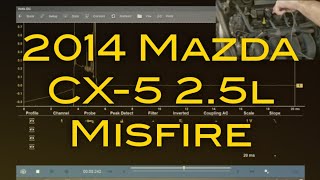
Source hint: YouTube: Mazda CX-5 2014, 2015, 2016, misfire diagnose & fix
2014 Mazda CX-5
Symptoms: The P0300 code appeared immediately following a large swing in ambient temperature.
What fixed it: Identified as a failure of the YUMEBISHI ignition coils as described in TSB 01-014/16.
Source hint: Reddit: r/CX5 - 2014 CX-5 P0300 Code
2016.5 Mazda CX-5 — 130000 miles
Symptoms: Persistent P0300 random misfire that continued even after the owner replaced both the spark plugs and the ignition coils.
What fixed it: The diagnostic path for high-mileage vehicles suggests looking into intake valve carbon buildup or vacuum leaks when standard ignition fixes fail.
Source hint: Mazdas247 Forum: 2013~2016 - CX-5 OBD2 scanning - when tracking down P0300 random misfire
Related OBD-II Codes
Frequently Asked Questions
How can I tell if my 2013-2016 CX-5 has the faulty ignition coils mentioned in TSB 01-014/16?
My 2.0L CX-5 has a P0300 and the oil level is too high. Is this related?
What is the specific spark plug recommended for the Skyactiv-G engine to prevent misfires?
Why are my TCS and TPMS lights on at the same time as the P0300 Check Engine Light?
Can I clean the intake valves myself to fix a P0300 caused by carbon buildup?
What is the updated part number for the Mazda CX-5 ignition coils?
Helpful Videos
We Have This Part in Stock

The information in this article is provided for general reference and educational purposes only. Vehicle specifications, procedures, and part compatibility can vary by production date, trim level, and region. Always consult your vehicle's factory service manual and verify part numbers before purchasing or performing repairs. Safety-critical components such as airbags, seat belts, and braking systems should be installed by a qualified professional.
- Mazda CX-5:
- 🧭 Diagnostic Flowchart
- 🎬 Helpful Videos
- 🛍️ Shop This Part
- What's Unique About the 2013-2016 Mazda CX-5
- Symptoms You May Notice
- Most Likely Causes
- Rare But Worth Checking
- Diagnosis Steps
- Parts You'll Likely Need
- Related Codes That Often Appear With This One
- Technical Service Bulletins (TSBs) & Recalls
- Platform-Specific Known Issues
- Mechanic-Grade Diagnostic Values
- Hidden / Shadow Codes Worth Checking
- Scan Tool Commands That Help
- Wiring & Ground Locations
- Real Owner Repair Stories
- "I Checked Everything" — The Actual Cause
- OEM Part Supersession History
- Model Year Variations Within This Range
- Other Known Issues on This Vehicle
- Used vs. New Parts: Buying Guide for This Vehicle
- Real Owner Stories
- 2013 Mazda CX-5
- 2014 Mazda CX-5 — 107000 miles
- 2014 Mazda CX-5
- 2016.5 Mazda CX-5 — 130000 miles
- Related OBD-II Codes
- Frequently Asked Questions
- 🎟️ Get 5% Off