

P0300 on 2016-2024 Mazda CX-9 2.5L Turbo: Random Misfire Causes and Fixes
P0300 on a Mazda CX-9 2.5T often points to worn spark plugs (due every 40,000 miles) or failing ignition coils. However, be aware of serious TSBs for cracked cylinder heads on 2016-2020 models (TSB 01-007/22) and oil-fouling from bad valve stem seals on 2021 models (TSB 01-012/21). Always start with inspecting spark plugs, but check for coolant loss or excessive oil consumption as these are major red flags for this specific engine.
- P0300 indicates a random misfire affecting multiple cylinders; do not ignore it, especially if the check engine light is flashing.
- Start your diagnosis with the simplest and most common causes: worn spark plugs (due every 40k miles) and failing ignition coils.
- Be aware of serious, model-year-specific TSBs for this engine: cracked cylinder heads (2016-2020) and oil-burning valve seals (2021). Check for coolant or oil loss.
- If basic ignition parts don't solve the problem, the most likely culprits are a vacuum leak or carbon buildup on the intake valves, which is common on this direct-injection engine.
What's Unique About the 2016-2024 Mazda CX-9
While P0300 is a generic code, the 2.5L Skyactiv-G Turbo engine in the CX-9 has specific, documented issues that can cause it. For 2016-2020 models, a cracked cylinder head leading to coolant leaks is a known, serious problem covered by TSB 01-007/22; 🎬 Watch: How this $5,000 coolant leak repair is covered by warranty. the cause is attributed to stress from the exhaust manifold deforming during use. Some 2021 models suffer from excessive oil consumption due to faulty valve stem seals (TSB 01-012/21), which can foul spark plugs and trigger misfires. Additionally, as a direct-injection engine, it is prone to carbon buildup on intake valves, a common cause of misfires at startup.
Symptoms You May Notice
- Rough or shaky engine idle
- Engine hesitation or stumbling during acceleration
- Noticeable loss of power
- Flashing Check Engine Light (indicates a severe misfire)
- Reduced fuel economy
- Engine dying at stops
- Bubbling or swishing sounds from the dashboard area (an early sign of air in the cooling system from a cracked head).
- Replacing only one spark plug or coil when others are near the end of their service life.
- Replacing oxygen sensors. While a bad O2 sensor can cause fuel trim issues, it's less likely to be the primary cause of a P0300 than ignition components or a vacuum leak.
- Assuming a bad catalytic converter. A severe, ongoing misfire can destroy a catalytic converter, but the converter itself is rarely the cause of the misfire.
Most Likely Causes
- Worn or Fouled Spark Plugs 🔴 High Probability → Shop Spark Plug The 2.5L Turbo engine has a recommended spark plug service interval of 40,000 miles. Plugs that are worn, have an incorrect gap, or are fouled by oil or carbon will cause misfires.
How to confirm: Remove and inspect all four spark plugs. Look for worn electrodes, white/ashy deposits (coolant), black carbon fouling, or oil. Check the gap against the manufacturer's specification.
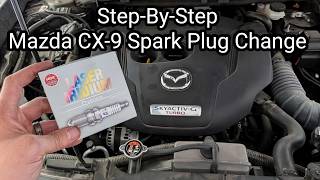
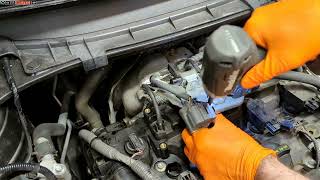
Typical fix: Replace all four spark plugs. The OEM part is Mazda PY8V-18-110. The equivalent NGK Iridium plug is 🎬 See this DIY guide for replacing spark plugs and coils. DILKAR7M8 (stock number 90288). It is critical to use a torque wrench for proper installation.
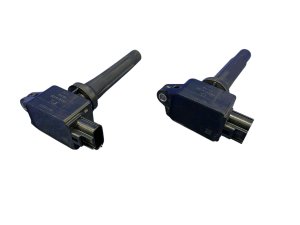
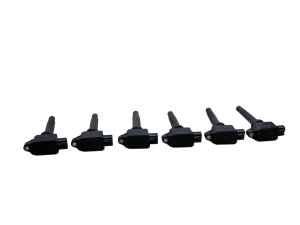
Est. part cost: $60-$120 - Failing Ignition Coils 🟡 Medium Probability → Shop Ignition Coil Ignition coils are a common failure item on many modern engines due to heat and electrical stress. While no specific TSB exists for the CX-9, they are a frequent cause of misfires.
How to confirm: With the engine running, use a scan tool to monitor misfire counts per cylinder. If a specific cylinder shows more misfires, swap its coil with a known good cylinder's coil. If the misfire follows the coil, the coil is bad. A multimeter can also be used to test resistance; see 'Specific Diagnostic Values' for ranges.
Typical fix: Replace the faulty ignition coil. OEM part numbers include PE20-18-100, PE20-18-100A, and PE01-18-100. The NGK equivalent is U5279. It is often recommended to replace all four coils at the same time as the spark plugs, especially on higher mileage vehicles.
Est. part cost: $40-$90 per coil - Carbon Buildup on Intake Valves 🟡 Medium Probability As a gasoline direct injection (GDI) engine, fuel is sprayed directly into the cylinder, not over the intake valves. This means there's no fuel to clean the valves, and oil vapor from the PCV system can bake onto them, restricting airflow and causing misfires, especially on cold starts.
How to confirm: This requires a visual inspection using a borescope inserted into the intake manifold to view the back of the valves.
Typical fix: Professional cleaning is required, typically using walnut shell blasting to safely remove the carbon deposits without damaging the engine.
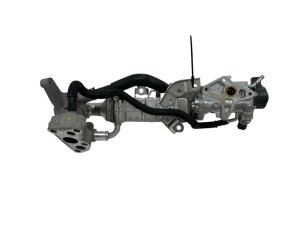
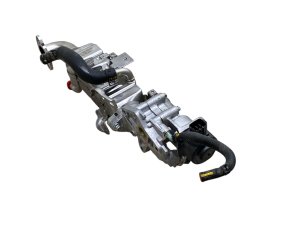
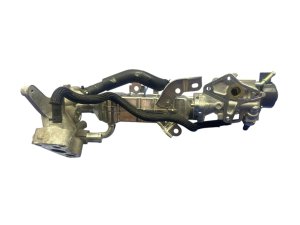
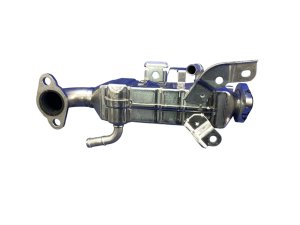
Est. part cost: $0 (service only) - Sticking EGR Valve or Software Issue ⚪ Low Probability → Shop Exhaust Gas Recirculation (EGR) Valve Mazda TSB 01-001/21 applies specifically to 2018 CX-9 models (VINs below JM3TC**237358). Manufacturer TSB Bulletin #01-001-21-3761a notes that vehicles may exhibit an occasional rough idle with DTC P0300:00 because carbon deposits pinched at the valve seat prevent the EGR valve from closing properly.
How to confirm: This is difficult to confirm without a dealer-level scan tool. The primary diagnosis is based on the vehicle model year, VIN, and symptoms (rough idle). The TSB notes carbon can prevent the valve from closing completely.
Typical fix: The official fix involves a PCM software update to force the learning of the closed position. In some cases, the EGR valve may also need to be cleaned or replaced if it is damaged. The EGR valve gasket (Part No. PY8V-20-305) should be replaced if the valve is removed.
Est. part cost: $0 for software; $150-$300 for EGR valve
Rare But Worth Checking
- Cracked Cylinder Head: → Shop Engine Cylinder Head This is a severe issue primarily affecting 2016-2020 models. TSB 01-007/22 was issued for cracks forming near the exhaust manifold, causing coolant to leak. The cause is stress from the exhaust manifold and driving forces. Early symptoms include a swishing/bubbling sound in the dash, loss of heat, and unexplained coolant loss before overheating and misfires occur. Mazda revised the cylinder head design in mid-2020 to address this.
- Excessive Oil Consumption due to Valve Stem Seals: Primarily affects 2021 models built before September 14, 2021 (per TSB 01-012/21). 🎬 Watch: Understanding the valve stem seal and oil consumption issue. Faulty exhaust valve stem seals allow oil to leak into the combustion chamber, which can foul spark plugs and cause misfires and a P0300 code. Owners report needing to add oil between changes. Dealers will now typically perform an oil consumption test before approving the TSB repair.
- Vacuum Leak: A crack in a vacuum hose, a leaking intake manifold gasket, or even a poorly seated engine air filter gasket can allow unmetered air into the engine, leaning out the air-fuel mixture and causing random misfires.
- Fuel Delivery Issue: A weak fuel pump or clogged fuel injectors can starve the engine for fuel, especially under load, leading to misfires. A low-pressure fuel pump recall (21V875000) affected some 2018-2019 models, where a faulty impeller could stop fuel flow.
Diagnosis Steps
- Read all stored fault codes with an OBD-II scanner. Note any codes accompanying P0300, as they provide critical clues (e.g., P250F for oil consumption, P0171 for vacuum leaks).
- Check the freeze frame data to understand the engine conditions (RPM, load, temperature) when the misfire occurred.
- For 2016-2020 models, listen for a 'swishing' or 'bubbling' noise from the dash after startup, and check the coolant reservoir level (when cool). These are early warnings for a cracked cylinder head.
- For 2021 models, check the engine oil level. If it is low without visible external leaks, suspect the valve stem seal issue (TSB 01-012/21).
- Inspect the engine air filter and its housing for a proper seal. A warped housing can create a vacuum leak.
- Inspect all four spark plugs. Replace them if they are due for service (40,000 miles), fouled, or damaged. Ensure the new plugs (OEM: PY8V-18-110) are correctly gapped and torqued.
- Inspect the ignition coils for any signs of cracks, melting, or corrosion. If a specific cylinder is misfiring more than others (viewable on a scan tool), swap its coil with another cylinder's to see if the misfire moves.
- If the vehicle is a 2016-2020 model and losing coolant, carefully inspect the area where the exhaust manifold meets the cylinder head for any signs of coolant leakage, which strongly indicates a cracked head (TSB 01-007/22).
- Perform a smoke test to check for vacuum leaks from hoses, the intake manifold gasket, or the PCV system.
- If misfires persist, consider having the intake valves inspected for carbon buildup with a borescope.
- If all else fails, check fuel pressure to rule out a weak fuel pump and consider having the fuel injectors professionally tested.
Parts You'll Likely Need
- Spark Plugs — These are a routine maintenance item with a 40,000-mile replacement interval and are the most common fix for random misfires.
Trusted brands: NGK, Denso
OEM price range: $80-$120
Aftermarket price range: $50-$100 - Ignition Coil
(OEM #PE20-18-100A)— Ignition coils provide the spark for combustion and can fail over time, leading to weak or no spark.
Trusted brands: Denso, NGK, Bosch
OEM price range: $100-$150
Aftermarket price range: $40-$90 - EGR Valve — On 2018 models, a sticking EGR valve can be the direct cause of P0300 at idle, as identified in a Mazda TSB.
Trusted brands: Mazda OE
OEM price range: $200-$300
Aftermarket price range: $150-$250
Related Codes That Often Appear With This One
- P0301, P0302, P0303, P0304 — These codes indicate a misfire on a specific cylinder. P0300 may appear first, and as the issue worsens, the PCM may isolate the fault and set a cylinder-specific code.
- P0171 — This code means 'System Too Lean (Bank 1)'. It often appears with P0300 when the root cause is a vacuum leak or a dirty Mass Airflow (MAF) sensor, as these problems affect the air-fuel ratio.
- P250F — This code for 'Engine Oil Level Low' may accompany a P0300 on 2021 models suffering from the valve stem seal issue described in TSB 01-012/21. A dealer technician on Reddit noted this DTC must be stored in the PCM to qualify for the TSB repair.
Technical Service Bulletins (TSBs) & Recalls
- 01-007/22: Coolant leaks at the cylinder head around the exhaust manifold.
- 01-012/21: Low engine oil level and DTC P250F:00 due to potential valve stem seal damage.
- 01-001/21: Rough idle with DTC P0300:00 due to EGR valve not closing properly.
- Bulletin #01-001-21-3761a: Occasional rough idle and P0300:00 caused by carbon deposits preventing the EGR valve from closing.
Platform-Specific Known Issues
- TSB 01-007/22: Some 2016-2020 models may develop cracks in the cylinder head near the exhaust manifold, leading to coolant leaks and potential engine failure.
- TSB 01-012/21: Some 2021 models may experience excessive oil consumption due to faulty valve stem seals, which can foul spark plugs.
- TSB 01-001/21: Some 2018 models may have a software issue causing the EGR valve to stick, resulting in a rough idle and P0300.
- Carbon buildup on intake valves is a common issue for all years due to the direct-injection engine design.
Mechanic-Grade Diagnostic Values
- Ignition Coil Primary Winding Resistance — expected: 0.4 - 2.0 Ohms. Failure: A reading outside this range (e.g., OL for open loop or 0 for a short) indicates a faulty coil.
- Ignition Coil Secondary Winding Resistance — expected: 6,000 - 10,000 Ohms (6kΩ - 10kΩ). Failure: A reading significantly outside this range or an open circuit (OL) points to a failed secondary winding.
- Engine Compression Ratio (Reference) — expected: 10.5:1. Failure: While not a direct P0300 test, this is a key engine spec. A compression test showing low or inconsistent readings across cylinders points to internal engine damage (e.g., from a cracked head) causing the misfire.
Scan Tool Commands That Help
- Mazda Modular Diagnostic System (M-MDS): EGR Valve Closed Position Learning — This is a required service function after performing the PCM software update outlined in TSB 01-001/21 for 2018 models with a rough idle and P0300. It forces the PCM to relearn the valve's closed position to prevent it from sticking open at idle.
- FORScan or professional scan tool: Misfire Cylinder Data (Mode $06) — Before swapping parts, use the live data or Mode 6 function to view misfire counts for each individual cylinder. This helps determine if the 'random' misfire is actually weighted heavily toward one or two cylinders, guiding diagnosis to a specific coil, plug, or injector.
Wiring & Ground Locations
- Engine Block and PCM Grounds — Specific ground point locations (e.g., G-series numbers) for the 2016+ CX-9 are not readily available in public diagrams. However, key grounds are typically located on the engine block itself, the cylinder head, and from the main wiring harness to the chassis near the battery or PCM.. A loose or corroded engine ground can cause weak spark across all cylinders, leading to random misfires that are difficult to trace. The ignition coils rely on a solid ground path to function correctly. Verifying the main ground straps are clean and tight is a crucial, often-overlooked step.
Real Owner Repair Stories
- Reddit user post (2021 Mazda CX-9, purchased pre-owned with ~20k miles) — Low oil indicator light came on. After the TSB fix, the light returned after driving for ~20 minutes, would clear on restart, and then come back.
❌ Tried (didn't work) The initial TSB repair for the valve stem seals did not permanently solve the problem.
✅ What actually fixed it The issue was diagnosed again as the valve stem seals. The dealer stated they would continue to perform the repair under an extended warranty (up to 85k miles), implying the fix may not be permanent for some vehicles. The owner was left with a recurring problem. - YouTube video by user 'RandomEarth' (2021 Mazda CX-9, purchased used with 17k miles) — Low oil level light came on near the 5,000-mile oil change interval.
❌ Tried (didn't work) Owner added half a quart of oil as a temporary measure.
✅ What actually fixed it The owner took the vehicle to a Mazda dealer for an oil change and mentioned the TSB. The dealer confirmed a fault code was still stored in the computer, which authorized them to perform the valve stem seal replacement under the TSB. The owner reports no further oil consumption issues 1.5 years and 25,000+ miles later. - Reddit user post (2017 Mazda CX-9) — Engine failure requiring replacement.
❌ Tried (didn't work) N/A - engine was already damaged.
✅ What actually fixed it The engine was replaced under warranty at 58,000 miles due to the known cylinder head cracking issue. The owner reported driving another 65,000 miles on the new, revised engine with no further problems, suggesting the updated part is a durable fix.
"I Checked Everything" — The Actual Cause
- On a 2016-2020 model, if a smoke test reveals no vacuum leaks but the vehicle is losing coolant and has a P0300, the cause is very likely an internal coolant leak from a cracked cylinder head (TSB 01-007/22). The misfire is caused by coolant fouling the spark plug, not unmetered air.
- On a 2021 model, if a smoke test is clean but the vehicle has a P0300 accompanied by excessive oil consumption or a P250F code, the cause is almost certainly oil leaking past the faulty exhaust valve stem seals (TSB 01-012/21). The oil fouls the spark plugs, leading to misfires that a smoke test cannot detect.
OEM Part Supersession History
PE01-18-100, PE01-18-100A→PE20-18-100A— Part consolidation and likely minor internal revisions for reliability across multiple Skyactiv engine platforms.
Heads up: The parts are generally interchangeable, but it is always best practice to use the latest revision (PE20-18-100A) when replacing a coil.Unknown (Cylinder Head for 2016-early 2020 models)→Unknown (Revised Cylinder Head for mid-2020+ models)— The original cylinder head design was prone to cracking near the exhaust manifold. The part was revised to prevent this failure.
Heads up: When replacing a cracked cylinder head on an early model, it is critical to use the new, revised part number to permanently fix the issue. Installing a used head from another 2016-2019 vehicle will likely result in a repeat failure.
Model Year Variations Within This Range
- 2016-2020: These model years are susceptible to cracked cylinder heads causing coolant-induced misfires, as documented in TSB 01-007/22.
- 2018: These models may experience a rough idle and P0300 due to a sticking EGR valve, addressed by a PCM software update in TSB 01-001/21.
- 2021 (built before Sept 14, 2021): These models are prone to oil consumption and oil-fouled plugs causing misfires due to defective exhaust valve stem seals, covered by TSB 01-012/21.
- 2021.5+: A mid-2021 refresh ('2021.5') introduced a larger 10.25-inch infotainment screen and other tech updates. While not mechanically related to P0300, vehicles from this period onward are not included in the valve stem seal TSB, suggesting the issue was resolved in production.
Diagnostic Flowchart
Other Known Issues on This Vehicle
Issues unrelated to this code that are worth knowing about as an owner of this generation:
- Cracked Cylinder Head Coolant Leak 🔴 High → Shop Engine Cylinder Head — Common on 2016-2020 models, typically appearing between 60,000 and 120,000 miles. Less common on 2021+ models with the revised head design. (Ref: TSB 01-007/22 (supersedes earlier versions))
- Excessive Oil Consumption 🔴 High — Primarily affects specific 2021 models built before Sept 2021. Can cause low oil light to illuminate between changes. (Ref: TSB 01-012/21)
- Water Pump Failure 🟠 Medium — While more prevalent on the first-generation CX-9, failures on the second generation have been reported. Failure can cause coolant to mix with engine oil, leading to engine damage.
- Soul Red Crystal Paint Chipping 🟡 Low — Owners report the signature Soul Red paint is particularly thin and prone to chipping easily. Seems more prevalent on 2017-2018 models.
- Sudden Uncommanded Braking 🔴 High — A rare but serious issue where false positives from the Smart Brake Support (SBS) system can cause the vehicle to brake suddenly and aggressively without an obstacle present. (Ref: Recall 19V403000 (for some 2018 models))
Used vs. New Parts: Buying Guide for This Vehicle
When a used part is the smart pick: A complete used engine assembly can be a cost-effective choice if the original engine has failed catastrophically (e.g., cracked head, internal damage). It is significantly cheaper than a new long block from Mazda.
Donor-vehicle mileage cap: roughly under 80000 miles for the part to have meaningful remaining life.
What to inspect on the donor part:
- CRITICAL: For a complete engine, source one from a 2021.5 or newer model to guarantee it has the revised cylinder head and is not prone to the cracking issue.
- Verify the VIN of the donor vehicle to ensure it does not fall within the range for the valve stem seal TSB (for 2021 donors).
- Obtain a vehicle history report for the donor car to check for reported accidents or maintenance issues.
- If possible, get compression test numbers from the seller before purchase.
OEM-only on this vehicle (don't cheap out):
- Cylinder Head: If replacing only the head, you MUST use a new, revised OEM part. A used head from a 2016-2020 model is almost guaranteed to fail again.
- Valve Stem Seals: This is a precision, low-cost part. Only use the updated OEM seals specified in the TSB when performing the repair.
- PCV Valve: Due to its low cost and critical function, always replace with a genuine OEM part.
Aftermarket brands forum-validated for this vehicle:
- NGK (Spark Plugs, Ignition Coils): NGK is the original equipment manufacturer for Mazda, so their parts are a direct equivalent to OEM.
- Bosch, Delphi (Ignition Coils): These are reputable Tier 1 suppliers known for quality ignition components.
Brands owners have reported issues with on this vehicle:
- Unbranded 'eBay' ignition coils: While tempting due to low cost, cheap, no-name ignition coils often have poor internal windings and insulation, leading to premature failure and repeat misfires.
Real Owner Stories
Aggregated from forums and TSBs cited above. Mileages and costs reflect what owners reported in those sources.
2016-2020 Mazda CX-9 2.5L Turbo — ~100000 miles
Symptoms: Overheating and rough idle; dealer confirmed a cracked head.
What fixed it: Cylinder head replacement; owner advises not to drive the vehicle if symptoms appear.
Source hint: Reddit r/MazdaCX9: 'Cracked Cylinder Head Advice'
2018 Mazda CX-9 2.5L Turbo — 99000 miles
Symptoms: Swishing and bubbling noises in the dash and heater blowing cold as early symptoms before the temperature gauge fluctuated.
What fixed it: Replacement of the cylinder head (related to TSB 01-007/22).
Source hint: Reddit r/MazdaCX9: 'Cylinder head Crack'
2021 Mazda CX-9 2.5L Turbo — ~1200 miles
Symptoms: Low engine oil level and potential misfires related to valve stem seal issues.
What fixed it: An oil consumption test over 1,200 miles followed by a dealer repair for valve stem seals.
Source hint: Reddit r/mazda: 'Experience With the 21-22 Oil Consumption Issue'
Related OBD-II Codes
Frequently Asked Questions
My 2018 CX-9 has a rough idle and P0300; is there a specific TSB for this?
I hear a bubbling sound from my dashboard and have a misfire. What does this mean for my 2016-2020 CX-9?
How often should I change the spark plugs on my 2.5L Turbo engine to avoid P0300?
My 2021 CX-9 is throwing a P0300 and the oil is low. Are these related?
Can I use any ignition coil to fix a misfire on my CX-9?
Is the cracked cylinder head issue limited only to the CX-9?
Helpful Videos



We Have This Part in Stock

The information in this article is provided for general reference and educational purposes only. Vehicle specifications, procedures, and part compatibility can vary by production date, trim level, and region. Always consult your vehicle's factory service manual and verify part numbers before purchasing or performing repairs. Safety-critical components such as airbags, seat belts, and braking systems should be installed by a qualified professional.
- Mazda CX-9:
- 🧭 Diagnostic Flowchart
- 🎬 Helpful Videos
- 🛍️ Shop This Part
- What's Unique About the 2016-2024 Mazda CX-9
- Symptoms You May Notice
- Most Likely Causes
- Rare But Worth Checking
- Diagnosis Steps
- Parts You'll Likely Need
- Related Codes That Often Appear With This One
- Technical Service Bulletins (TSBs) & Recalls
- Platform-Specific Known Issues
- Mechanic-Grade Diagnostic Values
- Scan Tool Commands That Help
- Wiring & Ground Locations
- Real Owner Repair Stories
- "I Checked Everything" — The Actual Cause
- OEM Part Supersession History
- Model Year Variations Within This Range
- Other Known Issues on This Vehicle
- Used vs. New Parts: Buying Guide for This Vehicle
- Real Owner Stories
- 2016-2020 Mazda CX-9 2.5L Turbo — ~100000 miles
- 2018 Mazda CX-9 2.5L Turbo — 99000 miles
- 2021 Mazda CX-9 2.5L Turbo — ~1200 miles
- Related OBD-II Codes
- Frequently Asked Questions
- 🎟️ Get 5% Off