

P0300 on 2010-2013 Mazda MAZDASPEED3: Random Misfire Causes and Fixes
On a 2010-2013 MAZDASPEED3, a P0300 code is most often caused by worn or incorrectly gapped spark plugs, or failing ignition coils. As a direct-injection engine, carbon buildup on intake valves is another very common cause, especially on higher mileage vehicles. Start with ignition components before moving to more complex diagnostics like fuel delivery or VVT system checks.
- P0300 indicates a random misfire on multiple cylinders; it does not point to a single faulty part.
- Start your diagnosis with the most common and affordable fixes: inspect and replace spark plugs and test ignition coils.
- The MAZDASPEED3's direct-injection engine is prone to carbon buildup on intake valves, which is a frequent cause of this code.
- A flashing check engine light signals a severe misfire that can cause expensive catalytic converter damage; avoid driving under this condition.
- Be aware of Mazda TSB #01-015-14-2929, which indicates the code can sometimes appear due to a software issue without a real mechanical fault.
What's Unique About the 2010-2013 Mazda MAZDASPEED3

The MAZDASPEED3's 2.3L MZR DISI (Direct Injection Spark Ignition) engine is a high-performance turbocharged unit. Its direct-injection nature makes it prone to carbon buildup on the intake valves, a primary cause of misfires that doesn't affect traditional port-injected engines. Additionally, Mazda issued a Technical Service Bulletin (TSB #01-015/14) for this model, noting that a P0300 code can sometimes be stored in memory due to a software glitch without any actual drivability problems. This makes it crucial to rule out simple fixes and software updates before assuming a major mechanical problem. The engine is also highly sensitive to spark plug heat range and gap, with owners reporting that using one-step-colder plugs can cause a P0300 on cold starts.
Diagnostic Flowchart

Tap your situation to follow the diagnostic path that matches what you're seeing on this vehicle.
Symptoms You May Notice

- Rough or erratic idle, sometimes described as a 'sputter' every few seconds.
- Hesitation or stumbling during acceleration, especially under load or at wide-open throttle.
- Noticeable loss of engine power and torque.
- Flashing or solid Check Engine Light.
- Sputtering, crackling, or backfiring sounds from the exhaust, especially on a cold start.
- Difficulty starting the engine.
- Replacing only one spark plug or ignition coil when others are in similar condition.
- Replacing the Mass Airflow (MAF) sensor without proper diagnosis; cleaning the MAF with a dedicated cleaner is a more appropriate first step if it's suspected.
- Assuming a major engine problem before checking for simple vacuum leaks or incorrect spark plug gaps.
- Using one-step-colder spark plugs on a stock or near-stock engine, which can cause cold-start misfires and P0300.
Most Likely Causes

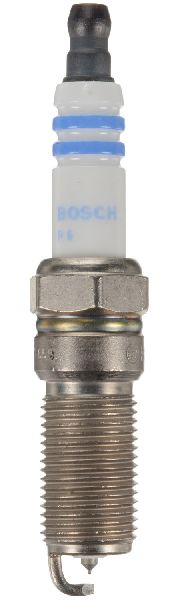
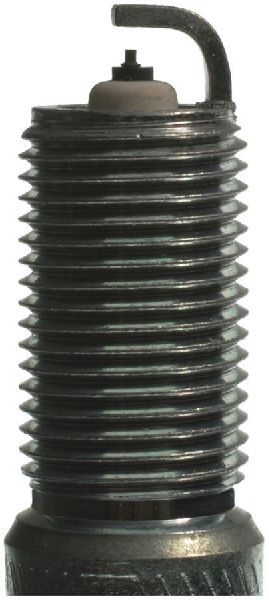
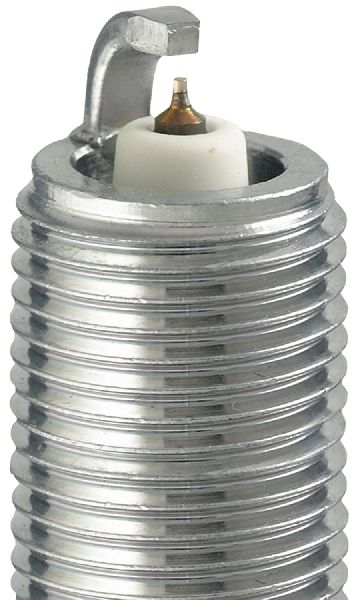
- Worn or Incorrectly Gapped Spark Plugs 🔴 High Probability → Shop Spark Plug The turbocharged, high-compression MZR engine is very sensitive to spark plug condition and gap. Using plugs other than the recommended stock heat range (NGK LTR6IX-11) or having an incorrect gap can cause misfires, especially on cold starts or under high boost. Many aftermarket plugs come pre-gapped too wide (e.g., .044") and must be re-gapped.
How to confirm: Remove and inspect all four spark plugs. Look for signs of wear, fouling, or damage. Check the gap with a feeler gauge; the community-preferred gap for a stock or lightly modified MAZDASPEED3 is between 0.026" and 0.028".
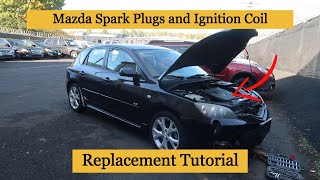
Typical fix: Replace all four spark plugs with OEM-spec NGK Iridium plugs (LTR6IX-11 or ILTR6A-8G) and ensure they are gapped correctly before installation. 🎬 See this walkthrough for replacing and gapping your spark plugs.
Est. part cost: $40-$80 - Failing Ignition Coils 🔴 High Probability → Shop Ignition Coil Heat and vibration cause ignition coils to fail over time, leading to a weak or inconsistent spark. While a single failing coil often throws a specific cylinder code (e.g., P0301), intermittent failures or multiple weak coils can trigger a P0300. Community consensus strongly advises against using cheap aftermarket coils, recommending only OEM or OEM-supplier brands like NGK or Denso.
How to confirm: If a scan tool shows misfire counts, identify the cylinder(s) with the highest counts. Swap the ignition coil from a misfiring cylinder with one from a known good cylinder. Clear the codes and drive the car. If the misfire code follows the coil (e.g., P0301 becomes P0302), the coil is bad.
Typical fix: Replace the faulty ignition coil(s). It is often recommended to replace them as a set if they are original and have high mileage. The OEM part number is L3G2-18-100B-9U.
Est. part cost: $50-$120 per coil - Carbon Buildup on Intake Valves 🟡 Medium Probability As a Direct Injection (DI) engine, fuel is sprayed directly into the cylinder, not over the intake valves. This means there is no fuel to wash away carbon deposits from the PCV system, which build up over time, restrict airflow, and cause misfires, especially on cold starts. This is a well-documented issue on the MZR DISI engine.
How to confirm: This is difficult to confirm without some disassembly. A visual inspection using a borescope inserted into the intake manifold is the most effective method. Symptoms like a rough cold start that smooths out when warm can be an indicator.
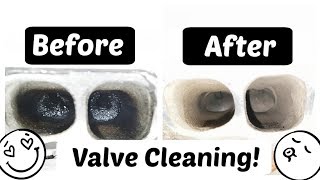
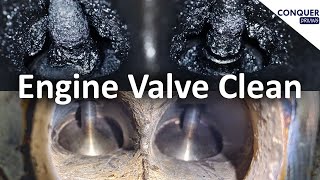
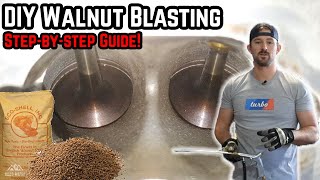
Typical fix: The intake manifold must be removed for a manual 'walnut blasting' or chemical/mechanical cleaning of the intake ports and valves. This is a labor-intensive job. Some shops may offer a chemical cleaning service (like with CRC or BG products) for a lower price, but manual cleaning is more effective. 🎬 Watch: How to clean carbon buildup from your intake valves.
Est. part cost: $20-$50 in cleaning supplies; shop service can range from $400 for a chemical flush to over $1000 for walnut blasting. - PCM Software Calibration ⚪ Low Probability Mazda TSB #01-015/14 (also listed as 01-015-14-2929) states that some 2010-2013 MAZDASPEED3 vehicles may store a P0300 code without any drivability concerns due to improper PCM programming. This is a 'ghost code' that doesn't reflect a physical problem and can be resolved with a software update.
How to confirm: If all other physical causes (ignition, vacuum, fuel) have been ruled out and the vehicle drives normally without any noticeable misfire, a Mazda dealership can check the PCM calibration version against the latest available update specified in the TSB.
Typical fix: A Mazda dealership needs to reprogram the PCM with the updated software calibration file.
Est. part cost: $0 (if under warranty) or 1-2 hours of dealer labor cost. - Vacuum Leaks ⚪ Low Probability Aging rubber hoses and gaskets can crack and cause unmetered air to enter the engine, leaning out the air/fuel mixture and causing misfires. Common leak points include the PCV hose, intake manifold gaskets, and other vacuum lines connected to the intake.
How to confirm: Visually inspect all vacuum lines and intake hoses for cracks or loose connections. A smoke test, where smoke is fed into the intake system, is the most effective way to find small leaks. Listening for a hissing sound at idle can also help locate a leak.
Typical fix: Replace the leaking hose or gasket.
Est. part cost: $10-$50
Rare But Worth Checking
- Leaking or Clogged Fuel Injectors: → Shop Fuel Injector While less common than ignition issues, the high-pressure direct injectors can become clogged or develop leaky seals, leading to poor fuel atomization and misfires. One owner reported that cleaning the injectors and replacing the seals resolved a persistent P0300 on startup. Professional cleaning and flow-testing can often restore them.
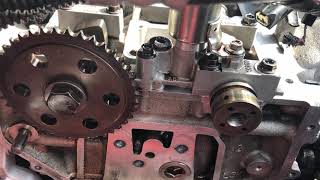
- Variable Valve Timing (VVT) System Malfunction: The MZR engine is known for VVT actuator issues, which can cause the camshaft timing to be incorrect, leading to a rough idle and misfire codes. This is often accompanied by a rattling noise on startup as the timing chain slaps against the valve cover. A P0300 code appearing immediately after a timing chain or VVT service could indicate an issue with timing synchronization.
- Low Fuel Pressure: A weak in-tank fuel pump or a failing high-pressure fuel pump (HPFP) can starve the engine of fuel, especially under load, causing random misfires. Owners with an Accessport or other monitoring tools can check if fuel rail pressure drops significantly below target (e.g., only hitting 1200 psi when it should be higher) during acceleration, which points to a fuel delivery problem.
Diagnosis Steps
- Read the codes with an OBD-II scanner and check for any other pending or stored codes, especially cylinder-specific misfires (P0301-P0304). 🎬 Watch: How to diagnose a P0300 misfire using Forscan.
- Check for any Technical Service Bulletins (TSBs). Specifically, review TSB #01-015/14 to see if the symptoms match a software issue (P0300 with no drivability problems).
- Inspect the ignition system. Remove and check all four spark plugs for wear, damage, and correct gap (target 0.026"-0.028"). Ensure stock heat range plugs are being used if the car is not heavily modified.
- Test the ignition coils. If a specific cylinder is misfiring, swap the coil with another cylinder to see if the misfire follows. Inspect the coil wiring and connectors for damage.
- Check for vacuum leaks. Visually inspect all hoses connected to the intake manifold. Perform a smoke test for a definitive diagnosis.
- If ignition and vacuum systems are good, investigate for carbon buildup on the intake valves, especially if the car has over 60,000 miles. Use a borescope for visual confirmation.
- Check fuel pressure. Use a scan tool or Accessport to monitor high-pressure fuel pump (HPFP) rail pressure at idle and under load to rule out a fuel delivery issue.
- If a rattling noise is present on startup, inspect the VVT system and timing chain tension.
- If all else fails, consider the PCM software update outlined in TSB #01-015/14, especially if no drivability issues are present.
Parts You'll Likely Need
- Iridium Spark Plugs
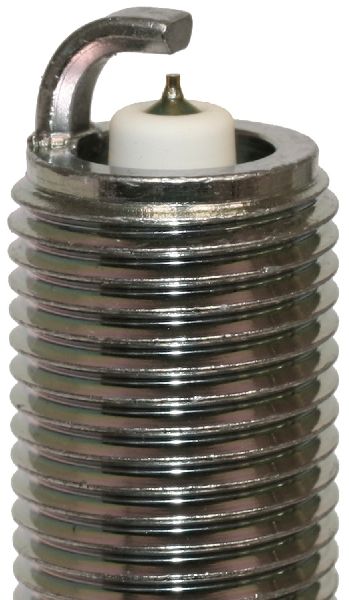
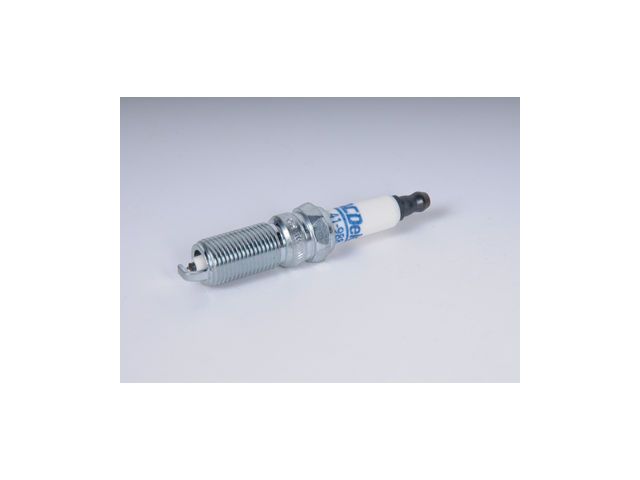
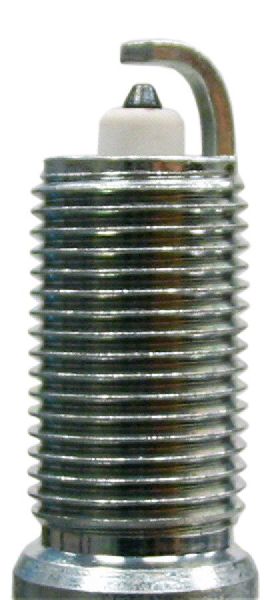
(OEM #LF8R-18-110)— The MAZDASPEED3 engine is sensitive to spark plug condition, and worn or improperly gapped plugs are a very frequent cause of P0300. The OEM-spec plug is NGK Iridium. Stock heat range is NGK LTR6IX-11 (6509) or NGK ILTR6A-8G (3787).
Trusted brands: NGK
OEM price range: $60-$100 (set of 4)
Aftermarket price range: $40-$80 (set of 4) - Ignition Coil
(OEM #L3G2-18-100B-9U)— Ignition coils are a common failure point that directly causes misfires. It is strongly recommended by the community to use OEM or high-quality OEM-supplier coils on this platform to avoid further issues.
Trusted brands: Mazda (OEM), NGK, Denso
OEM price range: $100-$130 (per coil)
Aftermarket price range: $60-$90 (per coil, for quality brands)
Related Codes That Often Appear With This One
- P0301, P0302, P0303, P0304 — If the random misfire begins to occur more frequently on one specific cylinder, the PCM may also log a cylinder-specific code in addition to P0300. This can be helpful in diagnosing a bad coil or plug.
- P2006 — This code for 'Intake Manifold Runner Control Stuck Closed' can sometimes appear with P0300, indicating a problem with airflow into the manifold which can contribute to misfires.
Technical Service Bulletins (TSBs) & Recalls
- 01-015-14-2929: Notes that some vehicles may experience a check engine light with DTC P0300 stored in memory without any actual driveability concerns, caused by improper PCM programming. [⭐ MANUFACTURER TSB — highest authority]
Platform-Specific Known Issues
- Sensitivity to Spark Plug Heat Range: → Shop Spark Plug The MZR DISI Turbo engine is known to be sensitive to spark plug heat range. Several owners have reported that installing 'one step colder' plugs (e.g., NGK LTR7IX-11) on a stock or lightly tuned car can cause rough cold starts and trigger a P0300 code, which resolves upon switching back to stock heat range plugs.
- Ghost Code TSB: Mazda officially recognized that a P0300 code can appear without any actual engine misfire or drivability issue. TSB 01-015/14 was issued to address this with a PCM software update, making it a unique diagnostic step for this platform if no physical faults are found.
Mechanic-Grade Diagnostic Values
- High-Pressure Fuel Rail Pressure (Warm Idle) — expected: 420-430 psi. Failure: Significantly lower or fluctuating pressure at idle after the engine is fully warmed up.
- High-Pressure Fuel Rail Pressure (WOT / Under Load) — expected: ~1750 psi (stock tune). Failure: Pressure drops significantly below 1600 psi during a wide-open throttle pull, indicating the HPFP cannot keep up with demand.
- Low-Pressure Fuel Pump (In-Tank) — expected: 55-71 psi (Key On, Engine Off). Failure: Pressure is below this range when tested at the HPFP inlet, indicating a weak in-tank pump or filter issue.
- Ignition Coil Primary Winding Resistance — expected: 0.49 - 0.57 ohms. Failure: A reading outside this range indicates a faulty primary coil winding.
- Ignition Coil Secondary Winding Resistance — expected: 9.5 - 11.1 kilohms. Failure: A reading outside this range indicates a faulty secondary coil winding.
- Direct Fuel Injector Resistance — expected: ~1.3 ohms. Failure: A significantly different reading or an open circuit (infinite resistance) indicates a failed injector coil.
Hidden / Shadow Codes Worth Checking
- Mode $06 Misfire Counts: Before a P0300 or P030x code is permanently stored, the PCM tracks misfire events for each cylinder. This data can reveal which cylinder(s) are contributing to the random misfire count even if a specific cylinder code isn't set. (see via Advanced scan tools like FORScan or a Cobb Accessport can display live misfire counts per cylinder, often found under Mode $06 test results or a similar live data menu.)
Scan Tool Commands That Help
- FORScan / Cobb Accessport: Live Data Monitoring (Misfire Count, Fuel Rail Pressure) — Use this to identify which specific cylinders are misfiring the most to narrow down a P0300. Monitoring Fuel Rail Pressure (Actual vs. Desired) is critical for diagnosing issues with the HPFP or in-tank pump.
Wiring & Ground Locations
- Engine Ground Points — Key locations include a ground on the passenger side motor mount, the HPFP ground, two grounds on the transmission casing (one large, one small), and a primary ground from the battery negative terminal to the driver's side fender/chassis.. A poor ground at any of these points can cause unstable voltage to the ignition coils, fuel injectors, or the PCM itself, leading to erratic behavior and random misfires.
- G06 — Located on the left rear of the engine.. This is a primary engine ground point; corrosion or looseness can cause a variety of sensor and actuator issues, including misfires.
- ECM/PCM Main Connectors — The two large harness connectors that plug into the ECM, located near the battery box.. A loose or corroded pin within these connectors, particularly for an injector or coil signal, can cause a persistent misfire on one or more cylinders that may be difficult to trace, as the harness wiring itself may test fine for continuity.
Real Owner Repair Stories
- Reddit user /u/dhzimmerman (MAZDASPEED3 (year not specified)) — P0300 code appeared the day after a routine service that included injector and valve cleaning.
❌ Tried (didn't work) Swapping spark plugs and coils between cylinders; the misfire did not follow the components, ruling them out.
✅ What actually fixed it The shop that performed the service replaced the recently cleaned/installed fuel injectors, which resolved the P0300 code and smoothed out the cold start. - Reddit user /u/RipShitu (MAZDASPEED3 (year not specified)) — Persistent P0300 random misfire code.
❌ Tried (didn't work) Cleaning MAF sensor., Switching from one-step-colder spark plugs back to OEM heat range plugs.
✅ What actually fixed it The final resolution was a combination of three separate issues: replacing a cracked intake manifold, replacing broken fuel injector seals, and performing a manual intake valve cleaning for carbon buildup. - Mazdaspeeds.org user 'coalstack' (2008 MAZDASPEED3 (Gen 1, but wiring principles apply)) — Sudden loss of power with codes for injectors 1 and 2 not firing.
❌ Tried (didn't work) Noid light test confirmed no pulse to injectors 1 & 2., Continuity test of the wiring harness to the ECM passed., Replacing the ECM with a refurbished unit.
✅ What actually fixed it The problem was a loose female pin inside the large wiring harness connector that plugs into the ECM. The pin for the injector #2 signal had lost its tension and was not making proper contact. The user disassembled the plug, re-tensioned the pin, and it fixed the issue completely.
"I Checked Everything" — The Actual Cause
- In one documented case, a P0300 was diagnosed after fuel system checks and a smoke test for vacuum leaks revealed no issues. The root cause was only discovered after removing the intake manifold: excessive carbon buildup on the intake valves and in the cylinder head passages was restricting airflow and causing the misfires. A manual cleaning restored proper function.
Model Year Variations Within This Range
- 2010-2013: There are no significant mechanical engine differences across the 2010-2013 model years that would alter the common causes or diagnostic procedures for a P0300 code. Changes were primarily related to cosmetic packages (e.g., 2013 models having gunmetal-colored wheels and trim) and interior technology options.
Helpful Videos

We Have This Part in Stock

The information in this article is provided for general reference and educational purposes only. Vehicle specifications, procedures, and part compatibility can vary by production date, trim level, and region. Always consult your vehicle's factory service manual and verify part numbers before purchasing or performing repairs. Safety-critical components such as airbags, seat belts, and braking systems should be installed by a qualified professional.
- Mazda MAZDASPEED3:
- 🧭 Diagnostic Flowchart
- 🎬 Helpful Videos
- 🛍️ Shop This Part
- What's Unique About the 2010-2013 Mazda MAZDASPEED3
- Symptoms You May Notice
- Most Likely Causes
- Rare But Worth Checking
- Diagnosis Steps
- Parts You'll Likely Need
- Related Codes That Often Appear With This One
- Technical Service Bulletins (TSBs) & Recalls
- Platform-Specific Known Issues
- Mechanic-Grade Diagnostic Values
- Hidden / Shadow Codes Worth Checking
- Scan Tool Commands That Help
- Wiring & Ground Locations
- Real Owner Repair Stories
- "I Checked Everything" — The Actual Cause
- Model Year Variations Within This Range
- 🎟️ Get 5% Off