

P0300 on 1999-2003 Mazda Protege: Random Misfire Causes and Fixes
On a 1999-2003 Mazda Protege, code P0300 is most often caused by a failing ignition coil pack. Because the engine uses a waste-spark system, one bad coil affects two cylinders, causing a significant misfire. Replacing both coils and the spark plugs is the most common fix, costing around $75-$150 for parts.
- P0300 on a 1999-2003 Protege is most likely caused by a failed ignition coil pack.
- Due to the waste-spark system, it is highly recommended to replace both coils, all four spark plugs, and both spark plug wires at the same time.
- Before replacing parts, perform a quick inspection for oil in the spark plug wells (bad valve cover gasket) and cracks in the large rubber intake hose.
- Do not drive with a flashing check engine light, as you can cause expensive damage to your catalytic converter in a very short time.
What's Unique About the 1999-2003 Mazda Protege
The 1999-2003 Protege, particularly the 2.0L FS-DE and 1.6L ZM-DE engines, uses a "waste spark" ignition system with two coil packs. Each coil is responsible for firing two cylinders simultaneously (cylinders 1 and 4, and cylinders 2 and 3). This design means that when a single coil pack begins to fail, it causes a severe misfire across two cylinders, which almost always logs the generic P0300 code before a cylinder-specific code can be isolated. This makes failing ignition coils an exceptionally common cause for this code on this specific vehicle, a fact noted in many owner forums.
Symptoms You May Notice
- Rough or shaking idle, sometimes feeling like the engine will stall.
- Engine stumbling and hesitation during acceleration.
- Significant loss of power, especially under load.
- Flashing Check Engine Light (CEL).
- Engine stalling, especially when coming to a stop or when the engine is warm.
- Smell of rotten eggs or sulfur from the exhaust, indicating an overloaded/damaged catalytic converter.
- Popping or backfiring noises from the exhaust.
- Engine sounds like a 'lawn mower' due to misfiring on two cylinders.
- Replacing only one ignition coil when both are of the same age and condition. The second coil often fails soon after.
- Replacing fuel injectors before thoroughly checking the much more common ignition system and vacuum leak issues.
- Replacing the catalytic converter without first fixing the root cause of the misfire that destroyed it. The new converter will quickly fail as well.
- Replacing oxygen sensors. O2 sensors will report the effects of a misfire, but are rarely the cause of a P0300.
Most Likely Causes
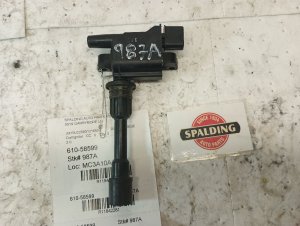
- Failing Ignition Coil(s) 🔴 High Probability → Shop Ignition Coil The waste-spark ignition system design puts continuous stress on the two coil packs, and they are a widely documented failure point on this platform. An official emissions recall was issued for ignition coils on the related 1.8L engine (Campaign #0702F), showing a history of coil problems for this generation.
How to confirm: With the engine idling roughly, unplug the electrical connector to one coil pack. If the engine's running condition does not change, that coil is likely bad. Alternatively, swap the two coil packs, clear the codes, and see if the specific misfire codes (e.g., P0301/P0304) move to the other pair of cylinders (P0302/P0303). A failing coil may also produce a visible or audible electrical arc.
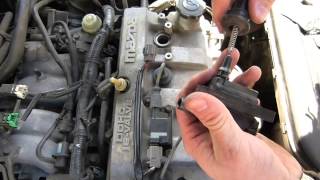
Typical fix: Replace both ignition coils, all spark plugs, and spark plug wires as a set. 🎬 Watch: How to replace your ignition coils and clear codes. This is considered a complete tune-up and prevents a second failure shortly after the first.
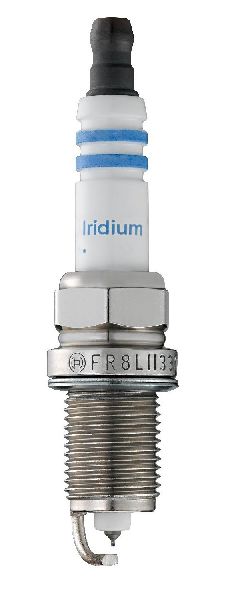
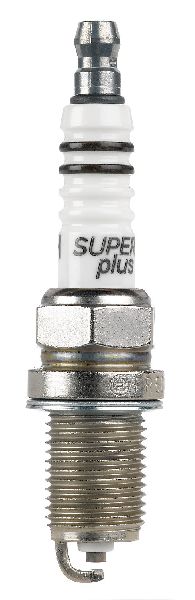
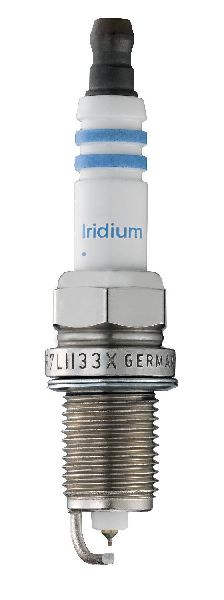
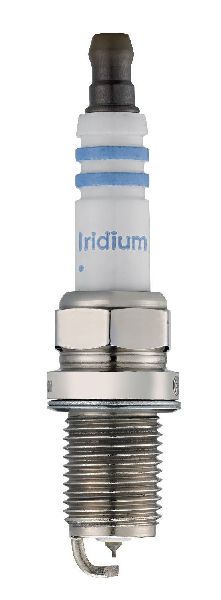
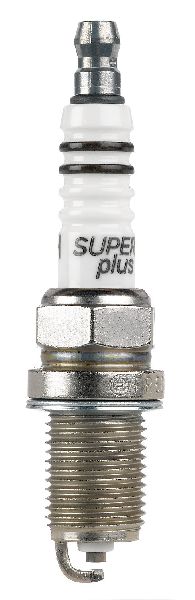
Est. part cost: $60-$150 - Worn Spark Plugs or Spark Plug Wires 🔴 High Probability → Shop Spark Plug These are standard wear items. Mazda engines of this era are sensitive to the type and condition of spark plugs, with owners overwhelmingly recommending NGK or Denso plugs for optimal performance. Wires can degrade, causing weak spark.
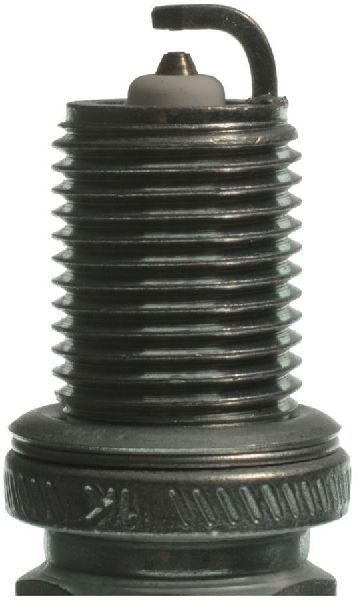
How to confirm: Visually inspect the spark plugs for wear (rounded electrode), damage, or heavy carbon/oil fouling. A cracked porcelain insulator is a clear sign of failure. Inspect wires for cracks, brittleness, or corrosion at the terminals.
Typical fix: Replace all four spark plugs and the set of spark plug wires. Use NGK (ZFR5F-11 for 2.0L) or Denso plugs for best results.
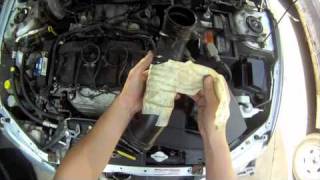
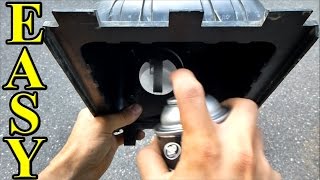
Est. part cost: $30-$60 - Vacuum Leak 🟡 Medium Probability The rubber and plastic components in the engine bay become brittle with age. The ribbed air intake hose between the MAF sensor and throttle body is particularly prone to cracking, creating a large unmetered air leak. 🎬 See how to replace a cracked intake tube to fix hesitation. The PCV valve hose and grommet can also crack and cause a significant leak.
How to confirm: Visually inspect all vacuum lines and the intake hose for cracks or loose connections, especially in the ribbed sections of the intake tube. A smoke test is the most effective method to pinpoint hard-to-see leaks from gaskets or hoses.
Typical fix: Replace the cracked hose or leaking gasket. The intake manifold gasket may also be a culprit.
Est. part cost: $20-$80 - Dirty or Faulty Mass Air Flow (MAF) Sensor 🟡 Medium Probability → Shop Fuel Injection Air Flow Meter Mazda extended the warranty on MAF sensors for the 1.6L engine under Special Service Program SSP56, indicating a known history of issues. A dirty sensor can incorrectly measure airflow, leading to a lean fuel condition and subsequent random misfires.
How to confirm: Unplug the MAF sensor while the engine is idling. If the idle stabilizes or improves, the sensor is likely faulty or very dirty. Cleaning the sensor's delicate hot wire with dedicated MAF sensor cleaner is a common first step.
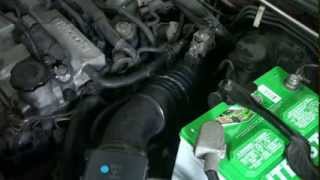
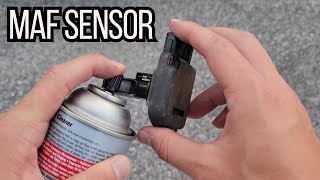
Typical fix: Clean the MAF sensor with an appropriate aerosol cleaner. 🎬 Watch: A quick guide to cleaning your MAF sensor properly. If cleaning doesn't work, the sensor must be replaced. Popular aftermarket brands include Delphi and Spectra.
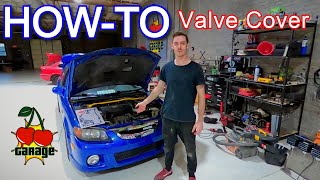
Est. part cost: $15 (cleaner) - $120 (new sensor) - Leaking Valve Cover Gasket ⚪ Low Probability → Shop Engine Valve Cover The gasket and spark plug tube seals harden and shrink with age, allowing engine oil to fill the spark plug wells. This oil can saturate the spark plug wire boot or coil-on-plug boot, causing the spark to short to the cylinder head instead of firing the plug.
How to confirm: Remove the ignition coils and spark plug wires. Look for liquid oil pooled in the spark plug tubes. The presence of oil is a definitive sign of a leaking gasket/seal.
Typical fix: Replace the valve cover gasket and the four spark plug tube seals. Thoroughly clean all oil out of the wells and replace any oil-fouled spark plugs, wires, or coil boots.
Est. part cost: $25-$50
Rare But Worth Checking
- Sticking EGR Valve: → Shop Exhaust Gas Recirculation (EGR) Valve A Mazda Technical Service Bulletin (MT000004166) specifically links a sticking EGR valve to rough idle and a P0300 code. An EGR valve stuck open at idle will create a massive vacuum leak, causing a very rough run condition and stalling.
- Low Fuel Pressure: A weak fuel pump or clogged fuel filter can starve the engine for fuel, causing lean misfires across all cylinders, especially under load. This is more likely on high-mileage vehicles.
- Clogged Catalytic Converter: → Shop Catalytic Converter This is usually a symptom of a long-term misfire (from bad coils) rather than the root cause. Unburned fuel overheats and melts the converter's internal structure, creating an exhaust blockage that causes excessive backpressure and leads to further misfires.
- Faulty Variable Tumble Control System (VTCS) Solenoid: A faulty VTCS solenoid (often throwing code P0660) can cause the intake runner butterflies to be in the wrong position, disrupting airflow and potentially contributing to a P0300 code, especially during warm-up.
Diagnosis Steps
- Read all stored trouble codes with an OBD-II scanner. Note any other codes besides P0300, as they provide crucial clues (e.g., P0171, P0421, P0660).
- Check if the Check Engine Light is solid or flashing. A flashing light indicates a severe, active misfire requiring immediate attention.
- Perform a thorough visual inspection of the engine bay. Look for obvious issues like the large, ribbed air intake hose being cracked or disconnected.
- Inspect the ignition system. Pull the coils and check the spark plug wells for oil. Oil in the wells confirms a leaking valve cover gasket.
- Remove and inspect all spark plugs. Look for wear, heavy fouling, or damage. Replace if they are old or in poor condition, preferably with NGK or Denso plugs.
- Test the ignition coils. Swap the two coil packs, clear codes, and run the engine to see if any cylinder-specific misfire codes move with the coil (e.g., P0301/P0304 moves to P0302/P0303).
- Clean the Mass Air Flow (MAF) sensor using a dedicated cleaner. Do not touch the delicate internal wires. Re-evaluate engine performance.
- If a vacuum leak is suspected but not visible, perform a smoke test to identify the source of the leak.
- If the above steps do not resolve the issue, test fuel pressure to rule out a weak fuel pump or clogged filter.
- Check for a clogged exhaust by using a backpressure gauge or by temporarily loosening the front oxygen sensor to see if performance improves (use caution, this will be loud and hot).
Parts You'll Likely Need
- Ignition Coil Pack
(OEM #ZM01-18-100 (for 1.6L ZM-DE) / FP85-18-100C (for 2.0L FS-DE))— This is the most frequent failure point causing a P0300 code on this vehicle due to the waste-spark system design.
Trusted brands: NGK, Denso, Standard Motor Products, Beck/Arnley - Spark Plugs
(OEM #NGK ZFR5F-11 (for 2.0L))— Often worn out or fouled by the time a misfire occurs. Replacing them is a critical part of a proper tune-up to resolve P0300.
Trusted brands: NGK, Denso - Spark Plug Wires — Replaced along with coils and plugs as a set to ensure the entire secondary ignition system is new and reliable.
Trusted brands: NGK, Denso - Air Intake Hose — This specific hose is known to crack with age, causing a large vacuum leak and a P0171/P0300 combination.
Trusted brands: Dorman, Genuine Mazda - Valve Cover Gasket Set — Required if oil is found in the spark plug wells. The set should include the main gasket and the four spark plug tube seals.
Trusted brands: Fel-Pro, Mahle, Beck/Arnley
Related Codes That Often Appear With This One
- P0301, P0302, P0303, P0304 — These codes indicate a misfire on a specific cylinder. A P0300 may appear first, and as the PCM isolates the fault, a more specific code may follow. Due to the waste-spark system, you will often see a pair of codes like P0301 and P0304 together.
- P0171 — This code for "System Too Lean" often accompanies P0300 when the cause is a major vacuum leak (like a cracked intake hose) or a faulty MAF sensor, as these issues introduce unmetered air and disrupt the air/fuel ratio.
- P0421 — This code for "Warm Up Catalyst Efficiency Below Threshold" often appears after a P0300 has been active for some time. The misfire allows unburned fuel to damage the catalytic converter, triggering this efficiency code. Many owners report this code appearing right after fixing the misfire.
- P0660 — This code points to a fault in the Variable Intake Control System (VICS) or Variable Tumble Control System (VTCS) solenoid circuit. A malfunctioning solenoid can affect air intake and contribute to the P0300 misfire code.
Technical Service Bulletins (TSBs) & Recalls
- MT000004166: Links a sticking EGR valve to rough idle and P0300.
- SSP56 (Special Service Program): Extended warranty coverage for the MAF sensor on certain 1999-2000 1.6L models, acknowledging a high failure rate.
- Emissions Recall #0702F: Recall to replace faulty ignition coils on 1999-2000 Protegé models with the 1.8L engine.
- Bulletin #01-001-21-3761a: Notes that some Mazda vehicles may exhibit an occasional rough idle with P0300 because carbon deposits pinched at the EGR valve seat prevent the valve from closing.
- Bulletin #01-012-24: Describes how some vehicles may exhibit a check engine light with DTC P0300:00 caused by a mis-detection of a misfire due to improper PCM control logic.
- Bulletin #01-007-19-3541: Indicates that in cold temperatures (around 32 degrees Fahrenheit / 0 degrees Celsius), some vehicles may exhibit a rough idle and/or the check engine light with P0300, P0301, P0302, or P0303 stored.
- Bulletin #01-012-19-3612: Confirms that some vehicles may experience the Check Engine Light ON with DTC P0300:00, P0301:00, P0302:00, P0303:00 and/or P0304:00 stored in memory.
Platform-Specific Known Issues
- Waste-Spark Ignition Coils: → Shop Ignition Coil The dual-coil waste-spark system is the number one cause of P0300. When one coil fails, it takes out two cylinders, creating a very noticeable random misfire condition that the PCM immediately flags as P0300.
- Cracked Ribbed Air Intake Hose: The flexible, ribbed section of the air intake hose is a very common failure point. It develops cracks over time, introducing a large amount of unmetered air that leans out the fuel mixture and causes misfires, often accompanied by a P0171 code.
- Oil-Fouled Spark Plug Wells: → Shop Spark Plug A leaking valve cover gasket allows oil to pool around the spark plugs. This oil can short the ignition spark to ground, causing a misfire that is often hard to diagnose without physically pulling the coils/wires to check for oil.
Mechanic-Grade Diagnostic Values
- Mass Air Flow (MAF) Sensor Voltage at Idle — expected: ~1.1 V DC. Failure: Voltage is significantly different or does not change with RPM.
- Mass Air Flow (MAF) Sensor Voltage at 1500 RPM — expected: ~1.7 V DC. Failure: Voltage does not rise with engine speed.
- Mass Air Flow (MAF) Sensor Live Data at Idle (FS-DE 2.0L) — expected: 1.6 - 2.4 g/s. Failure: Readings are outside this range at a stable, warm idle.
- Mass Air Flow (MAF) Sensor Live Data at 2500 RPM (FS-DE 2.0L) — expected: 5.1 - 7.2 g/s. Failure: Readings are outside this range while holding RPM steady.
- Long Term Fuel Trim (LONGFT1) at Idle — expected: -5% to +5%. Failure: Consistently high positive values (e.g., > +10%) suggest a vacuum leak or under-reporting MAF sensor. Consistently high negative values suggest a leaking injector or over-reporting MAF.
Wiring & Ground Locations
- Main Engine Ground — From negative battery terminal to the body on the passenger side near the power steering reservoir, then to a motor mount stud, then to a valve cover bolt.. A poor ground connection for the engine block or cylinder head can cause erratic behavior from sensors and ignition components, leading to misfire codes. Ensuring these points are clean and tight is a crucial, often overlooked step.
- PCM/ECU Ground Pins — Pins 24, 51, 76, and 77 on the ECU connector are all ground (B/W - Black/White wire). The ECU is located behind the passenger side kick panel or glove box.. The PCM relies on a stable ground reference to accurately interpret sensor data and fire the ignition coils. A fault at these specific pins can directly cause misfires and other engine management issues.
- Ignition Coil Power/Signal Pins — At the ECU connector, Pin 26 (R - Red wire) is for Ignition Coil #1 and Pin 52 (R/G - Red/Green wire) is for Ignition Coil #2 on the 1.8L FP-DE. These provide the signal to fire the coils.. If coils and plugs are good, a continuity or voltage drop test on these specific wires from the ECU to the coil connector can identify a wiring harness problem (break, chafe, or corrosion) causing a weak or absent spark.
Real Owner Repair Stories
- Mazda Forum user (2001 Protege ES GT 2.0L, 41,500 miles) — Shaking, sputtering, missing, rough idle, CEL on, smell of rotten eggs.
❌ Tried (didn't work) Dealer replaced EGR valve., Dealer cleared codes, problem returned., Dealer replaced spark plugs.
✅ What actually fixed it The dealer finally replaced both ignition coils under warranty, which resolved the P0300 misfire. The rotten egg smell indicated the misfire had already started to damage the catalytic converter. - Mazdas247 Forum user 'TheMAN' (Mazda Protege (high mileage)) — Rough idle, cruise surge, low idle, stalling, and eventually a P0300 code, especially in cold/humid weather.
❌ Tried (didn't work) Cleaning the EGR valve provided only a temporary fix.
✅ What actually fixed it The root cause was a faulty EGR valve that was sticking open, creating a vacuum leak condition that the ECU misinterpreted as a random misfire (P0300) before it could set a P0401 (EGR Flow) code. Replacing the EGR valve with an updated part number resolved the issue. - YouTube video by 'fupabox' (2002 Mazda Protege 2.0L) — Bogging on takeoff only after the engine warmed up, P0300 code. Would run fine when cold.
❌ Tried (didn't work) Replaced one ignition coil., Swapped ignition coils, misfire did not move., Confirmed all cylinders had spark.
✅ What actually fixed it The spark plugs, despite showing spark when tested cold, were failing under heat and load. Replacing all four spark plugs resolved the warm-engine bogging and the P0300 code. - Owner Report NHTSA ODI #11675874 — An owner reported scanning their vehicle and finding P0300 Random/Multiple Cylinder Misfire Detected along with P0304 Cylinder 4 Misfire detected, noting a previous recall on the vehicle.
OEM Part Supersession History
Unknown→Updated EGR Valve with metal shield— The original EGR valve design was prone to water condensation buildup in the stepper motor, causing rust and seizing, especially in cold climates. The updated design adds a shield to protect the motor.
Model Year Variations Within This Range
- 1999-2000: Base engines were the 1.6L ZM-DE or the 1.8L FP-DE. The exterior styling is pre-facelift.
- 2001-2003: Received a facelift with revised styling. The 1.8L engine was replaced by the larger 2.0L FS-DE engine for LX and ES trims. The 2.0L engine features the Variable Tumble Control System (VTCS) and Variable Inertia Charging System (VICS), adding solenoids and intake butterflies that can be a source of vacuum leaks or codes (P0660).
- March 3, 2003 - July 31, 2003: A specific batch of 2003 Protege vehicles had improperly torqued intake manifold shutter valve screws (VICS/VTCS), which could loosen and cause misfires. This was covered under Mazda Emission Recall 3005C.
Diagnostic Flowchart
Other Known Issues on This Vehicle
Issues unrelated to this code that are worth knowing about as an owner of this generation:
- Premature Body Rust 🔴 High — Extremely common, especially in salt-belt regions. Typically starts in the rear wheel wells, rocker panels, and around strut towers after 3-5 years.
- Automatic Transmission Failure (FN4A-EL) 🔴 High — Commonly reported between 60,000 and 120,000 miles. Symptoms include hard shifting, delayed engagement, flashing O/D light, and complete failure to move.
- Variable Tumble Control System (VTCS) Issues 🟠 Medium — The solenoid can fail, causing a check engine light (P1569), or the butterfly valve screws inside the intake manifold can loosen and fall into the engine, causing catastrophic damage. (Ref: A TSB was issued for the related VICS screws on some models.)
- Engine Mount Collapse 🟠 Medium — The original fluid-filled engine mounts are prone to leaking and collapsing, leading to excessive engine vibration at idle and while driving.
Used vs. New Parts: Buying Guide for This Vehicle
When a used part is the smart pick: Used parts like an intake manifold, EGR valve, or various engine sensors can be a cost-effective choice, especially if sourced from a lower-mileage donor vehicle. Given the age of these cars, a good used part can often be found for a fraction of the new price.
Donor-vehicle mileage cap: roughly under 120000 miles for the part to have meaningful remaining life.
What to inspect on the donor part:
- Check the vehicle's overall condition; a well-maintained exterior/interior often suggests better mechanical care.
- For electronic parts like MAF sensors or coil packs, try to get them from a car that was running before it was junked.
- Inspect rubber hoses and plastic connectors for cracks, brittleness, or signs of heat damage before purchasing.
OEM-only on this vehicle (don't cheap out):
- Catalytic Converter: Aftermarket converters for this era are notorious for failing to meet emissions standards or triggering efficiency codes (P0421) shortly after installation. A used OEM converter from a low-mileage car or a new OEM part is highly recommended.
- Mass Air Flow (MAF) Sensor: While some aftermarket brands work, many owners report issues with cheap, unbranded MAF sensors causing persistent lean/rich codes. Stick to OEM or known-good OEM-supplier brands.
Aftermarket brands forum-validated for this vehicle:
- Ignition Coils & Plugs: NGK and Denso are overwhelmingly recommended by owners for plugs and are a solid choice for coils.
- Sensors: Delphi, Denso, and Hitachi are reputable OEM suppliers for components like MAF sensors and ignition coils.
Brands owners have reported issues with on this vehicle:
- Unbranded 'eBay special' ignition coils and MAF sensors. Many forum posts detail chasing issues caused by these low-quality electronic parts that are often out of spec right out of the box.
Real Owner Stories
Aggregated from forums and TSBs cited above. Mileages and costs reflect what owners reported in those sources.
2002 Mazda Protege 2.0L
Symptoms: The engine was experiencing a misfire, and the owner used a diagnosis to identify codes P0300 and P0302.
What fixed it: Replacement of a faulty ignition coil resolved the misfire.
Source hint: YouTube video titled 'diagnosis and replacement of a faulty ignition coil on a 2002 Protege 2.0L'
1999-2003 Mazda Protege
Symptoms: The vehicle threw codes P0300 and P0660, and the owner discovered oil on the spark plug threads.
What fixed it: The presence of oil indicated a leaking valve cover gasket that needed replacement to stop the spark from shorting.
Source hint: Mazdas247.com thread 'protege-giving-codes-p0300-and-p0660'
1999-2003 Mazda Protege
Symptoms: The owner struggled with a P0300 code and eventually developed a P0421 code as well.
What fixed it: The owner replaced the EGR valve and spark plugs, but the P0300 was finally resolved by replacing the ignition coils. The subsequent P0421 indicated the catalytic converter was damaged by the prolonged misfire.
Source hint: Mazdaforum.com thread 'p0300-code-please-help-12500'
Related OBD-II Codes
Frequently Asked Questions
Is there a recall for the ignition coils on my 1999-2000 Protege?
Does Mazda have a special warranty for the MAF sensor on the 1.6L engine?
Which spark plugs should I use for my 2.0L FS-DE engine to avoid misfires?
Can a sticking EGR valve cause a P0300 on this vehicle?
Why does my Protege sound like a lawn mower when the Check Engine Light flashes?
I found oil in my spark plug wells; is this causing my P0300?
Helpful Videos

Used OEM Parts in Stock
New Aftermarket Parts Available

The information in this article is provided for general reference and educational purposes only. Vehicle specifications, procedures, and part compatibility can vary by production date, trim level, and region. Always consult your vehicle's factory service manual and verify part numbers before purchasing or performing repairs. Safety-critical components such as airbags, seat belts, and braking systems should be installed by a qualified professional.
- Mazda Protege:
- 🧭 Diagnostic Flowchart
- 🎬 Helpful Videos
- 🛍️ Shop This Part
- What's Unique About the 1999-2003 Mazda Protege
- Symptoms You May Notice
- Most Likely Causes
- Rare But Worth Checking
- Diagnosis Steps
- Parts You'll Likely Need
- Related Codes That Often Appear With This One
- Technical Service Bulletins (TSBs) & Recalls
- Platform-Specific Known Issues
- Mechanic-Grade Diagnostic Values
- Wiring & Ground Locations
- Real Owner Repair Stories
- OEM Part Supersession History
- Model Year Variations Within This Range
- Other Known Issues on This Vehicle
- Used vs. New Parts: Buying Guide for This Vehicle
- Real Owner Stories
- 2002 Mazda Protege 2.0L
- 1999-2003 Mazda Protege
- 1999-2003 Mazda Protege
- Related OBD-II Codes
- Frequently Asked Questions
- 🎟️ Get 5% Off