

P0300 on 2000-2002 Oldsmobile Bravada: Misfire Causes & Fixes (4.3L V6 & 4.2L I6)
P0300 on a 2000-2002 Bravada indicates a random misfire. For 2000-2001 models with the 4.3L V6, the most likely cause is a worn distributor cap and rotor due to internal corrosion. For the 2002 model with the 4.2L I6, the issue is typically a failing ignition coil, often damaged by moisture from a leaking cowl seal. A basic tune-up often resolves the issue on either engine.
- First, identify your engine: 2000-2001 models have a 4.3L V6 with a distributor, while 2002 models have a 4.2L I6 with coil-on-plug ignition.
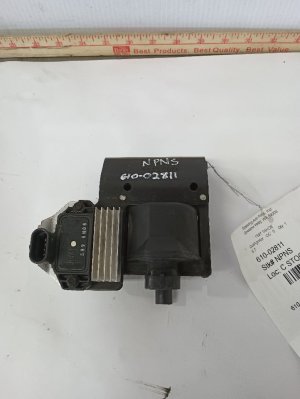
- For the 4.3L V6, the most likely fix is replacing the distributor cap, rotor, spark plugs, and wires.
- For the 4.2L I6, the most likely fix is replacing one or more faulty ignition coils and all spark plugs.
- If the check engine light is flashing, pull over and stop driving to prevent expensive damage to your catalytic converter.
- On the 4.2L I6, check for oil in the spark plug wells (indicating a bad valve cover gasket) or water damage to the coils (indicating a leaking cowl seal).
What's Unique About the 2000-2002 Oldsmobile BRAVADA
The 2000-2002 Bravada spans two distinct generations with different engines, leading to different common causes for a P0300 code. The 2000-2001 models use the long-running GM 4.3L V6, which is well-known for misfires caused by corrosion and wear within its distributor ignition system. In contrast, the 2002 model debuted the new 4.2L Atlas inline-6 engine, which uses a modern coil-on-plug ignition system where individual coil failures are the primary cause of misfires.
Diagnostic Flowchart
Tap your situation to follow the diagnostic path that matches what you're seeing on this vehicle.
Generation note: The 2000-2002 range covers two generations. 2000-2001 models are first-generation with the 4.3L V6 engine and a distributor ignition. The 2002 model is the first year of the second generation, featuring the new 4.2L Atlas inline-6 engine with a coil-on-plug ignition system. Common causes and parts differ significantly between them.
Symptoms You May Notice
- Rough or shaking idle
- Hesitation or stumbling during acceleration
- Flashing Check Engine Light
- Loss of power
- Difficulty starting the engine
- Smell of gasoline from the exhaust
- Engine stalling, especially at idle
- Replacing only the spark plugs on a 4.3L V6 without replacing the distributor cap and rotor, which are the more common failure points.
- Replacing oxygen (O2) sensors. A misfire will cause O2 sensors to read incorrectly, but they are rarely the root cause of a P0300.
- Replacing a single ignition coil on a 2002 4.2L I6 without also replacing the spark plug, which can cause the new coil to fail prematurely.
- Assuming an aftermarket ignition coil is as reliable as OEM. Many forum users report premature failure of cheap, unbranded coils.
Most Likely Causes
- Worn Distributor Cap and Rotor (2000-2001 4.3L V6) 🔴 High Probability The distributor on the 4.3L V6 is highly susceptible to internal corrosion from moisture buildup. A GM Technical Service Bulletin (TSB 03-06-04-041A) was issued because debris clogs the small vent screens on the distributor, trapping moisture and ozone gas which rapidly corrodes the metal terminals inside.
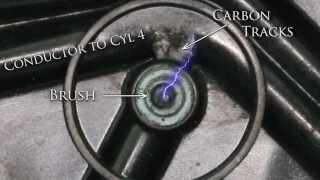
How to confirm: Remove the two screws holding the distributor cap. Inspect the inside of the cap for white, chalky residue, green corrosion on the metal terminals, or black carbon tracks. The tip of the rotor may also show significant wear or burning.
Typical fix: Replace the distributor cap and rotor as a set. It is critical to transfer the spark plug wires one at a time to maintain the correct firing order. Ensure the distributor vent screens are clear. Many owners use AC Delco parts to avoid premature failure.
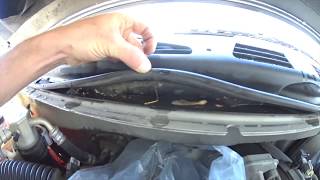
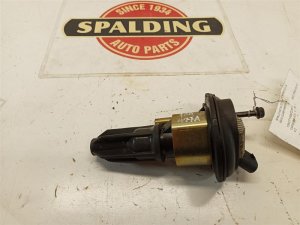
Est. part cost: $30-$80 - Failed Ignition Coil(s) (2002 4.2L I6) 🔴 High Probability → Shop Ignition Coil The 4.2L engine uses a coil-on-plug design. A widely known issue is a degraded cowl weatherstrip seal above the firewall, which allows water from rain or car washes to drip directly onto the engine, often shorting out the coil for cylinder #4.
How to confirm: Use a scanner to check for specific cylinder misfire codes (P0301-P0306), which often appear after an initial P0300. Swap the suspected bad coil with a coil from a known good cylinder. If the misfire code follows the coil to the new cylinder (e.g., P0304 becomes P0302 after swapping coils 4 and 2), the coil is bad.
Typical fix: Replace the faulty ignition coil. It is highly recommended to replace the corresponding spark plug at the same time and use dielectric grease inside the boot. Inspect and consider replacing the cowl seal 🎬 Watch: How to permanently fix water leaking onto your coils. to prevent repeat failures.
Est. part cost: $25-$60 per coil - Worn Spark Plugs 🟡 Medium Probability → Shop Spark Plug Spark plugs are a standard wear item. On the 4.2L I6, a leaking valve cover gasket is a very common problem that causes oil to pool in the spark plug wells, saturating the plug and coil boot, which leads to a misfire.
How to confirm: Remove the ignition coils and inspect the spark plug wells for oil. When removing the plugs, look for excessive electrode wear, heavy carbon fouling, or oil saturation on the plug itself.
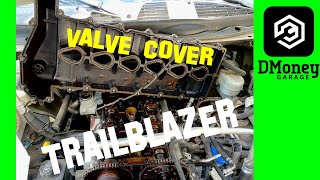
Typical fix: Replace all spark plugs. On the 4.2L, if oil is found, the valve cover gasket must also be replaced to solve 🎬 See this walkthrough for replacing a leaking valve cover gasket. the root cause. Many owners prefer AC Delco Iridium plugs (41-103) for this engine.
Est. part cost: $20-$100 for a set - Worn Spark Plug Wires (2000-2001 4.3L V6) 🟡 Medium Probability → Shop Spark Plug
How to confirm: Visually inspect wires for cracks, burns, or corrosion, especially where they might contact the engine block or exhaust. Test resistance with a multimeter (should be under 10k ohms per foot) or check for arcing in the dark with the engine running.
Typical fix: Replace the entire set of spark plug wires. This is often done as part of a full tune-up with the distributor cap, rotor, and spark plugs.
Est. part cost: $40-$90 - Clogged or Leaking Central Port 'Spider' Injector (2000-2001 4.3L V6) ⚪ Low Probability The original Central Sequential Fuel Injection (CSFI) system uses small poppet valves at the end of each fuel line that are prone to sticking from carbon buildup or leaking. A classic symptom is a long crank time or hard starting when the engine is warm.
How to confirm: Requires a fuel pressure gauge. After priming the system, shut the engine off and watch the gauge. A rapid drop in pressure indicates a leak, which is often internal to the spider assembly. A single wet, fuel-fouled spark plug can also point to a leaking poppet valve.
Typical fix: Replace the original CSFI 'spider' assembly with the updated Multi-Port Fuel Injection (MPFI) version. This is a permanent fix that replaces the poppet valves with true injectors.
Est. part cost: $200-$350 for the upgraded assembly - Low Fuel Pressure ⚪ Low Probability
How to confirm: Connect a fuel pressure gauge to the Schrader valve on the fuel rail. For the 4.3L V6, pressure should be 60-66 psi with the key on, engine off. For the 4.2L I6, it should be 50-57 psi. Pressure that drops quickly after the pump shuts off indicates a leak.
Typical fix: A weak fuel pump or a clogged fuel filter is the usual cause. Always replace the fuel filter first, as it is cheaper and a common point of restriction.
Est. part cost: $20-$50 for a filter, $150-$300 for a pump
Rare But Worth Checking
- Leaking Intake Manifold Gasket: → Shop Engine Intake Manifold On the 4.2L I6, the intake manifold gasket can fail, creating a vacuum leak that leans out the air/fuel mixture and causes random misfires, often accompanied by a P0171 code. The leak is often near cylinder 1 or 6. A smoke test is the best way to confirm this.
- Faulty Crankshaft Position Sensor: → Shop Engine Crankshaft Position Sensor A failing crankshaft position sensor can send erratic signals to the PCM, disrupting ignition and injection timing. This can cause intermittent misfires, stalling, or a no-start condition. A Crankshaft Variation Relearn procedure is often required after replacement.
- Low Engine Compression: Internal engine problems like a worn valve, bad piston rings, or a leaking head gasket can cause a loss of compression in one or more cylinders, leading to a persistent misfire. A cylinder compression or leak-down test can diagnose this.
Diagnosis Steps
- Scan for any other stored trouble codes. Codes for specific cylinders (P0301-P0306) or systems (P0171) can provide valuable clues.
- Determine which engine your Bravada has 🎬 Watch: A professional mechanic's guide to diagnosing GM P0300 codes. (4.3L V6 for 2000-2001, 4.2L I6 for 2002).
- For the 4.3L V6: Inspect the inside of the distributor cap and the rotor tip for white/green corrosion or black carbon tracks. This is the most common cause.
- For the 4.2L I6: Inspect the ignition coils and spark plug wells. Check for signs of moisture from a leaking cowl seal or oil from a leaking valve cover gasket. Swap a coil from a misfiring cylinder to a good one to see if the code follows.
- Remove and inspect all spark plugs for wear, fouling, or incorrect gap.
- Check fuel pressure using a fuel pressure gauge to rule out a weak pump or clogged filter. Check for rapid pressure drop after shutdown.
- Perform a vacuum leak test using a smoke machine or by carefully spraying carburetor cleaner around the intake manifold gasket area and listening for a change in engine idle.
- If all ignition and fuel system checks pass, consider a more advanced diagnosis like an engine compression or leak-down test to check for mechanical issues.
Parts You'll Likely Need
- Distributor Cap and Rotor Kit (2000-2001 4.3L V6)
(OEM #ACDelco D328A (Cap), D448 (Rotor)) - Ignition Coil (2002 4.2L I6)
(OEM #ACDelco D585) - Spark Plugs (Set)
(OEM #ACDelco 41-103 (for 4.2L I6)) - Upgraded MPFI Spider Injector Assembly (2000-2001 4.3L V6)
(OEM #Standard Motor Products FJ503, GM 19210688)
Related Codes That Often Appear With This One
- P0301-P0306 — If the random misfire becomes consistent in one or more specific cylinders, the PCM will log a corresponding code (e.g., P0301 for cylinder 1). This is common with failing coils on the 4.2L.
- P0171/P0174 — These 'System Too Lean' codes can appear with P0300 if the misfire is caused by a vacuum leak (like a bad intake gasket) or a fuel delivery problem that affects an entire engine bank.
Technical Service Bulletins (TSBs) & Recalls
- TSB #03-06-04-041A: Addresses P0300 on 4.3L V6 engines due to internal distributor corrosion. The bulletin notes that clogged distributor vent screens trap moisture and ozone, accelerating corrosion. The fix involves inspecting the cap and rotor for white residue or corrosion and ensuring the vent screens are clear.
- TSB #PIP5628G: A general diagnostic assistance bulletin from GM for P0300-P0308 codes, indicating that dealers should collect specific information to aid in diagnosis.
- TSB #03-06-04-030: While for a different GM V6, it is often referenced in relation to P0300 caused by intake manifold gasket leaks, a possible cause on the Bravada as well.
Platform-Specific Known Issues
- A known issue on 2000-2001 models with the 4.3L V6 is moisture and corrosion buildup inside the distributor cap, causing random misfires. A TSB (03-06-04-041) was released for this issue on similar GM vehicles.
- On 2002 models with the 4.2L I6, a leaking cowl seal can allow water to drip onto the ignition coils, leading to premature failure.
- Also on the 4.2L I6, a leaking valve cover gasket can fill the spark plug tubes with oil, fouling the spark plugs and ignition coil boots.
- The provided NHTSA TSB #PIP5628G for the 2002 engine notes that diagnosing P0300 codes can be complex, instructing technicians to gather specific information to aid in diagnosis.
Mechanic-Grade Diagnostic Values
- Fuel Pressure (2000-2001 4.3L V6) — expected: 60-66 psi (key on, engine off). Failure: Pressure below 60 psi indicates a weak pump or clogged filter. A rapid drop after the pump shuts off indicates a leak, often in the spider injector assembly.
- Fuel Pressure (2002 4.2L I6) — expected: 50-57 psi (key on, engine off). Failure: Pressure below 50 psi can cause lean misfires across all cylinders.
- Camshaft Position Actuator Solenoid Resistance (2002 4.2L I6) — expected: 8-12 ohms. Failure: A reading outside this range indicates a faulty solenoid, which can affect cam timing and cause misfires.
- Ignition Control Module (ICM) Power (2000-2001 4.3L V6) — expected: 10-12 Volts DC on the pink wire (Circuit A) with key on.. Failure: Low or no voltage indicates a power supply issue to the ICM, preventing spark generation.
Hidden / Shadow Codes Worth Checking
- Mode $06, Test ID $A2-$A7: This is not a typical DTC, but a diagnostic monitor within the PCM. Test IDs $A2 through $A7 correspond to misfire counts for cylinders 1 through 6. Even without a specific P0301-P0306 code, these counters can show which cylinder is misfiring the most. (see via A professional scan tool or an advanced OBD-II app that can access Mode $06 data. The data is often presented as 'Misfire Counts Per Cylinder'.)
Scan Tool Commands That Help
- Tech 2 or other capable bidirectional scanner: Crankshaft Position System Variation Learn (CASE Relearn) — This procedure is required after replacing the crankshaft position sensor, PCM, or crankshaft balancer. Failure to perform the relearn can cause the PCM to incorrectly interpret minor crankshaft speed variations as misfires, setting a false P0300 code.
- Tech 2 or other capable bidirectional scanner: Misfire History Data — When only a P0300 is present, viewing the misfire history graph or counters can reveal which specific cylinders have the highest number of misfire events, helping to narrow the diagnosis.
Wiring & Ground Locations
- G103 / G104 (2000-2001 4.3L V6) — Typically located on or near the thermostat housing on the front of the intake manifold. These are the primary grounds for the PCM and sensor data.. Corrosion or a loose connection at these ground points can cause erratic sensor readings, including from the crank and cam sensors, leading to phantom misfire codes and poor engine performance.
- PCM Ground (2002 4.2L I6) — A primary engine-to-chassis ground strap is located on the driver's side of the engine block, near the front. Another critical ground point (G107) is on the lower left side of the engine block.. A poor ground connection can cause a host of electrical issues, including incorrect data being sent to the PCM, which can result in a misfire diagnosis when none exists.
- Ignition Control Module Ground (2000-2001 4.3L V6) — The Black/White wire (Circuit C) in the 4-pin connector to the ICM provides the ground path.. The ICM cannot function without a solid ground. An intermittent ground on this circuit can cause a random loss of spark, leading directly to a P0300 code.
Real Owner Repair Stories
- Blazer Forum user (2001 Oldsmobile Bravada 4.3L V6) — Engine died on the highway, would not restart. Later showed P0300 and water in oil ('chocolate milk').
❌ Tried (didn't work) Initial diagnosis pointed to a head gasket due to water in oil.
✅ What actually fixed it The no-start was caused by a broken rotor tab inside the distributor. The water in the oil was a separate issue from a leaking lower intake manifold gasket, which was repaired at the same time. The P0300 was resolved by replacing the distributor rotor. - GMTNation forum user (2002+ 4.2L I6 (Trailblazer/Envoy/Bravada platform)) — Slight miss at idle, P0300 code present.
❌ Tried (didn't work) Standard tune-up parts (plugs, coils).
✅ What actually fixed it The issue was traced to a faulty Camshaft Position Actuator Solenoid (also known as a VVT solenoid). Replacing the solenoid and cleaning the passages resolved the idle misfire and the P0300 code.
"I Checked Everything" — The Actual Cause
- On the 4.2L I6 engine, a cracked exhaust manifold, specifically between the cylinder head and the first oxygen sensor, can introduce unmetered air into the exhaust stream. This causes the O2 sensor to read a false lean condition, prompting the PCM to add extra fuel, which can eventually lead to random misfires (P0300) without any vacuum leaks present in the intake system.
When the Usual Fixes Don't Work
- While a P0300 is most often caused by ignition or fuel system faults, a failing Crankshaft Position Sensor can also be the root cause. In some cases, the sensor can begin to fail intermittently without setting its own specific trouble code. The erratic signal it sends to the PCM about the engine's speed and position is misinterpreted as a cylinder misfire, leading the technician on a chase to fix ignition and fuel components that are not actually faulty. After replacing the sensor, a 'CASE Relearn' procedure is often necessary to sync the new sensor with the PCM.
OEM Part Supersession History
GM CSFI 'Spider' Injector Assembly (e.g., 12568332)→GM MPFI 'Spider' Injector Assembly (e.g., 19210688)— The original Central Sequential Fuel Injection (CSFI) unit used poppet valves that were highly prone to clogging and leaking. The updated Multi-Port Fuel Injection (MPFI) unit replaces the poppet valves with true electronic injectors, offering significantly better reliability, fuel atomization, and performance.
Heads up: This is a direct-fit upgrade; no modifications are required for installation on 1996-2001 4.3L engines.
Model Year Variations Within This Range
- 2000-2001 vs 2002: The entire powertrain is different. The 2000-2001 models use the 4.3L V6 with a distributor-based ignition and a CSFI 'spider' fuel injector. The 2002 model uses the 4.2L Inline-6 with a coil-on-plug ignition system and individual port fuel injectors. Diagnostic procedures and common failure points are completely different between these year groups.
Helpful Videos

We Have This Part in Stock

The information in this article is provided for general reference and educational purposes only. Vehicle specifications, procedures, and part compatibility can vary by production date, trim level, and region. Always consult your vehicle's factory service manual and verify part numbers before purchasing or performing repairs. Safety-critical components such as airbags, seat belts, and braking systems should be installed by a qualified professional.
- Oldsmobile BRAVADA:
- 🧭 Diagnostic Flowchart
- 🎬 Helpful Videos
- 🛍️ Shop This Part
- What's Unique About the 2000-2002 Oldsmobile BRAVADA
- Symptoms You May Notice
- Most Likely Causes
- Rare But Worth Checking
- Diagnosis Steps
- Parts You'll Likely Need
- Related Codes That Often Appear With This One
- Technical Service Bulletins (TSBs) & Recalls
- Platform-Specific Known Issues
- Mechanic-Grade Diagnostic Values
- Hidden / Shadow Codes Worth Checking
- Scan Tool Commands That Help
- Wiring & Ground Locations
- Real Owner Repair Stories
- "I Checked Everything" — The Actual Cause
- When the Usual Fixes Don't Work
- OEM Part Supersession History
- Model Year Variations Within This Range
- 🎟️ Get 5% Off