

P0300 on 2001-2002 Oldsmobile Intrigue: Random Misfire Causes and Fixes
A P0300 code on a 2001-2002 Oldsmobile Intrigue indicates a random or multiple cylinder misfire. The most common causes are a failing crankshaft position sensor, a bad fuel pressure regulator, or a faulty ignition control module. Addressing these issues is key to restoring engine performance.
- P0300 means the engine has a random misfire affecting multiple cylinders.
- For the 2001-2002 Intrigue, the most likely culprits are the crankshaft position sensor, fuel pressure regulator, or ignition control module.
- If your Intrigue has the 3.8L V6, leaking intake manifold gaskets are a very common cause.
- Do not ignore a flashing check engine light, as it signals a severe misfire that can quickly destroy the catalytic converter.
- Always check for simple things first, like a fuel smell in the regulator's vacuum line, before moving to more complex diagnostics.
What's Unique About the 2001-2002 Oldsmobile INTRIGUE
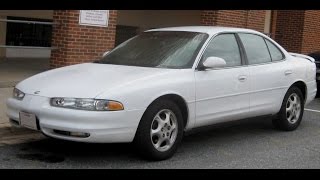
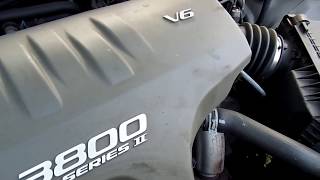
The 2001-2002 Intrigue was equipped with either the 3.5L LX5 "Shortstar" V6 or the 3.8L L36 Series II V6. While both can experience a P0300 code, their common failure points differ. The 3.8L engine is well-known for intake manifold gasket leaks causing vacuum issues and ignition control module failures. The 3.5L LX5 engine, a DOHC design based on the Aurora V8 architecture, is often called the 'Shortstar'. It was a more complex and costly engine for GM to produce. On this engine, a P0300 is very commonly traced to a failing crankshaft position sensor or a fuel pressure regulator that has failed and is leaking fuel into its vacuum line.
Diagnostic Flowchart
Tap your situation to follow the diagnostic path that matches what you're seeing on this vehicle.
Symptoms You May Notice
- Rough or shaky idle
- Engine hesitation or stumbling during acceleration
- Noticeable loss of engine power
- Flashing or solid Check Engine Light
- Engine stalling, especially when warm
- Hard starting (engine cranks longer than usual)
- Smell of raw fuel from the exhaust
- Reduced fuel economy
- Replacing only the spark plugs without checking for a root cause like a bad fuel pressure regulator or CKP sensor.
- Replacing a single ignition coil when the underlying issue is the ignition control module that fires it.
- Replacing oxygen sensors, which are more likely to be a symptom of the misfire (due to unburned fuel) rather than the cause.
Most Likely Causes
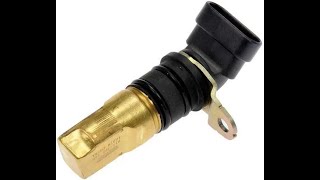
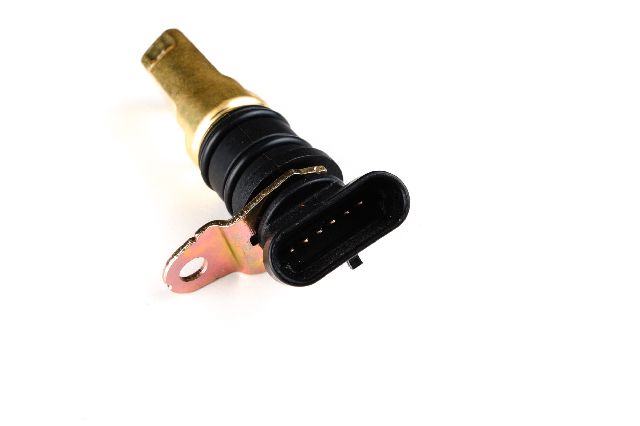
- Failing Crankshaft Position Sensor (CKP) 🔴 High Probability → Shop Engine Crankshaft Position Sensor This is a very common failure item on many GM vehicles of this era, including both the 3.5L and 3.8L Intrigue engines. The sensor's signal is critical for ignition and fuel timing, and an intermittent signal can cause random misfires across all cylinders.
How to confirm: The classic symptom is the engine stalling when it gets hot and refusing to restart until it cools down. A scan tool may show an erratic RPM signal during cranking. Testing the sensor's output with a multimeter or oscilloscope is the definitive check. A forum user on Edmunds.com noted getting a misfire code along with a crankshaft position sensor B code.
Typical fix: Replace the crankshaft position sensor. On the 3.5L engine, this requires removing the starter motor for access. 🎬 Watch: Step-by-step guide to replacing the 3.5L crankshaft sensor. A 'crankshaft variation relearn' procedure with a capable scan tool is recommended after replacement to ensure the PCM accurately detects misfires.
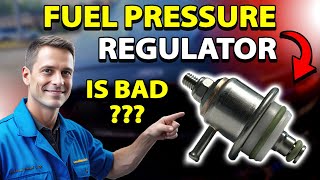
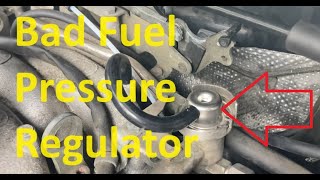
Est. part cost: $25-$60 - Faulty Fuel Pressure Regulator 🟡 Medium Probability → Shop Fuel Injection Pressure Regulator The regulator's internal diaphragm can rupture, allowing raw fuel to be sucked directly into the intake manifold through its vacuum line. This creates a rich running condition that can cause random misfires.
How to confirm: Disconnect the small vacuum hose from the top of the fuel pressure regulator on the fuel rail. If raw fuel is present in the hose or drips from the regulator's nipple, it has failed and must be replaced. The smell of gas in the vacuum line is a tell-tale sign.
Typical fix: Replace the fuel pressure regulator. It is located on the fuel rail and held in by a clip.
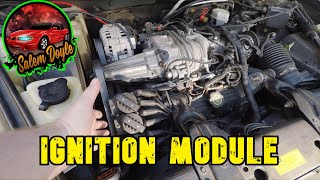
Est. part cost: $40-$80 - Failed Ignition Control Module (ICM) 🟡 Medium Probability The ICM, located under the ignition coil packs on the 3.8L V6, is responsible for firing the coils. It is a notorious failure point due to heat soak. When it begins to fail, it can cause intermittent or no spark to one or more coil packs, resulting in a random misfire affecting paired cylinders.
How to confirm: If you can determine that an entire coil pack (which fires two cylinders) is losing spark intermittently, the ICM is the likely culprit. Swapping a known-good coil pack to the suspect position without a change in symptoms points to the ICM. Many auto parts stores can test the module off the vehicle, but heat-related failures may not show up on a cold test.
Typical fix: Replace the ignition control module. It's highly recommended to also apply new dielectric grease between the new module and its mounting plate to help with heat dissipation. 🎬 See this walkthrough on replacing the GM 3800 ignition module. The original ACDelco part number is often cited as 10489422 or D579.
Est. part cost: $70-$150 - Leaking Intake Manifold Gaskets (especially 3.8L V6) 🟡 Medium Probability → Shop Engine Intake Manifold The GM 3.8L V6 is notorious for its original plastic-framed lower intake manifold (LIM) gaskets, which degrade over time from exposure to coolant, causing leaks. This can lead to coolant entering the intake ports or a significant vacuum leak, disrupting the air-fuel mixture and causing misfires.
How to confirm: Perform a smoke test on the intake system to check for vacuum leaks. You may also notice unexplained coolant loss or sludge in the antifreeze bottle. Spraying carburetor cleaner around the gasket mating surfaces while the engine is running may cause a change in idle speed, indicating a leak.
Typical fix: Replace the upper and lower intake manifold gaskets with an updated metal-framed design, such as the Fel-Pro MS 98014 T-1. It is also wise to replace the plastic coolant elbows at the same time.
Est. part cost: $50-$100 - Worn Spark Plugs and/or Wires ⚪ Low Probability → Shop Spark Plug While typically causing a single-cylinder misfire, if all plugs and wires are original and have high mileage, their overall poor condition can contribute to random misfires. A loose spark plug wire connection at the coil pack can also be a cause.
How to confirm: Inspect all spark plugs for wear, fouling, or an incorrect gap (typically ~0.050" for these engines). Check spark plug wires for cracks, corrosion, or high resistance with a multimeter.
Typical fix: Replace all spark plugs and spark plug wires as a set. Use quality Iridium or Platinum plugs like the OEM ACDelco parts.
Est. part cost: $60-$120
Rare But Worth Checking
- Clogged Catalytic Converter: → Shop Catalytic Converter A restricted catalytic converter creates excessive exhaust backpressure, which chokes the engine and can cause misfires across all cylinders, especially under load. You can test for this by checking the exhaust backpressure with a gauge in the upstream oxygen sensor port.
- Weak Fuel Pump: → Shop Fuel Pump Low fuel pressure from a failing pump can starve the engine for fuel, leading to lean misfires on multiple cylinders. A fuel pressure test at the fuel rail is needed to confirm this.
- Clogged Fuel Injectors: → Shop Fuel Injector If multiple injectors are dirty or clogged, it can lead to a random misfire code. This is less common than a single failed injector but can happen with poor fuel quality or high mileage. GM issued a TSB (03-06-04-030F) regarding this issue on many engines, including the 3.5L and 3.8L, recommending a specific on-vehicle cleaning procedure.
- Contaminated Mass Airflow (MAF) Sensor: → Shop Fuel Injection Air Flow Meter If an aftermarket 'oiled' air filter is used, excess oil can contaminate the MAF sensor's hot wire, causing it to report incorrect airflow to the PCM. This skews the air/fuel mixture and can lead to stumbling, rough idle, and misfire codes. GM issued a bulletin (04-07-30-011) warning against this condition.
Diagnosis Steps
- Scan the PCM for any other stored trouble codes. Codes for specific cylinders (P0301-P0306) or sensors can provide valuable clues.
- Check for the easiest and most common causes first. Disconnect the vacuum line from the fuel pressure regulator and check for any signs of raw fuel.
- If the engine stalls when hot and refuses to start until cool, strongly suspect the crankshaft position sensor.
- Inspect the ignition system. Check the condition of all spark plugs and wires. If you have a 3.8L engine, test for spark at each of the three coil packs. If an entire coil pack has no spark, suspect the ignition control module.
- Test fuel pressure at the fuel rail using a fuel pressure gauge to rule out a weak fuel pump or clogged filter.
- Check for vacuum leaks, especially around the intake manifold gaskets on the 3.8L engine. A smoke test is the most effective method.
- Test for a clogged catalytic converter by measuring exhaust backpressure or using an infrared thermometer to check for a significant temperature difference between the inlet and outlet (inlet should be cooler).
Parts You'll Likely Need
- Crankshaft Position Sensor
(OEM #ACDelco 213-950)— This is a very frequent point of failure on these GM engines, causing intermittent stalling and random misfires.
Trusted brands: ACDelco, Delphi
OEM price range: $40-$70
Aftermarket price range: $25-$50 - Ignition Control Module (3.8L V6)
(OEM #ACDelco D579)— A notorious failure point on the 3.8L engine due to heat soak, causing intermittent spark to paired cylinders.
Trusted brands: ACDelco, Delphi
OEM price range: $70-$150
Aftermarket price range: $50-$100
Related Codes That Often Appear With This One
- P0301-P0306 — These codes indicate a misfire on a specific cylinder (e.g., P0301 for Cylinder 1). They often accompany P0300 when the computer can identify at least one of the misfiring cylinders.
- P0171/P0174 — These codes for 'System Too Lean' on Bank 1 or 2 often appear with P0300 when the root cause is a vacuum leak, such as from failed intake manifold gaskets.
Technical Service Bulletins (TSBs) & Recalls
- PIP5628G: Preliminary information for diagnosing misfire codes P0300-P0308.
- 03-06-04-030F: Addresses various driveability symptoms, including P0300, caused by clogged fuel injectors and provides a cleaning procedure.
Platform-Specific Known Issues
- Crankshaft Position Sensor Access (3.5L): → Shop Engine Crankshaft Position Sensor On the 3.5L LX5 engine, replacing the crankshaft position sensor is more involved than on the 3.8L, as it requires the removal of the starter motor to gain access to the sensor's location.
- Ignition Control Module Heat Failure (3.8L): The ICM on the 3.8L L36 engine is mounted directly beneath the three ignition coils, a location that subjects it to significant heat. This constant heat cycling is a primary reason for its high failure rate, leading to random misfires.
Mechanic-Grade Diagnostic Values
- Fuel Pressure (3.5L & 3.8L Engines) — expected: 48-55 PSI with key on, engine off. Pressure should hold steady and not drop more than a few PSI over 30 minutes.. Failure: Pressure below 48 PSI indicates a weak pump or clogged filter. A rapid drop in pressure after the pump primes indicates a leaking injector, check valve, or fuel pressure regulator.
- Ignition Coil Secondary Resistance (3.8L) — expected: 5,000 - 8,000 ohms (5k-8k Ω). Failure: A reading significantly outside this range indicates a faulty coil winding.
- Mass Airflow (MAF) Sensor Reading at Idle — expected: Approximately 4-6 grams/second (g/s) for a healthy V6 engine at normal operating temperature.. Failure: Readings that are erratic, stuck at a specific value, or significantly different from the expected range can indicate a contaminated or failed sensor.
Scan Tool Commands That Help
- GM Tech 2: Misfire Graph / Misfire Counters — To view real-time misfire counts for each individual cylinder. This is invaluable for determining if the P0300 is truly random or if one or two cylinders are misfiring more frequently than others, even if they haven't triggered their own specific P030x code yet.
- GM Tech 2: Crankshaft Variation Relearn (CASE Relearn) — This procedure should be performed after replacing a crankshaft position sensor, PCM, or flexplate. It recalibrates the PCM's reference for the crankshaft's rotational speed, which is essential for accurate misfire detection. Failing to perform this can lead to false P0300 codes, especially on higher mileage engines.
Wiring & Ground Locations
- G101 / G106 — G101 is on the engine block. It jumpers to G106, located at the center of the frame cross rail under the crank pulley.. This is a primary ground for the Engine Control Module (PCM) and Transmission Control Module (TCM). A poor connection here can cause countless erratic electrical issues, including false sensor readings and misfires.
- G103 — Located at the left rear of the engine compartment on the cowl, above the brake booster.. This ground point serves the PCM, Body Control Module (BCM), and the Data Link Connector (DLC). A fault here can disrupt communication and cause strange behavior.
- PCM Connector C1, Pin 60 & C2, Pin 60 — At the Powertrain Control Module (PCM), located on the left front side of the engine compartment.. These are the primary ground pins (Circuit 451, BLK/WHT wire) for the PCM itself. Verifying continuity to ground from these pins is a critical step in diagnosing persistent, unexplained electrical issues that could cause a P0300.
Real Owner Repair Stories
- YouTube user comment on a P0300 diagnostic video (Not specified, but symptoms align with GM vehicles.) — P0300 code, random misfire.
❌ Tried (didn't work) Replacing crank sensor
✅ What actually fixed it The wiring to the camshaft position sensor was burnt. Wiggling the wires made the car run fine, confirming the issue was in the harness, not the sensor itself. - Edmunds.com Car Forums (2000 Oldsmobile Intrigue, 70,000 miles) — Hard starts, occasional stalling, Service Engine Soon light on and off.
❌ Tried (didn't work) Replaced camshaft position sensor, Replaced mass air flow sensor, Replaced camshaft position sensor a second time
✅ What actually fixed it The user was still diagnosing, but the story highlights a common frustration where replacing sensors (cam and MAF) based on codes did not solve the underlying stalling and misfire-related symptoms. The next suspected parts were the crankshaft position sensor, ignition switch, or fuel pressure regulator.
"I Checked Everything" — The Actual Cause
- A cracked flexplate can cause the crankshaft position sensor to generate an erratic signal, which the PCM interprets as random misfires. This is a mechanical failure that mimics an electronic one and will not be found by a smoke test, fuel pressure test, or standard ignition component checks.
Helpful Videos
We Have This Part in Stock


The information in this article is provided for general reference and educational purposes only. Vehicle specifications, procedures, and part compatibility can vary by production date, trim level, and region. Always consult your vehicle's factory service manual and verify part numbers before purchasing or performing repairs. Safety-critical components such as airbags, seat belts, and braking systems should be installed by a qualified professional.
- Oldsmobile INTRIGUE:
- 🧭 Diagnostic Flowchart
- 🎬 Helpful Videos
- 🛍️ Shop This Part
- What's Unique About the 2001-2002 Oldsmobile INTRIGUE
- Symptoms You May Notice
- Most Likely Causes
- Rare But Worth Checking
- Diagnosis Steps
- Parts You'll Likely Need
- Related Codes That Often Appear With This One
- Technical Service Bulletins (TSBs) & Recalls
- Platform-Specific Known Issues
- Mechanic-Grade Diagnostic Values
- Scan Tool Commands That Help
- Wiring & Ground Locations
- Real Owner Repair Stories
- "I Checked Everything" — The Actual Cause
- 🎟️ Get 5% Off