

P0300 on 2007-2011 Pontiac G3: Random Misfire Causes and Fixes
P0300 on a Pontiac G3 almost always points to a failing ignition system. The most common fix is replacing the single ignition coil pack and all four spark plugs. Oil leaking from the valve cover gasket into the spark plug tubes is a frequent contributing factor. This is a straightforward DIY job that costs between $75 and $150 for parts.
- P0300 on the Pontiac G3 is most often caused by a faulty ignition coil pack and/or worn spark plugs.
- For a complete and lasting repair, it is best to replace the coil pack and all four spark plugs at the same time.
- If the check engine light is flashing, stop driving immediately to prevent expensive damage to the catalytic converter.
- While checking for parts, inspect the spark plug tubes for oil, which would indicate a leaky valve cover gasket that also needs replacement.
What's Unique About the 2007-2011 Pontiac G3
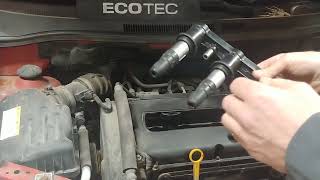
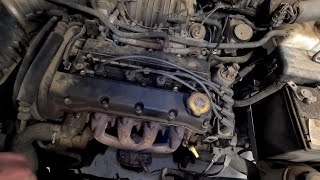
The Pontiac G3, a rebadged Chevrolet Aveo, uses a 1.6L E-TEC II engine with a single coil-on-plug ignition cassette (or coil pack) that provides spark to all four cylinders. Unlike systems with individual coils for each plug, when this single pack begins to fail, it often causes erratic sparks across multiple cylinders, making P0300 a very common code for this platform. 🎬 See how to diagnose a P0300 misfire on this 1.6L engine. Owner experiences on forums frequently confirm that replacing the coil pack and spark plugs together is the most effective solution. A very common related issue is the valve cover gasket leaking oil into the spark plug wells, which saturates the plug boots and causes misfires.
🎬 Watch: Step-by-step valve cover gasket replacement walkthrough.Diagnostic Flowchart
Tap your situation to follow the diagnostic path that matches what you're seeing on this vehicle.
Generation note: The 2007-2008 models were sold as the Pontiac G3 Wave, while the 2009-2010 models were the Pontiac G3. Both are based on the Chevrolet Aveo (T250 platform) and use the same 1.6L engine, so the causes and fixes for P0300 are identical across this year range.
Symptoms You May Notice
- Rough or shaking idle
- Hesitation or stumbling during acceleration
- Flashing or solid Check Engine Light
- Reduced fuel economy
- Difficulty starting the engine
- Engine sounds uneven or stutters
- Smell of unburnt gasoline from the exhaust
- Replacing oxygen (O2) sensors. O2 sensors report on the air-fuel mixture; they don't cause misfires directly, although a faulty one can contribute to an incorrect fuel mixture that leads to a misfire. A bad sensor will typically set its own specific code.
- Replacing the Mass Airflow (MAF) sensor. While a faulty MAF sensor can cause performance issues and potentially a P0300, it's a less common cause for a P0300 on this platform compared to ignition components.
Most Likely Causes
- Worn or Fouled Spark Plugs 🔴 High Probability → Shop Spark Plug As a routine maintenance item, spark plugs are the most common failure point in any ignition system. A very common issue on the 1.6L E-TEC II engine is the valve cover gasket leaking oil into the spark plug tubes. This oil fouls the plugs and saturates the boots, leading to misfires.
How to confirm: Remove the ignition coil pack and inspect the spark plug tubes for oil. If oil is present, the valve cover gasket has failed. Remove the spark plugs and inspect them for wear, carbon buildup, oil fouling, or cracks in the ceramic insulator. Check that the gap is correct; the OEM gap for part 25193473 is approximately 0.95mm or 0.037 inches.
Typical fix: Replace all four spark plugs. If oil was present in the wells, you MUST also replace the valve cover gasket and spark plug tube seals to prevent the new plugs from fouling. It is highly recommended to replace plugs when replacing the ignition coil pack.
Est. part cost: $20-$50 - Failing Ignition Coil Pack 🔴 High Probability → Shop Ignition Coil The single coil pack design means one failure can affect all cylinders. Aftermarket coil packs are also known to have a higher failure rate. Heat and vibration cause internal windings to break down over time, leading to weak or erratic spark.
How to confirm: With the engine running, carefully listen for arcing sounds from the coil pack. A more definitive test involves checking for consistent spark at each plug wire boot using a spark tester. Often, replacing the coil is a process of elimination after plugs and the valve cover gasket are ruled out or replaced.
Typical fix: Replace the entire ignition coil pack assembly. This is a single unit that bolts directly to the valve cover.
Est. part cost: $50-$120 - Vacuum Leak 🟡 Medium Probability Aging rubber vacuum hoses can crack and leak, particularly around the intake manifold. This introduces unmetered air that throws off the air-fuel ratio and causes random misfires.
How to confirm: Visually inspect all vacuum lines connected to the intake manifold for cracks or loose connections. Listen for a hissing sound at idle. A smoke test is the most effective way to find hard-to-see leaks.
Typical fix: Replace the cracked or disconnected vacuum hose. Common culprits include the PCV hose and brake booster line.
Est. part cost: $5-$20 - Low Fuel Pressure ⚪ Low Probability
How to confirm: Connect a fuel pressure gauge to the fuel rail's service port. The fuel system pressure for these vehicles should be between 55-62 psi. Check that the pressure is stable at idle and under load.
Typical fix: Replace the failing fuel pump module or clogged in-tank fuel filter/strainer.
Est. part cost: $150-$300
Rare But Worth Checking
- Clogged Fuel Injectors: → Shop Fuel Injector If misfires persist after addressing the ignition system, dirty injectors could be causing a lean condition in one or more cylinders. A user on an Aveo forum reported fixing a P0300 by running Seafoam through the engine.
- Clogged Catalytic Converter: → Shop Catalytic Converter A clogged exhaust can create excessive backpressure, leading to random misfires. This is usually accompanied by other codes like P0420 and a noticeable loss of power, especially at high RPM.
- Bad Electrical Connection: As seen in a Chevrolet Aveo forum, a poor connection in the wiring harness for the fuel injectors caused a P0300 code that was difficult to diagnose.
- Incorrect Spark Plugs Installed: → Shop Spark Plug A Suzuki Swift (platform mate) owner on YouTube fixed a persistent P0300-P0304 code after discovering a previous mechanic had installed spark plugs that were physically too long, causing piston contact. Always verify the correct part number.
- Crankshaft Position Sensor (CKP) Relearn Needed: → Shop Engine Crankshaft Position Sensor After major engine work or replacing the PCM, the CKP sensor may need a relearn procedure to properly detect misfires. A forum user noted this can be a cause for a P0300 code if not performed.
Diagnosis Steps
- Read the trouble codes with an OBD-II scanner and check for any other codes besides P0300. Note any freeze frame data to see the conditions when the code was set.
- Visually inspect the valve cover for oil leaks. Remove the ignition coil pack and look for oil pooling in the spark plug tubes. If oil is present, the valve cover gasket and tube seals must be replaced.
- Remove and inspect the spark plugs for wear, damage, oil fouling, or incorrect gap. Replace if they are old, fouled, or in poor condition. Ensure they are the correct part number for the vehicle.
- Inspect the ignition coil pack for any visible cracks or signs of arcing (white or black marks).
- Test for spark at each cylinder using an inline spark tester to confirm the coil pack is firing consistently. Spark should be bright blue and steady.
- If the spark is weak, intermittent, or absent on multiple cylinders, the coil pack is the likely culprit.
- If the ignition system is good, check for vacuum leaks. Visually inspect all hoses connected to the intake manifold. A smoke test is the most reliable method.
- If no vacuum leaks are found, test the fuel pressure. Connect a gauge to the fuel rail and verify pressure is within the 55-62 psi range.
- If all else fails, consider rarer causes like clogged fuel injectors, a restricted exhaust system, or electrical harness issues.
Parts You'll Likely Need
- Ignition Coil Pack
(OEM #96476979)— This is the most common failure point for a P0300 code on the 1.6L E-TEC II engine due to its single-pack design.
Trusted brands: ACDelco, Delphi, NGK, Standard Motor Products
OEM price range: $90-$140
Aftermarket price range: $50-$90 - Spark Plugs
(OEM #25193473)— Worn or oil-fouled spark plugs are a primary cause of misfires and should always be replaced as part of a tune-up, especially when installing a new coil pack.
Trusted brands: NGK (KJ20CR-L11), ACDelco (Conventional), Denso, Bosch (0 242 229 699)
OEM price range: $25-$40
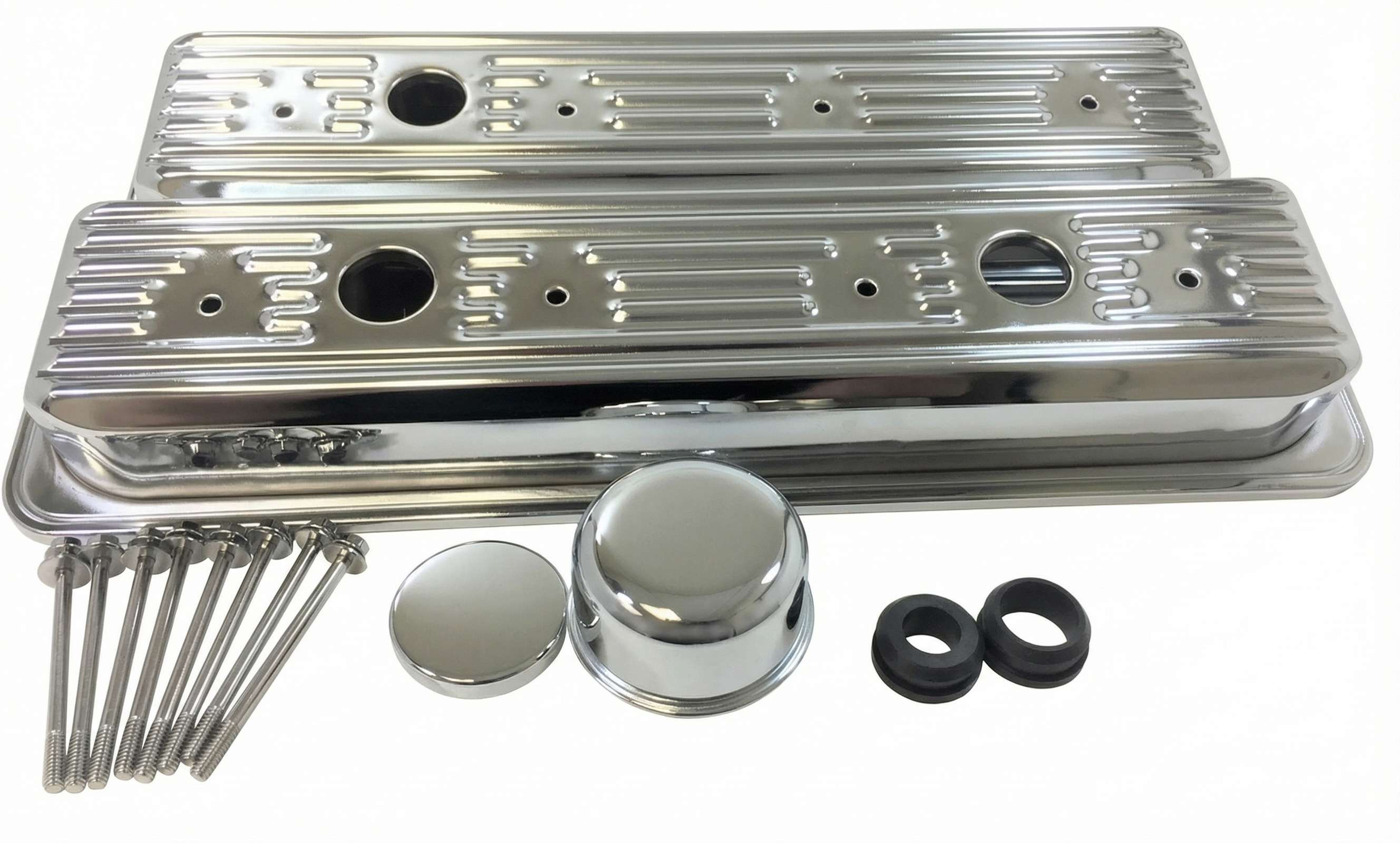
Aftermarket price range: $15-$30 - Valve Cover Gasket Kit — Frequently fails and leaks oil into the spark plug tubes, causing misfires. The kit should include the main gasket and the spark plug tube seals.
Trusted brands: Mahle, Fel-Pro, ACDelco
OEM price range: $50-$80
Aftermarket price range: $20-$40
Related Codes That Often Appear With This One
- P0301, P0302, P0303, P0304 — These codes indicate a misfire on a specific cylinder (e.g., P0301 for cylinder 1). They may appear alongside P0300 if the misfire is sometimes random but also frequently occurs in one particular cylinder.
Technical Service Bulletins (TSBs) & Recalls
- PIP5628G: Preliminary information for diagnosing misfire DTCs P0300 - P0308. This is a guide for technicians on what data to collect before calling for support.
- PIP3333C: Addresses intermittent engine misfires (P0300, P0301, P0304) and links it to possible fuel contamination, especially during cornering maneuvers.
Platform-Specific Known Issues
- The valve cover gasket on the 1.6L engine is notoriously prone to leaking oil into the spark plug tubes. This is a primary contributor to P0300 codes. If you find oil when changing the plugs, you must also replace the valve cover gasket and tube seals.
- Technical Service Bulletin #PIP3333C, while broad, discusses intermittent misfires (P0300, P0301, P0304) potentially caused by issues not easily found through standard diagnostics.
- Technical Service Bulletin #PIP5628G notes that P0300 can occur and requires specific diagnostic information to be relayed to GM's Technical Assistance Center (TAC), indicating complex cases may exist.
Mechanic-Grade Diagnostic Values
- Fuel Pressure (Key On, Engine Running) — expected: 58 PSI. Failure: Pressure significantly below 55 PSI indicates a weak pump or clogged filter.
- Engine Vacuum at Idle — expected: ~20-21 inHg. Failure: A low and steady reading (e.g., 16-18 inHg) can indicate incorrect ignition or valve timing.
- Ignition Coil Secondary Resistance — expected: 10,000 - 11,000 Ohms. Failure: Readings significantly outside this range suggest a faulty coil pack.
- Ignition Coil Spark Duration (via Lab Scope) — expected: Approximately 2.0 milliseconds. Failure: A significantly shorter burn time (e.g., 0.75-1.0 ms) on one tower indicates an internal coil failure for that cylinder pair.
- Camshaft Position Sensor (CMP) Connector Voltage — expected: One pin with 12V (ignition on), one pin with ground, one pin with 5V reference from the ECM.. Failure: Absence of any of these voltages points to a wiring or ECM issue, not a bad sensor.
- Engine Compression — expected: ~160 PSI per cylinder. Failure: Significantly lower pressure in one or more cylinders indicates a mechanical engine problem (e.g., valves, piston rings).
Hidden / Shadow Codes Worth Checking
- Mode 6, Test ID $A2-$A5: These test IDs store misfire counts for each cylinder (Cylinder 1 through 4) over the last 10 driving cycles. Even if a specific P030x code isn't set, this data can reveal which cylinder is misfiring most often. (see via An advanced OBD-II scanner capable of displaying Mode 6 test data.)
- Live Data Misfire Counters: Not a stored code, but a live data parameter showing real-time misfire events for each cylinder. This is the most effective way to isolate the source of a P0300 while the engine is running. (see via Most modern OBD-II scan tools can display live data. Look for PIDs labeled 'Misfire Cyl 1', 'Misfire Cyl 2', etc.)
Scan Tool Commands That Help
- Tech2 / GDS2 or equivalent professional scanner: Crankshaft Position (CKP) Variation Learn Procedure — This procedure must be performed after replacing the engine, crankshaft, or ECM. Failure to do so can cause the ECM to misinterpret normal crankshaft speed variations as misfires, setting a false P0300 code.
Wiring & Ground Locations
- G105 — On the engine block, near the starter motor.. This is a primary engine ground. A loose or corroded connection here can cause erratic behavior in multiple sensors and the ignition system, leading to random misfires.
- G101 — On the engine block, under the Engine Control Module (ECM).. This is the main ground point for the ECM. A poor connection can cause a wide range of unpredictable issues, including false misfire codes.
- Injector Harness Connector — The main multi-pin connector where the fuel injector sub-harness connects to the main engine harness.. A poor pin connection inside this single connector can cut power intermittently to one or more injectors, causing misfires that are difficult to trace to a single component.
Real Owner Repair Stories
- AveoForum.com user 'amoretto' (2007 Chevrolet Aveo 1.2L) — P0300 random misfire, rough running.
❌ Tried (didn't work) Replaced ignition module (coil pack), Replaced spark plug wires, Replaced spark plugs, Had fuel injectors professionally tested (they were good)
✅ What actually fixed it A mechanic found that the power wire for one cylinder's injector had a bad contact inside the main harness connector. Pushing the pin back into place securely resolved the P0300 code. - YouTube channel 'Phillip Bailey' (2011 Chevrolet Aveo 1.6L) — P0300, stumbling and misfiring.
❌ Tried (didn't work) Owner had already replaced the spark plugs and the ignition coil pack prior to the diagnosis.
✅ What actually fixed it The new aftermarket coil pack was defective. A lab scope showed the spark duration for cylinder #2 was significantly shorter than the others. Replacing the faulty new coil pack with a quality OEM part fixed the misfire. - YouTube channel 'bam6972' (2007 Chevrolet Aveo) — P0300 random misfire.
❌ Tried (didn't work) Replacing with iridium spark plugs did not solve the issue.
✅ What actually fixed it Replaced the spark plugs with basic Autolite copper plugs (part #3923) and ran half a can of Seafoam through a brake booster vacuum line. The combination of correct (basic) plugs and a carbon cleaning resolved the misfire.
"I Checked Everything" — The Actual Cause
- In several documented cases, a P0300 was not caused by a vacuum leak (which a smoke test would find). One owner fixed the code by discovering a loose pin in the main fuel injector wiring harness connector, which intermittently cut power to an injector. Another case traced the fault to a brand new, but defective, aftermarket ignition coil that had a weak output on one cylinder tower. These electrical faults would not be found with a smoke test.
When the Usual Fixes Don't Work
- While the most common fix is replacing the coil pack and spark plugs, there are numerous owner-documented cases where this did not solve the problem. In one instance, a persistent P0300 was finally traced to a bad pin connection in the main fuel injector wiring harness, a fix that required no new parts. In another, a brand new aftermarket coil pack was found to be defective, causing a misfire that was only identified using a lab scope to check spark duration. These cases highlight the need to confirm a diagnosis rather than simply replacing the most common parts.
OEM Part Supersession History
96476979 (Ignition Coil Pack)→Interchangeable with 25186687, 55561655, 55570160, 55585539.— Part consolidation and minor revisions by GM and aftermarket manufacturers.
Heads up: While many aftermarket parts are available, owner and technician reports suggest that OEM or high-quality Delphi/NGK units have a lower failure rate than cheaper alternatives. A defective new aftermarket coil has been a confirmed cause of a P0300.
Model Year Variations Within This Range
- 2009-2011: The 1.6L engine in the 2009+ G3 and Aveo models is the updated 'GEN II' E-TEC II which includes Variable Valve Timing (VVT). While the common causes for P0300 remain the same (ignition, fuel, vacuum), a VVT system failure (e.g., a stuck phaser or bad oil control solenoid) could theoretically cause random misfires, though it is a much rarer cause.
Helpful Videos


We Have This Part in Stock

The information in this article is provided for general reference and educational purposes only. Vehicle specifications, procedures, and part compatibility can vary by production date, trim level, and region. Always consult your vehicle's factory service manual and verify part numbers before purchasing or performing repairs. Safety-critical components such as airbags, seat belts, and braking systems should be installed by a qualified professional.
- Pontiac G3:
- 🧭 Diagnostic Flowchart
- 🎬 Helpful Videos
- 🛍️ Shop This Part
- What's Unique About the 2007-2011 Pontiac G3
- Symptoms You May Notice
- Most Likely Causes
- Rare But Worth Checking
- Diagnosis Steps
- Parts You'll Likely Need
- Related Codes That Often Appear With This One
- Technical Service Bulletins (TSBs) & Recalls
- Platform-Specific Known Issues
- Mechanic-Grade Diagnostic Values
- Hidden / Shadow Codes Worth Checking
- Scan Tool Commands That Help
- Wiring & Ground Locations
- Real Owner Repair Stories
- "I Checked Everything" — The Actual Cause
- When the Usual Fixes Don't Work
- OEM Part Supersession History
- Model Year Variations Within This Range
- 🎟️ Get 5% Off