

P0300 on 2007-2010 Pontiac G5: Random Misfire Causes and Fixes
For a 2007-2010 Pontiac G5, a P0300 code almost always points to a problem in the ignition system. The most likely culprits are a failed ignition control module (ICM) or worn-out spark plugs and coil packs. Start by inspecting these components, as they are common failure points on the Ecotec engine. This issue is shared with its platform-mates, the Chevrolet Cobalt and Saturn Ion.
- P0300 on a Pontiac G5 is most often caused by a faulty Ignition Control Module (ICM), worn spark plugs, or bad coil packs.
- Do not drive if the Check Engine Light is flashing to avoid expensive catalytic converter damage.
- Because the G5 is mechanically identical to the Chevy Cobalt, repair guides and forum advice for the Cobalt are directly applicable.
- When diagnosing, consider the ICM a high-probability cause unique to this engine platform.
- Check for any open recalls or special coverage adjustments, particularly regarding the fuel pump module, which could be related.
What's Unique About the 2007-2010 Pontiac G5
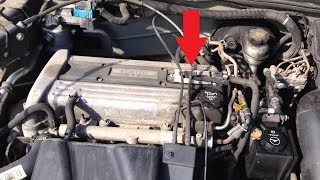
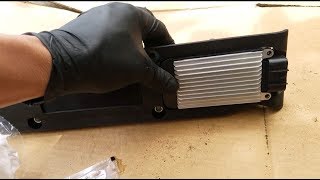
The Pontiac G5 shares its GM Delta platform and Ecotec engines (2.2L L61 and 2.4L LE5) with the Chevrolet Cobalt, Saturn Ion, and Chevrolet HHR, making them mechanically identical. A very common and well-documented issue on these engines is the failure of the Ignition Control Module (ICM), which sits beneath the coil packs. 🎬 Watch: A walkthrough of the most common Ecotec misfire fix. This part can fail from heat soak over time, causing an intermittent random misfire that can be difficult to diagnose, especially when the engine is warm. While standard causes like spark plugs and coils are still relevant, the ICM is a known weak point specific to this platform that should be considered early in the diagnostic process.
Diagnostic Flowchart
Tap your situation to follow the diagnostic path that matches what you're seeing on this vehicle.
Symptoms You May Notice
- Rough or shaky idle
- Hesitation or stumbling during acceleration
- Noticeable loss of engine power
- Flashing or steady Check Engine Light
- Reduced fuel economy
- Engine stalling, especially at stops
- Strong fuel smell from the exhaust
- Replacing only the spark plugs when the underlying issue is the Ignition Control Module.
- Replacing fuel injectors when the problem is a simple vacuum leak or a faulty ignition component.
- Chasing O2 sensor or other codes before addressing the primary spark and fuel delivery systems.
Most Likely Causes
- Faulty Ignition Control Module (ICM) 🔴 High Probability The ICM on the 2.2L and 2.4L Ecotec engines is located under the coil pack assembly, where it is subjected to significant heat. Over time, this heat can cause the module's internal electronics to fail, leading to random misfires that often appear once the engine warms up.
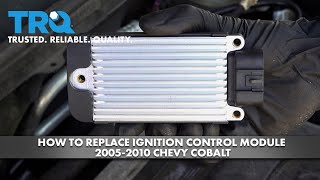
How to confirm: A common diagnostic trick is to use a heat gun on the module to see if it replicates the misfire. Swapping the ICM with a known-good module is a definitive test. A YouTube video by 'Backyard Chevy' demonstrates the entire replacement process on a 2006 Cobalt, a mechanically identical vehicle.
Typical fix: Replace the Ignition Control Module. It is often recommended to replace the coil packs and spark plugs at the same time since the assembly is already removed.
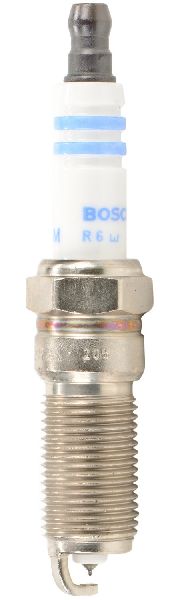
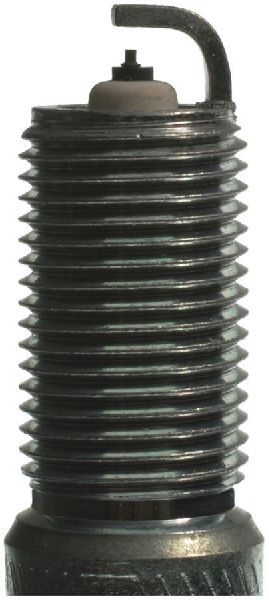
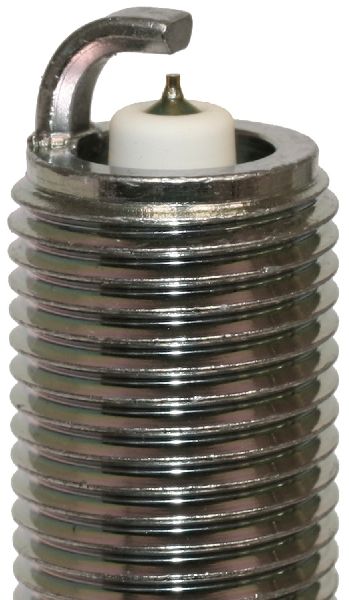
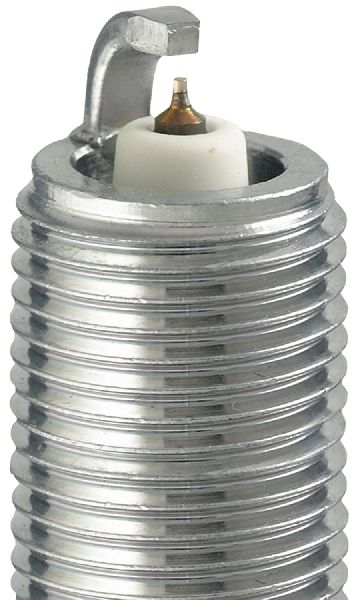
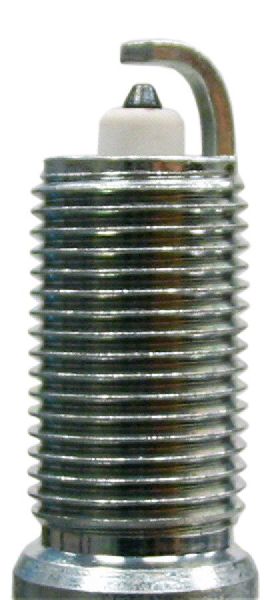
Est. part cost: $50-$150 - Worn Spark Plugs 🔴 High Probability → Shop Spark Plug
How to confirm: Remove and inspect the spark plugs for wear (rounded electrodes), fouling (black, oily, or white deposits), or an incorrect gap. If they are past their service interval (typically 100,000 miles for iridium plugs), they are a prime suspect.
Typical fix: Replace all four spark plugs. Use high-quality Iridium plugs, as specified for the original equipment. Common OEM parts are ACDelco 41-103 or the superseding part number 12681663.
Est. part cost: $20-$60 - Failed Ignition Coil Pack(s) 🟡 Medium Probability → Shop Ignition Coil
How to confirm: With the engine running, use a scan tool to observe live misfire data. You can also swap a suspected bad coil with a known good one from another cylinder and see if the misfire code changes to that specific cylinder (e.g., P0300 becomes P0302). On this platform, coils for cylinders 1/4 and 2/3 are often paired.
Typical fix: Replace the faulty ignition coil pack. Many owners replace the entire assembly (all four coils) at once for peace of mind, as they tend to fail around the same age.
Est. part cost: $40-$80 per coil - Vacuum Leak 🟡 Medium Probability Hoses and gaskets can become brittle with age and heat cycles.
How to confirm: Perform a smoke test to check for leaks in the intake manifold, vacuum hoses, and PCV system. A visual inspection may reveal cracked or disconnected hoses. A common failure point is the PCV hose connected to the intake manifold. A lean code (P0171) often accompanies a vacuum leak-induced P0300.
Typical fix: Replace the leaking gasket or hose.
Est. part cost: $10-$100 - Clogged or Faulty Fuel Injectors ⚪ Low Probability → Shop Fuel Injector
How to confirm: Use a scan tool with injector testing capabilities or perform a fuel injector balance test to check flow rates. A user on cobaltss.net fixed their P0300 by replacing a bad injector on cylinder #4 after confirming spark was good. Another user on the same forum resolved persistent misfires by cleaning carbon buildup from the intake valves and replacing a faulty injector.
Typical fix: Clean or replace the faulty fuel injectors. It's often recommended to replace them as a set.
Est. part cost: $50-$120 per injector
Rare But Worth Checking
- Low Fuel Pressure: A failing fuel pump or clogged fuel filter can starve the engine of fuel, causing misfires. A Special Coverage Adjustment (#12191A, later #12191B) was issued for 2007-2009 G5 models for a cracked fuel pump module that could cause fuel leaks or pressure issues. This could lead to a P0300 code.
- Stretched Timing Chain / Failed Tensioner: → Shop Engine Timing Chain Ecotec engines can be prone to timing chain issues, specifically a failed tensioner that gets stuck, allowing the chain to jump timing. This can cause camshaft/crankshaft correlation codes (P0016/P0017) alongside a P0300. A rattling noise on startup is a key symptom. A user on chevyhhr.net fixed their P0300 after replacing a stuck timing chain tensioner.
- Low Engine Compression: A worn valve, damaged piston ring, or a bad head gasket can cause a loss of compression, leading to a persistent misfire. A compression test is needed to confirm this mechanical issue.
- Loose or Corroded Ground Wires: Forum users on CobaltSS.net have reported that a loose ground, specifically G103 (located behind the driver's side headlight assembly on the frame rail), can cause intermittent misfires and a P0300 code.
Diagnosis Steps
- Read the trouble codes with an OBD-II scanner and check for any other pending or stored codes, especially cylinder-specific misfires (P0301-P0304) or lean codes (P0171).
- Check the freeze frame data to see the engine conditions (RPM, load, temperature) when the P0300 code was set. Misfires that only occur when warm often point to the ICM.
- Visually inspect the engine bay for obvious issues like cracked or disconnected vacuum hoses (especially PCV lines), and loose electrical connectors.
- Inspect the ignition system first, as it's the most common culprit. Remove and inspect all four spark plugs for wear and fouling. If they are old or of poor quality, replace them with OEM-spec Iridium plugs (e.g., ACDelco 41-103).
- Test the Ignition Control Module (ICM). With the engine running, carefully apply heat with a heat gun to the module to see if it induces a misfire. This simulates heat soak failure.
- Test the ignition coils. Swap a coil from a consistently misfiring cylinder (if identified via a P030x code) with a coil from a good cylinder and see if the misfire follows the coil.
- Check for wiring issues. Inspect the ignition coil and fuel injector harnesses for shorts, particularly where they may rub against A/C lines or engine brackets, as noted in forum discussions.
- Check for vacuum leaks using a smoke machine. Pay close attention to the intake manifold gasket and all PCV hoses.
- Test fuel pressure to ensure the fuel pump and filter are functioning correctly. A pressure of around 60 PSI should be seen. Be aware of the Special Coverage for the fuel pump module.
- If all else fails, perform a compression test to check for mechanical engine problems like bad valves or a failing head gasket.
Parts You'll Likely Need
- Ignition Control Module (ICM)
(OEM #12590954 (ACDelco D598A))— This is a very common failure item on the 2.2L and 2.4L Ecotec engines, causing random misfires due to heat failure.
Trusted brands: ACDelco, Delphi
OEM price range: $100-$180
Aftermarket price range: $50-$100 - Spark Plugs
(OEM #ACDelco 41-103 (or superseding #12681663))— Worn or fouled spark plugs are a primary cause of misfires and are a routine maintenance item.
Trusted brands: ACDelco, NGK
OEM price range: $30-$60
Aftermarket price range: $20-$40 - Ignition Coil Pack Assembly
(OEM #12590990 (ACDelco D597A for one coil))— The coils provide spark to the plugs. They can fail individually or as a unit. The assembly often includes the problematic ICM.
Trusted brands: ACDelco, Delphi
Related Codes That Often Appear With This One
- P0301, P0302, P0303, P0304 — If the random misfire begins to occur more frequently on a specific cylinder, the ECM may also set a cylinder-specific code, which can help isolate the problem.
- P0171 — This code indicates the engine is running lean (too much air, not enough fuel), which often points to a vacuum leak or a weak fuel pump as the root cause of the misfire.
- P050D — Mentioned in TSB #PIP5628G in conjunction with misfire codes, indicating a potential link to cold start rough idle issues.
Technical Service Bulletins (TSBs) & Recalls
- PIP5628G: Preliminary information for diagnosing misfire codes P0300-P0308 and P050D.
- PIP3333C: Addresses intermittent engine misfire with DTC P0300, P0301, and/or P0304.
- 12191A / 12191B: Special Coverage Adjustment for a cracked fuel pump module that can cause fuel odor, leaks, or low fuel pressure.
Platform-Specific Known Issues
- A known issue with the Ignition Control Module (ICM) failing due to its location and heat exposure is a primary cause of P0300 on this platform.
- TSB #PIP3333C notes the potential for intermittent misfires that may not be resolved by initial standard diagnostics, suggesting a potentially tricky underlying cause.
- TSB #PIP5628G indicates that GM's Technical Assistance Center has specific information they require to help diagnose persistent misfire issues, highlighting the potential complexity of the problem.
- A Special Coverage Adjustment (#12191A / 12191B) was issued for 2007-2009 G5 models for a cracked fuel pump module that could cause fuel leaks or pressure issues, which could contribute to misfires.
- Owners on forums have traced P0300 to a stuck timing chain tensioner, a known weak point on high-mileage Ecotec engines.
Mechanic-Grade Diagnostic Values
- Fuel Pressure (at fuel rail) — expected: 30-60 PSI, depending on the specific fuel system.. Failure: Pressure below 30 PSI indicates a weak fuel pump or clogged filter, potentially causing a lean misfire.
- Fuel Injector Coil Resistance — expected: Approximately 12.5 Ohms.. Failure: A reading significantly higher or lower than 12.5 Ohms, or an open circuit, indicates a failed injector coil.
- Catalytic Converter Temperature Differential — expected: The outlet pipe should be at least 100°F hotter than the inlet pipe.. Failure: If the outlet is the same temperature or cooler than the inlet, it suggests the converter is not functioning and may be clogged, creating backpressure that causes misfires.
Hidden / Shadow Codes Worth Checking
- Mode $06, Test ID $A2-$AF: This is not a hidden code but an OBD-II diagnostic mode that stores misfire counts for each cylinder (Cylinder 1 is $A2, Cylinder 2 is $A3, etc.). Even if a cylinder-specific code like P0301 isn't set, Mode $06 can show you which cylinder(s) are accumulating the most misfires, helping to pinpoint the source of a P0300. (see via A professional scan tool or an advanced DIY scanner with Mode $06 viewing capabilities.)
Scan Tool Commands That Help
- GM Tech2 / Professional Scan Tool: Crankshaft Position (CKP) System Variation Learn — This procedure is mandatory after replacing the crankshaft position sensor, the ECM, or sometimes after major engine work. Failure to perform the 'crank relearn' can cause the ECM to misinterpret normal crankshaft speed variations as misfires, setting a false P0300 or P1336 code.
- GM Tech2 / Professional Scan Tool: Fuel Injector Balance Test — This function allows a technician to fire each injector individually and measure the corresponding drop in fuel pressure. It is used to confirm if one or more injectors are clogged or failing to deliver the correct amount of fuel, which can be a direct cause of misfires.
Wiring & Ground Locations
- G103 — On the left front of the engine compartment, located under the left headlamp assembly on the frame rail.. This ground is used by the Engine Control Module (ECM). A loose or corroded G103 can cause erratic ECM behavior, leading to a host of issues including false random misfire codes.
- G105 — Located on the lower left front of the transmission case.. This ground point also serves the Engine Control Module (ECM). Similar to G103, poor contact at this location can interrupt proper ECM function and contribute to misfire detection issues.
Real Owner Repair Stories
- YouTube user Corey Sedrel (2000 Chevrolet 2500 with 6.0L Vortec engine (similar GM P0300 issue)) — Flashing check engine light and P0300 code specifically at highway speeds or higher RPMs.
❌ Tried (didn't work) Replaced downstream O2 sensor, Replaced spark plugs, Replaced spark plug wires
✅ What actually fixed it Taking the vehicle to a shop to have a 'Crankshaft Sensor Relearn' procedure performed with a capable scan tool. The issue was resolved immediately after the relearn.
OEM Part Supersession History
ACDelco 41-103→ACDelco 12681663— This is a standard part number update from GM/ACDelco. The 12681663 is the current OEM Iridium plug recommended for the application.
Heads up: While 41-103 may still be found, 12681663 is the correct and most current part to use for service.
Model Year Variations Within This Range
- 2009-2010: For the 2009 model year, the base 2.2L engine was updated from the L61 to the LAP version. The most significant change was the addition of Variable Valve Timing (VVT). This introduces new potential causes for a P0300 code, such as faulty camshaft position actuators (solenoids) or a problem with the camshaft phasers, which would not be present on the 2007-2008 L61 engines.
Helpful Videos
We Have This Part in Stock


The information in this article is provided for general reference and educational purposes only. Vehicle specifications, procedures, and part compatibility can vary by production date, trim level, and region. Always consult your vehicle's factory service manual and verify part numbers before purchasing or performing repairs. Safety-critical components such as airbags, seat belts, and braking systems should be installed by a qualified professional.
- Pontiac G5:
- 🧭 Diagnostic Flowchart
- 🎬 Helpful Videos
- 🛍️ Shop This Part
- What's Unique About the 2007-2010 Pontiac G5
- Symptoms You May Notice
- Most Likely Causes
- Rare But Worth Checking
- Diagnosis Steps
- Parts You'll Likely Need
- Related Codes That Often Appear With This One
- Technical Service Bulletins (TSBs) & Recalls
- Platform-Specific Known Issues
- Mechanic-Grade Diagnostic Values
- Hidden / Shadow Codes Worth Checking
- Scan Tool Commands That Help
- Wiring & Ground Locations
- Real Owner Repair Stories
- OEM Part Supersession History
- Model Year Variations Within This Range
- 🎟️ Get 5% Off