

P0300 on 2005-2010 Pontiac G6 3.5L: Causes and Fixes for Random Misfires
On a 2005-2010 Pontiac G6 with the 3.5L V6, a P0300 code is most often caused by worn-out spark plugs and/or failing ignition coils. Due to difficult access to the rear bank of cylinders, it's wise to replace all plugs and coils at once, costing around $150-$300 for parts. Less common but notable causes include vacuum leaks from intake gaskets and a faulty crankshaft position sensor needing a 'relearn' procedure.
- P0300 means multiple cylinders are misfiring. If the check engine light flashes, stop driving to avoid catalytic converter damage.
- For the 3.5L V6, the most likely culprits are worn spark plugs and/or bad ignition coils.
- Accessing the rear three plugs and coils requires removing the upper intake manifold, increasing labor time. It's best to replace all six plugs and coils at once.
- While intake gasket leaks are a famous GM issue, the LZ4 engine in this G6 is less prone to it than older V6s, but it should still be checked if ignition repairs don't solve the problem.
- Always check for vacuum leaks and verify fuel pressure if new plugs and coils do not fix the misfire.
What's Unique About the 2005-2010 Pontiac G6
While P0300 is a generic code, the Pontiac G6 with the 3.5L V6 has a few specific patterns. The most significant is the labor involved in ignition service; the rear three spark plugs and coils (cylinders 2-4-6) are located under the upper intake manifold, making replacement more involved than on many other vehicles. Also, while many older GM V6 engines are famous for intake manifold gasket failures causing this code, the specified LZ4 engine in later G6 models uses an improved metal-frame 'dry' intake design, making this specific failure less common than on its predecessors like the LX9 engine, though still possible.
Symptoms You May Notice
- Rough or shaking idle
- Engine stumbling or hesitating during acceleration
- Flashing or solid Check Engine Light
- Reduced fuel economy
- Noticeable loss of power
- A faint smell of gasoline or rotten eggs from the exhaust
- Engine sounds uneven or cuts out unexpectedly
- Replacing only one spark plug or coil when others are near the end of their service life, leading to a recurring misfire on a different cylinder shortly after.
- Replacing oxygen sensors, which can sometimes be flagged due to the misfire but are not the root cause.
- Assuming an intake gasket leak is the cause without performing a smoke test to confirm. 🎬 See this video for a guide on fixing random engine misfires.
Most Likely Causes
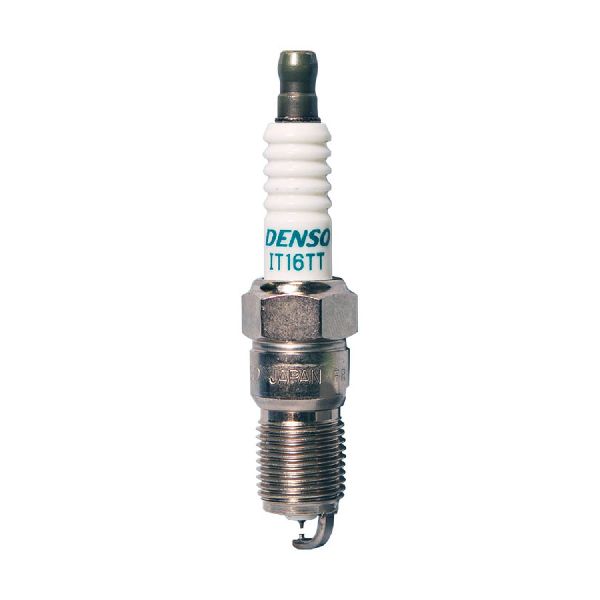
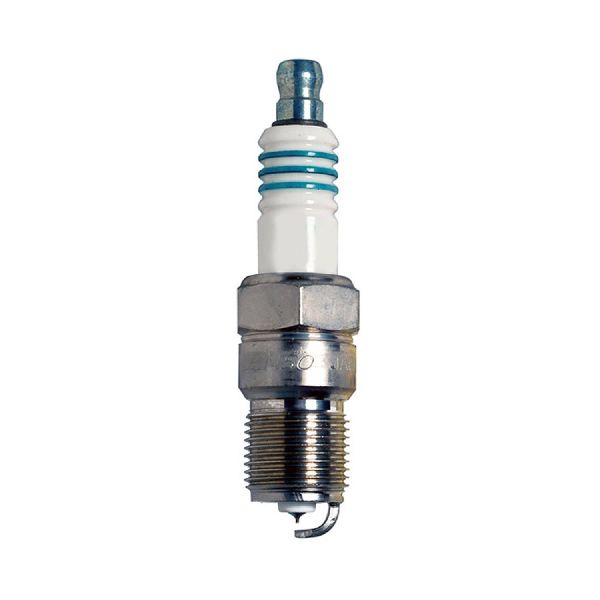
- Worn or Fouled Spark Plugs 🔴 High Probability → Shop Spark Plug Spark plugs are a routine maintenance item. Accessing the rear three plugs requires removing the upper intake manifold, so this service is sometimes delayed, leading to misfires. The original service interval is 100,000 miles.
How to confirm: Remove and inspect the spark plugs. Look for worn electrodes (gap exceeding 0.040 in), heavy carbon deposits, or fouling from oil or coolant. Oil in the spark plug tube indicates a leaking valve cover gasket.
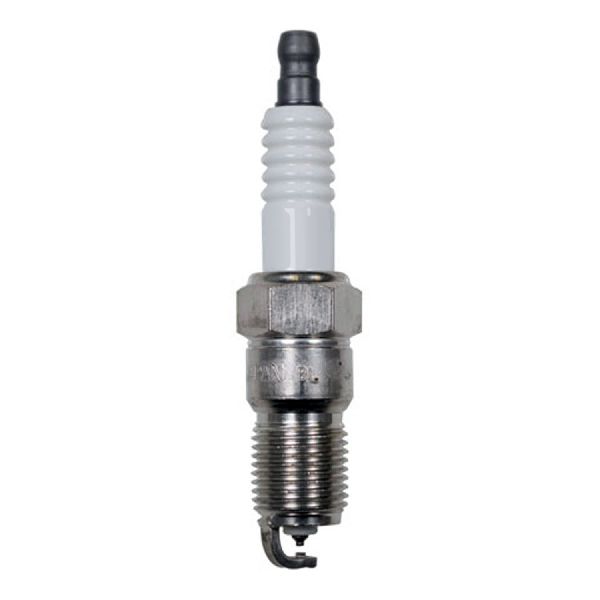
Typical fix: Replace all six spark plugs. It is highly recommended to use quality Iridium plugs, such as the OEM-spec ACDelco 41-103, to maximize the service interval given the labor involved.
Est. part cost: $60-$120 - Failed Ignition Coil(s) 🔴 High Probability → Shop Ignition Coil Ignition coils are a common failure item after 100,000 miles due to heat and vibration. Since the G6 V6 uses a coil-on-plug system, one or more can fail. A single failing coil can sometimes cause misfires on other cylinders before it fails completely, triggering a P0300.
How to confirm: Use a scan tool with live data to view misfire counts per cylinder. Swap the ignition coil from a misfiring cylinder with one from a non-misfiring cylinder. Clear the codes and run the engine. If the misfire code changes to the new cylinder (e.g., P0301 becomes P0303), the coil is bad. 🎬 Watch: This walkthrough shows you how to diagnose a failing ignition coil.
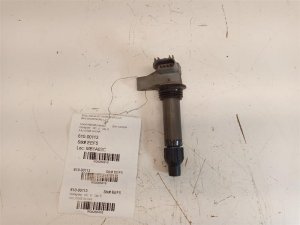
Typical fix: Replace the faulty ignition coil. The OEM part is ACDelco D515C (GM #12632479). It is often recommended to replace all six coils at the same time, especially if they are original and high-mileage, given the labor to access the rear bank.
Est. part cost: $40-$80 per coil - Vacuum Leak (Intake Manifold Gaskets) 🟡 Medium Probability Older GM 3.5L (LX9) engines were notorious for plastic intake gaskets failing. The specified LZ4 engine has an improved metal-frame 'dry' gasket design, making it less prone to failure, but leaks can still occur over time from the gaskets or cracked PCV hoses.
How to confirm: The best method is to perform a smoke test on the intake system. You can also carefully spray a combustible fluid like brake cleaner around the intake manifold gasket area with the engine running and listen for a change in idle speed, which would indicate a leak.
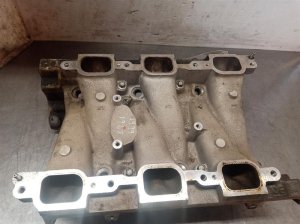
Typical fix: Replace the upper and lower intake manifold gaskets. Use an updated metal-frame gasket set like Fel-Pro MS 98014 T for maximum durability; this set is known for its steel carrier and torque limiters that prevent overtightening.
Est. part cost: $50-$100 - Low Fuel Pressure ⚪ Low Probability The fuel pump is an electric component in the fuel tank that can weaken with age. This platform uses a returnless fuel system, meaning the pressure regulator is part of the in-tank fuel sender assembly. Manufacturer Bulletin #PIP3333C notes that vehicles with intermittent misfires and codes P0300, P0301, or P0304 should have standard diagnostics performed to rule out fuel system issues.
How to confirm: Connect a fuel pressure gauge to the Schrader valve on the fuel rail. The pressure should be stable and within the 50-60 PSI specification at idle. A video guide exists showing how to perform this test on a G6.
Typical fix: A weak fuel pump or clogged in-tank fuel filter is the likely cause. The fuel pump is located in the fuel tank and requires dropping the tank for replacement.
Est. part cost: $200-$400 for a fuel pump assembly
Rare But Worth Checking
- Clogged or Dirty Fuel Injectors: → Shop Fuel Injector An injector can become partially clogged, leading to an intermittent lean condition on one cylinder that contributes to a random misfire count. GM issued TSB 03-06-04-030F for cleaning injectors to resolve P0300 codes.
- Clogged Catalytic Converter: → Shop Catalytic Converter A long-term misfire can damage the catalytic converter, which then becomes clogged. The resulting exhaust backpressure can cause a new, random misfire condition and a severe loss of power, an issue noted by G6 owners.
- Faulty Crankshaft Position Sensor (CKP): → Shop Engine Crankshaft Position Sensor A failing CKP sensor can send erratic signals to the PCM, which can be misinterpreted as a random misfire. This often causes stalling issues as well. A common OEM part number is 12703627. CRITICAL: After replacing the CKP sensor, a 'Crankshaft Variation Relearn' procedure must be performed with a capable scan tool to prevent a P0315 code and ensure proper operation.
- Low Engine Compression: If all ignition and fuel system checks pass, a mechanical issue like a worn piston ring, leaking valve, or failing head gasket could be the cause. A compression test, performed both when the engine is cold and at operating temperature, is needed to verify this. Manufacturer Bulletin #PIP5628G provides preliminary information for diagnosing misfires and DTC P0300 when technical assistance is required.
Diagnosis Steps
- Scan for all DTCs. Note any specific cylinder misfire codes (P0301-P0306) or lean codes (P0171/P0174). Check freeze frame data to see the conditions when the misfire occurred.
- Using a scan tool's live data, monitor misfire counts for each cylinder. The firing order is 1-2-3-4-5-6. The rear bank against the firewall contains cylinders 2-4-6; the front bank is 1-3-5.
- If specific cylinder misfires are identified, focus there. Swap the ignition coil and then the spark plug with a known good cylinder to see if the misfire follows the component.
- If misfires are truly random, start with a full inspection of the ignition system. Remove and inspect all six spark plugs for wear (gap > 0.040"), damage, and fouling.
- While plugs are out, inspect spark plug tubes for oil, which indicates a leaking valve cover gasket.
- Check for vacuum leaks. A smoke test is the most reliable method, focusing on the intake manifold gaskets and all PCV/vacuum hoses.
- Test fuel pressure at the fuel rail's Schrader valve to ensure the pump is providing adequate and stable pressure (target 50-60 PSI).
- If all else fails, consider a faulty Crankshaft Position Sensor. If replaced, a 'crankshaft variation relearn' is mandatory. Finally, perform an engine compression test (hot and cold) to rule out mechanical issues.
Parts You'll Likely Need
- Spark Plugs (Set of 6)
(OEM #ACDelco 41-103 (Iridium))— This is the most common maintenance item to fail and cause a P0300. The rear bank is difficult to access, so using high-quality Iridium plugs is crucial to extend the service interval.
Trusted brands: ACDelco, NGK
OEM price range: $10-$15 per plug
Aftermarket price range: $8-$12 per plug - Ignition Coil
(OEM #ACDelco D515C (GM #12632479))— A very common failure point that directly causes misfires. It's wise to replace them as a set with the spark plugs due to the labor involved to access the rear bank.
Trusted brands: ACDelco, Delphi
OEM price range: $40-$80 per coil
Aftermarket price range: $30-$60 per coil - Intake Manifold Gasket Set
(OEM #Fel-Pro MS 98014 T)— A vacuum leak at the intake manifold is a common cause of random misfires on this engine. The Fel-Pro set is a well-regarded updated design.
Trusted brands: Fel-Pro, ACDelco
OEM price range: $70-$110
Aftermarket price range: $50-$90
Related Codes That Often Appear With This One
- P0301-P0306 — These codes specify which cylinder is misfiring (e.g., P0301 for Cylinder 1). They often appear with P0300 when the misfire is frequent but not completely random, helping to pinpoint the initial problem area.
- P0171 / P0174 — These 'System Too Lean' codes indicate too much air or not enough fuel. A vacuum leak from a failed intake manifold gasket is a common cause for both lean codes and a P0300.
- P0420 — This 'Catalyst System Efficiency' code can be a direct result of a persistent P0300. Unburnt fuel from the misfire overheats and destroys the catalytic converter.
- P0315 — This 'Crankshaft Position System Variation Not Learned' code will appear if the Crankshaft Position Sensor is replaced but the mandatory relearn procedure is not performed with a scan tool.
Technical Service Bulletins (TSBs) & Recalls
- TSB 03-06-04-030F: Mentions that various driveability symptoms, including P0300, can be caused by clogged fuel injectors and provides a procedure for cleaning them.
- TSB 07-06-04-019E: Details an issue where water intrusion into the IP-to-body harness connector (driver's kick panel) can cause a P2138 code and Reduced Engine Power, which has overlapping symptoms with severe misfires. It warns against replacing the accelerator pedal before checking this connector.
- TSB 12-06-01-009F: While primarily for the 3.6L V6, this TSB on timing chains is relevant context for GM V6 engines of this era and why a P0300 on the 3.5L is more likely ignition/fuel related.
- Bulletin #PIP5628G: Provides diagnostic information for technicians to provide to TAC when a vehicle presents with misfires and DTC P0300.
- Bulletin #PIP3333C: Addresses intermittent engine misfires and SES lamp illumination with codes P0300, P0301, and/or P0304, advising technicians to follow published service information.
Platform-Specific Known Issues
- Water Intrusion in Driver's Kick Panel Harness: Per TSB 07-06-04-019E, water can leak into the main instrument panel-to-body harness connector, causing erratic signals for the accelerator pedal position sensor. This typically sets a P2138 code and puts the car in 'Reduced Engine Power' mode, but the associated rough running can sometimes be confused with a severe misfire. This should be investigated if other electrical issues are present.
Mechanic-Grade Diagnostic Values
- Fuel Injector Resistance — expected: 10 to 15 Ohms (when engine is cold). Failure: A reading significantly outside this range, or an open/short circuit, points to a bad injector coil.
- Ignition Coil Primary Resistance — expected: 0.4 - 2.0 Ohms. Failure: A reading of infinity (OL) indicates an open coil. A reading outside this range suggests a failing coil.
- Ignition Coil Secondary Resistance — expected: 9.5 - 11.1 kOhms. Failure: A reading outside this range indicates a faulty secondary coil winding.
- Fuel Pressure (Key On, Engine Off) — expected: 50-60 PSI. Failure: Pressure below 50 PSI or a rapid drop in pressure after the pump primes indicates a weak pump, faulty regulator, or leak.
- Short-Term Fuel Trim (STFT) & Long-Term Fuel Trim (LTFT) at idle — expected: Between -10% and +10%. Failure: Consistently high positive values (e.g., > +15%) on both banks suggest a vacuum leak affecting all cylinders.
Hidden / Shadow Codes Worth Checking
- Mode $06, Test ID $A2-$A7: Provides raw, non-DTC misfire count data for each cylinder (Cylinder 1 is $A2, Cylinder 2 is $A3, etc.). This allows a technician to see which cylinders are contributing to the P0300 count, even if they haven't misfired enough to set a specific P030x code. (see via A professional scan tool with Mode $06 data capability.)
Scan Tool Commands That Help
- GM Tech 2 / GDS2 or equivalent professional scanner: Fuel Injector Balance Test — Used to identify a clogged or weak fuel injector that isn't sealing or flowing properly. The scan tool individually pulses each injector and measures the corresponding drop in fuel rail pressure. All injectors should have a similar pressure drop (typically within 3 PSI of each other). This is more precise than a resistance test, which only checks the injector's coil.
- GM Tech 2 / GDS2 or equivalent professional scanner: Cylinder Power Balance / Misfire Graphic — This function provides a real-time graph of crankshaft speed variations, allowing the technician to visually identify which cylinder(s) are misfiring at different RPMs and loads. It's a primary step in diagnosing a P0300 to see if the misfires are truly random or weighted towards certain cylinders.
- Innova 5610 or other capable bidirectional scanner: Crankshaft Position Variation Learn — This is a mandatory procedure after replacing the Crankshaft Position Sensor. Failure to perform the relearn will result in a P0315 code and can cause the PCM to incorrectly report misfires.
Wiring & Ground Locations
- G105 / G107 — On a transmission case stud, located under the throttle body in the engine bay.. This is a critical ground point shared by the ECM and TCM. Corrosion or looseness at this stud is a well-documented cause of communication loss, erratic sensor data, and can trigger false codes. A bad ground here can cause symptoms that mimic a P0300 misfire.
- G103 — On the top of the left (driver's side) front strut tower in the engine compartment.. This is a major chassis and body ground point. While not a direct engine sensor ground, a poor connection here can cause widespread electrical noise and unstable voltages for various modules, indirectly contributing to misdiagnosis.
- ECM/PCM Connectors — Located in the engine compartment on the driver's side, often in front of the battery/underhood fuse block.. All ignition coil and fuel injector command signals originate here. Water intrusion, pin corrosion, or backed-out pins in these connectors can cause intermittent misfires on one or more cylinders, leading to a P0300.
Real Owner Repair Stories
- YouTube channel 'A2Z automotive' (2007 Pontiac G6 3.5L) — No-crank, no-start, error message on the cluster, and communication problems between modules.
❌ Tried (didn't work) Scanning for codes showed general communication loss, which could lead to replacing modules.
✅ What actually fixed it The problem was traced to the main ground point on top of the transmission housing (G105/G107). Multiple ground wires in the factory harness had broken off from the ring terminal, severing the ground connection for the ECM and TCM. The fix involved cleaning the wires and crimping on a new ring terminal to re-establish a solid ground. - YouTube channel 'Steve's Auto Care Videos' (2006 Pontiac G6 3.5L) — Misfire on cylinder #2 (P0302), but diagnostic process applies to P0300.
❌ Tried (didn't work) Confirmed injector wiring from the main harness to the injector was good via an ohms test., Confirmed the injector itself was electrically sound (resistance was 6.8 ohms, matching other cylinders).
✅ What actually fixed it The Engine Control Module (ECM) itself was faulty. The internal driver responsible for sending the ground pulse to fire the injector for cylinder #2 had failed. The final fix was replacing the ECM. - NHTSA ODI #10522595 — An owner reported experiencing a rough engine idle and misfire (DTC P0300) along with noise originating from the engine compartment.
Model Year Variations Within This Range
- 2005-2006 vs 2007-2010: The 2005-2006 G6 often used the 3.5L LX9 V6, which was more prone to the classic plastic intake manifold gasket failures. The 2007-2010 models used the updated LZ4 3.5L V6, which included Variable Valve Timing (VVT) and an improved metal-frame intake gasket design, making that specific failure less common but still possible. Diagnostics on LZ4 engines might also involve VVT system checks if other timing-related codes are present.
Diagnostic Flowchart
Real Owner Stories
Aggregated from forums and TSBs cited above. Mileages and costs reflect what owners reported in those sources.
2009 Pontiac G6 3.5L
Symptoms: Experienced a misfire setting a P0300 code.
What fixed it: Performed a basic tune-up.
Source hint: pontiacforum.com
GM V6
Symptoms: Persistent P0300 random misfire showing specifically on cylinders 3 and 6. Replaced coils, plugs, and ICM without success.
What fixed it: Performed a crankshaft variation relearn.
Source hint: Grand Prix Forums - 'P0300 Random misfire shows on 3 & 6 only. looking for help.'
Pontiac G6 3.5L — ~105000 miles
Symptoms: P0300 code with misfires.
What fixed it: Replaced spark plugs and ignition coils, noting the difficulty of accessing the rear bank.
Source hint: g6ownersclub.com
Pontiac G6
Symptoms: Car went into 'Reduced Engine Power' mode with rough running that felt like a severe misfire, accompanied by a P2138 code.
What fixed it: Repaired water leak into the main instrument panel-to-body harness connector in the driver's kick panel.
Source hint: TSB 07-06-04-019E
Related OBD-II Codes
Frequently Asked Questions
Why is it so expensive to replace the spark plugs on my 3.5L G6?
My G6 went into 'Reduced Engine Power' mode and is running extremely rough. Is this a P0300 misfire?
Are the intake manifold gaskets on my 2005-2010 3.5L LZ4 as prone to failure as older GM V6s?
I replaced the ignition coils and spark plugs, but I still have a P0300 code. What else could it be?
How do I know which ignition coil is bad on my G6 V6?
Does the timing chain issue mentioned in TSB 12-06-01-009F apply to my 3.5L G6?
Helpful Videos
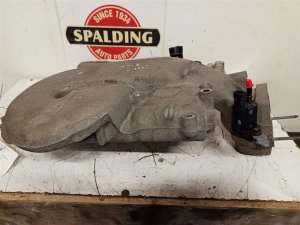
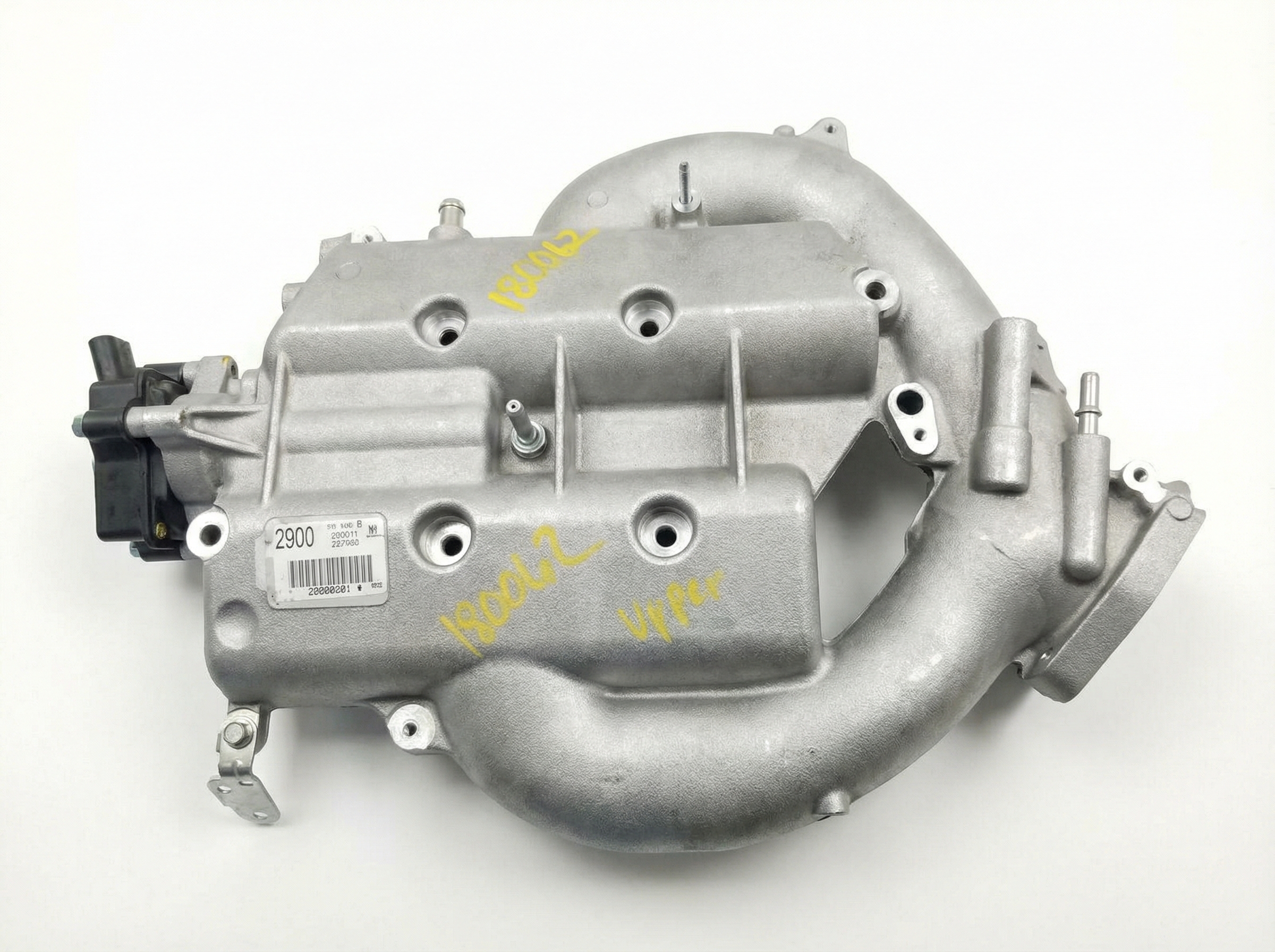
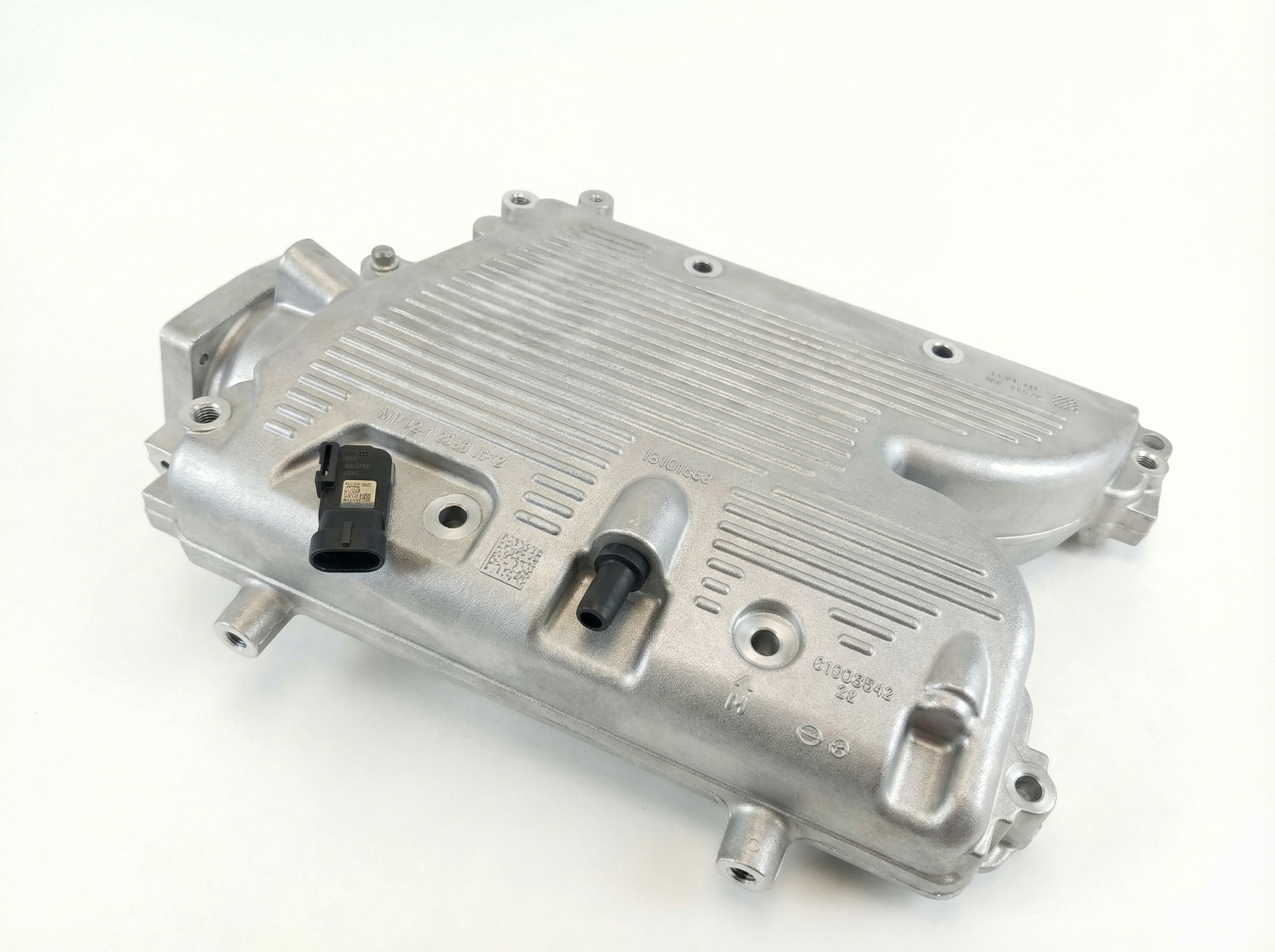
Used OEM Parts in Stock
New Aftermarket Parts Available


The information in this article is provided for general reference and educational purposes only. Vehicle specifications, procedures, and part compatibility can vary by production date, trim level, and region. Always consult your vehicle's factory service manual and verify part numbers before purchasing or performing repairs. Safety-critical components such as airbags, seat belts, and braking systems should be installed by a qualified professional.
- Pontiac G6:
- 🧭 Diagnostic Flowchart
- 🎬 Helpful Videos
- 🛍️ Shop This Part
- What's Unique About the 2005-2010 Pontiac G6
- Symptoms You May Notice
- Most Likely Causes
- Rare But Worth Checking
- Diagnosis Steps
- Parts You'll Likely Need
- Related Codes That Often Appear With This One
- Technical Service Bulletins (TSBs) & Recalls
- Platform-Specific Known Issues
- Mechanic-Grade Diagnostic Values
- Hidden / Shadow Codes Worth Checking
- Scan Tool Commands That Help
- Wiring & Ground Locations
- Real Owner Repair Stories
- Model Year Variations Within This Range
- Real Owner Stories
- 2009 Pontiac G6 3.5L
- GM V6
- Pontiac G6 3.5L — ~105000 miles
- Pontiac G6
- Related OBD-II Codes
- Frequently Asked Questions
- 🎟️ Get 5% Off