

P0300 on 2008-2009 Pontiac G8 3.6L V6: Random Misfire Causes and Fixes
On a 2008-2009 Pontiac G8 with the 3.6L V6, a P0300 random misfire code is very often a symptom of stretched timing chains, a well-known issue with this engine. While basic tune-up items like spark plugs and ignition coils should be checked first, the timing chain is the most probable serious cause, costing $1,500-$3,000+ to repair. Diagnosis should always include checking for timing-related codes like P0008 or P0017.
- A P0300 code on a 2008-2009 G8 V6 should be taken seriously, as it often points to stretched timing chains.
- Diagnosis should begin with basic maintenance items: check engine oil, inspect spark plugs, and test ignition coils.
- Do not drive if the Check Engine Light is flashing to avoid catastrophic damage to the catalytic converters.
- If timing chains are the cause, it is a complex and expensive repair that is not recommended for a novice DIYer.
- Using high-quality synthetic oil and adhering to a 5,000-mile change interval can help prolong the life of replacement timing chains.
What's Unique About the 2008-2009 Pontiac G8
The 3.6L V6 (LY7) engine in the base model Pontiac G8 is notorious for premature timing chain stretching. While any car can get a P0300 from bad spark plugs, on this specific engine, a persistent P0300 is a very strong indicator of this significant mechanical issue. This problem was so widespread that General Motors issued multiple Technical Service Bulletins (TSBs) and even a special warranty extension (#11340C), which has since expired. The issue is often caused by a combination of the original chain design and an overly optimistic Oil Life Monitoring system leading to oil degradation and inadequate lubrication.
Symptoms You May Notice
- Rough or shaking idle
- Hesitation or stumbling during acceleration
- Reduced engine power
- Poor fuel economy
- Check Engine Light is on and may be flashing
- Engine may be difficult to start
- Rattling noise from the front of the engine on a cold startup, which points to timing chain slack
- Replacing oxygen (O2) sensors. O2 sensors report on the state of combustion; they are almost never the cause of a misfire code.
- Replacing the catalytic converters. Misfires can damage catalytic converters, but the converters themselves do not cause the misfire.
Most Likely Causes
- Stretched Timing Chains 🔴 High Probability → Shop Engine Timing Chain The 3.6L LY7 V6 engine has a well-documented history of premature timing chain wear. The original chains were susceptible to stretching, a problem exacerbated by long oil change intervals recommended by the factory Oil Life Monitor system, which led to oil degradation. This causes the camshaft and crankshaft correlation to go out of spec, triggering misfires.
How to confirm: A professional scan tool can check for correlation codes like P0008, P0009, P0016, or P0017, which strongly point to a timing issue. A physical inspection for chain slack is the definitive confirmation, but this is a labor-intensive process. A rattling sound from the front of the engine on cold starts is also a strong indicator.
Typical fix: Replace all three timing chains, tensioners, and guides with an updated kit. This is a major repair that requires significant engine disassembly. It is critical to use the updated parts specified by GM to prevent a recurrence.
Est. part cost: $250-$600 - Worn or Fouled Spark Plugs 🟡 Medium Probability → Shop Spark Plug Spark plugs are a standard maintenance item. As they wear, the spark weakens, leading to incomplete combustion and misfires. Accessing the rear bank of plugs (cylinders 1, 3, 5) on the V6 is difficult as it requires removing the upper intake manifold.
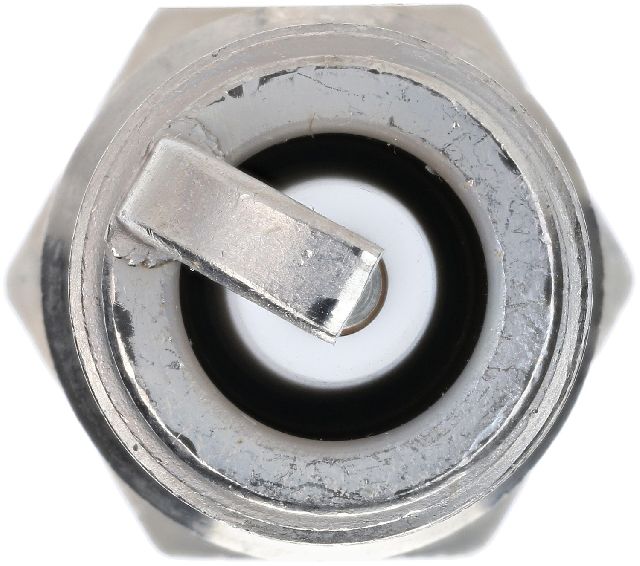
How to confirm: Remove and inspect all six spark plugs. Look for signs of wear on the electrode, carbon fouling, oil contamination, or an incorrect gap. Due to the labor involved, it's wise to replace them all if the intake is removed.
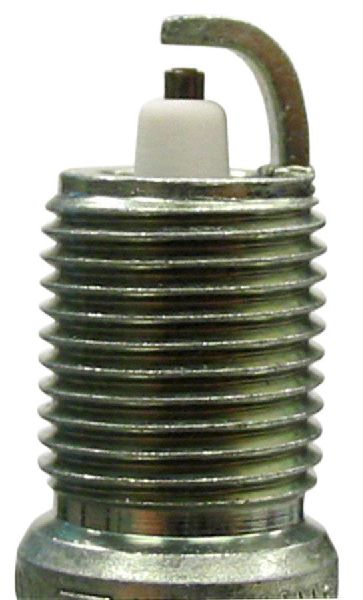
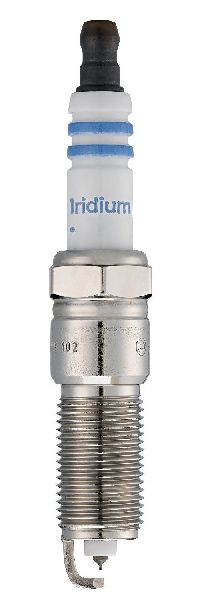
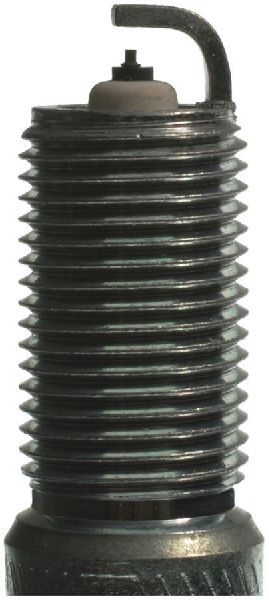
Typical fix: Replace all six spark plugs. It is recommended to use high-quality Iridium plugs, such as the OEM-spec ACDelco 41-107.
Est. part cost: $60-$120 - Failing Ignition Coils 🟡 Medium Probability → Shop Ignition Coil Heat and vibration from the engine can cause ignition coils to fail over time, resulting in a weak or non-existent spark. While a single failed coil usually throws a specific cylinder code (e.g., P0301), multiple intermittent failures can trigger a P0300.
How to confirm: Use a scan tool with live data to identify which cylinders are misfiring most frequently. Swap the ignition coil from a misfiring cylinder with one from a known good cylinder. If the misfire code follows the coil (e.g., a P0302 becomes a P0304 after swapping coils from cylinder 2 to 4), the coil is faulty.
Typical fix: Replace the faulty ignition coil. It is often recommended to replace all three rear bank coils if the intake manifold is removed, or all six if they are original and have high mileage.
Est. part cost: $40-$80 per coil - Low or Dirty Engine Oil ⚪ Low Probability The variable valve timing (VVT) system and the hydraulic timing chain tensioners are operated by oil pressure. Low or degraded oil can affect their operation, leading to improper cam phasing and contributing to timing-related misfires. This is a primary contributor to the timing chain stretch issue.
How to confirm: Check the engine oil level and condition on the dipstick. If it's low or very dirty, it needs to be changed immediately. Adhering to a 5,000-mile oil change interval with full synthetic oil is recommended over the factory OLM.
Typical fix: Perform an oil and filter change using a high-quality full synthetic oil that meets GM specifications (Dexos).
Est. part cost: $50-$100
Rare But Worth Checking
- Clogged Fuel Injectors: → Shop Fuel Injector If multiple injectors are dirty or failing, it can cause a random misfire condition. This is less common than ignition or timing issues.
- Vacuum Leak: A significant leak in the intake manifold gasket or a vacuum hose (like the PCV hose) can lean out the air-fuel mixture and cause misfires across multiple cylinders. This will often be accompanied by P0171 and P0174 codes.
- Low Fuel Pressure: A weak fuel pump or clogged fuel filter can starve the engine for fuel, leading to random misfires under load.
- Low Engine Compression: Internal engine damage such as a worn valve, damaged piston ring, or a bad head gasket can cause a loss of compression and a persistent misfire. This is a serious mechanical issue.
- Worn Camshaft Lobes: → Shop Engine Camshaft According to TSB Bulletin #PIP4138R, if standard diagnostics do not isolate the cause of a P0300 misfire or engine noise, technicians should check for a worn camshaft lobe.
Diagnosis Steps
- Read the fault codes with an OBD-II scanner. Note any other codes present besides P0300, especially P0008, P0017, P0171, or P0174.
- Listen for a chain rattle from the front of the engine during a cold startup. Any audible rattle is a strong sign of timing chain issues.
- Check the engine oil level and condition. Top off or change if necessary.
- Inspect the ignition system. This requires removing the intake manifold to access the rear bank. Examine all six spark plugs for wear and proper gap. Check for oil in the spark plug tubes, which indicates a leaking valve cover gasket.
- Test the ignition coils. Use a scan tool to see misfire counts per cylinder. Swap coils between a misfiring cylinder and a good cylinder to see if the misfire follows the coil.
- Check for vacuum leaks. Inspect all vacuum hoses and the intake manifold gasket for cracks or leaks. A smoke test is the most effective way to find hidden leaks.
- Test fuel pressure to ensure the fuel pump is delivering adequate fuel to the engine.
- If the above steps do not resolve the issue, and especially if codes like P0008 or P0017 are present, suspect stretched timing chains. This diagnosis is best confirmed by a professional mechanic.
Parts You'll Likely Need
- Timing Chain Kit
(OEM #12650230)— This is the most probable cause of a persistent P0300 on the 3.6L V6 due to a well-known design issue with the original chains. The kit should include all three chains, tensioners, and guides.
Trusted brands: ACDelco, Cloyes
OEM price range: $300-$500
Aftermarket price range: $200-$400 - Ignition Coil
(OEM #12632479)— Ignition coils are a common failure item that directly causes misfires. If one has failed, others may be nearing the end of their service life.
Trusted brands: ACDelco, Delphi, NGK
OEM price range: $60-$90
Aftermarket price range: $40-$70 - Iridium Spark Plugs (Set of 6)
(OEM #41-107)— Worn spark plugs are a primary cause of weak spark and misfires. They are a critical tune-up component that requires intake manifold removal to replace on the rear bank.
Trusted brands: ACDelco, NGK
OEM price range: $70-$120
Aftermarket price range: $50-$90
Related Codes That Often Appear With This One
- P0008 — This code indicates an 'Engine Positions System Performance Bank 1' error. On the LY7 engine, it almost always appears with timing chain issues and can trigger a P0300.
- P0017 — This code for 'Crankshaft Position - Camshaft Position Correlation Bank 1 Sensor B' is another strong indicator of a stretched timing chain.
- P0301-P0306 — These codes indicate a misfire on a specific cylinder (e.g., P0301 for cylinder 1). They often accompany a P0300 before the ECM determines the misfire is random, or if one cylinder is misfiring more than others.
- P0171 / P0174 — These 'System Too Lean' codes for Bank 1 and Bank 2 often appear with a P0300 if the root cause is a large vacuum leak affecting the entire engine.
- P050D — Manufacturer service bulletin #PIP5628C notes that this code may appear alongside P0300 when diagnosing engine misfire concerns.
Technical Service Bulletins (TSBs) & Recalls
- 12-06-01-009F: Information on High Feature V6 Timing Chain Kits and Chain Guide Replacement. This TSB provides part numbers for the updated timing chain kits and clarifies which components should and should not be replaced during the service.
- 11340C: Special Coverage Adjustment - Timing Chain Wear. This document outlines the extended warranty coverage (10 years/120,000 miles) GM offered for premature timing chain wear on certain LY7 and LLT engines.
- Bulletin #PIP5628C: This bulletin provides preliminary information to aid in diagnosing vehicles that present with misfires and DTC codes P0300 through P0308.
- Bulletin #PIP4138R: This bulletin addresses vehicles with a Service Engine Soon lamp, engine misfire (P0300-P0308), or engine noise, advising technicians to check for worn camshaft lobes if standard diagnostics are inconclusive.
Platform-Specific Known Issues
- The 3.6L LY7 V6 engine is widely known for premature timing chain stretching, which GM addressed with TSB #12-06-01-009F. This is the most significant and likely cause of a P0300 code on this vehicle.
- GM also issued Special Coverage Adjustment #11340C for some vehicles with this engine, extending the warranty for timing chain failure to 10 years or 120,000 miles, though this has now expired for all affected vehicles.
Mechanic-Grade Diagnostic Values
- Fuel Injector Resistance (LY7 3.6L V6) — expected: 11-17 Ohms. Failure: A reading of infinity (Open Loop) or near-zero ohms (short circuit) indicates a failed injector.
- Mode $06 Misfire Counts — expected: Counts should be zero or very low for all cylinders during a drive cycle.. Failure: A high count on one or more cylinders points to the specific cylinders contributing to the P0300, even if a cylinder-specific code (e.g., P0301) is not set.
Hidden / Shadow Codes Worth Checking
- Mode $06, Test ID $A2-$AD: This is not a formal trouble code but raw data from the ECM. These Test IDs correspond to misfire counts for each cylinder for the current and last ten drive cycles. This allows a technician to see which cylinders are misfiring and how often, even before a specific P030x code is triggered. (see via A professional-grade scan tool (like GM's GDS2) or an advanced consumer OBD-II scanner with Mode $06 capability.)
Scan Tool Commands That Help
- Tech2, GDS2, or other professional scan tool: Crankshaft Position Variation Learn (CASE Relearn) — This procedure is mandatory after replacing the timing chains, crankshaft position sensor, or the ECM. It calibrates the ECM to the precise rotational signature of the crankshaft. Failure to perform the relearn can cause the ECM to incorrectly detect misfires and set a P0300 code.
- GDS2 (GM Global Diagnostic System 2): Cylinder Power Balance Test — This function allows a technician to disable individual fuel injectors one by one to observe the RPM drop for each cylinder. If disabling a cylinder causes little or no change in RPM, it confirms that cylinder is not contributing power, helping to isolate the source of the misfire.
- GDS2 (GM Global Diagnostic System 2): Misfire Data Display — The GDS2 tool can display live and historical misfire counts for each cylinder. Note: According to GM documentation, if the battery has been disconnected or codes have been recently cleared, the vehicle may need to complete a full drive cycle before the misfire counters will increment, which can lead to a false reading of zero misfires.
Wiring & Ground Locations
- G112 — Connects the LH (driver's side) rear cylinder head to the engine harness.. This is a critical ground for the engine harness, which includes wiring for ignition coils and fuel injectors on that bank. A loose or corroded connection can cause erratic signals and lead to random misfires.
- G110 — Connects the RH (passenger side) front cylinder head to the engine harness.. Similar to G112, this ground is essential for the proper function of the ignition and fuel components on the passenger side bank. A poor connection can introduce electrical noise and trigger misfires.
Real Owner Repair Stories
- GRRRR8.net - Pontiac G8 Forum (2009 Pontiac G8 GT (Note: V8 engine, but the diagnostic principle for ignition components is identical)) — P0300 code would only appear during hard, wide-open-throttle (WOT) acceleration at high RPM. The check engine light would come on, and then go away after easing off the throttle.
❌ Tried (didn't work) The owner initially suspected bad fuel or spark plugs.
✅ What actually fixed it The issue was a faulty ignition coil. The diagnosis was complicated because an initial replacement coil was also bad out of the box, leading the owner to chase other potential causes before realizing the replacement part was also defective. The final fix was a new set of MSD ignition coils.
OEM Part Supersession History
Various older timing chain kit part numbers→Cloyes 9-0753S (aftermarket), ACDelco 12650230 (OEM)— The original timing chains were made of a softer metal that was prone to premature stretching. The updated kits use chains made from a hardened, more durable steel to resolve the issue.
Heads up: It is critical to use the complete, updated kit with all new chains, guides, and tensioners. Mixing old and new design components can lead to premature failure.
Model Year Variations Within This Range
- 2008-2009: There were no significant changes to the LY7 3.6L V6 engine or its components related to the P0300 code between the 2008 and 2009 model years. The timing chain issue is prevalent in both years.
Diagnostic Flowchart
Other Known Issues on This Vehicle
Issues unrelated to this code that are worth knowing about as an owner of this generation:
- Worn Front Radius Rod Bushings 🔴 High — Extremely common; can fail under 50,000 miles. Leads to clunking noises, steering wander, and uneven tire wear.
- Failing Front Strut Mounts 🟠 Medium — Common failure point causing popping or creaking noises when turning the steering wheel at low speeds.
- Ignition Key Can Be Bumped Out of 'Run' Position 🔴 High — Affects certain 2008-2009 models. A driver's knee can bump the key fob, causing the engine to shut off while driving. (Ref: GM Recall #14294)
- Bent Seat Belt Cables 🟠 Medium — The flexible steel cable for the front seat belts can bend from being sat on, potentially compromising its integrity. (Ref: GM Recall #14514)
- Faulty Tire Pressure Monitoring System (TPMS) 🟡 Low — A recall was issued for incorrect programming that would not alert the driver of low tire pressure until it was significantly below the required value. (Ref: GM Recall #08044)
Used vs. New Parts: Buying Guide for This Vehicle
When a used part is the smart pick: For this specific P0300 repair, used parts are generally not recommended for the primary failure items. However, a used intake manifold could be a cost-effective option if the original is found to be cracked during diagnosis. Used ignition coils can be used for temporary diagnosis (swapping to see if a misfire follows the coil) but should not be used for permanent repair.
Donor-vehicle mileage cap: roughly under 75000 miles for the part to have meaningful remaining life.
What to inspect on the donor part:
- For an intake manifold, check for any visible cracks, especially around bolt holes and gasket surfaces.
- Ensure all threaded inserts are intact and not stripped.
- Verify the part is from a vehicle that did not have a catastrophic engine failure or fire.
OEM-only on this vehicle (don't cheap out):
- Timing Chain Kit: Due to the critical nature and known issues with early designs, only a new, updated OEM (ACDelco) or reputable OEM-equivalent (Cloyes) kit should be used. Using a used timing set is extremely risky and likely to fail again quickly.
Aftermarket brands forum-validated for this vehicle:
- Timing Chain Kit: Cloyes
- Ignition Coils: Delphi, NGK
- Spark Plugs: NGK, ACDelco (OEM)
Brands owners have reported issues with on this vehicle:
- Unknown or 'white-box' no-name ignition coils and sensors from online marketplaces. These often have high failure rates and can cause diagnostic confusion.
Real Owner Stories
Aggregated from forums and TSBs cited above. Mileages and costs reflect what owners reported in those sources.
2009 Pontiac G8 3.6L V6
Symptoms: The owner experienced a P0008 code that would appear specifically during cold starts but would disappear once the engine reached operating temperature.
What fixed it: This symptom is noted as a precursor to persistent timing chain issues requiring replacement of the chains.
Source hint: Reddit - 2009 Pontiac G8 w/ 3.6GM Timing Chain p0008
2008-2009 Pontiac G8
Symptoms: Owners reported P0300 misfire codes occurring after performing engine modifications, such as a camshaft swap, due to the high sensitivity of the GM misfire detection system.
What fixed it: Diagnosis involved checking the sensitivity of the misfire detection system and ensuring all components were properly calibrated post-modification.
Source hint: GRRRR8.net - P0300 Misfire
Related OBD-II Codes
Frequently Asked Questions
Is there a TSB for the timing chain issues on my 2008-2009 Pontiac G8 3.6L?
Does the 2008-2009 Pontiac G8 have an extended warranty for timing chain failure?
Why does my G8 3.6L rattle for a few seconds when I first start it in the morning?
Which spark plugs should I use for my LY7 3.6L V6 engine?
Why is the labor so high to change spark plugs on the rear of the engine?
Can low oil cause a P0300 misfire code on my Pontiac G8?
Helpful Videos
Used OEM Parts in Stock
New Aftermarket Parts Available

The information in this article is provided for general reference and educational purposes only. Vehicle specifications, procedures, and part compatibility can vary by production date, trim level, and region. Always consult your vehicle's factory service manual and verify part numbers before purchasing or performing repairs. Safety-critical components such as airbags, seat belts, and braking systems should be installed by a qualified professional.
- Pontiac G8:
- 🧭 Diagnostic Flowchart
- 🎬 Helpful Videos
- 🛍️ Shop This Part
- What's Unique About the 2008-2009 Pontiac G8
- Symptoms You May Notice
- Most Likely Causes
- Rare But Worth Checking
- Diagnosis Steps
- Parts You'll Likely Need
- Related Codes That Often Appear With This One
- Technical Service Bulletins (TSBs) & Recalls
- Platform-Specific Known Issues
- Mechanic-Grade Diagnostic Values
- Hidden / Shadow Codes Worth Checking
- Scan Tool Commands That Help
- Wiring & Ground Locations
- Real Owner Repair Stories
- OEM Part Supersession History
- Model Year Variations Within This Range
- Other Known Issues on This Vehicle
- Used vs. New Parts: Buying Guide for This Vehicle
- Real Owner Stories
- 2009 Pontiac G8 3.6L V6
- 2008-2009 Pontiac G8
- Related OBD-II Codes
- Frequently Asked Questions
- 🎟️ Get 5% Off