

P0300 on 2000-2004 Pontiac Sunfire: Random Misfire Causes and Fixes
P0300 on a 2000-2004 Sunfire most often points to a failure in the ignition system. For 2002-2004 models with the 2.2L Ecotec engine, the ignition control module and coil pack assembly is the most common culprit. For earlier models with the 2.2L OHV engine, worn spark plugs and wires are a primary cause. A basic ignition system tune-up often resolves the issue.
- For 2002-2004 Sunfires with the 2.2L Ecotec engine, the integrated ignition control module/coil pack assembly is the most likely cause of a P0300 code.
- For 2000-2002 models with the 2.2L OHV engine, the root cause is more likely to be traditional tune-up items like spark plugs and wires.
- A flashing check engine light indicates a severe misfire that can quickly damage the catalytic converter, a much more expensive repair.
- Vacuum leaks, particularly from the intake manifold gasket on 2.2L OHV engines, are another common source of random misfires.
What's Unique About the 2000-2004 Pontiac SUNFIRE
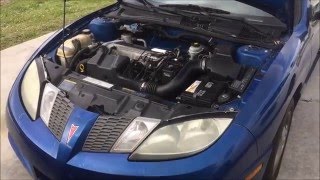
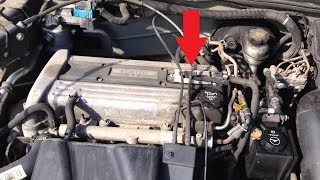
The 2000-2004 Sunfire spans a key engine transition for GM's J-body platform. Early models (2000-2002) primarily used the 2.2L OHV engine with traditional spark plug wires and a separate coil pack. Later models (2002-2004) switched to the 2.2L Ecotec engine, which features a single, integrated coil-on-plug ignition module 🎬 See the most common fix for Ecotec engine misfires. that sits atop the engine. This Ecotec ignition module is a notoriously common failure point and a primary cause for a P0300 code on those specific years. 🎬 Watch: Tips for diagnosing P0300 codes on the Sunfire. The module houses the electronics that control spark timing and can fail from heat soak, causing misfires that often appear or worsen as the engine warms up. The 2.2L Ecotec in these models also lacks a traditional camshaft position sensor, instead relying on the ignition control module to generate this signal, which can further complicate diagnosis if the module is faulty.
Diagnostic Flowchart
Tap your situation to follow the diagnostic path that matches what you're seeing on this vehicle.
Generation note: The 2000-2004 year range covers a significant powertrain update. Models from 2000-2002 may have the 2.2L OHV (LN2) or 2.4L DOHC (LD9) engine. The 2.2L OHV uses spark plug wires. From 2002/2003 onward, the primary engine was the 2.2L Ecotec (L61), which uses a coil-on-plug ignition module and has no spark plug wires. Diagnosis for a P0300 differs mainly in the ignition components that need to be tested.
Symptoms You May Notice
- Rough or shaking idle.
- Hesitation or stumbling during acceleration.
- Flashing Check Engine Light.
- Reduced engine power.
- Poor fuel economy.
- Difficulty starting the engine.
- Engine stalling, especially when cold or under load.
- Smell of raw fuel from the exhaust.
- Replacing oxygen (O2) sensors. O2 sensors will often report issues due to the unburned fuel from a misfire, but they are rarely the root cause of the P0300 code itself.
Most Likely Causes
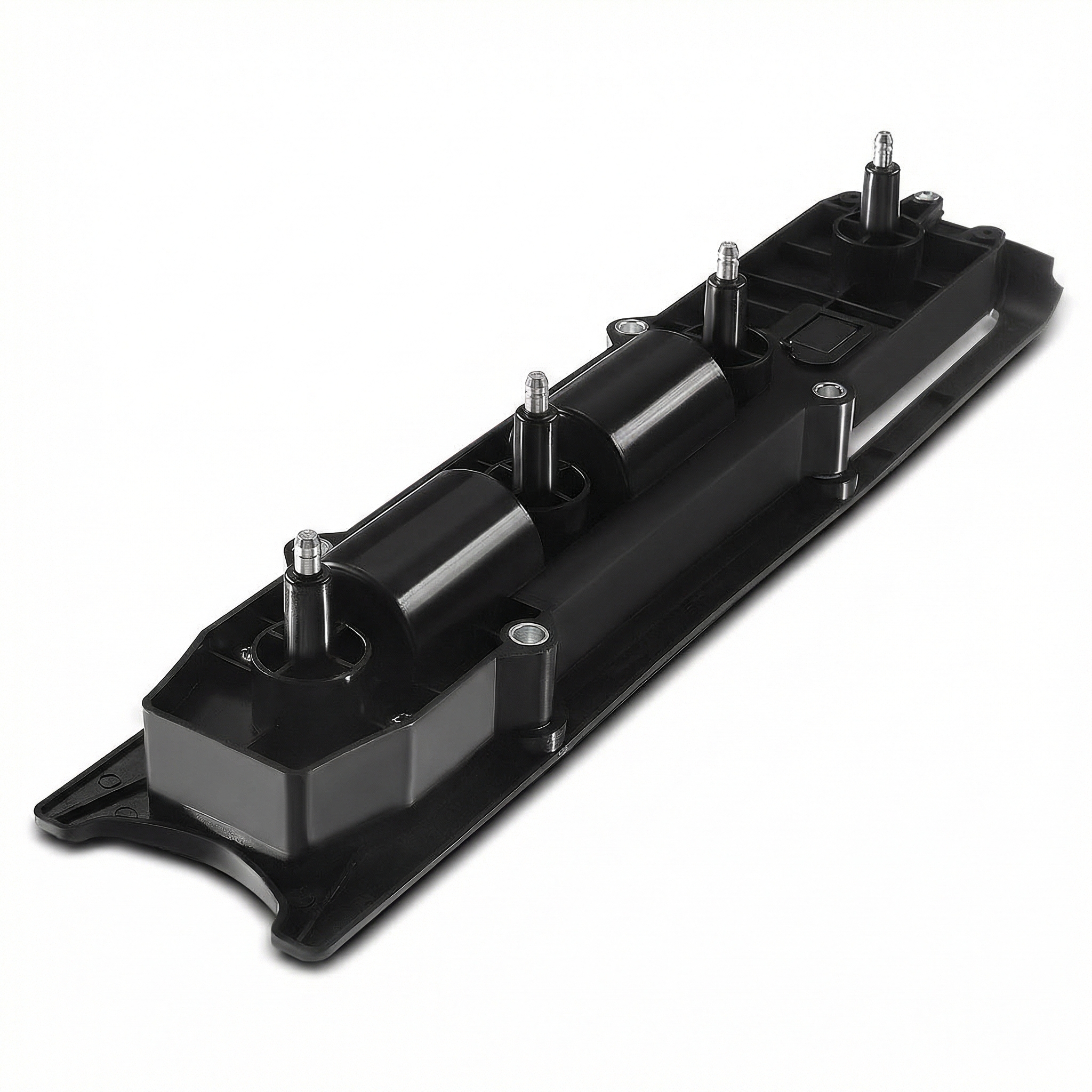
- Faulty Ignition Control Module (ICM) / Coil Pack Assembly 🔴 High Probability → Shop Ignition Coil This is the most common failure on 2.2L Ecotec engines (2002-2004). The module is prone to failure from heat, causing sporadic misfires that often worsen as the engine warms up. Moisture intrusion into the spark plug wells can also cause the coil boots to fail and the coil pack itself to short out.
How to confirm: Test for spark at each cylinder. On Ecotec models, test the ICM driver signals with a 12V test light connected to battery positive; the light should flash on the signal pins for each coil while cranking. If the light doesn't flash, the module is likely bad. Often, there are no specific codes for the ICM itself, just the resulting P0300.
Typical fix: Replace the entire ignition control module and coil pack assembly. It is also recommended to replace the spark plugs at the same time. Use dielectric grease on the new coil boots.
Est. part cost: $70-$150 - Worn Spark Plugs and/or Wires 🔴 High Probability → Shop Spark Plug This is a primary cause on the 2.2L OHV engine (2000-2002) which uses spark plug wires. Over time, wires degrade and plugs wear out, leading to a weak or inconsistent spark. Corrosion on the coil pack towers where the wires connect is also a common issue.
How to confirm: Visually inspect spark plugs for wear, fouling, or incorrect gap. Inspect wires for cracks, burns, or corrosion. On the 2.2L OHV, check the coil pack towers for rust or corrosion.
Typical fix: Replace all spark plugs and spark plug wires (on OHV engine). Clean the coil pack towers before installing new wires.
Est. part cost: $40-$80 - Vacuum Leak 🟡 Medium Probability Leaking intake manifold gaskets were a common issue on the 2.2L OHV engine. Aged or cracked vacuum hoses can also be a source on any engine. A stuck-open EVAP purge valve can also cause a vacuum leak that triggers a P0300, sometimes accompanied by a P0171 lean code.
How to confirm: Perform a smoke test to find the source of the leak. Alternatively, carefully spray carburetor cleaner around the intake manifold gasket and vacuum lines with the engine running; a change in idle RPM indicates a leak.
Typical fix: Replace the leaking gasket or hose. The Fel-Pro MS95818 is a common replacement part for the OHV engine's upper intake gasket.
Est. part cost: $20-$100 - Low Fuel Pressure or Clogged Injectors 🟡 Medium Probability
How to confirm: Connect a fuel pressure gauge to the Schrader valve on the fuel rail to test pressure. Listen to each injector with a mechanic's stethoscope to ensure they are clicking. In some cases, a misfire can be traced to a single dirty or faulty injector, which may not initially set a cylinder-specific code.
Typical fix: Replace the fuel filter first, as it is inexpensive. If pressure is still low, the fuel pump may be weak. Clogged injectors can sometimes be cleaned, but may require replacement.
Est. part cost: $20 (filter) - $250 (pump)
Rare But Worth Checking
- Clogged Catalytic Converter: → Shop Catalytic Converter A misfire can cause a catalytic converter to fail, but a clogged converter can also cause a misfire due to excessive exhaust backpressure. You can test for this by temporarily removing the upstream O2 sensor; if performance improves, the converter is likely clogged. A P0420 code often follows a persistent P0300.
- Low Engine Compression: Issues like a leaking head gasket or worn piston rings can cause low compression, leading to misfires. A compression test will confirm the health of the engine's mechanical components. Head gasket failure was a known, though less common, issue on the 2.2L engine.
- Faulty Crankshaft Position Sensor: → Shop Engine Crankshaft Position Sensor A failing crankshaft position sensor (CKP) can send erratic signals to the ECM, disrupting ignition and injection timing and causing random misfires. The sensor can fail intermittently as it heats up and may not always throw a specific CKP sensor code (like P0335) until it fails completely.
Diagnosis Steps
- Scan for any other accompanying trouble codes. Codes for specific cylinders (P0301-P0304) or other systems can help narrow the search.
- Perform a basic tune-up. Inspect and replace worn spark plugs. On 2.2L OHV engines, inspect and replace spark plug wires.
- Test the ignition system. On 2.2L Ecotec engines, test the ignition control module. On 2.2L OHV engines, test the coil pack, checking for cracks or corrosion on the towers.
- Check for vacuum leaks. Use a smoke machine or the carburetor cleaner method around the intake manifold and all vacuum lines.
- Test fuel pressure. Ensure the fuel pump and filter are providing adequate pressure to the fuel rail.
- Check fuel injectors. Listen for a consistent clicking sound from each injector. Consider an injector balance test if tools are available.
- Check for a clogged exhaust. Temporarily remove the upstream O2 sensor to see if engine performance improves.
- Perform an engine compression test to rule out internal mechanical problems like a bad head gasket.
- Consider the Crankshaft Position Sensor. If all other ignition and fuel tests pass, an intermittent CKP sensor could be the cause.
Parts You'll Likely Need
- Ignition Control Module & Coil Pack Assembly
(OEM #ACDelco D585 (Coil Pack), ACDelco D1965A (ICM))— This is the most frequent cause of P0300 on the 2.2L Ecotec engine (2002-2004). The coil pack and module are often replaced together.
Trusted brands: ACDelco, Delphi
OEM price range: $120-$200
Aftermarket price range: $70-$150 - Spark Plugs — Worn or fouled spark plugs are a universal cause of misfires and a common starting point for diagnosis.
Trusted brands: ACDelco, NGK
OEM price range: $20-$40
Aftermarket price range: $15-$30 - Spark Plug Wires — Only for the 2.2L OHV engine (2000-2002). Old wires can leak voltage, causing a misfire even with new plugs.
Trusted brands: ACDelco, NGK, Delphi
OEM price range: $30-$50
Aftermarket price range: $20-$40 - Intake Manifold Gasket
(OEM #Fel-Pro MS95818 (Upper gasket for 2.2L OHV))— A common source of vacuum leaks on the 2.2L OHV engine, leading to a lean condition and random misfires.
Trusted brands: Fel-Pro, ACDelco
OEM price range: $30-$60
Aftermarket price range: $15-$30
Related Codes That Often Appear With This One
- P0301, P0302, P0303, P0304 — These codes indicate a misfire on a specific cylinder. A P0300 may be accompanied by one of these if the random misfire begins to occur more frequently on a particular cylinder.
- P0420 — This code means 'Catalyst System Efficiency Below Threshold.' It often appears after a P0300 has been present for a while, as the unburned fuel from the misfire has damaged the catalytic converter.
- P0171 — This code means 'System Too Lean (Bank 1).' It can appear alongside a P0300 if the misfire is caused by a significant vacuum leak, such as from an intake manifold gasket or a stuck EVAP purge valve.
Technical Service Bulletins (TSBs) & Recalls
- PIP5628G: A general bulletin for technicians providing a checklist of information to gather for GM's Technical Assistance Center (TAC) when diagnosing any P0300-P0308 misfire code. It is a diagnostic aid, not a specific fix.
- PIP3333C: Discusses a rare condition where misfires on cylinders 1 or 4 can occur during sharp turns due to fuel contamination in the fuel rail. This is more likely on returnless fuel systems and can trigger a P0300. The fix is to clean the fuel system.
Platform-Specific Known Issues
- Failure of the integrated ignition control module/coil pack on 2.2L Ecotec engines is the most well-documented, platform-specific cause of a P0300 code on 2002-2004 models.
- Intake manifold gasket leaks are a known weak point on the earlier 2.2L OHV engines, causing vacuum leaks that trigger random misfires.
- On the 2.2L Ecotec, the ICM is responsible for generating the camshaft position signal; a faulty ICM can therefore cause timing-related misfires that might be misdiagnosed as a separate cam sensor issue.
Mechanic-Grade Diagnostic Values
- Fuel Pressure (2.2L Ecotec L61, 2003-2005) — expected: 50-60 PSI with key on, engine off. Failure: Pressure below 50 PSI indicates a weak fuel pump or clogged filter; pressure that bleeds off quickly indicates a leaking regulator or injector.
- Fuel Pressure (2.2L OHV LN2, 2000-2002) — expected: 41-47 PSI with key on, engine off. Failure: Low pressure points to a weak pump or clogged filter. If pressure is low, restricting the fuel return line should cause pressure to rise; if it doesn't, the pump is likely at fault.
- ICM Driver Signal (2.2L Ecotec) — expected: A test light connected to battery positive should flash when probing the two driver signal pins on the ICM connector while cranking the engine.. Failure: If the light does not flash on one or both pins, the ICM is not sending the signal to fire the coils and is faulty.
Scan Tool Commands That Help
- GM Tech 2 or equivalent professional scan tool: Crankshaft Position (CKP) System Variation Learn (CASE Relearn) — This procedure is required after replacing the crankshaft position sensor, the PCM, or after any major engine work involving the crankshaft. It calibrates the PCM to the minor manufacturing variations in the crankshaft reluctor wheel, which is critical for accurate misfire detection. Failure to perform this can lead to a persistent or false P0300 code.
- GM Tech 2 or equivalent professional scan tool: Fuel Pump Relay Control — When diagnosing fuel pressure issues on Ecotec models, this bidirectional command allows the technician to turn the fuel pump on with the engine off. This pressurizes the system to the maximum 50-60 PSI, making it easier to test for pressure, check for leaks, and diagnose a faulty fuel pressure regulator.
Wiring & Ground Locations
- G110 — On the rear of the engine block.. This is a primary engine ground. The Powertrain Control Module (PCM), Ignition Control Module (ICM), and Crankshaft Position Sensor all rely on a clean ground path. Corrosion or a loose connection at G110 can introduce electrical noise or voltage drops, leading to erratic sensor readings and causing random misfires.
- G112 — On the rear of the engine, near G110.. This is another critical engine ground point. Similar to G110, a poor connection here can affect the performance of the ignition and fuel systems, which are sensitive to ground integrity.
- ICM Connector (2.2L Ecotec) — The main electrical connector on the ignition module/coil pack assembly on top of the engine.. The pins for the coil driver signals (IC input) from the PCM are located here. Probing these specific pins is necessary to perform the test light diagnostic to confirm if the ICM is receiving and sending the correct signals.
Real Owner Repair Stories
- PY Online Forums (2002 Pontiac Sunfire, 2.2L (non-Ecotec OHV)) — P0300 code on startup, rough idle, and flashing CEL that cleared up after a few miles of driving.
❌ Tried (didn't work) Spark plugs were replaced after the problem started.
✅ What actually fixed it The owner found a crack in the coil pack housing. Replacing the faulty coil pack resolved the misfire.
Model Year Variations Within This Range
- 2003-2004: The 2.2L Ecotec engine became standard. These models use a return-style fuel system with a fuel pressure regulator on the rail, maintaining 50-60 PSI. This is different from the later returnless systems used on other GM platforms with the same engine.
- 2000-2002: The primary engine was the 2.2L OHV (VIN 4), which uses a traditional ignition system with spark plug wires and a separate coil pack/ICM assembly. It also uses a different fuel pressure specification (41-47 PSI) than the later Ecotec engine.
Helpful Videos
![How to Fix P0300 Engine Code in 3 Minutes [2 DIY Methods / Only $4.43]](https://img.youtube.com/vi/c5dkTOpzIDs/mqdefault.jpg)
Used OEM Parts in Stock
New Aftermarket Parts Available


The information in this article is provided for general reference and educational purposes only. Vehicle specifications, procedures, and part compatibility can vary by production date, trim level, and region. Always consult your vehicle's factory service manual and verify part numbers before purchasing or performing repairs. Safety-critical components such as airbags, seat belts, and braking systems should be installed by a qualified professional.
- Pontiac SUNFIRE:
- 🧭 Diagnostic Flowchart
- 🎬 Helpful Videos
- 🛍️ Shop This Part
- What's Unique About the 2000-2004 Pontiac SUNFIRE
- Symptoms You May Notice
- Most Likely Causes
- Rare But Worth Checking
- Diagnosis Steps
- Parts You'll Likely Need
- Related Codes That Often Appear With This One
- Technical Service Bulletins (TSBs) & Recalls
- Platform-Specific Known Issues
- Mechanic-Grade Diagnostic Values
- Scan Tool Commands That Help
- Wiring & Ground Locations
- Real Owner Repair Stories
- Model Year Variations Within This Range
- 🎟️ Get 5% Off