

P0300 on 2003-2011 Saab 9-3 2.0L Turbo: Random Misfire Causes and Fixes
For a P0300 on a Saab 9-3, start with the basics: replace the spark plugs with the correct NGK PFR6T-10G plugs, gapped to 0.9-1.0mm. If the misfire persists, inspect for vacuum leaks, especially small hoses on the fuel rail, intake manifold, and the brake booster line. Worn intake valves are a known, more serious issue on 2007-2009 models, causing cold start misfires and low compression.
- Always start by replacing the spark plugs with the correct NGK PFR6T-10G plugs; this is the most common fix.
- Thoroughly inspect all vacuum lines for cracks and leaks, as this is the second most common cause.
- If the car starts and runs rough when cold but improves when warm, suspect the known intake valve issue and perform a cold compression test.
- A flashing Check Engine Light is a serious warning that can lead to expensive catalytic converter damage; reduce driving immediately.
- Do not waste money on ignition coils or other parts until you have ruled out spark plugs and vacuum leaks.
What's Unique About the 2003-2011 Saab 9-3
The Saab 9-3's B207 engine, while generally robust, has specific vulnerabilities that lead to a P0300 code. Unlike older Saabs with a single Direct Ignition Cassette (DIC), this generation uses individual ignition coils. While ignition coils on early models (with yellow tops) were prone to failure, the later black top coils are considered reliable and not a primary suspect. More prevalent issues include vacuum leaks from aged rubber hoses and a significant, documented problem with premature intake valve wear, particularly on 2007-2009 models, which causes low compression and misfires, especially when the engine is cold. The Trionic T8 engine management system is also highly sensitive to spark plug type and condition, making incorrect plugs a frequent cause of this code.
Symptoms You May Notice
- Rough or unstable idle
- Hesitation or stumbling during acceleration
- Flashing or solid Check Engine Light
- Reduced engine power
- Rough starting, especially when cold
- Popping or backfiring from the exhaust
- Engine RPMs dropping low when shifting
- A smell of raw fuel from the exhaust
- Replacing ignition coils first. While coils are a common cause of misfires on many cars, on the B207 engine, spark plugs and vacuum leaks are far more likely culprits and should be checked first. Many owners on forums report unnecessarily replacing coils.
- Replacing the Mass Airflow (MAF) sensor. A faulty MAF sensor is a possible but less common cause. It should only be replaced after being properly diagnosed, not as a first guess. Unplugging the MAF to see if the engine runs better can be a diagnostic step; if it does, it points to a large air leak after the MAF, not necessarily a bad sensor.
Most Likely Causes
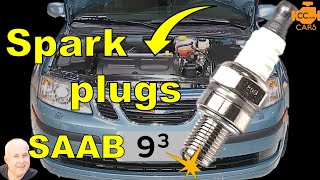
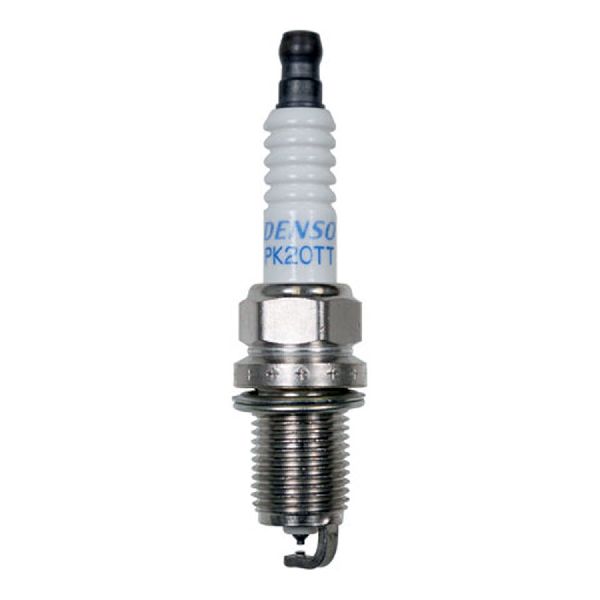
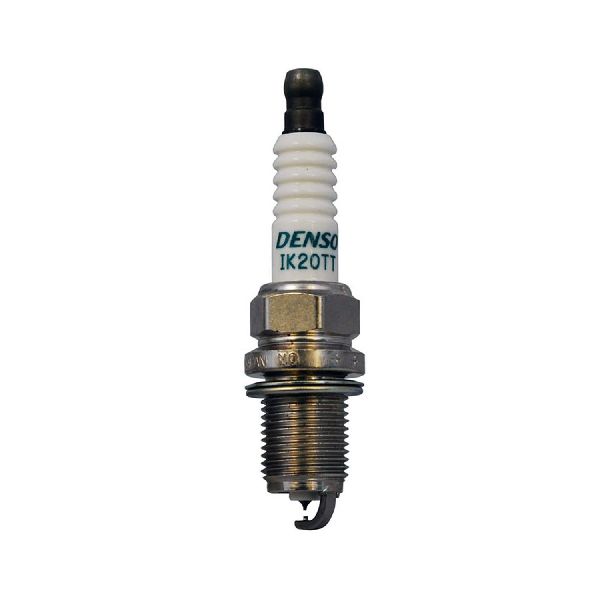
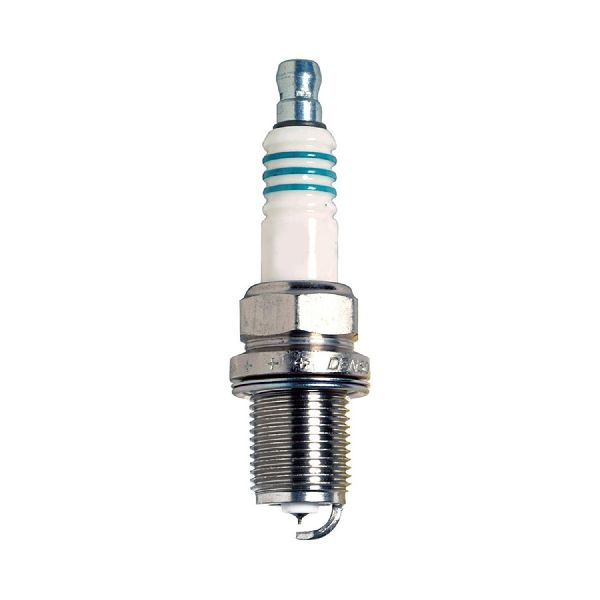
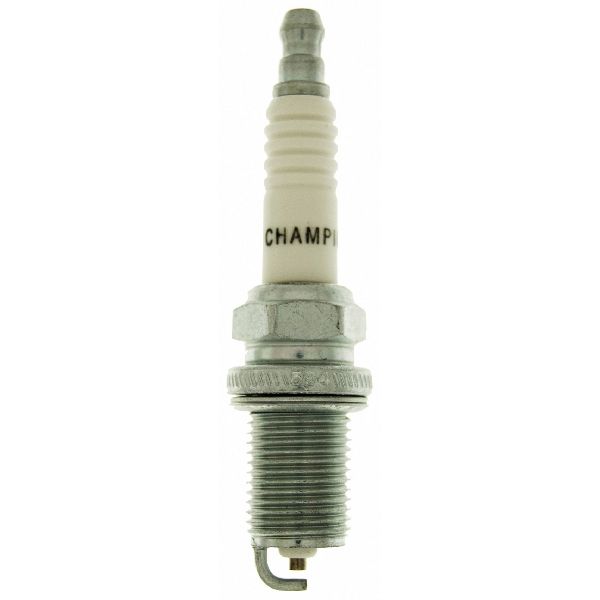
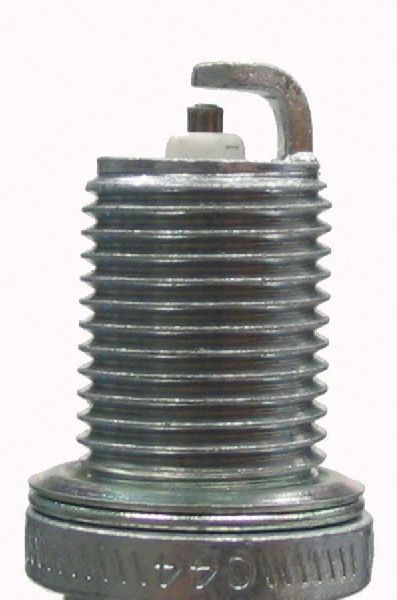
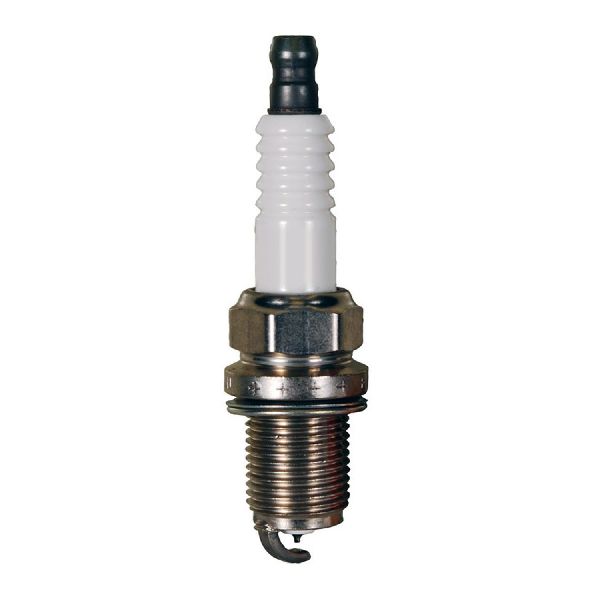
- Worn or Incorrect Spark Plugs 🔴 High Probability → Shop Spark Plug Saab's Trionic engine management system is highly sensitive to the type, condition, and gap of spark plugs. Using anything other than the specified NGK plugs can cause misfires. They are a standard maintenance item and often the first part to degrade, making them the number one suspect for a P0300.
How to confirm: Remove and inspect the spark plugs. Look for heavy carbon fouling, worn electrodes, or an incorrect gap (should be 0.9-1.0mm). Check the part number on the plug; it must be NGK PFR6T-10G. Other brands are known to cause issues.
Typical fix: Replace all four spark plugs with the correct OEM-specification NGK plugs (PFR6T-10G). Ensure they are gapped correctly to 0.9-1.0mm before installation. Do not use other brands or substitute part numbers.
Est. part cost: $40-$60 - Vacuum Leaks 🔴 High Probability After 10-20 years, the numerous rubber and plastic vacuum hoses in the engine bay become brittle and crack, creating unmetered air leaks that lean out the air/fuel mixture and cause misfires. Common failure points are well-documented in owner forums.
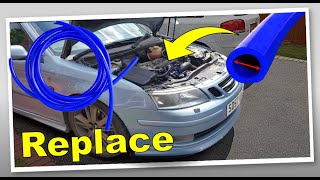
How to confirm: Visually inspect all vacuum lines for cracks or disconnection. Key areas include the small hose on the fuel pressure regulator, hoses for the turbo bypass and wastegate solenoids, the PCV system hoses, and the hard plastic line for the brake booster. A professional smoke test is the most definitive way to find hidden leaks.
Typical fix: Replace the cracked or leaking vacuum hose(s). It's often recommended to replace all accessible small-diameter vacuum lines at once with silicone hose as a preventative measure. A common culprit is a small, torn hose at the fuel rail.
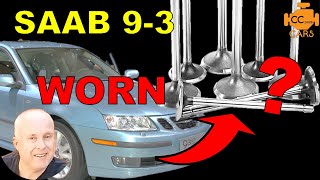
Est. part cost: $10-$50 for hose kits - Worn Intake Valves 🟡 Medium Probability A well-documented issue exists for 2007-2009 models (and some 2010-2011) regarding premature intake valve wear. The valve material was too soft, causing the valve face to wear down. This leads to a loss of compression, especially when the engine is cold and the metal has not expanded to create a seal.
How to confirm: The primary symptom is a very rough start and misfiring when the engine is cold, which improves or disappears as the engine warms up. A definitive diagnosis requires a cold compression test after the car has sat overnight. A healthy B207 engine should have 150+ PSI per cylinder. If one or more cylinders show significantly lower compression (e.g., 75-90 PSI) when cold but test better when hot, this is a strong indicator of worn valves. 🎬 See this walkthrough on diagnosing cold start intake valve issues.
Typical fix: This is a major repair. The cylinder head must be removed and sent to a machine shop to have new, harder intake valves (Part No. 55563529 or equivalent) installed and the valve seats re-cut.
Est. part cost: $400-$800 for valves, gaskets, and machine shop labor - Faulty Fuel Pressure Regulator ⚪ Low Probability → Shop Fuel Injection Pressure Regulator The diaphragm inside the regulator can fail, allowing raw fuel to be sucked into the intake manifold through its vacuum line, causing a rich condition and random misfires. This is a common enough failure to be a primary check after plugs and vacuum lines.
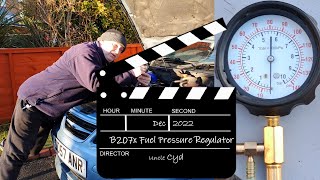
How to confirm: Locate the fuel pressure regulator on the fuel rail. Disconnect the small vacuum hose attached to it. If there is a strong smell of gasoline or visible liquid fuel in the hose, the regulator has failed. A fuel pressure test can also be performed; pressure should be ~42 PSI at idle and jump to ~52 PSI when the vacuum line is disconnected and plugged.
Typical fix: Replace the fuel pressure regulator. It is secured by a a clip and is relatively easy to access. 🎬 Watch: How to test and replace the fuel pressure regulator.
Est. part cost: $50-$100
Rare But Worth Checking
- Failing Fuel Pump: → Shop Fuel Pump A weak fuel pump can cause low fuel pressure, leading to lean misfires under load. If the car stumbles on hard acceleration but seems fine at idle, it's worth checking fuel pressure at the rail. This can also be caused by a failing fuel level sensor, which is part of the same assembly.
- Faulty Ignition Coils: → Shop Ignition Coil While individual coil failure is possible, it's less common on the B207 engine, especially on models with the updated black top coils. Early models with yellow top coils are more suspect. A failing coil usually triggers a specific cylinder code (P0301-P0304) before escalating to a P0300.
- Failing Engine Control Module (ECM): → Shop Engine Control Module (ECM) The Trionic T8 ECM is mounted directly to the engine and can suffer from heat-soak, leading to failed injector driver circuits. This typically presents with injector circuit codes (P0201-P0204) alongside a P0300. This is a known issue that can be repaired by specialists.
- Cracked Turbo Inlet Pipe: The plastic/rubber air intake pipe (aka 'Cobra') that connects the airbox/MAF to the turbocharger can become brittle and crack, especially in the concertina sections. This allows unmetered air to enter the engine post-MAF sensor, causing a lean condition (P0171) and misfires.
- Faulty PCV System Valve: The crankcase ventilation system uses several check valves. A common one in the intake manifold (OEM part 55557180 for later models) can fail, creating a vacuum leak. This can cause a rough idle and P0300.
Diagnosis Steps
- Read the code with an OBD-II scanner. Confirm P0300 is present and check for any other codes (e.g., P030x, P0171) that can help narrow the diagnosis.
- Inspect and Replace Spark Plugs. Remove all four plugs. Verify they are the correct NGK PFR6T-10G plugs and gapped to 0.9-1.0mm. Replace them if they are worn, fouled, or the incorrect type. This is the most common and cheapest fix.
- Inspect for Vacuum Leaks. With the engine running, listen for hissing sounds. Carefully check all small rubber hoses connected to the intake manifold, throttle body, and turbo control solenoids. Pay close attention to the vacuum line on the fuel pressure regulator and the brake booster line. A smoke test is highly effective.
- Check the Fuel Pressure Regulator. Pull the vacuum line off the regulator. If fuel is present in the line, the regulator is bad and must be replaced.
- Perform a Cold Compression Test. If the car runs particularly rough on a cold start but improves when warm, let it sit overnight and perform a compression test on all cylinders. A significant drop in press
Parts You'll Likely Need
- Spark Plugs
(OEM #NGK PFR6T-10G (Saab OE Ref: 55571391, 12787099))— These are the OEM-specified plugs. The Trionic ignition system is very sensitive, and these are proven to work correctly. - Vacuum Hose Kit
(OEM #N/A (often sold as aftermarket silicone kits))— The original rubber hoses are prone to cracking and are a primary cause of P0300. Replacing them is a cheap and effective preventative measure. - Intake Valve
(OEM #55563529)— Required for the common valve wear issue on 2007-2009 models. These are the updated, harder valves. - Fuel Pressure Regulator
(OEM #12847432)— The internal diaphragm can rupture, leaking fuel into the vacuum system and causing rich misfires.
Related Codes That Often Appear With This One
- P0301, P0302, P0303, P0304 — If the ECM can eventually isolate the misfire to a specific cylinder, it will set one of these codes in addition to P0300. This can sometimes be forced by holding the engine under load.
- P0171 — This code for 'System Too Lean' often accompanies P0300 when the root cause is a vacuum leak or a cracked turbo inlet pipe, as the unmetered air creates a lean condition that leads to misfiring.
- P0201, P0202, P0203, P0204 — These injector circuit codes point towards a failing ECM, which is a known issue on this platform due to heat soak.
Technical Service Bulletins (TSBs) & Recalls
- While a specific TSB number for the intake valve issue is often referenced in forums (e.g., 250-2853), a publicly available copy is difficult to verify. However, the problem is widely acknowledged by Saab specialists and documented in service literature as affecting 2007-2011 models, causing low compression when cold.
- Manufacturer TSB Bulletin #PIP5628C notes that technicians should provide specific diagnostic information to TAC if a vehicle presents with misfires and DTC codes P0300 through P0308.
Platform-Specific Known Issues
- Intake Valve Wear (2007-2009): A widely known factory defect where soft intake valve material leads to wear on the valve face, causing low compression and severe misfires on cold starts. Requires cylinder head removal to fix.
- Brittle Vacuum Lines: Numerous small vacuum hoses become hard and crack with age, leading to elusive vacuum leaks. The hose to the fuel pressure regulator and the brake booster line are common failure points.
- Heat-Soak ECM Failure: The Trionic T8 ECM is mounted on the engine, and prolonged heat exposure can cause internal components, particularly the injector driver circuits, to fail, leading to misfire codes.
Mechanic-Grade Diagnostic Values
- Fuel Injector Resistance — expected: 12 Ohms. Failure: A reading significantly different from 12 Ohms, or an open/short circuit, indicates a faulty injector. All four injectors should have very similar resistance values.
- Long Term Fuel Trim (Multiplicative Fuel Adaptation) — expected: Close to 0%. Failure: A high positive value (e.g., 19% as seen in one case) when accompanied by a P0171 code strongly suggests a vacuum leak or unmetered air entering the system after the MAF sensor.
- Short Term Fuel Trim at Idle — expected: Fluctuating near 0%. Failure: Consistently negative values (e.g., -1.5% to -5.5%) can indicate a rich condition, such as a leaking fuel pressure regulator. Large positive corrections under load can indicate a weak fuel pump or clogged filter.
- Catalytic Converter Temperature Differential — expected: The outlet temperature should be significantly hotter than the inlet temperature on a warm, running engine.. Failure: If the inlet temperature is hotter than the outlet temperature, it indicates the converter is clogged and not functioning, creating backpressure that can cause misfires.
Scan Tool Commands That Help
- Saab Tech2: Misfire Counters — This live data screen shows the number of misfire events per cylinder in real-time. It is essential for confirming which cylinders are misfiring and under what conditions (idle, load, etc.), helping to distinguish a random P0300 from an issue affecting specific cylinders.
- Saab Tech2: Knock Counters — The Trionic T8 system uses ionization detection via the spark plugs to detect knock. Viewing the knock counter alongside the misfire counter can help diagnose combustion issues. An increase in knock and misfire counts on specific cylinders can point to issues beyond simple ignition failure.
- Saab Tech2: Knock Reduction Adjustment — In one documented case, a technician used the Tech2 to adjust the 'knock reduction' parameter. This appears to be a sensitivity adjustment, and in that instance, increasing the count from 60 to 80 smoothed the idle and reduced misfire counts, suggesting it can be used to compensate for certain conditions, though it may mask an underlying problem.
Wiring & Ground Locations
- G7 — On the B207 engine, this grounding point is located on the engine control module's top right attachment lug.. This is the primary ground point for the ignition coils (via Pin 2 of the coil connector). A poor connection here can cause weak spark or erratic ignition performance across all cylinders, leading to a P0300.
- G2 — Located on the side of the left-hand structural member in the engine bay, near the connector bracket by the battery.. This is one of the two main battery ground points for the chassis. While not directly for the ignition system, a corroded or loose main ground can cause a host of unpredictable electrical issues, including problems with the ECM and ignition system power supply.
- Ignition Coil Connector Pins — On each of the four ignition coils.. Pin 1 is B+ power from the main relay. Pin 2 is ground to G7. Pin 3 is the trigger signal from the ECM. Pin 4 is the ionization signal sent back to the Combustion Detection Module (CDM). Testing for power at Pin 1 and ground continuity at Pin 2 is a critical step in diagnosing a universal ignition problem.
Real Owner Repair Stories
- Reddit user in r/saab (2004 9-3 2.0t) — Misfire and sputtering above 3,000 RPM, but not in neutral. Turbo gauge would redline during the event. Engine would sometimes die when shifting.
❌ Tried (didn't work) Visual inspection of the 'yellow top' ignition coils showed no obvious damage.
✅ What actually fixed it The user did not post a final fix, but the community strongly advised starting with replacing the spark plugs and then considering the ignition coils despite their appearance, as internal failures are common. - Reddit user in r/saab (2004 9-3 2.0t) — Misfire at around 3,000 RPM, preventing further acceleration. Car ran fine with the MAF sensor unplugged, albeit with reduced power.
❌ Tried (didn't work) Replacing spark plugs, ignition coils, cleaning and replacing the MAF sensor.
✅ What actually fixed it Another user reported the exact same symptoms were resolved by replacing a clogged catalytic converter. The backpressure from the clogged exhaust was preventing the engine from revving freely under load. - YouTube video by youfixnsave-garage (2006 Saab 9-3 (V6 Turbo model, but principle applies)) — P0300 random misfire on all cylinders.
❌ Tried (didn't work) The video implies that other common causes were considered, such as fuel pump or filter issues.
✅ What actually fixed it The problem was a faulty fuel pressure regulator. The video shows the replacement of the regulator, which resolved the P0300 code and restored normal engine operation.
Documented NHTSA Reports
- An owner reported in NHTSA ODI #11321867 that after several check engine lights and a P0300 diagnosis, cold and warm compression tests revealed that cylinder 2 compression was well out of specification.
- NHTSA ODI #11073052 describes a technician's concern regarding hard or no starting when cold, accompanied by misfires and codes P0300 through P0304, while the vehicle would start and run normally when hot.
"I Checked Everything" — The Actual Cause
- In cases where a P0300 is accompanied by a P0171 (System Too Lean) and misfires happen primarily under boost (e.g., above 3,000 RPM), a smoke test at atmospheric pressure may not reveal a leak. The actual cause could be a small tear or weak spot in a boost hose or the turbo inlet pipe that only opens up under pressure, causing a significant unmetered air leak.
OEM Part Supersession History
55192156→55563529— The original intake valves were made of a material that was too soft, leading to premature wear and loss of compression. The updated part (55563529) is made of a harder material to resolve this issue.Unknown ('Yellow Top' Coils)→12787707 ('Black Top' Coils)— Early models (approx. 2003-2005) were equipped with less reliable 'yellow top' ignition coils. These were superseded by the more durable 'black top' coils, part number 12787707, which are the standard replacement.
Heads up: While aftermarket coils are available, forum users strongly recommend using Genuine Saab/Mitsubishi coils (PN 12787707) as some aftermarket brands have been reported to cause persistent misfire issues.12787708 (Analogue Output)→55352173 (Digital Output)— The Combustion Detection Module (CDM), often called the ignition module, was changed from an analogue to a digital output design in the first few years of T8 production.
Heads up: The analogue and digital CDMs are not interchangeable. The correct module must be used for the vehicle's specific model year and ECM software.
Model Year Variations Within This Range
- 2003-2006 vs 2007-2011: In 2007, the interior was updated, integrating the Saab Information Display (SID) into the main instrument unit, with controls moved to the steering wheel. This does not directly affect the P0300 code but is a key identifier for the model year split.
- 2007-2009: These model years are most susceptible to the premature intake valve wear issue, which is a primary cause of cold-start misfires and P0300 on this platform.
- 2008-2011: A major exterior facelift was introduced for the 2008 model year, giving the car a new front-end design. The all-wheel-drive (XWD) system also became available as an option on 2.0T models starting in 2009.
Diagnostic Flowchart
Related OBD-II Codes
Frequently Asked Questions
Can I use any brand of spark plugs in my Saab 9-3 2.0T to fix a P0300?
My 2008 Saab 9-3 misfires badly on cold starts but runs fine when warm. What causes this?
Is there a specific TSB for the cold start misfire and intake valve wear on the B207 engine?
Where are the most common vacuum leaks that cause a P0300 on this vehicle?
Can the engine computer (ECM) cause a P0300 on the Saab 9-3?
How do I test if the fuel pressure regulator is causing my P0300?
Helpful Videos
We Have This Part in Stock

The information in this article is provided for general reference and educational purposes only. Vehicle specifications, procedures, and part compatibility can vary by production date, trim level, and region. Always consult your vehicle's factory service manual and verify part numbers before purchasing or performing repairs. Safety-critical components such as airbags, seat belts, and braking systems should be installed by a qualified professional.
- Saab 9-3:
- 🧭 Diagnostic Flowchart
- 🎬 Helpful Videos
- 🛍️ Shop This Part
- What's Unique About the 2003-2011 Saab 9-3
- Symptoms You May Notice
- Most Likely Causes
- Rare But Worth Checking
- Diagnosis Steps
- Parts You'll Likely Need
- Related Codes That Often Appear With This One
- Technical Service Bulletins (TSBs) & Recalls
- Platform-Specific Known Issues
- Mechanic-Grade Diagnostic Values
- Scan Tool Commands That Help
- Wiring & Ground Locations
- Real Owner Repair Stories
- Documented NHTSA Reports
- "I Checked Everything" — The Actual Cause
- OEM Part Supersession History
- Model Year Variations Within This Range
- Related OBD-II Codes
- Frequently Asked Questions
- 🎟️ Get 5% Off