

P0300 on 2006-2009 Saab 9-3 2.8L V6: Random Misfire Causes and Fixes
On the Saab 9-3 with the 2.8L V6, a P0300 code is most often caused by failing ignition coils and worn spark plugs. High under-hood heat degrades these parts. Accessing the rear bank of cylinders is difficult. Expect to pay $200-$400 for a full set of quality aftermarket coils and plugs for a DIY repair.
- P0300 on this Saab almost always points to a bad set of ignition coils and/or spark plugs.
- Due to high under-hood heat, always replace coils and plugs as a complete set of six using quality parts.
- If new ignition parts don't fix the issue, your next step is a smoke test to find cracked vacuum hoses.
- Be aware that replacing the three rear coils and plugs is much more difficult than the front three, as it requires removing the car's main computer.
- A flashing Check Engine Light means stop driving immediately to prevent expensive catalytic converter damage.
What's Unique About the 2006-2009 Saab 9-3
The Saab 9-3's 2.8L Turbo V6 (a GM-sourced engine, code LP9 or B284) is known for generating significant heat in a tight engine bay. This environment is particularly hard on the plastic ignition coils and rubber vacuum lines, making them the most frequent culprits for a P0300 code. Unlike the 4-cylinder models, accessing the rear bank of coils (cylinders 1, 3, 5) is a major task, requiring the removal of the engine's main computer (Trionic 8 ECM), which is mounted directly over the rear valve cover. This adds complexity and labor time to what is a simple job on many other vehicles.
Symptoms You May Notice
- Rough or unstable idle
- Engine hesitation or stumbling during acceleration
- Noticeable loss of power
- Flashing Check Engine Light (CEL)
- Increased fuel consumption
- Vibrations from the engine bay
- Difficulty starting the engine, especially when cold
- Replacing only one ignition coil when others are old.
- Replacing oxygen (O2) sensors, which are more likely to be a symptom of a problem rather than the cause of a P0300.
- Replacing the Mass Airflow (MAF) sensor without proper diagnosis via smoke test or live data.
- Confusing a boost control solenoid issue for a misfire. A faulty boost solenoid can cause hesitation under load that feels like a misfire.
Most Likely Causes
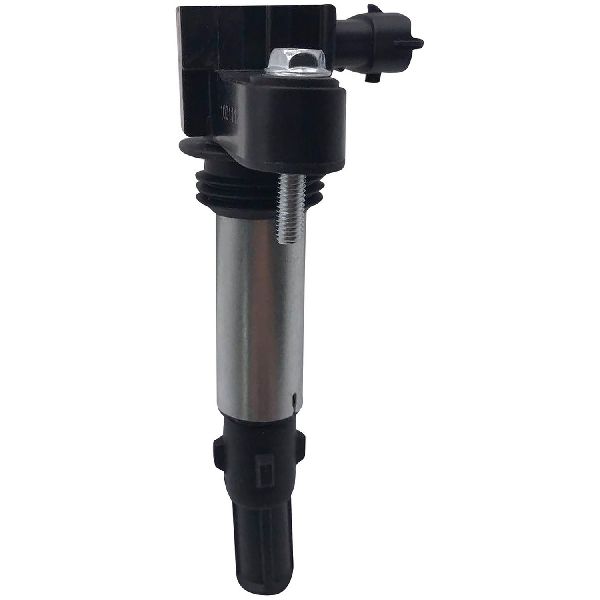
- Failing Ignition Coils 🔴 High Probability → Shop Ignition Coil The 2.8L V6 engine bay gets very hot, which accelerates the degradation of the plastic and electronics in the ignition coils, causing cracks. The rear bank (cylinders 1, 3, 5) is especially prone to failure due to reduced airflow. This is the most cited failure point for misfires on this engine.
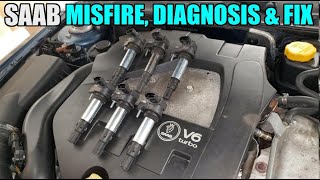
How to confirm: If a single cylinder misfire code (e.g., P0301-P0306) is also present, swap the suspected bad coil with a known good one. If the misfire code follows the coil to the new cylinder, the coil is bad. For a random P0300, visual inspection for cracks or oil contamination is a start, but replacement is often the only sure test. A diagnostic tool like a Tech2 can monitor misfire counts per cylinder 🎬 Watch: A mechanic's guide to diagnosing and fixing Saab misfires to help isolate a weak coil.
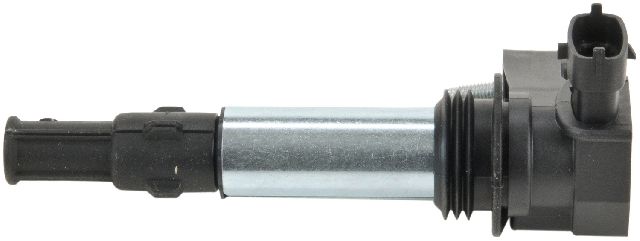
Typical fix: Replace all six ignition coils as a set with a quality brand like Bosch or Delphi. If one has failed due to age and heat, the others are likely to fail soon. The rear bank (cylinders 1, 3, 5) is difficult to access and requires removing the ECM.
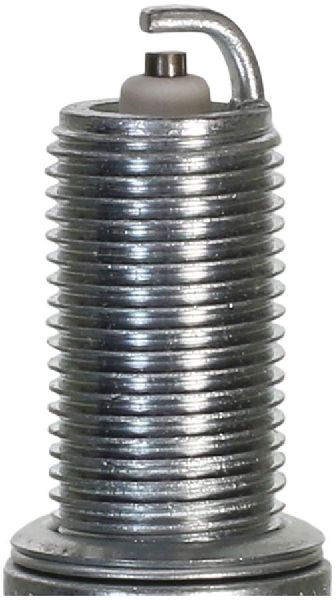
Est. part cost: $150-$350 for a set of 6 aftermarket coils. - Worn or Incorrect Spark Plugs 🔴 High Probability → Shop Spark Plug Like the coils, spark plugs have a finite life and are a primary ignition system wear item. Owners and tuners report that this engine is sensitive to the type, condition, and gap of its spark plugs. Increased cylinder pressure from tuning often requires a smaller plug gap to prevent misfires.
How to confirm: Remove the spark plugs and inspect them for wear, fouling, and an incorrect gap. The stock recommended gap is approximately 0.95mm (~0.037"). Many owners and tuners recommend reducing the gap to 0.80mm-0.85mm (~0.032") to improve ignition reliability, even on stock engines.
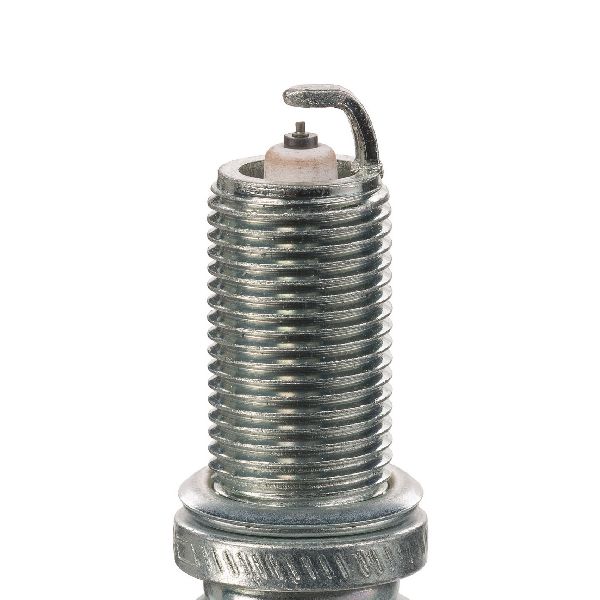
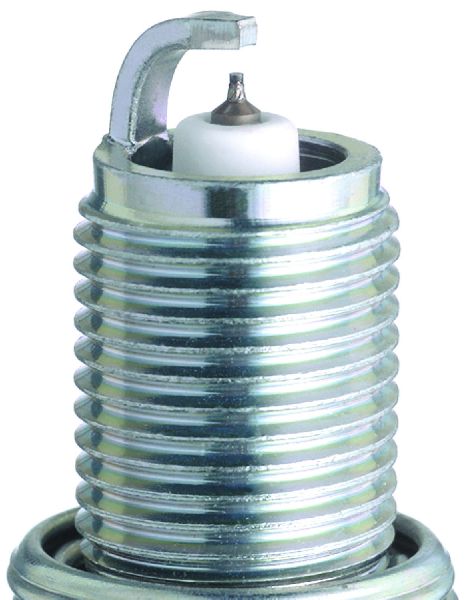
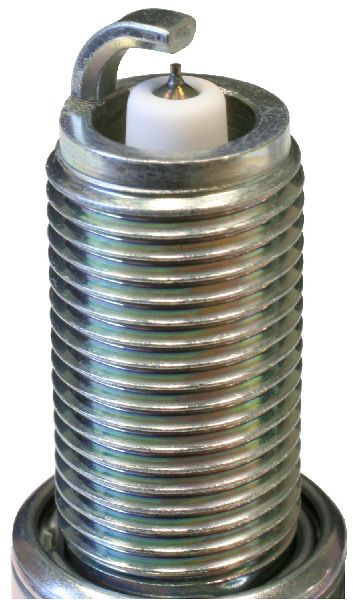
Typical fix: Replace all six spark plugs with the correct OEM-spec plugs. The NGK PLFR6C-10G is the standard OEM plug. This should always be done when replacing ignition coils.
Est. part cost: $60-$120 for a set of 6 high-quality iridium or platinum plugs. - Vacuum Leaks 🟡 Medium Probability Engine heat also makes rubber and plastic vacuum hoses brittle, leading to cracks and leaks. A common failure point is the small vacuum line that attaches to the fuel pressure regulator. A leak of unmetered air into the intake manifold throws off the air-fuel ratio for all cylinders, causing a random misfire.
How to confirm: Perform a smoke test to pressurize the intake system with smoke, which will visibly escape from any cracks or loose connections. Pay close attention to the brake booster vacuum line and the small hoses connected to the fuel pressure regulator and intake manifold. A visual inspection may reveal cracked hoses.
Typical fix: Replace the cracked or broken vacuum hose. It is often recommended to replace all small-diameter vacuum lines at once as a preventative measure. The brake booster line (P/N 12847287) is a known failure point.
Est. part cost: $10-$70 depending on the specific hose. - Failing Fuel Pressure Regulator ⚪ Low Probability → Shop Fuel Injection Pressure Regulator The regulator's internal diaphragm can rupture, causing incorrect fuel pressure across the entire fuel rail and potentially allowing raw fuel into the vacuum system, affecting all cylinders.
How to confirm: Check for the presence of raw fuel in the vacuum line attached to the regulator; if fuel is present, the diaphragm inside has ruptured. Test fuel pressure at the fuel rail's Schrader valve to confirm it is within spec.
Typical fix: Replace the fuel pressure regulator. This is a relatively simple and inexpensive part to replace. 🎬 See how replacing the fuel regulator fixed this P0300 code
Est. part cost: $40-$80
Rare But Worth Checking
- Stretched Timing Chain: → Shop Engine Timing Chain The LP9 V6 is known for potential timing chain stretching, though less common than on other GM engines if oil is changed regularly. While this usually triggers specific timing correlation codes (like P0008, P0016, P0017), it can cause random misfires in some cases before those codes appear. This is a very expensive, engine-out repair costing thousands.
- Low Fuel Pressure: A weak or failing fuel pump can cause a lean condition and misfires across all cylinders, especially under load. This should be investigated after ignition and vacuum issues are ruled out. A clogged fuel filter can also contribute to this issue.
- Clogged Catalytic Converters: → Shop Catalytic Converter While usually a *result* of long-term misfires, a severely clogged catalytic converter can create excessive backpressure, leading to poor engine performance and misfires. This is an uncommon cause but possible.
- Failing Engine Control Module (ECM): → Shop Engine Control Module (ECM) Due to its location directly on top of the hot engine, the Trionic 8 ECM can fail from heat and vibration. One owner on Reddit reported that having their ECM refurbished for $1500 AUD solved a persistent misfire issue after other parts were replaced. This is a last-resort diagnosis.
Diagnosis Steps
- Read all stored fault codes with an OBD-II scanner. Note any codes besides P0300, as they provide crucial clues (e.g., P0171 for vacuum leaks, P030X for a specific cylinder).
- If the Check Engine Light is flashing, do not drive the vehicle to prevent catalytic converter damage.
- Start with the easiest components: inspect the front bank of ignition coils (cylinders 2, 4, 6) and spark plugs. Look for cracks in the coil boots, oil fouling, or worn plug electrodes. The cylinder numbering is: Rear bank (firewall side) is 1, 3, 5; Front bank (radiator side) is 2, 4, 6.
- If a cylinder-specific code is present (e.g., P0302), swap the corresponding ignition coil with one from another cylinder (e.g., cylinder 4). Clear the codes and run the engine. If the code changes to P0304, the ignition coil is faulty.
- Inspect and check the gap on all spark plugs. The OEM NGK plugs should be gapped to ~0.95mm, but many owners find gapping down to 0.85mm provides a more stable spark.
- If coils and plugs are good, check for vacuum leaks. A professional smoke test is the most effective method. Visually inspect all accessible vacuum lines for cracks, especially the small line to the fuel pressure regulator and the brake booster line.
- Check the fuel pressure regulator's vacuum line for the presence of raw fuel, which indicates a ruptured diaphragm.
- If the above steps do not reveal the cause, the rear bank of ignition coils and spark plugs must be inspected. This requires disconnecting the battery and removing the ECM, which is mounted over the rear valve cover.
- For persistent issues, consider more complex causes like a weak fuel pump (test pressure at the rail), a clogged catalytic converter (check for backpressure), or, in a worst-case scenario for this engine, a stretched timing chain (check for correlation codes).
Parts You'll Likely Need
- Ignition Coil
(OEM #12629037, 0221604112 (Bosch))— This is the most common failure item causing P0300 on the 2.8L V6 due to high engine bay temperatures. It's best to replace them as a full set of six.
Trusted brands: Bosch, Delphi
OEM price range: $60-$90 per coil
Aftermarket price range: $25-$60 per coil - Spark Plug
(OEM #12788884 (Saab), PLFR6C-10G (NGK))— A fundamental tune-up part that is critical for proper combustion. Worn or improperly gapped plugs are a very common cause of misfires and should be replaced with the coils.
Trusted brands: NGK (PLFR6C-10G), Denso (IKH22 - for tuned applications)
OEM price range: $15-$25 per plug
Aftermarket price range: $10-$18 per plug - Vacuum Hose Kit — Brittle hoses are a common source of unmetered air leaks that cause random misfires. The small hose on the fuel pressure regulator is a frequent culprit.
Trusted brands: Generic silicone or rubber vacuum hose
OEM price range: $20-$50
Aftermarket price range: $10-$30
Related Codes That Often Appear With This One
- P0301-P0306 — If the ECM can eventually isolate the misfire to a specific cylinder, it will set a cylinder-specific code (e.g., P0301 for Cylinder 1) alongside or instead of P0300.
- P0171 / P0174 — These 'System Too Lean' codes often accompany P0300 when the root cause is a significant vacuum leak, as the unmetered air creates a lean condition that leads to misfiring.
- P0016 / P0017 — These crankshaft/camshaft position correlation codes can appear with P0300 if the underlying cause is a stretched timing chain.
Technical Service Bulletins (TSBs) & Recalls
- PIE-0094A / NHTSA 10036144: While for a 2010 Cadillac SRX, this technical bulletin addresses reprogramming the ECM for rough idle and P0300 on the same 2.8L V6 engine, indicating a known software sensitivity.
- TSB Bulletin #PIP5628C: This manufacturer bulletin provides preliminary information to aid in diagnosing vehicles that present with misfires and DTC codes P0300 - P0308 and/or P050D.
Platform-Specific Known Issues
- Rear Bank Ignition Coil Access: → Shop Ignition Coil Accessing the rear three ignition coils and spark plugs (cylinders 1, 3, 5) is significantly more difficult than the front bank. The procedure requires disconnecting the battery, then removing the main Engine Control Module (ECM) and its mounting bracket, which sits directly on top of the rear valve cover. This adds considerable time and complexity to a standard tune-up.
- Spark Plug Gap Sensitivity: → Shop Spark Plug The B284 engine is noted by owners and tuners to be sensitive to spark plug gap. While the factory gap is ~0.95mm, many find that reducing the gap to 0.80mm - 0.85mm provides a more reliable spark, reducing the chance of misfires, especially on tuned vehicles or those with aging coils.
- ECM Heat Failure: Due to the ECM's placement directly on the hot engine, it is susceptible to failure from prolonged heat exposure and vibration. While rare, a failing ECM can cause persistent and hard-to-diagnose misfire issues after all other common causes have been ruled out.
Mechanic-Grade Diagnostic Values
- Fuel Pressure, Key On Engine Off (KOEO) — expected: 275 kPa (approx. 40 PSI). Failure: Significantly lower pressure indicates a weak fuel pump, clogged filter, or faulty regulator.
- Fuel Injector Resistance — expected: 13.5 - 16 ohms. Failure: A reading outside this range, or an open circuit (infinite resistance), indicates a failed injector.
- Misfire Detection via Ionization Current — expected: The Trionic 8 ECM applies a voltage across the spark plug after firing to measure the ionization of gases in the cylinder. A strong ionization signal indicates a successful combustion event.. Failure: A weak or absent ionization signal for a given cylinder indicates a misfire. This data is accessible via a Tech2 scanner to see misfire counters per cylinder.
Scan Tool Commands That Help
- Tech2: Misfire Counters — To diagnose a P0300 without specific cylinder codes (P0301-P0306), a technician can use a Tech2 to view live misfire counts for each individual cylinder. This helps identify which cylinder(s) are contributing to the random misfire count, even if they haven't crossed the threshold to set a specific code.
- Tech2: Combustion Signal Analysis — The Trionic 8 system uses the spark plug for ion sensing to confirm combustion. The Tech2 can display the quality of this combustion signal. This advanced function helps differentiate between a lack of spark and a failure to combust for other reasons (e.g., fuel issue), as the system can confirm a spark was sent but no corresponding combustion 'ionization' was detected.
Wiring & Ground Locations
- G7 — On the engine control module's top right attachment lug.. This is a primary ground for the Trionic 8 ECM. A loose or corroded connection here can cause erratic ECM behavior, including phantom misfire codes and poor ignition system performance.
- G25 — Main battery ground cable connection to the left-hand engine mounting.. This is the main engine ground. Poor connection here can affect the entire ignition system, as the coils rely on a solid engine ground to complete their circuit. This can lead to weak spark across all cylinders and a random misfire code.
- Extra Ground Cable (V6) — An extra ground cable runs between the cylinder banks on the V6 engine.. This strap ensures both cylinder banks have equal ground potential. If this strap is broken or corroded, the rear bank (1, 3, 5), which is harder to see and service, may develop a weaker ground path, contributing to misfires on those cylinders that appear random.
Real Owner Repair Stories
- YouTube user 'youfixnsave-garage' (2006 Saab 9-3 V6 Turbo) — P0300, random misfire on all cylinders.
❌ Tried (didn't work) The video starts with the diagnosis, implying other common causes were considered but the focus was immediately on the fuel system after initial research.
✅ What actually fixed it The fuel pressure regulator, located on the fuel rail, was replaced. The video shows the replacement process and the car running smoothly afterward, resolving the P0300 code.
Documented NHTSA Reports
- An owner reported a hard or no starting condition when cold, accompanied by engine misfires with DTCs P0300, P0301, P0302, P0303, or P0304, though the vehicle would run normally when hot (NHTSA ODI #11073052).
- A report regarding the 2.0 Ecotec 4-cylinder engine noted that after several check engine lights and multiple P0300 readings, a compression test revealed cylinder 2 was well out of specification (NHTSA ODI #11321867).
OEM Part Supersession History
12613057→12629037, 19418102 (GM)— Updated design for improved durability and heat resistance.
Heads up: While physically interchangeable, using a mix of old and new revision coils is not recommended as their internal characteristics may differ slightly. It is best practice to replace all six with the same part number.12787707 (Often associated with the 4-cylinder, but sometimes mis-sold for V6)→N/A for V6— This is a common Saab ignition coil part number, but it is for the 4-cylinder Ecotec engine, not the 2.8L V6.
Heads up: This part will not fit or work on the LP9 V6 engine. Buyers must specifically source coils for the 2.8L V6 (e.g., 12629037).
Model Year Variations Within This Range
- 2006-2009: The 2.8L V6 engine was only offered in the 9-3 Aero (and later Turbo X) from 2006 to 2009. For the 2010 model year, Saab dropped the V6 option for the Aero trim, reverting to a 4-cylinder engine. Therefore, this entire guide is specific to this four-year window.
- 2007: For the 2007 model year, the LP9 engine received a new timing chain with a smaller pitch (7.7mm vs 9.5mm) to reduce noise and vibration. While parts are generally interchangeable, a complete timing job on a 2006 engine versus a 2007+ engine would require different chain and sprocket part numbers.
- 2008-2009: Aero models with XWD (all-wheel drive) received a higher torque output (400 Nm) compared to FWD models (355 Nm) starting in 2008, due to different ECU tuning. This can affect engine load and how misfires present, but the physical causes remain the same.
Diagnostic Flowchart
Real Owner Stories
Aggregated from forums and TSBs cited above. Mileages and costs reflect what owners reported in those sources.
2008 Saab 9-3 Aero 2.8t
Symptoms: Persistent misfire that was difficult to diagnose.
What fixed it: Tightened the spark plug gap to 0.80mm and addressed a failing ECM caused by heat damage from its mounting location on the engine.
Source hint: reddit.com/r/saab thread titled '2008 Saab 9-3 Aero 2.8t'
Saab 9-3 2.8T
Symptoms: Engine misfires triggering a P0300 code.
What fixed it: Replaced the ignition coils and spark plugs, specifically gapping the new plugs to 0.85mm. The repair required removing the ECM to access the rear bank.
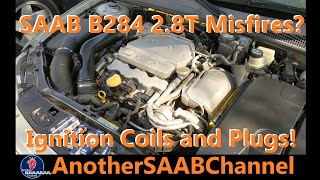
Source hint: YouTube - AnotherSAABChannel video titled 'SAAB 2.8T Misfires P0300 Coils and Plugs'
Saab 9-3 2.8T
Symptoms: Random misfires on a tuned engine.
What fixed it: Replaced spark plugs using specific tighter gap recommendations and tracked down/repaired vacuum leaks.
Source hint: saabcentral.com thread titled '2.8T Spark Plugs' on Vermont Tuning's section
Saab 9-3 Turbo X (V6)
Symptoms: Misfire requiring a tune-up of the ignition system.
What fixed it: Replaced spark plugs and ignition coils, which involved the step-by-step removal of the ECM and brackets to access the rear cylinders.
Source hint: YouTube - Auto Autopsy video 'Saab 9-3 Turbo X (V6) Spark Plug and Ignition Coil Replacement'
Related OBD-II Codes
Frequently Asked Questions
Why is it so difficult to change the rear ignition coils on my 2.8L V6 Saab 9-3?
What spark plugs and gap should I use to fix a P0300 on the B284 engine?
Does TSB PIE-0094A apply to my 2006-2009 Saab 9-3?
I found raw fuel in a vacuum line while diagnosing my P0300. What does this mean?
Which vacuum lines are most likely to cause a random misfire on the 2.8T?
Could my ECM be causing the P0300 code?
Helpful Videos
We Have This Part in Stock

The information in this article is provided for general reference and educational purposes only. Vehicle specifications, procedures, and part compatibility can vary by production date, trim level, and region. Always consult your vehicle's factory service manual and verify part numbers before purchasing or performing repairs. Safety-critical components such as airbags, seat belts, and braking systems should be installed by a qualified professional.
- Saab 9-3:
- 🧭 Diagnostic Flowchart
- 🎬 Helpful Videos
- 🛍️ Shop This Part
- What's Unique About the 2006-2009 Saab 9-3
- Symptoms You May Notice
- Most Likely Causes
- Rare But Worth Checking
- Diagnosis Steps
- Parts You'll Likely Need
- Related Codes That Often Appear With This One
- Technical Service Bulletins (TSBs) & Recalls
- Platform-Specific Known Issues
- Mechanic-Grade Diagnostic Values
- Scan Tool Commands That Help
- Wiring & Ground Locations
- Real Owner Repair Stories
- Documented NHTSA Reports
- OEM Part Supersession History
- Model Year Variations Within This Range
- Real Owner Stories
- 2008 Saab 9-3 Aero 2.8t
- Saab 9-3 2.8T
- Saab 9-3 2.8T
- Saab 9-3 Turbo X (V6)
- Related OBD-II Codes
- Frequently Asked Questions
- 🎟️ Get 5% Off