

P0300 on 2007-2010 Saturn Outlook: Random Misfire Causes & Fixes
P0300 on a Saturn Outlook indicates a random misfire. The most common causes are worn spark plugs and faulty ignition coils. However, on 2009-2010 models with the direct-injected (LLT) engine, carbon buildup on intake valves is a very frequent culprit. Stretched timing chains are also a known, serious issue for all years, often triggering codes like P0008 alongside P0300.
- P0300 means multiple cylinders are misfiring, and you should not ignore it, especially if the check engine light is flashing.
- For all years, start by inspecting basic tune-up items: spark plugs and ignition coils.
- If you have a 2009-2010 Outlook, severe carbon buildup on the intake valves is a highly probable cause and should be investigated with a borescope.
- If you hear a rattling noise from the engine on startup or have codes like P0017, a stretched timing chain is the likely culprit.
- Due to the labor involved in accessing the rear bank of cylinders, it is cost-effective to replace all six spark plugs and ignition coils at the same time.
What's Unique About the 2007-2010 Saturn OUTLOOK
The 2007-2010 Saturn Outlook uses two different versions of the 3.6L V6 engine, and the cause of a P0300 code often depends on which one you have. The 2007-2008 models use the port-injected LY7 engine, which is highly susceptible to premature timing chain stretch due to factors including an overly optimistic original oil life monitor calibration. The 2009-2010 models use the direct-injected (DI) LLT engine, which is extremely prone to severe carbon buildup on the intake valves—a problem GM addressed in technical service bulletins. This carbon buildup chokes airflow and is a leading cause of misfires on the later models. Both issues were so common that GM issued special coverage programs to extend warranties on these repairs.
Diagnostic Flowchart
Tap your situation to follow the diagnostic path that matches what you're seeing on this vehicle.
Generation note: While the Saturn Outlook had only one generation, this year range covers a significant engine update. The 2007-2008 models have the 3.6L LY7 V6. The 2009-2010 models have the 3.6L LLT direct-injection V6. The LLT engine is far more susceptible to P0300 caused by carbon buildup on the intake valves. The LY7 is more notorious for the timing chain issue, though it affects both.
Symptoms You May Notice
- Rough or shaking idle.
- Hesitation or stumbling during acceleration
- Reduced engine power or 'reduced power' mode activation.
- Poor fuel economy.
- Solid or flashing Check Engine Light.
- Smell of gasoline from the exhaust
- Engine rattling noise, especially on cold starts (indicative of timing chains).
- Replacing only one ignition coil when others are near the end of their service life, especially on the rear bank, leading to repeat repairs.
- Replacing oxygen sensors when the root cause is a vacuum leak or fuel delivery issue.
- Assuming the problem is spark plugs or coils on a 2009-2010 model without first checking for the extremely common carbon buildup issue.
- Replacing camshaft or crankshaft position sensors when codes like P0008 are present; these sensors are correctly reporting a mechanical timing problem.
Most Likely Causes
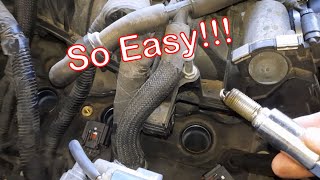
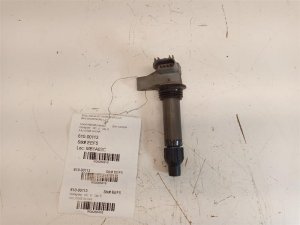
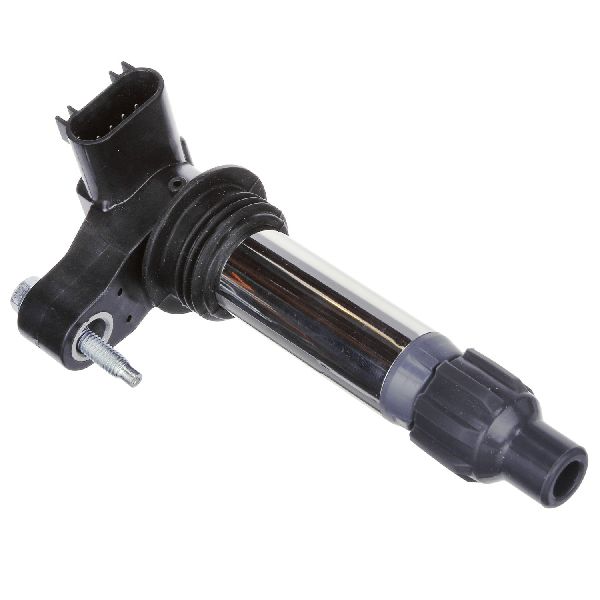
- Worn Spark Plugs or Faulty Ignition Coils 🔴 High Probability → Shop Ignition Coil Ignition coils, particularly the three on the rear bank against the firewall, are exposed to high heat and have a high failure rate. Accessing them requires removing the upper intake manifold. 🎬 Watch: Step-by-step guide to replacing spark plugs and coils. Spark plugs are a standard maintenance item, with a typical service interval of 60,000-100,000 miles.
How to confirm: Inspect spark plugs for wear, fouling, or incorrect gap. Use a scan tool to monitor misfire data on each cylinder. Swap a suspected bad ignition coil with one from a cylinder that is not misfiring (e.g., from the front bank to the rear) to see if the misfire follows the coil.
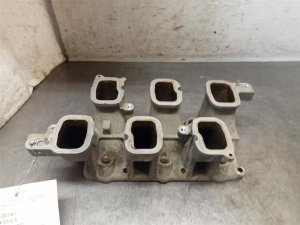
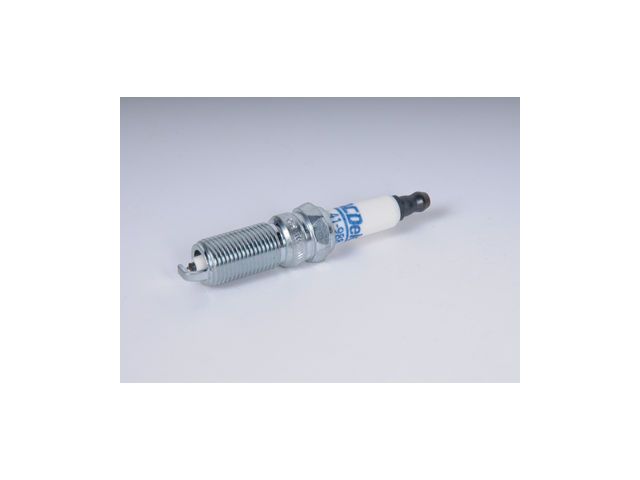
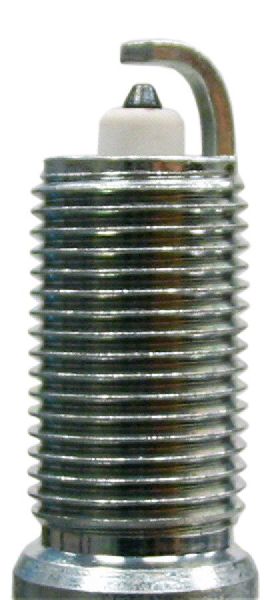
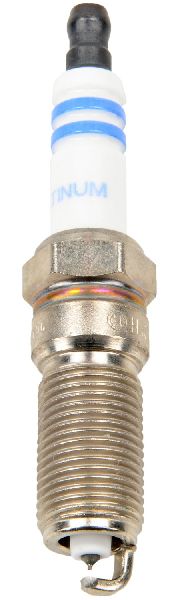
Typical fix: Replace all six spark plugs (ACDelco Iridium is often recommended) and any faulty ignition coils. It is highly recommended to replace all six coils at once if they are original, as accessing the rear three requires removing the intake manifold.
Est. part cost: $60-$300 - Intake Valve Carbon Buildup (2009-2010 models) 🔴 High Probability The 3.6L LLT engine uses direct injection (DI), which sprays fuel directly into the cylinder. This means no fuel washes over the intake valves to clean them. Oil vapors from the PCV system bake onto the hot valves, restricting airflow and causing misfires, especially on cold starts. GM issued TSB #PIP5029C/D regarding this issue, outlining a chemical cleaning procedure.
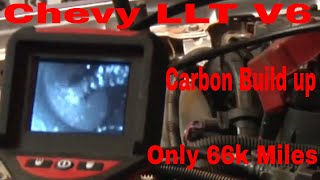
How to confirm: Visually inspect the intake valves using a borescope camera inserted through the intake manifold ports. 🎬 See what severe carbon buildup looks like on these valves. This is the only definitive way to confirm.
Typical fix: The valves must be cleaned manually. The most effective method is 'walnut blasting,' where crushed walnut shells are used to media blast the carbon off the valves. A less effective, but sometimes helpful, dealer procedure involves a chemical soak. Installing an oil catch can on the PCV line is a popular modification to reduce future buildup.
Est. part cost: $50-$100 (for cleaning materials/service) or $400-$800 for professional walnut blasting. - Stretched Timing Chains 🟡 Medium Probability → Shop Engine Timing Chain The early 3.6L V6 engines are notorious for premature timing chain wear, caused by a combination of long oil change intervals recommended by the Oil Life Monitor and original chain material/design. As the chains stretch, camshaft timing becomes inaccurate, leading to poor engine performance and random misfires. GM acknowledged this with Special Coverage Adjustment #11340C.
How to confirm: The presence of other codes like P0008, P0017, P0018, or P0019 is a strong indicator. A mechanic can use a scan tool or lab scope to check camshaft deviation angles to confirm the stretch. A distinct rattling noise on cold startup is also a common symptom.
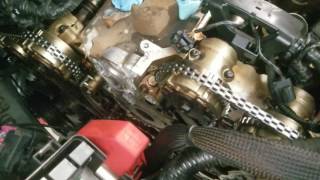
Typical fix: This is a major repair that involves replacing all three timing chains, the tensioners, and the guides with an updated part kit. It is a labor-intensive job often requiring the engine to be dropped 🎬 Watch: Expert tips for replacing timing chains inside the vehicle. from the vehicle.
Est. part cost: $300-$800 - Faulty Fuel Injectors 🟡 Medium Probability → Shop Fuel Injector Injectors can become clogged with deposits over time or fail electronically, leading to an improper fuel spray pattern and misfires. On the LLT engine, the high-pressure injectors can also fail.
How to confirm: A technician can perform a fuel injector balance test using a professional scan tool to measure the flow rate of each injector. Swapping injectors between cylinders is another diagnostic step, though more involved than swapping coils.
Typical fix: Replace the faulty fuel injector(s). Sometimes, a professional fuel system cleaning service can restore function.
Est. part cost: $50-$150 per injector - Vacuum Leak ⚪ Low Probability Aging plastic and rubber hoses in the PCV system can crack, and intake manifold gaskets can fail, allowing unmetered air into the engine. This leans out the air/fuel mixture and can cause random misfires.
How to confirm: A smoke test is the most effective method. This involves feeding pressurized smoke into the intake system and watching for where it escapes. Listening for hissing sounds around the engine bay can also sometimes locate a large leak.
Typical fix: Replace the leaking hose or gasket.
Est. part cost: $10-$150
Rare But Worth Checking
- Low Fuel Pressure: A weak fuel pump or clogged fuel filter can starve the engine for fuel, causing misfires across all cylinders, especially under load.
- Clogged Catalytic Converter: → Shop Catalytic Converter A blocked exhaust creates excessive backpressure, which can cause the engine to misfire and run poorly. This is often a consequence of long-term misfiring (dumping raw fuel), not the initial cause.
- Low Engine Compression: Internal mechanical issues like a burnt valve, worn piston rings, or a failed head gasket can cause a persistent misfire. A compression test can verify this.
- Loose or Corroded Ground Wires: A loose engine or chassis ground strap can cause intermittent and bizarre electrical issues, including random misfires. One owner of a platform-mate (GMC Acadia) traced a persistent P0300 to a loose ground bolt on the rear of the engine block.
Diagnosis Steps
- Read all stored fault codes with an OBD-II scanner. Note any codes accompanying P0300, especially timing-related codes (P0008, etc.).
- Check engine oil level and condition. Low or degraded oil can contribute to timing chain issues.
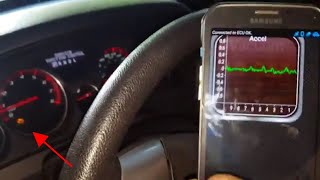
- Use the scanner's live data to monitor misfire counts per cylinder to see if the misfires are truly random or concentrated on one bank.
- Inspect all spark plugs for wear, damage, and proper gap. Replace if they are due or show signs of failure.
- Inspect ignition coils for signs of damage. Swap coils between cylinders to see if a specific misfire code (e.g., P0301) follows the coil.
- For 2009-2010 models, use a borescope to inspect the intake valves for carbon buildup, as this is a primary cause.
- Check for vacuum leaks using a smoke machine, paying close attention to the intake manifold area and all PCV hoses.
- If timing chain codes (P0008, P0017, etc.) are present, have a professional check camshaft deviation angles with a scan tool to confirm chain stretch.
- Test fuel pressure to ensure the fuel pump and regulator are functioning correctly.
Parts You'll Likely Need
- Ignition Coil
(OEM #12631062)— A very common failure item causing misfires. The rear bank is difficult to access, so replacing all at once is recommended.
Trusted brands: ACDelco, Delphi - Spark Plug
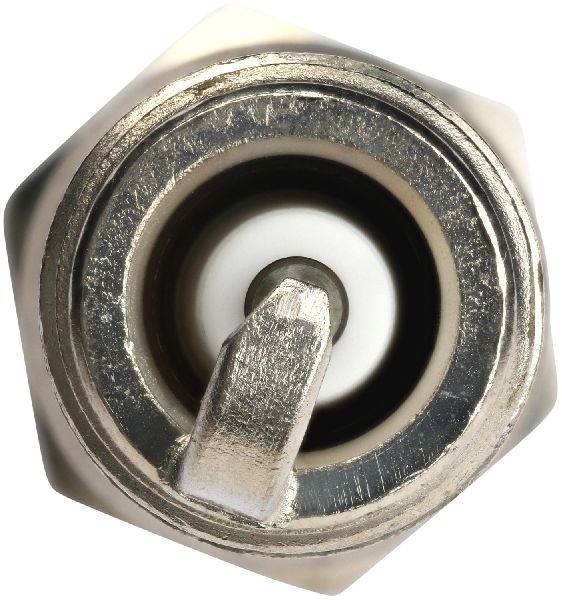
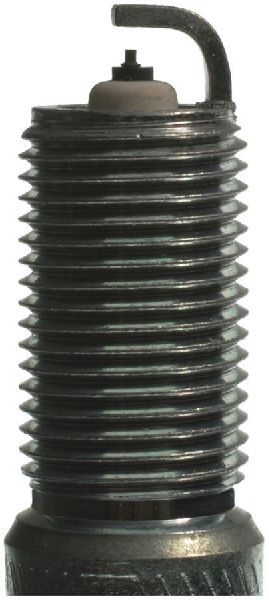
(OEM #41-109 (ACDelco Iridium))— Standard maintenance item. Worn or fouled plugs are a primary cause of misfires.
Trusted brands: ACDelco, NGK - Timing Chain Kit
(OEM #12650230 (For 2007 LY7))— Required for the notorious timing chain stretch issue. Kits include chains, guides, and tensioners.
Trusted brands: ACDelco, Cloyes - Intake Manifold Gasket Set — Must be replaced when removing the intake manifold to access the rear ignition coils and spark plugs.
Trusted brands: Fel-Pro, ACDelco
Related Codes That Often Appear With This One
- P0301-P0306 — If the PCM can eventually isolate the misfire to a specific cylinder, it will set one of these codes alongside P0300.
- P0008, P0017, P0018, P0019 — These codes relate to camshaft and crankshaft position correlation and are a strong sign that the P0300 is caused by stretched timing chains.
- P0171, P0174 — These 'System Too Lean' codes often appear when the misfire is caused by a large vacuum leak or a fuel delivery problem.
- P050D — This 'Cold Start Rough Idle' code is mentioned in TSB #PIP5628G and can be related to misfires caused by carbon buildup.
Technical Service Bulletins (TSBs) & Recalls
- TSB #11340C: Special Coverage Adjustment for premature timing chain wear. Extended the warranty to 10 years/120,000 miles. Also included an ECM reprogram to adjust the oil life monitor.
- TSB #PIP5029D: Addresses engine misfires on the 3.6L LLT engine due to major carbon deposits on the intake valves and outlines a chemical decarbonization procedure.
- TSB #PIP5628G: Provides diagnostic aid for technicians dealing with misfire codes P0300-P0308, instructing them on what data to collect before calling technical assistance.
- TSB #PIP5038B: General bulletin for technicians to follow published service information when diagnosing a wide range of misfire and ignition coil circuit codes (P0300-P0306, P0351-P0356).
Platform-Specific Known Issues
- Timing Chain Stretch (All Years, esp. 2007-2008 LY7): → Shop Engine Timing Chain The 3.6L V6 is infamous for stretched timing chains, leading to P0008 and P0300 codes. GM's Special Coverage #11340C addressed this by extending the warranty, but it has since expired for all vehicles. The root cause is often attributed to the original long oil change intervals and chain design. The only fix is a costly replacement of the chains, guides, and tensioners.
- Intake Valve Carbon Buildup (2009-2010 LLT): The direct-injection engine does not have fuel washing over the intake valves. This allows oil vapor from the PCV system to bake onto the valves, restricting airflow and causing P0300, especially at idle or on cold starts. The best repair is walnut shell blasting of the intake ports and valves.
Mechanic-Grade Diagnostic Values
- Ignition Coil Primary Resistance — expected: 0.4 to 2.0 ohms. Failure: A reading outside this range, or an open circuit (infinite resistance), indicates a faulty coil.
- Ignition Coil Secondary Resistance — expected: 6,000 to 10,000 ohms. Failure: A reading outside this range suggests the secondary windings are failing. Note: Some coil designs prevent this measurement.
- Fuel Trim (Short Term and Long Term) — expected: Within +/- 10%. Failure: Consistently high positive fuel trims (>10%) suggest the engine is compensating for a lean condition, often caused by a vacuum leak.
Scan Tool Commands That Help
- GDS2 / Tech2 or equivalent professional scan tool: Crankshaft Position Variation Relearn — This procedure is required after replacing the crankshaft position sensor, the ECM, or performing major engine work like a timing chain replacement. Failure to perform the relearn can cause the ECM to incorrectly interpret minor crankshaft speed variations as misfires, setting a false P0300 code.
- GDS2 / Tech2 or equivalent professional scan tool: Injector Balance Test — To diagnose a potentially faulty or clogged fuel injector. The tool commands each injector to fire for a specific duration while monitoring the corresponding drop in fuel pressure, allowing a comparison of flow rates between cylinders.
- GDS2 / Tech2 or equivalent professional scan tool: Misfire Counters — This live data PID should be monitored at the beginning of any P0300 diagnosis to determine if the misfires are truly random or if they are concentrated on a specific cylinder or bank, which can guide the diagnostic path.
Wiring & Ground Locations
- G101 — Left side of the engine.. This is a primary engine ground. A loose or corroded connection at this point can cause a variety of issues for the Engine Control Module (ECM) and its sensors, potentially leading to false sensor readings or erratic ignition system performance.
- G115 — Left side of the engine compartment, on the left inner fender panel.. This is a major chassis ground point. The ECM and other critical modules rely on clean ground connections. Poor grounding here can introduce electrical noise and intermittent faults that are difficult to trace, including misfires.
- ECM (Engine Control Module) — Located in the left front corner of the engine compartment.. The ECM itself requires a solid ground to the engine block to function correctly. Some technicians recommend adding a supplementary ground wire from the ECM case directly to the engine block to prevent intermittent issues caused by a poor ground through its mounting bracket.
Real Owner Repair Stories
- SaturnFans.com Forum (2008 Saturn Vue 3.6L (platform mate with same LY7 engine)) — P0300 code stored, no Check Engine Light initially. Using a scan tool, the owner observed that misfires were only being counted on Bank 1 (cylinders 1, 3, 5).
❌ Tried (didn't work) Replaced all spark plugs., Swapped ignition coil from cylinder #1 to #2; the misfire did not follow the coil.
✅ What actually fixed it The user's observation that misfires were isolated to one bank, combined with normal fuel trims, strongly pointed away from a general vacuum leak and towards a bank-specific problem. The forum discussion correctly guided the user to investigate the timing chains, as a slightly stretched chain can cause one bank to be out of time before the other, leading to misfires isolated to that bank before setting a P0008/P0017 code.
OEM Part Supersession History
12651450 (and other early revisions)→12693218, then 12700436— The original timing chains on the 3.6L V6 were prone to premature stretching. GM released updated kits with more durable chains, guides, and improved tensioners to increase longevity.
Heads up: It is critical to use the latest available part number for the timing chain kit. While older kits may physically fit, they contain the original, failure-prone chain design and will likely fail prematurely again.
Model Year Variations Within This Range
- 2007-2008: These models use the 3.6L LY7 port-injected V6. P0300 is most commonly associated with timing chain stretch, ignition components, or vacuum leaks.
- 2009-2010: These models use the 3.6L LLT direct-injected V6. While still susceptible to timing chain issues, they are far more likely to experience P0300 due to severe carbon buildup on the back of the intake valves, a problem not seen on the earlier port-injected LY7 engine.
Helpful Videos
Used OEM Parts in Stock
New Aftermarket Parts Available

The information in this article is provided for general reference and educational purposes only. Vehicle specifications, procedures, and part compatibility can vary by production date, trim level, and region. Always consult your vehicle's factory service manual and verify part numbers before purchasing or performing repairs. Safety-critical components such as airbags, seat belts, and braking systems should be installed by a qualified professional.
- Saturn OUTLOOK:
- 🧭 Diagnostic Flowchart
- 🎬 Helpful Videos
- 🛍️ Shop This Part
- What's Unique About the 2007-2010 Saturn OUTLOOK
- Symptoms You May Notice
- Most Likely Causes
- Rare But Worth Checking
- Diagnosis Steps
- Parts You'll Likely Need
- Related Codes That Often Appear With This One
- Technical Service Bulletins (TSBs) & Recalls
- Platform-Specific Known Issues
- Mechanic-Grade Diagnostic Values
- Scan Tool Commands That Help
- Wiring & Ground Locations
- Real Owner Repair Stories
- OEM Part Supersession History
- Model Year Variations Within This Range
- 🎟️ Get 5% Off