

P0300 on 2007-2010 Saturn SKY: Random Misfire Causes and Fixes
P0300 on a Saturn SKY indicates random engine misfires. The most common causes are worn spark plugs and faulty ignition coils. For the 2.0L Turbo (LNF) engine, carbon buildup on the intake valves is also a very frequent culprit. On both engines, failing camshaft position actuator solenoids are another known issue that can trigger misfires. A basic tune-up with new plugs and coils often resolves the issue, but GDI carbon cleaning or solenoid replacement may be necessary.
- P0300 means multiple cylinders are misfiring.
- Start your diagnosis with the cheapest and most common fixes: spark plugs and ignition coils.
- For the 2.0L Turbo Red Line model, pay close attention to the spark plug gap (0.032" is recommended) and be aware that carbon buildup on intake valves is a known issue.
- NEVER drive with a flashing Check Engine Light, as you risk destroying your catalytic converter, a very expensive repair.
What's Unique About the 2007-2010 Saturn SKY
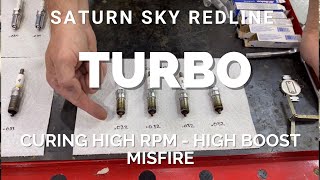
The Saturn SKY uses two different Ecotec engines: the naturally aspirated 2.4L LE5 and the turbocharged, direct-injected 2.0L LNF in the Red Line model. While both can suffer from common ignition faults, the 2.0L LNF engine is particularly susceptible to carbon buildup on the intake valves due to its Gasoline Direct Injection (GDI) design. This buildup can restrict airflow and cause misfires, a problem documented in GM Technical Service Bulletins. Additionally, the 2.0L LNF is sensitive to spark plug gaps, with an incorrect gap often causing misfires under boost. 🎬 Watch: Troubleshooting high boost misfires on the LNF engine. Both engines are also known to have issues with the camshaft position actuator solenoids, which can stick or fail, leading to improper valve timing and misfires.
Diagnostic Flowchart
Tap your situation to follow the diagnostic path that matches what you're seeing on this vehicle.
Symptoms You May Notice
- Rough or vibrating idle
- Hesitation or stumbling during acceleration
- Flashing or solid Check Engine Light
- Reduced engine power and poor acceleration
- Decreased fuel economy
- Difficulty starting the engine
- Exhaust smells strongly of fuel
- Engine noise is louder than usual during misfire events.
- Replacing only one spark plug or coil when others are near the end of their service life.
- Replacing oxygen sensors when the issue is actually a vacuum leak or ignition problem causing a lean condition.
- On the 2.0L LNF, replacing injectors or coils when the root cause is carbon buildup on the intake valves.
- Confusing the Camshaft Position *Sensors* with the Camshaft Position Actuator *Solenoids*. The solenoids are a more common failure point for causing misfires on this platform.
Most Likely Causes
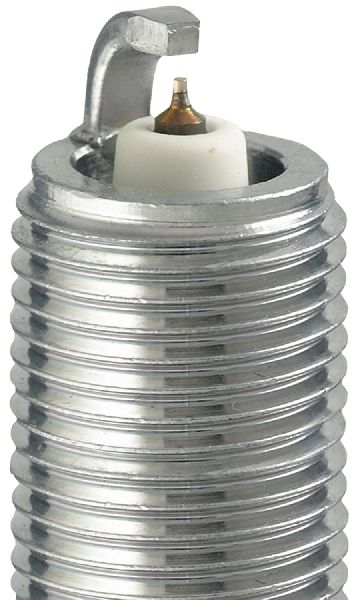
- Worn or Incorrectly Gapped Spark Plugs 🔴 High Probability → Shop Spark Plug The 2.0L LNF turbo engine is highly sensitive to spark plug gap, and 'spark blowout' can occur under boost if the gap is too wide. A GM TSB also noted that factory-applied talc powder in coil boots could cause arcing on the spark plug insulator, leading to misfires. Plugs are a primary wear item and the most common starting point for a P0300 fix.
How to confirm: Inspect the spark plugs for wear, fouling, or carbon tracking. Verify the gap. For the 2.4L LE5, the gap should be 0.040". For the 2.0L LNF Turbo, the factory spec is 0.035", but many owners and tuners recommend a tighter gap of 0.032" to prevent misfires under boost. The OEM ACDelco Iridium plugs are pre-gapped and should not be adjusted.
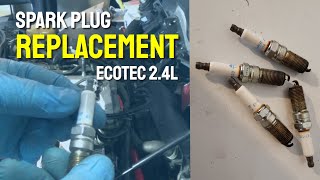
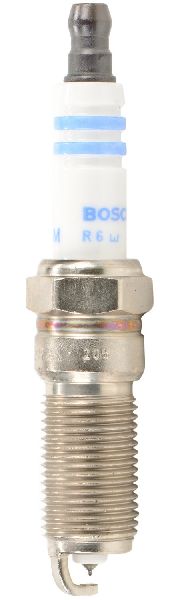
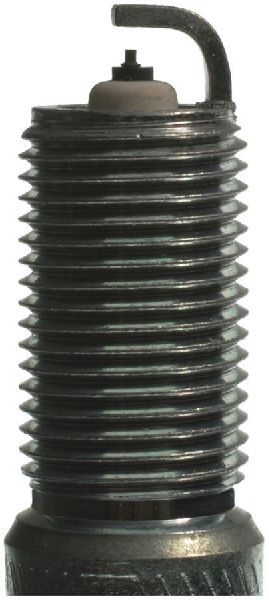
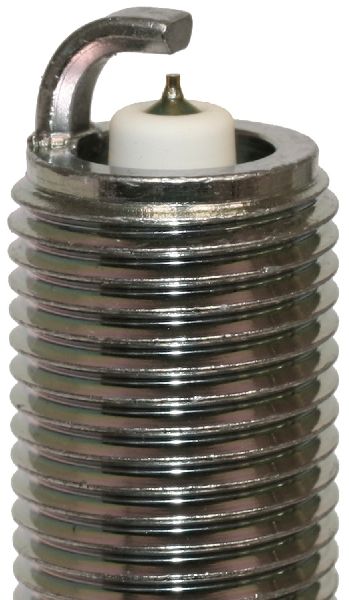
Typical fix: Replace all four spark plugs. Use high-quality Iridium plugs. For the 2.0L LNF, the OEM plug is ACDelco 41-108. For the 2.4L LE5, the OEM plug is ACDelco 41-988. Torque to 15 ft-lbs.
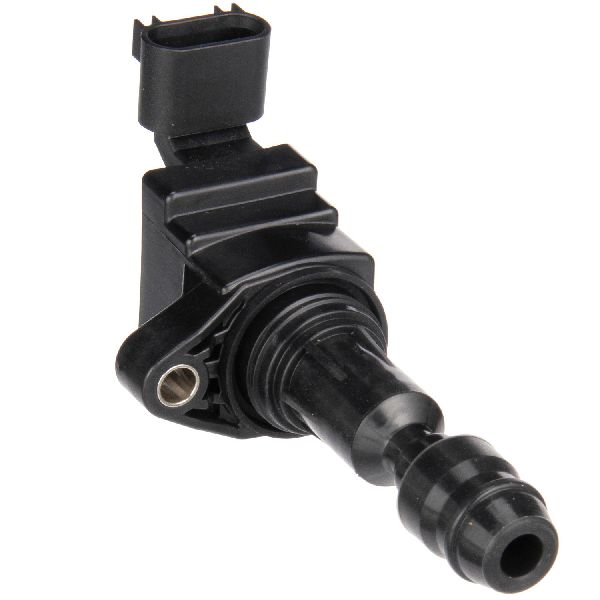
Est. part cost: $40-$80 - Faulty Ignition Coils 🔴 High Probability → Shop Ignition Coil Ignition coils are a common wear item. Heat cycles and age can cause them to fail, resulting in a weak or non-existent spark. Owners on forums frequently report solving misfires by replacing coils.
How to confirm: With the engine running, use a scan tool to monitor misfire counts per cylinder. If specific cylinders are misfiring (even with a P0300), swap the ignition coil from a misfiring cylinder with one from a non-misfiring cylinder. If the misfire code follows the coil (e.g., P0302 becomes P0304 after swapping coils from cylinders 2 and 4), the coil is bad.
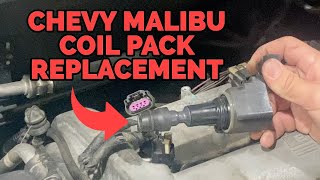
Typical fix: Replace the faulty ignition coil. The OEM part number is ACDelco D522C (GM 12638824), which fits both the 2.4L and 2.0L engines. It is often recommended to replace all four coils at the same time as the spark plugs, especially on higher mileage vehicles.
Est. part cost: $30-$70 per coil - Carbon Buildup on Intake Valves (2.0L LNF Turbo) 🟡 Medium Probability The 2.0L LNF is a Gasoline Direct Injection (GDI) engine. Fuel is injected directly into the cylinder, so it never washes over the intake valves. Oil vapor from the PCV system can bake onto the hot valves, forming carbon deposits that restrict airflow and cause misfires, especially on a cold start. This is a well-documented issue covered by GM TSB PIP5029 (now superseded by 16-NA-383).
How to confirm: This is difficult to confirm without a borescope to visually inspect the intake valves. If ignition and fuel system basics check out, and the misfire is worse when cold, carbon buildup is a strong possibility. Compression may be very low on a cold engine.
Typical fix: The valves must be cleaned. This can be done by a shop using a media blasting process (e.g., walnut blasting) or through a chemical induction cleaning service as described in GM TSB 16-NA-383, which involves using GM Upper Engine and Fuel Injector Cleaner. After cleaning, an oil and filter change is required.
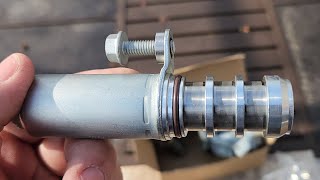
Est. part cost: $20-$40 for chemicals, $400-$800+ for professional media blasting service - Faulty Camshaft Position Actuator Solenoids (VVT Solenoids) 🟡 Medium Probability → Shop Engine Camshaft These solenoids control the variable valve timing. They are known to get clogged with oil sludge or fail electronically, causing the camshafts to be in the wrong position. This incorrect timing leads to rough idle, hesitation, and random misfires. Owners have reported fixing P0300 codes by replacing these actuators.
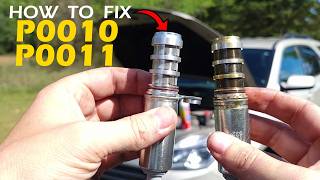
How to confirm: Scan for related codes like P0010, P0011, P0013, or P0014. You can test the solenoids by applying 12V to their terminals to see if they actuate. A more common method is to swap the intake and exhaust solenoids (they are identical) and see if the trouble code follows the part (e.g., an intake code P0010 becomes an exhaust code P0013).
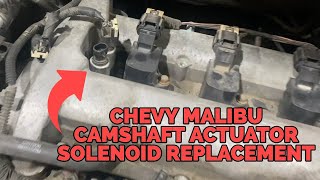
Typical fix: Replace the faulty solenoid(s). Both intake and exhaust solenoids are located on top of the valve cover and are held in by a single bolt, making for an easy replacement. The OEM part number for both is GM 12655420 (intake) and 12655421 (exhaust), though they are often sold as interchangeable.
Est. part cost: $40-$90 for a pair - Vacuum Leak ⚪ Low Probability Hoses and gaskets become brittle with age and can crack, allowing unmetered air to enter the engine, which leans out the air/fuel mixture and can cause random misfires. On the LNF, aftermarket intakes or charge pipes can also be a source of leaks if not installed correctly.
How to confirm: Perform a smoke test. This involves feeding pressurized smoke into the intake system and looking for leaks from cracked hoses, the intake manifold gasket, or other seals. You can also carefully spray brake cleaner or starting fluid around vacuum lines and gaskets with the engine running; a change in idle RPM indicates a leak.
Typical fix: Replace the leaking hose or gasket.
Est. part cost: $10-$100
Rare But Worth Checking
- Clogged or Faulty Fuel Injectors: → Shop Fuel Injector More common on the 2.0L LNF GDI engine. A failing injector can cause a misfire in a specific cylinder, but multiple dirty injectors could trigger a P0300. A TSB for a Saturn Vue suggested injector cleaning can resolve a P0300.
- Low Fuel Pressure: A weak fuel pump or clogged fuel filter can starve the engine of fuel, leading to lean conditions and random misfires across all cylinders. On the 2.0L LNF, this could also be caused by a failing high-pressure fuel pump (HPFP).
- Failing Camshaft Position Sensor: → Shop Engine Camshaft Distinct from the actuator solenoids, the sensors themselves can fail. This will typically throw a specific sensor code like P0340 or P0365, but can also contribute to misfire conditions.
- Weak Battery or Faulty Alternator: → Shop Alternator Modern ignition systems require stable voltage to operate correctly. A weak battery or failing alternator can cause low system voltage, leading to a weak spark and random misfires.
- Clogged Catalytic Converter: → Shop Catalytic Converter If the catalytic converter is clogged, it creates excessive exhaust backpressure, which can cause the engine to misfire randomly. This is often a result of long-term misfires that have gone unaddressed.
- Stretched Timing Chain: → Shop Engine Timing Chain While more common on GM's V6 engines, the Ecotec timing chains can also stretch over time, leading to incorrect cam timing and misfires. This is a more serious mechanical issue.
Diagnosis Steps
- Read all fault codes with an OBD-II scanner. Note any codes besides P0300, as they can provide valuable clues (e.g., P0171, P0011).
- Check the freeze frame data to see the engine conditions (RPM, load, temperature) when the P0300 code was set.
- Inspect the ignition system. Remove and inspect all four spark plugs for wear, damage, or fouling.
- Verify the spark plug gap is correct for your engine (2.4L: 0.040", 2.0L Turbo: 0.032" recommended).
- Test the ignition coils. The easiest method is to swap a coil from a misfiring cylinder (if identifiable via live data) with a known good cylinder and see if the misfire follows the coil.
- (2.0L LNF) If ignition components are good and misfires are worse on cold starts, suspect carbon buildup on intake valves.
- Check for vacuum leaks using a smoke machine or by carefully spraying brake cleaner around intake gaskets and vacuum hoses while monitoring engine RPM.
- Inspect and test the camshaft position actuator solenoids. Check for related DTCs (P0010-P0014) and consider swapping them to see if the fault moves.
- Check fuel pressure. For the 2.4L LE5, check the low-side pressure. For the 2.0L LNF, both low-side and high-side (commanded vs. actual) pressure should be checked with a capable scan tool.
Parts You'll Likely Need
- Spark Plugs
(OEM #ACDelco 41-108 (2.0L LNF), ACDelco 41-988 (2.4L LE5))— This is the most common and simplest fix for a P0300 code. They are a routine maintenance item.
Trusted brands: ACDelco, NGK, Denso
OEM price range: $40-$60
Aftermarket price range: $30-$50 - Ignition Coil
(OEM #ACDelco D522C (GM 12638824))— Ignition coils provide the high voltage for the spark and are a common failure point causing misfires.
Trusted brands: ACDelco, Delphi, NGK
OEM price range: $50-$70 per coil
Aftermarket price range: $30-$50 per coil - Camshaft Position Actuator Solenoid
(OEM #GM 12655420 / 12655421)— A known failure point on Ecotec engines that directly causes timing issues and misfires. Often replaced in pairs.
Trusted brands: ACDelco, Dorman, Delphi
OEM price range: $40-$60 each
Aftermarket price range: $20-$40 each
Related Codes That Often Appear With This One
- P0301, P0302, P0303, P0304 — These codes indicate a misfire on a specific cylinder. P0300 often appears with one or more of these once the ECM can isolate the fault.
- P0171 (System Too Lean) — This code often accompanies P0300 when the root cause is a large vacuum leak or a fuel delivery issue (like a weak fuel pump) that affects all cylinders.
- P0010, P0011, P0013, P0014 — These codes point to faults in the camshaft position actuator solenoid circuits. A failing solenoid is a known cause of P0300 on Ecotec engines.
Technical Service Bulletins (TSBs) & Recalls
- PIP5029 (A-H): Now superseded by 16-NA-383, this was the original TSB detailing misfires due to carbon buildup on GDI engines.
- 16-NA-383: The current TSB for diagnosing and cleaning carbon buildup on intake valves for all GM gasoline engines, including the LNF. It outlines the chemical cleaning procedure.
- PIP5628G: A preliminary information bulletin for dealers to gather diagnostic data for TAC (Technical Assistance Center) when diagnosing misfire codes P0300-P0308.
Platform-Specific Known Issues
- LNF Engine Carbon Buildup: The 2.0L LNF direct-injection engine does not have fuel washing over the intake valves. This allows oil and combustion byproducts from the PCV system to bake onto the valves, restricting airflow and causing misfires, particularly when the engine is cold. This is a widely known characteristic of this engine and a primary suspect for P0300 after basic ignition components are ruled out.
- Camshaft Position Actuator Solenoid Failure: → Shop Engine Camshaft Both the 2.4L LE5 and 2.0L LNF Ecotec engines are known for having their VVT solenoids fail. They get clogged by dirty oil or fail electronically, causing the cam timing to be off. This results in a rough idle and misfires that can be random, triggering a P0300. It's a common and relatively easy fix.
Mechanic-Grade Diagnostic Values
- Low-Pressure Fuel System (2.4L LE5 & 2.0L LNF) — expected: 40.5-47 PSI with key on, engine off. 30.5-44 PSI at idle.. Failure: Pressure significantly below the expected range indicates a weak in-tank fuel pump or clogged filter.
- High-Pressure Fuel System (2.0L LNF Only) — expected: Approximately 400-500 PSI at warm idle, rising with engine load. Cold start pressure can be much higher, around 1700-1800 PSI.. Failure: Pressure that is very low (e.g., under 100 PSI) at idle or does not increase when commanded by the ECM points to a failing high-pressure fuel pump (HPFP).
- Ignition Coil Primary Resistance (Both Engines) — expected: Approximately 0.5 - 2.0 Ohms.. Failure: A reading of OL (open loop/infinite resistance) or significantly outside the expected range indicates a faulty coil.
- Ignition Coil Secondary Resistance (Both Engines) — expected: Approximately 6,000 - 13,000 Ohms (6-13 kOhms).. Failure: A reading of OL (open loop/infinite resistance) or far outside the typical range suggests the coil's secondary winding has failed.
Hidden / Shadow Codes Worth Checking
- P050D: Cold Start Rough Idle. While not a 'shadow' code, it is a specific and highly relevant code that often appears with P0300 on GM direct injection engines. It indicates the PCM has detected an unstable engine speed immediately after a cold start. (see via A standard OBD-II scanner. When seen with P0300 on the 2.0L LNF, it strongly suggests looking at causes like faulty fuel injectors or significant carbon buildup on intake valves.)
Scan Tool Commands That Help
- GDS2 / Tech2: Crankshaft Variation Learn — This procedure should be performed after any major engine work, including timing chain or crankshaft sensor replacement, to allow the ECM to learn the precise position of the crankshaft. An incorrect learn value can contribute to false misfire detection.
- GDS2 / PICO Scope: Relative Compression Test — As suggested in GM bulletin PIP5628G, this test can quickly identify a mechanical sealing issue (valves, rings, head gasket) in a cylinder without a full teardown. If the test passes, the technician can focus on ignition and fuel delivery issues.
- GDS2 / Tech2: Injector Balance Test — This function commands each fuel injector to fire for a set duration and measures the corresponding drop in fuel pressure. It can identify a weak or clogged injector that may be causing a misfire.
Wiring & Ground Locations
- G106 — Located on the front center of the frame cross rail, under the crank pulley.. This is a primary engine and chassis ground. Corrosion or a loose connection here can cause unstable voltage to critical engine components, including the ECM and ignition system, leading to random misfires.
- G103 / G104 — Located at the left rear of the engine compartment on the cowl, above the brake booster (G103) and on the engine block/head itself (G104).. These grounds are critical for the Engine Control Module (ECM) and various sensors. G103 grounds the Data Link Connector (DLC), which can affect scanner communication if faulty. A poor ground at G104 can directly impact sensor readings and coil performance.
- ECM Body Ground — The metal case of the Engine Control Module (ECM) itself, which is typically mounted to a bracket on the engine.. Some owners have found that the ECM's ground path through its mounting bracket can be unreliable. Adding a supplementary ground wire from one of the ECM mounting bolts directly to the chassis or battery negative terminal can resolve intermittent and hard-to-diagnose electrical issues that may cause misfires.
"I Checked Everything" — The Actual Cause
- In some cases, particularly on the 2.0L LNF engine, a technician may perform a smoke test and find no vacuum leaks, yet the P0300 code persists. The actual cause is often severe carbon buildup on the back of the intake valves. This restricts airflow into the cylinders, disrupting the air/fuel mixture and causing misfires (especially when cold), but it does not present as a traditional vacuum leak that a smoke test would identify.
When the Usual Fixes Don't Work
- While worn spark plugs and faulty ignition coils are the most frequent culprits for a P0300 code, many owners have replaced these parts only to have the misfire return. In these instances, the root cause is often a platform-specific issue. On both the 2.4L and 2.0L engines, the next most likely cause is a pair of failing camshaft position actuator solenoids, which is a relatively inexpensive and simple fix. On the 2.0L LNF turbo engine specifically, if the misfire is worse on cold starts and persists after a tune-up, the cause is very likely to be heavy carbon deposits on the intake valves, which requires a chemical or media-blasting cleaning service to resolve.
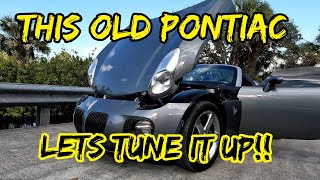
Helpful Videos

We Have This Part in Stock


The information in this article is provided for general reference and educational purposes only. Vehicle specifications, procedures, and part compatibility can vary by production date, trim level, and region. Always consult your vehicle's factory service manual and verify part numbers before purchasing or performing repairs. Safety-critical components such as airbags, seat belts, and braking systems should be installed by a qualified professional.
- Saturn SKY:
- 🧭 Diagnostic Flowchart
- 🎬 Helpful Videos
- 🛍️ Shop This Part
- What's Unique About the 2007-2010 Saturn SKY
- Symptoms You May Notice
- Most Likely Causes
- Rare But Worth Checking
- Diagnosis Steps
- Parts You'll Likely Need
- Related Codes That Often Appear With This One
- Technical Service Bulletins (TSBs) & Recalls
- Platform-Specific Known Issues
- Mechanic-Grade Diagnostic Values
- Hidden / Shadow Codes Worth Checking
- Scan Tool Commands That Help
- Wiring & Ground Locations
- "I Checked Everything" — The Actual Cause
- When the Usual Fixes Don't Work
- 🎟️ Get 5% Off