

P0300 on 2007-2010 Saturn Sky 2.0L Turbo: Random Misfire Causes and Fixes
On the Saturn Sky with the 2.0L LNF Turbo engine, a P0300 code is most often caused by worn spark plugs or faulty ignition coils. Carbon buildup on the intake valves, a common issue for this direct-injection engine, is the next likely culprit. Failing camshaft position actuator solenoids are also a known weak point. Start with plugs and coils, which costs around $50-$150 for parts.
- P0300 means multiple cylinders are misfiring randomly.
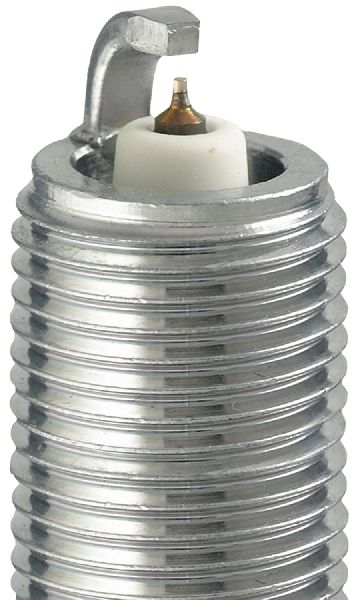
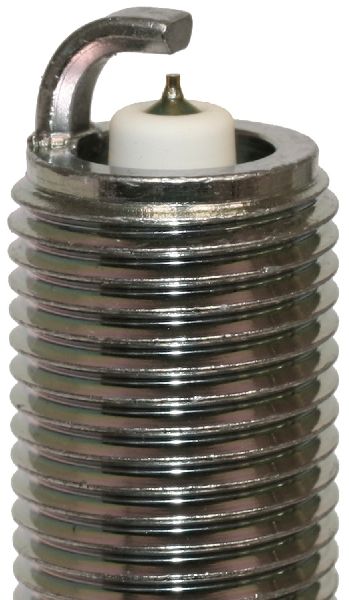
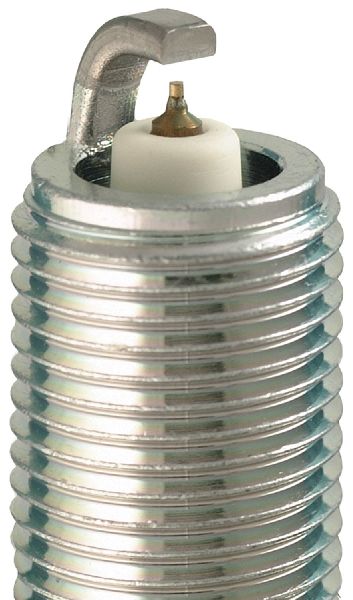
- For the 2.0L Turbo Sky, always start by replacing the spark plugs with correctly gapped Iridium plugs.
- NEVER drive with a flashing Check Engine Light, as this can quickly destroy your catalytic converter, a very expensive repair.
- If new plugs and coils don't fix the issue, the next most likely cause is carbon buildup on the intake valves, a known issue with this engine that requires professional service.
- Check for other codes; camshaft position codes (P001x) or lean codes (P0171) can point you directly to the root cause.
What's Unique About the 2007-2010 Saturn Sky
The Saturn Sky's 2.0L LNF engine is a direct-injection (GDI) turbocharged unit. This design is known for causing carbon deposits to build up on the back of the intake valves over time, which can disrupt airflow and cause misfires, especially at idle. This engine is also sensitive to spark plug condition and gap, making spark plugs a more frequent cause of P0300 than on many other vehicles. The high-pressure fuel pump (HPFP), unique to GDI engines, can also be a cause, as can the common-to-fail camshaft actuator solenoids.
Symptoms You May Notice
- Rough or shaky idle.
- Hesitation or stumbling during acceleration.
- Noticeable loss of engine power.
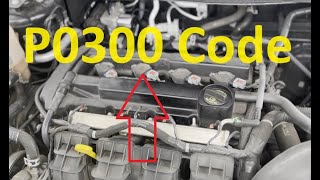
- Flashing or solid Check Engine Light. 🎬 Watch this ultimate guide to understanding the P0300 misfire code.
- Reduced fuel economy.
- Difficulty starting the engine.
- Engine stalling, especially at stops.
- Fuel smell from the exhaust.
- Replacing only one spark plug or coil when multiple are needed.
- Replacing oxygen sensors, which are unlikely to be the root cause of a misfire, though a misfire can damage them over time. A faulty O2 sensor can cause a P0300, but it's less common than ignition or fuel system issues.
- Replacing the Mass Airflow (MAF) sensor without proper diagnosis. While a faulty MAF can cause issues, it's less common than ignition or carbon problems for this code.
- Replacing the accelerator pedal assembly for VVT-related codes (P0010, etc.) when the issue is the solenoids. There is a TSB (07-06-04-019) related to accelerator pedals, but it concerns code P2138 and water intrusion, not typically P0300.
Most Likely Causes
- Worn or Incorrectly Gapped Spark Plugs 🔴 High Probability → Shop Spark Plug The LNF turbo engine is highly sensitive to spark plug condition and gap. 'Spark blowout' can occur under boost if the gap is too wide. Worn plugs are the most common and cheapest place to start diagnosis. One owner on the Cobalt SS forums noted their misfire was solved after finding a plug with a missing ground electrode.
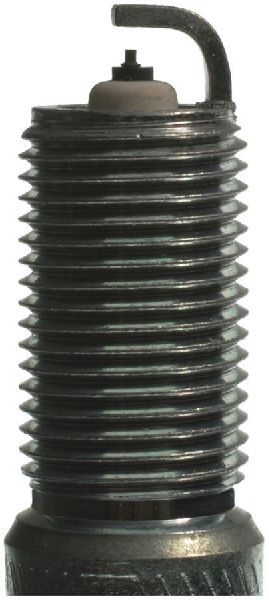
How to confirm: Remove and inspect all four spark plugs. Look for worn electrodes, oil fouling, white ashy deposits (indicating a lean condition), or carbon tracking. Check the gap with a feeler gauge; the recommended gap for the LNF engine is typically 0.032 inches.
Typical fix: Replace all four spark plugs with high-quality Iridium plugs (e.g., ACDelco 41-108) gapped correctly. It is critical to replace them as a set.
Est. part cost: $40-$80 - Failing Ignition Coils 🔴 High Probability → Shop Ignition Coil Ignition coils are a common wear item on most modern engines. Heat and vibration cause them to fail over time, leading to a weak or non-existent spark. On some Ecotec engines, the entire coil pack assembly, including the Ignition Control Module (ICM), is a known failure point. A GM TSB (PIP5038B) notes that repeated coil failures can be caused by bad electrical grounds or electromagnetic interference.
How to confirm: With the engine running, use a scan tool to monitor misfire counts per cylinder. If you don't have a scan tool, you can swap the ignition coil from a suspected misfiring cylinder (e.g., if you have a P0302) with a known good one. If the misfire code changes to the new cylinder (e.g., P0302 becomes P0301), the coil is bad.
Typical fix: Replace the faulty ignition coil. It is often recommended to replace them all at once, especially if they are original and the vehicle has high mileage.
Est. part cost: $30-$70 per coil - Carbon Buildup on Intake Valves 🟡 Medium Probability The LNF is a direct-injection engine, meaning fuel is sprayed directly into the cylinder. Unlike port-injected engines, fuel does not wash over the intake valves, allowing oil vapor and combustion byproducts from the PCV system to bake onto them, forming hard carbon deposits. This buildup restricts airflow, causing misfires, particularly at idle or low speeds.
How to confirm: This requires a borescope (a small camera) inserted into the intake ports to visually inspect the valves. Significant power loss and misfires that persist after an ignition system tune-up are strong indicators. A compression test may also show lower-than-normal readings.
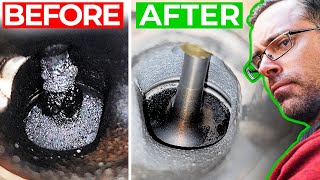
Typical fix: The intake manifold must be removed and the valves must be cleaned manually. The most effective method is walnut shell blasting, which is a labor-intensive process. Some owners report temporary improvement with chemical cleaners, but manual cleaning is the long-term solution. 🎬 Watch how to clean carbon buildup off your intake valves.
Est. part cost: $20-$50 for gaskets and seals; shop service for cleaning can be $400-$800+ - Faulty Camshaft Position Actuator Solenoids 🟡 Medium Probability → Shop Engine Camshaft These solenoids control the variable valve timing (VVT) by directing oil flow. They are notoriously prone to failure on Ecotec engines, including the LNF. They can become clogged with dirty oil or fail electrically, causing incorrect valve timing that leads to a rough idle, poor performance, and misfires. This is one of the most common failures on the Sky/Solstice platform.
How to confirm: This issue is almost always accompanied by camshaft position codes like P0010, P0011 (Intake side) or P0013, P0014 (Exhaust side). The solenoids can be removed, cleaned, and tested for operation with a 12v source, or swapped between intake/exhaust positions to see if the code changes.
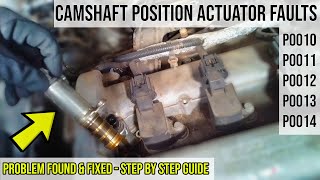
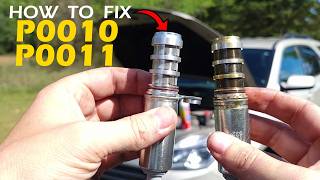
Typical fix: Replace the faulty intake and/or exhaust camshaft position actuator solenoid(s). It is highly recommended to perform an oil change at the same time, as dirty oil is the primary cause of failure. Part numbers are often 12655420 (Intake) and 12655421 (Exhaust). 🎬 See this walkthrough on how to replace your VVT solenoids.
Est. part cost: $25-$50 per solenoid
Rare But Worth Checking
- Clogged or Faulty Fuel Injectors: → Shop Fuel Injector As a direct-injection engine, the LNF injectors operate under very high pressure and can be prone to failure or clogging. While a single bad injector usually throws a specific cylinder code, multiple dirty injectors can cause a random P0300.
- Low Fuel Pressure: A failing high-pressure fuel pump (HPFP), unique to direct-injection engines, or a weak in-tank low-pressure pump can starve the engine for fuel under load, causing misfires across all cylinders. Expected HPFP pressure at idle is around 400-500 PSI, rising with load.
- Vacuum Leak: A cracked hose, failed intake manifold gasket, or leaking PCV component can introduce unmetered air, leaning out the air/fuel mixture and causing misfires. A smoke test is the most effective way to find a vacuum leak.
- Stretched Timing Chain: → Shop Engine Timing Chain While less common, a stretched timing chain can cause camshaft/crankshaft correlation issues, leading to improper valve timing and misfires. This would likely be accompanied by rattling noises on startup and may set other timing-related codes.
Diagnosis Steps
- Read all fault codes with an OBD-II scanner. Note any codes that accompany P0300, especially VVT or specific cylinder codes.
- If the Check Engine Light is flashing, do not drive the vehicle to avoid catalytic converter damage.
- Visually inspect the engine bay for obvious issues like disconnected vacuum hoses, damaged wiring, or signs of oil leaks around the valve cover.
- Replace all four spark plugs with new, correctly gapped plugs (e.g., ACDelco Iridium 41-108). This is a critical and inexpensive first step for the LNF engine.
- Inspect the ignition coils for signs of damage or carbon tracking. Swap coils between cylinders to see if a specific misfire code (P0301-P0304) follows the coil.
- If VVT codes (P0010, P0011, P0013, P0014) are present, inspect, clean, and test the camshaft position actuator solenoids. Replacement is a common and simple fix. Consider an oil change at the same time.
- If misfires persist, check for vacuum leaks using a smoke machine or by carefully spraying brake cleaner around gasket areas and listening for a change in engine idle.
- If other steps have failed, the next step is to investigate carbon buildup on the intake valves using a borescope. This is a known issue for the LNF engine.
- For advanced diagnosis, check fuel pressure for both the low-pressure (in-tank) and high-pressure (HPFP) systems. A scan tool that can read live data is needed to monitor the HPFP.
- Perform a compression test to rule out internal mechanical engine problems like piston ring or valve seat issues.
Parts You'll Likely Need
- Iridium Spark Plugs
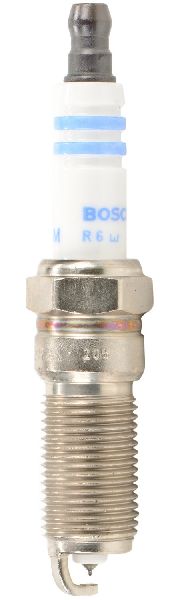
(OEM #12622441 (ACDelco 41-108))— The LNF engine is very sensitive to spark plug wear and gap. This is the most common fix for P0300 on this platform.
Trusted brands: ACDelco, NGK
OEM price range: $50-$90
Aftermarket price range: $40-$70 - Ignition Coil
(OEM #12629646)— Ignition coils are a primary wear item and a frequent cause of misfires.
Trusted brands: ACDelco, Delphi, Bosch
OEM price range: $50-$80 per coil
Aftermarket price range: $30-$70 per coil - Camshaft Position Actuator Solenoid
(OEM #12655420 (Intake), 12655421 (Exhaust))— A very common failure point on the Ecotec engine family, causing rough idle, performance loss, and misfires. Often sets P0010/P0011/P0013/P0014 codes alongside P0300.
Trusted brands: ACDelco, Dorman
OEM price range: $40-$60 per solenoid
Aftermarket price range: $25-$50 per solenoid
Related Codes That Often Appear With This One
- P0301, P0302, P0303, P0304 — These codes indicate a misfire on a specific cylinder. P0300 may appear first, and then as the PCM isolates the issue, a cylinder-specific code will be stored. Owners often report a P0300 along with one or more specific cylinder codes.
- P0171 (System Too Lean) — This often appears with P0300 if the cause is a large vacuum leak or a fuel delivery problem affecting all cylinders, such as a weak fuel pump.
- P0010, P0011, P0013, P0014 — These codes point to faults in the camshaft position actuator solenoid system, which is a known and very common cause of P0300, rough idle, and performance issues on this engine.
Technical Service Bulletins (TSBs) & Recalls
- GM TSB #07-06-04-019: While not directly for P0300, this TSB addresses DTC P2138 (Accelerator Pedal Position Sensor Correlation) caused by water intrusion in a harness connector. It is sometimes misapplied to P0300 issues but is relevant to general electrical diagnosis on the platform.
- Bulletin #PIP5628G: This manufacturer bulletin provides preliminary information to aid in diagnosing vehicles that present with misfires and DTC codes P0300 through P0308 and/or P050D.
Platform-Specific Known Issues
- Carbon Buildup: The direct-injection LNF engine is highly susceptible to carbon buildup on intake valves, which does not get cleaned by fuel. This requires manual cleaning (walnut blasting) for removal and is a common cause of persistent, otherwise undiagnosable misfires.
Mechanic-Grade Diagnostic Values
- High-Pressure Fuel Pump (HPFP) Pressure at Idle — expected: 400-500 PSI. Failure: Pressure significantly below 400 PSI at a warm idle, or does not rise with engine load.
- High-Pressure Fuel Pump (HPFP) Pressure at Cold Start — expected: 1700-1800 PSI. Failure: Significantly lower pressure during a cold start may indicate a weak HPFP.
- Low-Pressure Fuel System Pressure — expected: 40.5-47 PSI (Key on, engine off) / 30.5-44 PSI (at idle). Failure: Pressure below the specified range indicates a problem with the in-tank fuel pump or filter.
- Ignition Coil Primary Resistance — expected: 0.5 - 2.0 Ohms. Failure: A reading outside this range indicates a faulty coil.
- Ignition Coil Secondary Resistance — expected: 6,000 - 13,000 Ohms (6-13 kOhms). Failure: A reading outside this range indicates a faulty coil.
- Fuel Injector Resistance (LNF Engine) — expected: 10 - 15 Ohms. Failure: An injector with a reading significantly different from the others (more than 0.5 Ohms variance) or an open circuit is faulty.
- Engine Compression Test — expected: 150-160 PSI per cylinder. Failure: Low readings or significant variation between cylinders can indicate mechanical engine damage.
- Long Term and Short Term Fuel Trims — expected: Within +/- 5%. Failure: Consistently high positive trims (+10% or more) at idle suggest a vacuum leak, while high positive trims under load suggest a fuel delivery issue.
Scan Tool Commands That Help
- Tech2 / GDS2 / EFI Live: Crankshaft Position System Variation Learn (Crank Relearn) — After replacing a crankshaft position sensor, flywheel, or ECM, or as a diagnostic step for a persistent P0300 that doesn't resolve with common fixes. An incorrect crank position reading can cause the ECM to misinterpret slight rotational speed changes as misfires.
- Tech2 / GDS2: Cylinder Power Balance Test — To identify which cylinder(s) are contributing less power. The scan tool deactivates one cylinder at a time and measures the RPM drop. A cylinder with a smaller RPM drop is not firing effectively. This can help isolate a random misfire issue.
Wiring & Ground Locations
- G102 — Located at the left rear of the engine.. This is the primary ground for the ignition coils. A loose or corroded connection at G102 can cause a weak or intermittent spark across multiple cylinders, leading to a random misfire (P0300). This is referenced in GM TSB PIP5038B as a potential cause for repeated coil failures.
- G103 — Located on the cowl at the left rear of the engine compartment, above the brake booster.. This ground serves the Body Control Module (BCM) and the Data Link Connector (DLC). While not a direct cause of misfires, a poor connection here can cause communication issues with scan tools, complicating diagnosis.
- ECM Connector (Ignition Control) — On the Engine Control Module (ECM), which is located in the left rear corner of the engine compartment.. The ECM sends the control signal to each ignition coil. For advanced diagnosis, you can test the control circuit wiring continuity from the coil connector back to the specific ECM pin. The pins are: Cylinder 1 (Pin 57), Cylinder 2 (Pin 40), Cylinder 3 (Pin 91), and Cylinder 4 (Pin 74).
Real Owner Repair Stories
- CorvetteForum user (Corvette (similar GM V8 architecture, demonstrates a relevant GM-specific fix)) — Persistent P0300 code.
❌ Tried (didn't work) Not specified, but implied that common fixes were attempted.
✅ What actually fixed it Performing a 'Crank position relearn' procedure using EFI Live software finally resolved the P0300 code. - CorvetteForum user (Corvette) — P0300 'nightmare'.
❌ Tried (didn't work) Implied multiple attempts to fix.
✅ What actually fixed it The issue was finally resolved after replacing the fuel injectors and the oxygen sensors.
OEM Part Supersession History
12655420 (Intake Camshaft Position Actuator Solenoid)→12679099— Standard part evolution and potential design improvements.
Heads up: The new part number is a direct replacement for the original.12655421 (Exhaust Camshaft Position Actuator Solenoid)→12679100— Standard part evolution and potential design improvements.
Heads up: The new part number is a direct replacement for the original.Stock LNF Fuel Injectors→LDK Fuel Injectors (Rated at 140lbs/hr)— Performance upgrade for running ethanol fuels (E47/E85).
Heads up: Requires ECM tuning to adjust for the 13% higher flow rate. Installing these on a stock LNF tune will cause a rich running condition.
Diagnostic Flowchart
Real Owner Stories
Aggregated from forums and TSBs cited above. Mileages and costs reflect what owners reported in those sources.
Chevrolet Cobalt SS 2.0L LNF
Symptoms: Owner experienced a P0303 code that eventually turned into a random misfire P0300 code.
What fixed it: Inspected the spark plugs and found one plug with a completely missing ground electrode. Replacing the spark plugs resolved the issue.
Source hint: CobaltSS.net forum thread titled 'Dreaded P0303 now P0300 DTC code'
Chevrolet Cobalt SS 2.0L LNF (Tuned)
Symptoms: Owner with a tuned LNF chased misfire codes (P0300, P0301, P0302, P0304) occurring at idle and slow cruising speeds after already replacing ignition parts.
What fixed it: Suspected severe carbon buildup ('valve gunk') or High-Pressure Fuel Pump (HPFP) issues requiring further teardown after basic ignition tune-ups failed.
Source hint: CobaltSS.net forum thread titled 'Misfire codes idle crusing real slow p0300, 0301, 0302, 0304 ideas'
2009 Pontiac Solstice GXP 2.0L LNF
Symptoms: Owner experienced persistent P0300, P0302, and P0304 misfire codes even after replacing the spark plugs and ignition coils.
What fixed it: Demonstrated that the issue was more complex than basic ignition components, pointing toward deeper LNF issues like carbon buildup or VVT failures.
Source hint: Reddit r/MechanicAdvice thread titled '2009 Pontiac Solstice GXP cylinder misfires P0300'
Chevrolet HHR 2.0L LNF
Symptoms: Owner dealt with a mystery P0300 code that persisted after replacing both spark plugs and ignition coils.
What fixed it: Began investigating potential exhaust leaks or faulty fuel injectors as the root cause after ruling out the ignition system.
Source hint: ChevyHHR.net forum thread titled 'P0300 mystery'
Related OBD-II Codes
Frequently Asked Questions
What spark plugs should I use to fix a P0300 on my Saturn Sky LNF?
Why do my ignition coils keep failing on this 2.0L Turbo engine?
I replaced my plugs and coils but still have a P0300. Is it carbon buildup?
Can dirty oil cause a P0300 misfire code on the Saturn Sky?
Does GM TSB #07-06-04-019 apply to my P0300 misfire?
Helpful Videos
We Have This Part in Stock


The information in this article is provided for general reference and educational purposes only. Vehicle specifications, procedures, and part compatibility can vary by production date, trim level, and region. Always consult your vehicle's factory service manual and verify part numbers before purchasing or performing repairs. Safety-critical components such as airbags, seat belts, and braking systems should be installed by a qualified professional.
- Saturn Sky:
- 🧭 Diagnostic Flowchart
- 🎬 Helpful Videos
- 🛍️ Shop This Part
- What's Unique About the 2007-2010 Saturn Sky
- Symptoms You May Notice
- Most Likely Causes
- Rare But Worth Checking
- Diagnosis Steps
- Parts You'll Likely Need
- Related Codes That Often Appear With This One
- Technical Service Bulletins (TSBs) & Recalls
- Platform-Specific Known Issues
- Mechanic-Grade Diagnostic Values
- Scan Tool Commands That Help
- Wiring & Ground Locations
- Real Owner Repair Stories
- OEM Part Supersession History
- Real Owner Stories
- Chevrolet Cobalt SS 2.0L LNF
- Chevrolet Cobalt SS 2.0L LNF (Tuned)
- 2009 Pontiac Solstice GXP 2.0L LNF
- Chevrolet HHR 2.0L LNF
- Related OBD-II Codes
- Frequently Asked Questions
- 🎟️ Get 5% Off