

P0301 on 2009-2016 Audi A4 2.0T: Cylinder 1 Misfire Causes and Fixes
On a 2009-2016 Audi A4 2.0T, code P0301 is most often caused by a failed ignition coil or a worn spark plug in cylinder 1. Start by swapping the coil from cylinder 1 to another cylinder to see if the code follows. A DIY fix with a new coil and plug costs around $50-$75. If that fails, suspect the PCV valve or carbon buildup, which are also very common issues on this engine.
- P0301 on this Audi A4 is most frequently a bad ignition coil or spark plug in cylinder 1.
- Always perform the 'coil swap test' first as a free and effective diagnostic step.
- If coils and plugs are not the issue, the PCV valve and carbon buildup are the next most likely culprits.
- A flashing Check Engine Light is a 'stop driving now' warning to prevent catalytic converter damage.
- On 2009-2012 CAEB engines, a persistent misfire could be linked to deeper mechanical issues like piston rings (oil consumption) or timing components.
What's Unique About the 2009-2016 Audi A4
The EA888 2.0T engine in the B8/B8.5 generation A4 is robust but has several well-known weak points that directly lead to misfires. Ignition coils are a frequent failure item, with cylinder 1 being particularly vulnerable due to heat from the nearby turbocharger. As a direct-injection engine, it's also highly prone to carbon buildup on the intake valves, which disrupts airflow and is a common cause of misfires on vehicles with over 50,000 miles. Finally, failures of the PCV valve (oil separator) are common and create vacuum leaks that can trigger this code.
Generation note: This range covers the Audi A4 B8 (2009-2012) and B8.5 (2013-2016) generations. Both use versions of the 2.0T TFSI engine (CAEB and CAED, respectively). While most causes are common to both, the earlier CAEB engines are more known for issues with timing chain tensioners and oil consumption related to piston rings, which can be a deeper cause of misfires.
Symptoms You May Notice
- Rough or shaking idle, especially on cold start.
- Solid or flashing Check Engine Light.
- Hesitation or stumbling during acceleration.
- Noticeable loss of engine power.
- Reduced fuel economy.
- Smell of unburnt fuel from the exhaust.
- Loud whistling or howling sound from the engine bay (if caused by PCV failure).
- Replacing only the spark plug when the ignition coil was the actual point of failure.
- Replacing fuel injectors before thoroughly testing the ignition system and PCV valve, which are far more common and cheaper to fix.
- Assuming a misfire is always an ignition problem and overlooking a vacuum leak from a failed PCV valve, which is a very common cause on this engine.
Most Likely Causes
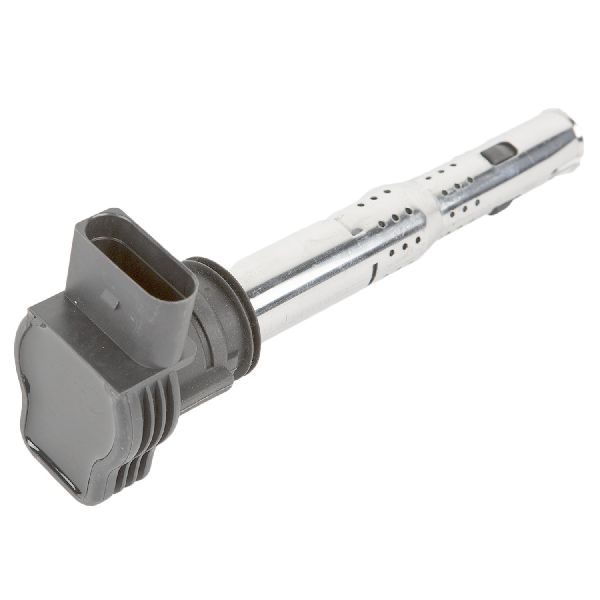
- Faulty Ignition Coil 🔴 High Probability → Shop Ignition Coil Ignition coils are a very common failure point on this VW/Audi engine platform due to high heat exposure, and cylinder 1 is closest to the turbo. The original black-top coils were particularly prone to failure.
How to confirm: Swap the ignition coil from cylinder 1 with one from another cylinder (e.g., cylinder 2). Clear the codes and drive. If the fault code changes to P0302, the ignition coil is faulty.
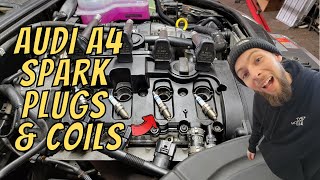
Typical fix: Replace the faulty ignition coil. Many owners replace all four at once as a 🎬 Watch: Step-by-step guide to replacing your spark plugs and coils. preventative measure, especially if they are original and the vehicle has over 60,000 miles. Upgraded 'R8' red-top coils are a popular choice.
Est. part cost: $30-$60 - Worn or Fouled Spark Plug 🔴 High Probability → Shop Spark Plug Spark plugs are a standard maintenance item with a typical interval of 35,000-40,000 miles on this engine. They can also become fouled with oil due to common oil consumption or PCV issues, leading to a weak spark.
How to confirm: After ruling out the coil, swap the spark plug from cylinder 1 to another cylinder. If the misfire code follows the plug, the plug is bad. Inspect the plug's tip for wear, carbon, or oil fouling.
Typical fix: Replace the spark plug. It is best practice to replace all four spark plugs at the same time to ensure consistent performance. Ensure they are gapped correctly.
Est. part cost: $15-$25 per plug - Carbon Buildup on Intake Valves 🟡 Medium Probability The 2.0T is a gasoline direct injection (GDI) engine. Fuel is injected directly into the cylinder and never washes over the intake valves. Oil vapor from the PCV system bakes onto the hot valves, forming hard carbon deposits that restrict airflow and cause misfires, especially on cold starts.
How to confirm: This requires a visual inspection using a borescope inserted into the intake ports after removing the intake manifold. Misfires that are worse when the engine is cold and improve as it warms up are a strong indicator.
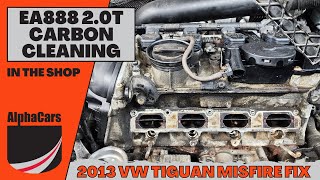
Typical fix: The intake manifold must be removed and the valves must be manually cleaned. The most effective method is media blasting with walnut shells, which removes the carbon without damaging the metal. 🎬 Watch: How carbon buildup causes misfires and how to clean it. This service typically costs $600-$1000 at a specialist shop.
Est. part cost: $20-$40 for gaskets - Failed PCV Valve (Oil Separator) 🟡 Medium Probability → Shop PCV Valve The rubber diaphragm inside the PCV valve assembly is known to tear, creating a large unmetered vacuum leak that disrupts the air-fuel ratio and causes lean codes (P0171) and misfires.
How to confirm: A failed PCV often creates a loud whistling or howling sound from the engine bay. A definitive test is to check for strong vacuum by trying to remove the oil cap while the engine is idling. If there is significant suction holding it down, the PCV has failed. You can also cover the small breather hole on top of the PCV; if the whistling stops, the diaphragm is torn.
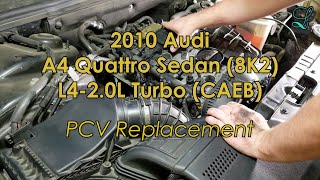
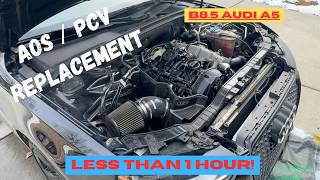
Typical fix: Replace the entire PCV valve assembly. It is critical to use the latest OEM revision of the part 🎬 See how easy it is to replace the PCV valve yourself. to ensure durability. Aftermarket versions are known to fail quickly.
Est. part cost: $120-$180 - Clogged or Leaking Fuel Injector ⚪ Low Probability → Shop Fuel Injector While durable, fuel injectors can become clogged over time or, less commonly, leak fuel into the cylinder, causing an improper mixture and misfire. A leaky injector may make the spark plug for that cylinder appear wet with fuel.
How to confirm: This is typically diagnosed after ignition, spark plugs, and the PCV system have been ruled out. It requires more advanced diagnostics, often involving checking fuel trims with a scan tool or physically removing the injectors for testing and flow-matching.
Typical fix: Replace the faulty fuel injector. It's often recommended to replace the full set if they are high-mileage originals. Replacing the Teflon seals is required whenever an injector is removed.
Est. part cost: $50-$150 per injector
Rare But Worth Checking
- Low Engine Compression: On early (2009-2012) CAEB engines, this is a major red flag for the common oil consumption issue caused by failed piston rings. A compression test followed by a leak-down test is necessary to diagnose this. A forum user also reported failed rocker arm bearings causing a persistent P0301, which is another form of mechanical failure.
- Stretched Timing Chain / Failed Tensioner: A major known issue on 2009-2013 CAEB engines. If P0301 is accompanied by timing-related codes like P0016, this is a strong possibility. You can check the timing chain stretch with a tool like VCDS by observing Measuring Block 093. This requires immediate professional diagnosis to prevent catastrophic engine failure.
Diagnosis Steps
- Read the fault codes with an OBD-II scanner (VCDS is preferred for VW/Audi) to confirm P0301 and note any other codes present.
- Perform an 'ignition coil swap test': Move the ignition coil from cylinder 1 to cylinder 2. Clear the codes and run the engine. If the fault code changes to P0302, the coil is bad.
- If the code remains P0301, swap the spark plug from cylinder 1 to cylinder 2. Clear codes and re-test. If the code then moves to P0302, the spark plug is the issue. Inspect the old plug for fouling.
- If the misfire is still on cylinder 1, inspect the PCV system. With the engine idling, carefully try to remove the oil filler cap. If it is held on by strong vacuum, or if a loud whistling noise is present, the PCV diaphragm has likely failed.
- If the above tests are inconclusive, the next steps involve more advanced diagnostics. Visually inspect the intake valves for carbon buildup using a borescope. This is a very likely cause if the car has over 60,000 miles and misfires mostly on cold starts.
- Test the fuel injector on cylinder 1. This may require professional equipment to check flow rates or a swap to another cylinder, which is labor-intensive.
- Perform an engine compression test to rule out mechanical issues like bad piston rings or valve problems. A healthy 2.0T engine should have compression between 160-200 PSI. Follow with a leak-down test to pinpoint the source of any compression loss.
Parts You'll Likely Need
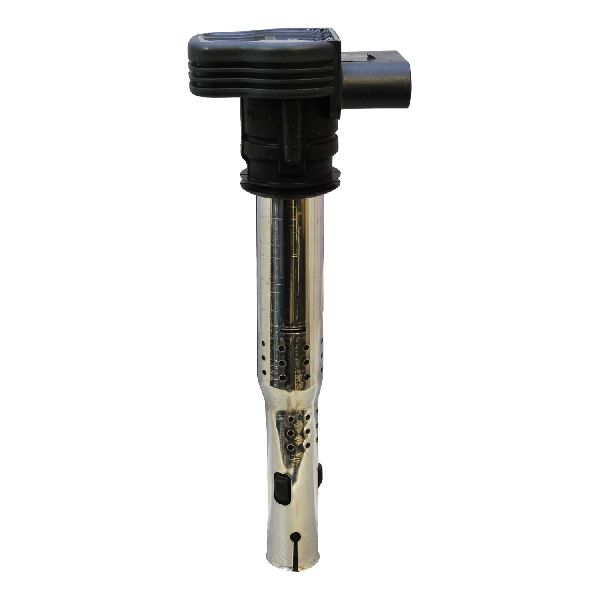
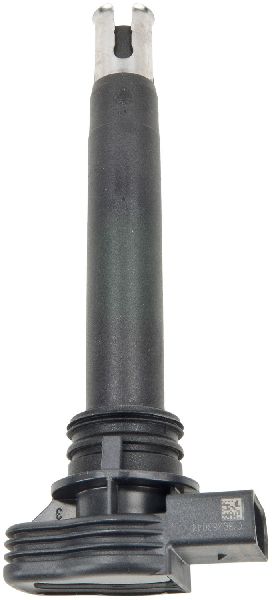
- Ignition Coil
(OEM #07K905715G)— This is the most frequent cause of a single-cylinder misfire on the 2.0T engine. They are a common wear-and-tear item.
Trusted brands: Bosch, Eldor, NGK
OEM price range: $45-$60
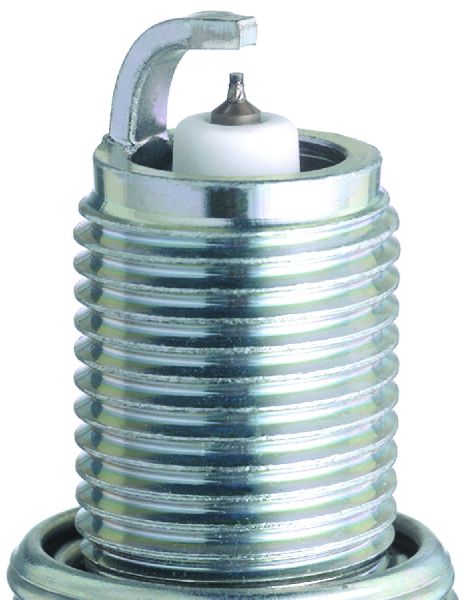
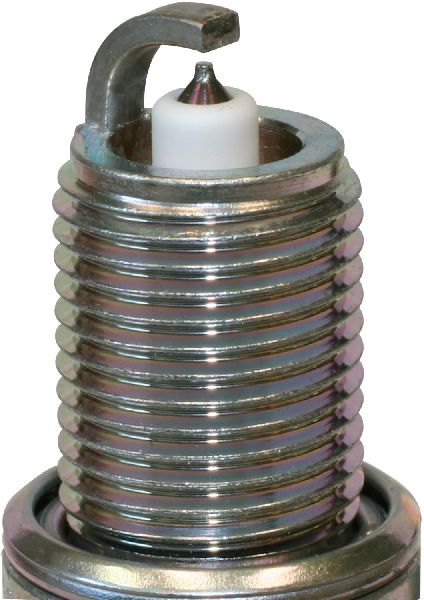
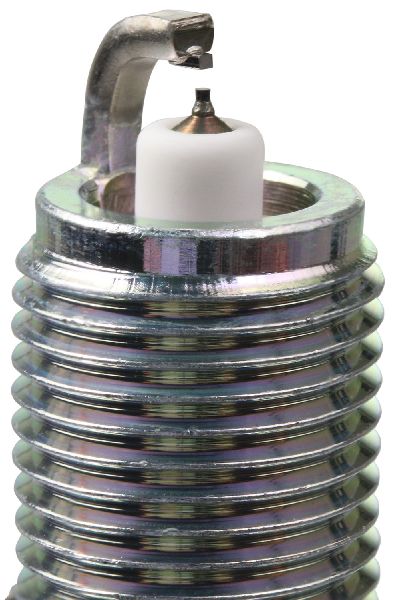
Aftermarket price range: $30-$50 - Spark Plug
(OEM #PFR7S8EG)— A worn or fouled spark plug is the second most likely cause. It's a standard maintenance item that is inexpensive and easy to replace.
Trusted brands: NGK, Bosch
OEM price range: $20-$25
Aftermarket price range: $15-$20 - PCV Valve / Oil Separator
(OEM #06H103495AC)— The diaphragm inside this assembly is known to tear, causing a major vacuum leak that leads to misfires. Always use the latest OEM revision.
Trusted brands: OEM Audi/VW
OEM price range: $150-$180
Aftermarket price range: $80-$120
Related Codes That Often Appear With This One
- P0300 — If the underlying issue (like a bad PCV valve or severe carbon buildup) is affecting multiple cylinders, a P0300 (Random/Multiple Misfire) may be stored alongside P0301.
- P0302, P0303, P0304 — These codes indicate misfires on other cylinders. Seeing them with P0301 points towards a systemic problem rather than a single component failure on cylinder 1.
- P0171 / P2187 — These 'System Too Lean' codes are commonly triggered by a failed PCV valve, which creates a large vacuum leak. The misfire from the lean condition is the symptom that triggers P0301.
- P130A — This Audi-specific code for 'hide cylinder' means the ECU has intentionally shut off the fuel injector to cylinder 1 to protect the catalytic converter from raw fuel. It confirms the ECU is actively managing a severe misfire and often points to a more serious issue like carbon buildup or mechanical failure.
Technical Service Bulletins (TSBs) & Recalls
- TSB #AWA 18-15-201902: Extended warranty for timing chain and tensioner.
- TSB #2033768/2: Addresses misfire codes (P0301-P0306) appearing with P130A, often related to carbon buildup, requiring contact with the Technical Assistance Center.
- Bulletin #A0124212069038_5: Provides diagnostic information for when the MIL is illuminated with cylinder misfire codes P0300 through P0306.
- Bulletin #A0123912069038_5: A manufacturer service bulletin noting information for MIL illumination and stored DTCs P0300, P0301, P0302, P0303, P0304, P0305, and P0306.
Platform-Specific Known Issues
- Excessive Oil Consumption: Early CAEB engines (2009-2011) were subject to a class-action lawsuit for excessive oil consumption due to faulty piston rings. This can cause spark plugs to foul with oil, leading to misfires.
- Timing Chain Tensioner Failure: The original timing chain tensioner on CAEB engines is a known failure point that can lead to jumped timing or catastrophic engine failure. Misfire codes can be an early symptom of a stretched chain.
Mechanic-Grade Diagnostic Values
- High-Pressure Fuel Rail Pressure (Actual vs. Specified) at warm idle — expected: Should be stable and matching at approximately 40 bar (580 PSI).. Failure: If the actual pressure is significantly lower (e.g., 6-10 bar) or does not rise with RPM, it indicates a failing High-Pressure Fuel Pump (HPFP) or a leak.
- Long-Term Fuel Trim at Idle (LTFT) — expected: Within +/- 5%. Values approaching +/- 10% indicate a problem the ECU is compensating for.. Failure: Consistently high positive values (e.g., > +10%) suggest a vacuum leak (like a bad PCV). Consistently high negative values suggest an issue like a leaking injector.
- Engine-to-Chassis Ground Voltage Drop — expected: Less than 0.15 volts at idle.. Failure: Readings higher than 0.15V indicate a degraded or corroded main engine ground strap, which can cause intermittent and hard-to-diagnose electrical issues, including misfires.
- Engine Compression — expected: A healthy 2.0T engine should show 160-200 PSI per cylinder, with minimal variation between them.. Failure: Significantly lower compression in one cylinder (e.g., below 130 PSI) or a large variance from others points to a mechanical issue like bad piston rings, a burnt valve, or a damaged cylinder head.
Hidden / Shadow Codes Worth Checking
- Misfire Counters (VCDS): VCDS and other advanced scan tools can show live misfire counts for each cylinder before a DTC is formally logged. This is invaluable for diagnosing intermittent misfires. (see via Using VCDS or a similar tool, navigate to Engine (01) -> Measuring Blocks -> Groups 014, 015, and 016 to see misfire counts for all cylinders at different RPM ranges.)
Scan Tool Commands That Help
- VCDS (VAG-COM): Measuring Blocks 140/141/230 - Fuel Rail Pressure — Use this to monitor 'Requested' vs. 'Actual' high fuel pressure. A significant deviation between the two values can help differentiate between a fuel pump failure, a sensor failure, or a leak.
- VCDS (VAG-COM): Measuring Block 032 / Advanced Measuring Values (UDS) — Use this to check long-term fuel trims (LTFT) at idle and partial load. High trims (positive or negative) confirm the ECU is compensating for a mixture problem (e.g., vacuum leak or leaking injector) that could be the root cause of the misfire.
Wiring & Ground Locations
- G11 / G12 — Located in the plenum chamber at the rear of the engine bay, near the battery and firewall.. These are the primary chassis and engine computer grounds. Corrosion or looseness at these points can cause unstable voltage for the entire engine management system, leading to erratic sensor readings and weak ignition spark, which can manifest as a misfire.
- Engine Ground Strap — Connects the engine block to the chassis frame rail, often on the passenger side of the engine bay.. This strap provides the main ground path for the alternator and ignition coils. If it becomes corroded or frayed, the ignition coils may not receive a stable ground, resulting in a weak spark and misfires, especially under load. A voltage drop test is the best way to confirm its integrity.
- Ignition Coil Connector — The 4-pin connector on top of the ignition coil for cylinder 1.. The plastic locking tabs on these connectors become brittle with age and heat cycles and frequently break. A loose or vibrating connector can cause an intermittent connection to the coil, leading to a P0301 misfire even if the coil itself is good.
Real Owner Repair Stories
- AudiWorld Forums user (2009 Audi A4 2.0T, 52,000 miles) — Rough idle (cold or hot), immediate P0301 code after clearing. Sometimes saw P0303 as well.
❌ Tried (didn't work) Replaced all four ignition coils, Replaced all four spark plugs, Replaced fuel injector #1
✅ What actually fixed it The final diagnosis was failed rocker arms on cylinder 1 and one on cylinder 3. Replacing all 16 rocker arms and lifters resolved the misfire completely. - NHTSA ODI #11402605 — An owner reported experiencing multiple cylinder misfires (P0300, P0301, P0302) while driving on the highway and city roads, accompanied by a blinking engine light.
- NHTSA ODI #11708802 — A report describes catastrophic engine failure while driving on a highway where the system gave error codes P054A, P0301, and P0017, rendering the vehicle undrivable despite regular oil services.
"I Checked Everything" — The Actual Cause
- A common scenario is a smoke test showing no vacuum leaks, but the misfire persists. The cause is often a 'weak' ignition coil that functions at idle but fails to produce a strong enough spark under the higher cylinder pressures of acceleration and load. Another possibility is a partially clogged fuel injector that provides enough fuel at idle but cannot flow enough under load, leaning out the mixture and causing a misfire that a smoke test would not reveal.
OEM Part Supersession History
06H103495E, 06H103495J, 06H103495AE→06H103495AH, 06H103495AC, 06H103495AK— The diaphragm in the original PCV valve designs was prone to tearing, causing massive vacuum leaks. Later revisions use improved materials and construction to increase durability.
Heads up: While physically interchangeable, installing an older revision part is not recommended. Always use the latest available OEM revision to prevent premature failure. Aftermarket versions are widely reported to fail quickly.
Model Year Variations Within This Range
- 2009-2012 (B8, primarily CAEB): These earlier engines are more susceptible to oil consumption issues due to piston ring design and timing chain tensioner failures. A P0301 on a high-mileage CAEB engine should prompt an immediate oil level check and consideration of a compression test to rule out oil-fouled plugs or ring/piston damage as the root cause.
- 2012-2016 (B8.5, primarily CAED/CPMB): Later engines used an updated intake manifold design (partially aluminum) and revised PCV routing. While the fundamental causes of P0301 are the same, some part numbers for the intake and PCV system may differ from the earlier B8 models.
Diagnostic Flowchart
Other Known Issues on This Vehicle
Issues unrelated to this code that are worth knowing about as an owner of this generation:
- Excessive Oil Consumption 🔴 High — Extremely common on 2009-2012 CAEB engines. Caused by faulty piston ring design. Can start as early as 30,000-50,000 miles and often worsens, with some owners reporting adding a quart of oil every 300-500 miles. (Ref: Multiple TSBs issued for consumption testing and repair (Stage 1 & Stage 2). A class-action lawsuit also addressed this issue, extending warranties for some owners.)
- Timing Chain Tensioner Failure 🔴 High — A critical failure point on 2009-2013 CAEB engines with the original tensioner design. Failure can occur without warning, typically from 60,000-100,000 miles, leading to catastrophic engine damage. (Ref: TSB #AWA 18-15-201902 (and others) address an extended warranty for the timing chain system.)
- Plastic Water Pump / Thermostat Housing Failure 🟠 Medium — The plastic housing is prone to cracking and leaking over time due to heat cycles. Failures are common from 70,000 miles onward, causing slow coolant loss that can be hard to detect. (Ref: No specific recall, but it's a widely acknowledged failure. Upgraded all-metal housings are a popular aftermarket solution.)
- Intake Manifold Runner Flap Motor/Sensor Failure 🟡 Low → Shop Engine Intake Manifold — The position sensor for the intake manifold runner flaps can fail, or the flaps themselves can get stuck due to carbon buildup. This typically triggers code P2015 and can cause rough running. More common on Gen 1 TSI engines.
Used vs. New Parts: Buying Guide for This Vehicle
When a used part is the smart pick: For this repair, used parts are generally not recommended for the common failure items. However, if a larger component like the intake manifold or cylinder head is diagnosed as faulty, a low-mileage used part from a reputable salvage yard can be a cost-effective option.
Donor-vehicle mileage cap: roughly under 70000 miles for the part to have meaningful remaining life.
What to inspect on the donor part:
- For an engine component, check for signs of heavy oil leaks or sludge.
- Verify the vehicle the part came from was not in a severe front-end collision.
- Ask for the VIN of the donor car to verify its year and engine code.
OEM-only on this vehicle (don't cheap out):
- PCV Valve / Oil Separator: Aftermarket versions are notorious for failing within months. Only use a genuine OEM part with the latest revision number.
- Fuel Injectors: While some aftermarket brands are reputable, the precise flow and spray pattern are critical on GDI engines. OEM or OEM-supplier (e.g., Bosch) is the safest bet.
- Engine Sensors (Crank/Cam): The ECU is sensitive to the signal quality from these sensors. Using cheap aftermarket sensors can lead to new, hard-to-diagnose issues.
Aftermarket brands forum-validated for this vehicle:
- Ignition Coils: Bosch, Eldor (often the OEM supplier), APR, 034Motorsport are popular and reliable choices.
- Spark Plugs: NGK, Bosch (stick to the specific part number recommended for the engine).
Brands owners have reported issues with on this vehicle:
- Unbranded or no-name ignition coils and PCV valves from online marketplaces. These are a common source of repeat failures.
Real Owner Stories
Aggregated from forums and TSBs cited above. Mileages and costs reflect what owners reported in those sources.
2009-2016 Audi A4 2.0T
Symptoms: Persistent P0301 misfire that remained even after the owner replaced the spark plugs, ignition coils, and the PCV valve.
What fixed it: The issue was ultimately caused by failed rocker arm needle bearings in cylinder 1.
Source hint: AudiWorld forum thread titled 'Misfire P0301 (Cylinder 1) - SOLVED'
2009-2016 Audi A4 2.0T — ~65000 miles
Symptoms: Misfires that are worse when the engine is cold and improve as it warms up; visual inspection showed hard carbon deposits on intake valves.
What fixed it: Manual cleaning of the intake valves using walnut shell media blasting.
Cost: $600-$1000
Source hint: Article context regarding Carbon Buildup and Ross-Tech diagnostic discussion
2009-2016 Audi A4 2.0T
Symptoms: P0301 and multiple other codes; rough performance that persisted after swapping coils and plugs to other cylinders.
What fixed it: Addressing carbon buildup on the intake valves and replacing fuel injectors.
Source hint: Audizine forum thread 'P0301 and a bunch of other codes - What I found'
Related OBD-II Codes
Frequently Asked Questions
Is there a TSB or extended warranty for the timing issues that might be causing my P0301 misfire?
My 2010 A4 is burning a lot of oil and now has a P0301 code. Are these related?
Should I upgrade to the 'R8' red-top ignition coils to fix my cylinder 1 misfire?
What does TSB #2033768/2 say about my Audi's misfire codes?
Why does my A4 misfire and shake only during a cold start?
How can I tell if my P0301 is caused by the PCV valve instead of a bad coil?
Helpful Videos
![Carbon Cleaning Audi A5 (2013 B8.5) | Intake Manifold & Fuel Injector Removal [Part 1]](https://img.youtube.com/vi/11cgh1CeFMM/mqdefault.jpg)


We Have This Part in Stock

The information in this article is provided for general reference and educational purposes only. Vehicle specifications, procedures, and part compatibility can vary by production date, trim level, and region. Always consult your vehicle's factory service manual and verify part numbers before purchasing or performing repairs. Safety-critical components such as airbags, seat belts, and braking systems should be installed by a qualified professional.
- Audi A4:
- 🧭 Diagnostic Flowchart
- 🎬 Helpful Videos
- 🛍️ Shop This Part
- What's Unique About the 2009-2016 Audi A4
- Symptoms You May Notice
- Most Likely Causes
- Rare But Worth Checking
- Diagnosis Steps
- Parts You'll Likely Need
- Related Codes That Often Appear With This One
- Technical Service Bulletins (TSBs) & Recalls
- Platform-Specific Known Issues
- Mechanic-Grade Diagnostic Values
- Hidden / Shadow Codes Worth Checking
- Scan Tool Commands That Help
- Wiring & Ground Locations
- Real Owner Repair Stories
- "I Checked Everything" — The Actual Cause
- OEM Part Supersession History
- Model Year Variations Within This Range
- Other Known Issues on This Vehicle
- Used vs. New Parts: Buying Guide for This Vehicle
- Real Owner Stories
- 2009-2016 Audi A4 2.0T
- 2009-2016 Audi A4 2.0T — ~65000 miles
- 2009-2016 Audi A4 2.0T
- Related OBD-II Codes
- Frequently Asked Questions
- 🎟️ Get 5% Off