

P0301 on 2013-2020 Audi A7: Cylinder 1 Misfire Causes and Fixes
P0301 on a 2013-2020 Audi A7 most often indicates a failed ignition coil or a worn spark plug in cylinder 1. This is a common issue and is typically a straightforward DIY fix, with a single OEM-brand ignition coil costing between $40 and $80. Swapping the coil from cylinder 1 to another cylinder to see if the fault code follows is the definitive diagnostic step.
- P0301 on an Audi A7 is almost always caused by a bad ignition coil or spark plug in cylinder 1.
- Always start diagnosis by swapping the ignition coil from cylinder 1 to another cylinder to see if the misfire code follows it. This is a free and definitive test for a bad coil.
- If the check engine light is flashing, stop driving as soon as safely possible to prevent catastrophic damage to the catalytic converter.
- If coils and plugs don't fix the issue, suspect a clogged fuel injector or carbon buildup on the intake valves, both of which are common on these direct-injection engines.
- The presence of code P130A alongside P0301 is a protective measure by the car's computer and confirms a severe misfire was detected.
What's Unique About the 2013-2020 Audi A7
The Audi A7, particularly the C7 generation (2013-2018) with the 3.0T supercharged engine, is well-documented for having ignition coils that fail frequently and for leaking supercharger intercoolers. As these are direct-injection engines, they are prone to heavy carbon buildup on the intake valves over time, which can restrict airflow and lead to misfires, often by 60,000-80,000 miles. It's also common to see the P0301 code accompanied by a manufacturer-specific code, P130A, which means the ECM has intentionally disabled the fuel injector to cylinder 1 to prevent engine and catalytic converter damage. This is confirmed in Audi TSB 0113892033768/1.
Diagnostic Flowchart
Tap your situation to follow the diagnostic path that matches what you're seeing on this vehicle.
Generation note: The 2013-2020 range covers two A7 generations: the C7 (2013-2018) with a supercharged 3.0L V6 and the C8 (2019-2020) with a turbocharged 3.0L V6. While the induction methods differ, the primary causes for a P0301 misfire—ignition coils, spark plugs, fuel injectors, and carbon buildup—are common to both platforms. The supercharged C7 models have the unique potential issue of leaking intercooler cores housed within the supercharger assembly. The C7.5 (2016-2018) CREC engine variant features dual injection (port and direct), which significantly reduces carbon buildup issues seen on earlier direct-injection-only engines.
Symptoms You May Notice
- Rough or shaky engine idle
- Hesitation or stumbling during acceleration
- Reduced engine power and sluggishness
- Flashing or solid Check Engine Light
- Smell of unburnt fuel from the exhaust
- Decreased fuel economy
- Whistling or hissing noise from the engine bay (if related to PCV failure)
- Replacing oxygen (O2) sensors without confirming they are faulty. O2 sensor codes may appear as a result of the misfire, not as the cause.
Most Likely Causes
- Faulty Ignition Coil 🔴 High Probability → Shop Ignition Coil Ignition coils are a known high-failure item on this platform, with many owners replacing them preventatively or at the first sign of a misfire.
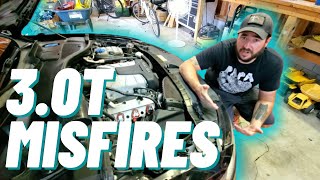
How to confirm: Swap the ignition coil from cylinder 1 with another cylinder (e.g., cylinder 2). Clear the codes and drive. If the code changes to P0302, the coil is bad. This is the most common and effective diagnostic step. 🎬 Watch: How to diagnose a misfire on your supercharged 3.0T engine.
Typical fix: Replace the faulty ignition coil. It is often recommended to replace all six coils if they are original and the vehicle has high mileage to ensure reliability.
Est. part cost: $40-$80 - Worn or Fouled Spark Plug 🔴 High Probability → Shop Spark Plug
How to confirm: After ruling out the ignition coil, inspect the spark plug for wear (worn electrode), carbon/oil fouling, or incorrect gap. An Audi owner on a Reddit forum fixed a P0301 by replacing the spark plug which was visibly fouled.
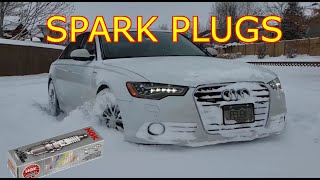
Typical fix: Replace the spark plug in cylinder 1. It is best practice to replace all six spark plugs at the same time to maintain consistent performance. Plugs should be gapped correctly before installation. 🎬 See this DIY walkthrough for replacing your A7 spark plugs.
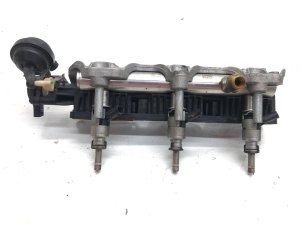
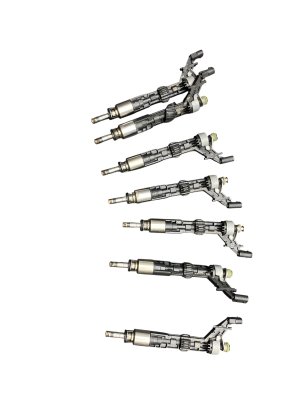
Est. part cost: $15-$30 per plug - Clogged or Faulty Fuel Injector 🟡 Medium Probability → Shop Fuel Injector Direct injectors operate under high pressure and can become clogged with carbon deposits or fail electronically over time, especially on higher mileage vehicles.
How to confirm: This is more difficult to diagnose. A professional can perform a fuel injector balance test or check values with an advanced scan tool like VCDS. Swapping injectors is labor-intensive as it requires removing the fuel rail.
Typical fix: Replace the faulty fuel injector. This is often done in conjunction with intake valve carbon cleaning due to the labor overlap.
Est. part cost: $100-$250 per injector - Intake Valve Carbon Buildup 🟡 Medium Probability As direct injection engines, fuel is sprayed directly into the cylinder, so it doesn't wash over and clean the intake valves. Oil vapor from the PCV system bakes onto the hot valves, restricting airflow and causing misfires, often starting around 60k-80k miles. This is less common on the later CREC engines with dual injection.
How to confirm: Requires a borescope inspection of the intake ports, which usually involves removing the intake manifold or supercharger.
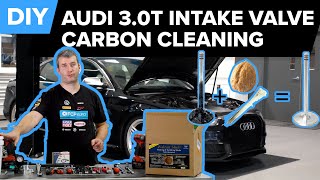
Typical fix: The intake manifold/supercharger must be removed for media blasting (walnut blasting) of the intake ports and valves. This service can cost between $700 and $2000 depending on the shop. 🎬 Watch: How to scrape and walnut blast your intake valves.
Est. part cost: $0 (service cost is labor)
Rare But Worth Checking
- Leaking Supercharger Intercooler: → Shop Turbocharger On supercharged C7 models, the intercoolers integrated into the supercharger can leak coolant internally. The primary symptom is mysterious coolant loss with no external drips, which then enters the cylinder and causes a misfire. While common on cylinders 3 and 6, it can affect any cylinder.
- PCV/Oil Separator Failure: A failed PCV diaphragm can cause a loud whistling or honking noise, excessive crankcase vacuum (making the oil cap hard to remove while running), and increased oil consumption, which can foul spark plugs. A user on a Ross-Tech forum diagnosed a rich condition and misfires that were resolved by allowing unmetered air into the crankcase (by pulling the dipstick), pointing to a faulty PCV system.
- Low Engine Compression: Mechanical issues like a worn piston ring, a burnt valve, or other head/block damage can cause a loss of compression, leading to a misfire. A compression test showing low PSI in cylinder 1 (e.g., 80 PSI vs 170+ in others) would confirm this. This can be a result of severe overheating caused by a separate component failure like a water pump or thermostat.
- Leaking Valve Cover Gasket: → Shop Engine Valve Cover If the gasket fails, oil can leak into the spark plug tube, fouling the plug and causing a misfire. An owner on AudiWorld reported this as the diagnosed cause for their misfire after finding oil on the plugs.
Diagnosis Steps
- Read the fault codes with an OBD-II scanner and note all present codes, especially P130A, which indicates a severe misfire.
- Mark and swap the ignition coil from cylinder 1 to cylinder 2. Clear the codes.
- Drive the vehicle until the check engine light returns. Re-scan the codes.
- If code P0302 appears, the ignition coil is faulty and needs replacement.
- If code P0301 returns, the problem is not the coil. Proceed to inspect the spark plug in cylinder 1.
- Remove the spark plug. Check for signs of wear, damage, or fouling from oil or fuel. Replace if necessary.
- If the plug and coil are good, check for common related issues like a failed PCV (whistling noises, strong vacuum at oil cap) or mysterious coolant loss (leaking intercooler).
- If no obvious related issues are found, the next most likely causes are a faulty fuel injector or carbon buildup.
- A professional diagnosis is recommended to check for carbon buildup (borescope inspection) or a faulty fuel injector (balance test).
- A compression test should be performed if mechanical engine damage is suspected.
Parts You'll Likely Need
- Ignition Coil
(OEM #06E905115G (or latest revision))— This is the most frequent failure point causing a single-cylinder misfire on the Audi 3.0T engine.
Trusted brands: Bosch, NGK, Eldor, APR
OEM price range: $60-$80
Aftermarket price range: $40-$60 - Spark Plug
(OEM #101905611G (NGK PFR8S8EG))— Spark plugs are a routine maintenance item and can cause misfires when worn or fouled. They are often replaced along with ignition coils.
Trusted brands: NGK, Bosch
OEM price range: $20-$30
Aftermarket price range: $15-$25 - Fuel Injector
(OEM #06E906036AE (or latest revision))— Becomes a more likely cause on higher-mileage vehicles or when ignition components have been ruled out.
Trusted brands: Bosch, Hitachi
OEM price range: $150-$250
Aftermarket price range: $100-$180
Related Codes That Often Appear With This One
- P0300 — If the misfire is intermittent or affects multiple cylinders, a P0300 (Random/Multiple Cylinder Misfire) may be stored alongside P0301.
- P0302 - P0306 — If other cylinders are also misfiring due to a common cause like carbon buildup or a vacuum leak, their respective codes will also be present.
- P130A — This Audi-specific code for 'Hide Cylinder' or 'Cylinder Disabling' is triggered by the ECM to shut off the fuel injector to a cylinder that is misfiring excessively, in order to protect the catalytic converter. Its presence, confirmed by TSB 0113892033768/1, confirms the misfire is severe.
Technical Service Bulletins (TSBs) & Recalls
- TSB 0113892033768/1: Confirms that DTC P130A (Cylinder Disabling) is stored in conjunction with a specific cylinder misfire fault (P0301-P0306) on the 3.0L FSI engine.
Platform-Specific Known Issues
- Carbon Buildup: Direct injection engines in the A7 are known for significant carbon accumulation on intake valves, which can cause misfires, a rough idle, and power loss. Professional walnut blasting is often required between 60k-100k miles.
- PCV/Oil Separator Failure: A failing PCV system can lead to a distinct whistling or honking sound, increased oil consumption, and oil fouling of spark plugs. A common DIY test is to check for strong suction at the oil filler cap while the engine is running.
- Leaking Supercharger Intercoolers (C7): A unique failure on the supercharged models where the internal charge a
Mechanic-Grade Diagnostic Values
- High-Pressure Fuel Rail Pressure — expected: Over 2,000 PSI under load.. Failure: A reading significantly below target, often triggering code P0087, can indicate a failing High-Pressure Fuel Pump (HPFP) or a leaking injector, contributing to a misfire.
- Low-Pressure Fuel System Pressure — expected: Around 50-80 PSI.. Failure: Low readings from the G410 sensor can starve the HPFP, leading to misfires under load. This can be checked in VCDS.
- VCDS Fuel Injector Quantity Deviation (TDI example, but principle is similar for FSI) — expected: Values close to 0.0 mg/stroke at idle.. Failure: Values approaching +/- 2.0 mg/stroke suggest an injector is either clogged (positive value, compensating) or leaking (negative value).
- Engine Compression — expected: Typically 170+ PSI, with minimal variation between cylinders.. Failure: A cylinder reading significantly lower than others (e.g., 80 PSI) indicates a mechanical engine problem like worn piston rings or a bad valve.
Hidden / Shadow Codes Worth Checking
- Misfire Counter (Live Data): The ECU tracks misfires for each cylinder in real-time. This is not a stored DTC but live data. A P0301 is set only after this counter exceeds a specific threshold in a set number of engine revolutions. (see via Using a VAG-specific scan tool like VCDS or OBDeleven, go to Engine (01) -> Advanced Measuring Values and select the misfire counters for each cylinder.)
Scan Tool Commands That Help
- VCDS (VAG-COM): Engine (01) -> Measuring Blocks (08) -> Groups 015 & 016 — To view the live misfire counters for all cylinders. This helps confirm if the misfire is exclusively on cylinder 1 and under what conditions (idle vs. load) it occurs. For newer UDS modules, this is found under 'Advanced Measuring Values'.
- VCDS (VAG-COM): Engine (01) -> Output Tests (03) -> Select Fuel Injector N30 (Cylinder 1) — To manually activate the fuel injector for cylinder 1. You should hear a distinct clicking sound. This test helps rule out an electrical failure in the injector circuit or the injector's solenoid itself.
- VCDS (VAG-COM): Engine (01) -> Measuring Blocks (08) -> Group 032 — To check long-term fuel trims. High fuel trim values can indicate a vacuum leak or an unmetered air issue (like a faulty PCV) that could be causing a lean misfire.
Wiring & Ground Locations
- Engine Block Ground Strap — Typically a braided cable connecting the engine block to the vehicle's chassis, often near the alternator or engine mount on the passenger side.. The ignition coils are grounded to the cylinder head, which relies on a clean engine-to-chassis ground. A corroded or loose main ground strap can cause intermittent and hard-to-diagnose ignition issues, including misfires.
- G12 - Firewall Ground — Located at the center of the firewall in the engine bay.. This ground point serves the Engine Control Module (ECM). A poor connection here can cause a wide range of erratic engine behaviors, including incorrect sensor readings and misfire detection.
Real Owner Repair Stories
- AudiWorld Forums User (2017 Audi Q7 3.0T (engine similar to A7)) — Check engine light with misfires on cylinders 1, 2, and 6 (P0300, P0301, P0302, P0306), especially under partial throttle.
❌ Tried (didn't work) Replacing the ignition coil and spark plug on one of the misfiring cylinders did not solve the issue.
✅ What actually fixed it The user noted another post where similar symptoms (misfires after thermostat replacement) were discussed, pointing towards a potential link between cooling system issues and misfires, possibly due to overheating causing head gasket leaks or sensor damage. - Ross-Tech Forums User (Audi 3.0T TFSI (CGWB Engine)) — P0301 - Cylinder 1 Misfire Detected, after replacing water pump, thermostat, and PCV.
❌ Tried (didn't work) The user had just completed major preventative maintenance, so the new misfire was unexpected.
✅ What actually fixed it The final fix was not posted in the thread, but the user confirmed the spark plug for cylinder 1 was getting fouled. This points towards a likely leaking fuel injector or oil fouling from the recent PCV work, demonstrating that a misfire can appear immediately after a related service if a component is damaged or installed incorrectly.
"I Checked Everything" — The Actual Cause
- In cases where a smoke test reveals no vacuum leaks, a persistent lean misfire (often with high fuel trims) can be caused by a faulty PCV valve creating excessive, unmetered vacuum in the crankcase. One user diagnosed this by pulling the oil dipstick; the introduction of unmetered air stabilized the idle and stopped the misfires, confirming the PCV was the root cause.
OEM Part Supersession History
06E905115, 06E905115A, 06E905115B, 06E905115C, 06E905115D, 06E905115E, 06E905115F→06E905115G— Progressive updates by the manufacturer to improve reliability and performance, addressing premature failure issues seen in earlier versions.
Heads up: All previous versions are replaced by the latest 'G' revision. While older versions will work, it is highly recommended to use the latest available part number (or a reputable OEM equivalent like Bosch or NGK) for longevity.
Model Year Variations Within This Range
- 2013-2018 (C7) vs. 2019-2020 (C8): The C7 generation uses a 3.0L supercharged V6, while the C8 generation uses a 3.0L single-turbo V6. While many misfire causes are the same, the C8 is noted by some owners to have more perceptible turbo lag compared to the instant response of the C7's supercharger. The C8 also lacks the C7's specific issue of leaking supercharger intercoolers.
- 2016-2018 (C7.5): The updated 'CREC' version of the 3.0T supercharged engine was introduced. A key difference is the addition of multi-port fuel injection alongside the direct injection system. This dual-injection setup sprays fuel onto the intake valves, effectively cleaning them and preventing the severe carbon buildup that causes misfires on earlier direct-injection-only versions.
Helpful Videos

We Have This Part in Stock

The information in this article is provided for general reference and educational purposes only. Vehicle specifications, procedures, and part compatibility can vary by production date, trim level, and region. Always consult your vehicle's factory service manual and verify part numbers before purchasing or performing repairs. Safety-critical components such as airbags, seat belts, and braking systems should be installed by a qualified professional.
- Audi A7:
- 🧭 Diagnostic Flowchart
- 🎬 Helpful Videos
- 🛍️ Shop This Part
- What's Unique About the 2013-2020 Audi A7
- Symptoms You May Notice
- Most Likely Causes
- Rare But Worth Checking
- Diagnosis Steps
- Parts You'll Likely Need
- Related Codes That Often Appear With This One
- Technical Service Bulletins (TSBs) & Recalls
- Platform-Specific Known Issues
- Mechanic-Grade Diagnostic Values
- Hidden / Shadow Codes Worth Checking
- Scan Tool Commands That Help
- Wiring & Ground Locations
- Real Owner Repair Stories
- "I Checked Everything" — The Actual Cause
- OEM Part Supersession History
- Model Year Variations Within This Range
- 🎟️ Get 5% Off