

P0301 on 2013-2015 Audi RS5 4.2L V8: Cylinder 1 Misfire Causes and Fixes
For a 2013-2015 Audi RS5, a P0301 code is most often caused by a failed ignition coil or a worn spark plug in cylinder 1. If replacing these parts doesn't resolve the issue, the next most likely cause is significant carbon buildup on the intake valves, a well-known issue with the 4.2L FSI engine that often requires professional cleaning.
- P0301 on a 2013-2015 RS5 means cylinder 1 (front passenger side) is misfiring.
- The most likely culprits are a bad ignition coil or a worn spark plug. Always start diagnosis by swapping these parts to another cylinder to see if the fault follows.
- Do not drive if the Check Engine Light is flashing, as this can quickly cause expensive damage to the catalytic converter.
- If new coils and plugs don't fix the misfire, the cause is very likely carbon buildup on the intake valves, a known issue with the 4.2L FSI engine that requires professional cleaning service (walnut blasting).
What's Unique About the 2013-2015 Audi RS5
The high-performance 4.2L FSI V8 (engine code: CFSA) in the RS5 is a direct-injection engine. This design, while efficient, is highly susceptible to carbon buildup on the intake valves because fuel is sprayed directly into the cylinder and does not wash over the valves to keep them clean. Over time, these carbon deposits can restrict airflow, becoming a primary cause of persistent misfires like P0301, especially after common ignition component failures have been ruled out. This issue is well-documented across multiple Audi models using the 4.2L FSI engine.
Symptoms You May Notice
- Rough or shaky idle, especially when the engine is cold.
- Hesitation or stumbling during acceleration.
- Noticeable loss of engine power, sometimes described as feeling sluggish.
- Solid or flashing Check Engine Light.
- Increased fuel consumption.
- Smell of gasoline from the exhaust.
- Replacing oxygen sensors or the mass airflow sensor without proper diagnosis. These components are less likely to cause a single-cylinder misfire and would typically trigger other diagnostic codes.
Most Likely Causes
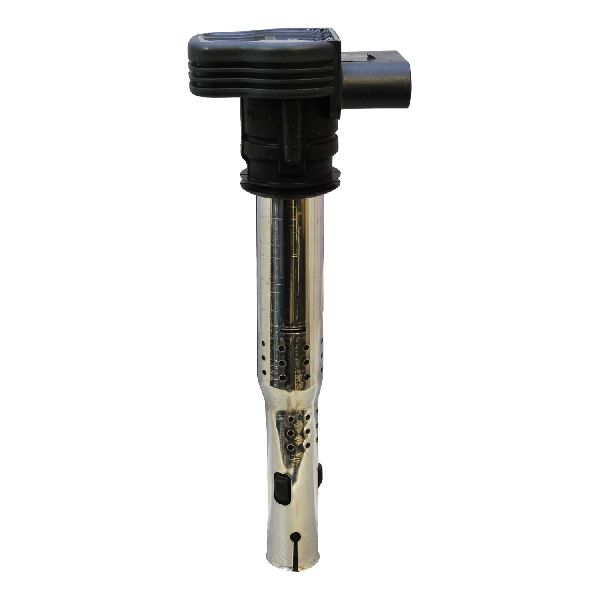
- Faulty Ignition Coil 🔴 High Probability → Shop Ignition Coil Ignition coils on VAG (Volkswagen Auto Group) engines are common failure items due to high heat and electrical stress. They are often the first component to fail when a single-cylinder misfire occurs. It's recommended to use the newest revision of the coil packs.
How to confirm: Swap the ignition coil from cylinder 1 with another cylinder (e.g., cylinder 2). Clear the codes and run the engine. If the code changes to P0302, the ignition coil is faulty. This is the standard first diagnostic step mentioned 🎬 Watch: How to find and diagnose engine misfires on Audis in numerous owner forums.
Typical fix: Replace the faulty ignition coil. It is often recommended to replace all eight coils at once for preventative maintenance, especially on a high-mileage vehicle, to ensure balanced performance.
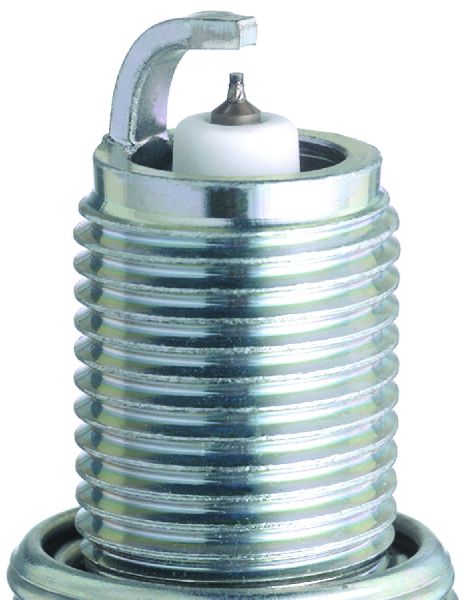
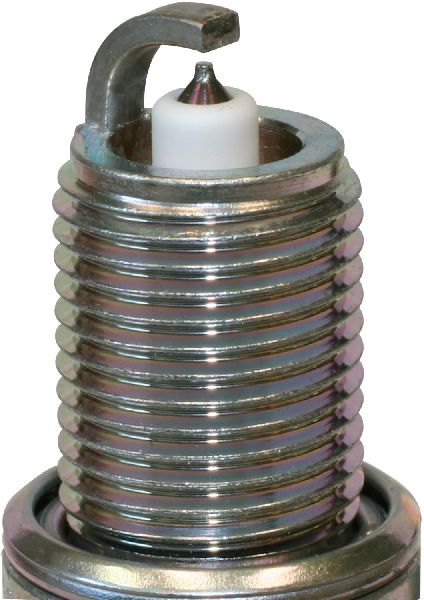
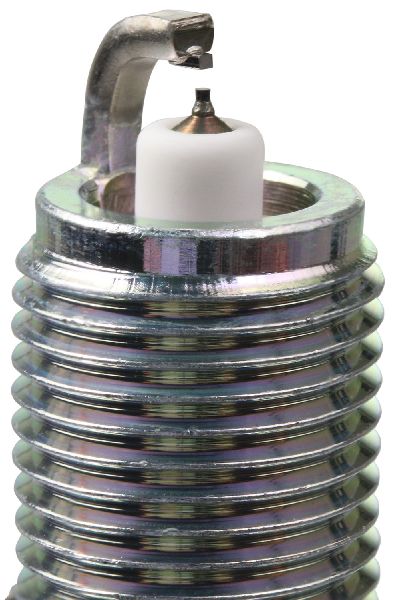
Est. part cost: $40-$70 per coil - Worn or Fouled Spark Plug 🔴 High Probability → Shop Spark Plug
How to confirm: After confirming the ignition coil is good, remove the spark plug from cylinder 1. Inspect it for wear on the electrode, carbon fouling, or oil deposits. You can also swap the plug with another cylinder to see if the misfire follows.
Typical fix: Replace the spark plug. It is best practice to replace all eight spark plugs at the same time to maintain balanced engine performance. Spark plug replacement intervals are typically between 30,000 to 100,000 miles depending on the type.
Est. part cost: $15-$25 per plug - Carbon Buildup on Intake Valves 🟡 Medium Probability The 4.2L FSI V8 is a direct-injection engine, which is notorious for carbon accumulation on the intake valves. This buildup restricts airflow, leading to poor combustion and misfires, with symptoms including power loss of 20-40 hp. This is often the cause if new coils and plugs do not fix the issue.
How to confirm: This requires a visual inspection using a borescope inserted into the intake ports. This is typically performed by a professional mechanic or an experienced DIYer during an intake manifold removal.
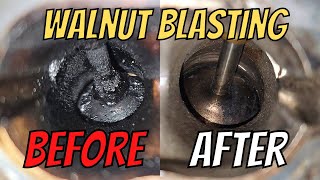
Typical fix: A professional 'walnut blasting' service is required to physically clean the carbon deposits from the intake ports and valves. This is a labor-intensive job often considered a necessary maintenance item every 40,000-60,000 miles. 🎬 Watch: Step-by-step guide to walnut blasting your 4.2L V8
Est. part cost: $0 (service-based) - Faulty Fuel Injector ⚪ Low Probability → Shop Fuel Injector Direct fuel injectors operate under high pressure and can become clogged with carbon or fail electronically over time, leading to improper fueling for a specific cylinder. Injector issues are becoming more common on B8 platform cars with over 80,000 miles.
How to confirm: Diagnosis involves checking fuel trims with an advanced scan tool like VCDS (VAG-COM) and may require swapping injectors between cylinders, which is a labor-intensive process requiring intake manifold removal and special tools.
Typical fix: Replace the faulty fuel injector. It's often recommended to replace all injectors on the same bank, or all eight, if one fails, due to the labor involved. Professional ultrasonic cleaning can sometimes restore a clogged injector.
Est. part cost: $100-$200 per injector
Rare But Worth Checking
- Vacuum Leak: A vacuum leak from a cracked hose or failed gasket can introduce unmetered air into the engine, leaning out the air-fuel mixture and causing misfires. On the 4.2L V8, a failed PCV (oil separator) diaphragm is a common source of a large vacuum leak, which can also cause oil consumption issues.
- Low Compression: Internal engine issues such as a worn piston ring, a damaged valve, or a failed head gasket can cause a loss of compression in cylinder 1, preventing proper combustion. This is a serious mechanical issue requiring professional diagnosis with a compression test.
Diagnosis Steps
- Read the trouble codes with an OBD-II scanner to confirm P0301 and check for any other codes.
- Identify Cylinder 1. On the Audi 4.2L V8, Bank 1 (cylinders 1-4) is on the passenger side of the vehicle (US models). Cylinder 1 is the front-most cylinder on that bank.
- Swap the ignition coil from cylinder 1 to cylinder 2. Clear the codes, start the engine, and see if the misfire code changes to P0302. If it does, the ignition coil is bad.
- If the code remains P0301, swap the spark plug from cylinder 1 to cylinder 2. Clear the codes and check if the misfire moves. If it does, the spark plug is faulty.
- If the misfire remains on cylinder 1 after swapping the coil and plug, the issue is more complex.
- Visually inspect for vacuum leaks, paying close attention to the PCV/oil separator and all intake tract hoses.
- The next step is to have a professional inspect the intake valves for carbon buildup using a borescope. This often requires removing the intake manifold.
- If valves are clean, further diagnostics will focus on the fuel injector for cylinder 1. This may involve checking fuel trims with a scan tool or physically swapping injectors.
- Perform a compression test on cylinder 1 to rule out mechanical engine problems like bad piston rings or valve issues.
Parts You'll Likely Need
- Ignition Coil
(OEM #06E905115G (or latest revision))— This is the most common cause of a single-cylinder misfire on this engine. The part number has been revised multiple times; ensure you are using the latest version available from the dealer or a reputable supplier.
Trusted brands: Bosch, NGK, Eldor
OEM price range: $60-$90
Aftermarket price range: $40-$70 - Spark Plug
(OEM #NGK PFR7W-TG)— Spark plugs are a regular maintenance item and a frequent cause of misfires when worn or fouled. Using the correct OEM-spec plug is important for this high-performance engine.
Trusted brands: NGK, Bosch
OEM price range: $20-$35
Aftermarket price range: $15-$25 - Fuel Injector
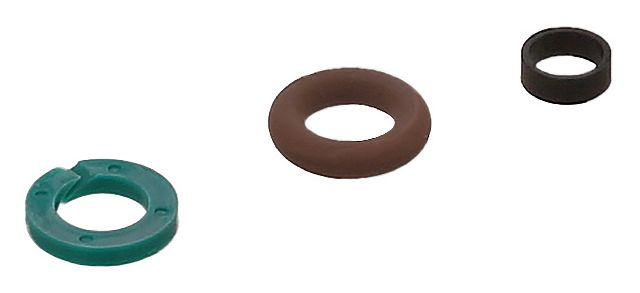
(OEM #079906036N)— Though less common than ignition parts, a clogged or failed fuel injector is a known cause for persistent misfires that aren't resolved by coils or plugs.
Trusted brands: Hitachi (OEM), Bosch
OEM price range: $150-$250
Aftermarket price range: $100-$180
Related Codes That Often Appear With This One
- P0300 — If the misfire is intermittent or begins to affect other cylinders, a P0300 (Random/Multiple Cylinder Misfire) code may appear alongside P0301. This can point to a systemic issue like widespread carbon buildup or a vacuum leak.
- P0302, P0303, P0304, etc. — Misfire codes for other cylinders may appear if the underlying cause, such as carbon buildup or low fuel pressure, is affecting the entire engine and not just cylinder 1.
- P310B — A low fuel pressure regulation code can sometimes accompany misfire codes, pointing towards a potential issue with the fuel delivery system, though this is less common than ignition or carbon issues.
Platform-Specific Known Issues
- The 4.2L FSI V8 engine is well-documented to suffer from severe carbon buildup on the intake valves, which can cause misfires, rough idle, and significant power loss. A carbon cleaning service (walnut blasting) is often considered a necessary maintenance item every 40,000-60,000 miles to restore performance.
Technical Service Bulletins (TSBs) & Recalls
- Bulletin #A0124212069038_5 — This manufacturer bulletin provides information for when the MIL is illuminated due to cylinder misfires, specifically citing codes P0300 through P0306.
- Bulletin #A0123912069038_5 — A related technical bulletin addressing illuminated Check Engine Lights and DTCs P0300, P0301, P0302, P0303, P0304, P0305, and P0306 across various Audi models.
Mechanic-Grade Diagnostic Values
- High-Pressure Fuel Rail Pressure — expected: Up to 1,973 PSI (136 bar) under load.. Failure: Significant deviation or inability to reach target pressure specified by the ECU can indicate a failing High-Pressure Fuel Pump (HPFP). Codes like P0087 or P2293 may accompany this.
- Ignition Coil Primary Resistance — expected: Approximately 0.4 to 2.0 ohms.. Failure: A reading outside this range suggests a faulty primary winding in the coil.
- Ignition Coil Secondary Resistance — expected: Approximately 8,000 to 14,000 ohms (8-14 kOhms).. Failure: A reading outside this range indicates a failure in the secondary windings.
- Live Misfire Count (VCDS) — expected: 0 counts at idle and under load on all cylinders.. Failure: Any count incrementing on Cylinder 1 in Measuring Blocks 015 or in Advanced Measuring Values confirms an active misfire.
Scan Tool Commands That Help
- VCDS (VAG-COM): Engine -> Measuring Blocks -> Groups 014, 015, 016 — Use these groups to view live misfire counters for each individual cylinder. For an 8-cylinder engine, Group 015 will show cylinders 1-4 and Group 016 will show 5-8. This is critical for confirming which cylinder is misfiring in real-time and verifying if a repair was successful.
- VCDS (VAG-COM): Engine -> Advanced Measuring Values -> Search for 'misfire' — On newer UDS-based controllers, this is the method to access the live misfire counters instead of the older Measuring Block groups. It allows you to select and graph the misfire count for Cylinder 1 specifically.
Wiring & Ground Locations
- Primary Engine/Transmission Ground — The main ground path runs from the transmission bellhousing to the chassis.. A corroded or loose primary ground can cause a host of electrical issues, including weak spark, which can lead to intermittent misfires across multiple cylinders. While less likely to cause a single-cylinder misfire, it's a foundational check.
- Engine Bay Ground Points — On the B8 platform, key ground points are located on the firewall and on the left and right sides of the engine bay structure.. The ignition coils are grounded through the wiring harness back to the ECU, which relies on these chassis grounds. A compromised ground near the Bank 1 (passenger side) could potentially contribute to ignition issues on cylinders 1-4.
- ECU Fuse Box — Located in the plenum chamber (under the plastic cover at the base of the windshield), near the ECU.. A specific 15-amp fuse in this box powers multiple engine components. In some 4.2L V8s, a failing fuse has been known to cause multiple seemingly unrelated fault codes, including those for fuel pressure and misfires.
Real Owner Repair Stories
- AudiWorld Forums user 'superswiss' (Audi RS5 (B8.5)) — Cold start misfires, eventually leading to a persistent Check Engine Light.
❌ Tried (didn't work) ECU update performed by the dealer., Using fuel system cleaner and performing a 'spirited drive' as advised by Audi (this provided a temporary fix for about a year).
✅ What actually fixed it A professional carbon cleaning service (performed by 034Motorsport). The user reported that after the cleaning, the engine started and idled much more smoothly than it had in a long time, completely resolving the misfire issue. - Audi Revolution Forums user 'TontoLoidRS5' (2015 Audi RS5, 37,363 miles) — Misfires on multiple cylinders.
❌ Tried (didn't work) Initial speculation on vacuum leaks, air filters, and spark plugs.
✅ What actually fixed it The owner performed a carbon cleaning and sent the fuel injectors out to be professionally cleaned and flow-tested. The photos shared showed extreme carbon buildup on the intake ports, which was the primary cause of the misfires. - NHTSA ODI #11708802 — An owner reported a catastrophic engine failure while driving on the highway; the system triggered error codes P0301, P054A, and P0017, rendering the vehicle undrivable despite regular service.
- NHTSA ODI #11402605 — A driver experienced a blinking engine light on both city roads and highways; a code reader initially identified P0300, P0301, and P0302, indicating multiple cylinder misfires.
OEM Part Supersession History
06E905115→06E905115A, B, C, D, E, F, and finally 06E905115G— Progressive improvements in reliability and resistance to heat and electrical failure. Each revision aimed to improve the longevity of the coil.
Heads up: All previous revisions (A-F) are superseded by 'G'. While older revisions may physically fit, it is strongly recommended to use only the latest available revision (06E905115G or newer if applicable) to ensure maximum reliability and performance.
Model Year Variations Within This Range
- 2013-2015: There are no major mechanical or engine differences for the US-market RS5 across these years. Changes were minor and mostly cosmetic or electronic, such as updated MMI firmware in later models for faster performance, and different option packages being available. A 2015 model may have a dedicated switch for the exhaust valves, whereas a 2013's valves are tied to the 'Sport' mode selection.
Diagnostic Flowchart
Other Known Issues on This Vehicle
Issues unrelated to this code that are worth knowing about as an owner of this generation:
- S-Tronic (DL501) Mechatronic Unit Failure 🔴 High — Can occur at various mileages, more common in cars driven in heavy traffic. Symptoms include jerky/harsh shifting, flashing PRNDS indicator, and loss of drive or reverse gears.
- Intake Valve Carbon Buildup 🔴 High — Considered a routine maintenance item. Noticeable power loss and misfires often begin between 40,000 and 60,000 miles. Requires professional walnut blasting to clean.
- Premature Front Suspension Bushing Wear 🟠 Medium — The front control arm bushings can wear out relatively quickly, leading to clunking noises over bumps and a less precise steering feel.
- Cooling System Leaks 🟠 Medium — Leaks can develop from plastic coolant lines, the water pump, or thermostat housing over time due to heat cycles. A user on Reddit noted the coolant overflow tank lines are a specific weak point.
- Excessive Brake Wear / Warped Rotors 🟡 Low — As a high-performance vehicle, brake pads and rotors wear more quickly than on standard cars, especially with aggressive driving. Some owners complain about the quality of factory rotors.
Used vs. New Parts: Buying Guide for This Vehicle
When a used part is the smart pick: For this specific repair, buying used parts is generally not recommended. The primary failure items are wear-and-tear components like ignition coils and spark plugs, or service-based issues like carbon buildup. Used electronic components like coils or injectors carry a high risk of being near the end of their own service life.
Donor-vehicle mileage cap: roughly under 40000 miles for the part to have meaningful remaining life.
What to inspect on the donor part:
- If considering a used fuel injector, ask for proof of professional cleaning and flow-testing.
- Avoid any used electronic part that shows signs of corrosion, heat damage (discoloration), or physical cracks.
OEM-only on this vehicle (don't cheap out):
- Ignition Coils: While reputable aftermarket options exist, OEM (often made by Eldor or Bosch) or OEM-supplier brands are the safest bet for this high-performance engine. Avoid unbranded, low-cost online options.
- Fuel Injectors: Due to the high pressures of the FSI system and the intensive labor to replace them, using OEM (Hitachi) or a top-tier equivalent is critical to avoid repeat failures.
Aftermarket brands forum-validated for this vehicle:
- Ignition Coils: Bosch, NGK, Eldor (often the OEM supplier)
- Spark Plugs: NGK (specifically PFR7W-TG is often cited as the OEM plug)
Brands owners have reported issues with on this vehicle:
- Unbranded or 'white-box' ignition coils and fuel injectors from online marketplaces. These often have high failure rates and do not meet the performance requirements of the 4.2L FSI V8.
Real Owner Stories
Aggregated from forums and TSBs cited above. Mileages and costs reflect what owners reported in those sources.
Audi RS5 4.2L FSI V8
Symptoms: Misfire diagnosed as P0301; owner performed diagnostic steps after replacing coils and plugs.
What fixed it: The misfire was ultimately traced to carbon buildup on the intake valves.
Source hint: https://www.audi-revolution.net/forum/index.php?topic=5106.0 - A detailed thread from an RS5 owner showing the process of diagnosing a misfire that was ultimately traced to carbon buildup
Audi RS5 4.2L FSI V8
Symptoms: Faulty code P0301 (Cylinder 1 Misfire) persisting after replacing coils and plugs.
What fixed it: Troubleshooting process highlighted the need for further diagnostics beyond basic ignition components.
Source hint: https://www.audiworld.com/forums/audi-a5-s5-rs5-coupe-cabrio-b9-220/faulty-code-p0301-cylinder-1-misfire-2987391/
Related OBD-II Codes
Frequently Asked Questions
Where is Cylinder 1 located on the Audi RS5 4.2L V8 engine?
My RS5 has a P0301 code and feels like it lost significant power. Could this be carbon buildup?
Should I replace just the one faulty ignition coil on my RS5?
How often should I perform a carbon cleaning on my 4.2L FSI engine to prevent misfires?
What is the recommended first step for diagnosing a P0301 on this specific Audi engine?
Are there specific ignition coils I should buy for the RS5?
Helpful Videos

We Have This Part in Stock


The information in this article is provided for general reference and educational purposes only. Vehicle specifications, procedures, and part compatibility can vary by production date, trim level, and region. Always consult your vehicle's factory service manual and verify part numbers before purchasing or performing repairs. Safety-critical components such as airbags, seat belts, and braking systems should be installed by a qualified professional.
- Audi RS5:
- 🧭 Diagnostic Flowchart
- 🎬 Helpful Videos
- 🛍️ Shop This Part
- What's Unique About the 2013-2015 Audi RS5
- Symptoms You May Notice
- Most Likely Causes
- Rare But Worth Checking
- Diagnosis Steps
- Parts You'll Likely Need
- Related Codes That Often Appear With This One
- Platform-Specific Known Issues
- Technical Service Bulletins (TSBs) & Recalls
- Mechanic-Grade Diagnostic Values
- Scan Tool Commands That Help
- Wiring & Ground Locations
- Real Owner Repair Stories
- OEM Part Supersession History
- Model Year Variations Within This Range
- Other Known Issues on This Vehicle
- Used vs. New Parts: Buying Guide for This Vehicle
- Real Owner Stories
- Audi RS5 4.2L FSI V8
- Audi RS5 4.2L FSI V8
- Related OBD-II Codes
- Frequently Asked Questions
- 🎟️ Get 5% Off