

P0301 on 2013 Audi S5: Cylinder 1 Misfire Causes and Fixes
On a 2013 Audi S5 with the 3.0T engine, a P0301 code is most often caused by a faulty ignition coil or a worn spark plug in cylinder 1. This is a common DIY fix with parts costing between $40 and $100. If new coils and plugs don't solve it, carbon buildup on the intake valves or a leaking supercharger intercooler are the next likely culprits.
- P0301 on a 2013 S5 means cylinder 1 (front passenger side) is misfiring.
- Start your diagnosis by swapping the ignition coil and then the spark plug from cylinder 1 to another cylinder to see if the fault follows the part.
- Do not ignore a flashing check engine light, as it signals a severe misfire that can quickly damage your catalytic converter.
- If coils and plugs are not the issue, the cause is likely carbon buildup on the intake valves, a known issue with this engine requiring professional service.
- The presence of code P130A is a specific Audi feature to protect your engine and confirms the ECM is actively disabling the misfiring cylinder.
What's Unique About the 2013-2013 Audi S5
For the 2013 model year, all Audi S5 models (both Coupe and Cabriolet) use the 3.0L supercharged V6 engine (engine code: CGXC), replacing the 4.2L V8 from the previous coupe. This direct-injection engine is known for three specific issues related to misfires: high failure rate of ignition coils, significant carbon buildup on intake valves, and leaking supercharger intercoolers. A Technical Service Bulletin (TSB 2033768/2) notes that misfire codes like P0301 are often accompanied by P130A, which means the ECM has intentionally disabled the cylinder to prevent unburnt fuel from damaging the catalytic converter.
Diagnostic Flowchart
Tap your situation to follow the diagnostic path that matches what you're seeing on this vehicle.
Symptoms You May Notice
- Rough or shaking idle
- Engine stumbling or hesitating during acceleration
- Noticeable loss of power
- Solid or flashing Check Engine Light
- EPC (Electronic Power Control) light may illuminate
- Increased fuel consumption
- Smell of gasoline from the exhaust
- Whistling or hissing sound from the engine bay (if PCV related)
- Replacing oxygen (O2) sensors. A misfire will cause abnormal exhaust readings and may trigger O2 sensor codes, but the sensor is almost never the root cause of a single-cylinder misfire.
- Assuming a tune-up (plugs and coils) will fix a misfire that only occurs under heavy load. On the 3.0T, this specific symptom often points to carbon buildup or leaking intercoolers.
Most Likely Causes
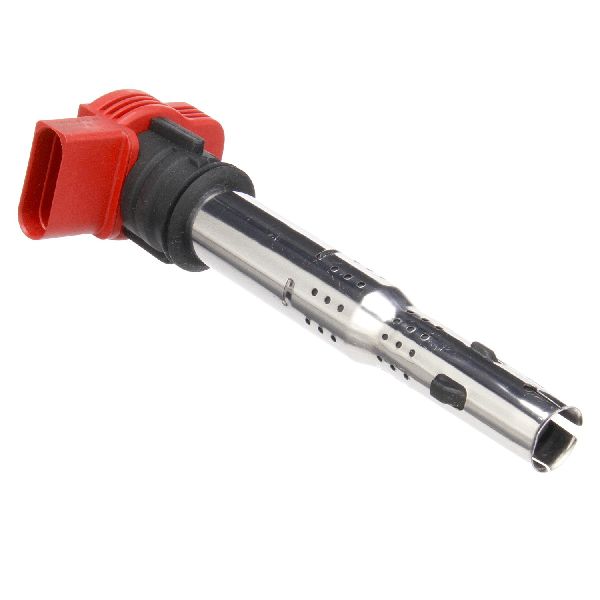
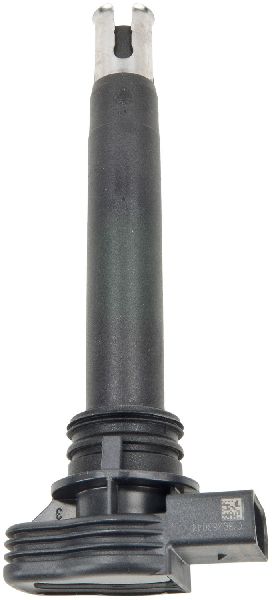
- Faulty Ignition Coil 🔴 High Probability → Shop Ignition Coil Ignition coils are a very common failure item on the Audi 3.0T engine due to high heat and electrical stress. While ignition coil issues are less frequent than on the 2.0T engine, they are still a primary suspect for a single-cylinder misfire.
How to confirm: Swap the ignition coil from cylinder 1 with another cylinder (e.g., cylinder 2). Cylinder 1 is the front-most cylinder on the passenger side. Clear the codes and drive. If the code changes to P0302, the ignition coil is faulty.
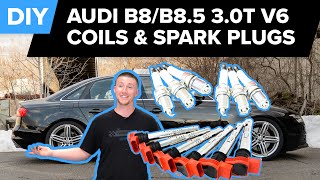
Typical fix: Replace the faulty ignition coil. It is often recommended to replace all six coils at the same time 🎬 Watch: Step-by-step guide to replacing coils and spark plugs. for preventative maintenance, especially if they are original and the vehicle has high mileage.
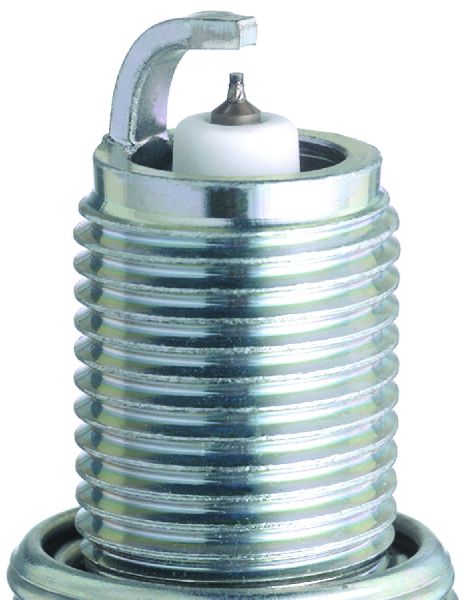
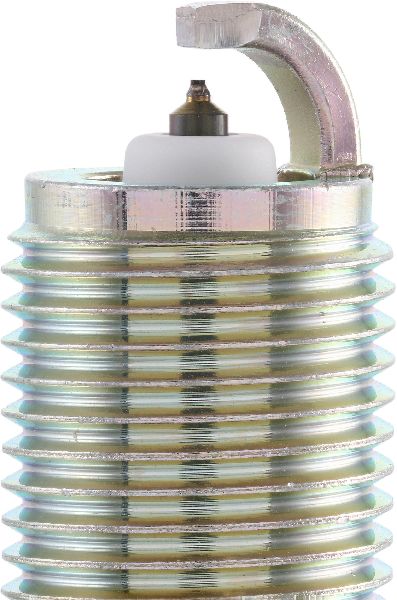
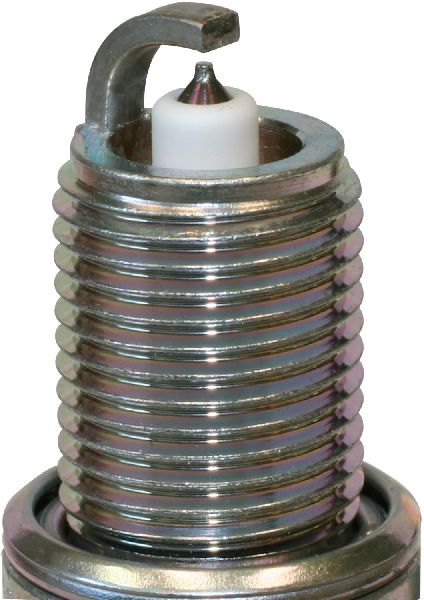
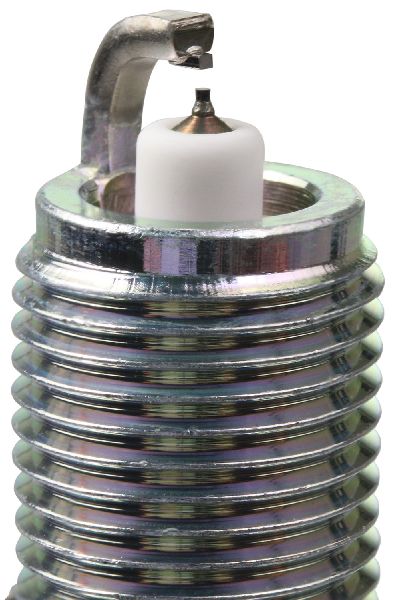
Est. part cost: $40-$80 per coil - Worn or Fouled Spark Plug 🔴 High Probability → Shop Spark Plug Spark plugs are a regular maintenance item with a finite lifespan. The service interval for the 3.0T is 55,000 miles. A worn electrode, incorrect gap, or carbon/oil fouling can prevent a strong spark. These engines are sensitive to using OEM-spec plugs from NGK or Bosch.
How to confirm: After confirming the coil is good, swap the spark plug from cylinder 1 to another cylinder. If the misfire code moves to that cylinder, the spark plug is bad. Visually inspect the plug for wear, oil, or heavy carbon deposits. A plug fouled with a pink/white crusty residue can indicate a coolant leak.
Typical fix: Replace the spark plug. It is best practice to replace all six spark plugs at the same time to ensure balanced performance.
Est. part cost: $15-$30 per plug - Carbon Buildup on Intake Valves 🟡 Medium Probability As a direct-injection (FSI) engine, fuel is sprayed directly into the cylinder, so it never washes over the intake valves. Oil vapor from the PCV system bakes onto the hot valves, restricting airflow and causing misfires, especially on cold starts or under heavy load. This is a well-documented issue on these engines.
How to confirm: This requires a visual inspection using a borescope inserted into the intake ports, which typically involves removing the supercharger for a clear view.
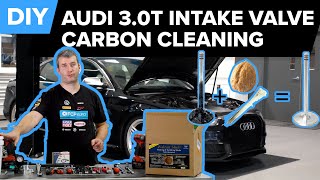
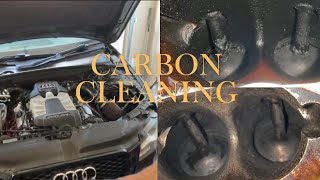
Typical fix: Perform a manual 'walnut blasting' or chemical cleaning of the intake ports and valves to remove the carbon deposits. This is a labor-intensive job, often costing over $1000. 🎬 Watch: How to perform a manual walnut blasting carbon cleaning.
Est. part cost: $800-$1500 (service cost) - Leaking Supercharger Intercooler 🟡 Medium Probability → Shop Turbocharger The 3.0T engine has two air-to-water intercoolers (cores) located within the supercharger housing. Over time, they can develop internal leaks, dripping coolant directly into the intake ports. This fouls spark plugs and causes misfires. Symptoms include mysterious coolant loss with no external drips.
How to confirm: The primary symptom is slow coolant loss without any visible leaks under the car. Definitive diagnosis requires removing the supercharger and visually inspecting the intake ports for coolant residue (a pink/white crust). A mechanic can also pressure-test the supercharger's cooling circuit.
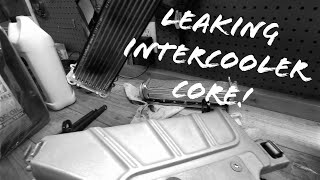
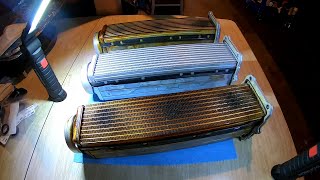
Typical fix: Replace the leaking intercooler core(s). This is a major repair as it requires removing the supercharger. 🎬 See this DIY walkthrough for replacing supercharger intercooler cores. While the supercharger is off, it is highly recommended to also replace the PCV valve and thermostat.
Est. part cost: $200-$400 per core (used/aftermarket), plus significant labor - Faulty Fuel Injector ⚪ Low Probability → Shop Fuel Injector Direct injectors operate under high pressure and can become clogged or fail electronically over time, disrupting the fuel spray pattern. Failures are less common on the 3.0T than on other Audi engines but can happen.
How to confirm: This is more difficult to diagnose. It involves checking injector resistance, monitoring fuel trims with an advanced scan tool, or swapping injectors between cylinders, which is a significant job requiring intake manifold removal.
Typical fix: Replace the faulty fuel injector. It's recommended to replace the seals on all injectors if one is being replaced.
Est. part cost: $100-$250 per injector
Rare But Worth Checking
- PCV System Failure: A failed PCV (Positive Crankcase Ventilation) valve, also called an oil separator, is a known issue on the 3.0T. It is located under the supercharger. Failure can cause a vacuum leak, high oil consumption, a whistling noise, and misfires. Due to its location, replacement is very labor-intensive and is often done at the same time as carbon cleaning or intercooler replacement.
- Low Engine Compression: A mechanical issue like a worn piston ring, a damaged valve, or a failed rocker arm can cause a loss of compression, resulting in a persistent misfire that is not fixed by ignition or fuel parts. A compression test is needed to confirm this.
Diagnosis Steps
- Read the fault codes with an OBD-II scanner. Note if P0301 is present alone or with other codes like P130A or P0300.
- Identify Cylinder 1. On the 3.0T V6, Bank 1 is the passenger side (US). Cylinder 1 is the front-most cylinder on the passenger side.
- Swap the ignition coil from cylinder 1 to cylinder 2 (middle cylinder, passenger side). Clear the codes and run the engine. If the code changes to P0302, the coil is bad and needs replacement.
- If the code remains P0301, swap the spark plug from cylinder 1 to cylinder 2. Clear codes and run the engine. If the code changes to P0302, the spark plug is bad.
- If the misfire is still on cylinder 1, check for coolant loss. A slowly dropping coolant level with no visible external leaks is a strong indicator of a leaking supercharger intercooler.
- If the misfire persists and there's no coolant loss, the problem is more complex. Inspect the fuel injector connector for damage or corrosion.
- At this stage, the most likely remaining causes are a clogged fuel injector, significant carbon buildup on the intake valves, or a mechanical engine issue.
- A professional diagnosis is recommended, which may involve using a borescope to inspect for carbon buildup, pressure testing the intercooler system, or performing a compression test to check for mechanical engine health.
Parts You'll Likely Need
- Ignition Coil
(OEM #06E905115F (or later revision))— This is the most frequent cause of a single-cylinder misfire and is the first part to check. The part number has been revised multiple times; ensure you get the latest version.
Trusted brands: Bosch, NGK, Eldor, APR
OEM price range: $60-$90
Aftermarket price range: $40-$70 - Spark Plug
(OEM #06M905606F)— A worn or fouled spark plug is the second most likely cause. The 3.0T engine is sensitive to correct plug selection. The service interval is 55,000 miles.
Related Codes That Often Appear With This One
- P130A — This Audi-specific code for 'Hide Cylinder' or 'Cylinder Disabling' is often triggered alongside a misfire code. It means the ECM has shut down cylinder 1 to protect the catalytic converter from raw fuel. Its presence confirms a definite, not intermittent, fault in that cylinder.
- P0300 — If you see 'Random/Multiple Cylinder Misfire' along with P0301, it indicates the problem is affecting more than just cylinder 1, pointing towards a systemic issue like a vacuum leak, PCV failure, or widespread carbon buildup.
- P0302, P0303, P0304, P0305, P0306 — Codes for other specific cylinders indicate a more widespread problem. If misfires are on cylinders 3 and 6, a leaking intercooler is a strong possibility.
Technical Service Bulletins (TSBs) & Recalls
- Bulletin #2033768/2 (supersedes #01138920337681): Mentions that a cylinder misfire fault (DTC P0301 – P0306) with DTC P130A may be stored in the engine control module, pointing towards a known issue, often related to carbon buildup.
Platform-Specific Known Issues
- A Technical Service Bulletin (TSB 2033768/2, superseding 01-13-89) was issued for misfire faults (P0301-P0306) accompanied by P130A. The TSB instructs technicians to contact Audi's Technical Assistance Center (TAC), noting that carbon buildup is a likely cause.
- A Reddit user with a P0301 on a B9 S5 (newer 3.0T engine) found the ultimate cause to be failed rocker arms on cylinder 1, which led to a broken exhaust valve spring, requiring a cylinder head rebuild. This highlights the possibility of mechanical failure.
- An AudiWorld forum member with a 2013 S5 experienced a P0303 misfire and confirmed it was a leaking passenger-side intercooler core by removing the supercharger and finding coolant residue. This is a real-world example of this specific failure mode.
Mechanic-Grade Diagnostic Values
- High-Pressure Fuel Rail Pressure (HPFP) — expected: Approximately 40 bar (580 PSI) at idle, rising to over 140 bar (2030 PSI) under load.. Failure: Significantly lower pressure than expected under load can cause lean misfires, though it usually affects multiple cylinders.
- Low-Pressure Fuel Pump (LPFP) Feed Pressure — expected: Approximately 4 to 6 bar (58 to 87 PSI).. Failure: Pressure dropping below this range will starve the HPFP and can cause misfires, particularly under high demand.
- VCDS Misfire Counter (Live Data) — expected: The misfire count for each cylinder should remain at or very near 0 at idle and under normal load.. Failure: A rapidly increasing number in the counter for cylinder 1 confirms an active misfire in real-time, even before the CEL is triggered.
- Mode $06 Misfire Data — expected: Counters should be low or zero.. Failure: A high count for cylinder 1 indicates misfires are occurring, potentially below the threshold required to set a P0301 code. This is useful for diagnosing intermittent issues.
Scan Tool Commands That Help
- VCDS (VAG-COM): Measuring Value Blocks (MVB) - Groups 015 & 016 — Use this to monitor live misfire counts for each cylinder. Group 015 shows cylinders 1-3, and Group 016 shows 4-6. This is the most effective way to confirm which cylinder is misfiring and under what conditions (e.g., idle, load, cold/hot).
- VCDS (VAG-COM): Advanced Measuring Values — On newer UDS-based control modules, this function replaces the older measuring blocks. You can select 'Misfire sum' and 'Cylinder 1 misfire counter' to get the same live data.
Wiring & Ground Locations
- Engine Ground Strap (Bank 1) — On the passenger side (Bank 1) of the engine compartment, a primary ground strap connects the engine block to the chassis frame rail.. A corroded or loose main engine ground can cause unstable voltage and intermittent electrical issues, including weak spark and misfires that can be difficult to trace.
- ECM Ground — The Engine Control Module (ECM) is located in the plenum chamber (the area under the windshield wipers). Its ground connections are typically made to dedicated studs on the chassis in that area.. The ignition coils are controlled and grounded via the ECM. A poor ground at the ECM itself can affect the firing of one or more coils, leading to misfires.
Real Owner Repair Stories
- AudiWorld forum user (2012 Audi S4 3.0T (same CGXC engine family)) — EPC light, rough running, P0305 (Cylinder 5 Misfire).
❌ Tried (didn't work) Replacing spark plugs, Replacing ignition coils
✅ What actually fixed it After removing the supercharger, a mechanic found coolant from a leaking internal intercooler core dripping directly into the cylinder. The fix was to replace the faulty intercooler core. - YouTube user / C7 owner (Audi C7 platform with 3.0T engine) — Misfire on cylinder 3 (passenger side, rear) under acceleration, EPC light.
❌ Tried (didn't work) Swapping ignition coil (misfire stayed on cylinder 3), Swapping spark plug (misfire stayed on cylinder 3)
✅ What actually fixed it The owner confirmed slow coolant loss from the divorced intercooler reservoir with no external leaks. The final diagnosis was a leaking supercharger intercooler core, requiring supercharger removal and core replacement. - AudiWorld forum user (Audi with 3.0T engine) — Persistent misfire code not resolved by common fixes.
❌ Tried (didn't work) Ignition coils, Spark plugs, Fuel injectors, Carbon cleaning
✅ What actually fixed it The root cause was a failed/cracked rocker arm on the affected cylinder. This mechanical failure required removing the valve cover for inspection and replacement of the valvetrain component.
"I Checked Everything" — The Actual Cause
- A failed PCV (oil separator) diaphragm is a classic cause of misfires on the 3.0T that can be missed by a standard intake smoke test. The PCV system creates an internal vacuum leak by drawing unmetered air from the crankcase. The primary symptom is often a loud whistling or sucking noise from the engine, especially noticeable if you try to remove the oil cap while the engine is running (it will be held on by strong vacuum).
OEM Part Supersession History
06E905115E→06E905115F, 06E905115G— Standard manufacturer revisions to improve reliability and performance against heat and electrical stress.
Heads up: While older revisions may work, it is strongly recommended to use the latest available part number (e.g., 'F' or 'G') and to replace all six coils at once to ensure matched performance. Mixing old and new revisions is not advised.
Model Year Variations Within This Range
- 2013: The 2013 model year was the first year the S5 Coupe received the 3.0T supercharged V6 (engine code CGXC), which the S5 Cabriolet already used. There are no significant mid-year mechanical changes reported for the 2013 CGXC engine that would alter the diagnosis of a P0301 code.
Helpful Videos

We Have This Part in Stock

The information in this article is provided for general reference and educational purposes only. Vehicle specifications, procedures, and part compatibility can vary by production date, trim level, and region. Always consult your vehicle's factory service manual and verify part numbers before purchasing or performing repairs. Safety-critical components such as airbags, seat belts, and braking systems should be installed by a qualified professional.
- Audi S5:
- 🧭 Diagnostic Flowchart
- 🎬 Helpful Videos
- 🛍️ Shop This Part
- What's Unique About the 2013-2013 Audi S5
- Symptoms You May Notice
- Most Likely Causes
- Rare But Worth Checking
- Diagnosis Steps
- Parts You'll Likely Need
- Related Codes That Often Appear With This One
- Technical Service Bulletins (TSBs) & Recalls
- Platform-Specific Known Issues
- Mechanic-Grade Diagnostic Values
- Scan Tool Commands That Help
- Wiring & Ground Locations
- Real Owner Repair Stories
- "I Checked Everything" — The Actual Cause
- OEM Part Supersession History
- Model Year Variations Within This Range
- 🎟️ Get 5% Off