

P0301 on 2010-2015 Buick LaCrosse: Cylinder 1 Misfire Causes & Fixes
P0301 on a 2010-2015 Buick LaCrosse most often means a failed ignition coil or a worn-out spark plug on cylinder #1. For V6 engines, cylinder #1 is on the rear bank against the firewall, requiring intake manifold removal for access. Swapping the coil with an adjacent cylinder (like #3) is a quick, no-cost diagnostic step. Expect to pay $30-$70 for a new coil and $10-$20 for a spark plug.
- P0301 means cylinder #1 is misfiring.
- The most likely cause is a bad ignition coil or spark plug.
- On V6 models, cylinder #1 is in the rear bank, requiring removal of the intake manifold for access.
- Always replace the intake manifold gaskets if the manifold is removed.
- A flashing check engine light indicates a severe misfire that can damage your catalytic converter; avoid driving.
What's Unique About the 2010-2015 Buick LACROSSE

For the 2010-2015 LaCrosse equipped with the 3.0L or 3.6L V6 engine, accessing the ignition coils and spark plugs for the rear bank of cylinders (Bank 1: cylinders 1, 3, 5) requires removing the upper intake manifold. 🎬 Watch: Step-by-step guide to removing the intake manifold and plugs. This makes a simple coil or plug replacement significantly more labor-intensive than on the 2.4L 4-cylinder engine. Because of the extra labor, it is highly recommended to replace all three rear coils and plugs (1, 3, and 5), along with the intake manifold gaskets, at the same time to prevent future repeat repairs.
Diagnostic Flowchart

Tap your situation to follow the diagnostic path that matches what you're seeing on this vehicle.
Symptoms You May Notice
- Rough or shaking idle
- Hesitation or stumbling during acceleration
- Noticeable loss of engine power
- Solid or flashing Check Engine Light
- Smell of raw gasoline from the exhaust
- Decreased fuel economy
- Engine jerking or sputtering
- Replacing only the spark plug when the ignition coil was the actual failure.
- Replacing an oxygen sensor, which is unlikely to cause a single-cylinder misfire and would typically set other codes.
- Replacing the mass airflow sensor, which would typically affect all cylinders randomly and set a P0300 or other air metering codes.
Most Likely Causes

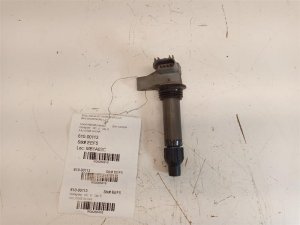
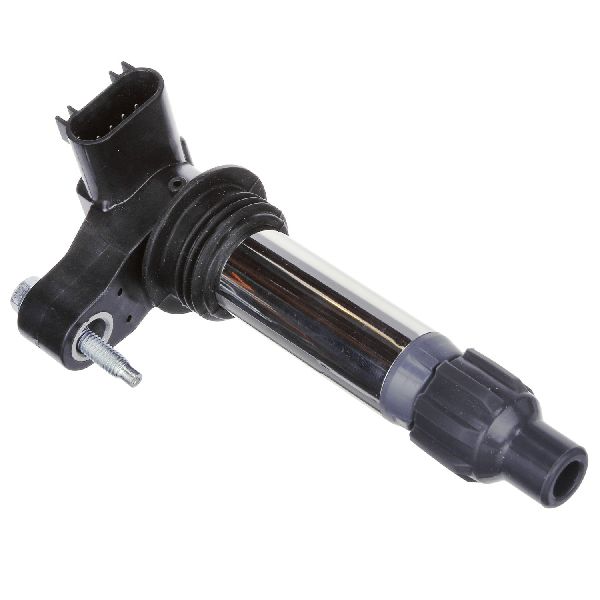
- Failed Ignition Coil 🔴 High Probability → Shop Ignition Coil Coil-on-plug ignition systems are common failure points due to constant exposure to high heat and vibration. On V6 models, the rear bank of coils is under the intake manifold, trapping more heat and making replacement more difficult.
How to confirm: Swap the ignition coil from cylinder #1 with another cylinder on the same bank (e.g., cylinder #3). Clear the codes and drive the vehicle. If the code changes to P0303, the coil is faulty. This is a standard and effective diagnostic step.
Typical fix: Replace the failed ignition coil. It is highly recommended to replace the corresponding spark plug at the same time and apply a small amount of dielectric grease to the inside of the new coil boot.
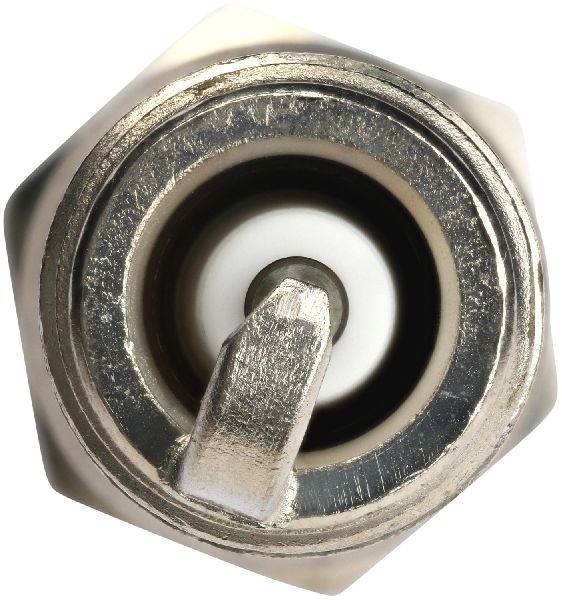
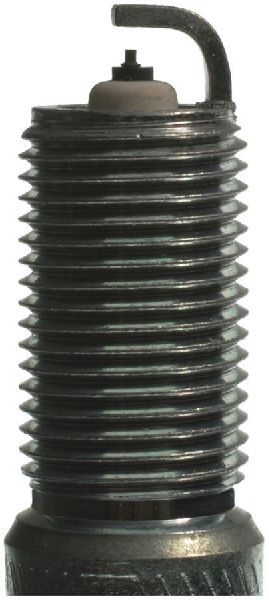
Est. part cost: $30-$70 - Worn or Fouled Spark Plug 🔴 High Probability → Shop Spark Plug Spark plugs are a regular maintenance item with a finite lifespan. The direct injection engines (3.0L/3.6L V6) are known to cause carbon buildup which can foul spark plugs over time, leading to a weak or inconsistent spark.
How to confirm: After ruling out the ignition coil, remove the spark plug from cylinder #1. Inspect it for wear (a rounded center electrode), excessive carbon or oil fouling, or cracks in the white porcelain insulator.
Typical fix: Replace the spark plug. It is best practice to replace all spark plugs as a set, especially on the V6 models where accessing the rear bank requires significant labor.
Est. part cost: $10-$25 per plug - Faulty Fuel Injector 🟡 Medium Probability → Shop Fuel Injector Direct injectors operate under high pressure and can become clogged with fuel deposits or fail electronically, especially on higher-mileage vehicles. Contaminated fuel can accelerate this process.
How to confirm: Listen to the injector with an engine stethoscope; it should make a consistent, rapid clicking sound. A more definitive test involves swapping the injector with another cylinder, but this is a labor-intensive job similar to replacing the coils on the V6's rear bank.
Typical fix: Replace the faulty fuel injector. It's good practice to replace the injector seal as well.
Est. part cost: $50-$120 - Intake Manifold Gasket Leak ⚪ Low Probability → Shop Engine Intake Manifold On V6 models, the intake manifold must be removed to service the rear bank of cylinders. If the gaskets are old and brittle, not replaced, or are installed incorrectly, they can leak unmetered air, causing a lean condition and misfires on the affected cylinders.
How to confirm: With the engine running, carefully spray brake cleaner or a combustible fluid around the intake manifold sealing area for cylinder #1. If the engine RPM changes noticeably, a vacuum leak is present.
Typical fix: Replace the upper and lower intake manifold gaskets. Fel-Pro is a commonly cited aftermarket brand for this repair.
Est. part cost: $40-$80 for a gasket set
Rare But Worth Checking
- Carbon Buildup on Intake Valves: The direct-injected 3.0L and 3.6L V6 engines are highly susceptible to carbon buildup on the intake valves because fuel is injected directly into the cylinder, not over the valves. This buildup can restrict airflow and cause misfires, especially on a cold start. GM has issued service bulletins (e.g., PIP5029, 16-NA-383) regarding this issue and recommends a chemical cleaning procedure or manual cleaning (walnut blasting).
- Low Engine Compression: If ignition and fuel system checks do not reveal the cause, a mechanical issue like a worn piston ring, leaking valve, or failing head gasket could be the culprit. A compression test is needed to diagnose this. While less common, timing chain issues on the 3.6L V6 can also lead to compression problems.
Diagnosis Steps
- Read the code from the ECM using an OBD-II scanner to confirm P0301 and check for any other 🎬 See how to diagnose a P0301 code and engine misfire. stored codes.
- Identify cylinder #1. On the 2.4L I4, it's the cylinder on the far-left (driver's side) when facing the engine. On the 3.0L/3.6L V6, Bank 1 (odd numbers) is against the firewall, and Bank 2 (even numbers) is by the radiator. Cylinder #1 is on the firewall side, towards the passenger side of the vehicle.
- Swap the ignition coil from cylinder #1 with another cylinder on the same bank (e.g., cylinder #3). This is the easiest next step on the 2.4L engine. For the V6, this requires removing the intake manifold.
- Clear the codes, start the engine, and let it run or drive it briefly. Re-scan for codes.
- If the code has moved to the other cylinder (e.g., P0303), the ignition coil is bad and needs replacement.
- If the code remains P0301, the issue is not the coil. Proceed to inspect the spark plug. If you have the intake off on a V6, it's wise to replace all rear plugs and the coil anyway.
- Inspect the spark plug from cylinder #1 for damage, wear, or fouling. If it looks bad, replace it. It's best to replace all plugs as a set.
- If the code remains P0301 after coil and plug checks, the problem is likely with the fuel injector or a mechanical issue with the cylinder.
- Inspect the fuel injector wiring for damage. Listen for a steady clicking from the injector using a mechanic's stethoscope.
- If ignition and fuel injector seem okay, perform a compression test on cylinder #1 to check for mechanical engine problems like bad rings or valves.
- If compression is good, consider a vacuum leak test or investigate potential carbon buildup on the intake valves, a known issue for the V6 engines.
Parts You'll Likely Need

- Ignition Coil
(OEM #12632479)— This is the most common failure part for a single-cylinder misfire. Heat and vibration cause the internal windings to fail over time. The OEM part is ACDelco D515C.
Trusted brands: ACDelco, Delphi, NGK, Denso
OEM price range: $50-$80
Aftermarket price range: $30-$60 - Iridium Spark Plug
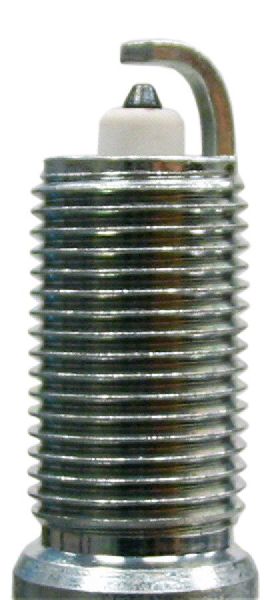
(OEM #41-109 (for 3.6L V6), 41-108 (for 2.4L I4))— Spark plugs are a routine wear item and are often replaced along with a failed coil. A worn or fouled plug can cause a weak spark and misfire. Iridium plugs are the OEM specified type for longevity.
Trusted brands: ACDelco, NGK, Denso, Bosch
OEM price range: $12-$20
Aftermarket price range: $8-$15 - Intake Manifold Gasket Set
(OEM #12673301 (Lower), specific upper gasket varies)— Required when replacing coils or plugs on the rear bank of the V6 engines. Reusing old gaskets is a major cause of vacuum leaks and repeat misfire codes. Aftermarket kits like Fel-Pro MS 97222 are commonly used.
Trusted brands: ACDelco, Fel-Pro
OEM price range: $60-$90
Aftermarket price range: $30-$50
Related Codes That Often Appear With This One
- P0300 — If the misfire is intermittent, just starting, or also affecting other cylinders randomly, a P0300 (Random/Multiple Misfire) may be stored alongside P0301. This can happen with issues like a vacuum leak or fuel pressure problems.
- P0302, P0303, P0304, P0305, P0306 — If other cylinders are also misfiring, their respective codes will appear (e.g., P0303 for cylinder 3). This points towards a more systemic issue like a bad batch of fuel, a major vacuum leak, or a failing component that serves multiple cylinders.
Technical Service Bulletins (TSBs) & Recalls
- Bulletin #PIP3333C: Addresses intermittent engine misfires (P0300, P0301, P0304) that may not be isolated by following standard service information diagnostics.
- Bulletin #PIP5029 / 16-NA-383: Discusses engine misfires (P0300-P0306) caused by heavy carbon buildup on the intake valves of direct injection engines, including the 3.0L and 3.6L V6.
- Bulletin #PIP4744B: Notes that a random misfire (P0300) on 2010-2011 models with the 3.0L/3.6L V6 can be caused by loose ignition coil ground bolts on the cylinder heads.
Platform-Specific Known Issues
- A known issue for this vehicle is an intermittent engine misfire that may not be easily isolated with standard diagnostics, as documented in NHTSA TSB #PIP3333C.
Mechanic-Grade Diagnostic Values
- Low-Pressure Fuel System (at fuel pump) — expected: 345-690 kPa (50-100 psi) with pump commanded ON, engine OFF. At idle, should be 300-400 kPa (43-58 psi).. Failure: Pressure below or above the specified ranges indicates a problem with the fuel pump or fuel pump control module.
- High-Pressure Fuel System (at fuel rail, V6 only) — expected: Approximately 1.9-5.0 MPa (276-725 psi) at idle.. Failure: Pressure significantly outside this range can indicate a failing high-pressure fuel pump or sensor.
- High-Pressure Fuel Pump Actuator Resistance (V6 only) — expected: 9-11 ohms at 25°C (77°F) between the two terminals.. Failure: Resistance outside this range indicates a faulty pump actuator, requiring pump replacement.
Hidden / Shadow Codes Worth Checking
- Mode $06, Test ID $A2-$A7: These Test IDs correspond to misfire counts for each cylinder (A2 for Cyl 1, A3 for Cyl 2, etc.) during the last 10 driving cycles. This can reveal intermittent misfires that haven't yet set a P0301 code. (see via A professional scan tool capable of reading Mode $06 data.)
Scan Tool Commands That Help
- GDS2/Tech2: Misfire Current Counter — This live data parameter shows a real-time count of misfire events per cylinder. It is the most direct way to confirm which cylinder is actively misfiring during a test drive or at idle.
- GDS2/Tech2: Fuel Injector Balance Test — This function individually disables each injector and measures the corresponding drop in RPM. A cylinder with a faulty injector will show little to no RPM drop when its injector is disabled. This helps isolate a fuel injector problem without swapping parts.
- GDS2/Tech2: Fuel Pump Enable — Used to manually run the low-pressure fuel pump to test for correct fuel pressure without the engine running.
Wiring & Ground Locations
- G105 / G106 — These are the primary engine block grounds, typically located on the front or side of the engine block near the accessories.. A poor engine ground can cause weak spark or erratic behavior from ignition coils and injectors, leading to misfires that are difficult to diagnose.
- Ignition Coil Connector — Directly on top of each ignition coil.. The wiring to the cylinder 1 ignition coil can be inspected for chafing or damage. The service manual provides schematics for the Bank 1 Ignition System to trace circuits back to the ECM.
- Fuel Pump Control Module — Located in the right rear corner of the trunk.. A burned connector or failed module at this location can cause low fuel pressure, leading to misfires. While this would typically cause a P0300, it can sometimes manifest as a single cylinder misfire initially.
Real Owner Repair Stories
- GM Forum user Wayne270th (Buick LaCrosse with 3.6L V6) — Persistent P0301 code, primarily at idle (around 700 RPM), which clears up above 1000 RPM. Rough idle that bounces between 590-700 RPM.
❌ Tried (didn't work) Swapped ignition coil multiple times., Swapped fuel injector twice (with cylinder 3 and 5)., Replaced spark plug., Replaced lower intake gaskets., Replaced entire upper intake manifold and gasket., Performed smoke test, sprayed carb cleaner, and used propane to check for vacuum leaks with no results found.
✅ What actually fixed it The user did not post a final resolution, highlighting a scenario where all common and many advanced diagnostic steps fail to isolate the root cause, suggesting a potential intermittent mechanical issue or an ECU-level fault.
OEM Part Supersession History
12590990, 12610626, 12618542→12632479 (ACDelco D515C)— Standard part evolution for improved durability and performance. The newer part features better windings and corrosion protection.ACDelco 41-109 (GM 12622561)→ACDelco 41-109 (GM 12681660)— The part number on the ACDelco box remains 41-109, but the underlying GM part number was updated. This is a rolling change for manufacturing and supply chain purposes.
Heads up: No incompatibility. It's important to note that ACDelco Iridium plugs are pre-gapped and should not be adjusted.
Model Year Variations Within This Range
- 2010: The 2010 model year was the only one in this range to offer the 3.0L LF1 V6 engine.
- 2011: The 3.0L V6 was discontinued. The base engine remained the 2.4L I4, and the optional V6 was the 3.6L LLT.
- 2012-2015: The 3.6L V6 was updated from the LLT to the LFX, which featured a power increase to 303 hp and integrated exhaust manifold cylinder heads. The base 2.4L engine gained the eAssist mild-hybrid system as standard.
- 2014-2015: The LaCrosse received a mid-cycle refresh for the 2014 model year with updated styling and interior technology (IntelliLink), but the powertrain options (2.4L w/eAssist, 3.6L LFX) remained the same.
Helpful Videos
Used OEM Parts in Stock
New Aftermarket Parts Available


The information in this article is provided for general reference and educational purposes only. Vehicle specifications, procedures, and part compatibility can vary by production date, trim level, and region. Always consult your vehicle's factory service manual and verify part numbers before purchasing or performing repairs. Safety-critical components such as airbags, seat belts, and braking systems should be installed by a qualified professional.
- Buick LACROSSE:
- 🧭 Diagnostic Flowchart
- 🎬 Helpful Videos
- 🛍️ Shop This Part
- What's Unique About the 2010-2015 Buick LACROSSE
- Symptoms You May Notice
- Most Likely Causes
- Rare But Worth Checking
- Diagnosis Steps
- Parts You'll Likely Need
- Related Codes That Often Appear With This One
- Technical Service Bulletins (TSBs) & Recalls
- Platform-Specific Known Issues
- Mechanic-Grade Diagnostic Values
- Hidden / Shadow Codes Worth Checking
- Scan Tool Commands That Help
- Wiring & Ground Locations
- Real Owner Repair Stories
- OEM Part Supersession History
- Model Year Variations Within This Range
- 🎟️ Get 5% Off