

P0301 on 2008-2013 Cadillac CTS: Cylinder 1 Misfire Causes and Fixes
P0301 on a 2008-2013 Cadillac CTS means cylinder 1 is misfiring. The most common cause is a failed ignition coil or a worn spark plug. Swapping the cylinder 1 coil with another is the fastest way to diagnose the problem. A new coil costs about $40-$80. On these direct-injection engines, carbon buildup on intake valves is also a frequent cause, especially on higher-mileage vehicles.
- P0301 means cylinder 1 (front passenger side) is misfiring.
- The most likely cause is a bad ignition coil, followed by a worn spark plug.
- Use the 'swap test' by moving the cylinder 1 coil to another cylinder to quickly confirm if the coil is the problem.
- If the check engine light is flashing, pull over and limit driving to prevent expensive catalytic converter damage.
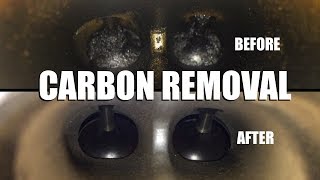
- On these specific engines, carbon buildup on the intake valves is a known issue that can cause misfires, especially when the engine is cold.
What's Unique About the 2008-2013 Cadillac CTS
🎬 Watch: 10 common problems to look for on these models.
The 2008-2013 Cadillac CTS uses direct-injection V6 engines (LLT, LFX, and LF1). While these engines are powerful and efficient, they are known for carbon buildup on the intake valves. This buildup can disrupt airflow and cause misfires, especially on a cold start, which might be mistaken for a bad coil or plug. GM issued a technical service bulletin (PIP5029E) acknowledging this exact issue across many vehicles with these engines. Additionally, another TSB (PIP4819A) specifically mentions loose spark plug wire connections as a potential cause for misfires on these vehicles.
Diagnostic Flowchart

Tap your situation to follow the diagnostic path that matches what you're seeing on this vehicle.
Symptoms You May Notice

- Rough or shaking idle
- Engine hesitation or stumbling during acceleration
- Reduced engine power
- Flashing or solid Check Engine Light
- Poor fuel economy
- Smell of unburned gasoline from the exhaust
- Engine noise such as rattling or ticking, especially on startup
- Replacing the oxygen sensor. An O2 sensor will not cause a single-cylinder misfire like P0301. It would typically set a fuel trim code (like P0171/P0174) or affect an entire engine bank.
- Replacing the catalytic converter. A misfire can damage a catalytic converter, but a bad converter will not cause a misfire code. The misfire is the cause, not the effect.
Most Likely Causes

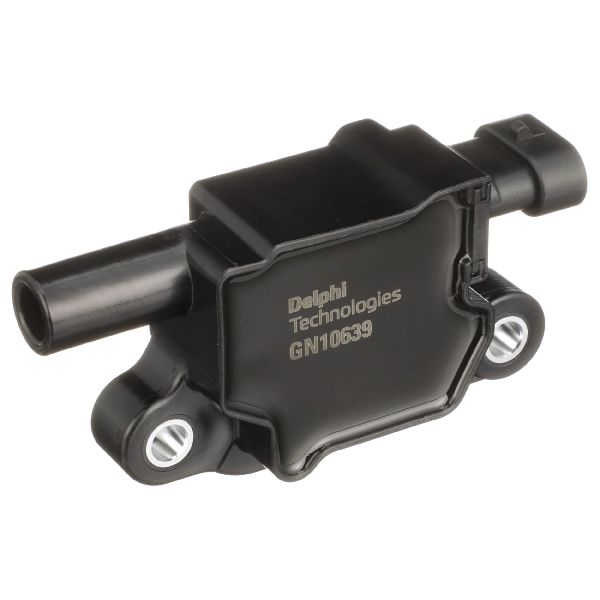
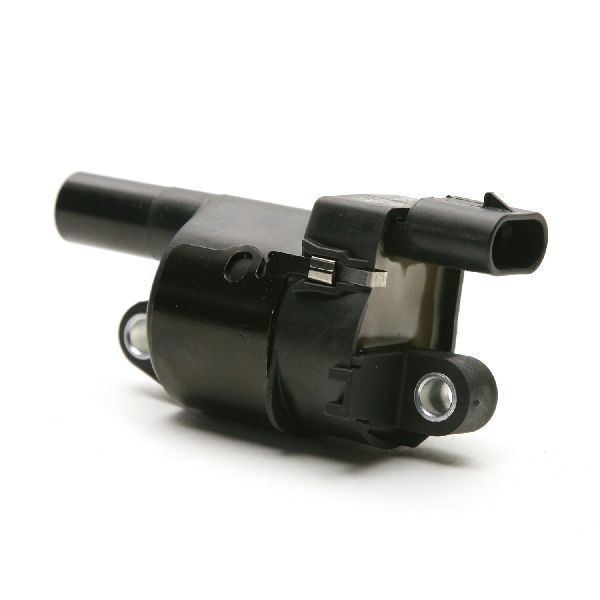
- Failed Ignition Coil 🔴 High Probability → Shop Ignition Coil Coil-on-plug systems are common failure points on many modern engines due to constant heat exposure. It's the most frequent cause for a single-cylinder misfire.
How to confirm: Swap the ignition coil from cylinder 1 with another cylinder (e.g., cylinder 3, also on the passenger side). Clear the codes and drive. If the code changes to P0303, the coil is faulty. This is a definitive diagnostic step confirmed by many owners in forums.
Typical fix: Replace the failed ignition coil. It is held on by a single 10mm bolt. Many owners recommend applying dielectric grease to the inside of the new coil boot.
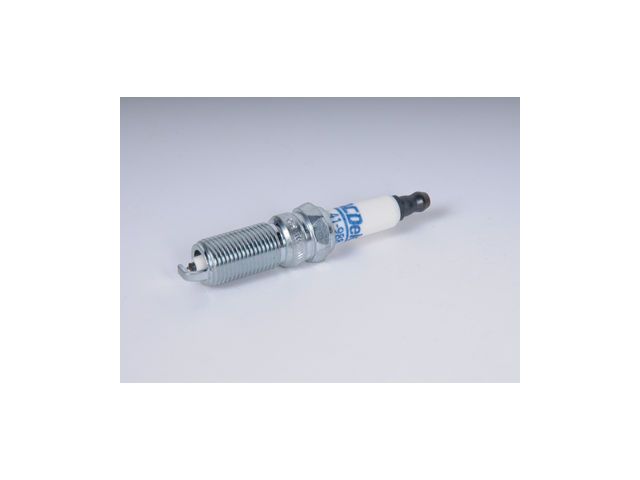
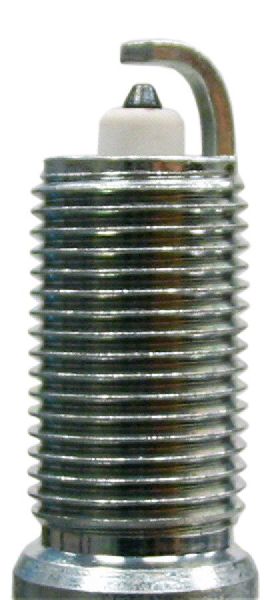
Est. part cost: $40 - $100 - Worn or Fouled Spark Plug 🔴 High Probability → Shop Spark Plug Spark plugs are a regular maintenance item with a service life up to 100,000 miles. A worn electrode, incorrect gap, or carbon/oil fouling can prevent a strong spark, leading to a misfire.
How to confirm: After ruling out the coil, remove the spark plug from cylinder 1. Inspect it for wear, damage, or heavy deposits. Compare it to a new plug. The OEM ACDelco Iridium plugs come pre-gapped and should not be adjusted.
Typical fix: Replace the spark plug. It is recommended to replace all six spark plugs at the same time for even performance, especially if they are near the end of their service life.
Est. part cost: $10 - $25 per plug - Carbon Buildup on Intake Valves 🟡 Medium Probability The direct-injection (GDI) engines in the CTS (LLT, LFX, LF1) do not spray fuel over the intake valves. This allows oil vapor from the PCV system to bake onto the valves, forming hard carbon deposits that restrict airflow and cause misfires, particularly when the engine is cold. This is a widely documented issue for these GM engines.
How to confirm: This is difficult to confirm without a borescope to visually inspect the back of the intake valves. Misfires that are worse on cold starts and do not resolve with new plugs/coils are a strong indicator.
Typical fix: The intake manifold must be removed and the valves cleaned manually (walnut blasting) or with chemical solvents. This is often a professional job costing $600-$1000+. GM outlines a chemical cleaning procedure in TSB PIP5029E, but walnut blasting is considered more effective by independent shops.
Est. part cost: $20 - $50 in chemicals, or $600+ for professional service - Faulty Fuel Injector ⚪ Low Probability → Shop Fuel Injector Direct injectors operate under very high pressure and can become clogged or fail electronically, preventing fuel from being delivered to cylinder 1. While less common than coils or plugs, injector failure is a known issue.
How to confirm: This usually requires a professional diagnostic tool to perform a fuel injector balance test. Swapping injectors is not a simple task on these engines and requires special tools and procedures due to the high-pressure fuel system.
Typical fix: Replace the faulty fuel injector. This is a more involved repair due to the high-pressure fuel system and location under the intake manifold. Professional replacement can cost between $976 and $1,334.
Est. part cost: $70 - $200
Rare But Worth Checking
- Loose Ignition Coil Connector/Wiring: → Shop Ignition Coil GM issued TSB #PIP4819A specifically for this issue. Before replacing parts, inspect the wiring harness and connector for cylinder 1's ignition coil to ensure it is secure and free of damage or corrosion.
- Stretched Timing Chain: The earlier 3.6L LLT engines were known for premature timing chain stretching. While less common on the LFX, it can still occur. This would typically set camshaft/crankshaft correlation codes (like P0008, P0017) along with misfire codes, and may produce a rattling noise on startup.
- Low Engine Compression: If ignition and fuel system checks don't find the issue, a mechanical problem like a worn piston ring, leaking valve, or bad head gasket could be the cause. A compression test on cylinder 1 will confirm this.
- Vacuum Leak: A leak in the intake manifold gasket near cylinder 1 can lean out the air/fuel mixture and cause a misfire. A smoke test is the best way to find a vacuum leak.
Diagnosis Steps
- Read the code with an OBD-II scanner and confirm P0301 is present. Note any other codes and freeze frame data.
- Check freeze frame data to see the engine conditions (RPM, load, temperature) when the misfire occurred.
- Locate cylinder 1 (passenger side, front of the engine).
- Swap the ignition coil from cylinder 1 with the coil from cylinder 3 (passenger side, middle). This is the most effective initial diagnostic step.
- Clear the codes, drive the vehicle, and re-scan. If the code is now P0303, the ignition coil is bad and needs replacement.
- If the code remains P0301, swap the spark plug from cylinder 1 with cylinder 3. Clear codes and re-test. If the code moves to P0303, the spark plug was the issue.
- If the code remains P0301, carefully inspect the ignition coil's electrical connector and wiring for any damage or looseness, as noted in TSB PIP4819A.
- If the ignition system is confirmed to be good, the next steps involve checking the fuel injector and performing a compression test on cylinder 1. These steps may require professional assistance.
- If misfires are most prominent on cold starts, suspect carbon buildup on the intake valves, which requires a borescope for visual confirmation or proceeding with a chemical cleaning procedure as outlined in GM TSB PIP5029E.
Parts You'll Likely Need
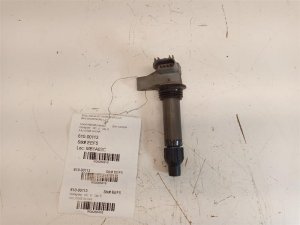
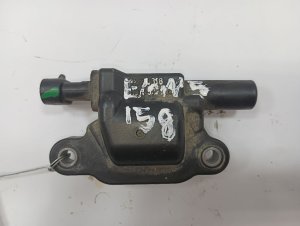
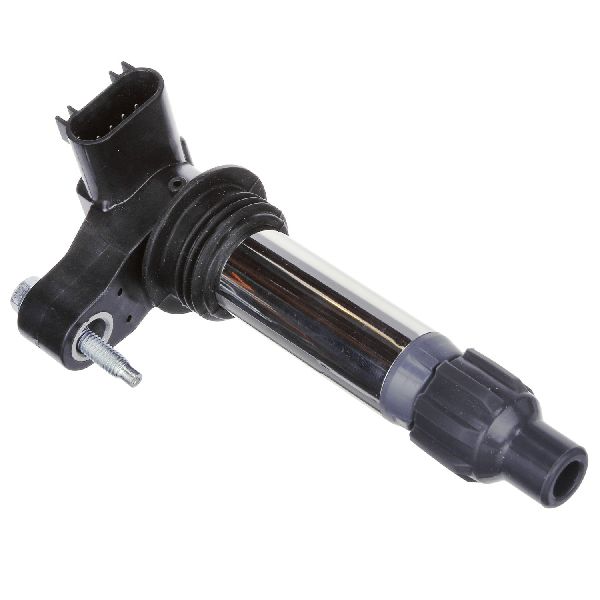
- Ignition Coil
(OEM #12632479 (Supersedes: 12590990, 12610626, 12618542))— This is the most common failure part for a P0301 code. The coil provides the high voltage needed to fire the spark plug.
Trusted brands: ACDelco (OEM), Delphi, NGK
OEM price range: $60-$100
Aftermarket price range: $40-$80 - Spark Plug
(OEM #41-109 (ACDelco Iridium))— As a routine maintenance item, a worn or fouled spark plug is the second most likely cause of a misfire. It's recommended to replace them when replacing a coil. These plugs are pre-gapped and should not be adjusted.
Trusted brands: ACDelco Iridium (OEM), NGK Laser Iridium
OEM price range: $15-$25
Aftermarket price range: $10-$20
Related Codes That Often Appear With This One
- P0300 — If the misfire is intermittent or begins to affect other cylinders, a P0300 (Random/Multiple Cylinder Misfire) may be stored alongside P0301.
- P0303, P0305 — These codes indicate misfires on other cylinders of the same bank (Bank 1, passenger side). If they appear together, it could point to a more systemic issue like a clogged catalytic converter for that bank or carbon buildup across all cylinders on that bank.
- P0201 — This code indicates a fault in the fuel injector circuit for cylinder 1. If you see P0301 and P0201 together, it strongly suggests the problem is with the fuel injector for cylinder 1 or its wiring.
Technical Service Bulletins (TSBs) & Recalls
- PIP4819A: Addresses engine misfires (P0300-P0308) and advises technicians to inspect for loose spark plug wire/coil connections.
- PIP5029E: Describes engine misfires, often on cold starts, due to heavy carbon deposits on the intake and/or exhaust valves on direct-injected engines.
- PIP5493D: Pertains to newer LGX engines but provides a general diagnostic flow for misfires, starting with checking for ECM calibration updates before inspecting mechanical components.
Platform-Specific Known Issues
- Carbon Buildup on Intake Valves: Per GM TSB #PIP5029E, direct-injection engines in the 2008-2013 CTS are susceptible to heavy carbon deposits on the intake valves, leading to cold-start misfires (P0300-P
Mechanic-Grade Diagnostic Values
- Low-Pressure Fuel System Pressure (Key ON, Engine OFF) — expected: 345-690 kPa (50-100 psi). Failure: Pressure below 345 kPa (50 psi) could indicate a weak in-tank fuel pump. Pressure should not drop more than 14 kPa (2 psi) in 5 minutes after the pump shuts off.
- High-Pressure Fuel System Pressure (Engine Idling) — expected: Over 2,000 PSI (13,790 kPa). Failure: Significantly lower pressure, often accompanied by codes like P0087, points to a failing high-pressure fuel pump (HPFP).
- Fuel Injector Resistance (LLT Engine) — expected: 1.25-1.75 ohms when engine coolant is between 10-32°C (50-90°F).. Failure: A reading outside this range, or a significant deviation between injectors, indicates a faulty injector.
- Spark Plug Resistance (ACDelco 41-109) — expected: 4,000-7,500 ohms (4-7.5k ohms). Failure: A reading significantly outside this range can indicate an internal failure of the plug's resistor.
Scan Tool Commands That Help
- GM GDS2 / Tech2 or equivalent professional scanner: Cylinder Power Balance Test — Used to identify a weak cylinder when a misfire is felt but not consistently setting a specific code. The tool disables one injector at a time and measures the RPM drop. A cylinder with little to no RPM drop is not contributing power and is the source of the misfire.
- GM GDS2 or equivalent professional scanner: Fuel Injector Balance Test — This automated test helps diagnose a suspected faulty fuel injector on GDI systems without mechanical disassembly. The scan tool commands the injector and measures pressure drops to determine if it's functioning correctly.
- GM GDS2 or equivalent professional scanner: Misfire Graphic — To monitor live and historical misfire counts per cylinder during a test drive. This helps confirm which cylinder is misfiring and under what conditions (e.g., load, RPM) it occurs.
Wiring & Ground Locations
- G102 — Right front of the engine compartment.. This is a primary ground point for several engine components, including the ignition coils for Bank 1 (cylinders 1, 3, 5). A loose or corroded connection here can cause intermittent misfires on the entire bank.
- G101 — Lower front of the engine block.. This is a main ground for the Engine Control Module (ECM). A poor connection can cause the ECM to behave erratically, potentially leading to false misfire codes or other communication issues.
- ECM Connector X1 (LFX Engine) — On the Engine Control Module. It is typically a black connector with a blue terminal assurance lock.. This connector contains the control circuits for the ignition coils and fuel injectors. When diagnosing a persistent P0301, checking for backed-out pins or corrosion at the specific pin for cylinder 1's ignition coil or injector is a critical step.
Real Owner Repair Stories
- GoTech (YouTube Channel) (2014 Chevy Impala with 3.6L V6 (LFX engine, similar to 2012-2013 CTS)) — A subtle misfire could be felt, but it was not severe enough to set a Check Engine Light. Scan tool showed misfire counts on cylinders 1, 3, and 5 (Bank 1) and a negative long-term fuel trim (-14%) on that bank.
❌ Tried (didn't work) New spark plugs, 6 new high-pressure fuel injectors, Multiple valve cleaning jobs, Swapping ignition coils, New throttle body, New intake manifold gaskets
✅ What actually fixed it Diagnosis with a labscope revealed that the Bank 1 timing was slightly retarded. A cam/crank correlation test showed the timing chain for Bank 1 had stretched, which was the root cause of the misfires on that entire bank.
OEM Part Supersession History
12590990, 12610626, 12618542→12632479— Standard part evolution for improved durability and protection against internal shorts and corrosion.
Heads up: The newer part number (12632479) is the correct service replacement for all previous versions and is fully compatible.
Model Year Variations Within This Range
- 2008-2011 (LLT Engine): Uses an aluminum intake manifold and has separate exhaust manifolds (headers). These engines were more prone to the early, more severe timing chain stretch issues.
- 2012-2013 (LFX Engine): Features a lighter composite intake manifold and integrated exhaust manifolds (part of the cylinder head). The timing chains and fuel injectors were also updated from the LLT design. While still susceptible to carbon buildup and timing chain wear, the issues are generally considered less frequent than on the early LLT engines.
Helpful Videos

Used OEM Parts in Stock
New Aftermarket Parts Available

The information in this article is provided for general reference and educational purposes only. Vehicle specifications, procedures, and part compatibility can vary by production date, trim level, and region. Always consult your vehicle's factory service manual and verify part numbers before purchasing or performing repairs. Safety-critical components such as airbags, seat belts, and braking systems should be installed by a qualified professional.
- Cadillac CTS:
- 🧭 Diagnostic Flowchart
- 🎬 Helpful Videos
- 🛍️ Shop This Part
- What's Unique About the 2008-2013 Cadillac CTS
- Symptoms You May Notice
- Most Likely Causes
- Rare But Worth Checking
- Diagnosis Steps
- Parts You'll Likely Need
- Related Codes That Often Appear With This One
- Technical Service Bulletins (TSBs) & Recalls
- Platform-Specific Known Issues
- Mechanic-Grade Diagnostic Values
- Scan Tool Commands That Help
- Wiring & Ground Locations
- Real Owner Repair Stories
- OEM Part Supersession History
- Model Year Variations Within This Range
- 🎟️ Get 5% Off