

P0301 on 2008-2013 Cadillac CTS: Cylinder 1 Misfire Causes and Fixes
P0301 on a 2008-2013 Cadillac CTS indicates a misfire in cylinder 1. The most common cause is a faulty ignition coil, followed by a worn spark plug. Swapping the cylinder 1 coil with another is the fastest way to diagnose the problem. A new coil costs about $40-$80. On these direct-injection engines, carbon buildup on the intake valves is also a very common cause, especially after 60,000 miles.
- P0301 is a misfire on cylinder 1, located at the front of the engine on the passenger side.
- Always start your diagnosis by swapping the cylinder 1 ignition coil with another cylinder's coil to see if the problem moves. This is a fast, free, and effective test.
- Do not drive if the Check Engine Light is flashing. This indicates a severe misfire that can quickly damage the catalytic converter, a very expensive part to replace.
- If new coils and plugs do not fix the misfire, the next most likely cause on these specific GDI engines is carbon buildup on the intake valves, which requires professional cleaning.
- On 3.6L LLT engines (2008-2011), be aware of the potential for stretched timing chains, a much more involved and expensive repair that can also cause misfires.
What's Unique About the 2008-2013 Cadillac CTS
The 3.0L LF1 and 3.6L LLT V6 engines in this generation of CTS are both direct-injection (GDI). This design makes them highly susceptible to carbon buildup on the intake valves, which can cause misfires that aren't solved by a typical tune-up. This is a well-documented issue covered by multiple revisions of GM TSB PIP5029. Additionally, the 3.6L LLT engine, used from 2008-2011, is particularly known for premature timing chain stretching, a more severe issue that can also manifest as misfire codes, often accompanied by a rattling noise on startup.
Symptoms You May Notice
- Rough or shaking idle
- Hesitation or stumbling during acceleration
- Noticeable loss of engine power
- Flashing or solid Check Engine Light
- Reduced fuel economy
- A smell of raw fuel from the exhaust
- Engine noise such as rattling or ticking, especially on startup (can indicate timing chain issues).
- Replacing oxygen sensors or the catalytic converter before thoroughly diagnosing the ignition and fuel systems. A misfire is the cause, not the effect, of downstream sensor readings or converter damage.
- Immediately assuming a timing chain issue without checking for the associated timing correlation codes (P0008, P0017, etc.) or a startup rattle.
Most Likely Causes
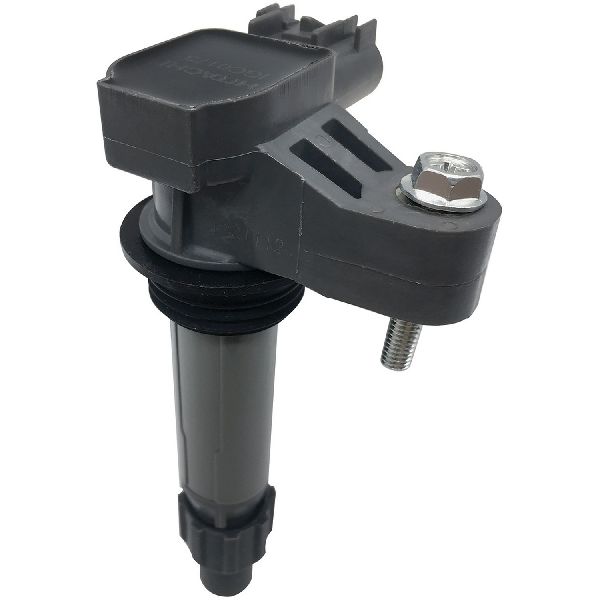
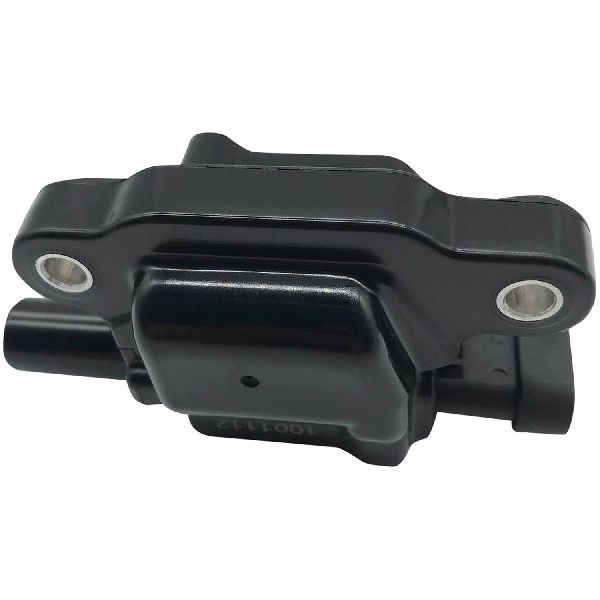
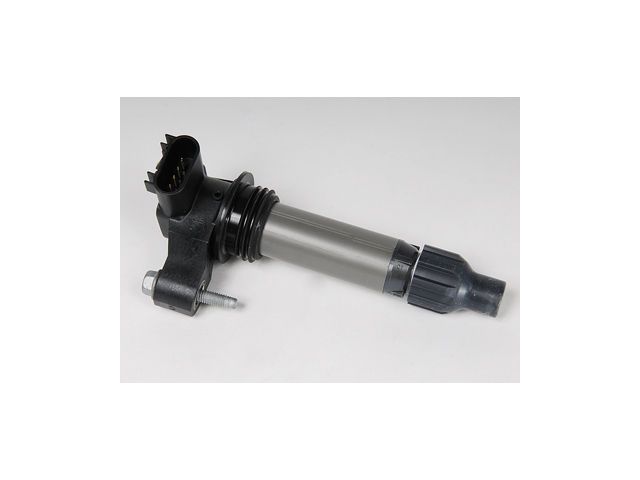
- Failed Ignition Coil 🔴 High Probability → Shop Ignition Coil Coil-on-plug systems are a common failure point due to constant exposure to high engine temperatures. Oil leaks from valve cover gaskets can also soak the coil boot and cause it to fail, a common issue on these engines. Manufacturer Bulletin #PIP5038B notes that technicians may find codes P0301 through P0306 alongside ignition coil circuit codes P0351-P0356, requiring standard service diagnostic procedures.
How to confirm: Swap the ignition coil from cylinder 1 with the coil from another cylinder (e.g., cylinder 3, the middle cylinder on the same bank). Clear the codes and drive. If the code changes to P0303, the coil is faulty.
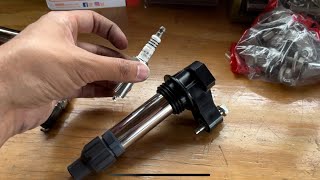
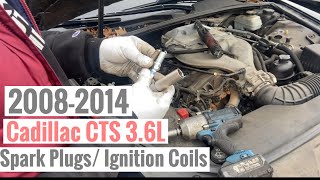
Typical fix: Replace the failed ignition coil. 🎬 See this walkthrough for replacing your coils and plugs. It is often recommended to replace all coils if they are original and have high mileage. Use of dielectric grease on the boot is recommended.
Est. part cost: $40-$80 - Worn or Fouled Spark Plug 🔴 High Probability → Shop Spark Plug Spark plugs are a standard maintenance item. While modern iridium plugs can last up to 100,000 miles, they can fail sooner or become fouled by oil (from valve cover leaks) or heavy carbon deposits from the GDI process. Bulletin #PIP4819A specifically advises technicians to inspect for loose spark plug wires or coil connections when diagnosing misfire codes P0300-P0308.
How to confirm: After ruling out the coil, remove the spark plug from cylinder 1. Inspect it for wear (worn electrode), damage (cracked insulator), or fouling (black, oily, or white deposits). A fouled plug can indicate other issues.
Typical fix: Replace the spark plug. It is best practice to replace all six spark plugs at the same time to ensure even performance. 🎬 Watch a mechanic replace spark plugs on this 3.6L engine. Ensure plugs are gapped correctly.
Est. part cost: $10-$25 per plug - Carbon Buildup on Intake Valves 🟡 Medium Probability The direct-injection design of the LF1 and LLT engines means fuel is not sprayed over the intake valves. This allows oil vapor from the PCV system to bake onto the valves, restricting airflow and causing misfires, especially on cold starts. This is a well-documented issue covered by GM TSB PIP5029.
How to confirm: This is difficult to confirm without a borescope to visually inspect the valves. It is often diagnosed after ignition and fuel system faults have been ruled out, especially on engines with over 60,000 miles. Symptoms are often worse on cold starts and may not be felt by the driver but will still log a code.
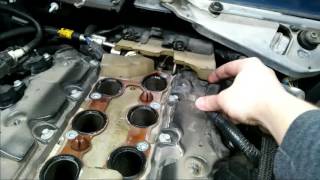
Typical fix: The intake manifold must be removed and the valves cleaned. The most effective method is walnut shell blasting. Chemical cleaning (like GM Upper Engine and Fuel Injector Cleaner) can also be attempted as a first step, 🎬 Watch how to perform a manual intake valve cleaning. but is often less effective for heavy deposits.
Est. part cost: $400-$800 for professional service - Faulty Fuel Injector ⚪ Low Probability → Shop Fuel Injector Direct injectors operate under very high pressure and can become clogged or fail electronically over time. Early generation GDI injectors on the LLT had some known issues.
How to confirm: Diagnosis is more complex. A professional can perform a fuel injector balance test. Swapping injectors is possible but is significantly more labor-intensive than swapping coils and requires special tools and replacement of Teflon seals.
Typical fix: Replace the faulty fuel injector. This requires removing the intake manifold and fuel rail. It is critical to replace the Teflon seal and use new O-rings lubricated with silicone-free oil.
Est. part cost: $70-$150
Rare But Worth Checking
- Stretched Timing Chain: This is a significant and well-documented issue, particularly on the 3.6L LLT engine (2008-2011). It was often exacerbated by extended oil change intervals. It will typically be accompanied by other codes like P0008, P0016, or P0017, and may cause misfires on an entire bank of cylinders (P0301, P0303, P0305). A rattling noise on startup is a key symptom.
- Low Cylinder Compression: Indicates a serious internal engine problem like a worn piston ring, a leaking head gasket, or a valve that isn't sealing correctly (which can also be a result of heavy carbon buildup). A compression test is required to diagnose this.
- Leaking Spark Plug Tube (Porous Cylinder Head): → Shop Spark Plug GM TSB PIP5095G (and later revisions like H) notes that on some V6 engines, porosity in the cylinder head can allow oil or coolant to leak *from* the sealed spark plug tube, shorting out the coil and plug. The only official repair is to replace the cylinder head. This should be suspected if the spark plug tube is filling with fluid from the inside, not from a valve cover leak.
- Vacuum Leak: A leak in a vacuum hose or, more commonly, a failed intake manifold gasket can introduce unmetered air and cause a lean condition, leading to misfires. This may affect a single cylinder if the leak is near the cylinder 1 intake runner.
Diagnosis Steps
- Check for any other stored DTCs with an OBD-II scanner. Note the freeze frame data to see engine conditions when the code was set.
- Identify cylinder 1, which is the front-most cylinder on the passenger side (Bank 1).
- Swap the ignition coil from cylinder 1 with the coil from cylinder 3 (the middle cylinder on the same bank).
- Clear the codes, start the engine, and let it run or drive it briefly. Re-scan for codes.
- If the code has moved to P0303, the ignition coil is the confirmed problem. Replace it.
- If the code remains P0301, the coil is likely good. Proceed to inspect the spark plug for cylinder 1. Look for wear, fouling, or damage. Replace if necessary.
- If the coil and plug are good, inspect the spark plug tube for any signs of oil or coolant. If fluid is present, determine if it's from a valve cover gasket leak (above) or a porous head (from within the tube, per TSB PIP5095).
- Listen to the fuel injector with a mechanic's stethoscope; it should have a consistent clicking sound. An inconsistent or silent injector is suspect.
- If ignition and fuel components seem okay, consider more complex issues. On higher mileage engines (>60k miles), carbon buildup is a strong possibility. A borescope inspection of the intake valves can confirm this.
- If timing-related codes (like P0008 or P0017) are present, or if there is a distinct rattling noise from the front of the engine on startup, suspect a stretched timing chain.
- A compression test can be performed to rule out mechanical engine damage like bad rings or valves.
Parts You'll Likely Need
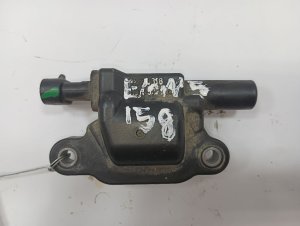
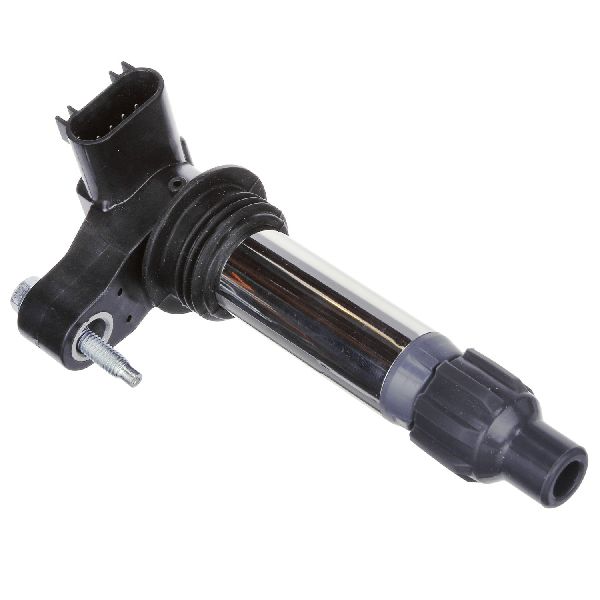
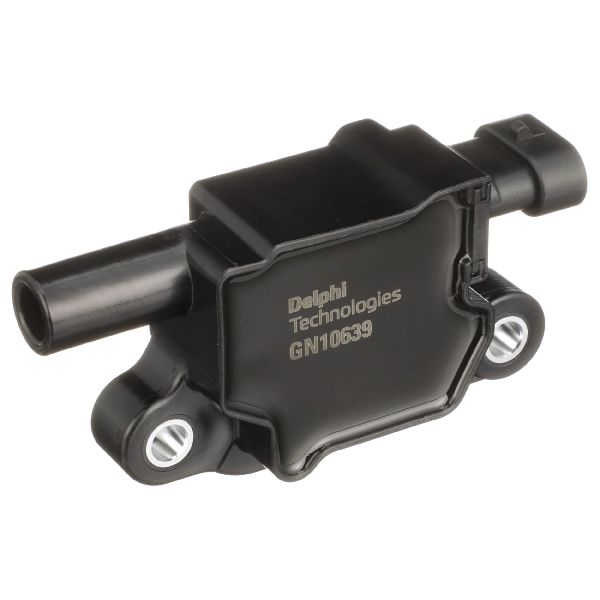
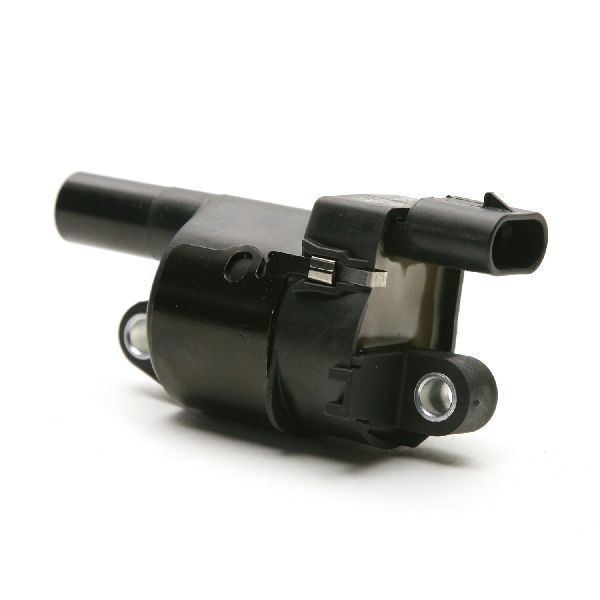
- Ignition Coil
(OEM #12632479)— This is the most common failure point for a single-cylinder misfire. Heat and age cause the internal windings to fail. This part number supersedes several previous versions (12590990, 12610626, 12618542).
Trusted brands: ACDelco, Delphi, NGK
Related Codes That Often Appear With This One
- P0300 — If the misfire is intermittent or affects multiple cylinders, a P0300 (Random/Multiple Cylinder Misfire) may be stored alongside P0301. This is common with systemic issues like carbon buildup or timing chain stretch.
- P0303, P0305 — If the cause (like a stretched timing chain or vacuum leak) affects the entire passenger-side bank (Bank 1), you may see misfire codes for the other cylinders on that bank.
- P0017 — This code for 'Crankshaft Position - Camshaft Position Correlation Bank 1 Exhaust' often appears with misfires when a timing chain has stretched on the 3.6L LLT engine.
- P0201 — This code for 'Cylinder 1 Injector Circuit / Open' points directly to an electrical issue with the fuel injector for cylinder 1, which would cause a P0301 misfire. Seeing this with P0301 makes the injector or its wiring the primary suspect.
Technical Service Bulletins (TSBs) & Recalls
- PIP5029E: Addresses engine misfires (P0300-P0306) on direct-injected engines caused by heavy carbon deposits on intake valves.
- PIP4819A: Advises inspection for loose spark plug wire/coil connections as a cause for misfire codes P0300-P0308.
- PIP5095G: Describes misfires caused by oil/coolant leaking into the spark plug tube due to a porous cylinder head, requiring head replacement.
- Bulletin #PIP5038B: Notes that vehicles may display a Malfunction Indicator Lamp with codes P0300-P0306 and ignition coil circuit codes P0351-P0356.
Platform-Specific Known Issues
- Carbon Buildup on Intake Valves: As documented in TSB PIP5029, the GDI engines in the CTS are prone to heavy carbon deposits that can cause misfires, especially when cold. This requires professional cleaning (walnut blasting) as a tune-up will not solve it.
- Premature Timing Chain Stretch (LLT Engine): The 2008-2011 3.6L LLT V6 is notorious for timing chain issues, often before 100,000 miles. This is a costly repair that can cause P0301 and other codes. Using high-quality oil and adhering to shorter change intervals (3,000-5,000 miles) is critical to prolonging chain life.
- Porous Cylinder Head (TSB PIP5095): In some cases, a manufacturing defect can cause porosity in the cylinder head, allowing oil or coolant to seep into the spark plug tube from the inside out, fouling the plug and coil. The only fix is cylinder head replacement.
Mechanic-Grade Diagnostic Values
- Fuel Injector Resistance (2008-2011 3.0L LF1 / 3.6L LLT) — expected: 11 - 15 Ohms. Failure: A reading of 0 Ohms (short) or infinite/OL (open) indicates a failed injector. Note: Some field tests have shown values as low as 1.5-1.6 Ohms on functioning injectors.
- Fuel Injector Resistance (2012-2013 3.6L LFX) — expected: 1.2 - 1.8 Ohms. Failure: A reading outside this range indicates a failed injector.
- Misfire Counters (Live Data) — expected: Near zero at all times.. Failure: Using a scan tool like a Tech2 or GDS2, a technician can monitor misfire counts per cylinder in real-time, even if a code has not been set. An accumulating count on cylinder 1 confirms the misfire location before the CEL is triggered.
Scan Tool Commands That Help
- GM GDS2 / Tech2: Cylinder Power Balance Test — Used to confirm a weak cylinder when a misfire is felt but not consistently setting a specific code. The tool sequentially disables each fuel injector and measures the corresponding drop in engine RPM. If disabling cylinder 1 causes little to no RPM drop, it confirms it is not contributing power.
- GM GDS2 / Tech2: Fuel Injector Balance Test — This automated test helps diagnose a clogged or failing fuel injector after ignition issues are ruled out. It measures the pressure drop during injector activation to see if it flows correctly.
Wiring & Ground Locations
- G101 — Lower front of the engine block.. This is a main ground for the Engine Control Module (ECM). A poor connection here can cause erratic ECM behavior and potentially false misfire codes or other issues.
- G102 / G112 — Located on the rear of the cylinder heads.. These are primary ground points for many engine sensors and components, including the ignition coil banks. A loose or corroded ground on the Bank 1 (passenger side) head can cause intermittent misfires on cylinders 1, 3, and 5.
- ECM Connector X1 — On the Engine Control Module (ECM).. This connector houses the control circuits for the fuel injectors. For the 3.6L LLT, the cylinder 1 injector control wire is a Tan wire at pin 63. The high-side driver wire is Brown/White at pin 75. Checking for backed-out pins, corrosion, or performing resistance tests from this connector can validate the entire circuit to the injector.
- Engine Wiring Harness — Routed over the intake plenum, valve covers, and near fuel lines.. GM TSB PIP4924D (for related injector codes) highlights that the engine harness is prone to chafing against various engine components. A worn-through wire for the cylinder 1 injector or ignition coil can cause an open or short, leading directly to a P0301 code.
Real Owner Repair Stories
- GoTech YouTube Channel (2014 Chevy Impala with 3.6L V6 LFX (similar to 2012-2013 CTS)) — Subtle misfire could be felt, but no Check Engine Light. Scan tool showed misfire counts on cylinders 1, 3, and 5 (Bank 1) and a negative long-term fuel trim (-14%) on that bank.
❌ Tried (didn't work) New spark plugs, 6 new high-pressure fuel injectors, Multiple intake valve cleanings, Swapping ignition coils, New throttle body, New intake manifold gaskets
✅ What actually fixed it A lab scope revealed that the Bank 1 timing was slightly retarded. A cam/crank correlation test confirmed the timing chain for Bank 1 had stretched, which was the root cause of the misfires on the entire bank.
OEM Part Supersession History
12590990, 12610626, 12618542→12632479— Standard part evolution for the ignition coil, with improved durability and internal potting to protect against heat and vibration.12611545, 12632255→12638530— Updated fuel injector design for the 3.6L LLT engine for improved reliability and flow characteristics.
Heads up: While these parts are often listed as interchangeable for the 2008-2011 LLT, it is best practice to replace injectors in a complete set to ensure matched flow rates.
Model Year Variations Within This Range
- 2008-2011: These models use the 3.6L LLT engine, which features an aluminum intake manifold and separate exhaust manifolds. These earlier direct-injection engines are known to be more susceptible to severe timing chain stretching issues.
- 2012-2013: These models use the updated 3.6L LFX engine. Changes include a lighter composite intake manifold, cylinder heads with integrated exhaust manifolds, and an improved timing chain design. While still a GDI engine prone to carbon buildup, the timing chain and injector issues are generally less frequent than on the LLT.
Diagnostic Flowchart
Real Owner Stories
Aggregated from forums and TSBs cited above. Mileages and costs reflect what owners reported in those sources.
Cadillac CTS (Bank 1 Misfire)
Symptoms: Experienced misfires on the entire Bank 1 (codes P0301, P0303, P0305) and found the spark plug wells completely full of oil.
What fixed it: Valve cover gasket replacement to stop oil from flooding the spark plug wells and fouling the ignition components.
Source hint: Reddit r/Cadillac: Misfire on entire bank after valve cover gasket job
2008-2013 Cadillac CTS 3.0L LF1 / 3.6L LLT — ~65000 miles
Symptoms: Engine misfires (P0300-P0306) that are noticeably worse on cold starts, occurring without any obvious ignition or fuel system faults.
What fixed it: Removal of the intake manifold and professional walnut shell blasting to clean heavy carbon deposits off the intake valves.
Cost: $400-$800
Source hint: TSB PIP5029E / Vehicle Specific Issues
2008-2013 Cadillac CTS 3.0L LF1 / 3.6L LLT
Symptoms: Misfires caused by oil or coolant leaking directly into the spark plug tube from the inside out, which fouls the ignition coil and spark plug.
What fixed it: Complete cylinder head replacement due to a manufacturing defect causing porosity.
Source hint: TSB PIP5095G
2008-2011 Cadillac CTS 3.6L LLT — ~85000 miles
Symptoms: Distinct rattling noise from the front of the engine on startup, accompanied by a P0301 misfire code and timing-related codes.
What fixed it: Timing chain replacement to address premature chain stretch.
Source hint: Vehicle Specific Issues: Premature Timing Chain Stretch (LLT Engine)
Related OBD-II Codes
Frequently Asked Questions
Does TSB PIP5029E apply to my 2008-2013 Cadillac CTS for a P0301 code?
Can a stretched timing chain cause a cylinder 1 misfire on the 3.6L LLT engine?
I found oil and coolant inside my cylinder 1 spark plug tube. What does this mean for my CTS?
How can I easily test if the ignition coil is causing the P0301 on my 3.0L or 3.6L engine?
Why are the ignition coils on my Cadillac CTS prone to failing?
Are there any TSBs for simple electrical issues causing misfires on this car?
Helpful Videos
Used OEM Parts in Stock
New Aftermarket Parts Available

The information in this article is provided for general reference and educational purposes only. Vehicle specifications, procedures, and part compatibility can vary by production date, trim level, and region. Always consult your vehicle's factory service manual and verify part numbers before purchasing or performing repairs. Safety-critical components such as airbags, seat belts, and braking systems should be installed by a qualified professional.
- Cadillac CTS:
- 🧭 Diagnostic Flowchart
- 🎬 Helpful Videos
- 🛍️ Shop This Part
- What's Unique About the 2008-2013 Cadillac CTS
- Symptoms You May Notice
- Most Likely Causes
- Rare But Worth Checking
- Diagnosis Steps
- Parts You'll Likely Need
- Related Codes That Often Appear With This One
- Technical Service Bulletins (TSBs) & Recalls
- Platform-Specific Known Issues
- Mechanic-Grade Diagnostic Values
- Scan Tool Commands That Help
- Wiring & Ground Locations
- Real Owner Repair Stories
- OEM Part Supersession History
- Model Year Variations Within This Range
- Real Owner Stories
- Cadillac CTS (Bank 1 Misfire)
- 2008-2013 Cadillac CTS 3.0L LF1 / 3.6L LLT — ~65000 miles
- 2008-2013 Cadillac CTS 3.0L LF1 / 3.6L LLT
- 2008-2011 Cadillac CTS 3.6L LLT — ~85000 miles
- Related OBD-II Codes
- Frequently Asked Questions
- 🎟️ Get 5% Off