

P0301 on 2008-2009 Cadillac STS: Cylinder 1 Misfire Causes and Fixes
P0301 on a 2008-2009 Cadillac STS means cylinder 1 is misfiring. The most common fix is replacing a faulty ignition coil or spark plug on the front passenger-side cylinder. For the 3.6L V6, carbon buildup on intake valves is also a very frequent cause. Expect to pay $40-$120 for an ignition part; carbon cleaning is more expensive.
- P0301 indicates a misfire specifically in cylinder 1.
- The most probable cause is a bad ignition coil, followed by a worn spark plug.
- A simple 'swap test' moving the coil to another cylinder is the fastest way to diagnose a faulty coil.
- On models with the 3.6L V6 engine, be aware that this code could be a symptom of a more serious timing chain problem, especially if accompanied by rattling noises or other timing-related codes.
- Always address a misfire promptly to prevent damage to the catalytic converter.
What's Unique About the 2008-2009 Cadillac STS
The 2008-2009 STS was offered with two distinct engines: the direct-injected 3.6L V6 (LLT) and the 4.6L Northstar V8 (LH2). While standard ignition faults are common to both, the 3.6L V6 is a direct-injection engine, making it highly susceptible to carbon buildup on intake valves, which doesn't occur in the port-injected Northstar V8. The V6 is also notorious for premature timing chain stretch, often linked to extended oil change intervals. The later-model LH2 Northstar V8 is much improved over its predecessors' head gasket issues but can still consume oil, potentially fouling spark plugs.
Diagnostic Flowchart
Tap your situation to follow the diagnostic path that matches what you're seeing on this vehicle.
Symptoms You May Notice
- Check Engine Light is on (may be flashing if the misfire is severe)
- Rough or shaky idle, sometimes bouncing between RPMs
- Engine hesitation or stumbling during acceleration
- Noticeable loss of power
- Reduced fuel economy
- Smell of unburnt gasoline from the exhaust
- Rattling noise from the engine on cold starts (a key symptom of timing chain issues on the 3.6L V6)
- Replacing the catalytic converter. A misfire can damage a catalytic converter, but a bad converter will not cause a single-cylinder misfire code like P0301.
- Replacing oxygen sensors. Faulty O2 sensors typically cause fuel trim codes (like P0171 or P0174) or random misfire codes (P0300), not a specific cylinder misfire.
Most Likely Causes
- Faulty Ignition Coil 🔴 High Probability → Shop Ignition Coil Coil-on-plug ignition systems are common failure points on most modern vehicles due to constant exposure to heat and vibration. Valve cover gasket leaks can also allow oil to seep into the spark plug tubes, damaging the coil boot and spring.
How to confirm: The easiest way to confirm a bad coil is to swap the ignition coil from cylinder 1 with another cylinder (e.g., cylinder 3). Clear the codes and drive. If the code changes to P0303 (Cylinder 3 Misfire), the coil is the culprit.
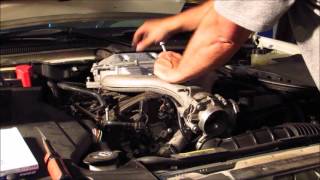
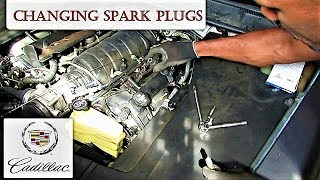
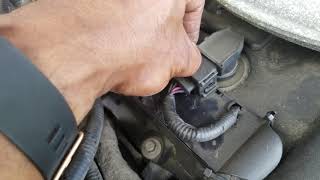
Typical fix: Replace the faulty ignition coil. 🎬 Watch: Step-by-step guide to replacing your STS ignition coils. It is often recommended to replace the corresponding spark plug at the same time.
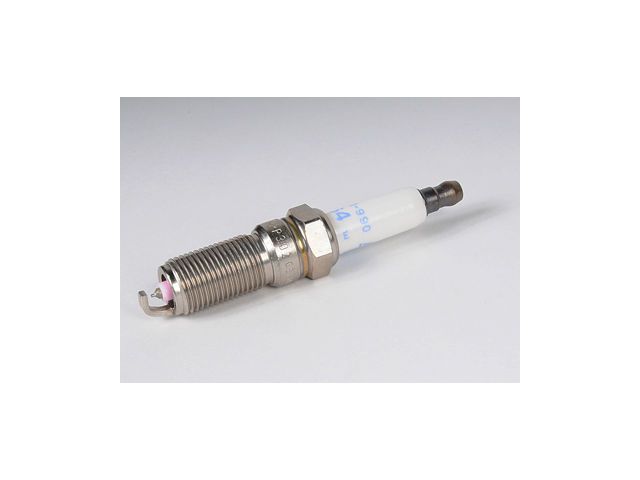
Est. part cost: $40-$120 - Worn or Fouled Spark Plug 🔴 High Probability → Shop Spark Plug Spark plugs are a regular maintenance item. The original Iridium plugs have a long life (around 100,000 miles), but can fail sooner. Oil or coolant leaks into the spark plug tube can also foul the plug, and on the 3.6L V6, carbon deposits can cause issues.
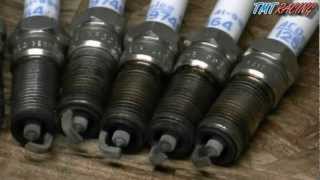
How to confirm: After ruling out the ignition coil, remove the spark plug from cylinder 1. Inspect it for wear, carbon buildup, or fouling from oil or coolant. A cracked porcelain insulator is a common failure point. You can also swap it with another cylinder's plug to see if the misfire follows.
Typical fix: Replace the spark plug. If replacing one, it's good practice to replace all plugs on that bank or the entire set if they are near the end of their service life.
Est. part cost: $10-$25 per plug - Carbon Buildup on Intake Valves (3.6L V6) 🔴 High Probability The 3.6L LLT is a direct-injection (GDI) engine. Fuel is injected directly into the cylinder, so it never washes over the intake valves. Oil vapor from the PCV system bakes onto the hot valves, forming hard carbon deposits that restrict airflow and can cause the valve to not seat properly, leading to misfires, especially on a cold start.
How to confirm: This requires a physical inspection using a borescope inserted into the intake port with the intake manifold removed. Misfires that are worse when the engine is cold are a strong indicator. GM has issued TSB #PIP5029D acknowledging this issue across many GDI engines.
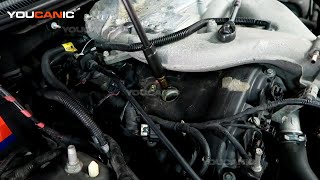
Typical fix: The intake manifold must be removed and the valves must be manually cleaned. The two most effective methods are walnut shell blasting or using chemical solvents and brushes. 🎬 See how to clean intake valves on the 3.6L engine.
Est. part cost: $20-$50 for gaskets and cleaners, but shop labor can be $500-$1000+. - Faulty Fuel Injector 🟡 Medium Probability → Shop Fuel Injector
How to confirm: For the 3.6L V6 (GDI), diagnosis is more complex. For the 4.6L V8 (Port), you can use a 'noid light' to verify the injector is receiving an electrical pulse. Swapping the injector with another cylinder is a definitive test for both, but is significantly more labor-intensive on the GDI engine.
Typical fix: Replace the faulty fuel injector. On the 3.6L V6, this requires removing the intake manifold.
Est. part cost: $80-$180 - Stretched Timing Chain (3.6L V6) 🟡 Medium Probability Early versions of the GM High Feature V6, including the LLT, were known for premature timing chain wear, often before 100,000 miles. This was exacerbated by GM's overly optimistic oil life monitor system; infrequent oil changes lead to oil degradation and sludge, accelerating chain stretch.
How to confirm: This usually presents with other codes like P0008, P0016, P0017, P0018, or P0019. A key symptom is a rattling sound from the front of the engine for a few seconds on a cold startup. A mechanic can confirm by checking camshaft deviation angles with a professional scan tool.
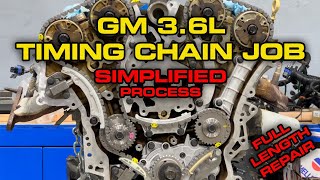
Typical fix: This is a major repair that involves replacing all three timing chains, tensioners, and guides. It is a very labor-intensive job. 🎬 Watch this full walkthrough of the 3.6L timing chain replacement.
Est. part cost: $400-$800 for a full kit
Rare But Worth Checking
- Low Engine Compression: This indicates a more serious internal engine problem, such as a worn piston ring, a leaking valve (possibly due to carbon buildup), or a head gasket issue. A compression test is required to diagnose this.
- Intake Manifold Gasket Leak: → Shop Engine Intake Manifold A vacuum leak near the cylinder 1 intake runner can lean out the air-fuel mixture and cause a misfire. This can be diagnosed with a smoke machine or by carefully spraying brake cleaner near the gasket with the engine running and listening for a change in idle speed.
- Worn Camshaft Bearing (Northstar V8): → Shop Engine Camshaft A rare issue mentioned in GM TSB #PIP4525C where a worn #1 cam bearing can cause excess oil to splash onto the cylinder wall, fouling the spark plug and causing a P0301. This would typically be accompanied by an oil consumption concern.
Diagnosis Steps
- Read the code with an OBD-II scanner and confirm P0301 is present. Note any other codes, especially P0300, P0351, or P0008/P0017.
- Locate cylinder 1. On both the 3.6L V6 and 4.6L V8, it is the front-most cylinder on the passenger side (right bank).
- Swap the ignition coil from cylinder 1 with an adjacent cylinder on the same bank (e.g., cylinder 3). Clear the codes and run the engine. If the code changes to P0303, the ignition coil is bad.
- If the code remains P0301, inspect the spark plug from cylinder 1. Look for wear, heavy carbon fouling, oil deposits, or a cracked insulator. Replace if questionable.
- If ignition components are good, inspect the wiring and connector for the fuel injector and ignition coil for any damage, corrosion, or chafing.
- For the 3.6L V6, consider the high probability of carbon buildup. If the vehicle has over 60,000 miles and misfires are worse when cold, inspection with a borescope is recommended.
- Listen for a brief engine rattle on cold startup. If present on the 3.6L V6, suspect a timing chain issue, especially if codes like P0008 are also present.
- If the above steps do not identify the issue, perform a compression test on cylinder 1 to check for mechanical engine problems like bad rings or valves.
Parts You'll Likely Need
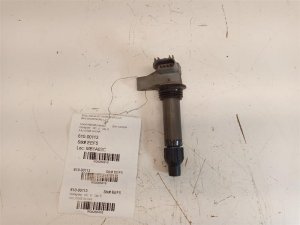
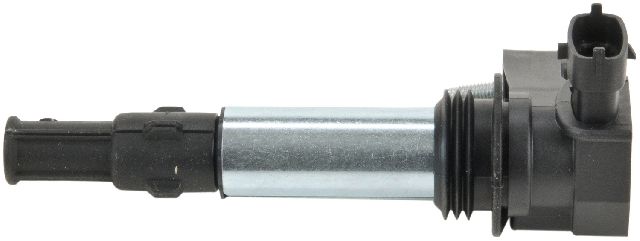
- Ignition Coil
(OEM #D501C (ACDelco 12632479))— This is the most frequent cause of a single-cylinder misfire due to wear and tear from engine heat.
Trusted brands: ACDelco, NGK, Denso, Delphi
OEM price range: $80-$120
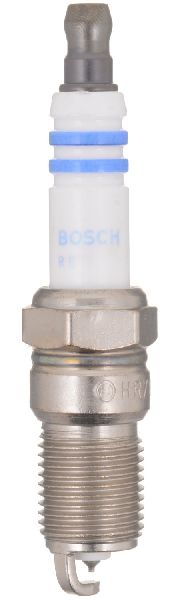
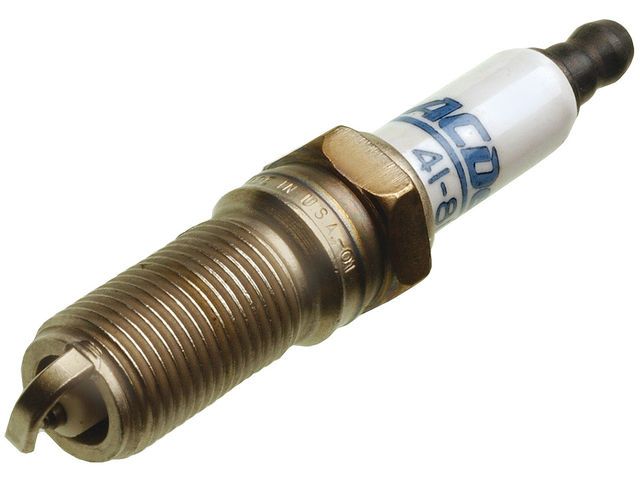
Aftermarket price range: $40-$75 - Spark Plug (Iridium)
(OEM #41-990 (ACDelco, for 3.6L V6), 41-987 (ACDelco, for 4.6L V8))— Spark plugs are a maintenance item and can fail, causing a misfire. It's best practice to replace the plug when replacing a coil.
Trusted brands: ACDelco, NGK, Denso
OEM price range: $15-$25
Aftermarket price range: $10-$20 - Fuel Injector
Related Codes That Often Appear With This One
- P0300 — If the misfire is intermittent or affects other cylinders, a P0300 (Random/Multiple Cylinder Misfire) may be stored as well. This is common with systemic issues like timing chain stretch or carbon buildup.
- P0351 — This code indicates a fault in the ignition coil primary or secondary circuit for cylinder 1. If you see P0351 with P0301, the problem is almost certainly the ignition coil or its wiring. [TSB #PIP5038B]
- P0201 — This code points to a malfunction in the fuel injector circuit for cylinder 1. Seeing it alongside P0301 strongly suggests the fuel injector or its wiring is the cause.
- P0008, P0017 (3.6L V6) — These codes indicate a crankshaft/camshaft correlation error on Bank 1. If seen with a P0301, it is a very strong indicator that the misfire is caused by a stretched timing chain.
Technical Service Bulletins (TSBs) & Recalls
- PIP5038B: Mentions P0301 among a group of misfire codes and directs technicians to follow published service information for diagnosis.
- PIP5029D: Describes engine misfires (P0300-P0306) caused by major carbon deposits on the intake valves of direct-injected engines, including the 3.6L LLT.
- 10-06-01-008H: While primarily for V8 oil consumption, this TSB family discusses how oil contamination and PCV issues can lead to fouled spark plugs and misfires, which is relevant context for the Northstar engine.
Platform-Specific Known Issues
- cadillacforums.com, Reddit r/MechanicAdvice
- NHTSA
- NHTSA
Mechanic-Grade Diagnostic Values
- Fuel Injector Coil Resistance (3.6L V6 LLT - GDI) — expected: 1.5 to 2.5 Ohms. Failure: A reading near zero (short) or infinite/OL (open) indicates a failed injector.
- Fuel Injector Coil Resistance (4.6L V8 LH2 - PFI) — expected: 11 to 16 Ohms. Failure: A reading significantly outside this range, or near zero/OL, indicates a faulty injector.
- Low-Side Fuel Pressure (3.6L V6 - Key On, Engine Off) — expected: 55-60 psi (380-410 kPa). Failure: Pressure below this range can indicate a weak low-pressure pump or a leak.
- Low-Side Fuel Pressure (3.6L V6 - Idling) — expected: 300-400 kPa (43-58 psi). Failure: Pressure outside this range may indicate an issue with the Fuel Pump Flow Control Module (FPCM).
- Ignition Coil Primary Winding Resistance — expected: 0.4 to 2 Ohms. Failure: A reading outside this range suggests a faulty coil.
- Ignition Coil Secondary Winding Resistance — expected: 6,000 to 10,000 Ohms. Failure: An open circuit (OL) or a reading outside this range indicates a failed coil.
Scan Tool Commands That Help
- Tech2 / GDS2: Cylinder Power Balance Test — This test allows a technician to disable one cylinder at a time to see the corresponding drop in RPM. If disabling cylinder 1 causes little or no change in RPM, it confirms that cylinder is not contributing power, helping to isolate the misfire.
- Tech2 / GDS2: Misfire Counter / Misfire History — A professional scan tool can display live and historical misfire counts for each cylinder. This is invaluable for confirming that the misfire is isolated to cylinder 1 and for checking if the issue is resolved after a repair.
- Tech2 / GDS2: Fuel Pump Enable — This command allows the technician to run the in-tank fuel pump without the engine running, which is necessary for accurately testing the low-side fuel pressure.
Wiring & Ground Locations
- G102 — Located at the left rear of the engine.. This is a primary ground point for the ignition coils. A loose or corroded connection here can cause weak or intermittent spark to multiple cylinders, including cylinder 1, leading to misfires.
- G103 — Located at the left rear of the engine compartment on the cowl, above the brake booster.. This ground serves the Engine Control Module (ECM) and Body Control Module (BCM). A poor connection here can cause a wide range of unpredictable electrical issues, including incorrect sensor readings and faulty driver signals for the ignition coils and fuel injectors.
- Cylinder 1 Ignition Coil Connector — On the front-most cylinder on the passenger side (right bank) of the engine.. The connector itself or the wiring pigtail can become brittle from heat and vibration, causing a poor connection. The terminals should be checked for corrosion or looseness. The harness provides power, ground, and the trigger signal from the ECM to the coil.
Real Owner Repair Stories
- CaddyInfo Forums user 'MIke D' (Cadillac STS (year not specified, but forum discussion is from 2008)) — Check engine light on, poor fuel economy (11 mpg on the highway).
✅ What actually fixed it The user identified a bad ignition coil. After discussion and testing help from other forum members, the coil was replaced, resolving the issue.
OEM Part Supersession History
12618542, 12610626, 12590990→12632479 (Also known as ACDelco D501C or D515C)— Standard part evolution, potential improvements in internal windings or insulation materials.
Model Year Variations Within This Range
- 2008-2009: The 2008 model year marked the introduction of the new 3.6L V6 with direct injection (LLT), which produced 302 horsepower, a significant increase from the previous port-injected V6. This change is critical for diagnosis, as the LLT engine is prone to carbon buildup on intake valves, a problem the 2007 and earlier models did not have. The 4.6L Northstar V8 remained largely unchanged. There were no major engine-related changes between the 2008 and 2009 model years.
Helpful Videos
Used OEM Parts in Stock
New Aftermarket Parts Available



The information in this article is provided for general reference and educational purposes only. Vehicle specifications, procedures, and part compatibility can vary by production date, trim level, and region. Always consult your vehicle's factory service manual and verify part numbers before purchasing or performing repairs. Safety-critical components such as airbags, seat belts, and braking systems should be installed by a qualified professional.
- Cadillac STS:
- 🧭 Diagnostic Flowchart
- 🎬 Helpful Videos
- 🛍️ Shop This Part
- What's Unique About the 2008-2009 Cadillac STS
- Symptoms You May Notice
- Most Likely Causes
- Rare But Worth Checking
- Diagnosis Steps
- Parts You'll Likely Need
- Related Codes That Often Appear With This One
- Technical Service Bulletins (TSBs) & Recalls
- Platform-Specific Known Issues
- Mechanic-Grade Diagnostic Values
- Scan Tool Commands That Help
- Wiring & Ground Locations
- Real Owner Repair Stories
- OEM Part Supersession History
- Model Year Variations Within This Range
- 🎟️ Get 5% Off