

P0301 on 2010-2013 Chevrolet Express: Cylinder 1 Misfire Causes and Fixes
P0301 on a 2010-2013 Express van most often indicates a failed spark plug or a bad spark plug wire for cylinder 1. A GM Technical Service Bulletin specifically highlights loose spark plug wires as a common cause. Replacing the spark plug and wire is a common, affordable DIY fix. However, on V8 models, this code can also be an early symptom of a more serious internal engine issue with an AFM lifter.
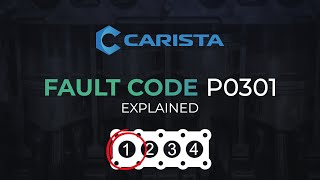
- P0301 on a 2010-2013 Express means cylinder #1 is misfiring.
- The most likely causes are a bad spark plug or a faulty spark plug wire, a known issue for this vehicle confirmed by a GM TSB.
- On V8 models, a P0301 accompanied by a ticking noise can be a sign of a serious, expensive AFM lifter failure.
- A flashing check engine light is serious and signals a risk of expensive catalytic converter damage; driving should be minimized.
- Diagnosing a bad ignition coil is straightforward: swap it with another cylinder's coil and see if the trouble code follows.
- Always start with the simplest and cheapest parts first: inspect the wire and spark plug for cylinder 1 before moving to coils or fuel injectors.
What's Unique About the 2010-2013 Chevrolet EXPRESS
The Chevrolet Express vans from this era are workhorses, often subjected to high mileage and demanding conditions. Their Vortec V8 engines are known for reliability but are also prone to heat-related wear on ignition components. General Motors specifically issued a service bulletin for these vans regarding misfire codes, pointing directly to spark plug wires as a frequent point of failure, which underscores how common this issue is for this specific platform. Furthermore, the 5.3L and 6.0L V8 engines feature Active Fuel Management (AFM), and a failing AFM lifter on cylinder 1 can cause a P0301 code, representing a much more severe mechanical problem than a simple ignition fault.
Diagnostic Flowchart
Tap your situation to follow the diagnostic path that matches what you're seeing on this vehicle.
Symptoms You May Notice
- Rough or shaky idle
- Hesitation or stumbling during acceleration
- Noticeable loss of engine power
- Solid or flashing Check Engine Light
- Smell of unburnt gasoline from the exhaust
- Reduced fuel economy
- Ticking or tapping noise from the engine bay, which may increase with RPM (if related to lifter issue)
- Replacing oxygen (O2) sensors before checking the basic ignition components.
- Replacing the fuel pump when only a single cylinder is misfiring.
- Assuming a simple ignition or fuel issue when the underlying cause is a failing AFM lifter on V8 models.
Most Likely Causes
- Faulty or Loose Spark Plug Wire 🔴 High Probability → Shop Spark Plug A known issue highlighted by GM's Technical Service Bulletin #PIP4819A. High engine heat and vibration can cause wires to degrade or become loose at the ignition coil. A related TSB for other models notes a missing internal 'C' clip in the wire boot can prevent a secure connection.
How to confirm: Visually inspect the wire for cylinder 1 for cracks, burns, or corrosion. Ensure it is securely connected to both the spark plug and the ignition coil by pulling and reseating it. Test the wire's resistance with a multimeter; an open circuit (infinite resistance) or very high resistance indicates a bad wire. OEM resistance varies by part number, but should not be an open circuit.
Typical fix: Replace the single spark plug wire or, for best results, replace the entire set of wires. 🎬 See this step-by-step guide for replacing plugs and wires.
Est. part cost: $50-$120 - Worn or Fouled Spark Plug 🔴 High Probability → Shop Spark Plug
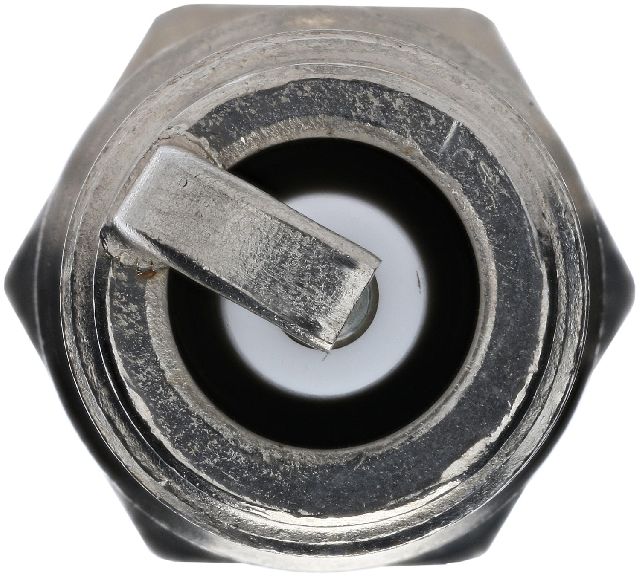
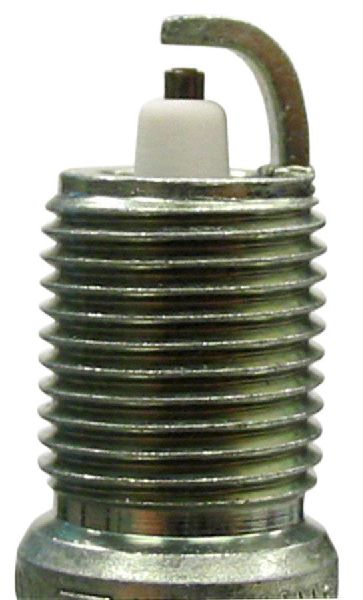
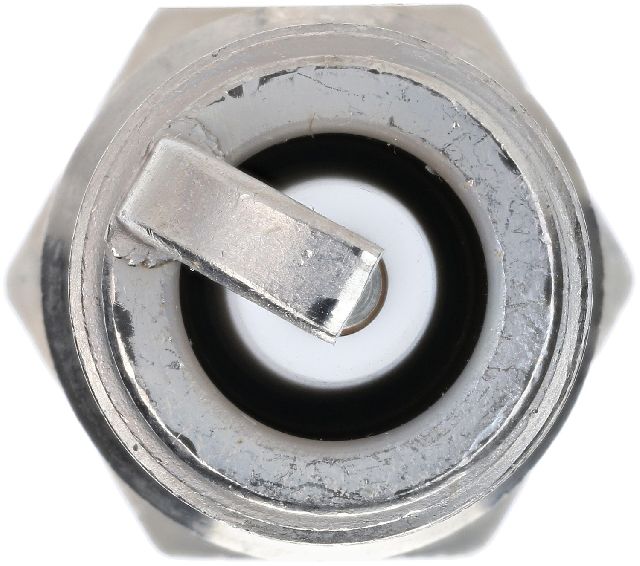
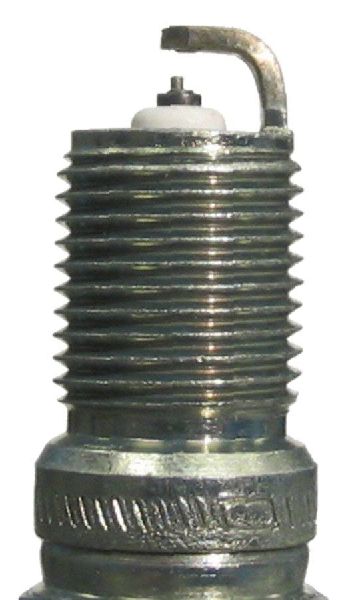
How to confirm: Remove the spark plug from cylinder 1. Inspect it for a worn electrode, carbon fouling, oil contamination, or cracks in the porcelain insulator. The gap should also be checked. Some owners report that these engines are sensitive to plug brands and that using the OEM ACDelco plugs is best.
Typical fix: Replace the spark plug. It is highly recommended to replace all spark plugs at the same time to ensure even performance.
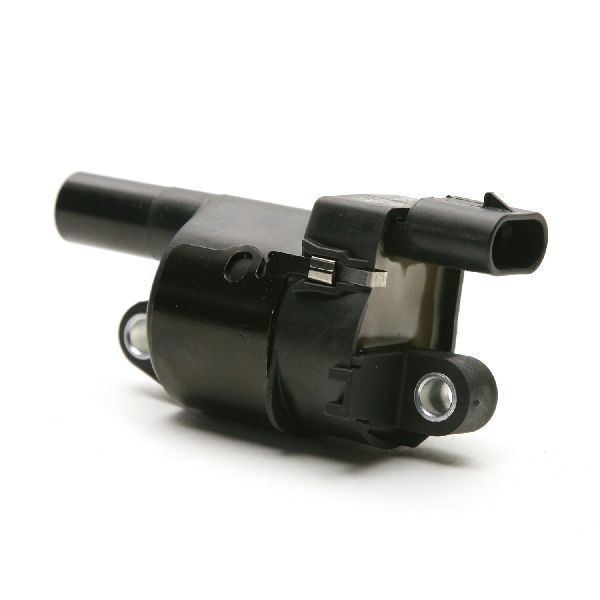
Est. part cost: $5-$20 per plug - Failing Ignition Coil 🟡 Medium Probability → Shop Ignition Coil
How to confirm: Swap the ignition coil from cylinder 1 with a coil from another cylinder (e.g., cylinder 3). Clear the codes and drive the vehicle. If the code changes to P0303 (Cylinder 3 Misfire), the ignition coil is faulty.
Typical fix: Replace the defective ignition coil.
Est. part cost: $30-$70 - Clogged or Faulty Fuel Injector ⚪ Low Probability → Shop Fuel Injector
How to confirm: Listen to the injector with a mechanic's stethoscope or a long screwdriver; it should make a consistent clicking sound. Compare the sound to an adjacent injector. You can also test the injector's resistance with a multimeter or swap it with another cylinder's injector to see if the misfire follows.
Typical fix: Clean or replace the fuel injector for cylinder 1. It's good practice to replace the O-rings and seals when servicing an injector.
Est. part cost: $50-$150
Rare But Worth Checking
- Active Fuel Management (AFM/DOD) Lifter Failure: → Shop Engine Valve Lifter On 5.3L and 6.0L V8s, this is a well-documented and serious mechanical failure. A lifter for cylinder 1 can become stuck or collapse, preventing the valve from opening correctly and causing a persistent misfire. Symptoms often include a rhythmic ticking noise from the engine. Diagnosis requires a compression test (which will show low compression on cylinder 1) and often internal engine inspection. Ignoring this can lead to camshaft damage and catastrophic engine failure.
- Intake Manifold Gasket Leak: → Shop Engine Intake Manifold These gaskets can fail and cause a vacuum leak near a specific cylinder, leading to a lean misfire. A smoke test is the best way to confirm a leak.
- Low Engine Compression: This indicates a more serious internal engine problem, such as a worn piston ring, a leaking valve, or a head gasket failure, separate from an AFM lifter issue. A compression test and cylinder leak-down test are required to diagnose this.
Diagnosis Steps
- Read the trouble codes with an OBD-II scanner to confirm P0301 and check for any other codes.
- Locate cylinder #1. On Chevy V8 engines (4.8L, 5.3L, 6.0L), it is the front-most cylinder on the driver's side.
- As per TSB #PIP4819A, carefully inspect the spark plug wire for cylinder #1. Check for any signs of damage, arcing (white marks), or looseness at both the spark plug and ignition coil. Physically pull and reseat the wire boot on the coil to ensure it's secure.
- Remove and inspect the spark plug from cylinder #1. Look for wear, damage, or fouling. Consider replacing it with an OEM ACDelco plug regardless, as they are inexpensive.
- If the plug and wire appear to be in good condition, swap the ignition coil from cylinder #1 with another cylinder (e.g., cylinder #3). Clear the codes, run the engine, and see if the misfire code moves to the new cylinder (P0303). If it does, the coil is bad.
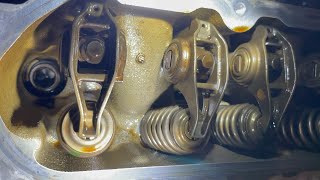
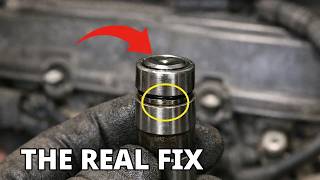
- If the misfire remains on cylinder #1, listen for a rhythmic ticking noise. 🎬 Watch: How to diagnose that specific AFM lifter noise. If present, suspect an AFM lifter issue on V8 models.
- Check the fuel injector. Listen for its operation and inspect its wiring connector for damage or corrosion.
- If ignition and fuel components seem okay, perform a compression test on cylinder #1. A significantly lower reading compared to other cylinders points to a mechanical engine issue, such as a bad valve, piston ring, or a failed AFM lifter.
Parts You'll Likely Need
- Spark Plug Wire Set
(OEM #ACDelco 9748RR (Example for V8 models))— This is a primary cause of P0301 on this vehicle, as identified in a manufacturer TSB. Wires degrade from heat and time, or the connection at the coil becomes loose.
Trusted brands: ACDelco, NGK
OEM price range: $70-$120
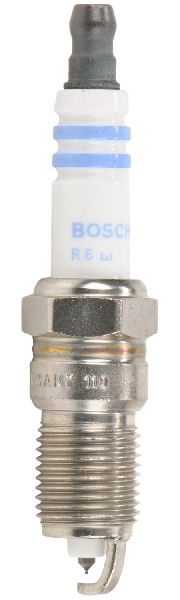
Aftermarket price range: $40-$80 - Spark Plug — Spark plugs are a routine maintenance item and a very common cause of single-cylinder misfires. Using OEM ACDelco plugs is often recommended.
Trusted brands: ACDelco, NGK, Bosch
OEM price range: $10-$20
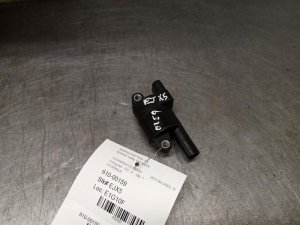
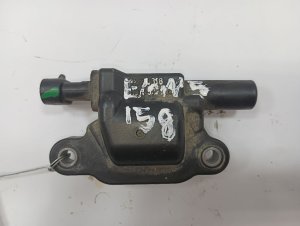
Aftermarket price range: $5-$15 - Ignition Coil — The individual coil-on-plug for cylinder 1 can fail, preventing the spark plug from firing.
Trusted brands: ACDelco, Delphi
OEM price range: $50-$80
Aftermarket price range: $30-$60
Related Codes That Often Appear With This One
- P0300 — If the misfire is intermittent or severe enough to affect other cylinders, a P0300 (Random/Multiple Cylinder Misfire) code may be stored alongside P0301. This is also common with AFM lifter issues.
Technical Service Bulletins (TSBs) & Recalls
- PIP4819A: Addresses engine misfires (P0300-P0308) and points to a loose spark plug wire at the ignition coil as a likely cause. Instructs to replace the wire if loose.
- 19-NA-219 (and predecessors): While not cited in full, this TSB and related bulletins address diagnosing misfires that are caused by collapsed or stuck AFM lifters, a known issue on these V8 engines.
Platform-Specific Known Issues
- GM Technical Service Bulletin #PIP4819A was issued for these vehicles for misfire codes (P0300-P0308). It specifically directs technicians to inspect for a loose spark plug wire at the ignition coil end and replace the wire if found loose.
- The 5.3L and 6.0L V8 engines are equipped with Active Fuel Management (AFM), also known as Displacement on Demand (DOD). These systems are known for lifter failures, where a lifter can collapse or get stuck. A failed AFM lifter on cylinder #1 will cause a P0301 code and requires significant internal engine repair.
Mechanic-Grade Diagnostic Values
- Fuel Pressure (Gasoline Engines, KOEO or Idle) — expected: 45-58 PSI (310-400 kPa). Failure: Pressure is below 45 PSI or is slow to build after the pump primes.
- Fuel Injector Resistance (High-Impedance/Saturated) — expected: 11.0 - 16.0 Ohms. Failure: A reading of 0 Ohms (shorted), infinite/OL (open), or a value that is more than 1-2 Ohms different from the other injectors.
- Ignition Coil Secondary Resistance — expected: 9.5 - 11.1 kOhms (kilo-ohms). Failure: A reading significantly outside this range, or an open (OL) or shorted (0) reading. Note: This is a generic value; primary resistance is difficult to measure on these coils.
- Mode $06 Misfire Count (Cylinder 1) — expected: A very low number, ideally zero, over a drive cycle.. Failure: A rapidly increasing count of misfires for cylinder 1, even if the Check Engine Light is not yet flashing. This data is accessible with most advanced scan tools.
Hidden / Shadow Codes Worth Checking
- Misfire Graphic (Tech2/GDS2): This is not a code but a live data display on GM's factory scan tool. It shows a real-time bar graph of misfire counts for each cylinder, allowing a technician to instantly see that cylinder 1 is the problem and how severe the misfire is compared to others. (see via GM Tech2 or GDS2 scan tool under 'Special Functions' -> 'Misfire Graphic'.)
Scan Tool Commands That Help
- GM Tech2 / GDS2: Cylinder Power Balance Test — Used to confirm a misfire and isolate its cause after ignition components have been checked. The tool commands the ECM to sequentially disable the fuel injector for each cylinder. If disabling cylinder 1 causes no change in engine RPM or smoothness, it confirms that cylinder was not contributing power. If disabling another cylinder (e.g., cylinder 3) causes a noticeable drop in RPM, it confirms that cylinder was working properly. This helps differentiate a fuel/mechanical issue from an ignition issue.
- GM Tech2 / GDS2: Injector Balance Test — This is a more advanced test to check if a fuel injector is flowing the correct amount of fuel. It's used when a clogged or faulty injector is suspected but a simple resistance test passes. The tool pressurizes the system and measures the pressure drop when each injector is fired for a specific duration.
Wiring & Ground Locations
- G102 — On the left rear of the engine block/cylinder head.. This is a primary engine ground. A poor connection here can cause erratic behavior in sensors and actuators, including the ignition coils and fuel injectors on the driver's side (Bank 1), which includes cylinder 1.
- G103 — On the right rear of the engine block/cylinder head.. While cylinder 1 is on the other bank, a poor ground anywhere on the engine can introduce electrical noise and voltage drop issues that may affect the ECM's ability to correctly fire coils and injectors.
- Engine to Firewall Ground Strap — Typically runs from the rear of the driver's side cylinder head to a stud on the firewall.. This strap grounds the entire engine assembly to the vehicle's body/chassis. If it's broken or corroded, the ignition system may try to find a ground through other, smaller pathways, leading to weak spark and misfires.
- Ignition Coil Harness Connector — On top of the valve cover for cylinder 1.. The plastic locking tabs can become brittle and break, leading to a loose connection that can cause an intermittent misfire. The TSB for loose spark plug wires also applies conceptually here; any loose connection in the ignition primary or secondary circuit is a likely cause.
Real Owner Repair Stories
- Composite of multiple forum reports and TSBs (2011 Chevrolet Express 2500 5.3L V8, ~120,000 miles) — Started with an intermittent Check Engine Light for P0301. Over a few weeks, it became a solid light with a noticeable rough idle and a distinct 'ticking' or 'tapping' sound from the driver's side of the engine, especially on cold starts.
❌ Tried (didn't work) Replaced spark plug for cylinder 1., Swapped ignition coil from cylinder 1 to cylinder 3 (code remained P0301)., Replaced spark plug wire for cylinder 1.
✅ What actually fixed it The persistent ticking noise and failure of basic ignition parts to solve the problem led to a professional diagnosis. A compression test showed low compression on cylinder 1. The mechanic diagnosed a collapsed Active Fuel Management (AFM) lifter. The repair involved removing the cylinder head, replacing all AFM lifters on that bank (and often the camshaft due to damage from the failed lifter), and replacing the Valve Lifter Oil Manifold (VLOM).
OEM Part Supersession History
GM AFM Lifter (e.g., Elgin HL-7011)→GM DFM Lifter (e.g., Elgin HL-7025)— The newer Dynamic Fuel Management (DFM) lifter design was released by GM and is more robust.
Heads up: CRITICAL: The new DFM lifter (HL-7025) WILL work in older AFM applications. However, the original AFM-only lifter (HL-7011) will ONLY fit AFM applications and cannot be used in newer DFM engines. When replacing, it is often recommended to use the newer DFM-style lifter even in an AFM engine.
Model Year Variations Within This Range
- 2010+: For 2010, the 4.8L and 6.0L V8 engines gained E85 flex-fuel capability. This introduces different fuel system components (like compatible injectors) that may not be interchangeable with non-flex-fuel models.
- 2010+: For 2010, 2500 and 3500 models received the heavier-duty six-speed 6L90 automatic transmission, replacing the four-speed in some prior applications. This doesn't directly cause P0301 but is a key vehicle difference.
- 2010-2013: Ignition coils for the V8 engines came in two distinct physical shapes ('round' or 'square' tops). Visual confirmation is required before ordering a replacement to ensure correct fitment on the valve cover bracket.
Helpful Videos
![How to Fix P0301 Engine Code in 3 Minutes [2 DIY Methods / Only $4.22]](https://img.youtube.com/vi/3R-0J38Phfc/mqdefault.jpg)
Used OEM Parts in Stock
New Aftermarket Parts Available

The information in this article is provided for general reference and educational purposes only. Vehicle specifications, procedures, and part compatibility can vary by production date, trim level, and region. Always consult your vehicle's factory service manual and verify part numbers before purchasing or performing repairs. Safety-critical components such as airbags, seat belts, and braking systems should be installed by a qualified professional.
- Chevrolet EXPRESS:
- 🧭 Diagnostic Flowchart
- 🎬 Helpful Videos
- 🛍️ Shop This Part
- What's Unique About the 2010-2013 Chevrolet EXPRESS
- Symptoms You May Notice
- Most Likely Causes
- Rare But Worth Checking
- Diagnosis Steps
- Parts You'll Likely Need
- Related Codes That Often Appear With This One
- Technical Service Bulletins (TSBs) & Recalls
- Platform-Specific Known Issues
- Mechanic-Grade Diagnostic Values
- Hidden / Shadow Codes Worth Checking
- Scan Tool Commands That Help
- Wiring & Ground Locations
- Real Owner Repair Stories
- OEM Part Supersession History
- Model Year Variations Within This Range
- 🎟️ Get 5% Off