

P0301 on 2016-2021 Chevrolet Silverado 1500: Cylinder 1 Misfire Causes and Fixes
P0301 on a 2016-2021 Silverado most often points to a bad spark plug or ignition coil on cylinder 1. However, a known and serious issue is a failed Active/Dynamic Fuel Management (AFM/DFM) lifter, which is a more complex and expensive repair. Always check the simple ignition parts first before suspecting a lifter, but be aware of the high failure rate of this component on these specific trucks.
- P0301 indicates a misfire on cylinder 1 (front, driver's side).
- Always start diagnosis with the cheapest, easiest parts: the spark plug and ignition coil for cylinder 1.
- Be aware that a persistent P0301 on this specific truck, especially if accompanied by a ticking noise, is a strong indicator of a failed AFM/DFM lifter.
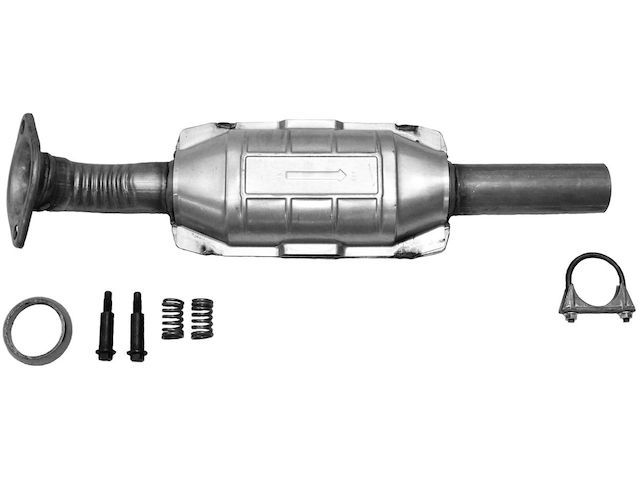
- Driving with a flashing check engine light can cause expensive catalytic converter damage and should be avoided.
- Repairing a failed lifter is a costly, labor-intensive job that often includes replacing the camshaft as well.
What's Unique About the 2016-2021 Chevrolet SILVERADO 1500

The 2016-2021 Silverado 1500, with its EcoTec3 engines, uses Active Fuel Management (AFM) or Dynamic Fuel Management (DFM) to improve fuel economy by deactivating cylinders. This system relies on special, complex valve lifters. These lifters are a known weak point and are prone to collapsing or getting stuck, which is a very common cause for a P0301 misfire on this specific truck. GM has issued technical service bulletins, like #23-NA-043, specifically addressing this internal lifter issue causing misfires. While the code could still be a simple spark plug, the possibility of a failed lifter is significantly higher on these trucks compared to vehicles without this technology. The 2019+ models with the 5.3L L84 and 6.2L L87 engines feature the more advanced DFM system, but are still susceptible to lifter failures.
Diagnostic Flowchart

Tap your situation to follow the diagnostic path that matches what you're seeing on this vehicle.
Generation note: The 2016-2021 year range covers two Silverado 1500 generations: the end of the 3rd Gen (K2XX, 2016-2018) and the start of the 4th Gen (T1XX, 2019-2021). Both generations use the EcoTec3 engine family (5.3L and 6.2L V8s) and share the Active/Dynamic Fuel Management systems, making them both susceptible to the same lifter-related issues that can cause a P0301 code. The 3rd Gen primarily used AFM, while the 4th Gen introduced DFM on some engine configurations, which can deactivate any combination of cylinders.
Symptoms You May Notice
- Flashing or solid Check Engine Light
- Rough or shaky engine idle
- Engine hesitation or stumbling during acceleration
- Noticeable loss of power
- Increased fuel consumption
- A distinct ticking or popping noise from the engine bay, especially if a lifter has failed
- Smell of gasoline from the exhaust
- Replacing only the spark plug when the underlying cause is a failing lifter. The new plug may temporarily improve things, but the misfire will return.
- Assuming a ticking noise is a simple exhaust leak when it is actually a sign of a failing lifter or damaged camshaft.
Most Likely Causes


- Worn or Fouled Spark Plug 🔴 High Probability → Shop Spark Plug Spark plugs are a regular maintenance item. Carbon tracking or oil fouling (sometimes related to PCV issues or piston ring wear) can cause a persistent misfire.
How to confirm: Remove the spark plug from cylinder 1 (front, driver's side) and inspect it for wear, carbon buildup, or oil fouling. Compare it to a new plug. A fouled plug is a symptom, and the root cause should be investigated.
Typical fix: Replace the spark plug. It's often recommended to replace all 8 plugs at the same time for consistent performance. Use of a quality Iridium plug is recommended. 🎬 See this walkthrough on replacing spark plugs to fix a misfire.
Est. part cost: $8-$25 per plug - Failed Ignition Coil 🔴 High Probability → Shop Ignition Coil
How to confirm: Swap the ignition coil from cylinder 1 with another cylinder (e.g., cylinder 3). Clear the codes and drive the vehicle. If the code changes to P0303, the coil is bad.
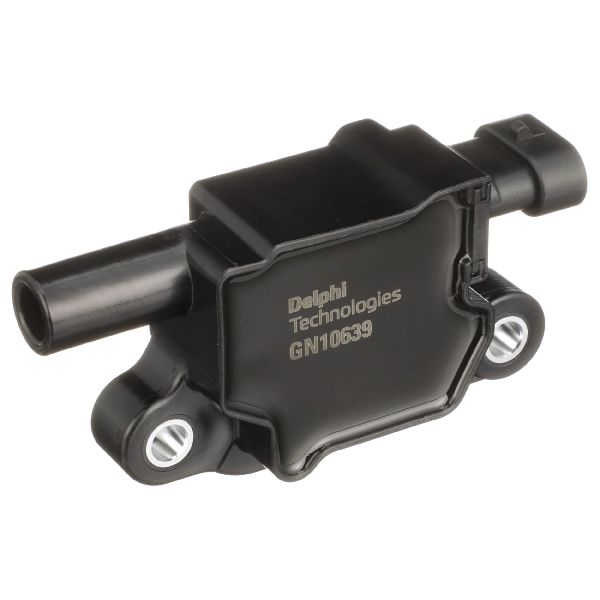
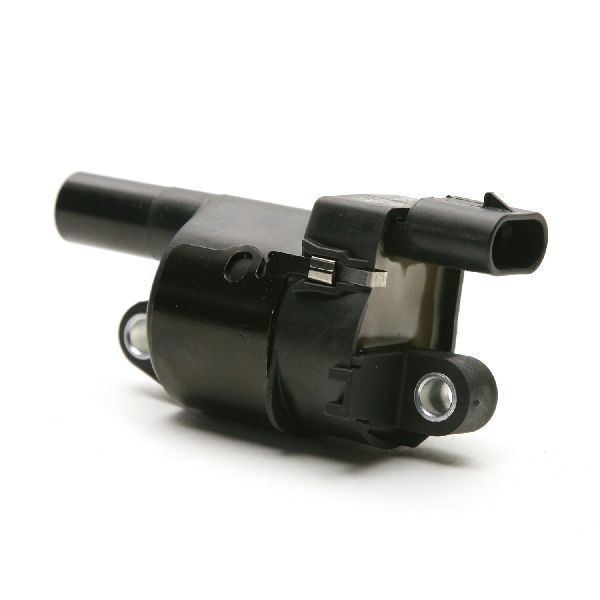
Typical fix: Replace the faulty ignition coil. It is a simple bolt-on part. 🎬 Watch: A quick guide to replacing your faulty ignition coils.
Est. part cost: $40-$100 - Collapsed or Stuck AFM/DFM Lifter 🟡 Medium Probability → Shop Engine Valve Lifter The Active/Dynamic Fuel Management systems use complex hydraulic lifters that are a well-documented failure point on these engines, as outlined in GM TSB #23-NA-043. The issue is widely discussed by owners in forums.
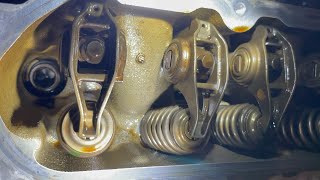
How to confirm: After ruling out spark and fuel, a technician may remove the valve cover to check for a loose rocker arm or a pushrod that isn't moving correctly, indicating a collapsed lifter. A compression test may also show low compression on cylinder 1. A distinct, loud ticking or clattering sound is a strong indicator.
Typical fix: This is a major repair. It requires replacing all lifters and guides on the affected bank (or both banks, depending on mileage and TSB guidance). Often, the camshaft is also damaged and requires replacement. Many owners opt to perform an 'AFM/DFM delete', replacing the complex components with standard LS7-style lifters and disabling the system via an ECU tune to prevent future failures.
Est. part cost: $400-$1500 for lifters, guides, gaskets, and potentially a camshaft and new head bolts. - Faulty Fuel Injector ⚪ Low Probability → Shop Fuel Injector Direct injection (DI) injectors on later models can be prone to clogging, but it's less common than ignition or lifter issues.
How to confirm: Swap the fuel injector from cylinder 1 with another cylinder. If the misfire code follows the injector, it is faulty. This is more involved than swapping a coil. A professional may use a scan tool to perform a fuel injector balance test.
Typical fix: Replace the faulty fuel injector. This is more expensive on these trucks than on older port-injected models.
Est. part cost: $70-$180 for the part, with significantly higher labor costs compared to older trucks.
Rare But Worth Checking
- Bent Pushrod: This is almost always a direct consequence of a lifter failure. If a lifter collapses, the pushrod can become unseated and get bent by the valvetrain.
- Damaged Camshaft Lobe: → Shop Engine Camshaft When an AFM lifter fails, its roller can stop spinning and grind against the camshaft lobe, causing severe damage that requires camshaft replacement.
- Broken Valve Spring: Though less common than a lifter failure, broken valve springs can occur and will cause a misfire and potential ticking noise. GM TSB 19-NA-219 mentions this as a possible cause for misfires.
- Vacuum Leak: A vacuum leak near cylinder 1's intake runner can lean out the air-fuel mixture and cause a misfire, though this is less common than ignition or lifter issues.
Diagnosis Steps
- Read the code with an OBD-II scanner to confirm P0301 and check for any other codes.
- Check the misfire counter data on a capable scan tool (Mode $06) to see if the misfires are happening at idle, under load, or all the time. This can help pinpoint the condition under which the failure occurs.
- Inspect the spark plug for cylinder 1. Look for wear, damage, or fouling. Replace if necessary. An ACDelco 41-166 is a common OEM replacement.
- Swap the ignition coil from cylinder 1 to cylinder 3. Clear the codes and see if the misfire moves to cylinder 3 (P0303). If it does, replace the coil (e.g., ACDelco D521C).
- Inspect the spark plug wire for any visible damage or loose connections.
- If the misfire remains on cylinder 1, inspect the fuel injector wiring and consider swapping the injector with another cylinder to see if the problem follows. This is more labor-intensive.
- If spark and fuel seem okay, listen carefully for a loud ticking or knocking sound from the driver's side of the engine, which is a strong sign of a mechanical issue.
- Perform a compression test. A significantly lower reading on cylinder 1 indicates a mechanical problem like a bad lifter, broken valve spring, worn piston rings, or a valve sealing issue.
- If a lifter is suspected, remove the driver's side valve cover and inspect the valvetrain for cylinder 1. Check for a loose rocker arm or bent pushrod, which confirms a collapsed lifter.
Parts You'll Likely Need
- Spark Plug
(OEM #ACDelco 41-166 (or 41-110 depending on year/engine))— Spark plugs are a common maintenance item and the most frequent cause of a single-cylinder misfire.
Trusted brands: ACDelco, NGK
OEM price range: $15-$25
Aftermarket price range: $8-$20 - Ignition Coil
(OEM #ACDelco D521C)— Ignition coils fail over time and are a primary cause of misfires after spark plugs.
Trusted brands: ACDelco, Delphi
OEM price range: $60-$100
Aftermarket price range: $40-$80 - AFM/DFM Valve Lifter Kit
(OEM #ACDelco 12680871 (AFM Lifter))— This is the most common major mechanical failure causing a P0301 on this platform, as noted in TSB #23-NA-043. A kit usually includes lifters and guides.
Trusted brands: ACDelco, General Motors
OEM price range: $300-$500
Aftermarket price range: $200-$400 - Camshaft — Often required if a collapsed lifter has damaged a lobe on the original camshaft. This is a common point of collateral damage.
Related Codes That Often Appear With This One
- P0300 — If the lifter issue becomes more severe or if there are multiple failing components, the misfire can become random and affect multiple cylinders, triggering a P0300 (Random/Multiple Cylinder Misfire Detected) code.
- P050D — Cold Start Rough Idle. This code can sometimes accompany a misfire code, especially if the issue is related to carbon buildup or a mechanical problem that is more pronounced when the engine is cold.
Technical Service Bulletins (TSBs) & Recalls
- Bulletin #23-NA-043: Addresses poor engine performance and misfire codes (including P0301) caused by internal lifter concerns. It provides guidelines for replacing lifters on one or both banks depending on vehicle mileage.
- Bulletin #19-NA-219: An informational bulletin that helps diagnose misfires and engine noises (chirp, squeak, tick), listing potential causes like worn cam lobes, sticking valves, broken valve springs, and collapsed AFM lifters.
- Bulletin #19-NA-236: (Superseded but relevant) Discusses engine misfires with potential bent pushrods, often leading back to a lifter issue.
Platform-Specific Known Issues
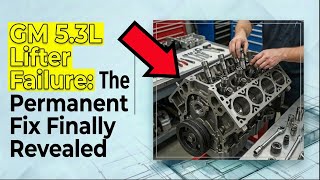
- AFM/DFM Lifter Failure: The most significant issue for these trucks. The special lifters used for cylinder deactivation are prone to failure. TSB #23-NA-043 was issued by GM to address this, outlining a procedure to replace the lifters and guides to correct engine misfires (P0300-P0308). The failure can cause a misfire, ticking noises, and if left untreated, can lead to a damaged camshaft. Owner forums are filled with reports of this failure, with some experiencing it under 100k miles.
- AFM/DFM Delete: Due to the high failure rate, many owners and independent shops recommend a full 'AFM/DFM delete' when a lifter fails. This involves replacing the specialized AFM/DFM lifters with conventional lifters (like LS7-style), often replacing the camshaft with a non-AFM version, and reprogramming the ECU to disable the cylinder deactivation system entirely. This is seen as a permanent fix to the problem.
Mechanic-Grade Diagnostic Values
- Ignition Coil Primary Resistance — expected: ~0.64 - 0.66 ohms. Failure: A reading significantly higher or lower than the expected range indicates a faulty coil winding.
- Ignition Coil Secondary Resistance — expected: ~6.1k - 7.98k ohms. Failure: A reading outside this range suggests an internal failure of the coil.
- Fuel Injector Coil Resistance (Standard Port Injection) — expected: 12-17 ohms. Failure: A reading outside of this specification indicates a bad injector coil.
- Low-Pressure Fuel System Pressure (Key On, Pump Running) — expected: 320-580 kPa (46-84 PSI). Failure: Pressure below this range can indicate a weak low-pressure fuel pump, affecting the high-pressure pump's ability to supply the injectors.
- High-Pressure Fuel Rail Pressure (Engine Idling) — expected: 1.9-5.0 MPa (276-725 PSI). Failure: Pressure that is unstable or significantly out of this range at idle can point to issues with the high-pressure fuel pump or rail pressure sensor.
- Fuel Injector Balance Rate (GDS2 Scan Tool) — expected: Between -6.9 mm³ and +4.0 mm³ at idle. Failure: A rate outside this range for cylinder 1 suggests the ECM is making significant fueling adjustments to compensate for a mechanical or injector issue on that cylinder.
Scan Tool Commands That Help
- GDS2 (GM Dealer Tool) or equivalent professional scanner: Fuel Injector Balance Test — Use this after ruling out spark issues. The tool disables one injector at a time and measures the drop in fuel rail pressure. Comparing the pressure drop for cylinder 1 to the average of the others can confirm if the injector is clogged (less drop) or leaking (more drop).
- GDS2 (GM Dealer Tool) or equivalent professional scanner: Cylinder Power Balance — This function disables one cylinder at a time and measures the corresponding drop in engine RPM. A smaller RPM drop for cylinder 1 indicates it is contributing less power, pointing towards a spark, fuel, or compression issue on that specific cylinder.
- GDS2 (GM Dealer Tool): Throttle Body Idle Air Flow Compensation Reset — After completing mechanical repairs like a lifter replacement or fixing a vacuum leak, this function should be performed. An engine misfire can cause the ECM to learn incorrect idle airflow values, leading to a rough or unstable idle even after the root cause is fixed.
Wiring & Ground Locations
- G102 — Located at the left rear of the engine.. This ground point is the primary ground for all 8 ignition coils. A loose or corroded connection at G102 could potentially cause intermittent spark issues, including on cylinder 1.
- G104 — Located on the left rear corner of the engine, mounted to the driver's side cylinder head.. This is a major engine ground strap connection. Poor grounding here can affect various engine sensors and the ECM's ability to accurately control spark and fuel, potentially contributing to misfires.
- Cylinder 1 Ignition Coil Connector — On the driver's side valve cover, the front-most coil.. The connector itself or the wiring leading to it can become brittle, loose, or damaged, interrupting the signal to the coil and causing a misfire on only cylinder 1.
Real Owner Repair Stories
- Reddit user Jlgray1204 (2009 Chevrolet Silverado (similar AFM engine design)) — Persistent P0301 misfire, white smoke, slight gasoline smell from exhaust.
❌ Tried (didn't work) Replaced all spark plugs and wires, Swapped ignition coil and fuel injector from cylinder 1 to other cylinders (fault stayed on #1), Removed heads, seated valves, replaced valve stem gaskets and head gasket, Cylinder leak-down test showed a good seal
✅ What actually fixed it The two AFM lifters on cylinder 1 had been installed backwards during a previous repair. The oil ports were facing the wrong direction, causing them to lock in a closed position once oil pressure built up. Correctly orienting the lifters resolved the misfire. - Reddit user in r/ChevyTrucks (2017 Chevrolet Silverado 1500 LT 5.3L V8 with ~164k miles) — P0302 (Cylinder 2 Misfire), rough idle.
❌ Tried (didn't work) Replaced the fuel injector (cost $700 at a shop, code returned in 3 days), Replaced the ignition coil and spark plug (code returned after a week)
✅ What actually fixed it The mechanic's final diagnosis was a failing lifter, which is the likely root cause after the ignition and fuel components were replaced without resolving the issue. The user was contemplating the high cost of the lifter repair.
OEM Part Supersession History
12639516, 12645725→12680871, and subsequently 12740071— GM has updated the AFM/DOD valve lifter design over the years, likely to improve durability and address the high failure rates.
Heads up: While multiple part numbers exist, it's critical to use the latest revision specified for the vehicle's VIN and engine type (AFM vs. DFM) when performing a repair.
Model Year Variations Within This Range
- 2016-2018 (L83 Engine): These model years primarily use the Active Fuel Management (AFM) system, which deactivates cylinders 1, 7, 4, and 6. Lifter failure is common, but only on these four cylinders which use the special AFM lifters.
- 2019-2021 (L84 Engine): These model years introduced Dynamic Fuel Management (DFM) on the 5.3L L84 and 6.2L L87 V8s. DFM uses a more complex system with deactivating lifters on all eight cylinders and features 17 different cylinder firing patterns. This means a P0301 lifter failure can occur on cylinder 1 just as it could on any other cylinder, as they all contain the specialized DFM lifters.
Helpful Videos
We Have This Part in Stock


The information in this article is provided for general reference and educational purposes only. Vehicle specifications, procedures, and part compatibility can vary by production date, trim level, and region. Always consult your vehicle's factory service manual and verify part numbers before purchasing or performing repairs. Safety-critical components such as airbags, seat belts, and braking systems should be installed by a qualified professional.
- Chevrolet SILVERADO 1500:
- 🧭 Diagnostic Flowchart
- 🎬 Helpful Videos
- 🛍️ Shop This Part
- What's Unique About the 2016-2021 Chevrolet SILVERADO 1500
- Symptoms You May Notice
- Most Likely Causes
- Rare But Worth Checking
- Diagnosis Steps
- Parts You'll Likely Need
- Related Codes That Often Appear With This One
- Technical Service Bulletins (TSBs) & Recalls
- Platform-Specific Known Issues
- Mechanic-Grade Diagnostic Values
- Scan Tool Commands That Help
- Wiring & Ground Locations
- Real Owner Repair Stories
- OEM Part Supersession History
- Model Year Variations Within This Range
- 🎟️ Get 5% Off