

P0301 on 2011-2015 Chevrolet Volt: Cylinder 1 Misfire Causes and Fixes
P0301 on a Gen 1 Chevy Volt means cylinder 1 is misfiring. This is most often caused by a worn spark plug or a failed ignition coil pack where the contact spring for cylinder 1 has corroded. A DIY repair with new plugs and a new coil pack costs around $120-$200 and is a common, straightforward fix for this platform.
- P0301 on a 2011-2015 Volt is a misfire on the cylinder closest to the passenger side.
- The most likely cause is a faulty ignition coil pack, often due to corrosion from moisture.
- Always replace all four spark plugs (ACDelco 41-121 is recommended) when replacing the coil pack.
- Do not continue driving with a flashing check engine light, as this can quickly destroy the catalytic converter.
- The repair is straightforward for a DIYer and involves basic hand tools.
What's Unique About the 2011-2015 Chevrolet VOLT
The Chevy Volt is a plug-in hybrid where the 1.4L gasoline engine serves primarily as a generator, running only intermittently. This infrequent use can lead to unique issues. Moisture can accumulate in the ignition system, causing significant corrosion on the ignition coil contact springs, a widely documented failure point for the Gen 1 Volt and its platform mates. Additionally, long periods of inactivity can cause fuel to go stale, potentially leading to injector deposits. Because the engine runs less often, owners may not notice a problem until the check engine light comes on during a longer trip.
Diagnostic Flowchart
Tap your situation to follow the diagnostic path that matches what you're seeing on this vehicle.
Symptoms You May Notice
- Check Engine Light (CEL) is on or flashing
- Rough or shaking engine operation, especially when the gas engine kicks on
- Reduced power or hesitation
- Unusual engine noises, like stuttering or popping
- Smell of unburned gasoline from the exhaust
- "Engine Not Available" message may appear on the driver display
- Replacing only one spark plug instead of the full set. Worn plugs put extra strain on the new coil pack, potentially causing it to fail prematurely.
- Replacing oxygen (O2) sensors, which may report an issue due to unburned fuel but are not the root cause of the misfire.
- Immediately assuming a major engine failure without first performing simple ignition system checks.
Most Likely Causes
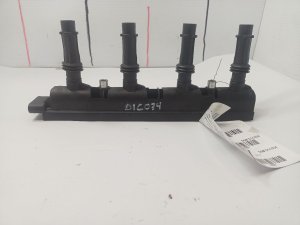
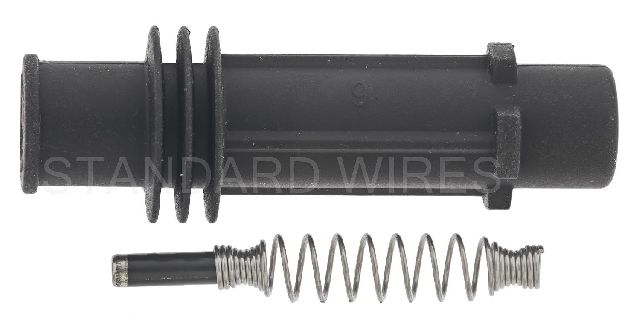
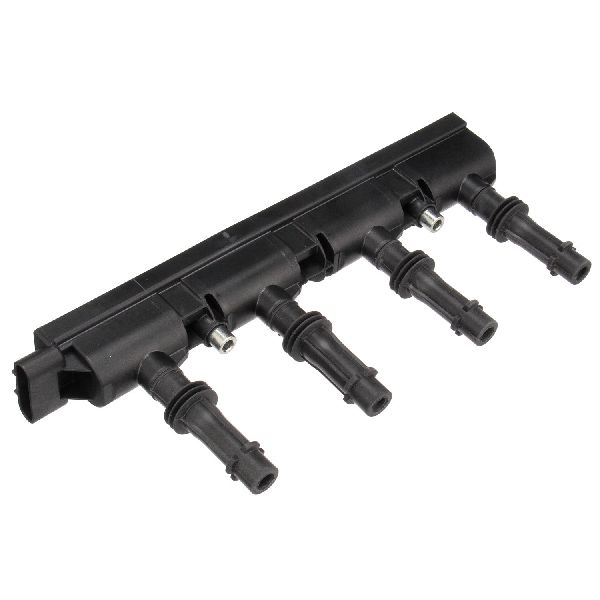
- Failing Ignition Coil Assembly 🔴 High Probability → Shop Ignition Coil The Gen 1 Volt uses a single cassette-style coil pack that is a notorious failure point. The internal contact springs that connect to the spark plugs are highly susceptible to rust and corrosion from trapped moisture, leading to a weak or intermittent spark on one or more cylinders. This is the most common cause of a P0301 code on this platform.
How to confirm: Remove the single coil pack assembly (held by two T30 Torx bolts) from the top of the engine. Pull the boot for cylinder 1 off the coil pack and inspect the metal contact spring inside. Look for any signs of white, green, or rust-colored corrosion or powder. If significant corrosion is present, the pack is faulty and should be replaced.
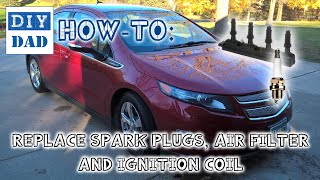
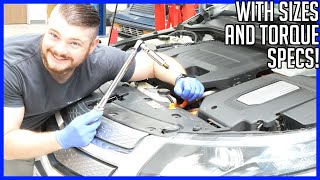
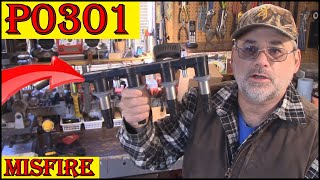
Typical fix: Replace the entire ignition coil pack assembly. 🎬 Watch: Full walkthrough for replacing the coil pack and plugs. It is a single unit that covers all four cylinders. Applying a small amount of dielectric grease to the inside of the new boots can help prevent future moisture intrusion.
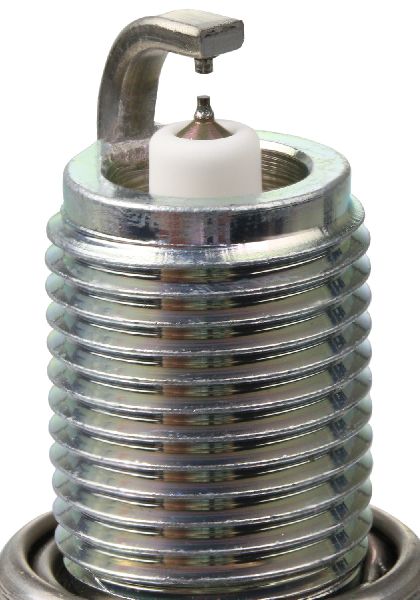
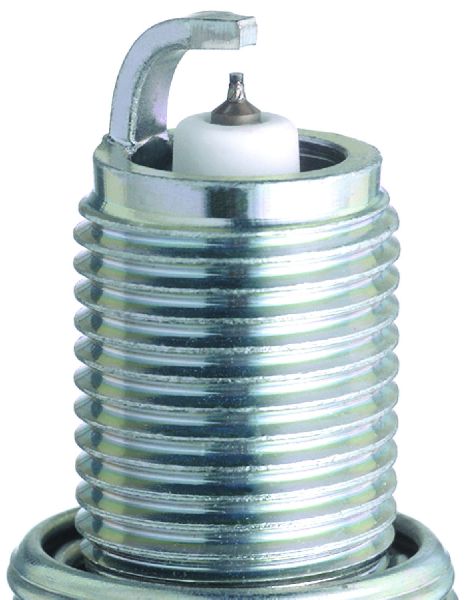
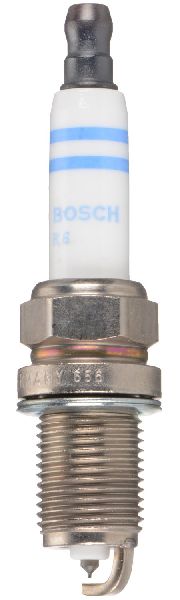
Est. part cost: $70-$160 - Worn or Fouled Spark Plugs 🔴 High Probability → Shop Spark Plug While a routine maintenance item, the intermittent nature of the Volt's engine can lead to carbon fouling if the engine only runs for short periods. The OEM-specified ACDelco Iridium plugs are recommended for longevity and are often replaced alongside the coil pack as a best practice.
How to confirm: After removing the coil pack, remove the spark plug from cylinder 1 using a 5/8" spark plug socket. Inspect the electrode for heavy carbon buildup, oil fouling, or wear. The center electrode should be sharp, not rounded. Also, check the porcelain insulator for cracks or a brownish 'corona stain', which indicates external voltage leakage.
Typical fix: Replace all four spark plugs as a set. The correct torque specification for the spark plugs is 18 lb-ft (25 Nm). 🎬 See this guide for proper spark plug installation and torque. Under- or over-tightening can cause serious issues.
Est. part cost: $30-$90 - Dirty or Clogged Fuel Injector 🟡 Medium Probability → Shop Fuel Injector Infrequent engine use means gasoline can sit in the fuel rail for extended periods. This can lead to fuel breakdown and the formation of varnish and deposits that can restrict or clog the fuel injector for cylinder 1. Using a quality fuel stabilizer can help mitigate this for drivers who primarily use battery power.
How to confirm: After ruling out spark issues, the easiest way to confirm is to swap the cylinder 1 fuel injector with another cylinder (e.g., cylinder 2). Clear the codes and run the engine. If the misfire code changes to P0302, the injector is the problem. This is a more involved diagnostic step than an ignition system repair.
Typical fix: Replace the faulty fuel injector. Some shops may offer professional fuel system cleaning services, but replacement is often more effective for a clogged injector.
Est. part cost: $50-$120
Rare But Worth Checking
- Internal Engine Mechanical Failure: Though less common, some owners have reported more severe issues like loss of compression due to worn piston rings or burnt valves, requiring significant engine repair. This is a known issue on the related 1.4L Turbo engine in the Chevy Cruze. A compression test followed by a cylinder leak-down test is required to diagnose this. Zero compression in a cylinder points to a major mechanical failure.
- Failed PCV System (Valve Cover): On the 1.4L engine, the PCV diaphragm is integrated into the valve cover. If it fails, it creates a large, unmetered vacuum leak that can cause misfires and a lean condition. This often presents with a P0171 (System Too Lean) code as well and may be accompanied by a whistling noise from the engine. The entire valve cover must be replaced to fix the issue. 🎬 Watch: How to replace a failed valve cover and PCV.
- Corroded ECM or Coil Pack Connector: → Shop Ignition Coil In rare cases, corrosion can form inside the electrical connector for the ignition coil pack or even at the ECM itself, causing a short or poor connection for the cylinder 1 trigger wire. This can damage the new ignition coil if not addressed.
Diagnosis Steps
- Read the code with an OBD-II scanner to confirm P0301 and any other related codes.
- Visually inspect the ignition coil pack. Remove the plastic engine cover and the two T30 Torx bolts holding the coil assembly. Lift the assembly and check the contact springs inside the boots, especially the one for cylinder 1 (passenger side), for white or green corrosion or rust.
- If the coil pack looks corroded, it is almost certainly the cause. It is best practice to replace both the coil pack and all four spark plugs at the same time.
- If the coil looks clean, remove the spark plug from cylinder 1 (5/8" socket) and inspect it for wear, damage, or fouling. Compare it to the other plugs.
- As a definitive step, replace all four spark plugs with new Iridium plugs (gapped correctly) and apply dielectric grease to the boots of the new coil pack. Torque the plugs to 18 lb-ft.
- If the misfire persists after replacing plugs and the coil pack, the problem is likely fuel or mechanical.
- Consider swapping the fuel injector from cylinder 1 to another cylinder (e.g., cylinder 2) to see if the misfire code follows the injector (changing to P0302).
- If the misfire still remains on cylinder 1, perform a compression test to check for mechanical engine problems like bad valves or piston rings. Zero or very low compression indicates a serious internal engine problem.
Parts You'll Likely Need
- Ignition Coil Assembly
(OEM #55579072)— This is the most common failure point for misfires on the Gen 1 Volt due to corrosion of the contact springs. It is a single cassette-style unit.
Trusted brands: ACDelco (OEM), Delphi (often the OEM supplier), NGK
OEM price range: $90-$160
Aftermarket price range: $70-$120 - Iridium Spark Plugs (Set of 4)
(OEM #ACDelco 41-121)— Worn or fouled spark plugs are a primary cause of misfires and should always be replaced when servicing the ignition system to ensure longevity of the new coil.
Trusted brands: ACDelco (OEM), NGK (e.g., 94279)
OEM price range: $40-$90
Aftermarket price range: $30-$70
Related Codes That Often Appear With This One
- P0300 — If the misfire is intermittent or affects other cylinders, a P0300 (Random/Multiple Cylinder Misfire) may be stored alongside P0301.
- P0302, P0303, P0304 — If the single ignition coil pack is failing, it's common for multiple cylinders to start misfiring as other contact springs corrode, leading to additional codes.
- P0171 — If the misfire is caused by a failed PCV system in the valve cover, a P0171 (System Too Lean) code is often stored as well due to the large vacuum leak.
Technical Service Bulletins (TSBs) & Recalls
- PIP3333C: Mentions intermittent engine misfire with DTC P0301 on 2011 models, indicating a known issue.
- PIP5334: Provides the correct spark plug torque spec of 18 lb-ft (25 Nm) for the 2011-2015 Volt 1.4L engine.
Platform-Specific Known Issues
- The NHTSA lists Technical Service Bulletin #PIP3333C, which acknowledges intermittent engine misfires and codes P0300, P0301, and/or P0304, directing technicians to follow standard diagnostics first. This confirms it is a known issue.
- While not specific to the Volt, TSBs for the related 1.4L engine in other GM vehicles discuss piston ring issues leading to misfires (P0301-P0304), which can be a rare but severe cause in the Volt as well.
Mechanic-Grade Diagnostic Values
- Ignition Coil Cassette Primary Resistance — expected: ~0.660 Ohms. Failure: A reading of OL (open loop) or a value significantly outside the expected range indicates a faulty coil winding.
- Ignition Coil Cassette Secondary Resistance — expected: ~6.1k Ohms (6,100 Ohms). Failure: A reading significantly higher or lower than the expected 6.1k Ohm value suggests the secondary windings are compromised.
- Fuel Pressure (Low-Side) — expected: ~55 PSI. Failure: Pressure significantly below 55 PSI points to a weak fuel pump or a clogged fuel filter, which can cause lean misfires.
- Fuel Injector Resistance — expected: 12 - 17 Ohms (general specification for high-impedance injectors). Failure: A reading outside of this range, especially an open (OL) or shorted (near zero) reading, indicates a failed injector coil.
- Short/Long Term Fuel Trims (STFT/LTFT) — expected: Within +/- 10% at warm idle.. Failure: Consistently high positive values (e.g., > +10%) show the ECM is compensating for a lean condition, which could be a vacuum leak or a clogged injector on cylinder 1.
Hidden / Shadow Codes Worth Checking
- Misfire Counter (Live Data PID): This is not a stored code, but a live data parameter that shows the number of misfire events for each specific cylinder in real-time. It is invaluable for confirming if the misfire is isolated to cylinder 1 or if other cylinders are also misfiring intermittently, which might not be enough to set their own codes. (see via A professional scan tool like the GM GDS2/Tech2 or an advanced aftermarket scanner capable of reading manufacturer-specific live data.)
Scan Tool Commands That Help
- GM GDS2 / Professional Scan Tool: Cylinder Power Balance Test — This active test should be used after initial checks when the cause is not obvious. The tool deactivates each cylinder one by one and measures the RPM drop. If deactivating cylinder 1 causes little or no RPM drop compared to other cylinders, it confirms cylinder 1 is not contributing power, isolating the fault without swapping parts.
- GM GDS2 / Fuel System Diagnostic Tool: Fuel Injector Balance Test — Use this test when a fuel injector is suspected. It requires connecting a fuel pressure gauge. The tool fires a single injector for a precise duration, and the technician records the pressure drop. If the pressure drop for cylinder 1 is significantly less than the others, it confirms the injector is restricted or clogged.
Wiring & Ground Locations
- K20 Engine Control Module (ECM) — Located in the engine bay.. This module controls the ignition and fuel systems. All signals for the ignition coil and fuel injector originate here. Damage or corrosion at the module's connectors can cause a P0301.
- K20 ECM Connector X1 — This is one of the main connectors on the Engine Control Module.. This connector contains the critical wiring for the engine sensors and actuators. For example, on a 2011 Volt, pin 19 is the Run/Crank Ignition 1 Voltage, and pin 20 is the Battery Positive Voltage supply to the ECM. A poor connection on the specific ignition control (IC) wire for cylinder 1 within this harness can directly cause a P0301.
Real Owner Repair Stories
- Reddit user in r/Audi (Audi with 2.0 TFSI engine (similar direct injection and coil-on-plug design principles)) — P0304 (Cylinder 4 Misfire), violent shaking when accelerating, flashing check engine light.
❌ Tried (didn't work) Replacing all spark plugs.
✅ What actually fixed it The problem was ultimately a dead fuel injector on the affected cylinder. This is a valuable story as it shows that even after addressing the most common ignition components (plugs/coils), the fuel injector can be the root cause.
"I Checked Everything" — The Actual Cause
- A common scenario for the 1.4L engine is a misfire (P0301) accompanied by a lean code (P0171) where a smoke test of the intake system shows no leaks. The actual cause is a torn PCV diaphragm inside the camshaft/valve cover. This creates a large, unmetered vacuum leak that a smoke test may not reveal because the air is being drawn from the crankcase into the intake manifold internally. The key symptom is often a distinct hissing or whistling sound from the top of the engine, which can be confirmed by checking for vacuum at the small PCV vent port on the cover.
OEM Part Supersession History
55579072→25198623— Standard part number update and consolidation by the manufacturer.
Heads up: The new part number (25198623) is the correct service replacement for the original (55579072).
Model Year Variations Within This Range
- 2011-2013: Some other GM vehicles from this era with related engines received a PCM software update to improve misfire detection logic as a first step before replacing parts. While not a Volt-specific TSB for P0301, it is a best practice to check if any ECM software updates are available for the vehicle before beginning hardware diagnosis, as it can sometimes resolve overly sensitive misfire detection.
Helpful Videos

Used OEM Parts in Stock
New Aftermarket Parts Available


The information in this article is provided for general reference and educational purposes only. Vehicle specifications, procedures, and part compatibility can vary by production date, trim level, and region. Always consult your vehicle's factory service manual and verify part numbers before purchasing or performing repairs. Safety-critical components such as airbags, seat belts, and braking systems should be installed by a qualified professional.
- Chevrolet VOLT:
- 🧭 Diagnostic Flowchart
- 🎬 Helpful Videos
- 🛍️ Shop This Part
- What's Unique About the 2011-2015 Chevrolet VOLT
- Symptoms You May Notice
- Most Likely Causes
- Rare But Worth Checking
- Diagnosis Steps
- Parts You'll Likely Need
- Related Codes That Often Appear With This One
- Technical Service Bulletins (TSBs) & Recalls
- Platform-Specific Known Issues
- Mechanic-Grade Diagnostic Values
- Hidden / Shadow Codes Worth Checking
- Scan Tool Commands That Help
- Wiring & Ground Locations
- Real Owner Repair Stories
- "I Checked Everything" — The Actual Cause
- OEM Part Supersession History
- Model Year Variations Within This Range
- 🎟️ Get 5% Off