

P0301 on 2012-2016 Dodge Caravan: Cylinder 1 Misfire Causes and Fixes
P0301 on a Dodge Caravan indicates a misfire in cylinder #1. The most common fixes are replacing the ignition coil or spark plug for that cylinder. However, on 2012-2013 models, this code can be a symptom of a more serious, well-known cylinder head issue that was subject to an extended warranty. On all years, a persistent ticking noise accompanying the misfire often points to rocker arm failure.
- P0301 means cylinder #1 (rear bank, passenger side) is misfiring.
- Always start diagnosis by swapping the ignition coil from cylinder #1 to cylinder #3. This is a fast, free, and effective test.
- If you have a 2012-2013 model, be aware of the known cylinder head defect. If basic ignition and fuel system checks don't fix the misfire, a compression and leak-down test is necessary.
- Do not drive if the check engine light is flashing, as this can quickly destroy your catalytic converter, leading to a much more expensive repair.
What's Unique About the 2012-2016 Dodge CARAVAN
The 2012-2016 Grand Caravan uses the 3.6L Pentastar V6. While ignition parts are common culprits for a P0301, early versions of this engine (2011-2013) are known for a specific defect causing the left-side cylinder head to fail, which can lead to misfires on the rear bank of cylinders (1, 3, 5). This issue was so prevalent that Chrysler issued TSB #09-002-14 REV. B and an extended warranty (X56). Additionally, these engines are prone to valvetrain issues like worn rocker arms, where the needle bearings fail, causing a distinct ticking noise and a persistent single-cylinder misfire.
Diagnostic Flowchart
Tap your situation to follow the diagnostic path that matches what you're seeing on this vehicle.
Symptoms You May Notice
- Rough or shaky idle
- Hesitation or stumbling during acceleration
- Noticeable loss of engine power
- Solid or flashing Check Engine Light
- Reduced fuel economy
- Distinct ticking or tapping noise from the top of the engine, especially when cold.
- Replacing oxygen sensors. O2 sensor codes can sometimes accompany misfire codes, but the misfire is usually the root cause, not the sensor.
- Replacing only spark plugs when a faulty ignition coil was the root cause. A bad coil can work intermittently, leading to confusion.
Most Likely Causes
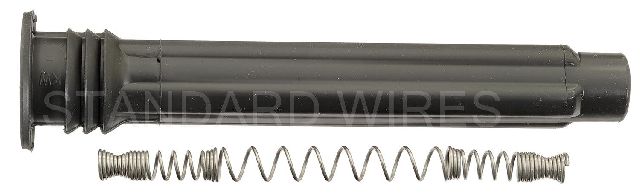
- Faulty Ignition Coil 🔴 High Probability → Shop Ignition Coil Coil-on-plug systems are exposed to significant heat and vibration, making them a common failure item over time. This is the most frequent cause of a single-cylinder misfire.
How to confirm: Swap the ignition coil from cylinder #1 with another cylinder on the same bank (e.g., cylinder #3). Clear the codes and drive. If the code changes to P0303, the coil is bad. This is a definitive and widely used DIY diagnostic step.
Typical fix: Replace the faulty ignition coil. Many owners and mechanics choose to replace the spark plug at the same time, especially since access to the rear bank requires some labor.
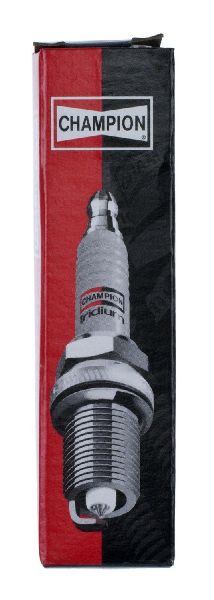
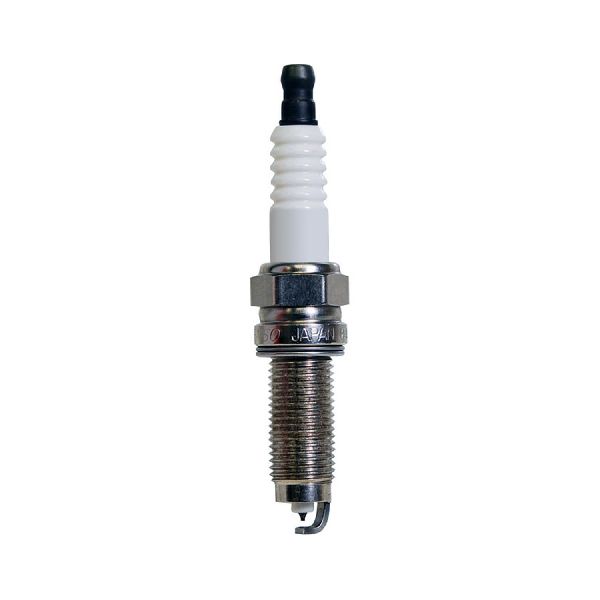
Est. part cost: $40-$100 - Worn or Fouled Spark Plug 🔴 High Probability → Shop Spark Plug Spark plugs are a regular maintenance item with a 100,000-mile replacement interval. Accessing the rear bank (where cylinder #1 is) requires removing the upper intake air ducting, so they may be neglected.
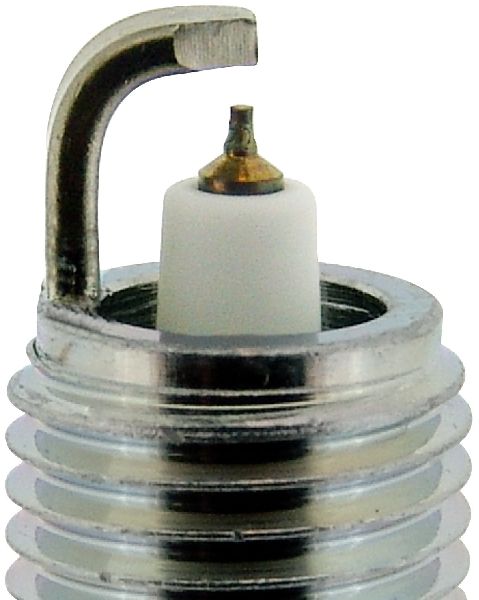
How to confirm: After ruling out the coil, remove the spark plug from cylinder #1. Inspect it for wear (worn electrode), carbon buildup, or oil fouling. The factory gap spec is around 0.043 inches. You can also swap it with another cylinder's plug to see if the misfire follows.
Typical fix: Replace the spark plug. It is highly recommended to replace all six spark plugs at the same time due to the labor involved in accessing them.
Est. part cost: $10-$25 per plug - Defective Left Cylinder Head 🟡 Medium Probability → Shop Engine Cylinder Head Early 3.6L Pentastar engines (specifically 2011-2013 models) had a known manufacturing defect with valve seats on the left cylinder head (which houses cylinders 2, 4, and 6), but the issue has been reported by some to cause misfires on the right head (1, 3, 5) as well. Chrysler issued an extended warranty (X56) for this issue under TSB #09-002-14 REV. B.
How to confirm: If ignition and fuel system checks do not resolve the misfire, a cylinder compression test followed by a cylinder leak-down test is required. Per TSB #09-002-14, a leak-down rate of 25% or more confirms the failure.
Typical fix: Replacement of the left cylinder head assembly. This is a major repair, often costing thousands of dollars if not covered by warranty.
Est. part cost: $800-$1500 for the part - Faulty Fuel Injector ⚪ Low Probability → Shop Fuel Injector Less common than ignition or mechanical issues, but injectors can become clogged with deposits or fail electrically, causing a lean misfire.
How to confirm: Listen for a consistent clicking sound from the injector with a mechanic's stethoscope. Use a 'noid light' to confirm the electrical pulse from the PCM. Swapping injectors is possible but labor-intensive as it requires removing the fuel rail.
Typical fix: Replace the faulty fuel injector.
Est. part cost: $50-$120
Rare But Worth Checking
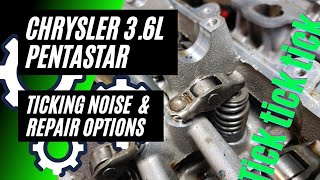
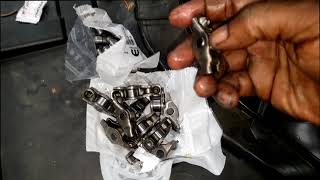
- Worn Rocker Arm / Camshaft Lobe: → Shop Engine Rocker Arm The 3.6L Pentastar can suffer from failed needle bearings in the rocker arms, causing a ticking noise and wearing down the camshaft lobe. This results in a persistent misfire that ignition or fuel parts won't fix. This is a well-documented failure across the Pentastar engine family. 🎬 See this video for Pentastar ticking noise repair options.
- Faulty Powertrain Control Module (PCM): TSB #18-069-16 REV. A notes that some 2015-2016 models built between July 27, 2015 and September 11, 2015 may require a PCM replacement due to an improperly coated atmospheric vent, which can cause various misfire codes including P0301.
Diagnosis Steps
- Read all stored fault codes with an OBD-II scanner. Note any other codes present.
- Identify cylinder #1. On the Grand Caravan's transverse-mounted 3.6L engine, the rear bank of cylinders (closest to the firewall) contains cylinders 1, 3, and 5, from passenger side to driver side. Cylinder #1 is on the passenger side, rear.
- Swap the ignition coil from cylinder #1 with the coil from cylinder #3. This is the easiest diagnostic test. Clear the codes and test drive. If the code changes to P0303, the ignition coil is the problem.
- If the code remains P0301, swap the spark plug from cylinder #1 with cylinder #3. Clear codes and test drive. If the code changes to P0303, the spark plug is faulty.
- If the misfire remains on cylinder #1, listen carefully for a distinct ticking noise from the valve cover area, which would point towards a rocker arm failure.
- Inspect the wiring and connector for the ignition coil and fuel injector for any damage, corrosion, or loose connections. The plastic locking tabs on the connectors can become brittle and break.
- Use a 'noid light' to verify that the fuel injector for cylinder #1 is receiving an electrical pulse from the PCM.
- If all ignition and fuel delivery checks pass, perform a cylinder compression test on cylinder #1. A healthy reading should be above 100 PSI, with no more than a 25% variance from other cylinders.
- If compression is low, perform a cylinder leak-down test. This is the definitive test for the cylinder head issue. Air escaping from the exhaust points to a bad exhaust valve/seat. Per Chrysler TSB 09-002-14, leakage of 25% or more warrants cylinder head replacement. 🎬 Watch: Advanced diagnostic steps for Pentastar valve train repairs.
Parts You'll Likely Need
- Ignition Coil
(OEM #68444557AA (superseded by 68223569AD))— This is the most common cause of a single-cylinder misfire and is the easiest part to diagnose via a 'swap test'.
Trusted brands: Mopar, NGK, Denso
OEM price range: $60-$120
Aftermarket price range: $40-$100 - Spark Plug
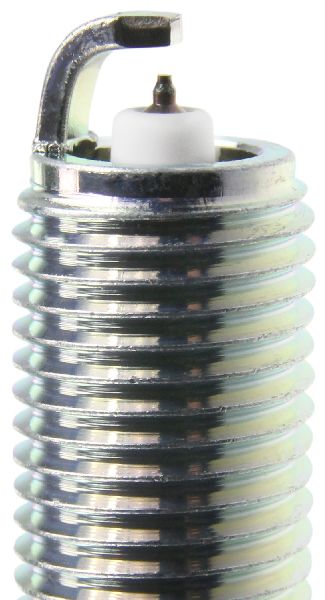
(OEM #SP149125AE (Champion RER8ZWYCB4))— As a standard wear item, a worn or fouled spark plug is a high-probability cause for a misfire. The 100,000-mile service interval is often when they fail.
Trusted brands: Mopar (Champion), NGK, Denso
OEM price range: $20-$35
Aftermarket price range: $10-$25 - Left Cylinder Head Assembly
(OEM #RL141353AC (superseded by 68141353AC))— For 2012-2013 models, this part is needed to fix the well-documented factory defect that causes misfires on the left bank of cylinders. Note that this TSB specifically calls out codes P0302, P0304, P0306, but the issue is systemic to the engine family.
Trusted brands: Mopar
OEM price range: $1000-$1500
Aftermarket price range: $800-$1200
Related Codes That Often Appear With This One
- P0300 — If the misfire is severe or intermittent, or if other cylinders are also beginning to fail (e.g., due to a failing cylinder head or rocker arms), a P0300 Random/Multiple Cylinder Misfire code may be set.
- P0303, P0305 — Since cylinders 1, 3, and 5 are on the same cylinder head (the rear/firewall bank), a problem affecting the whole bank, like a vacuum leak or valvetrain issue, could cause misfires on these other cylinders as well.
- P2302, P2305, P2308, etc. — These codes for 'Ignition Coil Secondary Circuit - Insufficient Ionization' are often seen alongside misfire codes on 2015-2016 models and are specifically mentioned in TSB #18-069-16 related to the faulty PCM issue.
Technical Service Bulletins (TSBs) & Recalls
- 18-069-16 REV. A: Mentions P0301 as a possible DTC on 2015-2016 models (built between 07/27/2015 and 09/11/2015) due to a faulty PCM with an improperly coated vent, requiring PCM replacement.
- 18-104-15: Lists P0301 as a potential DTC in relation to other system checks on 2012 models.
- 09-002-14 REV. B: Details the diagnosis (cylinder leak-down test of 25% or more) and repair (cylinder head replacement) for the known Pentastar V6 left cylinder head issue on 2011-2013 models, which causes misfires on cylinders 2, 4, and 6.
Platform-Specific Known Issues
- Left Cylinder Head Failure (2012-2013 models): A significant number of early 3.6L Pentastar engines were built with improperly hardened valve seats on the left cylinder head, leading to wear, loss of compression, and misfire codes (P0302, P0304, P0306). Chrysler acknowledged this with TSB #09-002-14 REV. B and offered an extended warranty (X56) for 10 years/150,000 miles. While P0301 is on the opposite bank, awareness of this major engine issue is critical for owners of these model years.
- Rocker Arm Failure: The 3.6L Pentastar engine family is known for premature failure of the needle bearings in the valvetrain rocker arms. This causes excessive clearance, resulting in a distinct 'ticking' sound from the upper engine and can lead to a persistent single-cylinder misfire code like P0301 that is not resolved by replacing ignition or fuel components.
Mechanic-Grade Diagnostic Values
- Fuel Injector Resistance — expected: 12.0 - 14.5 ohms. Failure: A significantly higher reading (e.g., over 20 ohms), an open circuit (infinite resistance), or a short (near zero ohms) indicates a failed injector. All injectors should have very similar resistance values.
- Ignition Coil Primary Resistance — expected: ~0.46 ohms. Failure: A reading significantly outside a narrow range of the specification suggests a faulty primary winding.
- Ignition Coil Secondary Resistance — expected: 9.5k - 15.7k ohms. Failure: A reading outside of this range indicates a failure in the secondary windings of the coil.
- Fuel Pressure (Key On, Engine Running) — expected: 58 psi +/- 2 psi (400 kPa +/- 14 kPa). Failure: Significantly lower pressure points to a weak fuel pump, clogged filter, or faulty regulator.
- Long Term Fuel Trim (LTFT) at Idle — expected: -10% to +10%. Failure: A consistently high positive value (e.g., > +15%) suggests a vacuum leak, while a high negative value (e.g., < -15%) suggests a rich condition like a leaking injector.
- Injector Pulse Width (Scan Tool Live Data) — expected: All cylinders should show a similar pulse width in milliseconds (ms) at idle.. Failure: A cylinder with a significantly shorter or zero pulse width compared to others may indicate the PCM is shutting down the injector due to a detected issue.
Hidden / Shadow Codes Worth Checking
- Misfire Monitor Status / Adaptive Numerator: Chrysler vehicles use a system called the 'Adaptive Numerator' to learn the crankshaft's rotational profile before enabling misfire counting. If this memory is cleared (e.g., after a battery disconnect or clearing adaptives with a scan tool), the misfire counter will not work. The status will show as 'Waiting' or '????'. (see via This status is visible in the misfire data section of a professional scan tool like Autel or Snap-on, or the dealer wiTECH tool. A status of 'In Progress' or 'Learned' indicates the monitor is active.)
- Mode $06, TID $A2-$AC, CID $01-$0C: Mode $06 data can reveal misfire counts per cylinder for the last 10 drive cycles, even if a code hasn't been set. The Test ID (TID) for misfire counts is typically from $A2 to $AC, with each representing a specific cylinder. This can help identify intermittent misfires that aren't yet severe enough to trigger a P0301. (see via Requires an OBD-II scanner capable of reading Mode $06 data.)
Scan Tool Commands That Help
- wiTECH or advanced aftermarket scanner: View Misfire Counters ('Which cylinder is misfiring') — This is the primary function to use for confirming a misfire. It provides a live count of misfire events for each cylinder, allowing you to confirm the fault is on cylinder #1 and see if other cylinders are also misfiring intermittently. On wiTECH, this is found under 'OBD II monitors'.
- wiTECH or advanced aftermarket scanner: Fuel Injector Kill / Cylinder Cutout — This bidirectional test allows you to manually disable the fuel injector for a specific cylinder while the engine is running. When you disable the injector for cylinder #1, if there is no change in engine RPM or sound, it confirms that cylinder was not contributing, pointing to a problem with fuel, spark, or compression on that cylinder.
- wiTECH: PCM Reprogram/Flash — This is required when a Technical Service Bulletin (TSB) indicates a software update is needed to resolve false misfire codes. TSB 18-053-12 for 2012 models and TSB 18-069-16 REV. A for specific 2015-2016 models both require a PCM flash to correct issues that can cause a P0301.
- wiTECH or advanced aftermarket scanner: Adaptive Memory Reset / Relearn — After certain repairs, like replacing a throttle body or addressing a major vacuum leak, resetting the engine's learned adaptive values can be necessary. However, be aware that on Chrysler vehicles, this may clear the 'Adaptive Numerator' and require a drive cycle to relearn the misfire monitor.
Wiring & Ground Locations
- Cylinder #1 Ignition Coil Connector — Rear cylinder bank (closest to firewall), passenger side. The connector plugs directly into the top of the ignition coil.. This connector and its wiring are the primary suspects for an electrical fault causing a P0301. Check for broken locking tabs, corrosion on pins, or chafed wires.
- PCM Connector C1 (White/Black) — The Powertrain Control Module (PCM) is located on the driver's side of the engine compartment, near the strut tower. C1 is the large white or black connector.. This connector houses the ground circuits for the PCM. Specifically, pins 49, 50, 51, 52, 53, and 72 are known ground points. A poor connection here can cause widespread electronic issues, including misfires.
- Engine Ground Strap — A braided ground strap connects the upper engine mount (passenger side) to the vehicle's frame/body.. This is a primary engine-to-chassis ground. If it is broken or corroded, the ignition system may seek a weaker ground path, leading to intermittent spark, weak spark, and misfire codes. It is often found broken during other repairs like water pump replacement.
- G300 Ground — Located inside the cabin, at the base of the driver's side B-pillar or in the driver's kick panel area.. This is a major chassis ground point. While less likely to cause a single cylinder misfire, a loose or corroded G300 can cause a host of strange electrical issues and module communication problems that could accompany a misfire code.
Real Owner Repair Stories
- Reddit user, r/MechanicAdvice (2018 Dodge Grand Caravan) — Persistent P0301 misfire only noticeable at idle. Smooth driving otherwise. No ticking noises.
❌ Tried (didn't work) Heads were rebuilt., Swapped spark plugs., Swapped ignition coils., Swapped fuel injectors., Compression and leak-down tests passed., Checked for vacuum leaks with smoke machine and carb cleaner.
✅ What actually fixed it The user discovered noticeable carbon buildup ('gunk') on one of the intake valves for cylinder 1. The implication was that this buildup was disrupting airflow enough to cause an idle-only misfire, a problem that was not resolved even by a cylinder head rebuild and passed standard mechanical tests. - 2CarPros Forum User (2003 Dodge Grand Caravan 3.8L V6) — Intermittent P0301 code, engine misfire.
❌ Tried (didn't work) Replaced spark plugs, wires, coil, and injector at a non-dealer shop., Dealer performed fuel system cleaning and de-carbonization., Dealer replaced a supposedly 'burnt valve' ($1600), but the misfire remained.
✅ What actually fixed it The issue was unresolved in the thread, but a key diagnostic step performed by the dealer was running a jumper wire directly from the PCM connector to the #1 fuel injector to bypass the factory harness. This is a mechanic-grade technique to definitively rule out a wiring problem between the PCM and the component.
"I Checked Everything" — The Actual Cause
- In a case reported on a mechanic forum, a 2018 Grand Caravan passed a smoke test and other vacuum leak checks, but continued to have a P0301 at idle. The ultimate suspected cause was carbon buildup on a single intake valve, which disrupted airflow at low RPMs but did not constitute a traditional vacuum leak.
When the Usual Fixes Don't Work
- While the most common causes for P0301 are a faulty ignition coil or spark plug, numerous owner accounts describe scenarios where replacing these parts did not fix the issue. In one detailed case involving an 2018 Grand Caravan, the misfire persisted even after swapping all ignition and fuel components and performing a cylinder head rebuild. The final suspected cause was isolated carbon buildup on an intake valve, demonstrating that even when common fixes and major mechanical work are performed, subtle issues can remain. In another instance with an older model, a dealer replaced a valve to no effect, with the next diagnostic steps being to test the PCM and inspect the transmission flexplate for cracks causing a vibration that could be misinterpreted by the crank sensor as a misfire.
OEM Part Supersession History
68223569AB, 68223569AC→68223569AD— Standard part revision by the manufacturer.5184296AD, 5184296AE, 5184296AF, 5184296AG→5184296AH— Represents minor production variations and consolidation of part numbers for the 3.6L Pentastar rocker arm. All versions (AF, AG, AH) are considered functionally identical.
Model Year Variations Within This Range
- 2012: A PCM software update was released under TSB 18-053-12 to address several issues, including false misfire codes (P0300-P0306) that could set in warmer ambient temperatures. The fix is to reprogram the PCM with the latest software.
- 2015-2016 (specific build dates): TSB #18-069-16 REV. A applies to vehicles built between July 27, 2015, and September 11, 2015. An improperly coated vent on the PCM could allow moisture intrusion, causing misfire codes including P0301. The fix is a mandatory PCM replacement and reprogram if the VIN is on the list.
Helpful Videos
We Have This Part in Stock


The information in this article is provided for general reference and educational purposes only. Vehicle specifications, procedures, and part compatibility can vary by production date, trim level, and region. Always consult your vehicle's factory service manual and verify part numbers before purchasing or performing repairs. Safety-critical components such as airbags, seat belts, and braking systems should be installed by a qualified professional.
- Dodge CARAVAN:
- 🧭 Diagnostic Flowchart
- 🎬 Helpful Videos
- 🛍️ Shop This Part
- What's Unique About the 2012-2016 Dodge CARAVAN
- Symptoms You May Notice
- Most Likely Causes
- Rare But Worth Checking
- Diagnosis Steps
- Parts You'll Likely Need
- Related Codes That Often Appear With This One
- Technical Service Bulletins (TSBs) & Recalls
- Platform-Specific Known Issues
- Mechanic-Grade Diagnostic Values
- Hidden / Shadow Codes Worth Checking
- Scan Tool Commands That Help
- Wiring & Ground Locations
- Real Owner Repair Stories
- "I Checked Everything" — The Actual Cause
- When the Usual Fixes Don't Work
- OEM Part Supersession History
- Model Year Variations Within This Range
- 🎟️ Get 5% Off