

P0301 on 2021-2025 Ford Bronco: Cylinder 1 Misfire Causes and Fixes
P0301 on a 2021-2025 Ford Bronco with the 2.3L EcoBoost engine most often indicates a bad ignition coil or a fouled spark plug on cylinder 1. Ford has issued multiple Technical Service Bulletins (TSBs) for this issue. Expect to pay $40-$90 for a new Motorcraft coil and around $15-$25 for a spark plug. The coil swap is the definitive DIY diagnostic step.
- P0301 on a 2021-2025 Bronco 2.3L is a misfire in the cylinder closest to the front of the vehicle.
- The most likely cause is a bad ignition coil or a worn-out spark plug.
- A simple diagnostic trick is to swap the ignition coil from cylinder 1 to cylinder 2 and see if the code follows (changes to P0302).
- Do not ignore a flashing check engine light, as it signals a severe misfire that can quickly damage your expensive catalytic converter.
- Check for open TSBs, as Ford has issued several related to this exact problem that may involve a simple software update.
What's Unique About the 2021-2025 Ford BRONCO
The 2.3L EcoBoost engine in the 6th generation Bronco is known for having misfire issues, particularly related to ignition components. Forum discussions on Bronco6G.com are filled with owner experiences of P0301, corroborating that coils and plugs are the first suspects. Ford has acknowledged this by releasing several Technical Service Bulletins (TSBs) that point directly to faulty ignition coils, spark plugs, and even PCM software logic as the root causes for codes like P0301. While these are common failure points on many engines, the frequency on this specific platform is high enough to warrant official manufacturer guidance for technicians.
Diagnostic Flowchart
Tap your situation to follow the diagnostic path that matches what you're seeing on this vehicle.
Symptoms You May Notice
- Rough or shaky idle
- Hesitation or stumbling during acceleration
- Flashing Check Engine Light (indicates a severe misfire that can damage the catalytic converter)
- Solid Check Engine Light
- Reduced engine power or 'limp mode'
- A bucking or jerking sensation while driving, particularly at highway speeds (35-55 mph) [TSB #SSM 53869]
- Smell of unburned gasoline from the exhaust
- Engine feels 'off' during a cold start, as noted by an owner on the Bronco6G forum.
- Replacing the O2 sensors. While a misfire can affect O2 sensor readings, the sensor itself is rarely the cause of a single-cylinder misfire code.
- Replacing the catalytic converter. A misfire can destroy a catalytic converter, but a bad converter will not cause a P0301 code. The converter failure is a symptom, not the cause.
- Assuming a tune-up will fix it without proper diagnosis. While plugs and coils are common, throwing parts at the problem without confirming the fault (e.g., by swapping coils) can be wasteful if the issue is a fuel injector or wiring.
Most Likely Causes
- Faulty Ignition Coil 🔴 High Probability → Shop Ignition Coil Ford has identified ignition coils as a primary cause of misfires on this engine, as noted in TSB #SSM 53971. Owners on forums like Bronco6G frequently report that a bad Coil-on-Plug (COP) is the culprit.
How to confirm: The easiest way to confirm a bad coil is to swap the ignition coil from cylinder 1 with another cylinder (e.g., cylinder 2). Clear the codes and drive the vehicle. If the trouble code changes to P0302 (Cylinder 2 Misfire), the coil is faulty. This is the standard DIY diagnostic procedure recommended across owner forums.
Typical fix: Replace the faulty ignition coil. It is often recommended to replace all four coils and spark plugs at the same time for preventative maintenance, especially if the vehicle has higher mileage.
Est. part cost: $40 - $90 - Worn or Fouled Spark Plug 🔴 High Probability → Shop Spark Plug TSB #SSM 53971 directly lists spark plugs as a potential cause. Turbocharged direct-injection engines like the EcoBoost are harder on spark plugs, leading many owners and mechanics to recommend a replacement interval of 40-60k miles, much shorter than the 100k mile interval in the manual. In a severe case on Bronco6G, a user reported a spark plug's ground electrode broke off at just 262 miles, destroying the engine.
How to confirm: After ruling out the ignition coil, remove the spark plug from cylinder 1 using a 5/8" spark plug socket. Inspect it for wear, carbon fouling, oil, or a cracked porcelain insulator. Even if it looks okay, it's worth replacing if its age is unknown. Verify the gap is correct before installing a new plug.
Typical fix: Replace the spark plug in cylinder 1. Best practice is to replace all four spark plugs at the same time with the correct OEM-spec iridium plugs (Motorcraft SP-594 or equivalent NGK). Ensure they are gapped correctly (typically 0.028-0.031 inches, but verify for your specific model year) and torqued to spec.
Est. part cost: $15 - $25 - Faulty Fuel Injector 🟡 Medium Probability → Shop Fuel Injector TSB #TSB 21-2262 mentions that misfire codes can be caused by issues related to fuel injector operation. On a Bronco6G forum, one owner's P0301 issue was ultimately traced to a bad fuel injector after the dealer first suspected other causes. A Mustang EcoBoost owner had a similar experience, where the final fix for a persistent P0301 under high load was a new injector.
How to confirm: This is more difficult for a DIY diagnosis. A professional can perform a fuel injector balance test. A DIY method involves listening to the injector with a mechanic's stethoscope to ensure it's clicking. Swapping injectors between cylinders is possible but is much more labor-intensive than swapping coils and involves the high-pressure fuel system.
Typical fix: Replace the faulty fuel injector. This is a more involved job due to the high-pressure fuel system and may be best left to a professional.
Est. part cost: $50 - $120 - Outdated PCM Software ⚪ Low Probability TSB #TSB 21-2262 specifically states that on 2021 models, misfire DTCs could be caused by the PCM configuration related to fuel injector operation. This indicates a logic issue rather than a hard part failure.
How to confirm: A Ford dealership or a qualified shop with access to Ford's diagnostic software (FDRS) can check the current PCM calibration against the latest available version. There is no DIY way to check this.
Typical fix: Reprogram the Powertrain Control Module (PCM) to the latest software version. This is often done as a 'reflash' and can be performed by the dealer.
Est. part cost: $0 - $150 (May be covered under warranty or emissions warranty)
Rare But Worth Checking
- Loss of Engine Compression: While rare on a newer vehicle, a loss of compression due to a leaking valve, damaged piston, or head gasket issues can cause a persistent P0301. A user on the Bronco6G forum experienced a catastrophic engine failure at only 262 miles when a piece of a faulty spark plug broke off and damaged the cylinder wall and piston. This is a mechanical engine problem and would likely be accompanied by other symptoms like smoke from the exhaust or coolant loss.
- Damaged Ignition Coil Wiring: → Shop Ignition Coil The wiring harness leading to the ignition coil can become damaged, causing an intermittent or constant misfire. In one instance on the Bronco6G forums, a user with a P0301 code discovered a chewed wire from rodent damage was the actual cause, not a failed coil. Always inspect the wiring for breaks, corrosion, or signs of animal activity.
Diagnosis Steps
- Read the trouble code with an OBD-II scanner to confirm P0301. Use a scanner that can read freeze-frame data to see the engine conditions when the code was set.
- Note if the Check Engine Light is solid or flashing. A flashing light indicates a severe misfire that could damage the catalytic converter. Avoid driving if possible.
- Locate cylinder 1 (the front-most cylinder on the 2.3L engine).
- Swap the ignition coil from cylinder 1 with the coil from cylinder 2. This is the most crucial diagnostic step.
- Clear the codes and drive the vehicle until the Check Engine Light returns. Try to replicate the conditions from the freeze-frame data (e.g., high load, highway speed).
- Re-scan the codes. If the code is now P0302, the ignition coil is the faulty part and should be replaced.
- If the code remains P0301, the coil is likely good. Proceed to inspect the spark plug. Before removing, check the spark plug well for any signs of water or oil, which would indicate other issues (like a leaking valve cover gasket or the water intrusion issue seen on Rangers).
- Remove the spark plug from cylinder 1 using a 5/8" spark plug socket. Check for excessive wear, damage, or fouling. Replace if necessary. It's best practice to replace all four.
- If the coil and plug are good, inspect the wiring and connector to the ignition coil and fuel injector for any visible damage, corrosion, or looseness.
- If no obvious issues are found, the problem may require professional diagnosis. A technician can perform a fuel injector balance test, check for PCM software updates per TSB 21-2262, or perform a compression test to check for mechanical engine issues.
Parts You'll Likely Need
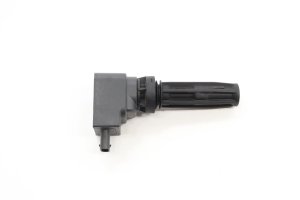
- Ignition Coil
(OEM #P2GZ-12029-A)— This is one of the most common failure points for a P0301 code on this engine, as identified by Ford TSBs and countless owner reports. [1, TSB #SSM 53971]
Trusted brands: Motorcraft
OEM price range: $40 - $90
Aftermarket price range: $30 - $70 - Iridium Spark Plug
(OEM #SP-594)— Spark plugs are a primary cause of misfires on this engine, as noted in TSB #SSM 53971. They are a common wear item and should be inspected or replaced early in the diagnostic process.
Trusted brands: Motorcraft, NGK
OEM price range: $15 - $25
Aftermarket price range: $10 - $20
Related Codes That Often Appear With This One
- P0300 — If the misfire becomes more widespread or intermittent across cylinders, a P0300 (Random/Multiple Cylinder Misfire) may appear alongside P0301.
- P0302, P0303, P0304 — These codes indicate misfires in other cylinders. Seeing them together with P0301 points to a systemic issue like bad fuel, a vacuum leak, or a problem affecting the entire ignition or fuel system. The provided TSBs often list these codes together. [TSB #SSM 53971, TSB #SSM 53869]
- P0351 — This code means 'Ignition Coil 'A' Primary/Secondary Circuit Malfunction.' It's more specific than P0301 and points directly to an electrical problem with the ignition coil circuit for cylinder 1, which could be the coil itself, the wiring, or the PCM driver. A user on a Mustang forum reported this code appearing after P0301 persisted.
Technical Service Bulletins (TSBs) & Recalls
- SSM 53971: Addresses misfire codes P0301-P0304 on 2025 models due to spark plugs or ignition coils.
- SSM 53869: Links misfire codes P0300-P0304 with a buck/jerk sensation on 2021 models.
- TSB 21-2262: Points to PCM configuration for fuel injectors as a cause for misfires on 2021 models, requiring a software update.
Platform-Specific Known Issues
- TSB #SSM 53971: Some 2025 Broncos with the 2.3L EcoBoost may exhibit misfire codes (P0301-P0304) due to spark plugs and/or ignition coils. The fix is to inspect and replace the faulty component.
- TSB #SSM 53869: Certain 2021 Broncos with the 2.3L engine may set misfire codes (P0300-P0304) accompanied by a buck/jerk sensation at highway speeds (35-55 mph). This points to a specific performance issue linked to the misfire.
- TSB #TSB 21-2262: On 2021 Bronco models with the 2.3L engine, misfire codes can be caused by the PCM's software configuration related to fuel injector operation, requiring a software update (reflash) by a dealer.
- Catastrophic Spark Plug Failure: A documented case on Bronco6G.com showed a spark plug ground electrode breaking off on a nearly new engine, leading to complete engine destruction, highlighting the importance of using quality plugs.
Mechanic-Grade Diagnostic Values
- Low-Pressure Fuel System — expected: 50-60 psi. Failure: Pressure significantly below this range indicates a failing in-tank fuel pump.
- High-Pressure Fuel System (Direct Injection) — expected: Up to 1600+ psi. Failure: Inability to reach high pressure under load can indicate a failing High-Pressure Fuel Pump (HPFP). This requires a scan tool capable of reading this PID.
- Ignition Coil Primary Circuit Resistance — expected: Approximately 0.7 to 1.5 ohms. Failure: A reading of OL (open loop/infinite resistance) or significantly outside the expected range indicates a faulty primary winding in the coil.
- Ignition Coil Secondary Circuit Resistance — expected: Approximately 5,000 to 15,000 ohms (5-15 kOhms). Failure: A reading of OL or far outside the typical range suggests a break or short in the secondary windings.
- Ignition Coil Connector Voltage (Key On, Engine Off) — expected: One pin should show battery voltage (approx. 12V).. Failure: No voltage indicates a problem with the power supply fuse or wiring to the coil, not the coil itself.
Hidden / Shadow Codes Worth Checking
- Mode 6, Test ID $A2-$A7: Mode 6 data tracks misfire counts per cylinder even before they are high enough to trigger a P030x code. Test ID $A2 corresponds to Cylinder 1. Viewing this data can show intermittent misfires that haven't yet set a CEL. (see via A professional-grade OBD-II scanner or software like FORScan that can access Mode 6 test results.)
Scan Tool Commands That Help
- Ford IDS/FDRS or compatible (Snap-on, Autel, etc.): Power Balance Test — This is the most effective tool for diagnosing a persistent misfire. The test graphically displays the power contribution of each cylinder in real-time by selectively disabling fuel injectors. A cylinder with a significant drop in performance compared to others is easily identified. This can confirm a P0301 is a real performance issue and helps differentiate between fuel and spark problems.
Wiring & Ground Locations
- Engine-to-Firewall Ground Cable — On the driver's side, there is a ground cable and wiring harness fastener attached to a stud on the firewall.. A poor ground connection at the firewall can cause a host of intermittent electrical issues for engine sensors and ignition components, potentially leading to misfire codes. Verifying this ground is tight and corrosion-free is a crucial step in diagnosing elusive electronic problems.
- Ignition Coil Connector — On top of the valve cover, connected to each ignition coil. It is a 3-wire connector.. The connector itself or its wiring can be a point of failure. The three wires are typically a power feed (12V), a ground, and a trigger signal from the PCM. Testing for voltage and signal at this connector is key to determining if the coil itself or the control circuit is at fault.
Real Owner Repair Stories
- Reddit user in r/Mustang (Ford Mustang with 2.3L EcoBoost (shared engine), 30k miles) — P0300, P0301, P0302, P0303, P0304 codes
❌ Tried (didn't work) Changing fuel injectors, Replacing spark plugs, Replacing coil packs, Walnut blasting intake valves for carbon buildup
✅ What actually fixed it A compression test revealed engine coolant was leaking into the block. The engine was replaced under warranty to resolve the issue. - Reddit user in r/FordExplorer (2019 Ford Explorer with 2.3L EcoBoost) — P0300 and P0301
❌ Tried (didn't work) Initial diagnosis was inconclusive.
✅ What actually fixed it A borescope inspection confirmed coolant was leaking into cylinder #1 due to a head gasket failure, requiring engine replacement. This occurred even without classic symptoms like white smoke or milky oil.
When the Usual Fixes Don't Work
- While ignition coils and spark plugs are the most common culprits for P0301, several owner accounts for the 2.3L EcoBoost engine in various platforms report that the ultimate fix was a complete engine replacement due to coolant intrusion into a cylinder. This was often discovered only after replacing all common ignition and fuel components without success. A compression test or borescope inspection was required to find the root mechanical failure.
OEM Part Supersession History
Unknown→P2GZ-12029-A— This is the current OEM part number for the ignition coil assembly fitting the 2.3L EcoBoost in the Bronco and other models. Part numbers are often superseded to reflect design improvements or manufacturing changes.
Heads up: According to parts diagrams, this part number is specified for various 2.3L EcoBoost engines, including Explorer models from mid-2024 onward, suggesting it is a recent or updated part.
Model Year Variations Within This Range
- 2021 (early production): Early 2021 Broncos (built before 11/17/2021) have the PCV fitting located on the bottom of the intake manifold. Later models (2021.5+) have the PCV fitting on the top. This is important to know if inspecting or servicing the PCV system while diagnosing a potential cause of oil consumption or misfires.
- 2021: TSB 21-2262 specifically calls out 2021 Bronco models for potential misfire DTCs (including P0301) that can be caused by the PCM software configuration related to fuel injector operation, requiring a reflash.
We Have This Part in Stock

The information in this article is provided for general reference and educational purposes only. Vehicle specifications, procedures, and part compatibility can vary by production date, trim level, and region. Always consult your vehicle's factory service manual and verify part numbers before purchasing or performing repairs. Safety-critical components such as airbags, seat belts, and braking systems should be installed by a qualified professional.
- Ford BRONCO:
- 🧭 Diagnostic Flowchart
- 🛍️ Shop This Part
- What's Unique About the 2021-2025 Ford BRONCO
- Symptoms You May Notice
- Most Likely Causes
- Rare But Worth Checking
- Diagnosis Steps
- Parts You'll Likely Need
- Related Codes That Often Appear With This One
- Technical Service Bulletins (TSBs) & Recalls
- Platform-Specific Known Issues
- Mechanic-Grade Diagnostic Values
- Hidden / Shadow Codes Worth Checking
- Scan Tool Commands That Help
- Wiring & Ground Locations
- Real Owner Repair Stories
- When the Usual Fixes Don't Work
- OEM Part Supersession History
- Model Year Variations Within This Range
- 🎟️ Get 5% Off