

P0301 on 2021-2025 Ford E-350: Cylinder 1 Misfire Causes and Fixes
P0301 indicates a misfire on cylinder 1. On the 7.3L V8 engine, this is commonly caused by a faulty spark plug wire or ignition coil. However, it can also be a symptom of a serious internal engine issue involving worn camshafts and valve tappets, as noted in Ford TSB 25-2572.
- P0301 is a misfire in cylinder 1, the front-most cylinder on the passenger side.
- The most common, easy-to-fix causes are a bad spark plug wire, ignition coil, or spark plug.
- A simple 'swap test' moving the coil and wire to another cylinder can quickly diagnose these parts.
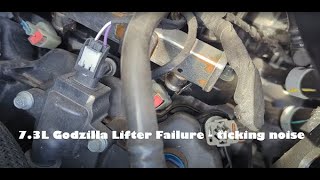
- **Crucially**, listen for a ticking or tapping noise. This could signal a known, serious issue with camshaft and lifter wear specific to the 7.3L V8 engine, which requires professional diagnosis and is a very expensive repair.
- Do not ignore a flashing Check Engine Light, as it can quickly lead to catalytic converter damage.
What's Unique About the 2021-2025 Ford E-350
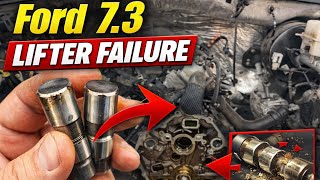
For the 2021-2025 Ford E-350 with the 7.3L "Godzilla" V8, a P0301 code must be taken seriously. While common ignition system faults are frequent culprits, this engine platform is known to have issues with premature wear of internal components. A Technical Service Bulletin (TSB 25-2572) directly links misfire codes on these engines to significant wear on the camshaft and valve tappets (lifters). This failure often manifests as a delamination or spalling of the hardened surfaces on the cam lobes and lifter rollers, leading to reduced valve lift and eventually, misfires.
Diagnostic Flowchart
Tap your situation to follow the diagnostic path that matches what you're seeing on this vehicle.
Symptoms You May Notice
- Rough engine idle
- Hesitation or stumbling during acceleration
- Noticeable loss of engine power
- Flashing or solid Check Engine Light
- Engine shaking or vibrating
- Smell of gasoline from the exhaust
- Ticking or tapping noise from the upper engine
- Replacing only the spark plug when the spark plug wire is the actual cause of the misfire.
- Assuming a simple ignition problem when a ticking noise is present, which could indicate the more serious camshaft/lifter issue.
- Replacing ignition components repeatedly when the misfire code does not move to another cylinder, indicating the problem is likely mechanical (lifter/cam) or fuel-related.
Most Likely Causes
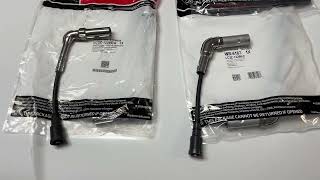
- Faulty Spark Plug Wire 🔴 High Probability → Shop Spark Plug The original-spec spark plug wires are known to fail prematurely due to high heat from the exhaust manifolds, especially under heavy load like towing. Ford acknowledged this with TSB 20-2370 for F-53 chassis and later released a redesigned, more heat-resistant wire set (part LC3Z-12286-C). 🎬 Watch: See the redesigned spark plug wires in detail.
How to confirm: Inspect the wire for any visible damage, cracks, or burns. Swap the cylinder 1 wire with another cylinder's wire (e.g., cylinder 3) and see if the misfire code changes to P0303. Cylinder 1 is the front-most cylinder on the passenger side.
Typical fix: Replace all 8 spark plug wires with the upgraded OEM set (LC3Z-12286-C) or a quality aftermarket set with ceramic boots.
Est. part cost: $80-$160 - Faulty Ignition Coil 🟡 Medium Probability → Shop Ignition Coil Like the wires, ignition coils are susceptible to heat-related failure. The coil-on-plug design is generally reliable, but individual coils can fail, causing a persistent misfire on one cylinder.
How to confirm: Swap the ignition coil from cylinder 1 with a coil from another cylinder. If the trouble code moves to the new cylinder (e.g., P0303), the coil is faulty. The OEM part number for a single coil is LC3Z-12029-A.
Typical fix: Replace the single failed ignition coil. Many technicians recommend using OEM Motorcraft parts for longevity.
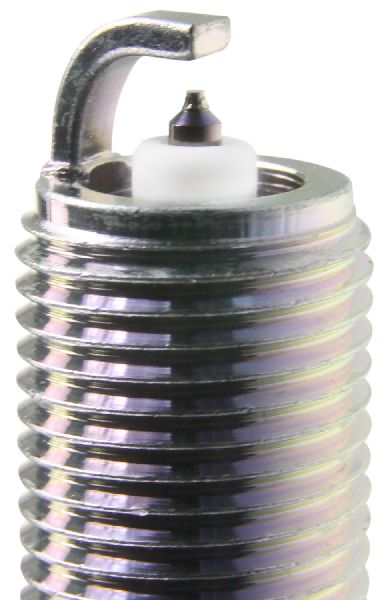
Est. part cost: $40-$90 - Worn or Fouled Spark Plug 🟡 Medium Probability → Shop Spark Plug
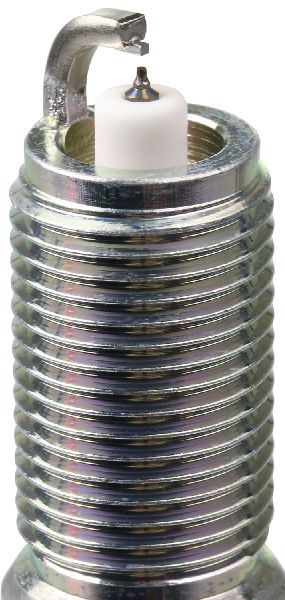
How to confirm: Remove the spark plug from cylinder 1 and inspect it. Look for signs of wear on the electrode, oil fouling, or carbon buildup. A wet, fuel-soaked plug can indicate an ignition or injection issue.
Typical fix: Replace the spark plug. It is best practice to replace all spark plugs at the same time.
Est. part cost: $5-$20 per plug - Worn Camshaft and/or Valve Tappets (Lifters) ⚪ Low Probability → Shop Engine Camshaft A known, serious issue with the 7.3L Godzilla engine family involves premature failure of the camshaft and lifters. The failure is a physical delamination of the hardened surfaces, which can be exacerbated by low oil pressure at idle from the variable displacement oil pump. TSB 25-2572 directly addresses this. 🎬 See what a wiped out Godzilla camshaft looks like.
How to confirm: This requires professional diagnosis. The primary symptom is a rhythmic ticking/tapping noise from the upper engine that increases with RPM. A compression test and physical inspection of the valvetrain by removing the valve covers are necessary to confirm. A misfire that persists after replacing all ignition components on the affected cylinder strongly points to this mechanical issue.
Typical fix: This is a major engine repair that involves replacing the camshaft, all 16 valve tappets (lifters), and potentially other related components like pushrods. In many warranty cases, Ford has opted to replace the entire engine.
Est. part cost: $800-$2500+ - Faulty Fuel Injector ⚪ Low Probability → Shop Fuel Injector
How to confirm: Listen to the injector with a mechanic's stethoscope; it should have a consistent clicking sound. You can also check the injector's resistance with a multimeter or have a professional perform a fuel injector balance test.
Typical fix: Replace the faulty fuel injector.
Est. part cost: $50-$120
Rare But Worth Checking
- Vacuum Leak: A vacuum leak near the intake manifold runner for cylinder 1 can lean out the air/fuel mixture and cause a misfire. This would typically be accompanied by a lean code (P0171 or P0174).
- Low Compression: Beyond the camshaft issue, low compression could be caused by a burnt valve or damaged piston rings, though this is less common on a newer engine. There are also some reports of cracked cylinder heads on low-mileage 7.3L engines which can cause misfires.
- Cracked Oil Pump Drive Gear: Ford issued SSM 51330 for a ticking noise from the lower front of the engine, caused by a cracked oil pump drive gear. While this may not directly cause a single-cylinder misfire, it's a known valvetrain-related noise on this engine that should be differentiated from a lifter tick.
Diagnosis Steps
- Read the code with an OBD-II scanner and confirm P0301 is present. Note any other codes like P0300 or P0316.
- Identify Cylinder 1: Locate cylinder 1. On the 7.3L V8, cylinders 1-3-5-7 are on the passenger side (front to back) and 2-4-6-8 are on the driver's side. Cylinder 1 is at the front of the passenger side.
- Listen for Noises: Listen for any abnormal engine noises. A rhythmic ticking from the top of the engine is a red flag for the camshaft/lifter issue. A tick from the lower front could be an oil pump gear.
- Isolate the Ignition System: To rule out a simple ignition problem, swap components with a known good cylinder (e.g., cylinder 3 on the same bank).
- a. Swap the ignition coil from cylinder 1 to cylinder 3. Clear codes and run the engine. If the code changes to P0303, the coil is bad.
- b. If the code remains P0301, swap the spark plug wire. If the code then moves to P0303, the wire is bad.
- Inspect the Spark Plug: If the misfire remains on cylinder 1, remove and inspect its spark plug for wear, damage, or fouling. Compare it to the plug from cylinder 3. If it looks bad, replace it.
- Check Fuel and Mechanicals: If all ignition components are confirmed good but P0301 persists, the issue is likely with the fuel injector or a mechanical problem.
- Professional Diagnosis: At this point, a professional should take over. They will check the fuel injector and then perform a compression test. Low compression warrants further investigation into the valvetrain (camshaft, lifters, valves) as per TSB 25-2572.
Parts You'll Likely Need
- Spark Plug Wire Set
(OEM #LC3Z-12286-C)— The original wires are prone to heat failure. This is the upgraded, more durable OEM replacement designed for heavy-duty use and is a highly recommended fix/upgrade.
Trusted brands: Motorcraft
OEM price range: $100-$160
Aftermarket price range: $60-$120 - Ignition Coil
(OEM #LC3Z-12029-A)— A common failure point for ignition systems, causing a lack of spark to the cylinder.
Trusted brands: Motorcraft, MSD, Denso
OEM price range: $60-$90
Aftermarket price range: $40-$70 - Spark Plug — A standard maintenance item that can wear out or become fouled, causing a weak or inconsistent spark.
Trusted brands: Motorcraft, NGK, Autolite
OEM price range: $10-$20
Aftermarket price range: $5-$15 - Camshaft and Valve Tappet Kit
(OEM #LC3Z-6500-C (Lifter))— In the event of the known mechanical failure, this kit is required for repair. Ford has superseded the original lifter part number multiple times.
Trusted brands: Motorcraft
OEM price range: $800-$1500
Aftermarket price range: $600-$1200
Related Codes That Often Appear With This One
- P0300 — This is a 'Random Misfire' code. It often appears alongside a specific cylinder misfire code like P0301 if the misfire is intermittent or beginning to affect other cylinders.
- P0316 — This code indicates a 'Misfire Detected on Startup (First 1000 Revolutions)'. It frequently accompanies specific cylinder misfire codes, pointing to a problem present from a cold start.
- P0302, P0303, P0304, etc. — If multiple cylinder misfire codes are present, it could point to a systemic issue like a failing camshaft affecting multiple lobes, a major vacuum leak, or fuel delivery problems.
Technical Service Bulletins (TSBs) & Recalls
- TSB 25-2572: Notes that misfire DTCs P0301-P0308 may be caused by excessive wear on the camshaft and/or valve tappets.
Platform-Specific Known Issues
- Persistent Misfire After Ignition Swap: In a thread on Ford-Trucks.com, a user with a P0303 code on a high-mileage E-Series ambulance performed a complete tune-up (plugs, wires, coils) and even swapped components between cylinders, but the P0303 code immediately returned. This is a classic sign that the issue is not in the ignition system and is likely a mechanical fault like the known cam/lifter issue.
- Misdiagnosis at the Dealership: An owner of a 2020 F-350 with a P0304 misfire took their truck to a dealer. The dealer replaced the coil, plug, and wire, but the misfire returned on the drive home. This indicates the initial parts were likely not the root cause, and the underlying mechanical issue was missed.
Mechanic-Grade Diagnostic Values
- Ignition Coil Primary Resistance — expected: ~0.68 Ohms. Failure: Significantly higher or infinite resistance (open circuit).
- Ignition Coil Secondary Resistance — expected: ~4.8K Ohms. Failure: Significantly higher or infinite resistance.
- Fuel Injector Resistance — expected: ~12.5 Ohms. Failure: A reading outside of a narrow range around the specification, or infinite resistance.
- Fuel Pressure (Key On, Engine Off) — expected: 60 PSI. Failure: Low fuel pressure can indicate a weak fuel pump or a leak, potentially causing a lean misfire.
- Engine Oil Pressure at Hot Idle — expected: As low as 6-8 PSI (by design). Failure: While very low, this is considered normal by Ford. However, this low pressure is a suspected contributor to the lifter/camshaft wear issue, especially in vehicles that idle frequently. Some owners report PCM updates from Ford that may increase idle oil pressure.
Hidden / Shadow Codes Worth Checking
- Mode $06, TID $53: This is not a 'code' but a data stream within the OBD-II system. Test ID (TID) $53 tracks the misfire counts for each individual cylinder. You can view the count for cylinder 1 (and all others) before it reaches the threshold to set a P0301 code. This is invaluable for diagnosing intermittent misfires. (see via A professional scan tool or advanced DIY software like FORScan can access Mode $06 data.)
Scan Tool Commands That Help
- Ford IDS/FDRS (Dealer Tool) or FORScan (Advanced DIY): Power Balance Test — This is a critical diagnostic step. The test allows the technician to disable fuel to each cylinder one by one and displays the corresponding drop in RPM. A cylinder with a smaller RPM drop than the others is not contributing as much power, confirming the location of the misfire. This helps verify the misfire is on cylinder 1 and hasn't been misreported by the PCM.
Wiring & Ground Locations
- G104 — On the left side of the engine compartment (for non-stripped chassis models).. This is a primary engine compartment ground. A poor connection here can cause erratic behavior from various sensors and actuators, including the ignition system and PCM, potentially leading to false misfire codes.
- G105 — On the left front of the engine compartment.. Another critical engine ground point. Verifying this ground is clean and tight is a basic but essential step in diagnosing any electrical issue, including misfires.
- PCM Engine Connector (126-way) — At the Powertrain Control Module (PCM).. This connector contains the wiring for the ignition coils and fuel injectors. A technician would use a pinout diagram for this connector to test for voltage, ground, and signal at the PCM, ruling out a wiring break between the PCM and the component.
Real Owner Repair Stories
- Reddit user on r/superduty (2021 F-250 with 7.3L engine, ~58,000 miles) — A ticking sound in the engine that got progressively worse over 2-3 months.
❌ Tried (didn't work) Not specified, owner took it to the dealer.
✅ What actually fixed it Dealer diagnosed the known camshaft/lifter issue. The entire engine was replaced under the 60,000-mile powertrain warranty. - Bearded Ford Tech (YouTube Channel) (Ford Super Duty with 7.3L engine (year not specified)) — Ticking/tapping noise, misfire code on cylinder #1.
❌ Tried (didn't work) Not applicable, this was a direct diagnosis.
✅ What actually fixed it The technician identified a delaminated and pitted valve lifter on cylinder #1, which had also damaged the camshaft. This is a direct confirmation of the failure pattern described in TSB 25-2572.
When the Usual Fixes Don't Work
- While the most common fixes for P0301 are ignition-related (plugs, wires, coils), the significant number of documented camshaft and lifter failures on the 7.3L Godzilla engine means a technician should not stop diagnosis after swapping ignition parts. If a ticking noise is present, or if swapping ignition components to another cylinder does not move the misfire, the valvetrain must be considered a primary suspect. Multiple owners have had entire engines replaced under warranty for this issue, even at relatively low mileage (e.g., ~58,000 miles), underscoring the severity of the potential mechanical fault.
OEM Part Supersession History
LC3Z-6500-A→LC3Z-6500-B, then LC3Z-6500-C— These are the part numbers for the valve tappets (lifters). The multiple revisions suggest Ford has made changes to the part, likely to address the premature wear and delamination issue that causes valvetrain noise and misfires.
Heads up: When replacing lifters due to failure, it is critical to also inspect the camshaft and replace it if there is any visible damage. Using new lifters on a damaged cam will lead to immediate failure of the new parts.
Model Year Variations Within This Range
- 2021-2025: The Ford E-350 with the 7.3L V8 was offered with two different power ratings: a 'premium' version and an 'economy' version. The economy version has lower horsepower and torque (300 hp / 425 lb-ft) compared to the premium version (325 hp / 450 lb-ft). This is achieved through different PCM calibrations. While it doesn't change the P0301 diagnosis, it's an important distinction for the platform.
- 2023+: In Super Duty trucks, the 7.3L received a slight torque increase from 475 to 485 lb-ft starting in 2023. While this specific change may not apply directly to the E-350's tuning, it shows that Ford continues to make minor revisions to the platform.
Helpful Videos
We Have This Part in Stock

The information in this article is provided for general reference and educational purposes only. Vehicle specifications, procedures, and part compatibility can vary by production date, trim level, and region. Always consult your vehicle's factory service manual and verify part numbers before purchasing or performing repairs. Safety-critical components such as airbags, seat belts, and braking systems should be installed by a qualified professional.
- Ford E-350:
- 🧭 Diagnostic Flowchart
- 🎬 Helpful Videos
- 🛍️ Shop This Part
- What's Unique About the 2021-2025 Ford E-350
- Symptoms You May Notice
- Most Likely Causes
- Rare But Worth Checking
- Diagnosis Steps
- Parts You'll Likely Need
- Related Codes That Often Appear With This One
- Technical Service Bulletins (TSBs) & Recalls
- Platform-Specific Known Issues
- Mechanic-Grade Diagnostic Values
- Hidden / Shadow Codes Worth Checking
- Scan Tool Commands That Help
- Wiring & Ground Locations
- Real Owner Repair Stories
- When the Usual Fixes Don't Work
- OEM Part Supersession History
- Model Year Variations Within This Range
- 🎟️ Get 5% Off