

P0301 on 2015-2022 Ford Escape: Cylinder 1 Misfire Causes and Fixes
P0301 indicates a misfire in cylinder 1. On 2015-2019 Ford Escapes with 1.5L or 2.0L EcoBoost engines, this is very often caused by coolant leaking into the cylinder due to an engine design flaw, requiring a new engine block. For other models, or if coolant intrusion is ruled out, the cause is likely a bad ignition coil or spark plug.
- P0301 means cylinder 1 is misfiring.
- On 2017-2019 Escapes with 1.5L or 2.0L EcoBoost engines, immediately suspect coolant intrusion. Check your coolant level and look for white exhaust smoke before buying any parts.
- A common misstep is replacing only the spark plug or coil, which will not fix a misfire caused by a coolant leak.
- Proper diagnosis for these specific engines requires a cooling system pressure test and a borescope inspection.
- If coolant intrusion is confirmed, the only reliable fix is an expensive engine short/long block replacement as outlined in Ford's TSBs.
What's Unique About the 2015-2022 Ford ESCAPE

For the third-generation Ford Escape (2017-2019) with 1.5L and 2.0L EcoBoost engines, the P0301 code is notoriously linked to a serious, well-documented engine design flaw. Unlike a typical misfire from a bad spark plug, this issue involves coolant leaking directly into the cylinders. The root cause is the 'open-deck' design of the engine block, where the coolant passages between the cylinders are too wide, leaving insufficient surface area for the head gasket to seal under high boost pressure. This can lead to cracks forming in the block itself, allowing coolant intrusion. Ford has issued multiple Technical Service Bulletins (TSBs) like 19-2346 and 22-2260, and the official fix is a complete new long block assembly with a revised block design.
Diagnostic Flowchart

Tap your situation to follow the diagnostic path that matches what you're seeing on this vehicle.
Generation note: The 2015-2022 range covers the end of the 3rd generation (2013-2019) and the start of the 4th generation (2020-present). The widespread coolant intrusion issue is primarily documented for the 2017-2019 3rd-gen models with 1.5L and 2.0L EcoBoost engines. While a P0301 can occur on any generation, this specific severe cause is less common on 4th-gen models (2020+) which use updated engine block designs to correct the flaw.
Symptoms You May Notice

- Flashing or solid Check Engine Light
- Rough engine idle or shaking, especially on a cold start, which may smooth out as the engine warms up
- Noticeable loss of power and acceleration
- Engine hesitation or stumbling
- Poor fuel economy
- White smoke from the exhaust, especially on startup.
- A sweet smell of burning coolant from the exhaust.
- Unexplained loss of engine coolant in the reservoir.
- Replacing only the spark plug and/or ignition coil without checking for coolant loss. As seen in owner complaints, this often results in the check engine light returning because the root cause (coolant intrusion) was not addressed.
Most Likely Causes

- Engine Coolant Intrusion 🔴 High Probability A design flaw in the open-deck 1.5L and 2.0L EcoBoost engines used from 2017-2019 can cause cracks to form in the cylinder walls, allowing coolant to leak into the combustion chamber. This is documented in Ford TSBs, with 19-2346 covering the 2.0L 🎬 See this walkthrough of the 2.0L EcoBoost coolant intrusion issue. and 22-2260 (superseding 20-2100) covering the 1.5L. 🎬 Watch: Diagnosing 1.5L EcoBoost misfires and coolant loss TSBs.
How to confirm: Check for steady coolant loss with no external leaks. Perform a cooling system pressure test; if it fails, use a borescope to visually inspect inside cylinder 1. Look for signs of moisture or a 'steam-cleaned' piston head, which appears unusually clean compared to other cylinders. White smoke and a sweet smell from the exhaust are strong indicators.
Typical fix: Replacement of the engine long block assembly with a redesigned part is the only permanent fix recommended by Ford.
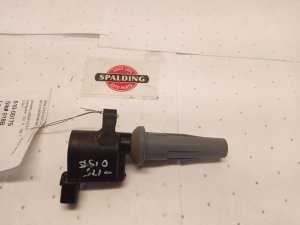
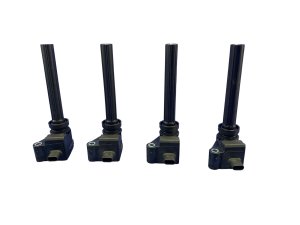
Est. part cost: $4000-$7000+ - Faulty Ignition Coil 🟡 Medium Probability → Shop Ignition Coil Coil-on-plug systems are common failure points on many modern engines. Heat and vibration cause the internal windings to fail over time.
How to confirm: Swap the ignition coil from cylinder 1 with another cylinder (e.g., cylinder 2). Clear the codes and drive. If the code changes to P0302, the ignition coil is faulty.
Typical fix: Replace the failed ignition coil. It is often recommended to replace all coils at the same time.
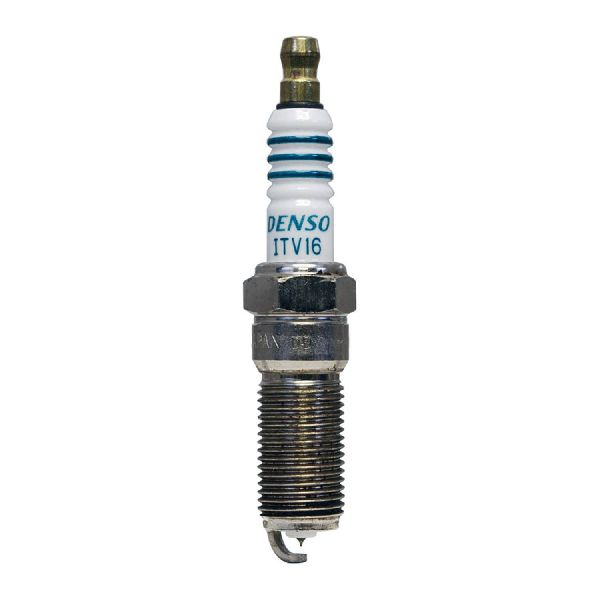
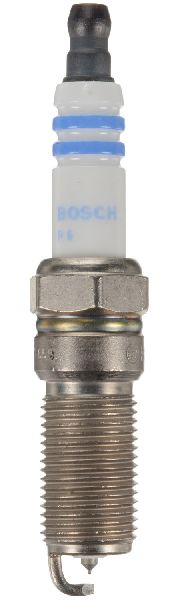
Est. part cost: $40-$80 per coil - Worn or Fouled Spark Plug 🟡 Medium Probability → Shop Spark Plug
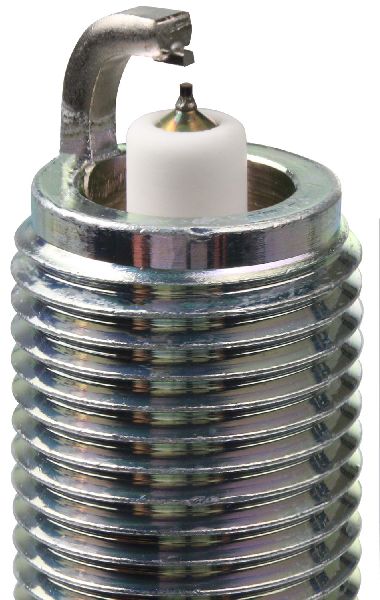
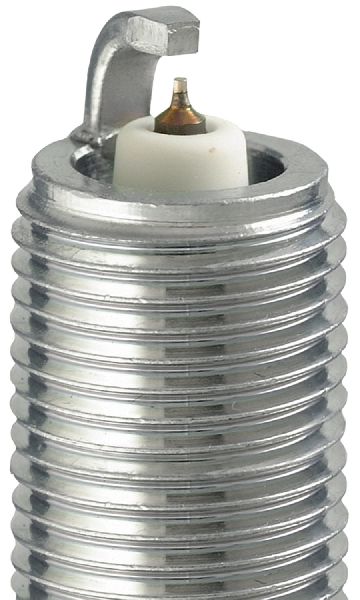
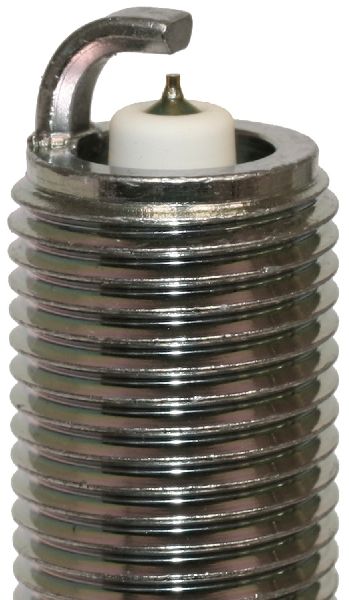
How to confirm: Remove the spark plug from cylinder 1. Inspect for wear on the electrode, cracks in the porcelain, or fouling. Coolant fouling will appear as a white or greenish crystalline deposit, and may also 'steam clean' the plug, making it look cleaner than others.
Typical fix: Replace the spark plug. If one is worn, it is best practice to replace all of them as a set.
Est. part cost: $10-$25 per plug - Clogged or Faulty Fuel Injector ⚪ Low Probability → Shop Fuel Injector
How to confirm: Listen for a consistent clicking sound from the injector. You can also swap the injector with another cylinder to see if the misfire code follows, though this is more labor-intensive than a coil swap.
Typical fix: Replace the faulty fuel injector.
Est. part cost: $50-$150
Rare But Worth Checking
- Low Engine Compression: While rare on its own, low compression can be a symptom of the coolant intrusion issue (damaged piston/rings) or other mechanical problems like a burnt valve.
- Vacuum Leak: A leak in the intake manifold gasket near cylinder 1 could lean out the air/fuel mixture enough to cause a misfire.
- PCM/Wiring Issue: In rare cases, a faulty driver in the Powertrain Control Module (PCM) or a damaged wire to the ignition coil or fuel injector for cylinder 1 can cause a persistent misfire.
Diagnosis Steps
- Scan the PCM for any other stored trouble codes, paying close attention to P0316.
- Check the engine coolant level in the reservoir. If it is low, top it off and monitor for loss over time. Note that a slow leak may not be immediately obvious.
- On a cold start, check the exhaust for white, sweet-smelling smoke, a key sign of burning coolant.
- If coolant loss is suspected, perform a cooling system pressure test. The system should hold pressure (typically 15-18 PSI) for at least 30-60 minutes. A pressure drop indicates a leak.
- If the pressure test fails, remove the spark plugs. Inspect the plug from cylinder 1 for a 'steam-cleaned' look or greenish-white deposits.
- Use a borescope to inspect the inside of each cylinder, especially cylinder 1. Look for any signs of moisture, green/yellow coolant, or an unusually clean piston top compared to the others.
- If no signs of coolant intrusion are present, proceed with standard misfire diagnosis. Swap the ignition coil from cylinder 1 to cylinder 2. Clear the codes and see if the misfire moves to P0302. If it does, the coil is bad.
- If the misfire does not move, inspect the spark plug from cylinder 1 for damage, wear, or carbon/oil fouling.
- If the spark plug and coil are good, investigate the fuel injector for cylinder 1.
- If all else fails, perform an engine compression test and a cylinder leak-down test to check for mechanical issues like a burnt valve or bad rings.
Parts You'll Likely Need
- Engine Long Block Assembly
(OEM #G2GZ-6006-A (2.0L) or DS7Z-6006-F (1.5L) - Verify by VIN)— This is the official Ford-recommended fix for the coolant intrusion issue on affected 1.5L and 2.0L EcoBoost engines, as it contains the updated block design.
Trusted brands: Motorcraft
OEM price range: $4000-$6000
Aftermarket price range: N/A - Ignition Coil
(OEM #CM5Z-12029-K)— A common failure item for misfires when coolant intrusion is not the cause.
Trusted brands: Motorcraft, NGK, Bosch
OEM price range: $60-$90
Aftermarket price range: $30-$60 - Spark Plug
(OEM #SP-578 (2.0L) or SP-580 (1.5L))— A routine maintenance item and a frequent cause of simple misfires. Coolant contamination will also ruin a spark plug, requiring replacement even if the engine is replaced.
Trusted brands: Motorcraft, NGK
OEM price range: $15-$25
Aftermarket price range: $8-$15
Related Codes That Often Appear With This One
- P0316 — Misfire Detected on Startup (First 1000 Revolutions). This code is frequently seen with coolant intrusion, as the coolant that has pooled in the cylinder overnight causes an immediate misfire on a cold start.
- P0300 — Random/Multiple Cylinder Misfire. As the coolant intrusion problem worsens or affects the area between cylinders, it can cause misfires on adjacent cylinders, leading to a random misfire code. 🎬 Watch a real-world diagnosis of P0301 and P0302 water intrusion.
- P0302, P0303, P0304 — Misfire on other specific cylinders. The engine block design flaw often occurs between cylinders, so a misfire on one cylinder may soon be joined by another.
Technical Service Bulletins (TSBs) & Recalls

- TSB 19-2346: For 2.0L EcoBoost engines, this bulletin confirms that a rough run condition with misfire codes may be due to coolant intrusion and that the fix is to replace the long block engine assembly. It applies
Platform-Specific Known Issues
- A significant number of 2017-2019 Ford Escapes with 1.5L and 2.0L EcoBoost engines are affected by a known engine block defect that allows coolant to leak into the cylinders. This is documented in Ford TSBs, most notably TSB 19-2346 for the 2.0L and TSB 22-2260 for the 1.5L. The issue stems from an 'open-deck' block design that provides inadequate head gasket sealing surface between cylinders. The official and only permanent repair is a complete engine long block replacement with a revised part. Owner forums are filled with reports of this failure, often occurring outside of the standard warranty period and leading to repair quotes ranging from $7,000 to over $9,000.
Mechanic-Grade Diagnostic Values
- Fuel Pressure (KOEO - Key On, Engine Off) — expected: 379 kPa (55 psi). Failure: Significantly lower pressure may indicate a weak fuel pump or leak.
- Engine Compression — expected: Above 125 PSI, with no more than 10% variation between any two cylinders.. Failure: A reading on cylinder 1 that is significantly lower than others indicates a mechanical issue (rings, valves, head gasket).
Hidden / Shadow Codes Worth Checking
- Mode 6 / Mode $06: This is not a code, but a diagnostic mode on OBD-II scanners that provides access to non-continuous monitor test results. For misfires, it shows raw misfire counts for each individual cylinder, often before the count is high enough to trigger a P0301 code and the check engine light. This is extremely useful for diagnosing intermittent misfires. (see via A professional scan tool or a high-quality consumer OBD-II scanner with Mode 6 capability is required.)
Scan Tool Commands That Help
- Ford IDS (or equivalent professional scanner): Power Balance Test / Cylinder Contribution Test — This function graphically displays the rotational speed contribution of each cylinder in real-time. It is the fastest way to confirm a live misfire and verify that the P0301 code corresponds to a real performance drop in cylinder 1, as opposed to a sensor error. It's also used to verify a repair has been successful.
Wiring & Ground Locations
- Powertrain Control Module (PCM) — Located on the left side of the engine compartment on 2017 models. The harness connects to the PCM via connectors, including C175B.. In rare cases of a persistent P0301 where the coil, plug, and injector are confirmed good, the wiring between the PCM and the component for cylinder 1 could be damaged. Inspecting the harness leaving the PCM connectors is a valid, though advanced, diagnostic step.
- Engine Ground Point — An unpainted metal surface on the engine block or chassis.. While all cylinders share common grounds, a poor or corroded ground can cause a host of electrical issues, including weak spark that can manifest as a misfire. When diagnosing an electrical cause, verifying the main engine-to-chassis ground strap is clean and tight is a fundamental step.
Real Owner Repair Stories
- GoTech Automotive on YouTube (2011 Ford Escape 2.5L (Note: Older model, but diagnostic principle is highly relevant)) — P0301 misfire on cylinder 1, rough running. Vehicle had already had new parts installed without fixing the issue.
❌ Tried (didn't work) New parts had been installed prior to the video (plugs, coils, etc.), Swapping coils and injectors did not resolve the issue on cylinder 1.
✅ What actually fixed it A cylinder leak-down test revealed significant leakage. Air was heard escaping from the tailpipe, confirming the root cause was a burnt/leaking exhaust valve on cylinder 1, requiring cylinder head service.
OEM Part Supersession History
F2GZ-6006-B→G2GZ-6006-A, then K2GZ-6006-A, then K2GZ-6006-E— Represents the evolution of the 2.0L EcoBoost long block engine assembly through the third generation Escape. Later part numbers incorporate design revisions to address known issues.
Heads up: F2GZ-6006-B was used on models from mid-2015 onward. It is critical to verify the correct part number for the specific vehicle's VIN and build date, as multiple revisions exist.
Model Year Variations Within This Range
- 2017-2019 vs 2020-2022: The 1.5L EcoBoost engine in 2017-2019 Escapes is a 4-cylinder design known for the coolant intrusion flaw. For the 2020 model year, this was replaced with a completely different 1.5L EcoBoost 3-cylinder 'Dragon' engine. This 3-cylinder engine does not share the same open-deck block design and is not known to have the same coolant intrusion problem, though it has had separate recalls for other issues like fuel injectors. This is a critical distinction when diagnosing P0301 on a 1.5L model.
Helpful Videos
Used OEM Parts in Stock
New Aftermarket Parts Available

The information in this article is provided for general reference and educational purposes only. Vehicle specifications, procedures, and part compatibility can vary by production date, trim level, and region. Always consult your vehicle's factory service manual and verify part numbers before purchasing or performing repairs. Safety-critical components such as airbags, seat belts, and braking systems should be installed by a qualified professional.
- Ford ESCAPE:
- 🧭 Diagnostic Flowchart
- 🎬 Helpful Videos
- 🛍️ Shop This Part
- What's Unique About the 2015-2022 Ford ESCAPE
- Symptoms You May Notice
- Most Likely Causes
- Rare But Worth Checking
- Diagnosis Steps
- Parts You'll Likely Need
- Related Codes That Often Appear With This One
- Technical Service Bulletins (TSBs) & Recalls
- Platform-Specific Known Issues
- Mechanic-Grade Diagnostic Values
- Hidden / Shadow Codes Worth Checking
- Scan Tool Commands That Help
- Wiring & Ground Locations
- Real Owner Repair Stories
- OEM Part Supersession History
- Model Year Variations Within This Range
- 🎟️ Get 5% Off