

P0301 on 2011-2019 Ford Explorer 3.5L V6: Cylinder 1 Misfire Causes and Fixes
P0301 means a misfire on cylinder 1. On the 3.5L V6 Explorer, this is almost always a bad ignition coil or spark plug. The main challenge is that cylinder 1 is on the rear bank against the firewall, requiring removal of the upper intake manifold for access. Expect to pay $400-$700 at a shop due to the extra labor.
- P0301 points to a misfire in cylinder 1, which is on the hard-to-reach rear bank against the firewall.
- The most likely cause is a bad ignition coil and/or a worn spark plug.
- Repair requires removing the upper intake manifold, making it a labor-intensive job.
- It is critical to replace all three rear spark plugs, ignition coils, and the intake gaskets at the same time to avoid repeat labor.
- If the check engine light is flashing, stop driving immediately to prevent catalytic converter damage.
What's Unique About the 2011-2019 Ford Explorer
The key issue for this code on the 2011-2019 Explorer with the 3.5L V6 is the physical location of cylinder 1. It is part of Bank 1 (cylinders 1-2-3), which is positioned at the rear of the engine bay, against the firewall. This makes access extremely difficult, as the upper intake manifold must be removed to reach the ignition coil and spark plug. This turns a simple ignition component replacement into a more complex and labor-intensive job.
Symptoms You May Notice
- Rough or shaking idle
- Engine stumbling or hesitating during acceleration
- Noticeable loss of power
- Solid Check Engine Light
- Flashing Check Engine Light (indicates a severe misfire)
- Smell of unburned gasoline from the exhaust
- Replacing only the spark plug without replacing the ignition coil, or vice-versa. Given the significant labor to access the rear bank, it is strongly advised to replace both components simultaneously for all three rear cylinders.
Most Likely Causes
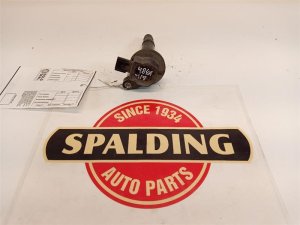
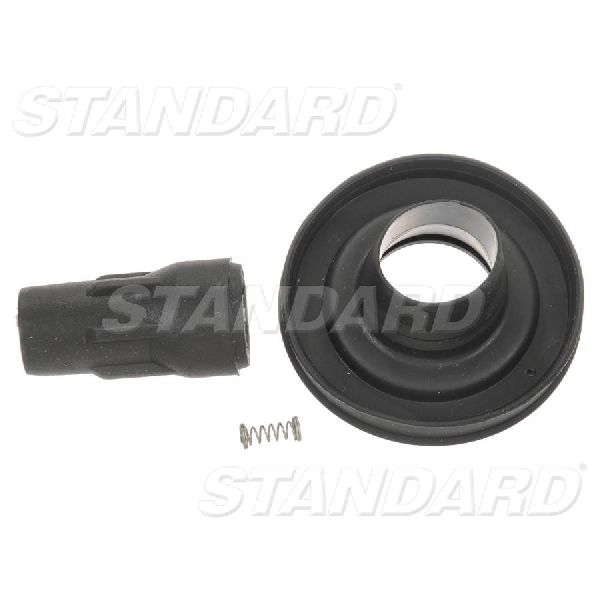
- Failed Ignition Coil 🔴 High Probability → Shop Ignition Coil The ignition coils, particularly on the rear bank, are subjected to significant heat which can lead to premature failure. The original equipment coils have been through several part number revisions, suggesting improvements have been made over the years.
How to confirm: The standard method is to swap the coil with one from another cylinder and see if the misfire code follows (e.g., P0301 becomes P0304). However, due to cylinder 1's location, this is impractical without first removing the intake manifold. The most common approach is to replace the coil once the intake manifold is removed.
Typical fix: Replace the ignition coil for cylinder 1. It is highly recommended to replace all three rear coils (cylinders 1, 2, 3) and their spark plugs at the same time to avoid repeating the labor-intensive intake manifold removal.
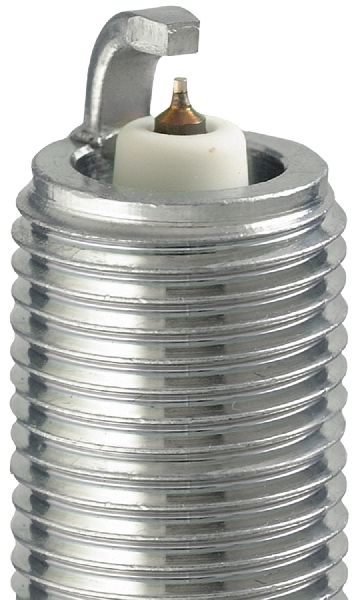
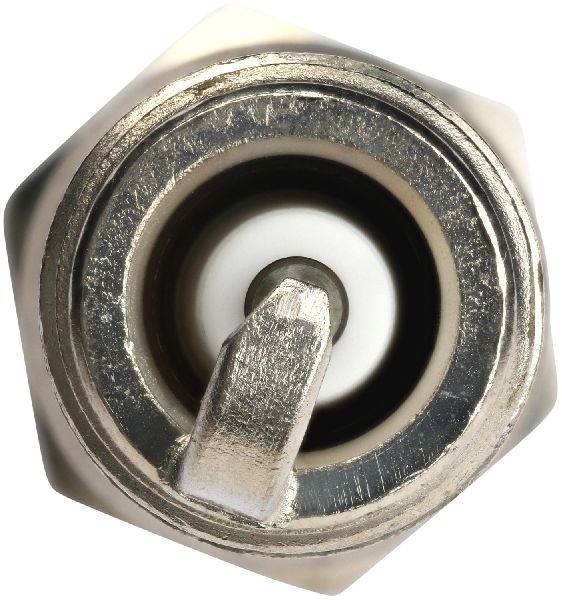
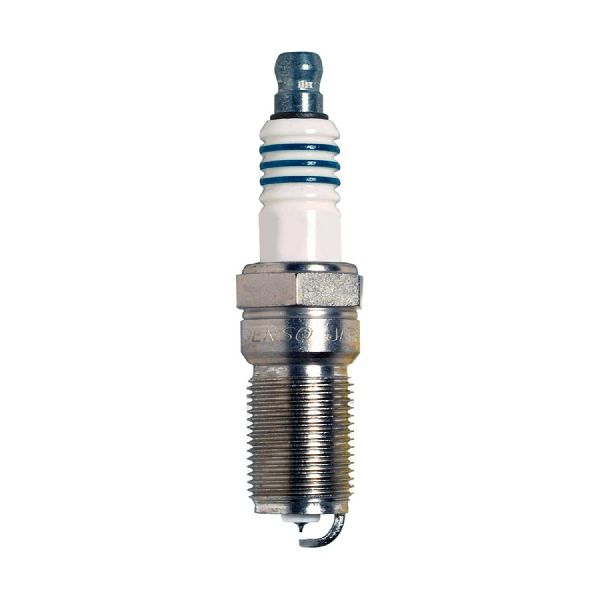
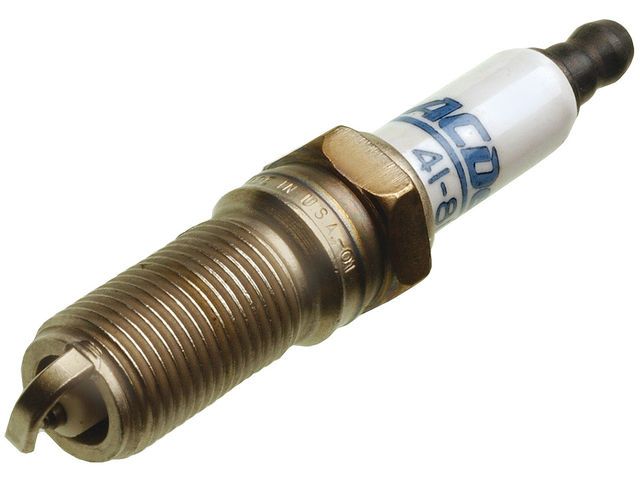
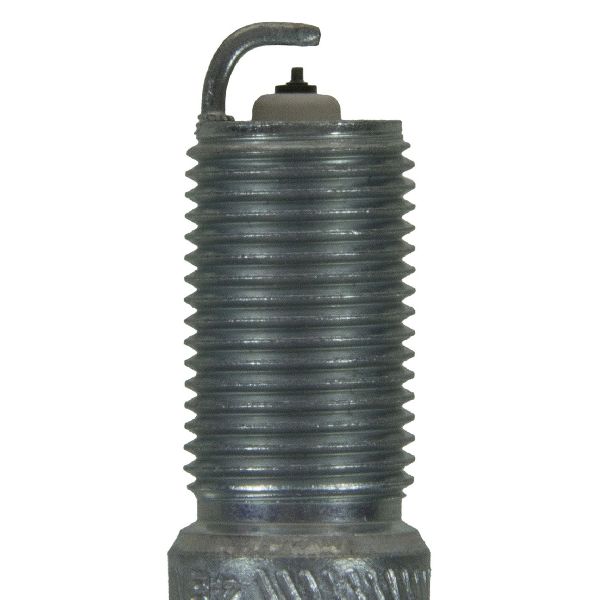
Est. part cost: $30-$70 per coil - Worn or Fouled Spark Plug 🔴 High Probability → Shop Spark Plug Spark plugs are a regular maintenance item with a service interval of around 60,000 to 100,000 miles. Worn electrodes or carbon fouling can prevent a strong spark, causing a misfire. Hairline cracks in the porcelain insulator are also a common failure point.
How to confirm: Visually inspect the spark plug after removal. Look for a worn or damaged electrode, heavy carbon deposits, oil fouling, or fine cracks in the white porcelain insulator.
Typical fix: Replace the spark plug for cylinder 1. As with the ignition coil, it is best practice to replace all six spark plugs, or at least the three on the rear bank, at the same time.
Est. part cost: $8-$20 per plug - Faulty Fuel Injector 🟡 Medium Probability → Shop Fuel Injector
How to confirm: Listen for a clicking sound from the injector with a mechanic's stethoscope. A more definitive test is to check the injector's resistance with a multimeter (should be between 11-18 ohms). If the coil and plug are confirmed good but the misfire remains on cylinder 1, the injector is the next likely suspect. The presence of code P0201 almost guarantees a faulty injector or wiring.
Typical fix: Replace the fuel injector for cylinder 1. This also requires removing the intake manifold.
Est. part cost: $50-$100 - Faulty EVAP Purge Valve ⚪ Low Probability A stuck-open EVAP purge valve is a known issue on this platform that can create a vacuum leak, leading to a lean condition and misfires, often affecting multiple cylinders.
How to confirm: With the engine running, disconnect the vapor line from the valve and check for suction with your finger. There should be no vacuum present at idle with the valve electrically disconnected. If you can blow through the valve when it's removed and disconnected, it is stuck open and faulty.
Typical fix: Replace the EVAP canister purge valve. This is a relatively simple and inexpensive part to replace.
Est. part cost: $30-$60
Rare But Worth Checking
- Low Engine Compression: If ignition and fuel components are ruled out, a mechanical issue like a worn piston ring, leaking valve, or bad head gasket could be the cause. A compression test is needed to confirm. One owner of a 3.5L V6 reported a persistent misfire where the faulty cylinder had 150 PSI of compression while others were at 165-175 PSI, indicating a mechanical problem.
- Leaking Intake Manifold Gaskets: → Shop Engine Intake Manifold When the intake manifold is removed to service the rear bank, the gaskets must be replaced. If they are old, damaged, or reused, they can cause a vacuum leak that leads to misfires.
- Powertrain Control Module (PCM) Fault: In very rare cases, the driver circuit within the PCM that controls the ignition coil can fail. This is typically diagnosed only after all other possibilities have been exhausted.
Diagnosis Steps
- Confirm the P0301 code is present using an OBD-II scanner.
- Note if the Check Engine Light is flashing, which indicates a severe misfire requiring immediate attention.
- Due to the location of cylinder 1 on the rear bank, plan to remove the upper intake manifold. This is a multi-hour job requiring care and organization.
- Once the manifold is removed, you will have access to the ignition coils for cylinders 1, 2, and 3.
- Remove the 8mm bolt holding the cylinder 1 ignition coil and disconnect its electrical connector.
- Pull the ignition coil straight up and out.
- Using a 5/8" spark plug socket with an extension, remove the spark plug.
- Inspect the old spark plug for signs of wear, oil fouling, damage, or cracks in the porcelain.
- Install a new spark plug and a new ignition coil for cylinder 1. Best practice is to replace the plugs and coils for all three rear cylinders (1, 2, 3) at this time.
- Crucially, replace the upper and lower intake manifold gaskets before reinstalling the manifold. Do not reuse the old gaskets.
- Reassemble all components in the reverse order of removal. Torque bolts to factory specifications.
- Clear the trouble codes with the OBD-II scanner and perform a test drive to ensure the misfire is gone.
Parts You'll Likely Need
- Ignition Coil
(OEM #BL3Z-12029-C)— This is the most common failure part for a P0301 misfire on this engine. This part number supersedes previous versions BL3Z-12029-A and BL3Z-12029-B.
Trusted brands: Motorcraft, NGK, Denso, Delphi
OEM price range: $50-$80
Aftermarket price range: $30-$60 - Spark Plug
(OEM #SP-520 (CYFS-12Y-T6))— Worn spark plugs are a primary cause of misfires and should always be replaced when servicing a coil. The part number SP-520 has been superseded by SP-589, but both refer to the same plug, CYFS-12Y-T6.
Trusted brands: Motorcraft, NGK, Autolite
OEM price range: $10-$15
Aftermarket price range: $8-$12 - Upper Intake Manifold Gasket Set
(OEM #BR3Z-9E436-A (Lower), 8A5Z-9E436-B (Upper))— These gaskets must be replaced anytime the intake manifold is removed to prevent vacuum leaks.
Trusted brands: Motorcraft, Fel-Pro, Mahle
OEM price range: $30-$50
Aftermarket price range: $20-$40
Related Codes That Often Appear With This One
- P0300 — If the misfire is intermittent or affects multiple cylinders, a P0300 (Random Misfire) code may appear alongside P0301.
- P0302, P0303 — Since the conditions that cause one coil or plug on the rear bank to fail (heat, age) also affect the others, it's common to see misfires on adjacent cylinders.
- P0201 — This code indicates a fault in the fuel injector circuit for cylinder 1. If P0201 is present, the injector or its wiring is the likely cause of the P0301 misfire.
- P0456 — A P0456 (Small EVAP Leak) code can appear with misfire codes if the cause is a faulty EVAP purge valve.
Mechanic-Grade Diagnostic Values
- Ignition Coil Primary Resistance — expected: ~0.5 Ohms. Failure: A significant deviation from this value.
- Ignition Coil Secondary Resistance — expected: ~5.5k - 6.1k Ohms. Failure: A reading significantly outside this range.
- Fuel Injector Coil Resistance — expected: 11 - 18 Ohms. Failure: An open circuit (infinite resistance), a short (near-zero ohms), or a reading significantly outside the expected range.
- Fuel System Pressure (Engine Running at Idle) — expected: ~30-40 PSI. Failure: Pressure that is significantly lower than specification may indicate a weak fuel pump or clogged filter.
- Injector Pulse Width (at idle) — expected: 0.8 ms to 2.5 ms. Failure: A pulse width for cylinder 1 that is significantly different from the other cylinders.
Hidden / Shadow Codes Worth Checking
- Mode 6, Test ID $51: This test ID in Mode 6 data relates to the misfire monitor. Component IDs $01 through $06 will correspond to cylinders 1 through 6, showing raw misfire counts for each. This allows a technician to see misfires that have not yet reached the threshold to set a P0301 code. (see via Requires a professional scan tool or an advanced OBD-II app (like FORScan) that can display Mode 6 data.)
Scan Tool Commands That Help
- Ford IDS (or equivalent professional scan tool): Power Balance Test — This test graphically displays the RPM contribution of each cylinder, allowing a technician to quickly identify a weak or non-contributing cylinder. If disabling cylinder 1 causes little or no drop in RPM compared to other cylinders, it confirms cylinder 1 is the source of the misfire. This is a primary step before disassembling components.
Wiring & Ground Locations
- Main Engine Ground Strap — Located on the transmission case, below the brake booster, connecting the engine/transaxle assembly to the chassis.. A loose, corroded, or broken main ground can cause numerous electrical issues, including a weak or inconsistent spark from the ignition coils, which can lead to a difficult-to-diagnose misfire on any cylinder.
- G104 — Located on the right side of the engine compartment.. This is a common grounding point for various engine bay components. Poor connection here could potentially affect ignition system performance.
Real Owner Repair Stories
- Ford Truck Enthusiasts Forums (2000 Ford Explorer 4.0L (Note: Different engine, but same diagnostic principle and code)) — Check Engine Light on, rough idle.
❌ Tried (didn't work) Replaced spark plugs, Replaced spark plug cables (wires), Replaced PCV valve, Swapped coil pack with a known-good unit, Replaced fuel filter
✅ What actually fixed it The problem was ultimately resolved by replacing the fuel injector for cylinder 1.
Model Year Variations Within This Range
- 2016-2019: For the 2016 model year refresh, the Explorer received a redesigned front fascia, hood, and standard LED low-beam headlights. The SYNC 3 infotainment system also replaced the older MyFord Touch system. These changes do not affect the diagnosis or repair of a P0301 code on the 3.5L V6 engine.
Diagnostic Flowchart
Other Known Issues on This Vehicle
Issues unrelated to this code that are worth knowing about as an owner of this generation:
- Internal Water Pump Failure 🔴 High — Commonly occurs between 80,000 and 130,000 miles. Failure can cause coolant to mix with engine oil, leading to catastrophic engine damage.
- Power Transfer Unit (PTU) Failure 🔴 High — The PTU (transfer case for AWD models) is located near the hot exhaust, causing its 'lifetime' fluid to break down. This leads to overheating and failure, which can damage the transmission. Regular fluid changes every 30,000 miles are recommended.
- Electronic Power Assisted Steering (EPAS) Failure 🔴 High — Failures of the EPAS gear can lead to a sudden loss of power steering assist. This was subject to a recall (14S06) for 2011-2013 models, but issues can still occur. (Ref: 14V-286 / 14S06)
- Exhaust Odor / Carbon Monoxide In Cabin 🟠 Medium — Widespread complaints of exhaust smells entering the cabin, particularly in 2011-2017 models. While a NHTSA investigation did not lead to a full recall, Ford issued service campaigns to seal body gaps and reprogram HVAC systems. (Ref: Ford Field Service Action 17B25)
- Electronic Throttle Body Malfunction 🟠 Medium — Can cause the vehicle to suddenly lose power and enter 'limp mode,' often triggering wrench or check engine lights with codes like P2111 or P2112.
Used vs. New Parts: Buying Guide for This Vehicle
When a used part is the smart pick: For this specific repair, using used parts is generally not recommended. The primary failure components (ignition coils, spark plugs) are wear items and should always be replaced with new parts. The cost savings on a used coil or injector are minimal compared to the significant labor cost of accessing the rear bank, making the risk of premature failure of a used part not worthwhile.
Donor-vehicle mileage cap: roughly under 80000 miles for the part to have meaningful remaining life.
What to inspect on the donor part:
- If sourcing a major component like an intake manifold, ensure there are no visible cracks or damage.
- Verify the donor vehicle was not in a front-end collision that could have stressed plastic components.
OEM-only on this vehicle (don't cheap out):
- Intake Manifold Gaskets: Always use new, high-quality gaskets (OEM Motorcraft or reputable aftermarket like Fel-Pro) to prevent vacuum leaks, as the labor to fix a leak is substantial.
Aftermarket brands forum-validated for this vehicle:
- Ignition Coils: Motorcraft (OEM), Denso, NGK
- Spark Plugs: Motorcraft (OEM), NGK, Autolite
- Gaskets: Fel-Pro, Mahle
Brands owners have reported issues with on this vehicle:
- Unbranded, 'white-box' ignition coils and sensors from online marketplaces. These often have a high failure rate, and the risk is not worth the savings given the labor involved.
Real Owner Stories
Aggregated from forums and TSBs cited above. Mileages and costs reflect what owners reported in those sources.
2014 Ford Explorer 3.5L V6
Symptoms: Owner confirmed the intake manifold must be removed to access the rear bank of spark plugs for a standard change.
What fixed it: Replacement of spark plugs on the rear bank.
Source hint: BobIsTheOilGuy | 2014 Ford Explorer Spark Plug Change
2011-2018 Ford Edge 3.5L V6
Symptoms: P0301 code persisted even after replacing plugs, coils, and injectors.
What fixed it: Identified as a rare PCM (Powertrain Control Module) issue.
Source hint: Ford Edge Forum | 3.5 cylinder 1 misfire again and again and UGH!!!
2011-2019 Ford Explorer 3.5L V6 — ~100000 miles
Symptoms: Discussion of major reliability concerns including internal water pump failure and PTU fluid breakdown.
What fixed it: Regular PTU fluid changes every 30,000 miles and monitoring the internal water pump.
Cost: $2,000-$3,000
Source hint: Reddit r/FordExplorer | "Any years to avoid when buying a used 100k Explorer?"
Related OBD-II Codes
Frequently Asked Questions
Why is it recommended to replace all three rear coils and plugs if only cylinder 1 is misfiring?
Can I just swap the cylinder 1 coil with another to test it like on other cars?
Is there a recall for the power steering issues on my 2011-2013 Explorer?
I smell exhaust inside my 2015 Explorer; is this related to the P0301 code?
Could a faulty EVAP purge valve cause my P0301 misfire?
What gaskets do I need to buy before fixing the cylinder 1 misfire?
Helpful Videos
Used OEM Parts in Stock
New Aftermarket Parts Available

The information in this article is provided for general reference and educational purposes only. Vehicle specifications, procedures, and part compatibility can vary by production date, trim level, and region. Always consult your vehicle's factory service manual and verify part numbers before purchasing or performing repairs. Safety-critical components such as airbags, seat belts, and braking systems should be installed by a qualified professional.
- Ford Explorer:
- 🧭 Diagnostic Flowchart
- 🎬 Helpful Videos
- 🛍️ Shop This Part
- What's Unique About the 2011-2019 Ford Explorer
- Symptoms You May Notice
- Most Likely Causes
- Rare But Worth Checking
- Diagnosis Steps
- Parts You'll Likely Need
- Related Codes That Often Appear With This One
- Mechanic-Grade Diagnostic Values
- Hidden / Shadow Codes Worth Checking
- Scan Tool Commands That Help
- Wiring & Ground Locations
- Real Owner Repair Stories
- Model Year Variations Within This Range
- Other Known Issues on This Vehicle
- Used vs. New Parts: Buying Guide for This Vehicle
- Real Owner Stories
- 2014 Ford Explorer 3.5L V6
- 2011-2018 Ford Edge 3.5L V6
- 2011-2019 Ford Explorer 3.5L V6 — ~100000 miles
- Related OBD-II Codes
- Frequently Asked Questions
- 🎟️ Get 5% Off