

P0301 on 2008-2011 Ford Focus: Cylinder 1 Misfire Causes and Fixes
For a P0301 code on a 2008-2011 Ford Focus, the most likely cause is a worn spark plug or a failing ignition coil for cylinder 1. This is a common and inexpensive DIY repair, often costing under $50 for parts. Always check for oil in the spark plug well, as a leaking valve cover gasket is a frequent root cause.
- P0301 means cylinder 1 (passenger side) is misfiring.
- The most common culprits are a bad spark plug or ignition coil, which are affordable and simple to replace for a DIYer.
- When checking the ignition coil, look for oil in the spark plug tube. If you see oil, you must replace the valve cover gasket to permanently fix the problem.
- A simple and effective diagnostic trick is to swap the ignition coil from cylinder 1 to cylinder 2 and see if the trouble code follows it (changing to P0302).
- Do not ignore a flashing check engine light, as this indicates a severe misfire that can quickly destroy your catalytic converter.
What's Unique About the 2008-2011 Ford Focus
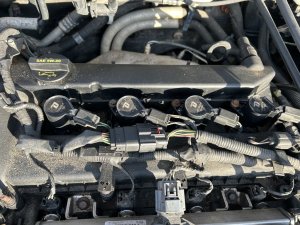
The 2008-2011 Ford Focus with the 2.0L Duratec engine uses a coil-on-plug (COP) ignition system. This design eliminates the need for traditional spark plug wires by placing an individual ignition coil directly on top of each spark plug. While this is an efficient design, it means that oil leaks from the valve cover gasket can pool in the spark plug wells, saturating the ignition coil boot and causing a misfire. This is a relatively common point of failure for this specific engine and its Mazda MZR platform mate.
Symptoms You May Notice
- Rough or shaky idle.
- Hesitation or stumbling during acceleration.
- Solid or flashing Check Engine Light.
- Reduced engine power.
- Decreased fuel economy.
- Smell of unburned gasoline from the exhaust.
- Replacing only the spark plug when the root cause was an oil-soaked ignition coil from a leaking valve cover gasket. The new plug will soon be fouled, and the misfire will return.
Most Likely Causes
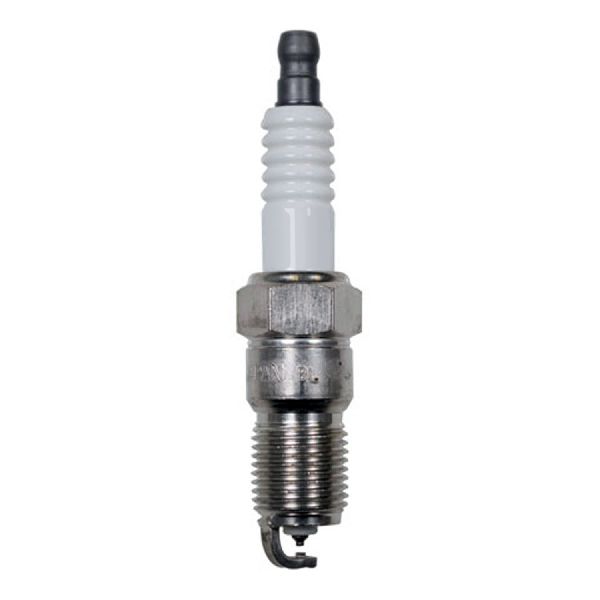
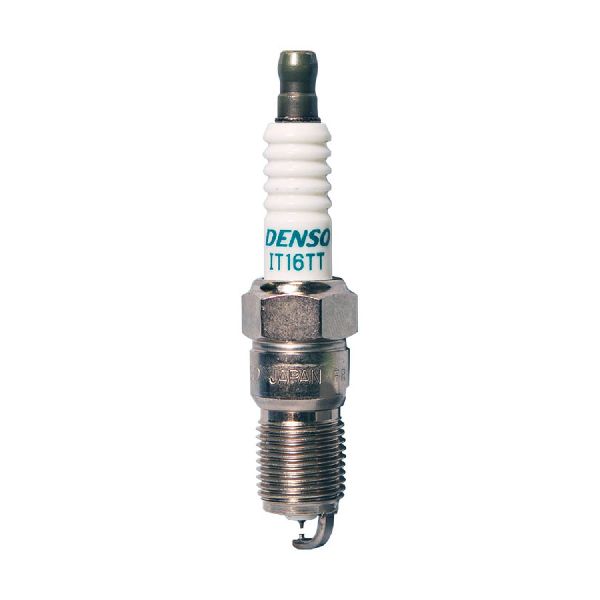
- Worn or Fouled Spark Plug 🔴 High Probability → Shop Spark Plug Spark plugs are a regular maintenance item with a typical service interval of 60,000 to 100,000 miles and are a primary cause for misfires on most gasoline engines. They have a finite lifespan and are often the first component to fail.
How to confirm: Remove the spark plug from cylinder 1. Inspect it for heavy carbon buildup, oil fouling, or a worn-out electrode. The gap may also be incorrect.
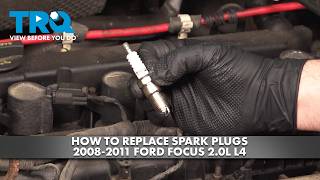
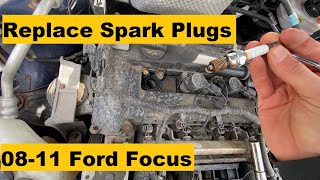
Typical fix: Replace the spark plug. It is recommended to replace all four spark plugs 🎬 See this step-by-step guide for replacing your spark plugs. at the same time to ensure even performance. The OEM part is a Motorcraft plug.
Est. part cost: $20-$50 for a set of 4 - Failed Ignition Coil 🔴 High Probability → Shop Ignition Coil The coil-on-plug design exposes the coil to significant heat. Oil leaks from the valve cover gasket can also saturate and damage the coil boot, leading to failure.
How to confirm: Swap the ignition coil from cylinder 1 with the coil from another cylinder (e.g., cylinder 2). Clear the codes and drive the vehicle. If the code changes to P0302, the ignition coil is faulty.
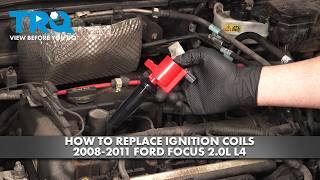
Typical fix: Replace the faulty ignition coil. It is only necessary to replace the one that has failed. The OEM part is Motorcraft DG-511.
Est. part cost: $25-$75 - Leaking Valve Cover Gasket 🟡 Medium Probability → Shop Engine Valve Cover Gaskets degrade over time with heat and age. An oil leak into the spark plug tubes is a known issue that directly leads to ignition component failure.
How to confirm: When removing the ignition coil for cylinder 1, check for liquid oil in the spark plug tube.
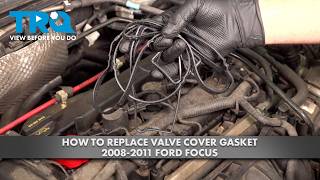
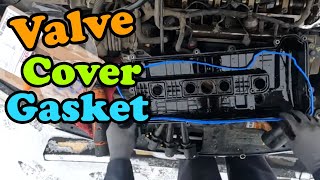
Typical fix: Replace the valve cover gasket and the spark plug tube seals. Clean the oil out of the spark plug tube and replace the oil-fouled ignition coil and spark plug. A popular, quality aftermarket gasket is the Fel-Pro VS 50778 R. 🎬 Watch: How to replace the valve cover gasket yourself.
Est. part cost: $30-$60 - Clogged or Faulty Fuel Injector ⚪ Low Probability → Shop Fuel Injector
How to confirm: After ruling out ignition issues, you can swap the fuel injector from cylinder 1 with another cylinder and see if the misfire code follows the injector. You can also listen for a clicking sound from the injector with a mechanic's stethoscope to confirm it's operating.
Typical fix: Replace the faulty fuel injector. It's also a good practice to clean the other injectors or replace them as a set if they are high-mileage.
Est. part cost: $40-$100
Rare But Worth Checking
- Low Engine Compression: This is a more serious mechanical issue. If ignition and fuel systems check out, a compression test is the next step. A forum user reported a P0301 on a Focus was ultimately due to a failed compression test in cylinder 1, indicating a burnt valve or piston ring issue. A wet compression test (adding a small amount of oil to the cylinder) can help differentiate between bad rings (compression improves) and a valve issue (compression does not improve).
- Vacuum Leak: A leak in a vacuum hose or intake manifold gasket can introduce unmetered air, leaning out the air/fuel mixture and causing a misfire. This would typically affect more than one cylinder but can sometimes manifest as a single-cylinder misfire initially.
Diagnosis Steps
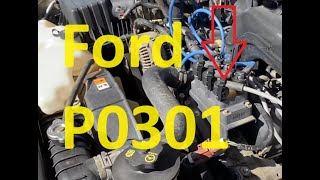
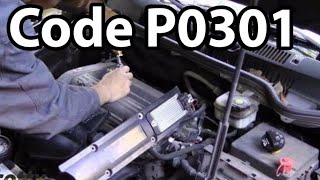
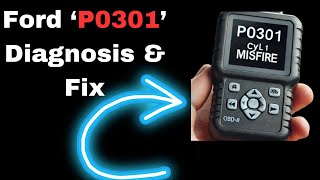
- Retrieve the trouble code with an OBD-II scanner to confirm P0301 is present. 🎬 Watch: A quick breakdown of P0301 causes and fixes.
- Identify cylinder 1, which is the cylinder on the far passenger side of the engine.
- Remove the ignition coil from cylinder 1. Inspect the spark plug well for any signs of oil. If oil is present, the valve cover gasket is leaking and must be replaced.
- Inspect the ignition coil and its boot for cracks, swelling, or signs of arcing.
- Swap the ignition coil from cylinder 1 with the coil from cylinder 2. Clear the codes and run the engine to see if the misfire code moves to P0302. If it does, the coil is bad.
- If the misfire stays on cylinder 1, remove the spark plug. Inspect it for wear, damage, or fouling. Replace if necessary.
- If ignition components are good, the next step is to check the fuel injector. This can be done by swapping injectors between cylinders or by testing the injector's resistance and listening for its operation.
- If the misfire persists, check for vacuum leaks using a smoke machine or by carefully spraying starter fluid around the intake manifold gaskets while monitoring engine RPM.
- If all else fails, perform a compression test on all cylinders to check for internal engine mechanical problems. A reading below 125 PSI or a significant variation between cylinders indicates a problem.
Parts You'll Likely Need
- Ignition Coil
(OEM #DG-511 (Motorcraft))— This is one of the most common failure points for a P0301 code, especially if oil has leaked into the spark plug well. The 'coil swap' is a definitive diagnostic test.
Trusted brands: Motorcraft, NGK, Denso, Bosch
OEM price range: $50-$90
Aftermarket price range: $25-$75 - Spark Plugs
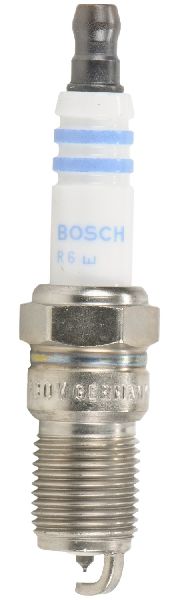
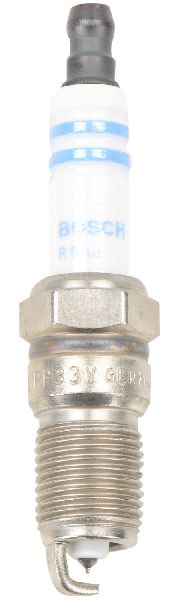
(OEM #SP-513 / CYFS-12-FPX (Motorcraft))— Spark plugs are a routine maintenance item and the most frequent cause of misfires. They are inexpensive and easy to replace.
Trusted brands: Motorcraft, NGK, Autolite
OEM price range: $8-$15 per plug
Aftermarket price range: $5-$10 per plug - Valve Cover Gasket Kit
(OEM #VS 50778 R (Fel-Pro is a common high-quality aftermarket choice))— If oil is found in the spark plug tube, this part is non-negotiable. The leak is the root cause of the ignition failure and must be fixed to prevent a repeat failure.
Trusted brands: Motorcraft, Fel-Pro, Mahle
OEM price range: $40-$70
Aftermarket price range: $25-$50
Related Codes That Often Appear With This One
- P0300 — If the misfire is intermittent or affects other cylinders, a P0300 (Random Misfire Detected) may appear alongside P0301.
- P0302, P0303, P0304 — If the cause is systemic (like a major vacuum leak or poor fuel quality), other cylinders may also log misfire codes.
Technical Service Bulletins (TSBs) & Recalls
- Bulletin #SSM 46539 — A manufacturer service bulletin notes that some Focus vehicles may exhibit a MIL on with a perceived misfire after a cold start. Diagnostic Trouble Codes (DTCs) may include P0300, P0301, P0302, P0303, P0304, and P0316.
Platform-Specific Known Issues
- Real-World Repair Story from Reddit: A user on r/MechanicAdvice with a 2010 Ford Focus reported a P0301 code and a shaky, rough-running engine. A mechanic friend helped them discover oil filling the spark plug wells. They cleaned the oil and replaced the spark plugs, but the misfire returned the next day. This highlights a common misdiagnosis: failing to address the root cause. The oil-fouled ignition coil was likely already damaged, and the leaking valve cover gasket meant the problem would persist until the gasket, coil, and plug were all replaced.
Mechanic-Grade Diagnostic Values
- Fuel Pressure (Key On, Engine Off) — expected: 35 - 55 PSI. Failure: Pressure below 35 PSI indicates a weak fuel pump or clogged filter.
- Ignition Coil Primary Resistance — expected: 0.4 - 2.0 Ohms. Failure: A reading outside this range (e.g., OL for open loop or 0 for a short) indicates a faulty coil.
- Ignition Coil Secondary Resistance — expected: 6,000 - 10,000 Ohms. Failure: A reading significantly outside this range suggests the internal secondary windings are failing.
- Fuel Injector Resistance — expected: ~12 Ohms. Failure: A reading significantly different from the other injectors, or an open/shorted reading, points to a faulty injector.
Scan Tool Commands That Help
- Ford IDS / Professional Scanners (e.g., Snap-on): Power Balance Test — Use this after confirming the P0301 code to definitively identify the misfiring cylinder without swapping parts. The test disables fuel to each cylinder one by one and graphs the resulting drop in engine RPM. A cylinder that shows little or no RPM drop when disabled is not contributing power and is the source of the misfire.
Wiring & Ground Locations
- G103 — Right side of the engine compartment.. This is a primary ground point in the engine bay. A loose or corroded connection here can cause intermittent and hard-to-diagnose electrical issues for the PCM and ignition system, potentially leading to misfires.
- G104 — At the left front strut tower.. Another critical engine bay ground. Verifying this ground is clean and tight is a crucial step when diagnosing electrical faults that could cause a P0301.
- Ignition Coil Power Wire — At the ignition coil connector for cylinder 1.. The power feed to all ignition coils is a Green/Red (GN/RD) wire. This comes from the power hold relay. Verifying 12V+ on this wire with the key on is essential.
- Engine Wiring Harness — Along the top/side of the engine block, near the valve cover.. There are reports and a TSB for a similar engine (2.0L GDI) of the main wiring harness chafing against the engine block, particularly near ground G103. This can cause a short in the ignition coil control wire, leading to a persistent misfire on one or more cylinders.
OEM Part Supersession History
4M5Z-12029-A, DG-507, 4M5Z-12029-BC→4M5Z-12029-B— Part revision and consolidation by the manufacturer.
Model Year Variations Within This Range
- 2008-2011: The North American Focus for these years was a heavily facelifted version of the first-generation (C170 platform), not the newer European Mk2. The powertrain was simplified to a single 2.0L Duratec engine, which received a minor power bump from 136 to 140 hp over the previous generation. This powertrain was stable, so diagnostic procedures for P0301 are consistent across this year range.
- 2009: For the 2009 model year only, coupe models equipped with a 5-speed manual transmission received a slightly different engine tune, increasing power to 143 hp. This has no significant impact on P0301 diagnosis.
Diagnostic Flowchart
Other Known Issues on This Vehicle
Issues unrelated to this code that are worth knowing about as an owner of this generation:
- Passenger-Side Hydraulic Motor Mount Failure 🟠 Medium — Very common. The hydraulic mount collapses or leaks, causing significant vibration at idle and while driving. Many owners report replacing it multiple times. (Ref: A TSB was issued for models from 2000-2011 regarding engine vibration problems, recommending specific mount replacements.)
- Intake Manifold Runner Control (IMRC) Failure 🟡 Low → Shop Engine Intake Manifold — Common. The plastic components of the IMRC system (actuator, levers, or flaps) can break or get stuck, often triggering a P2004 code. This can cause a rough idle and loss of power.
- Automatic Transmission Issues (4F27E) 🟠 Medium — Owners report issues like hard shifting, slipping, and failure to go into overdrive. Problems can sometimes be related to solenoids or the TCM, not just mechanical failure. (Ref: While the later PowerShift transmission is more notorious, the 4-speed 4F27E in the 08-11 models has its own documented issues.)
- Failing ABS Module or Wheel Speed Sensors 🟠 Medium — A common issue where the ABS light illuminates. Sometimes it's a simple wheel speed sensor, but failure of the ABS control module itself is also reported.
Used vs. New Parts: Buying Guide for This Vehicle
When a used part is the smart pick: For this repair, using a used part is generally not recommended for the primary failure components (ignition coils, spark plugs, gaskets). The cost savings are minimal compared to the risk of receiving a part that is near the end of its service life. A used fuel injector from a low-mileage donor could be a viable option if cleaned and tested before installation.
Donor-vehicle mileage cap: roughly under 60000 miles for the part to have meaningful remaining life.
What to inspect on the donor part:
- For an ignition coil, check for any cracks in the plastic housing or swelling/discoloration on the boot.
- For a fuel injector, ensure the plastic connector isn't brittle and the O-rings are intact (though they should be replaced anyway).
- Check the donor vehicle's history for any signs of overheating or poor maintenance.
OEM-only on this vehicle (don't cheap out):
- Ignition Coils: While good aftermarket options exist, forum consensus strongly indicates that OEM Motorcraft coils offer the best reliability and longevity, making them worth the extra cost to avoid repeat failures.
Aftermarket brands forum-validated for this vehicle:
- Ignition Coils: Denso, NGK, Bosch, Delphi.
- Valve Cover Gasket: Fel-Pro is a highly regarded and commonly used aftermarket brand for this repair.
Brands owners have reported issues with on this vehicle:
- Generic, unbranded ignition coils sold in cheap multi-packs on sites like Amazon or eBay are frequently reported to fail prematurely.
Real Owner Stories
Aggregated from forums and TSBs cited above. Mileages and costs reflect what owners reported in those sources.
2010 Ford Focus 2.0L
Symptoms: Engine malfunction light flashing, car runs 'crap', shaking/stuttering like driving on a road with loads of potholes.
What fixed it: The issue was identified as a failed compression test on cylinder 1 (reading only 50 PSI), indicating a significant internal engine problem like a burnt valve or piston ring failure.
Source hint: FordOwnersClub.com
2010 Ford Focus
Symptoms: P0301 code and a shaky, rough-running engine. Oil was found filling the spark plug wells.
What fixed it: The owner initially only cleaned the oil and replaced spark plugs, but the misfire returned. The complete fix requires replacing the leaking valve cover gasket, the oil-fouled ignition coil, and the spark plug.
Source hint: Reddit r/MechanicAdvice
Owner Reported Misfire and Coolant Loss
Symptoms: Misfires occurred and codes P0304 and P0301 were seen. The owner noted that spark plugs in positions 1 and 4 were completely worn out. There was also a reported loss of coolant with no visible leaks.
What fixed it: The car ran well after the replacement of the worn spark plugs. (NHTSA ODI #11716439)
Diagnostic Findings of Carbon Tracking
Symptoms: An initial scan revealed P0302, but a later diagnostic reported P0301. The technician found carbon tracking on all spark plugs and ignition coil boots.
What fixed it: A dealer inspection noted issues with carbon tracking and a faulty locking tab on a connector. (NHTSA ODI #11703561)
Related OBD-II Codes
Frequently Asked Questions
Where is cylinder 1 located on my 2008-2011 Ford Focus 2.0L Duratec?
Is there a TSB for the engine vibrations I'm feeling along with the P0301 code?
What is the specific Motorcraft part number for the ignition coil on my 2.0L Duratec?
I found oil in my spark plug wells while checking the P0301 code; what gasket do I need?
Could my rough idle be caused by something other than the cylinder 1 misfire?
What should the compression reading be for my 2.0L engine?
Helpful Videos

Used OEM Parts in Stock
New Aftermarket Parts Available


The information in this article is provided for general reference and educational purposes only. Vehicle specifications, procedures, and part compatibility can vary by production date, trim level, and region. Always consult your vehicle's factory service manual and verify part numbers before purchasing or performing repairs. Safety-critical components such as airbags, seat belts, and braking systems should be installed by a qualified professional.
- Ford Focus:
- 🧭 Diagnostic Flowchart
- 🎬 Helpful Videos
- 🛍️ Shop This Part
- What's Unique About the 2008-2011 Ford Focus
- Symptoms You May Notice
- Most Likely Causes
- Rare But Worth Checking
- Diagnosis Steps
- Parts You'll Likely Need
- Related Codes That Often Appear With This One
- Technical Service Bulletins (TSBs) & Recalls
- Platform-Specific Known Issues
- Mechanic-Grade Diagnostic Values
- Scan Tool Commands That Help
- Wiring & Ground Locations
- OEM Part Supersession History
- Model Year Variations Within This Range
- Other Known Issues on This Vehicle
- Used vs. New Parts: Buying Guide for This Vehicle
- Real Owner Stories
- 2010 Ford Focus 2.0L
- 2010 Ford Focus
- Owner Reported Misfire and Coolant Loss
- Diagnostic Findings of Carbon Tracking
- Related OBD-II Codes
- Frequently Asked Questions
- 🎟️ Get 5% Off