

P0301 on 2013-2018 Ford Focus ST: Cylinder 1 Misfire Causes and Fixes
On a 2013-2018 Ford Focus ST, code P0301 is most often caused by a worn spark plug or a bad ignition coil. A set of four OEM-grade spark plugs costs around $40-$60, and a single ignition coil is about $30-$50 for an aftermarket replacement. Always check spark plugs first, especially on tuned cars.
- P0301 on a Focus ST is a misfire in cylinder 1, the one closest to the belts on the passenger side.
- The most likely cause is a worn spark plug or a bad ignition coil. These are relatively inexpensive and easy to replace.
- Always perform the 'coil swap test' before buying parts to accurately diagnose the problem.
- If your Check Engine Light is flashing, pull over immediately to prevent expensive catalytic converter damage.
- If you have a tuned car, ensure you are using the correct heat range and gap for your spark plugs as specified by your tuner.
What's Unique About the 2013-2018 Ford Focus ST
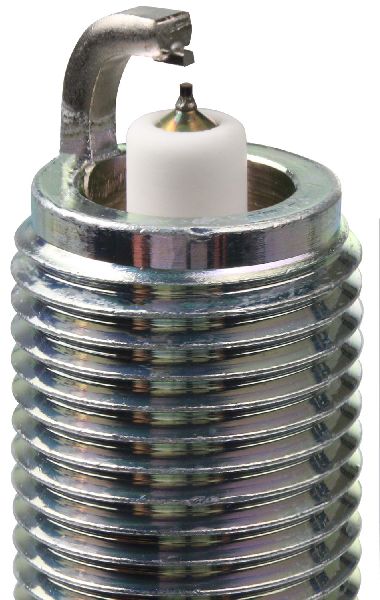
The 2.0L EcoBoost in the Focus ST is a direct-injection, turbocharged engine. While the primary causes for a P0301 misfire are universal (spark, fuel, compression), this platform has specific considerations. Many STs are tuned, which increases cylinder pressure and heat, making them more sensitive to spark plug wear and proper gapping. Owners who have modified their cars often use 'one-step-colder' spark plugs (e.g., NGK 6510 LTR7IX-11) to prevent pre-ignition and Low-Speed Pre-Ignition (LSPI). While less common, these direct-injection engines can also be prone to carbon buildup on intake valves over time (typically 80k+ miles), which can disrupt airflow and lead to misfires.
Symptoms You May Notice
- Rough or shaking idle, sometimes described as sounding like a Subaru boxer engine.
- Hesitation or stumbling during acceleration.
- Noticeable loss of power.
- Solid or flashing Check Engine Light (CEL).
- Popping or sputtering sounds from the exhaust.
- Decreased fuel economy.
- Smell of unburnt fuel from the exhaust.
- Replacing only the spark plug without checking the ignition coil. The 'coil swap' test is crucial to avoid buying unnecessary parts.
- Assuming a bad fuel injector before thoroughly testing the ignition system, which is far more common and easier to fix.
- Replacing ignition parts when the actual cause is a vacuum leak from a failed purge valve.
Most Likely Causes
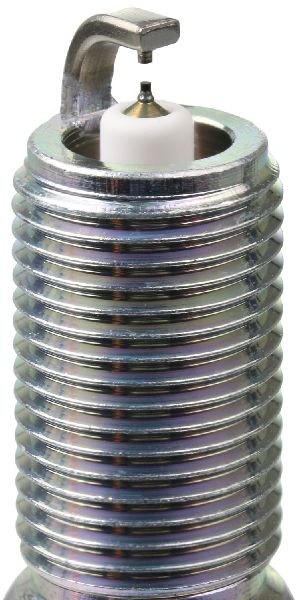
- Worn or Fouled Spark Plugs 🔴 High Probability → Shop Spark Plug The turbocharged nature of the EcoBoost engine, especially if tuned, puts high demand on spark plugs, leading to a shorter service life. Ford recommends a 100,000-mile interval for stock cars, but the enthusiast community recommends 30,000-40,000 miles or even less on tuned vehicles. Incorrectly gapped plugs are a very common cause of misfires.
How to confirm: Inspect the spark plug from cylinder 1. Look for a worn electrode, heavy carbon deposits, oil fouling, or a cracked insulator. The gap should be checked against specifications. Stock gap is typically 0.028"-0.031". Tuned cars often require a tighter gap, such as 0.026", to prevent spark blow-out under high boost.
Typical fix: Replace all four spark plugs as a set. It is critical to use plugs of the correct heat range (OEM or one-step-colder for tuned cars) and gap them properly before installation. Torque to spec.
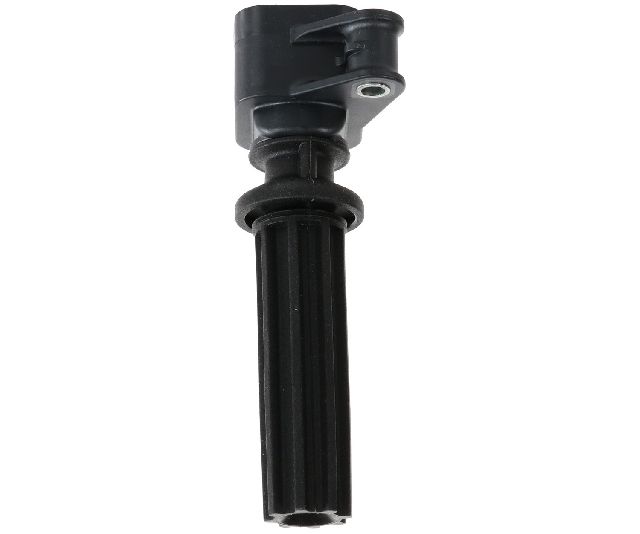
Est. part cost: $40-$80 for a set of 4 - Failing Ignition Coil 🔴 High Probability → Shop Ignition Coil
How to confirm: Swap the ignition coil from cylinder 1 with the coil from another cylinder (e.g., cylinder 2). Clear the codes and drive the vehicle. If the misfire code changes to P0302, the coil is faulty. This is a definitive and free diagnostic step.
Typical fix: Replace the faulty ignition coil. While you can replace just the one, many owners replace them as a set if the vehicle has high mileage or if one has failed.
Est. part cost: $30-$75 per coil - Faulty Fuel Injector 🟡 Medium Probability → Shop Fuel Injector Direct injection (GDI) fuel injectors operate under very high pressure and can become clogged or fail electronically over time. A leaky injector can also wash oil from the cylinder walls, accelerating wear.
How to confirm: This is more difficult to diagnose. After ruling out spark plugs and coils, a technician may listen for the injector's 'click' with a mechanic's stethoscope or perform a resistance test on the injector's electrical circuit. Swapping injectors is possible but is much more involved than swapping coils as it requires removing the intake manifold.
Typical fix: Replace the faulty fuel injector. This often involves removing the intake manifold and should be done with a new set of seals.
Est. part cost: $70-$150 per injector
Rare But Worth Checking
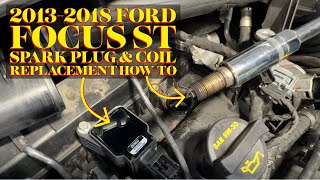
- Low Engine Compression: This is a serious mechanical issue. A P0301 code can be the first symptom of a failing piston ring land (a known failure on abused or highly tuned EcoBoosts), a burnt valve, or a damaged cylinder head. A compression test is required to confirm. 🎬 See how a P0301 code can signal serious engine failure. NHTSA ODI #11720710 describes a case where a relative compression test revealed cylinder 1 had only 70 PSI, confirming it as the source of the misfire.
- Carbon Buildup on Intake Valves: Because the fuel is injected directly into the cylinder, it doesn't wash over the intake valves. Over many miles (80k+), carbon can build up, restricting airflow and causing misfires. This usually happens gradually and may be accompanied by misfires on other cylinders. Walnut blasting is the typical cleaning procedure.
- Coolant Intrusion into Cylinder: A known issue on some 2.0L EcoBoost engines involves a block design flaw allowing coolant to leak into the cylinder, causing a misfire. Ford TSB 19-2346 addresses this for the Edge, Escape, Fusion, MKC, and MKZ. While the Focus ST is not explicitly listed, it uses a related engine, making this a possibility if you are also experiencing unexplained coolant loss. NHTSA ODI #11618539 notes a case where a coolant leak in cylinder 1 "froze the spark plug," necessitating an engine rebuild.
- Faulty Canister Purge Valve: A very common failure on the Focus ST, the purge valve can get stuck open, creating a vacuum leak that can cause a rough idle and, in some cases, trigger misfire codes. This issue is often accompanied by codes P1450 or P144C and may cause a rough idle particularly after refueling.
- Internal Engine Wear: Manufacturer Bulletin #TSB 25-2572 notes that P0301-P0308 codes may be due to the camshaft and/or valve tappet having excess wear within the engine assembly.
Diagnosis Steps
- Read the diagnostic trouble codes with an OBD-II scanner to confirm P0301 and check for any other codes.
- If the Check Engine Light is flashing, do not drive the vehicle to prevent catalytic converter damage.
- Swap the ignition coil from cylinder 1 to cylinder 2. Clear the codes, start the engine, and see if the misfire moves to cylinder 2 (code P0302). If it does, the ignition coil is the problem.
- If the misfire stays on cylinder 1, remove the spark plug from cylinder 1. Inspect it for signs of wear, oil, or fuel fouling. Also inspect the spark plug well for oil, which would indicate a leaking valve cover gasket.
- Move the spark plug from cylinder 1 to cylinder 3. Clear codes and re-test. If the code moves to P0303, the spark plug was the issue.
- If the misfire remains on cylinder 1 after swapping the coil and plug, the problem is likely with the fuel injector or a mechanical engine issue.
- Listen to the fuel injector with a mechanic's stethoscope or long screwdriver to ensure it is clicking. Compare the sound to the other injectors.
- Check for vacuum leaks, paying close attention to the canister purge valve and its associated lines.
- If all else fails, perform a compression test on all cylinders to check for mechanical engine damage. A healthy 2.0L EcoBoost should have compression above 125 PSI with minimal variation (less than 15%) between cylinders.
Parts You'll Likely Need
- Spark Plugs
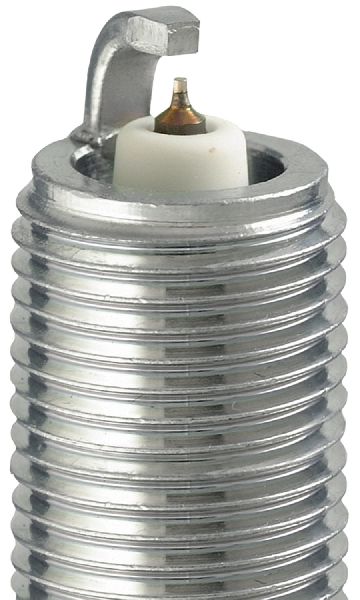
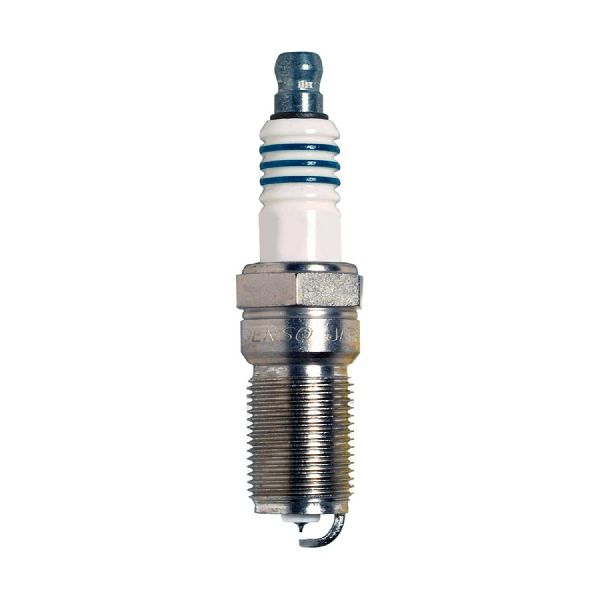
(OEM #CYFS12Y2 (Motorcraft SP537))— Spark plugs are a routine maintenance item and the most frequent cause of misfires on turbocharged engines.
Trusted brands: Motorcraft, NGK
OEM price range: $40-$60 (set of 4)
Aftermarket price range: $30-$50 (set of 4) - Ignition Coil
(OEM #CM5Z-12029-K (Motorcraft DG549))— Ignition coils are subjected to high heat and can fail electronically, causing a lack of spark to the plug.
Trusted brands: Motorcraft, Bosch, Delphi, NGK, MSD
OEM price range: $60-$90 (per coil)
Aftermarket price range: $30-$60 (per coil)
Related Codes That Often Appear With This One
- P0300 — If the misfire is intermittent or affects multiple cylinders, a P0300 (Random/Multiple Cylinder Misfire) may be stored alongside P0301.
- P0302, P0303, P0304 — If other cylinder-specific misfire codes are present, it may point towards a systemic issue like bad fuel, widespread carbon buildup, or a significant vacuum leak.
- P0316 — This code indicates a misfire detected on startup (first 1000 revolutions) and is sometimes seen alongside P0301 in cases of mechanical failure or coolant intrusion.
Technical Service Bulletins (TSBs) & Recalls
- TSB 19-2346: While not officially for the Focus ST, this TSB is critical context. It details a coolant intrusion issue in the 2.0L EcoBoost engine block for models like the Escape, Edge, and Fusion, which can cause misfires. Given the engine family relation, it's a known possibility for similar symptoms in the ST, especially with coolant loss.
- Bulletin #TSB 25-2572: This manufacturer bulletin notes that DTC P0301 can be caused by excessive wear on the camshaft or valve tappets within the engine assembly, leading to rough engine performance.
Platform-Specific Known Issues
- Low Speed Pre-Ignition (LSPI)
- Spark Plug Gapping
Mechanic-Grade Diagnostic Values
- High-Pressure Fuel Rail Pressure (FRP) — expected: ~2000-2300 PSI under load. Can be over 200 PSI at idle.. Failure: Pressure dropping to the 80-90 PSI range under load indicates a complete failure of the high-pressure fuel pump (HPFP); the reading is just low-side pressure.
- Low-Side Fuel Pressure — expected: ~80-85 PSI under load.. Failure: Significant drops below 70 PSI under load could indicate a failing in-tank fuel pump and starve the HPFP, causing misfires.
- Misfire Monitor Data (Mode $06) — expected: Near-zero misfire counts for all cylinders over a drive cycle.. Failure: A high number of misfire counts logged for cylinder 1 (e.g., TID $A2, CID $01) confirms the misfire, even if the CEL is not always on.
Hidden / Shadow Codes Worth Checking
- Mode $06 Misfire Counts: This is not a 'code' but a data function in the OBD-II system. The PCM tracks misfire events for each cylinder. Before the count is high enough to trigger a P0301, the raw counts can be viewed in Mode $06 data with a capable scanner. This can show an emerging problem on a specific cylinder. (see via An advanced OBD-II scanner or software like FORScan that can access and display Mode $06 test results.)
Scan Tool Commands That Help
- Ford IDS, FORScan, high-end Snap-on/Autel scanners: Power Balance Test — This is a definitive test to confirm a misfire's source. The tool disables one fuel injector at a time and graphs the resulting RPM drop for each cylinder. If disabling cylinder 1 causes no change in RPM, it confirms that cylinder was not contributing power, pinpointing the issue to that cylinder. It helps differentiate between ignition, fuel, or mechanical issues without swapping parts.
Wiring & Ground Locations
- G104 — Left front of the engine compartment.. This is a primary engine and PCM ground. A loose or corroded G104 can cause numerous intermittent issues, including weak spark or erratic sensor readings that can lead to misfires.
- Cylinder 1 Ignition Coil Connector — The electrical connector on the ignition coil for the cylinder closest to the belts on the passenger side.. The pins should be checked for corrosion or damage. The signal wire (varies by year, but often a colored wire with a stripe) can be tested for a square wave signal from the PCM with an oscilloscope during cranking.
- S135 / S136 / S137 — Splices within the engine control sensor & fuel charge wiring assembly.. These are factory splices that distribute power or ground to the ignition coils. While rare, a failure at one of these points in the harness could cut power to a coil, causing a misfire. This is typically investigated only after plugs, coils, and compression have been ruled out.
Real Owner Repair Stories
- YouTube user 'Zipties and Boost' (Ford Focus ST (year not specified)) — Car started misfiring, threw P0301. Idle was rough and sounded bad.
❌ Tried (didn't work) Replaced spark plugs, Swapped ignition coils
✅ What actually fixed it The problem was a catastrophic engine failure. Upon further inspection after the initial fixes failed, the spark plug for cylinder 1 was found to be covered in oil. This indicated a failed piston ring land, a known issue with the 2.0L EcoBoost, which required a full engine replacement. - Reddit user on r/FocusST (2017 Focus ST1, 17.6k miles, Stage 2 modifications) — Blinking CEL and sluggish performance while cruising at 50mph in 6th gear. No heavy driving was involved.
❌ Tried (didn't work) The user immediately pulled over and did not continue driving.
✅ What actually fixed it The user did not post the final resolution in the thread, but the story is valuable as it illustrates that a P0301 misfire, even a severe flashing-CEL event, can occur under light-load cruising conditions and not just during aggressive driving. - NHTSA ODI #11405478 — An owner reported a P0301 code after being advised of low coolant with no visible leaks. Despite replacing spark plugs and swapping coils between cylinders 1 and 2, the code returned after 500 miles.
- NHTSA ODI #11473292 — An owner experienced a P0301 code within the first month of ownership; in this instance, the dealership replaced an oxygen sensor, which initially seemed to resolve the issue.
"I Checked Everything" — The Actual Cause
- In cases of a P0301 on the Focus ST where ignition parts are confirmed good and a smoke test reveals no vacuum leaks, the cause is often mechanical. A prime example is a cracked piston ring land, which will not show up on a smoke test but will cause low compression and oil fouling of the spark plug, leading to a persistent misfire.
When the Usual Fixes Don't Work
- While the most common advice is to replace spark plugs and ignition coils, there are notable cases where this does not solve the problem. A significant counter-example is the failure of piston ring lands on the 2.0L EcoBoost. In these instances, the owner may replace ignition components multiple times only for the P0301 code to return. The true cause, low compression in cylinder 1, is only found via a compression test, highlighting that a misfire code can be the first and only symptom of a severe mechanical failure.
OEM Part Supersession History
CM5Z-12029-A→CM5Z-12029-K (Motorcraft DG549)— Standard revision and improvement by the manufacturer.
Heads up: While other coil part numbers like BL3Z-12029-C are sometimes cross-referenced for EcoBoost engines, CM5Z-12029-K / DG549 is the correct specified part for the 2.0L in the Focus ST.
Model Year Variations Within This Range
- 2015-2018 (facelift): The 2015 model year introduced a significant facelift with revised front/rear styling, a new flat-bottom steering wheel, and retuned suspension and steering. However, the 2.0L EcoBoost engine and its core components related to a P0301 misfire (ignition system, fuel system, internal mechanics) remained unchanged from the 2013-2014 models. Therefore, the diagnosis and common causes for P0301 are identical across the entire 2013-2018 range.
Diagnostic Flowchart
Other Known Issues on This Vehicle
Issues unrelated to this code that are worth knowing about as an owner of this generation:
- Canister Purge Valve Failure 🟠 Medium — Extremely common. Can fail at various mileages. Symptoms include rough idle after refueling, difficulty starting after refueling, and CEL with codes like P1450 or P144C. (Ref: Ford issued a recall (18S32) for this part on some Focus models, though not all STs were covered.)
- Weak Manual Transmission Synchronizers 🔴 High — Common, especially on earlier models (2013-2014) and cars that are driven hard. Leads to grinding when shifting into gears (especially 2nd and 3rd) or being locked out of a gear. (Ref: No official recall, but a well-known issue in the community. Upgraded carbon synchro sets are a popular aftermarket fix.)
- Failing Passenger-Side Hydraulic Engine Mount 🟠 Medium — Very common failure, often occurring between 50,000 and 80,000 miles. The mount leaks its hydraulic fluid, causing excessive engine vibration to be felt in the cabin, especially at idle.
- Low-Speed Pre-Ignition (LSPI) 🔴 High — A risk primarily for tuned vehicles, but possible on stock cars. Occurs when applying heavy throttle at low RPM in a high gear (lugging the engine). Can cause catastrophic damage, including cracked pistons or ring lands.
- Cracked Cylinder Head / Integrated Exhaust Manifold 🔴 High → Shop Engine Cylinder Head — Less common than other issues but a known catastrophic failure. The head can crack near the integrated exhaust manifold where the turbo bolts on, leading to coolant loss and overheating.
Used vs. New Parts: Buying Guide for This Vehicle
When a used part is the smart pick: For a P0301 repair, obtaining non-electronic, simple mechanical parts from a junkyard is a viable option. This includes items like the plastic engine cover or specific brackets. An intake manifold is also generally safe to purchase used, provided it is inspected for cracks.
Donor-vehicle mileage cap: roughly under 70000 miles for the part to have meaningful remaining life.
What to inspect on the donor part:
- For any used part, check for signs of physical damage, cracks, or warping.
- If considering a used engine or cylinder head, request vehicle history to check for reported overheating or major accidents.
- Look for a donor vehicle that appears well-maintained and is from a dry climate to reduce the risk of corrosion on electrical connectors and grounds.
OEM-only on this vehicle (don't cheap out):
- High-Pressure Fuel Pump (HPFP)
- High-Pressure Fuel Injectors
Aftermarket brands forum-validated for this vehicle:
- Ignition Coils: MSD, Accel, Denso (noted as a possible OEM supplier)
- Spark Plugs: NGK, Motorcraft (OEM)
Brands owners have reported issues with on this vehicle:
- Unnamed or generic 'eBay special' ignition coils and fuel injectors. These parts often have high failure rates and may not meet the performance demands of a turbocharged, direct-injection engine.
Real Owner Stories
Aggregated from forums and TSBs cited above. Mileages and costs reflect what owners reported in those sources.
2013-2018 Ford Focus ST 2.0L EcoBoost
Symptoms: The owner experienced a flashing Check Engine Light and P0301 while cruising. The car had a rough idle described as sounding like a 'Subaru boxer engine' and was popping from the exhaust.
What fixed it: The community advice for this Stage 2 tuned owner was to check spark plug gap and condition first, then perform an ignition coil swap to diagnose the failure.
Source hint: r/FocusST - 'Misfire Cyl1 P0301'
2013-2018 Ford Focus ST 2.0L EcoBoost
Symptoms: Owner reported a P0301 code specifically for a Cylinder 1 misfire and sought immediate diagnostic steps.
What fixed it: The recommended fix involved checking the spark plugs (gap and condition) and swapping the ignition coil to another cylinder to see if the code followed the coil.
Source hint: focusst.org - 'Guys I need help. Threw a code p0301. Cylinder 1 misfire. What do I do'
Ford Edge (Platform Mate) 2.0L EcoBoost
Symptoms: Rough idle when cold accompanied by P0301 and P0302 codes.
What fixed it: The issue was diagnosed as coolant intrusion into the cylinders, which eventually required a full engine replacement under the guidelines of the TSB.
Source hint: fordedgeforum.com - 'Rough Idle When Cold - P0301/2 Code - coolant intrusion'
Related OBD-II Codes
Frequently Asked Questions
Does TSB 19-2346 apply to my Focus ST if I have a P0301 code?
How often should I change spark plugs on a tuned Focus ST to avoid misfires?
What spark plug gap should I use for my 2.0L EcoBoost?
Could my P0301 misfire be related to the fuel system recall?
Is there a simple way to tell if my P0301 is just a bad ignition coil?
Why does my Focus ST sound like a Subaru boxer engine when it misfires?
Helpful Videos
We Have This Part in Stock


The information in this article is provided for general reference and educational purposes only. Vehicle specifications, procedures, and part compatibility can vary by production date, trim level, and region. Always consult your vehicle's factory service manual and verify part numbers before purchasing or performing repairs. Safety-critical components such as airbags, seat belts, and braking systems should be installed by a qualified professional.
- Ford Focus ST:
- 🧭 Diagnostic Flowchart
- 🎬 Helpful Videos
- 🛍️ Shop This Part
- What's Unique About the 2013-2018 Ford Focus ST
- Symptoms You May Notice
- Most Likely Causes
- Rare But Worth Checking
- Diagnosis Steps
- Parts You'll Likely Need
- Related Codes That Often Appear With This One
- Technical Service Bulletins (TSBs) & Recalls
- Platform-Specific Known Issues
- Mechanic-Grade Diagnostic Values
- Hidden / Shadow Codes Worth Checking
- Scan Tool Commands That Help
- Wiring & Ground Locations
- Real Owner Repair Stories
- "I Checked Everything" — The Actual Cause
- When the Usual Fixes Don't Work
- OEM Part Supersession History
- Model Year Variations Within This Range
- Other Known Issues on This Vehicle
- Used vs. New Parts: Buying Guide for This Vehicle
- Real Owner Stories
- 2013-2018 Ford Focus ST 2.0L EcoBoost
- 2013-2018 Ford Focus ST 2.0L EcoBoost
- Ford Edge (Platform Mate) 2.0L EcoBoost
- Related OBD-II Codes
- Frequently Asked Questions
- 🎟️ Get 5% Off